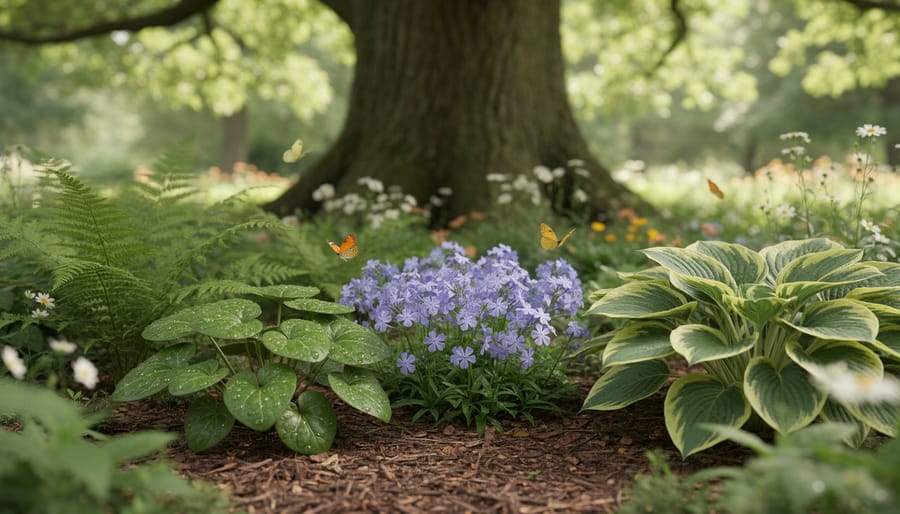
That shady corner beneath your oak tree or the dim strip along your north-facing fence doesn’t have to stay bare. Native perennials suited for shade offer a sustainable, low-maintenance solution that transforms those challenging spots into vibrant ecosystems while supporting local wildlife. Unlike sun-loving plants that struggle and disappoint in low light, these shade-adapted natives thrive in the conditions that already exist in your garden.
The beauty of choosing native perennials for shade goes beyond just filling empty space. These plants evolved alongside your region’s pollinators, birds, and beneficial insects, creating relationships that support the entire food web. They’re adapted to your local soil and rainfall patterns, which means less watering, no fertilizing, and minimal fuss once established. After that first year of getting roots down, most native shade perennials practically take care of themselves.
I’ve spent years testing native plants in my own shady garden, and I’ve watched struggling beds transform into lush, self-sustaining landscapes. The difference between forcing the wrong plant into a shady spot and choosing one that actually wants to be there is remarkable. You’ll notice it in the vigorous growth, the return of butterflies and songbirds, and the fact that you’re not constantly replacing failed plants or battling pests.
This guide brings you 12 reliable native perennials that flourish in shade, each selected for its proven performance, ecological value, and beauty. Whether you’re working with dappled light under deciduous trees or deep shade beside a building, you’ll find options that turn your most challenging garden spaces into highlights.
How We Selected These Shade-Loving Natives
Choosing the right native perennials for your shade garden shouldn’t feel like guesswork. We curated this list by applying rigorous criteria that balance ecological responsibility with real-world gardening success, drawing on consultations with native plant specialists and valuable feedback from Bluestem readers who’ve battled their own shady spots.
Every plant here earned its place by meeting these standards:
- Proven pollinator and wildlife support, providing nectar, pollen, or habitat for local species
- Adaptability across shade conditions, from dappled light to deep woodland shade
- Minimal water and maintenance needs once established
- Availability through native plant nurseries in multiple regions
- Multi-season interest beyond a single bloom period
We prioritized perennials that work with your soil and conditions rather than demanding constant intervention. Several readers told us they’d struggled with exotic shade plants that either languished or required endless amendments, so we focused on species genuinely suited to the low-light challenges most gardeners face. This isn’t about cramming plants into unsuitable spaces, it’s about matching the right native to the right spot and watching it flourish year after year with surprisingly little fuss.
1. Wild Ginger (Asarum canadense): The Groundcover Champion
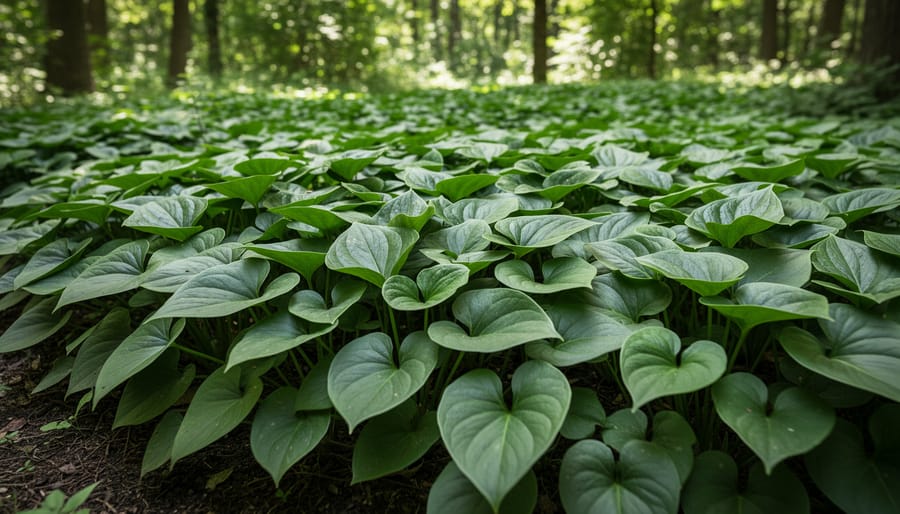
Wild ginger earns its place as the first native shade perennial on this list because it solves one of the trickiest garden challenges: filling those deep shade areas where almost nothing else will grow. This North American native thrives in the darkest corners under mature trees, where grass gives up and bare soil invites erosion.
The real star here is the foliage. Each heart-shaped leaf, reaching 4 to 6 inches across, creates a lush green carpet that looks intentional and maintained, even though you’ll barely lift a finger once it’s established. The plant spreads slowly through rhizomes, knitting together into a dense groundcover that stabilizes slopes and suppresses weeds naturally. Give it a year or two, and you’ll have a continuous mat that looks like you hired a landscape designer.
The curious reddish-brown flowers hide near the soil surface in early spring. While humans rarely notice them, they’re perfectly positioned for pollination by ground-dwelling beetles and ants, making wild ginger a quiet supporter of beneficial insects.
For best results, plant wild ginger in moist, humus-rich soil that mimics forest floor conditions. It pairs beautifully with other woodland natives like ferns, Solomon’s seal, and trilliums, creating layered interest in shaded gardens. Once established, it tolerates dry shade better than you’d expect, though consistent moisture keeps the foliage looking its freshest through summer.
2. Solomon’s Seal (Polygonatum biflorum): Elegant Arching Beauty
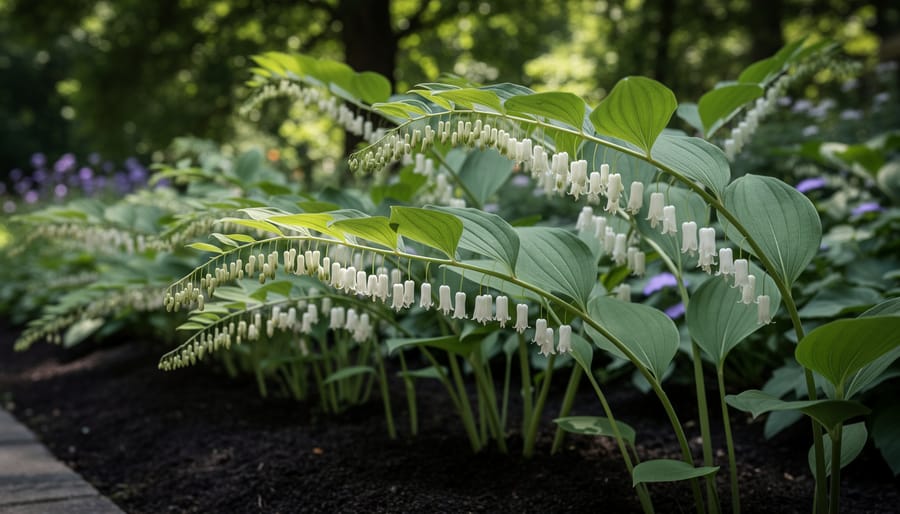
Solomon’s Seal earns its place in shade gardens through sheer architectural elegance. Those graceful arching stems, reaching 18 to 36 inches tall, create a fountain-like effect that adds movement and structure to woodland borders. In late spring, small white bell-shaped flowers dangle in pairs beneath the stems, drawing in bees while maintaining an understated charm.
What makes this native particularly valuable is its drought tolerance once established. While many shade perennials demand consistent moisture, Solomon’s Seal handles dry shade remarkably well after its first growing season. This resilience makes it ideal for planting under mature trees where rainfall rarely penetrates and roots compete for water.
The show doesn’t end with flowering. Come fall, the entire plant transforms into golden yellow foliage that glows against darker backgrounds before the stems collapse neatly for winter. Blue-black berries follow the flowers, providing food for wildlife.
Plant rhizomes in spring or fall, spacing them 18 inches apart in humus-rich soil. They spread slowly through underground rhizomes, forming elegant colonies without becoming aggressive. Solomon’s Seal shines when massed along shaded pathways, paired with ferns and hostas, or used as a backdrop for lower-growing groundcovers like Wild Ginger. Give it room to arch, and it’ll reward you for years with minimal fuss.
3. Foamflower (Tiarella cordifolia): Spring Sparkle with Year-Round Foliage
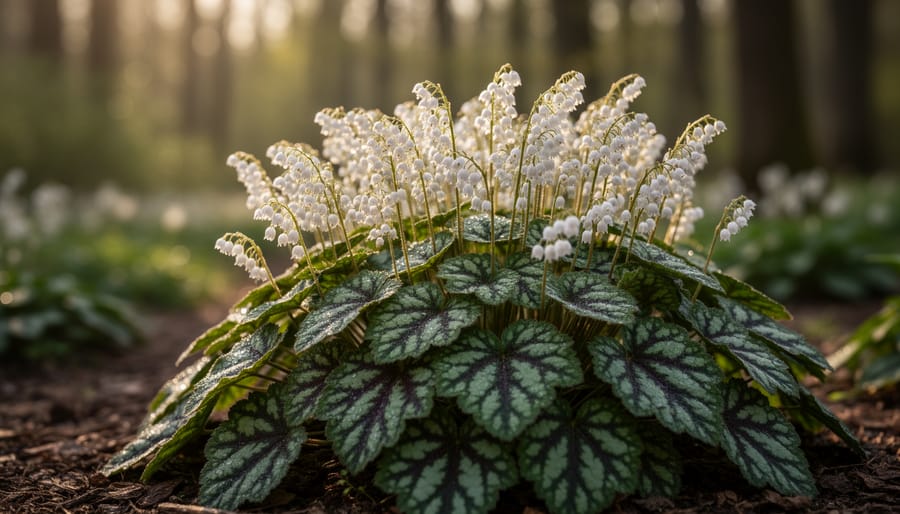
Foamflower earns its spot in shade gardens through sheer reliability. From April through May, it sends up 6- to 12-inch stems topped with delicate white flowers that resemble tiny foam bubbles, hence the name. The blooms are charming, but the foliage is what makes this plant indispensable year-round.
The leaves form low rosettes, typically maple-shaped with attractive burgundy veining or mottling that intensifies in cooler weather. Unlike many perennials that disappear after frost, foamflower keeps its leaves through winter in most climates, providing valuable ground-level interest when little else is showing. In mild winters, the foliage remains green; in colder regions, it takes on bronze or reddish tones.
This native spreads by stolons (above-ground runners) to form colonies, but it does so politely. You won’t find it overtaking your garden, just gradually filling in bare spots at a manageable pace. It prefers moist, humus-rich soil in partial to full shade and pairs beautifully with ferns and bleeding hearts.
For cultivars, ‘Running Tapestry’ offers particularly striking leaf patterns with dark centers, while ‘Brandywine’ produces pink-tinged flowers. Both maintain the species’ native vigor and adaptability, making them excellent choices for low-maintenance shade gardens that look good in every season.
4. Alumroot (Heuchera americana): Foliage Superstar for Partial Shade
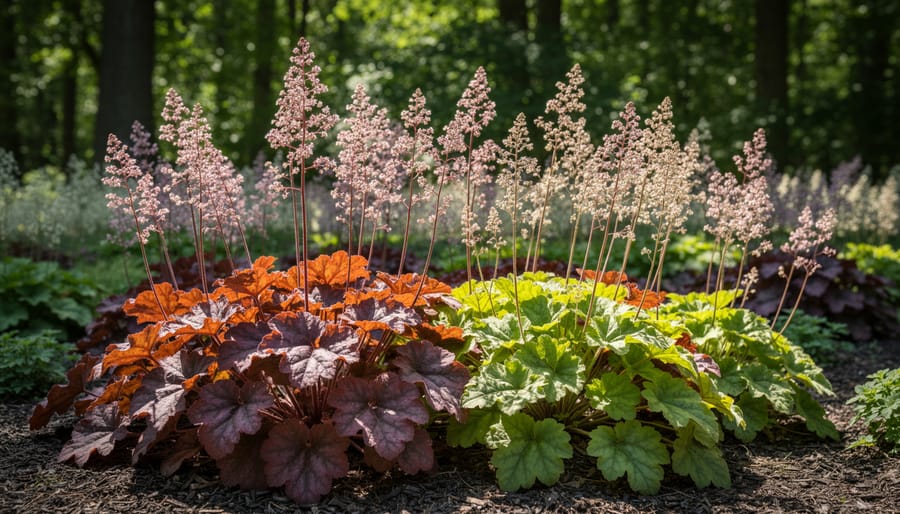
Alumroot earns its place in shade gardens through extraordinary foliage that outshines most flowering perennials. The leaves emerge in spring with intricate silver veining over purple-bronze backgrounds, and as seasons shift, they deepen to burgundy and chocolate tones while maintaining that signature metallic overlay. This native delivers visual interest for nine months of the year, far longer than plants valued solely for blooms.
In late spring, slender wands rise eighteen to thirty inches above the foliage, carrying tiny white or greenish flowers that dance in the slightest breeze. While subtle compared to showier perennials, these delicate spires attract small bees and add vertical dimension without blocking views of companion plants behind them.
Alumroot thrives in partial shade with consistent moisture but tolerates drier conditions once established, making it more forgiving than many shade lovers. Plant it along shaded borders where morning sun can illuminate those metallic leaves, or mass three to five plants as a stunning groundcover beneath taller woodland perennials.
In zones 7 and warmer, the foliage persists through winter, providing rare cold-season color. Farther north, leaves may brown but still offer textural interest until spring growth arrives. Space plants twelve to fifteen inches apart, and resist the urge to bury the crown, keep it slightly above soil level to prevent rot.
5. Eastern Columbine (Aquilegia canadensis): Hummingbird Magnet
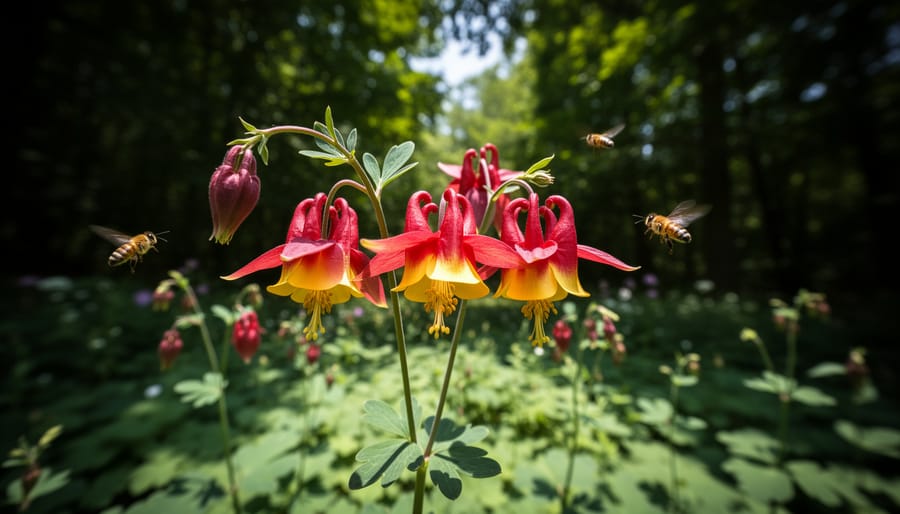
Eastern Columbine earns its place in any shade garden through sheer pollinator power. Those distinctive red-and-yellow nodding flowers appear in late spring, dangling like tiny lanterns from delicate stems. Hummingbirds can’t resist them, and you’ll often spot ruby-throated hummingbirds hovering at the spurred blooms throughout May and June.
The fern-like blue-green foliage stays attractive even after flowering finishes, providing textural interest through summer. Plants typically reach 18 to 24 inches tall, making them perfect for mid-border placement or tucking among larger shade perennials.
One of columbine’s best traits is its gentle self-sowing habit. After flowering, seed capsules develop and eventually scatter seeds nearby. You’ll notice new seedlings appearing the following spring, gradually creating naturalized colonies without becoming invasive. If you prefer tidy control, simply deadhead spent flowers before seeds mature.
Eastern Columbine thrives in partial to light shade with consistent moisture, though established plants tolerate some drought. Pair it with Wild Ginger for contrasting foliage textures, or let it weave through Solomon’s Seal for a layered woodland effect. Blue Phlox makes an excellent companion, blooming just before columbine takes center stage.
The combination of hummingbird appeal, delicate beauty, and easy self-maintenance makes this native a sustainable garden essential.
6. Blue Phlox (Phlox divaricata): Fragrant Carpet of Spring Color
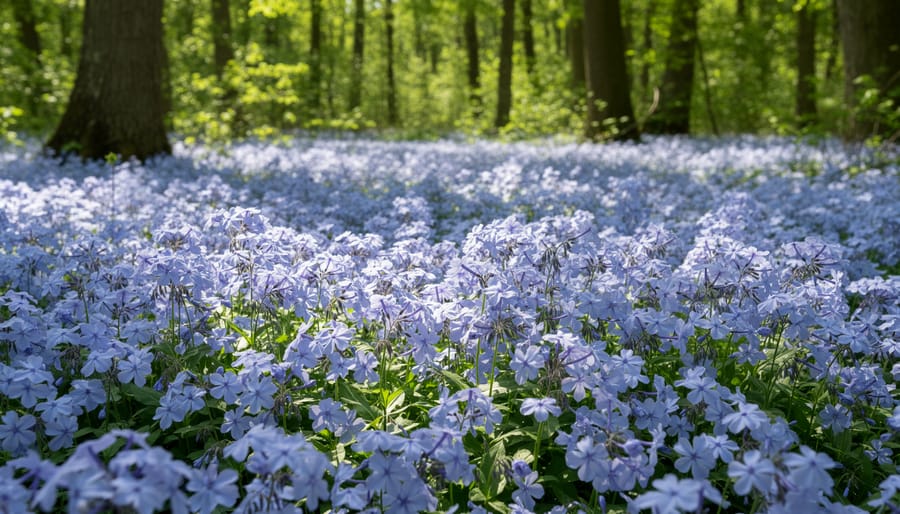
Blue phlox transforms shaded woodland gardens each April and May with waves of sweetly fragrant lavender-blue flowers that seem to hover just above the ground. This low-growing perennial (reaching only 10-15 inches tall) spreads steadily through creeping rhizomes to form soft, billowing colonies that naturalize beautifully beneath deciduous trees.
The real magic happens on warm spring evenings when the flowers release their distinctive sweet fragrance, attracting swallowtails, skippers, and other early-season butterflies. Each blossom displays five notched petals in shades ranging from pale blue to deep purple, depending on the cultivar, though straight species plants offer the most reliable performance and self-seeding.
Plant blue phlox in light to moderate shade with consistently moist, humus-rich soil. Morning sun is fine, but protection from hot afternoon rays prevents the foliage from scorching. Space plants 12-18 inches apart and they’ll knit together within two seasons.
Maintenance couldn’t be simpler. Shear plants lightly after flowering if you want a tidier appearance, though leaving spent blooms allows for gentle self-sowing. Divide established clumps every three to four years in early fall to maintain vigor and share extras with neighbors. Blue phlox tolerates dry shade once established but performs best with consistent moisture during its spring growth spurt.
7. Coral Bells (Heuchera spp.): Native Varieties for Every Garden
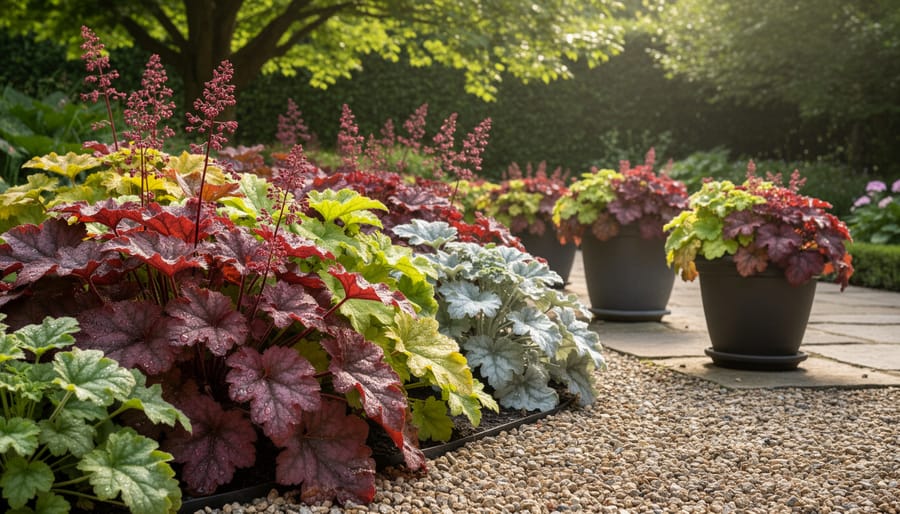
Coral bells present a fascinating case study in native plant selection. While garden centers overflow with flashy hybrids boasting neon purple or lime-green foliage, the true native species, Heuchera americana (American alumroot) and Heuchera villosa (hairy alumroot), offer superior adaptation to regional shade conditions and stronger wildlife value.
Native Heuchera americana thrives in the Eastern and Midwestern states, displaying silver-veined leaves that shift from green to burgundy as temperatures cool. Its airy white flower spikes in late spring attract native bees often ignored by hybrid varieties. Heuchera villosa, native to the Southeast, tolerates deeper shade and higher humidity than its cultivated cousins, producing robust clumps that resist the crown rot plaguing many hybrids in muggy climates.
These natives excel in containers where their evergreen foliage provides year-round interest. Plant them in well-draining potting mix with added compost, positioning the crown slightly above soil level to prevent rot. In garden beds, space plants 12 to 18 inches apart in partial to full shade.
The payoff for choosing native species over hybrids? Plants that live longer, require less fussing, and support local pollinators while delivering that coveted foliage drama gardeners crave.
8. Jack-in-the-Pulpit (Arisaema triphyllum): Woodland Wonder
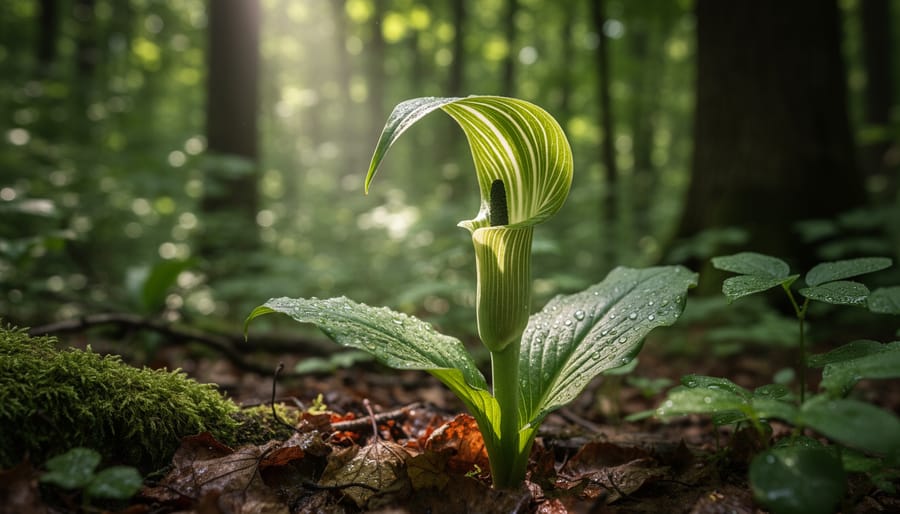
If you want a plant that stops visitors in their tracks, Jack-in-the-Pulpit delivers. This woodland native produces one of the most distinctive flowers you’ll encounter: a green-and-maroon-striped hood (the “pulpit”) sheltering a club-like spadix (“Jack”) inside. The flowers emerge in spring, but the real showstopper comes in late summer when clusters of brilliant red berries replace the blooms, creating striking vertical interest when many shade plants fade.
Jack-in-the-Pulpit thrives in moist, humus-rich soil under dappled to full shade. It naturally grows in woodland environments, so mimicking those conditions brings the best results. Add a thick layer of leaf mold or compost around the plants to maintain consistent moisture and feed the soil gradually. The plants can reach 12 to 18 inches tall, with their three-part leaves adding architectural structure even when not in flower.
Wildlife value runs high with this species. The berries feed wood thrush and wild turkey, while the flowers attract small flies and fungus gnats for pollination. The plant goes dormant by midsummer in dry conditions, so pair it with ferns or hostas that will fill the space as it retreats. Be patient during establishment, Jack-in-the-Pulpit often takes a season to settle in before producing its signature blooms.
9. Jacob’s Ladder (Polemonium reptans): Cool-Season Performer
Jacob’s Ladder earns its common name from the neat arrangement of small leaflets climbing opposite sides of each stem, creating a ladder-like pattern that remains attractive long after the spring blooms fade. In April and May, clusters of nodding, bell-shaped flowers in soft lavender-blue rise above the foliage on slender stems, creating a delicate woodland effect.
This perennial performs best in consistently moist shade, making it an excellent choice for those tricky spots near downspouts or in naturally damp areas where many plants struggle. Unlike some moisture-lovers, it tolerates average garden soil as long as it doesn’t dry out completely during hot summers. A two-inch layer of leaf mulch helps maintain the even moisture it prefers.
The compact growth habit reaches 12 to 18 inches tall and wide, perfect for edging shaded paths or tucking into the front of woodland borders. The fernlike foliage creates a soft texture that contrasts beautifully with bolder-leaved plants like Wild Ginger or the architectural presence of Jack-in-the-Pulpit.
Jacob’s Ladder naturalizes gently through self-sowing without becoming aggressive, and the seedlings are easy to transplant to new spots or share with gardening friends. Deer typically leave it alone, and once established, it requires virtually no maintenance beyond occasional division every four to five years if clumps become crowded.
10. Virginia Bluebells (Mertensia virginica): Ephemeral Spring Magic
Virginia bluebells deliver one of spring’s most breathtaking displays in shady gardens, then politely disappear until next year. The transformation from pink buds to sky-blue trumpet flowers happens over about three weeks in mid-spring, creating a color-shifting effect that stops visitors in their tracks.
What makes bluebells perfect for sustainable shade gardens is their ephemeral nature. By early summer, the foliage yellows and the plant goes completely dormant, leaving no trace above ground. This isn’t a problem, it’s an opportunity. Plant ferns, hostas, or wild ginger around your bluebell patches. As the bluebells fade, these companions expand to fill the space, giving you two gardens in one spot.
Mass plantings create the most impact. A drift of fifty or more bulbs produces that magical “blue river” effect you see in woodland photos. Space them four to six inches apart in rich, moist soil. They’ll naturalize over time through self-seeding, gradually expanding their territory.
Mark the location after they go dormant so you don’t accidentally disturb the roots during summer garden work. Once established, bluebells need almost no care, just let the foliage die back naturally to feed next year’s show.
11. Wild Geranium (Geranium maculatum): Reliable Bloomer for Dry Shade
Wild geranium earns its place in sustainable shade gardens by solving one of the trickiest challenges: thriving where tree roots suck moisture from the soil and little sunlight penetrates. Those pink-to-lavender flowers appear reliably each late spring, hovering above deeply lobed leaves that remain attractive through fall. Unlike its finicky cultivated cousins, this native spreads slowly through rhizomes to form graceful drifts without becoming invasive.
The real magic happens in dry shade under mature maples or oaks, where most flowering perennials give up. Wild geranium establishes a deep root system that accesses moisture other plants can’t reach, making it genuinely low-maintenance once settled. The palmate foliage turns bronze and gold in autumn, contributing to a three-season garden even in challenging spots.
For design, plant wild geranium in groups of five or more for impact, spacing them 12-15 inches apart. It pairs beautifully with ferns and Solomon’s seal, creating layered texture in woodland settings. The plants self-sow modestly, filling gaps without overwhelming neighbors. Deadheading spent flowers keeps the foliage looking fresh, but it’s optional, the seed heads have their own charm and feed birds through summer.
12. Green and Gold (Chrysogonum virginianum): Bright Ground Cover
Green and Gold earns its cheerful name with sunny yellow daisy-like flowers that begin in mid-spring and continue sporadically through fall, sometimes even into early winter in mild climates. This low-growing native spreads slowly through stolons to form a dense mat of bright green, semi-evergreen foliage that stays attractive in zones 7 and warmer. Unlike aggressive groundcovers, it respects boundaries while still filling in reliably over time.
The species performs beautifully in partial to full shade, though it tolerates more sun in northern regions where summers stay cool. Plant it 12 to 15 inches apart for quicker coverage, or space wider and let it fill in naturally over two to three seasons. It adapts to average garden soil but appreciates consistent moisture during establishment.
Regional adaptations matter with Green and Gold. Southern gardeners should choose shadier spots to prevent scorching, while northern growers can push it into brighter conditions. The variety ‘Allen Bush’ offers particularly vigorous growth and extended bloom, while ‘Pierre’ stays more compact for tighter spaces.
Once established, this native requires minimal intervention beyond occasional division every four to five years if it becomes too dense. Basic year-after-year care keeps it thriving, though you rarely need to feed perennials this self-sufficient. Pair it with Wild Ginger or ferns for textural contrast in woodland settings.
Expert Insight: Creating Sustainable Shade Gardens
I reached out to Maria Chen, a landscape ecologist and native plant specialist with the Native Plant Conservation Alliance, to discuss the art of creating thriving shade gardens with native perennials.
“The biggest mistake I see is treating shade gardens like they need fixing,” Maria explains. “Shade isn’t a problem to solve, it’s an opportunity to work with nature instead of against it. These native perennials have evolved specifically for shaded woodland conditions, so they’re already programmed to succeed where lawn grass and sun-lovers struggle.”
Maria emphasizes starting with the soil. “Most shade plants prefer organic-rich soil that mimics a forest floor. Work in leaf compost or aged wood chips rather than fighting your soil’s natural structure. Under trees, you’re competing with roots for moisture, so that organic matter acts like a sponge.”
When it comes to combining plants, she suggests thinking in layers. “Mix different bloom times and foliage textures. Pair early spring ephemerals like Virginia Bluebells with later bloomers like Wild Geranium. Add evergreen foliage from Wild Ginger underneath. You’ll create a blooming perennial garden that delivers interest from March through October.”
The sustainability payoff grows over time. “After two seasons, these natives establish deep roots and essentially care for themselves. They support native pollinators and beneficial insects that non-native shade plants can’t. You’re building an ecosystem, not just a garden bed, one that gets better and more self-sufficient every year.”
Planting and Care Tips for Shade Perennials
Success with native shade perennials starts with understanding your existing conditions rather than attempting a complete soil overhaul. Walk your shaded areas at different times of day to identify which spots receive dappled light, partial shade, or deep shade, then choose plants matched to each zone. Most native woodland perennials prefer soil rich in organic matter, so work a two to three inch layer of leaf compost or aged wood chips into the top six inches before planting. Skip peat moss and opt for locally sourced compost that mimics the forest floor these plants naturally call home.
Plant in spring or fall when temperatures are moderate and rainfall is more reliable. Dig holes twice as wide as the root ball but no deeper, setting each plant at the same depth it grew in its container. Space according to the mature spread listed for each species, resisting the urge to crowd plants for instant fullness. Water thoroughly at planting, then maintain consistent moisture for the first growing season while roots establish, checking soil moisture two inches down rather than relying on a fixed schedule.
Once established, most native shade perennials need minimal intervention. A spring application of leaf compost provides sufficient nutrients, while fallen leaves left in place through winter protect crowns and feed soil organisms. Avoid over-fertilizing, which produces lush growth attractive to pests and diseases. For additional perennial bloom tips and seasonal care strategies, focus on observing how your plants respond to existing conditions. Divide clumps only when they show reduced vigor or outgrow their space, typically every four to five years, and share divisions with fellow gardeners to expand native plant populations in your community.
Building Your Sustainable Shade Garden
Creating a thriving shade garden with native perennials isn’t about perfection from day one. Start with three or four plants from this list that genuinely excite you, whether it’s the cheerful blooms of Green and Gold or the architectural drama of Jack-in-the-Pulpit. Plant them, watch how they settle in, and notice which spots they love most. This observational approach teaches you more about your specific conditions than any book ever could.
The beauty of native perennials lies in their patience. They might look modest that first season as they focus energy on root development, but by year two or three, you’ll see them flourish into self-sustaining contributors to your garden ecosystem. You’re not just filling empty space under trees. You’re creating habitat for native bees, providing food for butterflies, and building soil health through plants that have evolved alongside your local conditions for thousands of years.
As your shade garden matures, pay attention to the quiet satisfactions: spotting a hummingbird visiting your Eastern Columbine, watching Wild Ginger spread into a lush carpet, or discovering volunteer seedlings from last year’s Virginia Bluebells. These small moments confirm you’ve invested in something bigger than a pretty garden. We’d love to hear about your shade garden journey, whether it’s a single Foamflower thriving under your oak tree or a full woodland tapestry. Share your experiences, questions, and photos with the Bluestem community so we can all learn from each other’s successes.
Common Questions About Native Shade Perennials
How much shade is too much shade?
Most native shade perennials perform best with at least 2-3 hours of dappled light or bright indirect light daily. Dense, year-round shade under evergreens or north-facing walls with zero direct sun becomes challenging, though plants like wild ginger and Solomon’s seal can manage even these tougher spots.
Can I grow these in containers?
Absolutely. Smaller natives like coral bells, foamflower, and green and gold thrive in pots, making them perfect for shaded patios or balconies. Choose containers at least 12 inches deep, use quality potting mix, and water more frequently since containers dry faster than garden beds.
How do I know which plants are native to my specific region?
Check your state’s native plant society website or use the USDA PLANTS database to verify native ranges. Most of the plants on this list have wide distributions across eastern North America, but regional varieties often perform best, so look for locally-sourced stock when possible.
When is the best time to plant?
Early fall gives native perennials the ideal start, allowing roots to establish before winter while avoiding summer heat stress. Spring planting works too, but you’ll need to water more attentively through the first summer.
Patience pays off with native shade perennials, but the wait isn’t as long as you might think. Most will show noticeable growth in their second season and reach mature size by year three or four. Groundcovers like wild ginger and blue phlox spread steadily, filling a two-foot circle in about three years under good conditions. Clump-formers such as Solomon’s seal and coral bells expand more slowly but deliver immediate impact even as young plants.
Aggressive spreading rarely happens with true native perennials in their home range since local conditions keep them balanced. Wild ginger and foamflower spread deliberately but politely, unlike invasive exotics that bulldoze everything in sight. If a plant does wander beyond where you want it, shallow roots make removal easy. You’re far more likely to wish you’d planted more than to battle unwanted spread.