Gardening supplies in 2026 typically consume 15-30% of a household garden’s annual budget, with smart procurement strategies cutting costs by as much as 40%. Whether you’re stocking up on soil amendments, choosing between organic and synthetic fertilizers, or deciding if bulk mulch makes financial sense, understanding how procurement costs break down helps you make confident decisions without sacrificing quality.
The price you pay for garden supplies swings dramatically based on a handful of key variables: purchase volume, timing, supplier type, and product grade. Buying a single bag of potting mix at a retail garden center in spring costs roughly three times more per cubic foot than ordering a pallet direct from a landscape supplier in fall. Organic amendments command premiums of 20-60% over conventional options, yet deliver long-term soil health returns that slash future input costs. Seed prices shift wildly by variety, with heirloom tomatoes ranging from pennies per packet to premium cultivars at several dollars for a dozen seeds.
Many gardeners treat procurement as a series of one-off errands, grabbing what they need when they need it. That approach leaves money on the table. A purchase planner aligns your buying calendar with seasonal price dips and helps you spot opportunities to consolidate orders, share bulk shipments with neighbors, or skip the retail markup entirely.
This guide breaks down actual cost drivers category by category, maps where your procurement dollars flow, and walks you through practical strategies to source what you need economically without compromising your garden’s success.
What Drives Gardening Procurement Costs?
Understanding what shapes the price tag on your gardening purchases helps you spot genuine value and avoid overpaying. Unlike many products with stable pricing year-round, gardening supplies fluctuate based on a constellation of factors, some predictable, others less obvious until you start comparing receipts.
Seasonality is the single biggest driver. Walk into any garden center in March and you’ll pay premium prices for seed-starting supplies, potting soil, and transplants as demand peaks alongside everyone’s spring planting fever. That same bag of potting mix might drop 30-40% by late June when retailers clear inventory, and fall bulbs often go on clearance in November once peak planting season passes. Savvy gardeners learn these rhythms and time purchases accordingly, buying dormant-season supplies when urgency fades and prices follow.
Supplier type creates wide price ranges for identical products. Big-box retailers use gardening supplies as loss leaders during peak season, you might find competitive pricing on basics like bagged soil or common annuals, but their selection skews generic and staff expertise varies wildly. Local nurseries charge 15-25% more on average but offer region-specific plant varieties, staff who actually garden, and the ability to inspect quality before buying. Online suppliers split the difference, often beating both on specialty items while adding shipping costs that can erase savings on heavy products like soil or stone.
Several core factors determine what you’ll ultimately pay:
- Quality gradesHeirloom seeds cost 50-100% more than standard hybrids; certified organic potting soil runs $2-4 more per bag than conventional blends
- Shipping and handlingFreight charges on soil, mulch, or stone can double the per-unit cost for online orders under 500 pounds
- Bulk discountsBuying a full pallet of bagged goods or a truckload of compost typically cuts per-unit costs by 20-35%
- Geographic locationUrban gardeners often pay 10-20% premiums due to higher retail rents, while rural areas may lack competition
- Brand positioningBoutique seed companies and designer tool brands charge for aesthetics and storytelling, not just function
- Timing within seasonEnd-of-season clearances offer 40-60% discounts as retailers liquidate perishable inventory like plants and seeds
These variables interact in ways that make simple price comparisons tricky. A $12 bag of organic potting soil from a local nursery might actually cost less per gardening season than a $7 big-box bag if the quality difference means better plant health and fewer replacements. Geographic factors compound this, a gardener in Phoenix pays different rates for irrigation supplies than someone in Seattle, and local soil conditions determine whether you’ll need costly amendments or can work with native earth. Recognizing these dynamics lets you ask better questions when shopping and build procurement strategies that match your specific context rather than chasing the lowest sticker price blindly.
Gardening Costs by Category: What You’ll Actually Pay
Seeds and Seedlings
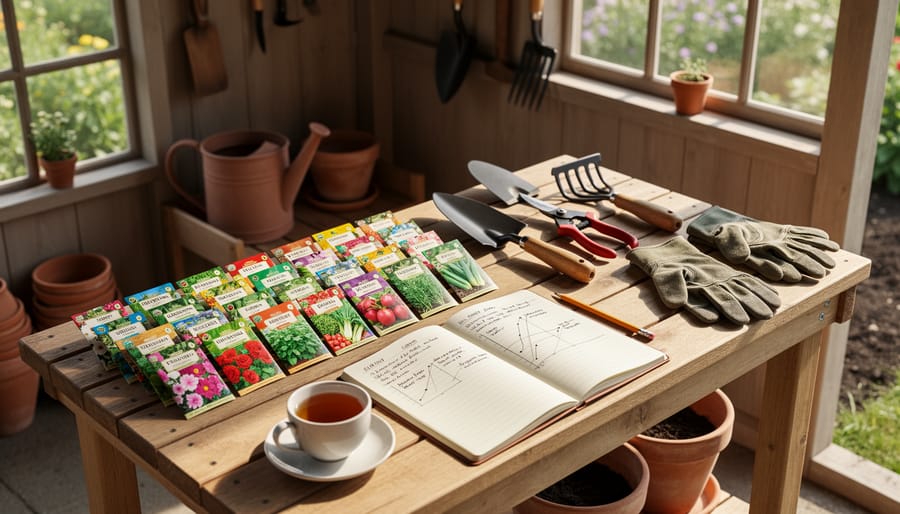
Vegetable seed packets typically run $2 to $5 for conventional varieties, while organic options cost $3 to $7. Heirloom seeds often command a premium, expect $4 to $8 per packet. Flower seeds range from $1.50 for common annuals like marigolds to $6 for specialty perennials. Herb starts cost $3 to $6 per pot at nurseries, though buying a seed packet for $2.50 yields dozens of plants if you’re patient. Transplants, ready-to-plant vegetables like tomatoes and peppers, run $4 to $8 each for conventional, $6 to $12 for organic. Buying seedlings saves time but costs three to five times more than growing from seed. Smart timing unlocks year-round savings seed packets go on clearance in late summer, and many nurseries discount leftover transplants mid-season.
Soil, Compost, and Amendments
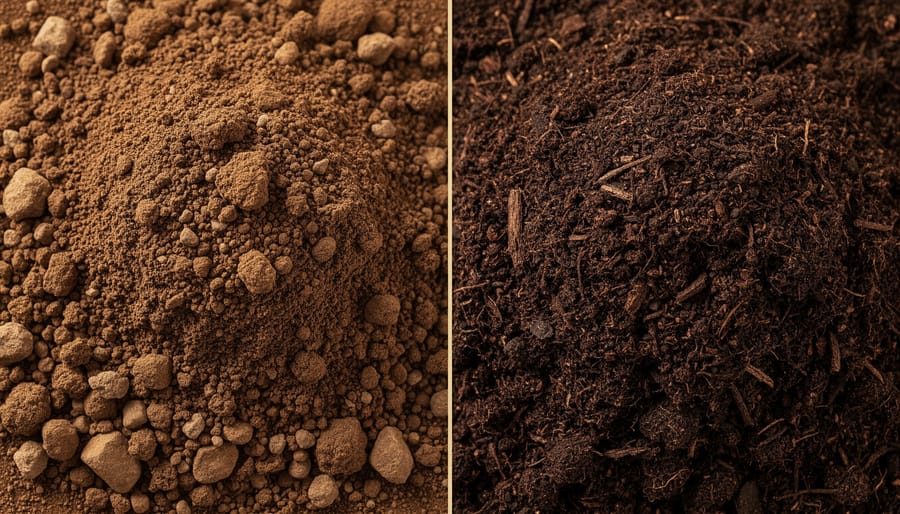
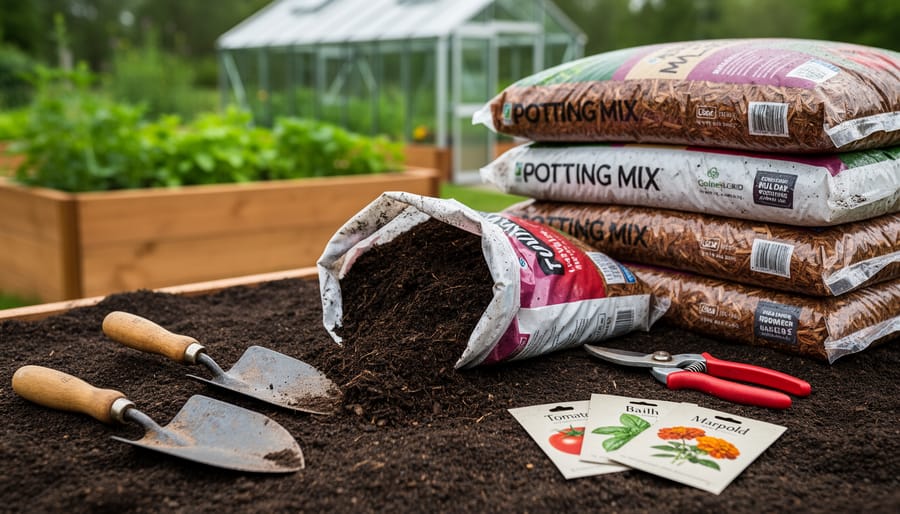
Bagged potting soil typically runs $8-15 for a 1.5 cubic foot bag at big-box stores, while premium blends with added fertilizers or moisture control can hit $20-25. Bulk compost is far more economical if you’re filling raised beds, expect $25-40 per cubic yard from local suppliers, compared to $60-80 if you buy bagged equivalents. All-purpose granular fertilizers cost $12-20 for a 10-pound bag, while organic options like fish emulsion or kelp meal range $15-30. Specialty amendments vary widely: a 3-cubic-foot bale of peat moss costs $10-18, worm castings run $15-25 for 15 pounds, and mycorrhizae inoculants can reach $25-40 for small quantities. Buying soil components in bulk and mixing your own can slash costs by half compared to pre-bagged blends.
Tools and Equipment
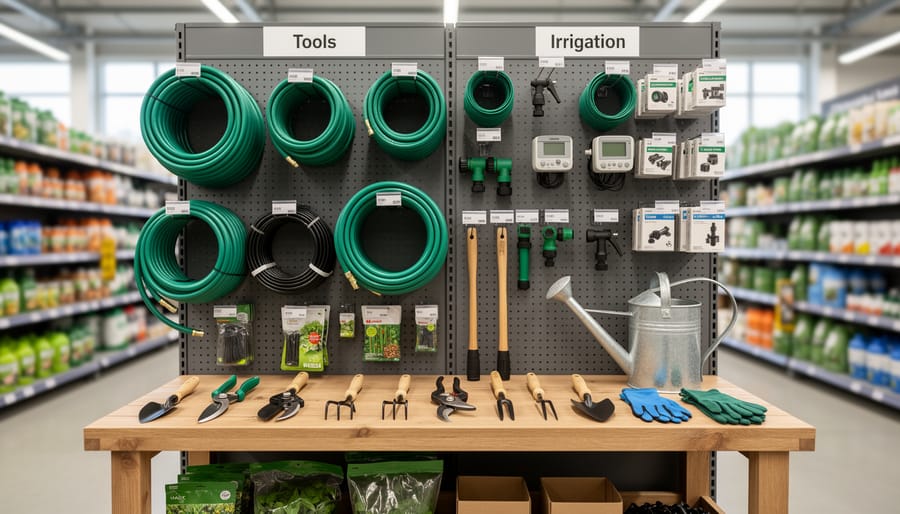
Hand tools span a wide range: basic trowels and hand pruners run $8, $25, while professional-grade pruners and ergonomic designs cost $40, $80. A decent spade or garden fork sits around $30, $60, though budget versions exist for half that. For power equipment, expect $150, $400 for a quality tiller or trimmer, rental makes sense if you only need them once a season. Irrigation supplies vary dramatically: a basic hose and sprinkler cost $30, $50, while drip irrigation kits for a 100-square-foot bed range from $40, $120 depending on components. Investing in durable tools saves money long-term, as cheap pruners often fail within a season and poorly-built tillers break down mid-project. Buy the best you can afford for frequently-used items, and consider borrowing or renting specialized equipment you’ll rarely need.
Containers, Raised Beds, and Structures
Container gardening and structural elements can range from bargain finds to premium investments. Basic plastic pots start around $2, $5 for 1-gallon sizes, while decorative ceramic or terracotta containers run $15, $50 depending on size and craftsmanship. Fabric grow bags offer an affordable middle ground at $8, $20 for multi-packs.
Raised bed kits vary widely. A simple 4×8-foot cedar kit typically costs $80, $150, though DIY builds using lumber can slash that to $40, $60 if you’re handy. Metal corrugated beds land in the $100, $200 range and last decades with minimal maintenance.
Trellises and supports range from $10, $25 for basic bamboo stakes to $50, $150 for sturdy metal or wooden obelisks. If you’re planning vertical gardening, budget accordingly, cucumbers and beans need room to climb.
Small greenhouse kits or cold frames start around $100, $300 for basic tunnel designs, while permanent polycarbonate structures easily reach $500, $2,000. Many gardeners begin with a simple hoop house using PVC pipe and plastic sheeting, keeping first-year costs under $75 while testing whether they’ll use a larger investment.
Where Your Gardening Budget Actually Goes: A Cost Breakdown
Understanding where your money goes is the first step to gardening smarter. Most home gardeners spend their budget across four main categories, and the proportions reveal a lot about what actually makes a garden thrive. Let’s break down a typical seasonal budget so you can see where every dollar lands.
For a mid-sized vegetable or flower garden (roughly 200-400 square feet), soil preparation and amendments typically claim the largest share, about 40% of your total spending. This includes bagged soil, compost, fertilizers, and pH adjusters. It feels like a lot upfront, but healthy soil is the foundation of everything that grows. Skimping here almost always costs you later in poor yields and struggling plants.
Seeds and plants usually take around 25% of the budget. This covers seed packets, starter transplants, bulbs, and any perennials you’re adding. The percentage shifts depending on whether you’re growing from seed (cheaper) or buying established plants (faster but pricier). First-year gardeners often spend more here as they build up their plant collection.
Tools and infrastructure account for about 20% of spending, though this number drops sharply after your first season. Initial investments in hand tools, hoses, trellises, and raised bed frames feel steep, but quality tools last for years. Once you own a good spade and pruners, that 20% shrinks to almost nothing in subsequent seasons.
The remaining 15% goes to ongoing inputs, water, pest control, mulch replenishment, and mid-season fertilizer boosts. These costs vary wildly based on your climate and what you’re growing. A drip irrigation system costs more upfront but can cut your water spending by a third over a summer.
Notice what’s missing from this breakdown: labor. DIY gardening means your time and effort are the hidden costs that don’t show up on receipts. If you hired out the same work, labor would easily become 50% or more of the total project cost, flipping the entire equation.
DIY Procurement vs. Professional Landscaping Services
Deciding whether to source and install garden materials yourself or hire a professional comes down to budget, time, and project complexity. Both approaches have their place, and understanding the true cost difference helps you make the right call for your situation.
For small-scale projects, planting a vegetable bed, installing a few shrubs, or building a simple raised bed, DIY procurement typically saves 40-60% compared to hiring out. You’ll pay retail prices for materials but skip labor markups and design fees. A DIY 4×8-foot raised bed with quality soil and amendments might cost $250 in materials and a Saturday afternoon of your time. The same project through a landscaper could run $500-700, including their procurement markup (usually 15-30% above retail) and installation labor.
Professional services make more sense for larger installations or projects requiring specialized knowledge. A full landscape overhaul, irrigation system installation, or mature tree planting involves equipment, expertise, and supplier relationships you don’t have. Landscapers often access wholesale pricing that partially offsets their markup, and they know which materials perform best in your climate. For a 500-square-foot patio with plantings, a pro might charge $4,000-6,000 total, versus $2,500-3,000 if you DIY, but the pro finishes in days, not weekends, and guarantees the work.
Pros
- DIY saves 40-60% on labor and design fees for straightforward projects.
- You control every material choice and quality decision directly.
- Hands-on experience builds skills and deepens your gardening knowledge.
- Professional procurement eliminates research time and avoids rookie mistakes.
- Pros complete projects faster and often guarantee their work.
Cons
- DIY requires substantial time for research, shopping, hauling, and installation.
- Mistakes with materials or technique can cost more to fix than hiring out.
- You miss out on wholesale pricing and trade discounts pros access.
- Professional services add 15-30% material markups plus labor costs.
- You have less direct control over specific product brands and sources.
The hybrid approach works well for many gardeners. Handle your own procurement for staples like soil, mulch, and common plants where you can avoid overspending by comparing suppliers and buying in season. Hire professionals for technical installs, underground irrigation, retaining walls, electrical for lighting, where their expertise and equipment justify the premium. This lets you stretch your budget on the labor-intensive basics while ensuring complex elements are done right the first time.
How to Use Price Benchmarks and Cost Estimators
Start by building a simple spreadsheet or notebook where you’ll track prices over time, even a basic notes app works. Each time you shop for gardening supplies, record the item, supplier, date, and price. Within a few seasons, you’ll spot patterns that reveal when prices dip and which vendors consistently offer better value. This personal database becomes your most reliable benchmarking tool, tailored to your local market and the specific products you buy.
Before making any significant purchase, walk through a structured comparison process:
- List exactly what you need, with quantities and specifications (organic vs. conventional, bag size, tool quality grade).
- Check prices from at least three suppliers, mix big-box stores, local nurseries, and online retailers to see the full range.
- Note the current season and whether you’re shopping at peak demand (spring planting) or off-peak (late fall, winter).
- Calculate per-unit costs to compare apples-to-apples: cost per pound of soil, per packet of seeds, per square foot of mulch coverage.
- Factor in all delivery fees, fuel costs for pickup, or minimum order requirements that affect the true price.
- Compare your total cost against the benchmarks from earlier sections or your own historical data to confirm you’re getting fair value.
Online cost calculators can speed up this process for larger projects. Search for “garden project cost estimator” or “raised bed material calculator” to find tools that let you input your garden size and get ballpark figures for soil volume, lumber, and amendments. These calculators won’t replace your own supplier research, but they give you a reality check and help you budget before you commit.
Sarah Chen, who runs a community garden supply co-op in Portland, recommends practicing smart budget timing by shopping the off-season. “I buy bulk compost in November when nurseries are clearing inventory, and I stock up on seeds in late summer when seed companies discount the current year’s stock,” she explains. “I also keep a running list on my phone of prices I see throughout the year, so when something drops below my benchmark, I know to buy extra.”
Set calendar reminders for annual price checks on your most-purchased items, spring soil prices in February, fall bulb prices in August. Over two or three years, you’ll develop an intuitive sense of fair pricing and never second-guess whether you’re overpaying again.
Expert Insight: Smart Sourcing Strategies from a Seasoned Gardener
I talked with Maria Chen, who has run Green Haven Nursery in Portland for 22 years, about how smart gardeners stretch their dollars without sacrificing quality.
“The biggest mistake I see is people buying everything in March when demand peaks and prices are highest,” Maria says. “Shop fall clearance sales for perennials and shrubs, you’ll pay 50 to 70 percent less, and fall is actually the best planting time for establishing roots before winter.”
She recommends organizing a bulk buy with three or four neighbors. “When you split a cubic yard of compost or a pallet of pavers, you get contractor pricing instead of retail. We’re happy to work with garden clubs or neighborhood groups.”
Maria’s other buying tips focus on relationship-building. “Get to know your local nursery staff. Ask about damaged bags of soil or plants that didn’t sell well, we’d rather discount them than compost them. And don’t be shy about negotiating on larger orders. Independent nurseries have more flexibility than chains.”
For ongoing costs, she’s adamant about propagation. “Once you buy a tomato plant, save seeds. Take cuttings from herbs and perennials. A single rosemary plant can become twenty in two years. Your biggest procurement cost should be in year one, then you’re mostly maintaining and expanding from what you already have.”
She warns against false economies, though. “Cheap potting soil is expensive when your plants fail. Spend on quality where it touches roots, soil, compost, starter plants, and save on decorative elements.”
Common Questions About Gardening Procurement Costs
When gardeners first dive into procurement planning, the same practical questions come up again and again. Here are straightforward answers to the concerns I hear most often about timing, sourcing, and budgeting for garden supplies.
When is the cheapest time to buy gardening supplies?
Late summer through fall offers the steepest discounts on tools, containers, and leftover seasonal stock as retailers clear space for holiday inventory. Early spring sees competitive pricing on seeds and soil amendments as suppliers vie for your business before the rush.
Are online suppliers actually cheaper than local stores?
It varies by product. Seeds and small items often cost less online, but shipping quickly erases savings on heavy goods like soil, mulch, or large tools. Compare the delivered price, not just the list price, and factor in your time.
How much should I budget for a first-time vegetable garden?
A modest 100-square-foot starter plot typically runs between 150 and 300 dollars in year one, covering soil prep, seeds or transplants, basic tools, and initial amendments. Costs drop significantly in subsequent seasons once infrastructure is in place.
What’s worth splurging on versus going budget?
Invest in quality pruners, a sturdy spade, and good compost, which you’ll use for years and directly impact plant health. Save on decorative pots, generic hand tools, and trendy gadgets that add little functional value.
How do I avoid hidden costs in garden procurement?
Read product specs carefully to catch undersized bags or diluted formulas, factor in shipping and handling for online orders, and watch for “per unit” versus “per package” pricing tricks. Keep a running total as you shop rather than guessing at checkout.
One surprise that catches new gardeners off guard is the cumulative cost of impulse buys. That five-dollar herb plant or decorative stake seems trivial in the moment, but three trips to the nursery with a handful of unplanned purchases each time can quietly blow a monthly budget. Set a procurement list before you shop and stick to it, treating extras as genuine luxuries rather than automatic additions. Another common oversight is underestimating ongoing costs like replacement potting mix, fertilizer refills, and pest control products, which recur every season and deserve a dedicated line in your budget. Track these expenses for a full year to get an accurate picture of your true gardening spend, then adjust your procurement strategy accordingly. The goal is not deprivation but intentional spending that aligns with your garden’s real needs and your financial comfort zone.
Understanding the true cost of gardening procurement transforms you from a passive shopper into a strategic buyer. When you know what drives prices, seasonality, supplier markups, quality tiers, you stop second-guessing every purchase and start making confident decisions that stretch your budget further without sacrificing results.
The benchmarks and breakdowns we’ve covered aren’t just numbers to memorize. They’re tools you’ll refine with every growing season. Maybe this year you discovered that buying compost in bulk with a neighbor saved 40 percent, or that timing your seed orders for January sales beat March prices by half. Those insights compound. Next season, you’ll spot even better opportunities because you’re paying attention to patterns instead of reacting to impulse.
Treat procurement as a skill worth developing, not a chore to rush through. Keep a simple log of what you paid, where you bought it, and how it performed. Note which splurges delivered real value and which budget picks worked just as well. That personal database becomes more valuable than any generic price guide because it reflects your garden, your climate, and your suppliers.
You don’t need a huge budget to grow something beautiful and productive. You need smart procurement habits and the willingness to learn from every transaction. Start small, track what works, and watch both your garden and your purchasing wisdom flourish.