Permaculture gardening is a method of growing food and ornamental plants that mimics natural ecosystems, creating self-sustaining gardens that require less water, fewer inputs, and minimal maintenance once established. Instead of fighting against nature with chemical fertilizers and constant intervention, permaculture works with natural patterns to build soil health, conserve resources, and produce abundant harvests year after year.
If you’ve ever wondered why some gardens seem to thrive with little effort while others demand endless weeding, watering, and fertilizing, permaculture offers a different approach entirely. This gardening philosophy, developed in the 1970s by Australians Bill Mollison and David Holmgren, applies twelve core principles drawn from observing how forests, prairies, and wetlands function without human management. The result is a garden that becomes more productive over time rather than depleting the soil and your energy.
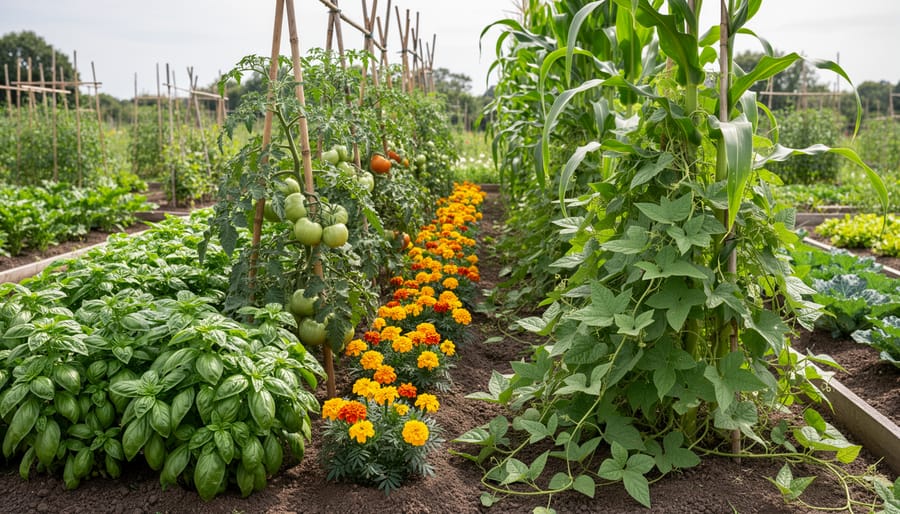
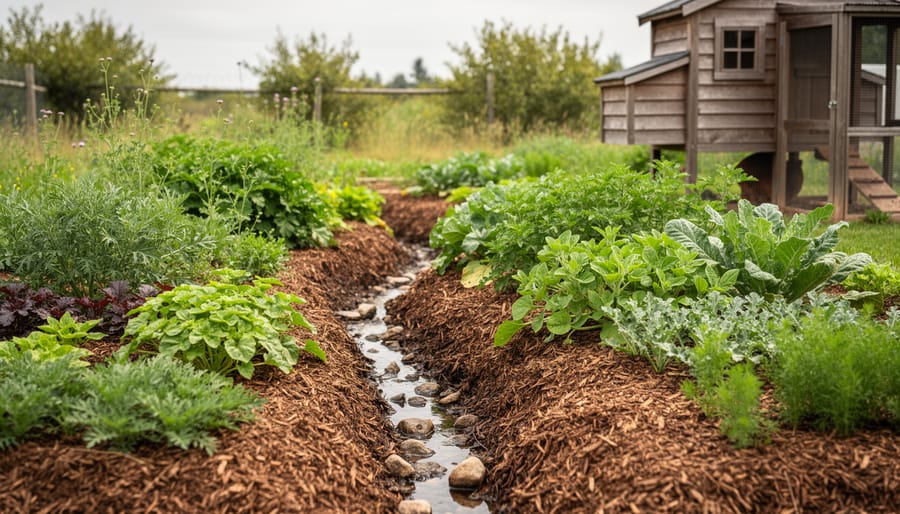
What sets permaculture apart from conventional gardening is its focus on designing whole systems rather than individual beds. You might plant nitrogen-fixing beans alongside heavy-feeding tomatoes, position a chicken coop so the birds naturally fertilize your fruit trees, or create swales that capture rainwater before it runs off your property. Each element serves multiple functions, and the garden gradually builds its own fertility.
This article breaks down what permaculture actually means in practical terms, how the mechanics work in a home garden setting, and which core components you can start implementing this season. You’ll also hear from experienced permaculture practitioners about what worked in their gardens and find a simple first project that demonstrates the principles in action.
What Permaculture Gardening Really Means
Permaculture gardening goes far beyond swapping synthetic fertilizers for compost or choosing heirloom seeds. It’s a design philosophy rooted in observing how natural ecosystems function and then replicating those patterns in your own garden space. Rather than fighting against nature with constant weeding, tilling, and chemical inputs, permaculture works with natural processes to create gardens that become more productive and require less intervention over time.
At its heart, permaculture is guided by three core ethics that shape every decision you make in the garden. Care for the Earth means building soil health, protecting water quality, and creating habitat for beneficial creatures rather than depleting resources. Care for People ensures your garden produces abundant food and beauty while being safe and accessible for your family and community. Fair Share encourages you to grow what you genuinely need, share surplus with others, and reinvest excess back into the land rather than endlessly expanding or extracting.
These ethics translate into tangible garden practices. You might position your compost bin uphill from vegetable beds so nutrients naturally flow downward, demonstrating care for earth through thoughtful placement. You’d grow a mix of annual vegetables for this season’s meals alongside perennial fruits and herbs that feed you for years, balancing immediate and long-term care for people. You’d plant extra berry bushes to share harvests with neighbors or leave some flowers uncut for pollinators, practicing fair share in small but meaningful ways.
What makes permaculture truly distinctive is its emphasis on mimicking natural ecosystems through observation and design. Before you plant a single seed, you watch how water moves across your yard after rain, where sun lingers longest, which areas stay naturally moist. You design your garden based on these observations, creating layers of plants like a forest edge or grouping species that support each other like wild plant communities do. The result is a garden that gradually requires less from you while giving more back.
How Permaculture Gardening Works in Practice
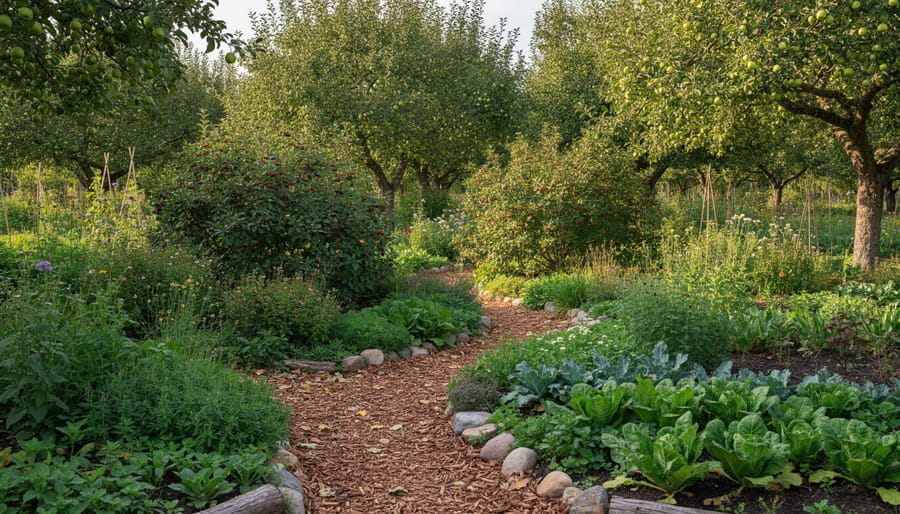
Permaculture gardening starts with observation, not action. Before you dig a single bed or plant a seed, spend time watching how water moves across your property after rain, where frost settles first in autumn, which spots get full sun or stay shaded, and where wind hits hardest. This observation period might feel passive, but it prevents costly mistakes and reveals opportunities you’d otherwise miss.
Once you understand your site, you organize it using permaculture zones a simple framework that places the most-visited elements closest to your house and less-intensive areas farther away. Your kitchen herb garden sits just outside the door (zone 1), while berry bushes might occupy zone 2 near your daily path, and a small fruit tree guild could anchor zone 3, which you visit weekly. This zoning saves countless steps and ensures high-maintenance plants get the attention they need.
Design principles guide every decision you make in the garden:
- Observe and interact: Watch patterns before acting, then respond thoughtfully
- Catch and store energy: Harvest rainwater, save seeds, build healthy soil that holds nutrients
- Obtain a yield: Every element should produce something useful, whether food, habitat, or mulch
- Use and value renewable resources: Rely on compost instead of fertilizer, rainwater instead of municipal supply
- Produce no waste: Turn prunings into mulch, kitchen scraps into compost, fallen leaves into soil
- Design from patterns to details: Understand the big picture before fussing with specifics
Creating beneficial relationships forms the heart of permaculture practice. Instead of rows of single crops, you group plants that support each other. A fruit tree might anchor a guild of nitrogen-fixing clover at its base, comfrey that mines deep minerals, garlic that deters pests, and flowers that attract pollinators. Each plant contributes something while receiving benefits from its neighbors.
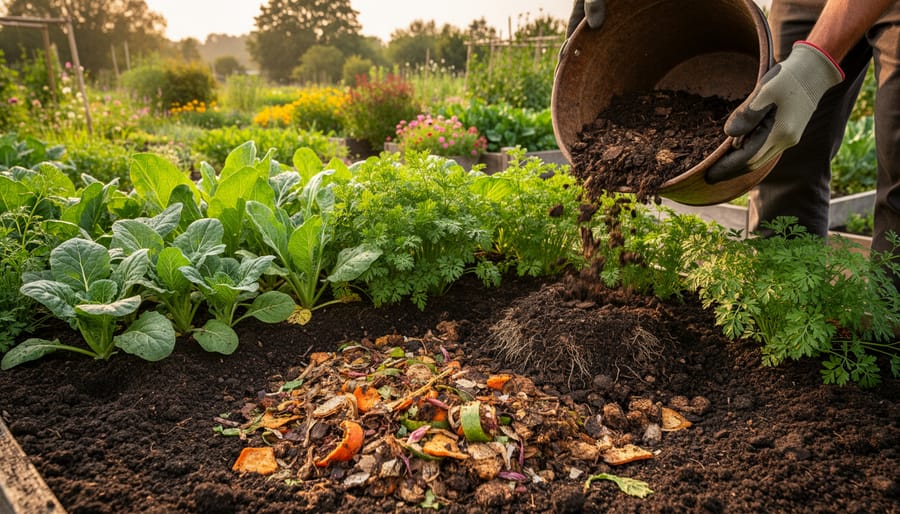
Building soil fertility happens through constant additions of organic matter rather than synthetic inputs. You sheet mulch new beds with cardboard and wood chips, plant nitrogen-fixing legumes throughout the garden, chop and drop nutrient-accumulating plants like comfrey as living mulch, and return every scrap of organic material to the soil. Over time, this creates deep, rich earth teeming with life.
Working with natural cycles means planting perennials that return each year, allowing some plants to self-seed, timing work with seasonal rhythms, and accepting that gardens have productive and dormant phases. You stop fighting nature and start collaborating with it.
Core Components of a Permaculture Garden
Plant Guilds and Companion Systems
Plant guilds group compatible species together so each contributes something useful to the others, one plant might fix nitrogen in the soil, another attracts pollinators, while a third provides shade or suppresses weeds. This approach mirrors how plants naturally cluster in the wild, creating resilient little communities that require minimal intervention once established.
The Three Sisters guild demonstrates this beautifully: corn provides a sturdy stalk for beans to climb, beans enrich the soil with nitrogen that feeds the corn, and sprawling squash leaves shade the ground to retain moisture and discourage weeds. All three thrive together with less work than growing them separately.
A fruit tree guild follows similar logic. You might plant nitrogen-fixing comfrey around an apple tree, add chives to deter pests, include strawberries as a living mulch, and let yarrow attract beneficial insects. These companions support the tree’s health while producing their own harvests, and they integrate perfectly with no-dig gardening methods since the system builds soil naturally over time without disturbance.
Perennial and Self-Seeding Food Plants
One of permaculture’s smartest labor-saving strategies is choosing plants that come back year after year or replant themselves. Unlike most vegetables that require you to start from scratch each spring, perennial food plants establish deep roots and return reliably, think asparagus, rhubarb, sorrel, and perennial kale. You plant them once and harvest for years, sometimes decades.
Self-seeding annuals offer similar benefits without the commitment. Lettuce, arugula, cilantro, and dill allowed to flower will scatter seeds that sprout the following season, often in unexpected but workable spots. This natural reseeding creates ongoing harvests with minimal intervention.
The beauty of this approach goes beyond convenience. Perennials build soil structure with extensive root systems, often diving deeper than annual crops to access nutrients and water. They provide year-round ground cover that prevents erosion and suppresses weeds. Self-seeders fill gaps and adapt to your garden’s microclimates, showing you exactly where they thrive.
Together, these plants form the backbone of a low-maintenance food garden that works with natural cycles rather than demanding constant replanting and soil disturbance.
Water Harvesting and Management
Water is one of the most valuable resources in any garden, and permaculture treats every drop as something to capture, slow down, and use wisely. Rather than letting rain rush across the surface and disappear into storm drains, permaculture designs work to keep water on-site where it can soak into the soil and support plant life.
Swales are shallow ditches dug along the contour of a slope, designed to catch runoff and allow it to infiltrate gradually. Picture a gentle depression that runs horizontally across a hillside, when rain flows downhill, the swale intercepts it and gives it time to sink in rather than erode the soil away. Plant the downhill side of a swale with fruit trees or shrubs, and they’ll benefit from the concentrated moisture.
Rain gardens are another clever feature: shallow planted depressions that collect water from roofs, driveways, or paved areas. Fill them with native plants and grasses that tolerate both wet and dry conditions, and they’ll filter the water while creating habitat.
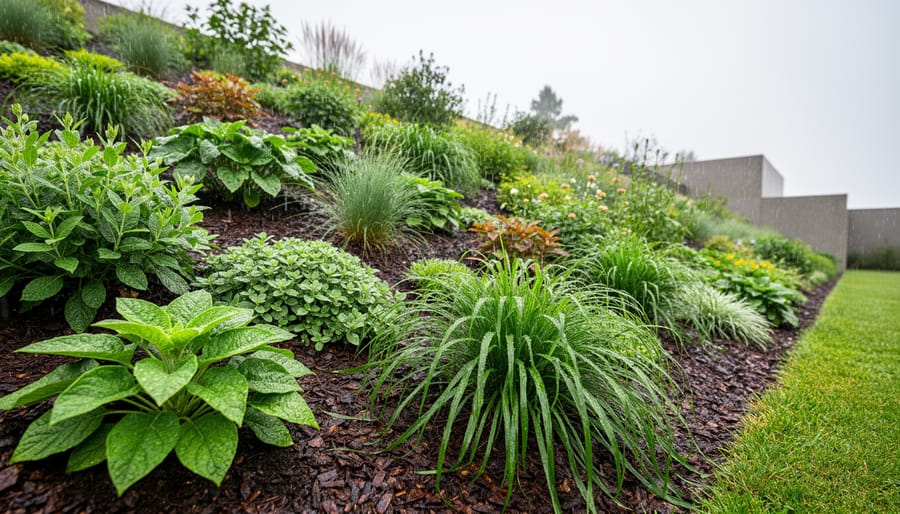
Don’t overlook mulch as a water management tool. A thick layer of wood chips, straw, or leaves acts like a sponge, absorbing rainfall and releasing it slowly while reducing evaporation. Together, these strategies transform your garden into a landscape that holds onto moisture naturally.
Where and How Permaculture Gardening Is Applied
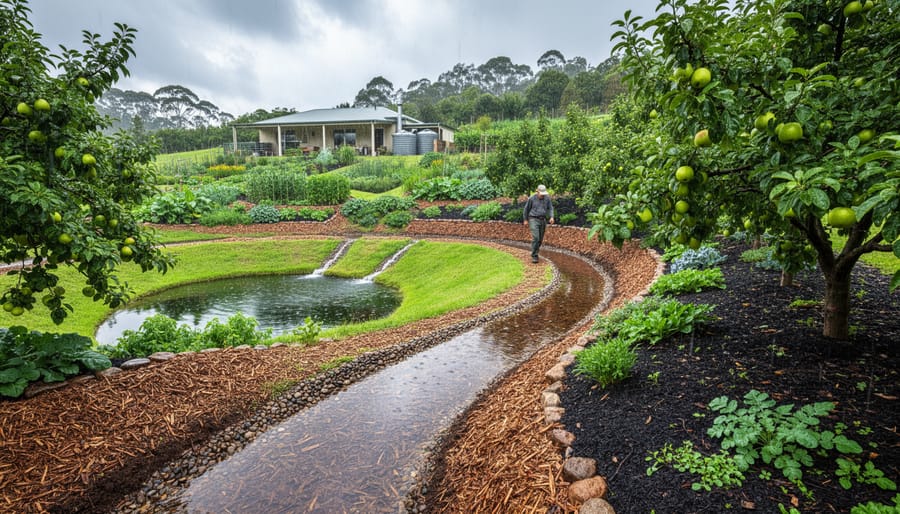
Permaculture gardening isn’t confined to sprawling rural properties or ideal climates. The beauty of this approach lies in its adaptability, the same principles that guide a five-acre homestead can transform a city balcony or a suburban side yard. Whether you’re working with a postage-stamp plot or several acres, permaculture scales to fit your space, climate, and specific goals.
In urban settings, permaculture often focuses on maximizing vertical space and making every square inch productive. A small balcony can support a thriving system using container permaculture with stacked pots, self-watering systems, and companion plantings that provide food while attracting beneficial insects. City gardeners might create a miniature guild around a dwarf fruit tree in a large container, underplanted with herbs and edible groundcovers. Vertical gardening ideas like trellised beans growing alongside culinary herbs demonstrate how permaculture thinking turns limitations into creative opportunities.
Suburban yards offer more room to layer systems. Here, permaculture might mean replacing a water-hungry lawn with an edible landscape of fruit trees, berry bushes, perennial vegetables, and pollinator-supporting flowers. A rain garden positioned to catch runoff from the roof handles stormwater while growing moisture-loving edibles. The front yard becomes a productive, attractive space that feeds the household and supports local wildlife.
Rural homesteaders can embrace larger-scale applications, food forests with canopy trees, understory shrubs, and ground-layer perennials, or swales that slow and sink water across sloped land. Livestock often integrate into these systems, with chickens fertilizing orchards or pigs clearing land for new planting areas.
Common permaculture applications include:
- Urban food gardens on balconies, rooftops, and shared community plots
- Edible landscapes that replace ornamental plantings with productive, beautiful alternatives
- Backyard food forests layering trees, shrubs, and perennials for long-term yields
- Community gardens designed with shared composting, water harvesting, and teaching spaces
- Regenerative farms integrating animals, perennials, and soil-building crops
The principles adapt to any climate too. Desert gardeners focus heavily on water harvesting and shade creation. Cold-climate practitioners emphasize hardy perennials, season extension, and windbreaks. Tropical gardeners work with abundant water and year-round growing seasons. What changes is the specific techniques, not the underlying approach of observing conditions and working with what you have. Your permaculture garden reflects your unique site, goals, and vision, there’s no single right way to apply these principles.
Getting Started: A Simple Permaculture Garden Project
The best way to understand permaculture is to build something. An herb spiral makes an excellent first project because it’s small, practical, and demonstrates several permaculture principles at once. You’ll create different microclimates in a compact footprint, stack functions vertically, and produce useful herbs, all while learning to observe and respond to your site.
Observe First
Spend a few days watching your chosen spot. Note where sun hits at different times, where water pools after rain, and which areas stay moist or dry. A sunny location near your kitchen works well, but adapt to what you have. Even an hour of morning sun can support shade-tolerant herbs.
Gather Your Materials
Collect stones, bricks, or urbanite (broken concrete) for the spiral wall, about enough to fill a wheelbarrow. You’ll need compost, existing garden soil, and some sand or gravel for drainage. If you’re new to building garden structures, our raised beds guide covers similar construction principles. Choose 5-7 herb varieties with different moisture needs: Mediterranean herbs like rosemary and thyme for the dry top, parsley and chives for the middle, and mint or lemon balm for the moist base.
Build the Spiral
Mark a circle about three feet across. Starting from the center, lay stones in an outward spiral, gradually building height to create a mound roughly knee-high at the center. As you spiral outward and downward, leave the outer edge at ground level. Fill the center with fast-draining mix (soil, compost, sand), transitioning to richer, moisture-retentive soil toward the base.
Plant and Establish
Place drought-lovers at the sunny top, working down to moisture-lovers at the shaded base. Water thoroughly, then mulch around plants with straw or wood chips. The stones absorb heat during the day and release it at night, extending your growing season, permaculture’s “each element serves multiple functions” in action.
Water regularly for the first few weeks, then let the design do its work. The spiral’s slope naturally moves moisture from top to bottom, creating self-regulating zones. Harvest often, observe what thrives, and adjust next season. You’ve just created a productive, low-maintenance system that teaches you more each year.
Learning from a Permaculture Pioneer: Interview Insights
I spoke with Maria Chen, who’s been designing and living with permaculture gardens for over fifteen years at her two-acre property in Vermont. Her journey began, unexpectedly, with failure.
“I spent three summers fighting my clay soil, replanting the same vegetables every year, hauling water uphill,” she told me. “Then I visited a friend’s permaculture garden. She had fruit trees, herbs, vegetables, all thriving together with barely any input. I realized I’d been working against my land instead of with it.”
That realization changed everything. Maria started observing her property’s patterns, where water naturally pooled, which areas stayed shaded, where wildlife traveled. Her biggest lesson? “Slow down and watch before you act. I wasted so much effort because I was in a hurry to ‘fix’ things that weren’t actually broken.”
For beginners feeling overwhelmed by permaculture concepts, Maria offers reassuring advice: “Don’t try to transform your whole yard overnight. Pick one small area and apply one principle. Maybe that’s adding mulch to build soil, or planting three companion plants together instead of in separate rows. You’ll learn more from doing one thing well than from reading ten books.”
Her favorite permaculture technique is what she calls “productive hedgerows”, mixing nitrogen-fixing shrubs, berry bushes, and pollinator plants along fence lines. “These hedges feed us, feed the soil, create windbreaks, and attract beneficial insects. They turn unused edges into the most productive parts of my garden.”
When I asked what keeps her excited about permaculture after all these years, Maria smiled. “Every season, my garden requires less from me and gives more back. That’s not magic, that’s what happens when you design with nature instead of despite it.”
Common Questions About Permaculture Gardening
Starting a permaculture garden raises practical questions, especially if you’re used to conventional growing methods. Here are honest answers to the concerns that come up most often.
Is permaculture gardening expensive to start?
Initial costs depend on your approach, but permaculture actually saves money over time. You can begin with free or low-cost materials like collected seeds, homemade compost, and repurposed containers, then gradually add perennials and infrastructure as your budget allows.
Does it work in extreme climates?
Permaculture principles apply everywhere because they’re about working with your specific conditions rather than against them. Cold-climate gardeners focus on wind protection and thermal mass, while hot-climate practitioners emphasize shade structures and water retention.
How much time does permaculture gardening require?
The upfront design and establishment phase takes more thought than traditional gardens, but mature permaculture systems need far less ongoing maintenance. Once established, you’ll spend less time watering, weeding, and replanting compared to annual vegetable beds.
Can I grow regular vegetables or only perennials?
You can absolutely grow annual vegetables in a permaculture garden. The difference is how you integrate them with perennials, beneficial plants, and soil-building practices to create a more resilient system overall.
The timeline question deserves a fuller answer. You’ll notice immediate changes when you start composting or add mulch, but building a truly self-sustaining system takes two to three growing seasons. Perennials need time to establish roots, soil biology develops gradually, and you’ll learn through observation what works in your specific microclimate. This isn’t a weakness, it’s the nature of working with living systems rather than quick fixes.
Don’t let perfect be the enemy of good. You don’t need to transform your entire property at once or master every technique before starting. Begin with one bed, one guild, or even just a observation journal noting sun patterns and water flow. Each small experiment teaches you something and moves your garden toward greater sustainability. The beauty of permaculture is that mistakes become compost, literally and figuratively, feeding your next attempt.
You don’t need to transform your entire garden overnight to embrace permaculture. Start by simply watching how water moves through your yard after rain, where the sun lingers longest, which plants thrive without much help, and what insects visit most often. These observations are the foundation of permaculture thinking.
Try one small change this season. Plant a perennial herb that feeds pollinators. Redirect a downspout to water your garden. Let some vegetables go to seed and see what happens next spring. Each experiment teaches you something about your unique ecosystem and builds your confidence to try more.
Permaculture isn’t about perfection or following rigid rules. It’s about developing a relationship with your garden that gets richer over time as you learn what works in your specific space. Some techniques will succeed immediately, others will need adjustment, and that’s exactly how it should be. The garden becomes your teacher.
We’re here to support your journey at Bluestem Gardening, whether you’re just starting to explore permaculture principles or ready to tackle your first guild planting. Share your experiences, ask questions, and connect with fellow gardeners who are discovering the same joys and challenges you are.