Companion planting practices are strategic methods of growing different plants near each other to maximize their health, productivity, and natural pest resistance. These time-tested techniques work by creating beneficial relationships between plants, from nutrient sharing and pest deterrence to improved pollination and soil health.
If you’ve ever planted basil next to tomatoes or beans beside corn, you’ve already used companion planting. But effective companion gardening goes far beyond classic pairings. It’s a complete approach that transforms how you design and maintain your growing space, addressing everything from soil fertility to pest management without relying on synthetic inputs.
The beauty of companion planting lies in its versatility. Whether you’re working with a small raised bed, planning a sprawling vegetable garden, or trying to make your existing plot more resilient in the face of unpredictable weather, these practices adapt to your situation. A thoughtful companion planting strategy can reduce watering needs during drought, suppress weeds naturally, and create microclimates that protect tender plants from temperature swings.
What makes certain companion planting practices genuinely good versus merely traditional? The answer involves understanding the science behind plant relationships, matching compatible species to your climate and garden type, and implementing combinations that solve real problems you face season after season. This article breaks down the proven practices that work, explains the mechanisms driving their success, and shows you exactly how to apply them in your own garden for measurable results.
What Companion Planting Practices Really Mean
Companion planting is the practice of growing different plant species near each other to create mutually beneficial relationships. Instead of viewing your garden as a collection of individual plants, this approach treats it as a connected ecosystem where certain combinations can deter pests, improve soil health, attract pollinators, and help plants withstand environmental stress.
The idea isn’t new. Gardeners have paired plants strategically for centuries, sometimes based on careful observation and sometimes on folklore passed through generations. You’ve probably heard that marigolds repel pests or that basil makes tomatoes taste better. Some of these claims hold up under scientific scrutiny, while others don’t. The difference matters because effective companion planting relies on understanding actual plant interactions rather than repeating garden myths.
- Companion Planting
- The intentional placement of plants together to enhance growth, reduce pests, or provide other measurable benefits through their proximity.
- Allelopathy
- The chemical influence one plant has on another through root exudates or leaf residues, which can either inhibit or promote neighboring plant growth.
- Polyculture
- Growing multiple crop species together in the same space, mimicking natural ecosystems rather than planting single crops in isolation.
- Climate Adaptation
- Garden strategies that help plants cope with changing weather patterns, including drought, heat extremes, unpredictable rainfall, and shifting pest pressures.
Science-backed companion strategies focus on measurable outcomes like pest reduction through scent masking, improved pollination rates, or enhanced nutrient availability. These practices become increasingly valuable as climate instability makes traditional growing methods less reliable. Strategic plant partnerships can create shade to protect heat-sensitive crops, retain soil moisture during dry spells, and maintain biodiversity that buffers against pest outbreaks when weather patterns shift. Understanding these real mechanisms lets you design combinations that solve specific problems in your garden rather than hoping folklore will work.
How Companion Planting Works in Your Garden
The Science of Plant Partnerships
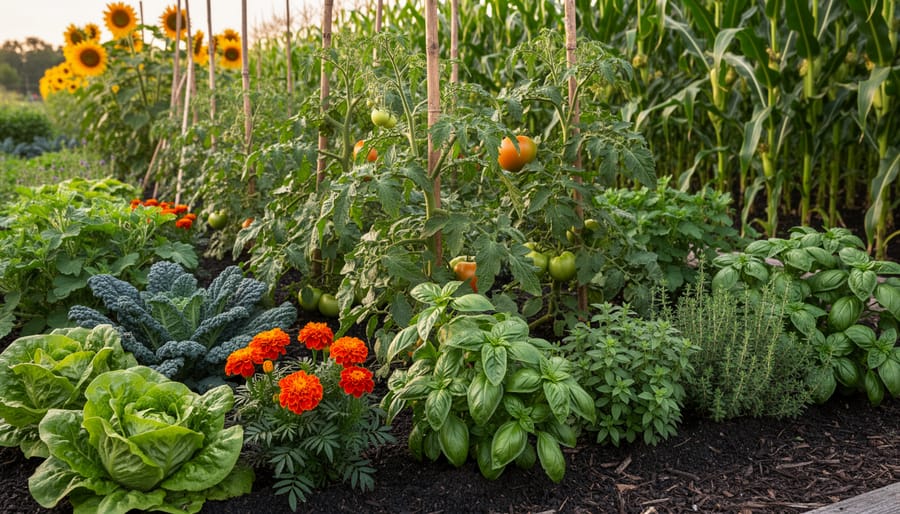
Plants don’t just coexist, they actively communicate and cooperate through surprisingly sophisticated channels. Below ground, roots release chemical compounds called allelochemicals that can either encourage or discourage neighboring plants. Tomatoes, for instance, secrete substances that suppress certain weeds, while legume roots host bacteria that convert atmospheric nitrogen into a form other plants can use.
Above ground, the interactions continue. Some companions emit volatile organic compounds that either repel pests or attract their predators. Basil releases oils that can mask the scent of nearby tomatoes from pest insects, while flowers like alyssum produce nectar that draws in parasitic wasps, natural pest controllers. Plants also create physical partnerships: tall crops provide shade that protects heat-sensitive companions, while dense foliage acts as living mulch, keeping soil cooler and moisture locked in.
These aren’t random effects, they’re refined strategies plants developed over millennia. When you pair proven plant pairs strategically, you’re essentially letting your garden become a self-supporting ecosystem. The key is understanding that each plant brings something to the table, whether that’s pest protection, soil enrichment, or structural support for its neighbors.
Building Climate Resilience Through Companionship
Climate change doesn’t just mean hotter summers, it brings droughts that stretch longer than expected, sudden temperature swings that confuse your plants, and pest outbreaks in seasons where you’ve never seen them before. Companion planting gives you practical tools to buffer your garden against these unpredictable stresses.
When you pair deep-rooted plants with shallow-rooted neighbors, you’re tapping different soil layers for water during dry spells. A taproot reaching down 18 inches can access moisture that surface-feeders can’t touch, reducing competition when rainfall becomes sporadic. Meanwhile, leafy companions like lettuce planted at the base of taller crops create living shade that drops soil temperatures by 10-15 degrees Fahrenheit on scorching days, protecting roots and conserving precious moisture.
Strategic companions also recruit pest-fighting allies exactly when you need them most. As warming temperatures push aphids and whiteflies into longer active seasons, planting yarrow or fennel attracts predatory wasps and lacewings that patrol your garden from spring through fall. You’re building a resilient ecosystem that adapts as conditions shift, rather than relying on a single control method that fails when the weather throws a curveball.
The most climate-smart gardens use companions to create microclimates, pockets of cooler air, retained moisture, and stable conditions where plants can ride out extremes together. That’s resilience you can see and measure, one thoughtful pairing at a time.
Core Companion Planting Strategies for Every Gardener
Pest-Confusing and Trap Cropping Companions
Some plants act as living pest shields, either masking the scent of your prized crops or luring hungry insects away to protect what you truly care about. Strong-smelling herbs like basil, rosemary and marigolds confuse pests searching for tomatoes or brassicas by disrupting their scent trail, while nasturtiums serve as decoy hosts that aphids attack first, sparing your lettuce and beans. These natural garden defenders reduce your reliance on sprays, which matters more as climate shifts intensify pest pressure and beneficial insect populations fluctuate. Radishes planted near squash draw cucumber beetles away from main crops, and you simply pull and discard the infested radishes. The trick is planting trap crops early enough to establish them before pests arrive, and checking them regularly so they absorb the damage rather than becoming a breeding ground.
Nitrogen-Fixing and Soil-Building Partners
Legumes like peas, beans, and clover are nature’s fertilizer factories, pulling nitrogen from the air and storing it in root nodules where neighboring plants can access it. This natural soil enrichment becomes especially valuable as climate stress depletes nutrients faster, plants under heat or drought pressure need readily available nitrogen to maintain resilience. Pair nitrogen-fixers with heavy feeders like tomatoes, corn, or brassicas that benefit from the steady nutrient supply. Clover works beautifully as a living mulch beneath fruit trees, while winter peas planted after summer crops rebuild soil for spring planting. Beyond legumes, deep-rooted companions like comfrey and yarrow mine minerals from subsoil and deposit them where shallow roots can reach them. Some herb soil partners like chamomile accumulate calcium and sulfur, making these nutrients available as their leaves decompose. The beauty of these partnerships is their compounding benefit, healthier soil means stronger plants that handle climate variability with less supplemental feeding.
Shade and Moisture Companions
In regions facing hotter summers and extended dry spells, tall plants become protective allies for heat-sensitive crops. Corn, sunflowers, and trellised beans create living shade that drops soil temperatures by 10-15 degrees, letting lettuce, spinach, and cilantro thrive weeks longer than they would in full sun. These shade providers also slow moisture evaporation, a corn canopy can reduce water loss by up to 30% for squash planted beneath.
The pairing works both ways. Low-growing companions like lettuce or nasturtiums act as living mulch, keeping soil cool and moist around the roots of taller plants. In my garden, I’ve watched arugula planted around tomato bases extend harvest time into scorching July weather that would normally bolt it immediately. The tomatoes benefit too, their roots stay consistently hydrated without extra watering.
Dense plantings create humid microclimates that buffer against temperature swings, making your garden more resilient when heatwaves strike unexpectedly.

Pollinator-Attracting Companions
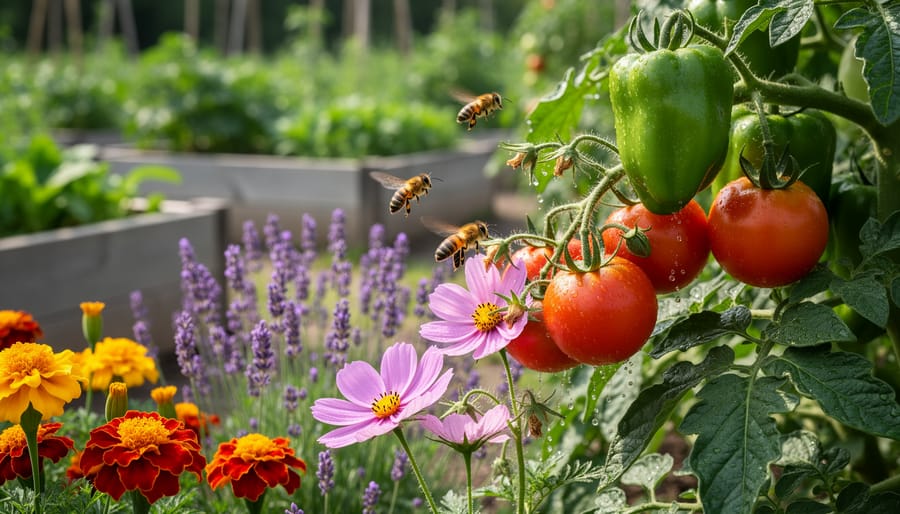
Climate shifts are making pollinator populations less predictable, but strategic flowering companions can keep your garden buzzing with beneficial insects throughout the season. The key is planting a succession of blooms that provide nectar and pollen from early spring through fall, creating a reliable food source even when weather patterns become erratic.
Intersperse flowering herbs like oregano, thyme, and borage among vegetables to attract bees, butterflies, and hoverflies that pollinate crops while controlling aphids and other pests. Alyssum makes an excellent low border around vegetable beds, drawing in tiny parasitic wasps that target common garden pests. For longer-season pollinator support, plant zinnias, cosmos, and calendula near fruiting crops like cucumbers and squash.
The beauty of pollinator companions is their dual benefit: they increase fruit set and yields while reducing pest pressure naturally. As climate change disrupts traditional insect emergence patterns, maintaining diverse flowering companions helps ensure that beneficial insects find your garden and stay, providing critical pollination services when you need them most.
Living Mulch and Ground Cover Partners
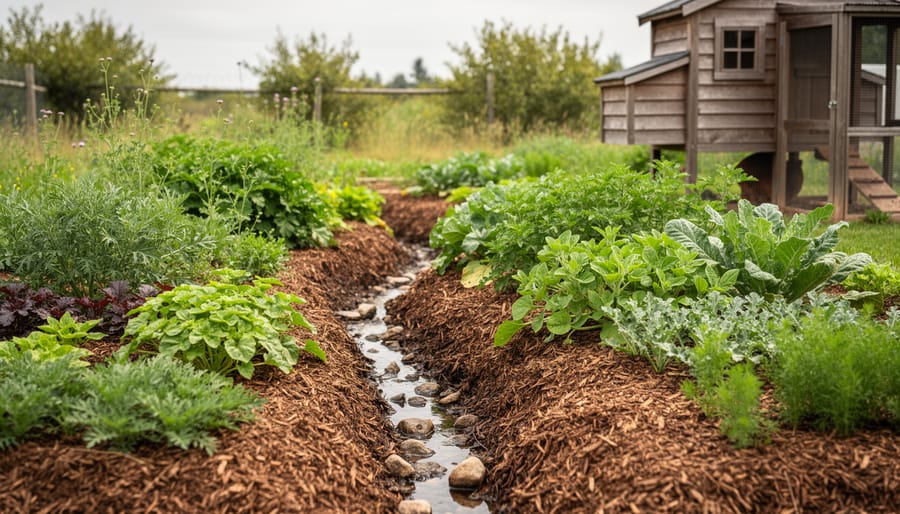
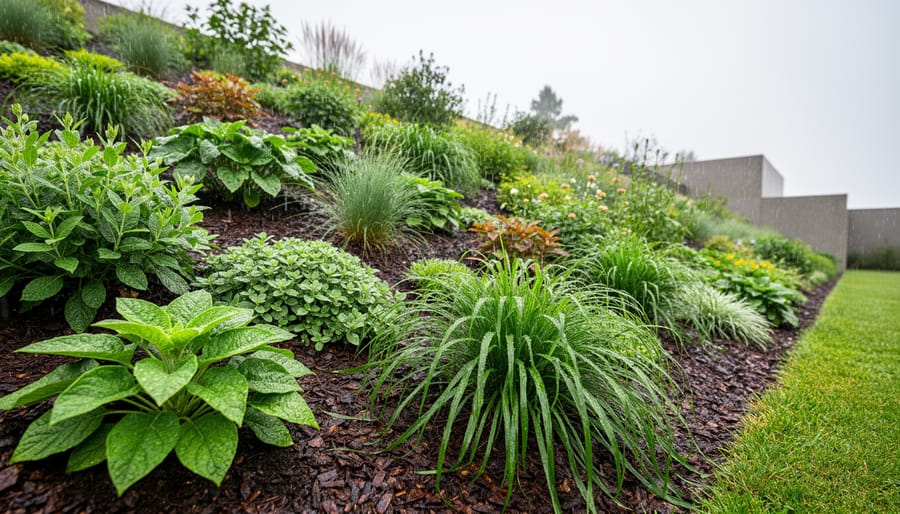
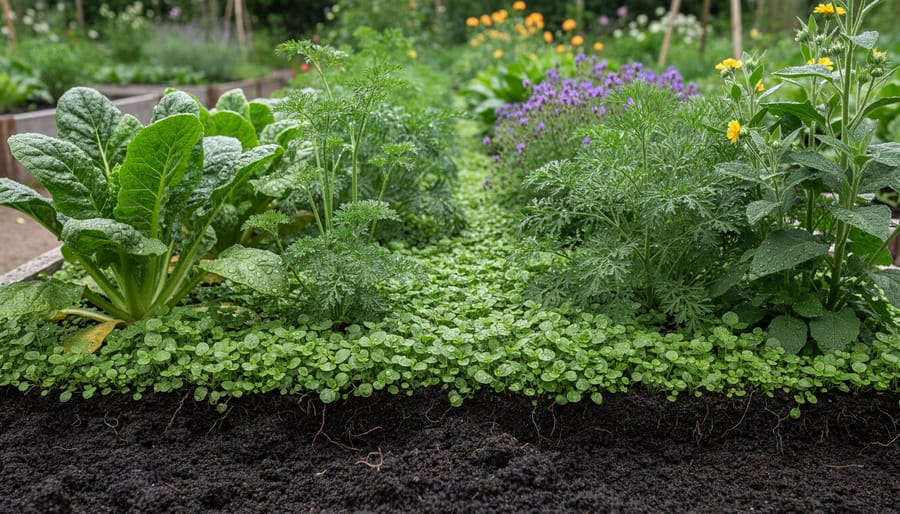
Low-growing plants that spread across bare soil create a living blanket that tackles several garden challenges at once. White clover, creeping thyme, and sweet alyssum work particularly well as living mulches, forming dense mats that shade the soil surface and dramatically reduce evaporation during hot, dry periods. These ground covers also crowd out weed seedlings before they establish, cutting your maintenance time while protecting soil structure from heavy rain and wind erosion.
The beauty of living mulches lies in their dual function, many options like crimson clover and hairy vetch actually fix nitrogen while they protect the ground, feeding your main crops as they grow. In vegetable gardens, plant low-growing companions like creeping oregano or Corsican mint between rows or at bed edges. They’ll keep soil temperatures cooler by several degrees during heat waves and maintain more consistent moisture levels, reducing your watering needs by up to thirty percent. Just choose varieties that won’t aggressively compete with your main crops for nutrients and light.
Where and When to Use Companion Planting Practices
In Vegetable and Edible Gardens
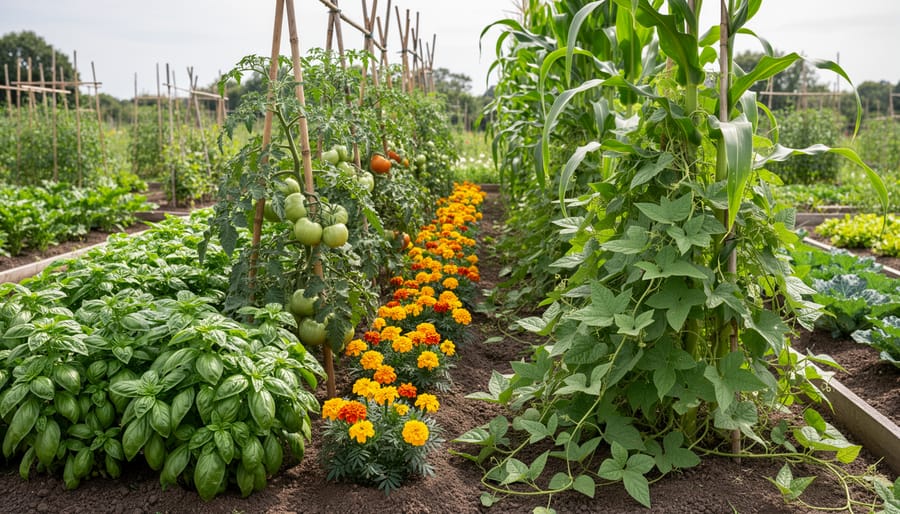
Vegetable gardens showcase companion planting at its most practical. The classic tomato-basil pairing isn’t just folklore, basil’s aromatic oils help mask tomato scent from pests while improving flavor, and its shallow roots don’t compete with tomato’s deeper feeders. In hotter climates, consider adding shade-tolerant lettuce beneath tomatoes to maximize space and cool the soil.
The Three Sisters combination, corn, beans, and squash, demonstrates multiple companion benefits simultaneously. Corn provides structure for beans to climb, beans fix nitrogen that feeds all three plants, and squash leaves shade the ground to retain moisture and suppress weeds. If you’re facing drought conditions, add extra squash varieties to increase ground coverage.
For pest management, plant carrots alongside onions or chives. The strong onion scent confuses carrot flies, while carrots’ ferny foliage helps deter onion pests. In regions with intense sun, interplant heat-sensitive crops like lettuce between taller vegetables such as peppers or pole beans to create natural shade pockets throughout the day.
In Ornamental and Pollinator Gardens
Ornamental gardens present perfect opportunities to blend beauty with purpose through strategic companion planting. Rather than viewing flower beds as purely decorative, climate-smart gardeners are creating layered plantings that support pollinators while building resilience against heat stress and erratic rainfall.
The key is mixing flowering periods and plant heights. Pair early-blooming perennials like crocus and hellebores with mid-season bloomers such as coneflowers and salvia, then add late-flowering sedums and asters. This succession keeps nectar flowing when pollinators need it most, especially during the critical shoulder seasons that climate shifts are making unpredictable.
Create cooling microclimates by combining taller plants like delphiniums or hollyhocks with lower-growing companions such as catmint or hardy geraniums. The taller plants provide afternoon shade during heat waves, while the ground-level companions act as living mulch to conserve moisture.
Native flowering plants paired with pollinator favorites like lavender and Russian sage create robust gardens that thrive despite weather extremes. These combinations reduce water needs while ensuring bees, butterflies, and beneficial insects find reliable food sources even as traditional bloom times shift with changing climate patterns.
In Small Spaces and Containers
Limited space doesn’t mean limited benefits from companion planting, in fact, containers and small urban gardens demand even smarter plant partnerships. When every square inch matters, choosing companions that perform multiple functions becomes essential for climate resilience and productivity.
Start with vertical thinking. Pair deep-rooted plants like tomatoes with shallow-rooted lettuce or herbs in the same large container, maximizing soil use while the tomato foliage shades moisture-loving greens below during heat waves. Trailing nasturtiums planted at container edges act as living pest decoys while cascading beautifully over balcony railings.
Window boxes and balcony planters benefit from the classic trio of tomato, basil, and marigold, the basil repels aphids, marigolds deter whiteflies, and all three tolerate container life well. For shaded urban patios, try pairing shade-tolerant lettuce with chives and parsley in self-watering containers that buffer against forgotten watering during busy weeks.
Reference a companion planting chart specifically designed for containers to identify pairings with compatible root depths, water needs, and growth habits. The key is choosing plants that won’t compete aggressively in confined quarters while still providing mutual benefits like pest protection and efficient water use.
Step-by-Step: Planning Your First Companion Garden
Starting your first companion garden feels less overwhelming when you break it down into manageable steps. You don’t need to transform your entire garden overnight, begin with one bed or a few containers and build confidence as you observe what works in your specific conditions.
Step 1: Assess Your Growing Space
Walk through your garden and note where sun and shade fall throughout the day. Notice which areas dry out quickly and which stay moist. Check for spots that get blasted by afternoon heat or buffered by nearby structures. These observations tell you which companion strategies match your space, drought-stressed areas need moisture-conserving partners, while hot spots benefit from shade companions.
Step 2: Choose Your Anchor Plants
Start with the main crops or plants you definitely want to grow. These become your anchors, tomatoes, peppers, roses, whatever matters most to you. Write them down and note their basic needs: sun requirements, water preferences, typical pest problems. This list guides which companions will actually help rather than compete.
Step 3: Select Compatible Companions
For each anchor plant, choose one or two companions that address a specific challenge you face. If your tomatoes always get aphids, add basil or marigolds nearby. If your soil dries out fast, tuck in some clover as living mulch. Keep it simple, three to four plant types per bed is plenty for your first season.
Step 4: Plan Your Layout on Paper
Sketch your bed with rough spacing. Place tall plants where they won’t shade shorter companions unintentionally. Position pest-deterrent companions upwind of vulnerable crops if possible. Leave access paths so you can reach everything for harvest and maintenance. This planning stage saves headaches later.
Step 5: Plant Strategically
Some companions work best planted simultaneously, while others succeed as succession plantings. Set out transplants or direct-sow seeds according to each plant’s timing needs. Don’t crowd, give companions room to establish without strangling each other. Err on the generous side with spacing your first year.
Step 6: Observe and Adjust
Here’s where the real learning happens. Walk through your garden regularly and notice what’s thriving, struggling, or surprising you. Did the marigolds actually reduce pests, or did they just look pretty? Are those beans fixing nitrogen or hogging water? Take quick notes on your phone. These observations become your personalized companion planting guide, far more valuable than any generic chart. Next season, you’ll plant with insider knowledge about what actually works in your garden’s unique conditions.
Expert Wisdom: Interview with a Climate-Smart Gardener
I’ve learned that companion planting isn’t about following rigid rules, it’s about understanding your garden’s microclimate and letting plants teach you what works. In my Vancouver Island garden, I’ve spent fifteen years adapting traditional pairings to our increasingly unpredictable weather patterns.
My go-to climate-resilient trio is pole beans, summer squash, and calendula. The beans fix nitrogen while climbing stakes instead of corn (which struggles in our cooler summers), the squash creates living mulch that keeps soil cool during heat waves, and calendula attracts beneficial insects while tolerating both drought and heavy rain. This combination has remained productive through our wildly fluctuating seasons when single crops would have failed.
The biggest lesson I’ve learned is that companion planting buys you time when conditions aren’t ideal. During last year’s record-breaking June heat, my lettuce shaded by taller tomato plants lasted three weeks longer than unprotected plantings. When we had an unusually wet July, interplanting basil with tomatoes improved air circulation enough to prevent the fungal issues my neighbors battled.
For beginners facing climate uncertainty, I recommend starting with what I call “insurance pairings”, combinations where each plant serves as backup for the other. Plant heat-loving tomatoes alongside cool-season lettuce; as temperatures rise, the tomatoes shade the lettuce, and when lettuce eventually bolts, tomatoes are thriving. Mix quick-maturing radishes with slow-growing carrots; if early season conditions are poor, radishes still produce, and they break up soil for carrot roots.
Don’t get discouraged by failures. I’ve had plenty of combinations flop spectacularly, but each taught me something about my soil and microclimate. Keep notes on what works in your specific conditions rather than blindly following traditional advice. The best companion planting practices are the ones you discover yourself through observation and experimentation, adjusted year by year as our climate continues to shift. Pay attention to timing too, and avoid pairing mistakes that come from planting incompatible growth rates together.
Common Questions About Companion Planting Practices
Starting a companion planting practice often raises practical questions that aren’t fully answered by traditional planting guides. Here are the concerns gardeners ask most frequently, along with honest, experience-based answers that can save you time and frustration.
How long does it take to see results from companion planting?
Some benefits appear immediately, shade from tall plants or physical pest barriers, while others like improved soil fertility or balanced insect populations may take a full growing season to become noticeable. Keep records and compare your observations year-over-year.
Is companion planting actually backed by science, or is it just folklore?
Many companion planting practices have solid scientific support, particularly nitrogen fixation by legumes, trap cropping, and allelopathy (chemical interactions between plants). However, some traditional pairings lack research evidence and may work primarily through good general garden practices rather than specific plant interactions.
Do I need to follow companion planting charts exactly?
No, companion planting charts are starting points, not rigid rules. Your local climate, soil conditions, pest pressures, and growing season will affect which pairings work best, so treat charts as suggestions and experiment to find what succeeds in your specific garden.
Why did my companion planting combination fail?
Common reasons include mismatched water needs, one plant outcompeting the other for nutrients or light, planting too densely, or timing issues where plants weren’t at the right growth stage to provide the expected benefit. Adjust spacing, timing, or choose different varieties before abandoning the pairing entirely.
Can companion planting work in hot, dry climates?
Absolutely, but focus on pairings that emphasize shade provision, moisture retention, and drought-tolerant species rather than those developed for temperate regions. Deep-rooted plants paired with shallow-rooted ones can access different water levels without competition.
Should I avoid certain plant combinations completely?
A few pairings genuinely inhibit each other, fennel suppresses many vegetables, black walnut trees release chemicals toxic to tomatoes and peppers, and beans with alliums is problematic. Beyond these well-documented conflicts, most “bad companion” warnings are overstated or context-dependent.
How do I adapt companion planting as my climate changes?
Monitor which pairings still perform well during heat waves, irregular rainfall, or when pests arrive earlier than usual. Gradually shift toward combinations that offer multiple benefits, shade plus nitrogen-fixing, or pollinator attraction plus ground cover, so your garden remains productive even when conditions vary unpredictably.
The reality is that companion planting requires patience and observation. You won’t get every combination right the first season, and what works beautifully for a gardener three states away might struggle in your microclimate. That’s not failure, it’s the learning process that builds genuine gardening expertise. Pay attention to what your plants tell you through their growth patterns, and adjust accordingly.
Starting your companion planting journey doesn’t require perfect knowledge or a flawless plan. The most successful gardeners treat their plots as living laboratories, observing what thrives together in their unique patch of earth. Your microclimate, soil type, and local weather patterns create conditions no book can fully predict, making your own experimentation invaluable.
Begin with just two or three proven pairings this season. Plant tomatoes alongside basil, tuck marigolds among your vegetables, or try the Three Sisters combination. Watch how your plants respond to each other and to your changing climate. Notice which partnerships conserve moisture during dry spells, which attract the pollinators you need, and which simply make your garden more resilient when weather turns unpredictable.
Companion planting reminds us that gardening sits at the intersection of science and art. Yes, research guides our choices, but intuition, creativity, and careful observation transform generic advice into practices perfectly suited to your garden. Every season teaches new lessons about what works in your particular corner of the world.
Climate challenges make thoughtful planting partnerships more valuable than ever, and your garden can become increasingly resilient with each growing season. Start small, stay curious, and let your plants show you what’s possible.