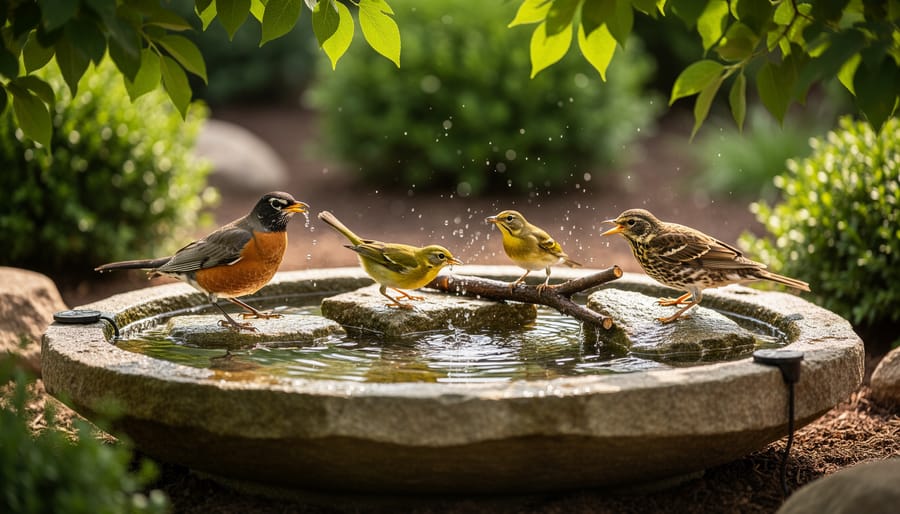
Install a simple birdbath in a shaded spot where birds can see approaching predators, keeping water depth between one and three inches to accommodate species of all sizes. Add a dripper or small fountain to create movement and sound that attracts birds from remarkable distances—the gentle splashing acts like a dinner bell for our feathered friends. Position rocks or branches at varying heights in the water to give birds stable perching spots while they drink and bathe, and place the feature within ten feet of shrubs or trees so wet birds can quickly reach cover to preen and dry their feathers.
Water features transform ordinary gardens into thriving wildlife habitats that buzz with activity from dawn to dusk. Even the simplest setup will draw more bird species than feeders alone, because every bird needs water daily regardless of diet. I’ve watched my own backyard come alive after adding just a basic ceramic basin—suddenly robins, warblers, and even shy thrushes became regular visitors.
The beauty of bird water features lies in their flexibility. You can start with a fifteen-dollar terra cotta saucer or invest in an elaborate pond with recirculating pumps. Both work equally well if you understand what birds actually need: clean, shallow water that’s refreshed regularly and positioned where they feel safe from cats and other predators.
Whether you’re drawn to the meditative trickle of a fountain or prefer the simplicity of a ground-level basin, creating a water source for birds offers immediate rewards. You’ll witness behaviors you’d never see at feeders—joyful splashing, careful drinking rituals, and the social dynamics of multiple species sharing one precious resource.
What Birds Really Need from Water Features
If you’ve ever watched birds at a backyard water feature, you’ve probably noticed they don’t just swoop in for a quick drink and leave. They have specific needs and behaviors that, once you understand them, will help you create the perfect watering spot.
Birds use water for two essential purposes: drinking and bathing. While drinking is straightforward, bathing is crucial for maintaining their feathers in top condition. Clean, well-maintained feathers provide better insulation and improve flight capability. After bathing, birds spend considerable time preening, which involves spreading oil from a gland near their tail throughout their feathers to keep them waterproof and flexible.
Here’s something that surprises many gardeners: depth matters more than you might think. Most songbirds prefer water that’s only 1 to 2 inches deep. Think about it from a robin’s perspective. She’s small, and deep water feels dangerous. Shallow water lets her wade in confidently, splash around, and make a quick exit if a predator appears. If you’ve installed a deeper birdbath and wondered why visitors seem hesitant, depth is often the culprit. Adding a few flat stones can create the perfect shallow platform.
Accessibility is equally important. Birds need clear sightlines to watch for predators while they’re vulnerable and wet. They also appreciate nearby branches or shrubs where they can perch before and after bathing, shaking off excess water and preening in relative safety.
Now, let’s talk about why moving water works like magic. I’ve seen birdbaths sit unused for weeks, then suddenly become Grand Central Station after adding a simple dripper. Birds have excellent hearing and eyesight, and they’re naturally drawn to the sound and sparkle of moving water. Stagnant water also raises red flags for them, just as it would for us. It can harbor mosquitoes and bacteria, while moving water stays fresher and signals a reliable, safe source.
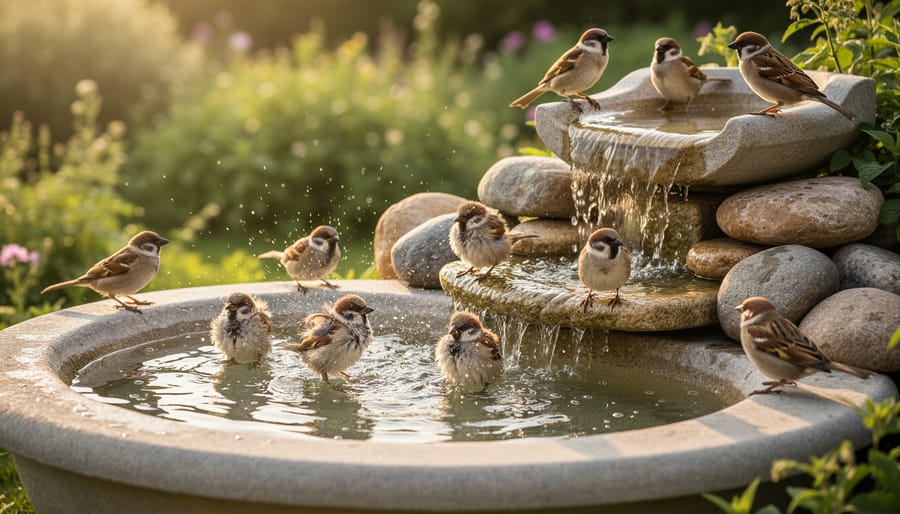
The Best Water Features That Actually Attract Birds
Traditional Bird Baths (Done Right)
The classic pedestal bird bath remains popular for good reason, but I’ve learned through years of watching birds (and making my share of mistakes) that getting the details right makes all the difference between an ignored basin and a bustling avian hot spot.
Let’s start with depth, which trips up many well-meaning gardeners. Birds need shallow water—ideally between one and two inches deep. I once installed a beautiful decorative bath that was nearly four inches deep, and the only visitors were squirrels! The solution? Add flat stones or river rocks to create graduated depths, giving both small songbirds and larger species comfortable bathing zones.
Material choice matters more than you might think. Concrete and ceramic retain less heat than metal, which can become dangerously hot in summer sun. If you adore that copper basin, position it in dappled shade. Whatever material you choose, look for textured or rough surfaces—smooth glazed bowls send birds slipping and sliding, which isn’t just comical, it’s actually stressful for them.
Placement requires thinking like a nervous robin. Position your bath about ten feet from dense shrubs or trees, giving birds a quick escape route from predators while preventing cats from having convenient hiding spots too close. I learned this lesson when neighborhood cats started treating my poorly-placed bath like a buffet line!
Finally, maintenance can’t be negotiable. Change the water every two to three days during warm weather to prevent mosquito breeding and bacterial growth. A quick scrub with a brush keeps algae at bay—skip the chemicals, as even mild soap residue can damage delicate feathers.
Ground-Level Water Sources
Many birds, particularly ground-feeding species like sparrows, towhees, and thrashers, naturally prefer drinking and bathing at ground level where they feel most secure. These birds have evolved to seek out shallow puddles, stream edges, and dew-covered leaves rather than elevated water sources.
Creating ground-level water features is wonderfully simple and incredibly effective. Start with a shallow terracotta saucer or repurposed dish placed directly on the ground or nestled into a slight depression in your garden bed. The key is keeping water depth between half an inch to two inches maximum. I learned this lesson when I first set out a deeper bowl and noticed birds would perch nervously at the edge but rarely venture in!
Rock pools offer another fantastic option that looks completely natural. Arrange flat stones in a slight bowl shape, leaving the center lower to collect water. The varied depths created by different stone heights accommodate multiple species at once, and the textured surface gives birds confident footing.
Position these features near shrubs or low plantings where birds can quickly retreat if startled, but maintain a three-foot clearance so predators can’t hide too close. Place a few small rocks or pebbles inside your basin to create even shallower spots and provide secure perches. Change the water every two to three days to keep it fresh and prevent mosquito breeding.
Moving Water Features
Birds can hear the tinkling sound of moving water from remarkable distances, often up to several hundred feet away. That’s why adding motion to your water feature dramatically increases its effectiveness at attracting feathered visitors. I’ve noticed more activity at my birdbath within days of adding a simple dripper, and the variety of species visiting has doubled.
Drippers are the most budget-friendly option and work beautifully in any existing birdbath. These devices create a steady drip-drip-drip that birds find irresistible. You can purchase basic drippers for around fifteen dollars, or create your own by suspending a recycled container with a small hole above your bath. The hypnotic sound brings in species that might otherwise pass by your yard entirely.
Misters produce fine water sprays that many birds, especially hummingbirds and warblers, absolutely adore. They’ll fly through the mist repeatedly, preening and bathing mid-flight. Misters attach easily to garden hoses and cost between twenty and fifty dollars.
For something more dramatic, small fountains and waterfalls create visual appeal alongside that attractive babbling sound. Solar-powered fountain pumps have become incredibly affordable, starting around thirty dollars, making them perfect for areas without electrical outlets. They’re also wonderfully eco-friendly and cost nothing to operate. If you have access to outdoor electrical sources, plug-in fountains offer more consistent water flow and typically range from fifty to one hundred fifty dollars.
I always recommend starting simple with a dripper, then upgrading as you discover which features your local birds prefer most.
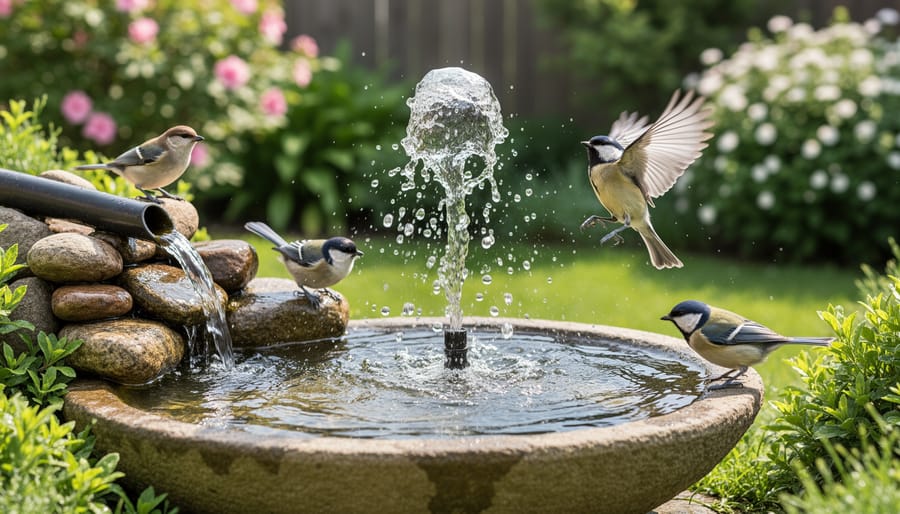
Natural-Style Water Gardens
Natural-style water gardens blend beautifully into your landscape while becoming wildlife magnets. The secret lies in mimicking nature—think gentle slopes rather than steep edges, and shallow areas where birds can wade safely. I love creating bog gardens at pond margins using moisture-loving plants like cardinal flower and blue flag iris. These transition zones give birds multiple drinking depths and bathing spots.
For smaller spaces, a simple depression lined with clay or a flexible liner works wonderfully. Add river stones of varying sizes to create natural-looking shallow areas, and let native plants soften the edges. This approach does double duty for creating a biodiverse garden that supports insects, amphibians, and birds alike.
The beauty of naturalistic water features is their low maintenance—they practically care for themselves once established, and birds absolutely adore them.
Creating the Perfect Bird-Friendly Water Feature: A Step-by-Step Project
Ready to create your own bird oasis? I promise this project is easier than you might think, and the joy of watching birds discover your handiwork makes every step worthwhile. I built my first bird water feature on a Saturday morning, and by that afternoon, I had my first visitors—a family of robins who’ve been regulars ever since.
Let’s gather what you’ll need. For a simple ground-level basin (perfect for beginners), you’ll want a shallow ceramic or concrete plant saucer about 18-24 inches wide, three to five smooth rocks of varying sizes, a bag of pea gravel, and a flat stone or two for the basin’s edge. You’ll also need a small level and a trowel. The total investment runs about $25-30, and you probably have some of these items already.
Start by choosing your location. Birds prefer water features placed 10-15 feet from dense shrubs or trees—close enough to offer escape routes from predators, but far enough that cats can’t ambush them. Pick a spot you can see from your favorite window. Trust me, you’ll want to watch the activity! Make sure it’s relatively level and gets a mix of sun and shade throughout the day.
Now for construction. First, use your trowel to create a level surface where your basin will sit. Check it with your level—this matters because uneven water depth can deter smaller birds. Place your saucer on the prepared spot and fill it about two inches deep with water. This is the magic depth where most songbirds feel comfortable.
Next comes the fun part. Arrange your smooth rocks in the basin to create varying depths. Position larger rocks to break the water surface, giving birds multiple perching options. Some birds prefer standing in just a half-inch of water, while others like it slightly deeper. Add a handful of pea gravel around the rocks to create texture and prevent slipping.
Place your flat stones around the basin’s perimeter as landing pads. Birds often scope out a water source before committing, and these edge stones give them confidence.
Fill with fresh water, step back, and admire your work. Within a few days, word will spread through the bird community, and you’ll become the neighborhood hotspot. Remember to refresh the water every two to three days—more often in hot weather.
You’ve just created something beautiful and meaningful. Welcome to the wonderful world of backyard bird hosting!
Location and Placement Secrets
Finding the perfect spot for your bird water feature can make all the difference between an occasionally visited puddle and a thriving avian gathering place. Let me share some tried-and-true placement strategies that I’ve learned over years of watching feathered friends in my own garden.
Position your water feature within 10-15 feet of trees or shrubs. This proximity gives birds quick escape routes from predators while providing convenient perching spots where they can preen after bathing. However, avoid placing it directly under dense branches where cats might lurk overhead. I once moved a birdbath just three feet away from an overhanging branch, and visits immediately doubled.
Consider the sun-shade balance carefully. Morning sun helps keep water fresh and inviting, while afternoon shade prevents overheating during summer months. A location with dappled sunlight throughout the day often works beautifully, especially when surrounded by native garden plants that create natural shading patterns.
From a practical standpoint, position your feature where you can easily view it from inside your home. Kitchen or living room windows make excellent viewing spots, transforming dishwashing or morning coffee into delightful birdwatching opportunities.
Keep water features at least 15-20 feet away from bird feeders. This separation prevents seed hulls and droppings from contaminating the water, reducing maintenance and keeping bathing areas hygienic. It also creates distinct activity zones in your garden, encouraging birds to explore more of your outdoor space.
Finally, ensure ground-level accessibility for easy cleaning and refilling. You’ll appreciate this practical consideration when you’re maintaining your feature every few days during peak summer activity.
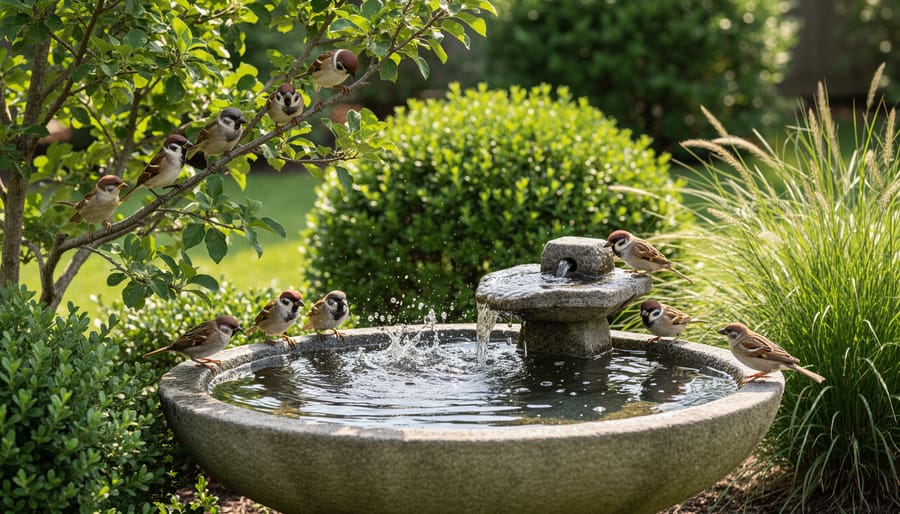
Keeping Your Bird Water Feature Clean and Safe
A clean water feature is essential for keeping your feathered visitors healthy and coming back for more! The good news is that maintenance doesn’t have to be overwhelming, even for busy gardeners.
During warmer months, refresh the water every two to three days to prevent mosquito breeding and bacteria buildup. I simply dump out the old water onto nearby plants (they love it!) and refill with fresh water from the hose. For birdbaths and shallow features, a quick scrub with a stiff brush once a week keeps things sparkling. Skip the soap and chemicals, which can harm birds. Instead, use a mixture of one part white vinegar to nine parts water for stubborn grime, then rinse thoroughly.
Algae growth is common in sunny spots, but you can minimize it by positioning your feature in partial shade or adding a solar fountain to keep water moving. These simple wildlife management practices make a real difference in water quality.
As winter approaches, you’ll need to decide whether to maintain your feature year-round or winterize it. In freezing climates, either bring smaller features indoors or add a birdbath heater to provide open water when natural sources freeze over. Birds desperately need water in winter too!
Remember, a slightly imperfect water feature that’s regularly maintained beats a pristine but neglected one any day. Your birds will appreciate your efforts, and you’ll enjoy watching them thrive in your garden sanctuary.
Common Mistakes (And How I Fixed Mine)
I’ll be honest—my first attempt at a bird water feature was a complete flop. I bought a beautiful ceramic birdbath, proudly placed it in the center of my garden, and waited. And waited. After three weeks, I’d seen exactly one robin take a quick dip while all the neighborhood birds happily splashed in my neighbor’s puddle-filled driveway. Frustrating, right?
Here’s what I learned from my mistakes. First, my birdbath was too deep. Birds need shallow water, about one to two inches maximum. I added a few flat rocks to create graduated depths, and suddenly I had visitors. Second, I’d placed it too far from any protective cover. Birds feel vulnerable when bathing, so they need nearby shrubs or branches to escape to if threatened. I moved mine closer to my butterfly bush, and activity tripled within days.
The biggest game-changer? Adding movement. Still water doesn’t attract birds nearly as well as moving water does. I couldn’t afford an expensive fountain pump, so I started simple—hanging a recycled water bottle with tiny holes above the bath to create a slow drip. That gentle sound brought in species I’d never seen before.
My friend Sarah had the opposite problem—her solar fountain worked too well, creating a mini geyser that scared birds away. She adjusted the flow setting to create gentle ripples instead, and now her water feature is the busiest spot in her yard. Sometimes the simplest tweaks make all the difference.
Adding water features to your garden creates a remarkable transformation that goes far beyond simple decoration. You’ll likely notice increased bird activity within days of installation, as feathered visitors discover these vital resources in your yard. The wonderful thing about water features is that you don’t need to start with anything elaborate. A simple shallow dish can be just as effective as an expensive fountain when it comes to meeting birds’ basic needs.
I encourage you to begin with one feature and pay attention to which species visit and when. You might be surprised to discover that different birds prefer different water depths or movement styles. This observation period helps you understand your local bird community and guides future additions to your garden.
Remember, every water feature you add plays a meaningful role in wildlife habitat conservation. As natural water sources become scarcer due to development and climate change, your garden oasis becomes increasingly valuable. You’re not just creating a beautiful space for yourself—you’re providing essential support for the birds that bring joy, pest control, and ecological balance to your neighborhood. Start simple, stay consistent with maintenance, and enjoy watching your garden come alive with avian activity.