Transform an empty garden bed into a pollinator paradise by choosing the right location first. Select a spot that receives at least six hours of direct sunlight daily, since most nectar-rich plants need full sun to produce the flowers that attract bees, butterflies, and hummingbirds. Avoid areas with heavy foot traffic or strong winds, which can deter these delicate visitors.
Group plants with similar blooming periods together to create concentrated zones of color and scent. This clustering technique helps pollinators locate food sources more efficiently than scattered individual plants. Place early-spring bloomers like crocuses and hellebores near mid-season favorites such as coneflowers, then finish with fall asters to ensure continuous nectar availability from March through October.
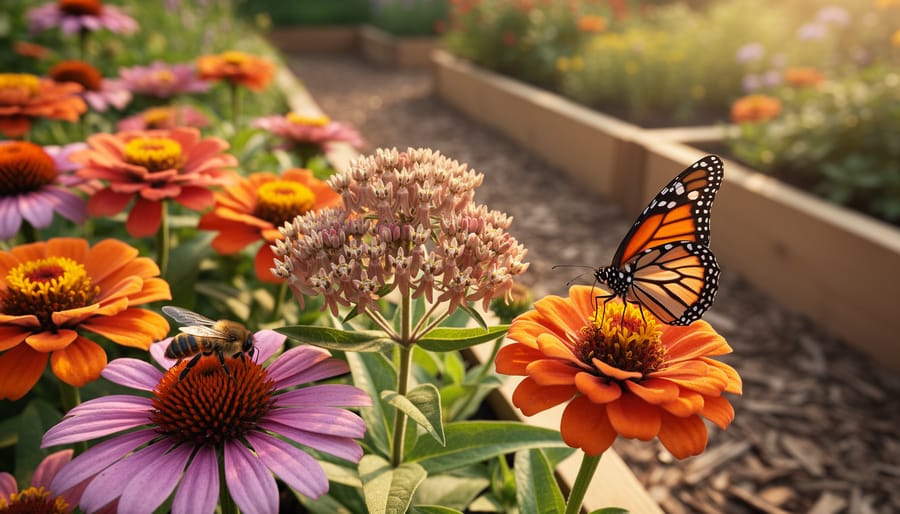
The real secret lies in companion planting strategies that amplify your garden’s appeal. Pair host plants with nectar sources. For example, plant milkweed alongside zinnias to provide both caterpillar food for monarchs and adult butterfly nectar in one location. This dual-purpose approach maximizes your space while supporting complete pollinator life cycles.
Start with native plants adapted to your region’s climate and soil conditions. They require less maintenance, resist local pests naturally, and provide exactly what your native pollinators need to thrive. A small 4-by-6-foot bed containing just five different native species can support dozens of pollinator species throughout the growing season.
This guide walks you through everything from soil preparation to seasonal care, with insights from expert gardeners who’ve successfully established their own pollinator havens. You’ll discover which plant combinations work best and learn to avoid common mistakes that can derail even well-intentioned efforts.
Why Companion Planting Makes Your Pollinator Garden Irresistible
When you’re planting a pollinator garden, companion planting transforms a simple flower bed into an irresistible buffet that keeps bees, butterflies, and hummingbirds coming back all season long. The secret lies in how different plants work together to create layers of attraction that no single species can achieve alone.
Think of companion planting as building a neighborhood rather than a single house. When you pair early bloomers like crocuses with mid-season stars like coneflowers and late-season champions like asters, you’re essentially hanging out a “vacancy” sign from March through October. This extended bloom schedule means pollinators find food in your garden when they need it most, especially during the critical early spring when queens emerge and late fall when insects are preparing for winter.
This happens because different pollinators have different preferences. Long-tongued bumblebees adore tubular flowers like salvias, while short-tongued mining bees prefer open-faced blooms like sunflowers.
Color layering matters too. Pairing purple lavender with yellow coreopsis creates a visual beacon that pollinators can spot from hundreds of feet away. These proven plant combinations work because pollinators see different color spectrums than we do, and high-contrast pairings show up brilliantly in ultraviolet light.
Strategic plant partnerships also create beneficial microclimates. Taller plants like Joe Pye weed provide shelter for shorter companions during intense midday sun, creating cool spots where butterflies can rest. Dense foliage at ground level, like creeping thyme beneath taller perennials, holds morning dew longer and maintains humidity that many beneficial insects need.
The scent factor shouldn’t be overlooked either. When you combine aromatic herbs like oregano with sweet-scented flowers like sweet alyssum, you’re broadcasting multiple chemical signals that attract different pollinator species simultaneously. It’s like sending out invitations to a garden party where everyone finds something they love.
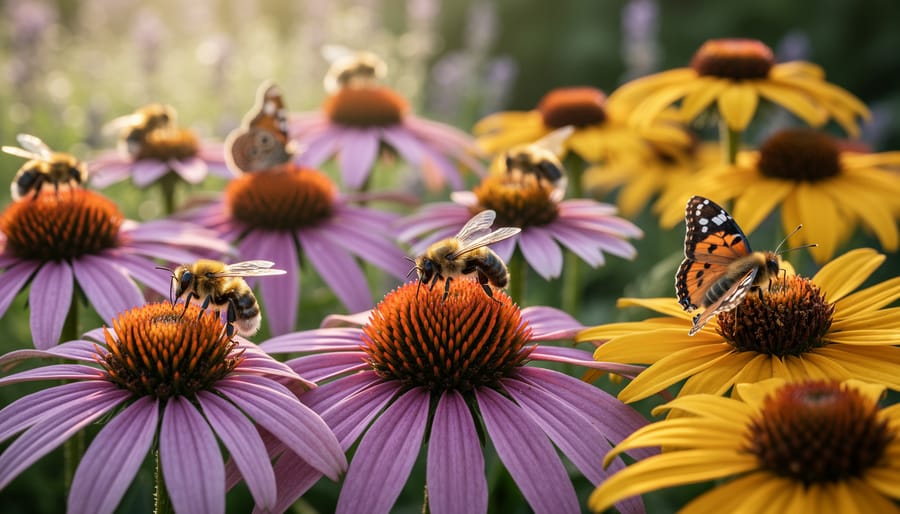
Planning Your Pollinator Garden Layout
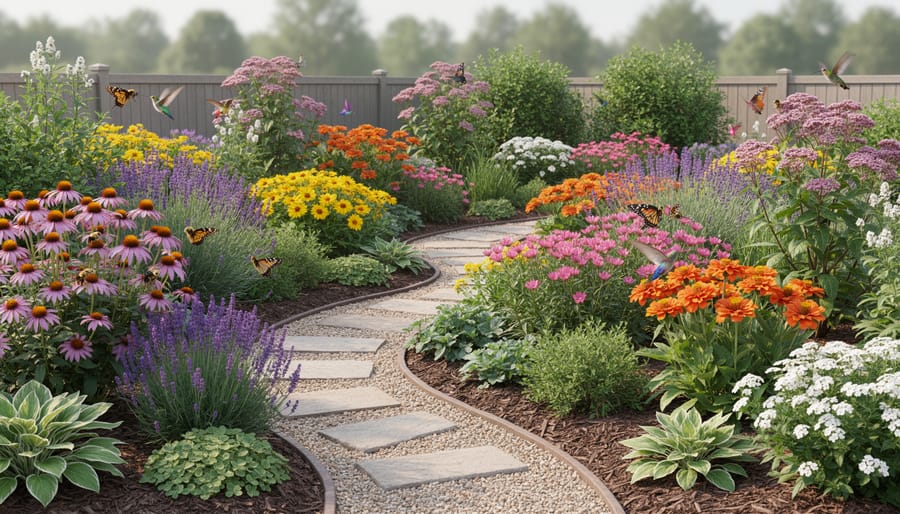
Choosing the Right Location and Size
Location makes or breaks a pollinator garden. I’ve watched beautifully planted gardens struggle simply because they were tucked in the wrong spot, while modest plantings in ideal locations buzzed with life from day one.
Start by observing sun patterns in your yard. Most pollinator-friendly flowers need at least six hours of direct sunlight daily. Bees are particularly active in sunny spots, though some native shade-lovers like woodland phlox can attract butterflies to partially shaded areas. Before you commit to a location, spend a few days tracking how sunlight moves across your space.
Wind protection matters more than many beginners realize. Strong gusts make it difficult for pollinators to land and feed efficiently. If your chosen site is exposed, consider planting taller species on the windward side or positioning your garden near a fence or hedge that can serve as a natural windbreak.
Water access is another key factor. Pollinators need drinking water, especially during hot months. A shallow dish with pebbles for landing, a birdbath, or even a small pond nearby will encourage visitors to linger. Place your garden within reasonable distance of a water source you can maintain consistently.
Size is flexible and should match your commitment level. A 3-by-5-foot plot can support plenty of pollinators if planted densely with the right species.
Creating Bloom Succession Through Plant Partnerships
The secret to keeping pollinators visiting your garden all season long lies in planning for continuous blooms. When early spring flowers fade, you’ll want mid-season plants ready to take over, followed by late bloomers that carry pollinators through until frost.
Think of your garden as a relay race. Start with spring bulbs and early perennials like crocus and Virginia bluebells that feed hungry bees emerging from winter dormancy. As these finish, summer stalwarts such as coneflowers and bee balm step in during the hottest months. Finally, fall champions like asters and goldenrod provide crucial fuel for migrating monarchs and bees preparing for winter.
| Season | Plant Pairing | Pollinator Benefit |
|---|---|---|
| Spring | Crocus + Wild Geranium | Early nectar for native bees |
| Summer | Purple Coneflower + Black-Eyed Susan | Peak butterfly activity, seed for birds |
| Fall | New England Aster + Goldenrod | Migration fuel for monarchs, late-season bees |
Master gardener Susan Mulvihill suggests sketching a simple bloom calendar before planting. “List your plant choices by bloom time,” she explains. “If you notice a gap in July or September, you know exactly where to add more variety.” This simple planning step ensures no hungry pollinator leaves your garden empty-handed.
Designing for Pollinator Diversity
Different pollinators have distinct preferences, and understanding these quirks helps you create a garden that buzzes with life. Bees gravitate toward blue, purple, and yellow flowers with landing platforms like salvias and coneflowers. Butterflies prefer flat-topped blooms in bright pinks and oranges, where they can perch while feeding. Hummingbirds zip straight to tubular red and orange flowers like bee balm and cardinal flower.
Since pollinator preferences vary by species companion planting becomes your secret weapon. Try pairing tall Joe Pye weed with mid-height black-eyed Susans and low-growing sedums. This layered approach creates feeding zones at different heights, allowing various pollinators to forage without competing for space.
Don’t forget about beneficial insects like ladybugs and lacewings. They need smaller flowers with easy access to nectar. Tuck yarrow, dill, and sweet alyssum between your showier blooms. These hardworking helpers control aphids and other pests while adding texture to your beds.
Plant in clusters of three to five rather than single specimens. This strategy makes your garden more visible from above and gives pollinators efficient feeding routes without wasting energy flying between scattered plants.
Best Companion Plant Combinations for Pollinators
The Power Trio: Coneflower, Black-Eyed Susan, and Anise Hyssop
This trio has earned its reputation in pollinator gardens for good reason. Purple coneflower (Echinacea purpurea) blooms from early to late summer, while black-eyed Susan (Rudbeckia hirta) picks up the pace from midsummer through fall. Anise hyssop (Agastache foeniculum) bridges both, flowering from July through September. Together, they create an uninterrupted buffet for pollinators.
The height variation works beautifully too. Black-eyed Susans typically reach 2 to 3 feet, coneflowers stretch to 3 to 4 feet, and anise hyssop towers at 3 to 5 feet. This layering allows bees and butterflies to navigate easily between blooms while giving you a naturally pleasing visual depth.
Bumblebees particularly love landing on coneflower’s sturdy cone centers, while monarchs and swallowtails prefer the nectar-rich tubes of anise hyssop. Black-eyed Susans attract smaller native bees and beneficial wasps. When planting a pollinator garden, choosing coneflower companion plants that share similar sun and soil needs makes maintenance easier. All three thrive in full sun and well-drained soil, making them low-maintenance partners.
Native Plant Partnerships That Pollinators Recognize
Local pollinators don’t just visit native plants randomly. They recognize specific partnerships that have evolved together over millennia creating reliable food corridors throughout the growing season.
In the Midwest and Eastern regions, pairing milkweed with goldenrod gives monarchs nectar from spring through fall. The milkweed feeds their caterpillars while goldenrod provides crucial fuel for their autumn migration. I’ve watched this combination support not just monarchs but also native bees and beneficial wasps.
Western gardeners can plant lupine alongside penstemon for a stunning blue-and-coral display that hummingbirds and specialist bees adore. These two natives bloom in succession, keeping pollinators fed for months.
In the Southwest, desert marigold pairs beautifully with globe mallow. Both handle heat and drought while attracting native solitary bees that have adapted to forage in intense conditions.
The secret is thinking beyond individual plants. When you’re planting a pollinator garden, group three to five plants of each species together rather than scattering singles across your beds. This clustering makes it easier for pollinators to locate and work the flowers efficiently, maximizing the energy they gain from each visit.
Herb and Flower Combinations for Multi-Season Interest
Combining culinary herbs with flowering perennials is one of the smartest moves you can make when planting a pollinator garden. Lavender paired with salvia creates a purple paradise that draws bees from early summer through fall, while you harvest sprigs for cooking. I’ve watched bumblebees work overtime on my oregano flowers, which bloom profusely if you let a few plants go to seed instead of pruning them all back.
Thyme makes an excellent ground cover beneath taller flowers like coneflowers and black-eyed Susans. The combination works beautifully because thyme blooms in late spring when many perennials are just getting started. Herb companion planting strategies help you maximize both pollinator activity and kitchen harvests without sacrificing garden space.
Try planting rosemary alongside catmint for a Mediterranean feel that pollinators adore. The rosemary flowers attract early-season bees, while catmint keeps the buffet open for months. These partnerships give you fresh herbs for dinner and a thriving habitat that supports beneficial insects throughout the growing season.
Ground Cover and Tall Plant Partnerships
Think of your pollinator garden as a multi-story building where every level offers something valuable. Layering ground covers beneath taller plants creates more habitat in the same square footage, and pollinators absolutely love the variety.
Creeping thyme makes an excellent living carpet under towering sunflowers or joe-pye weed. It stays low enough to avoid competing while offering tiny blooms that smaller bees adore. The taller plants get the sunshine they need up top, and the thyme fills what would otherwise be bare soil. This approach also suppresses weeds naturally, saving you hours of maintenance.
Try pairing catmint as a mid-height layer between tall ironweed and low-growing sedum. The different bloom times keep pollinators visiting throughout the season, and the contrasting textures make your garden visually interesting too.
Master gardener Elena Rodriguez, who tends a three-acre pollinator meadow in Vermont, shared this tip with me: “Plant your tall species first, then tuck ground covers around their bases once they’re established. The big plants provide afternoon shade that helps tender ground covers settle in during hot weather.”
This vertical strategy works especially well in smaller gardens where every inch counts. You’re essentially doubling your planting space without expanding your garden beds.
Planting Your Pollinator Garden Step-by-Step
Now that you’ve planned your pollinator garden and chosen your plant partnerships, it’s time to get your hands in the soil. I recently spoke with Lily Chen, a master gardener who’s created pollinator havens across three climate zones, and she reminded me that the planting process itself matters just as much as plant selection. “You’re not just putting plants in holes,” she told me. “You’re building a community underground and above ground at the same time.”
Start by preparing your garden bed at least two weeks before planting. Remove existing turf or weeds, then work compost into the top 6-8 inches of soil. This waiting period lets the soil settle and gives beneficial microorganisms time to establish. Think of it as setting the dinner table before your guests arrive.
Here’s how to plant your pollinator garden using companion principles:
- Map out your companion clusters on the ground using flour or garden markers. Keep taller plants like Joe Pye weed toward the back and shorter companions like catmint in front.
- Start with your anchor plants (the tall natives that provide structure). Dig holes twice as wide as the root ball but no deeper.
- Plant companion groupings in odd numbers around each anchor. Three purple coneflowers paired with five black-eyed Susans looks more natural than strict rows.
- Add your natural garden defenders like yarrow and tansy at the garden’s edges or interspersed throughout.
- Water each plant thoroughly as you go, creating a small basin around the stem to direct moisture to roots.
- Apply a 2-3 inch layer of mulch around plants, keeping it away from stems to prevent rot.
Lily emphasizes spacing generously at first. “New gardeners always plant too close,” she says. “Give each plant room to spread. The gaps fill in faster than you think.” For perennials, follow the mature width listed on plant tags, not the current pot size.
Water daily for the first week, then transition to deep watering twice weekly. Your goal is encouraging roots to grow down, not stay shallow. Watch for wilting between waterings, but don’t panic if leaves droop slightly on hot afternoons. That’s normal.
The first season focuses on establishment. Don’t expect a riot of blooms immediately. Your plants are busy building root systems below ground, creating the foundation for years of pollinator activity ahead.
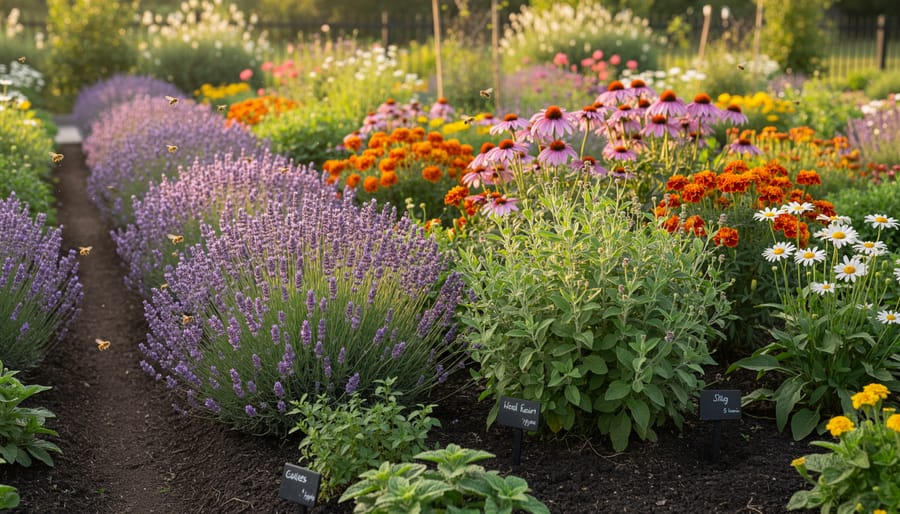
What a Master Gardener Learned About Pollinator Companions
I sat down with Linda Harrington, a Master Gardener with 22 years of experience, to learn what she’s discovered about companion planting for pollinators. Her insights surprised me.
“My biggest mistake? Thinking I needed every plant to bloom at once,” Linda laughed, gesturing toward her thriving garden. “In my third year of planting a pollinator garden, I loaded up on spring bloomers. By July, everything had faded and the bees looked confused.”
That revelation changed her approach completely. Now she staggers bloom times and discovered something unexpected: coneflowers planted near anise hyssop created what she calls a “pollinator highway.” Bumblebees would visit the coneflowers, then immediately move to the hyssop. She wasn’t sure why at first.
“I finally figured it out. The two plants offered different nectar depths, so bees with different tongue lengths could feed in the same area. It kept them around longer instead of wandering off to find suitable flowers elsewhere.”
Her second discovery involved yarrow, which she initially dismissed as too common. “I planted yarrow as filler between my showy bee balm, and suddenly I had ten times more beneficial insects. Turns out those tiny parasitic wasps that control aphids love yarrow’s flat landing pads. I haven’t had a serious aphid problem since.”
Linda’s advice for newcomers? Start small and watch carefully. She keeps a simple notebook tracking which pollinators visit which plant combinations.
“You’ll notice patterns your second season. Maybe swallowtails prefer your purple coneflowers when they’re next to catmint, or hummingbirds hit the salvias harder when cardinal flower grows nearby. Let the pollinators teach you what works. That’s better than any garden book.”
Common Mistakes to Avoid When Planting for Pollinators
Even the most well-intentioned gardeners can stumble when planting a pollinator garden. One of the biggest mistakes? Creating a garden that only blooms in spring or early summer. Pollinators need food from early spring through fall, so if your garden goes quiet after June, you’re leaving bees and butterflies without resources when they need them most. Plan for successive blooms by choosing plants with different flowering periods.
Another common error is spacing plants too far apart. Pollinators navigate by following clusters of color and scent, so widely scattered plants force them to work harder for less reward. Instead, plant in groups of at least three to five of the same species, creating visible “landing zones” that guide pollinators through your garden like a well-marked highway.
Many gardeners also reach for showy cultivars without realizing these fancy hybrids often produce less nectar and pollen than their native counterparts. Double-flowered varieties might look impressive, but those extra petals frequently mean reduced or inaccessible food sources for pollinators. Stick with straight species plants whenever possible, or research cultivars specifically noted for their pollinator value.
Timing matters too. Some gardeners plant young seedlings with perfect spacing but forget these plants will fill out. What looks sparse now might become overcrowded in two seasons. Conversely, impatience leads others to overplant, creating competition that weakens everything. Following spacing guidelines on plant tags helps you avoid these plant pairing mistakes.
Finally, don’t overlook the power of leaving things a little messy. Raking away every leaf and cutting back all stems in fall removes essential nesting sites for native bees. Let some areas stay wild through winter.
You don’t need acres of land or a master gardener’s certificate to make a real difference for pollinators. Starting small is perfectly fine. A single container of companion-planted herbs on your balcony can feed dozens of bees, and a modest garden bed designed with pollinator partnerships will outperform a larger, randomly planted space.
The beauty of planting a pollinator garden lies in what happens after you’ve tucked those first plants into the soil. You’ll notice which bees prefer your lavender over your salvia. You’ll see butterflies claiming favorite landing spots. You’ll discover that the catmint you paired with your roses attracted a hummingbird you’d never spotted before. These observations aren’t just pleasant surprises; they’re valuable information that helps you refine your approach each season.
Don’t be afraid to experiment and adjust. Move plants that aren’t thriving, add new companions where you see gaps in bloom times, and take notes on what works in your specific conditions. Gardening with pollinators in mind becomes a conversation between you and the creatures who visit.
Every garden you plant, no matter its size, contributes to a network of habitat that struggling pollinator populations desperately need. You’re not just growing flowers. You’re providing essential resources, creating refuge, and participating in something far bigger than your backyard.
Start this weekend if you can. The pollinators are waiting, and your garden is waiting to teach you things no article ever could.