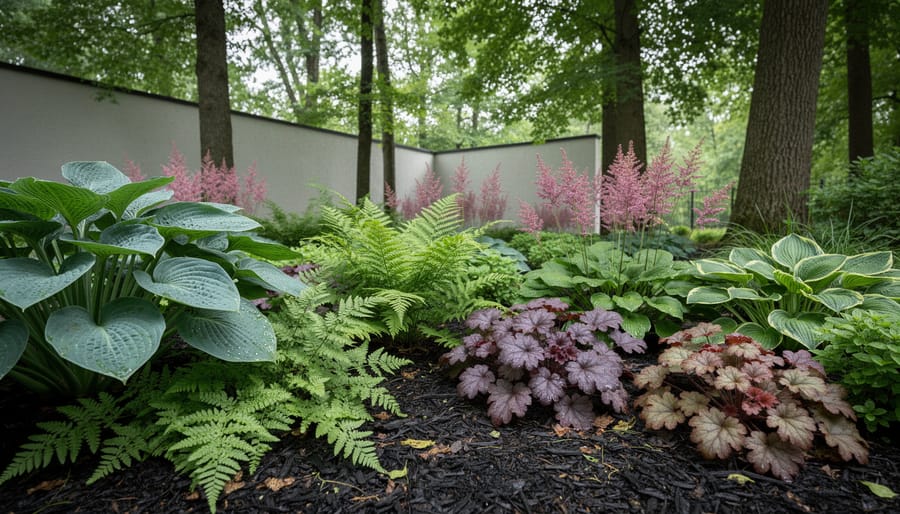
The best low-maintenance shade plants thrive with minimal water, tolerate neglect, and spread naturally without constant pruning or fertilizing. Think hostas, astilbes, coral bells, and ferns that fill bare spots under trees and along north-facing walls where grass struggles and annuals fade by midsummer.
Shady areas often become problem zones. Tree roots hog moisture and nutrients, sunlight barely reaches ground level, and many popular garden plants simply won’t perform. But choosing the right shade perennials transforms these frustrating spaces into lush, textured gardens that require less work than sunny borders. Once established, the plants we’ll explore demand only occasional division and a yearly mulch refresh.
What makes a shade plant truly low-maintenance? Root systems that compete with trees, foliage that naturally resists pests and disease, and growth habits that fill space without turning invasive. You want plants that look good from spring through fall without deadheading, spraying, or weekly watering. The difference between a struggling shade garden and one that practically runs itself comes down to matching the right plant to your specific conditions: dry shade under maples, damp shade near downspouts, or dense shade where even weeds give up.
This guide walks you through the key factors that determine success, compares your main plant options, and offers specific recommendations for every shade scenario in your yard. We’ll also cover the common mistakes that lead gardeners to give up on shady spots entirely, plus a proven planting plan that works with your soil instead of fighting it.
What Makes a Shade Plant Truly Low-Maintenance?
The best shade plants share five characteristics that let you plant once and enjoy for years. Understanding these traits before you buy saves money, avoids frustration, and ensures your shady spots look lush without demanding weekend after weekend of upkeep.
Start with drought tolerance. The most reliable shade plants need regular watering during their first growing season, but once their roots establish, they can handle dry spells without wilting or requiring irrigation. Look for species described as drought tolerant once established plants like epimedium, native ferns, and hardy geraniums that develop deep root systems and store moisture efficiently. This matters especially under trees, where surface roots compete for water and shade plants must survive on whatever rainfall reaches them.
Disease resistance ranks equally high. Low-maintenance plants shrug off common fungal issues like powdery mildew and leaf spots without spraying or treating. Hostas with thick, waxy leaves resist slug damage better than thin-leaved varieties. Astilbes bred for resistance to bacterial blight keep their foliage clean all season. When researching plants, check for disease-resistant cultivar names or varieties native to your region, which evolved natural defenses against local pathogens.
Minimal pruning needs separate easy plants from demanding ones. The best choices maintain attractive shapes naturally, without deadheading, shearing, or cutting back. Groundcovers like pachysandra spread on their own without trimming. Ferns unfurl fresh fronds each spring and simply fade back in fall. Contrast this with plants that require regular deadheading to look tidy or shrubs that become leggy without annual pruning.
Soil adaptability gives you flexibility. Plants that tolerate a range from sandy loam to heavy clay mean you can skip soil amendments and still succeed. Sedges, Solomon’s seal, and many native woodland wildflowers adjust to whatever they’re given, eliminating the need to haul in compost or test pH levels before planting.
Finally, natural pest resistance keeps plants looking good without intervention. Deer avoid strong-scented foliage like that of lamium or bugleweed. Rabbits pass over tough-leaved ferns. Insects rarely bother plants with bitter sap or fuzzy textures. When pests ignore your plants, you avoid the cycle of monitoring, treating, and replanting that drains time and enthusiasm.
Types of Low-Maintenance Shade Plants Compared
Shade-Loving Perennials
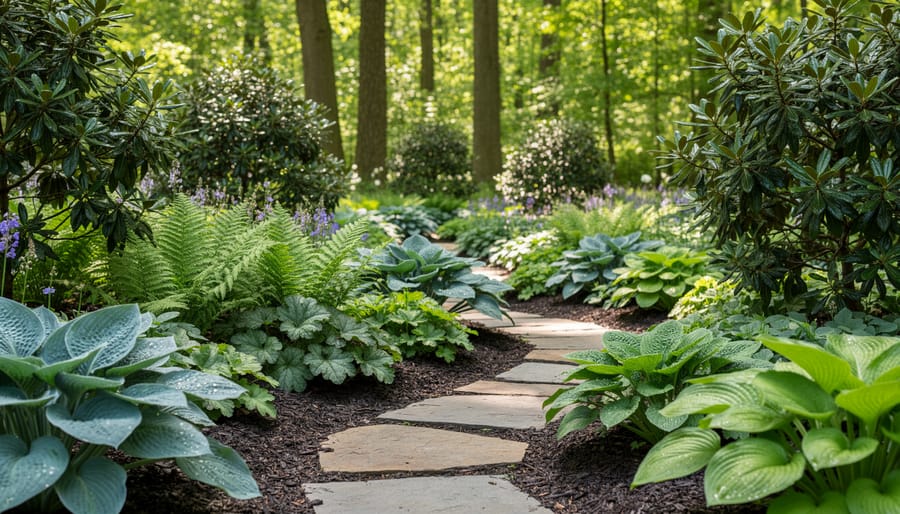
Hostas anchor virtually every successful shade garden for good reason: they’re nearly indestructible once established, offer dramatic foliage variety from miniature to dinner-plate size, and ask almost nothing in return. They tolerate dry spells after their first season, shrug off most pests except slugs, and multiply reliably without becoming aggressive. Blue-leaved varieties like ‘Halcyon’ hold their color best in deeper shade, while fragrant-flowered types such as ‘Royal Standard’ brighten August with white blooms.
Astilbes deliver feathery plumes in pink, red, white, or peach throughout early summer, thriving in moist shade where many perennials struggle. Their fern-like foliage stays attractive all season, and established clumps return faithfully without division for years. Choose varieties like ‘Fanal’ for deep crimson or ‘Bridal Veil’ for airy white flowers.
Bleeding hearts, both the traditional Dicentra spectabilis with arching stems of heart-shaped flowers and the longer-blooming fringed types, establish quickly and tolerate neglect beautifully. They go dormant by midsummer in hot climates, which makes them perfect companions for hostas that fill the space as bleeding hearts fade. All three handle clay, loam, or amended soil equally well and rarely need staking, spraying, or fussing beyond an annual spring mulch.
Groundcovers for Problem Areas
Groundcovers solve the toughest shade garden challenges, those bare patches under trees, slopes that wash out, and weedy corners that demand constant attention. The right low-growing spreaders transform problem spots into finished-looking beds while actively preventing weeds from establishing.
Pachysandra terminalis thrives in dense shade where grass won’t grow, forming a thick, evergreen carpet that chokes out weeds once it fills in. Plant six inches apart, water through the first season, then walk away. Japanese spurge (another common name) tolerates dry shade under mature maples and oaks, though it appreciates occasional watering during prolonged drought.
Lamium maculatum, or spotted deadnettle, brings silvery foliage and pink or white spring flowers to partially shaded areas. It stays under eight inches tall, spreads reliably without becoming a nuisance, and handles a range of soil conditions. The variegated leaves brighten dim corners year-round.
Sweet woodruff (Galium odoratum) carpets woodland edges with whorled leaves and tiny white flowers in May. It spreads steadily through gentle runners, prefers consistently moist soil, and releases a sweet hay scent when cut. Plant it where you want complete coverage, it fills in thoroughly but pulls up easily if it oversteps its bounds.
Ferns and Native Woodland Plants
Hardy ferns and native woodland plants represent the ultimate set-it-and-forget-it choices for shade gardens. These species evolved in forest understories, which means they’re already adapted to the exact conditions your shady yard provides, no coddling required.
Ferns like autumn fern, Christmas fern, and lady fern establish quickly and tolerate dry spells once their roots take hold. They don’t need deadheading, staking, or dividing. Most self-regulate their size and resist pests naturally. Christmas fern stays evergreen through winter, providing year-round structure.
Native woodland plants such as wild ginger, foamflower, and Solomon’s seal integrate seamlessly into existing ecosystems. They support local pollinators and birds while requiring zero fertilizer or pest control. Wild ginger spreads slowly to form a dense, weed-suppressing carpet. Foamflower produces delicate spring blooms without any deadheading needed.
The key advantage: these plants thrive on neglect because your shade garden mimics their native habitat. Unlike ornamental introductions that struggle and demand intervention, natives and hardy ferns simply grow. Plant them properly at the start, mulch once, and let them do what they’ve done for millennia.
Top Recommendations for Different Shade Conditions
Best Plants for Deep Shade
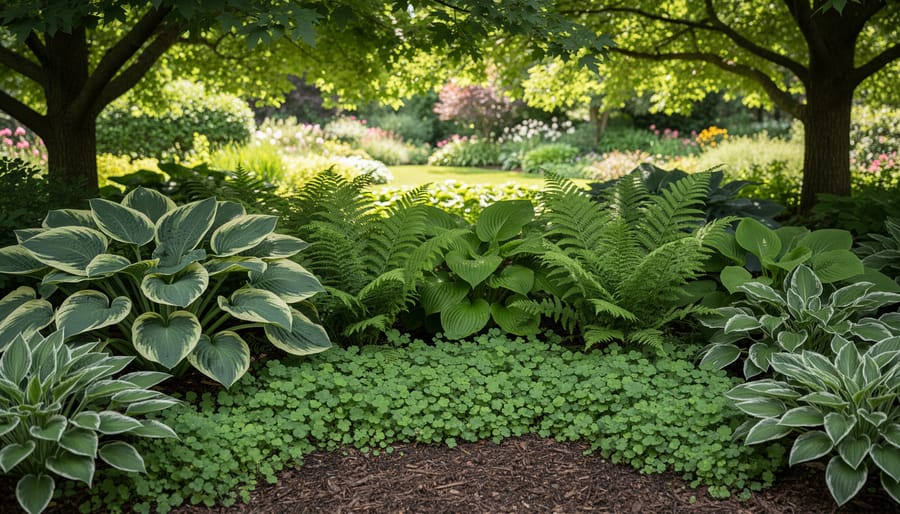
Deep shade, where deep shade means under two hours of direct sun daily, tests even experienced gardeners. But several foolproof species actually prefer these dim conditions. Cast iron plant (Aspidistra elatior) earns its name by tolerating neglect, deep darkness, and inconsistent watering once established. Japanese pachysandra forms dense evergreen carpets that need zero maintenance after the first season, though it spreads aggressively in some regions. For vertical interest, Christmas fern (Polystichum acrostichoides) stays green year-round and handles dry shade under mature trees better than most competitors.
Lenten rose (Helleborus orientalis) blooms in late winter when nothing else dares, and its leathery foliage persists through summer heat without wilting. If you want flowers beyond early spring, try toad lily (Tricyrtis), which produces orchid-like blooms in fall and asks for nothing but mulch and occasional debris removal. These five plants anchor any shade plants list for challenging spots where other options fail.
Winners for Dry Shade
Dry shade, the toughest spot in any garden, sits under mature trees where thick roots suck up moisture and dense canopies block rain. Most plants sulk or die here, but a handful thrive precisely because they evolved for these conditions.
Epimedium (barrenwort) tops the list. Its delicate, heart-shaped leaves and tiny spring flowers belie genuine toughness: once established, it handles drought, dense shade, and root competition without complaint. Plant it under maples or oaks and forget about it. The foliage stays attractive through fall and semi-evergreen in mild winters.
Solomon’s seal offers arching stems lined with cream-colored bell flowers in spring, followed by blue-black berries that birds love. It spreads slowly through rhizomes but never aggressively, filling space reliably year after year. Established plants need zero supplemental water, even through summer dry spells.
Liriope (lilyturf) bridges the gap between groundcover and perennial, producing grassy clumps with lavender flower spikes in late summer. It tolerates deep shade, drought, and even black walnut toxicity, a rare combination that makes it invaluable for impossible corners.
Japanese forest grass (Hakonechloa) adds soft texture and bright chartreuse color to dim areas. Though slower to establish than the others, mature clumps handle dry shade beautifully.
Reliable Choices for Partial Shade
Partial shade offers the most flexibility for plant selection, since many species thrive in this “Goldilocks zone” where conditions aren’t too bright or too dark. These transitional areas, often found on the east side of buildings or beneath high-canopied trees, receive morning sun or dappled light throughout the day, creating ideal conditions for plants that appreciate some brightness without full exposure.
Heucheras (coral bells) top the list for reliable performance and visual interest. Their colorful foliage lasts from spring through frost, and they rarely need dividing. Once established, they handle drought surprisingly well and resist deer browsing. Look for newer cultivars bred specifically for shade, which show better leaf color in lower light.
Brunnera macrophylla (Siberian bugloss) delivers clouds of forget-me-not-like blue flowers in spring, followed by heart-shaped leaves that stay attractive all season. Variegated selections like ‘Jack Frost’ add brightness to dim corners. This plant spreads slowly to fill space without becoming aggressive, and it tolerates both clay and sandy soils once its roots take hold.
Japanese painted ferns bring elegant texture with their silvery-purple fronds. Unlike many ferns, they handle slightly drier conditions and don’t require constant moisture. They pair beautifully with hostas or heucheras to create layered planting combinations that need minimal intervention beyond an annual spring cleanup.
Matching Plants to Your Maintenance Style
Before you buy a single shade plant, take an honest look at your gardening calendar. The most common setup for failure isn’t choosing the wrong plant, it’s choosing plants that demand more attention than you’ll realistically give them.
Weekend Gardeners (2-4 hours weekly) can handle a broader range of shade plants, including those that benefit from seasonal deadheading or occasional division. You have time for hostas that need spring slug monitoring, astilbes that appreciate spent flower removal, and groundcovers that may require edge trimming twice a season. This schedule also accommodates learning basic tree pruning methods for maintaining the canopy that creates your shade conditions.
Monthly Maintainers (2-3 hours monthly) need truly self-sufficient performers. Focus on ferns that require zero deadheading, evergreen groundcovers like pachysandra that suppress their own weeds, and clump-forming perennials like brunnera that never need dividing. Skip anything described as “benefits from regular deadheading” or “divide every few years”, those phrases signal more work than your schedule allows.
Seasonal Check-In Types (quarterly visits) should stick to native woodland plants and the most bombproof ferns. Wild ginger, Solomon’s seal, Christmas fern, and epimedium thrive with nothing more than a spring mulch refresh and fall cleanup. Avoid hostas entirely, they’re slug magnets without regular monitoring. Your plant palette will be smaller, but everything in it will succeed without you, creating reliable beauty that doesn’t punish your lifestyle.
Match your maintenance style to your plant choices upfront, and your shade garden will reward you with years of effortless performance instead of becoming another weekend obligation.
Common Mistakes to Avoid When Buying Shade Plants
The fastest way to derail your low-maintenance shade garden is to make poor choices at the nursery. Many gardeners, excited to fill an empty corner, grab whatever looks healthy without considering how the plant will perform long-term. Here are the most common traps, and how to sidestep them:
- Choosing invasive spreadersPlants like bishop’s weed and Japanese pachysandra can quickly overtake beds, requiring constant containment rather than saving you work. Check your region’s invasive species list before buying, and ask nursery staff about spreading habits.
- Ignoring hardiness zonesA stunning shade perennial rated for zone 6 won’t survive a zone 4 winter, no matter how well you care for it. Always verify your USDA zone and choose plants rated for at least one zone colder for reliability.
- Underestimating mature sizeThat cute six-inch hosta may grow to four feet wide within three years. Planting too densely means dividing, transplanting, or watching plants choke each other out, the opposite of low-maintenance.
- Mismatching water needs to site conditionsBuying moisture-loving astilbes for a dry shade area under maples creates a high-maintenance nightmare. Assess your actual soil moisture before selecting plants, not your ideal vision.
- Confusing shade-tolerant with shade-lovingShade-tolerant plants survive in shade but thrive in sun, often becoming leggy and weak without adequate light. Shade-loving plants actively prefer low light and perform best there.
- Skipping disease resistance researchSome popular shade plants are prone to specific issues that demand intervention. Powdery mildew on bee balm or rust on hollyhocks means regular spraying or a pest management program not the hands-off garden you wanted.
- Buying immature specimens without growth informationA tiny fern labeled only “shade fern” could be a compact variety or a six-foot ostrich fern. Without knowing the species and cultivar, you can’t plan spacing or predict behavior.
The smartest approach is to research before you shop. Make a list of plants suited to your specific conditions, light level, soil type, moisture, and zone, then buy only what’s on that list. This front-end discipline saves years of transplanting, replacing, and managing problems you could have avoided from the start.
Creating a Low-Maintenance Planting Plan
The biggest time-saver you can implement is doing the prep work right the first time. A few hours invested upfront will save you countless hours over the next decade.
Start by mapping your shade. Walk your property at different times of day, morning, midday, and late afternoon, noting where sun hits and for how long. Deep shade stays dark all day. Partial shade gets two to four hours of direct sun or bright filtered light. Dappled shade shifts throughout the day under deciduous trees. Write it down. Your memory will betray you when you’re standing in the garden center six weeks later.
Next, check your soil. Dig a hole eight inches deep in each shade area. Is it bone-dry and full of roots? That’s dry shade, the toughest condition. Does water sit in the hole after rain? You’ve got wet shade. Sandy, clay, or rich loam? Each matters. A simple pH test from the hardware store tells you if you’re acidic (most woodland soils) or alkaline. This fifteen-minute exercise will prevent years of struggling with mismatched plants. For a deeper dive into improving what you find, smart soil management can transform problem areas into thriving beds.
Group plants by their water and soil needs, not just aesthetics. Put drought-tolerant epimedium and Solomon’s seal together in the dry shade under your maple. Reserve moisture-lovers like astilbes and ligularia for the area near the downspout. This clustering means you water only where needed, rather than the whole bed.
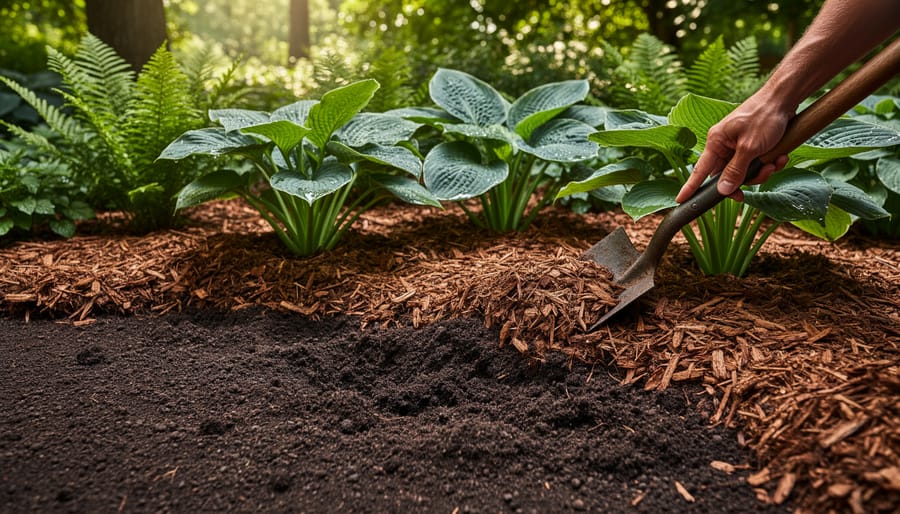
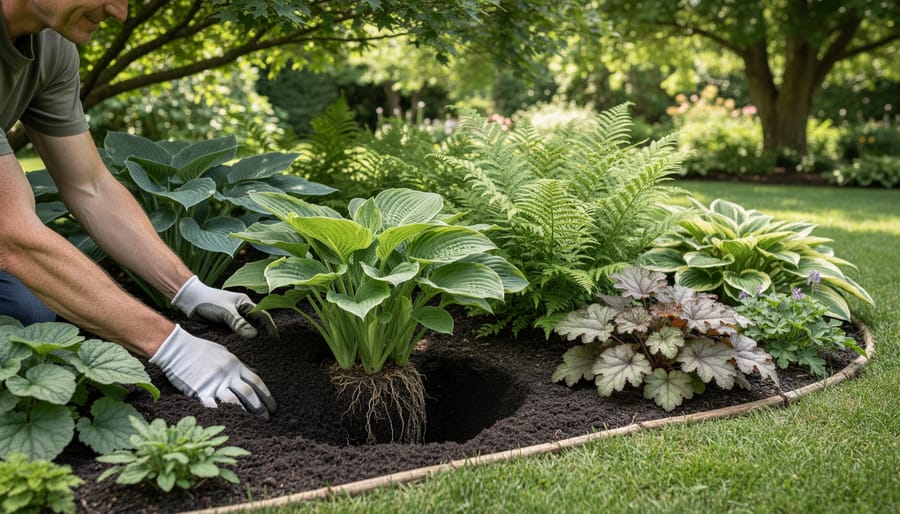
When you plant, give new additions their best start. Dig holes twice as wide as the root ball but no deeper. Amend only the planting hole if your soil is terrible, adding compost to the whole bed is better but takes more time. Water deeply at planting, then maintain consistent moisture for the first growing season while roots establish. Mulch with two to three inches of shredded bark to retain moisture and suppress weeds. These new planting tips apply to shade plants just as much as trees.
After that first season? You should be watering only during prolonged drought and pulling the occasional weed. That’s the payoff.
Expert Perspective: Interview with a Shade Garden Specialist
We spoke with Margaret Chen, a landscape designer with over twenty years of experience transforming challenging shade gardens across the Pacific Northwest. Her work focuses on creating naturalistic plantings that practically take care of themselves.
What’s your go-to recommendation for someone just starting with shade gardening?
Start with native ferns, autumn fern or lady fern depending on your region. They’re nearly indestructible once established, they look good from spring through fall, and they tell you immediately if something’s wrong with your site. If a fern struggles, you know you need to address drainage or soil quality before investing in anything more expensive.
What’s the biggest mistake you see homeowners make?
Fighting their conditions instead of working with them. Someone will buy a beautiful Japanese forest grass, plant it in bone-dry shade under a maple, then wonder why it looks miserable. Dry shade needs epimedium or barrenwort. Moist shade can handle astilbes and ligularias. Match the plant to what you actually have, not what you wish you had.
Which plant surprised you with how tough it really is?
Brunnera, hands down. I initially dismissed it as too delicate-looking, but it handles heat, dry spells, clay soil, and comes back reliably year after year. The variegated varieties add brightness without needing any deadheading or fussing. I use it everywhere now.
How do you define “low-maintenance” in practical terms?
A plant that needs attention twice a year, spring cleanup and maybe one haircut in midsummer if it flops. It doesn’t get diseases that require spraying, doesn’t need staking, doesn’t require dividing every three years, and doesn’t sulk if you skip watering. Hostas fit that bill. So do most native woodland perennials.
What’s one lesson that changed how you approach shade gardens?
Patience pays off exponentially. New clients always want instant fullness, but shade plants take two to three years to really establish and show their best. When you plant properly, mulch well, and give them time to develop root systems, they become genuinely self-sufficient. Rush it with too much fertilizer or overwatering, and you create dependency. Let them adapt slowly, and they’ll outlive you.
Final advice for beginners?
Buy one plant you love, observe it for a full year, then buy more. You’ll learn your microclimates, understand what thrives versus survives, and avoid expensive mistakes.
Frequently Asked Questions
Do shade plants need fertilizer? How soon should you expect them to fill in? These are the questions that come up again and again when gardeners start shopping for low-maintenance shade plants. Here are straight answers to the concerns we hear most often.
Do shade plants need fertilizer?
Most shade plants need little to no fertilizer once established, especially native species and ferns that evolved in woodland conditions with naturally nutrient-rich leaf litter. A spring topdressing of compost is usually more than enough for healthy growth.
How long until shade plants are established?
Expect 1-2 growing seasons for perennials and groundcovers, and 2-3 years for shrubs to develop strong root systems. During this time, water regularly during dry spells, but once established, most low-maintenance shade plants handle drought remarkably well.
Can you grow shade plants in containers?
Absolutely, hostas, ferns, coral bells, and many other shade lovers thrive in pots on shady patios or porches. Just remember that containers dry out faster than ground plantings, so even low-maintenance plants need more frequent watering when potted.
Are shade plants deer resistant?
Many are naturally unappealing to deer, including ferns, epimedium, lamium, and hellebores. However, hungry deer will eat almost anything, so in high-pressure areas, consider combining less-preferred plants with physical barriers or repellents during establishment.
What’s the difference between shade-tolerant and shade-loving plants?
Shade-loving plants actually prefer lower light and perform best there, while shade-tolerant plants can survive shade but would rather have more sun. For truly low-maintenance results, choose shade lovers, they won’t struggle or demand extra attention to compensate for dim conditions.
Should I remove tree leaves from shade plantings?
No, leaving fallen leaves mimics natural woodland conditions and provides free mulch, moisture retention, and slow-release nutrients as they decompose. Just rake them off delicate crowns to prevent smothering, but otherwise let nature do the work.
One more question worth addressing: do you need to divide shade perennials regularly? Not for low-maintenance varieties. Plants like hostas, Solomon’s seal, and epimedium can grow in the same spot for decades without division, though you can divide them every 5-10 years if you want to propagate new plants for other areas. That optional maintenance is a bonus, not a requirement for healthy growth.
Choosing the right shade plants from the start transforms what could feel like a perpetual chore into years of quiet, reliable beauty. The time you invest upfront, understanding your light levels, testing your soil, matching plants to their ideal conditions, pays dividends season after season. You’re not just buying plants; you’re creating a self-sustaining ecosystem that works with your garden’s natural rhythms rather than fighting against them.
Start with a few proven performers rather than attempting an entire shade bed at once. Plant three hostas, a patch of epimedium, maybe a Solomon’s seal or two. Watch how they respond to your particular patch of shade. Notice which spots stay damp longest after rain, where tree roots dominate, which areas get that golden hour of morning sun. This firsthand knowledge becomes invaluable as you expand.
Remember that “low-maintenance” doesn’t mean zero effort forever, it means front-loading your work during establishment, then enjoying the results. Water consistently that first growing season. Mulch properly. Give plants the spacing they need. Once established, most shade plants become wonderfully independent, returning each spring without fanfare and filling space without constant intervention.
Your shady spots don’t have to be problem areas anymore. With the right plants chosen thoughtfully, they become the garden’s most restful, easiest corners, places that look lush and intentional while asking very little in return. That’s the real reward of getting your plant selection right from day one.