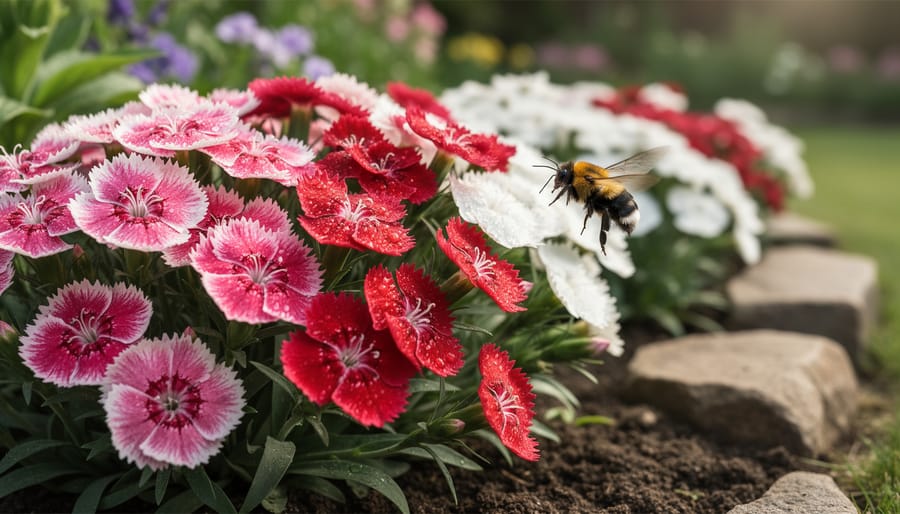
Yes, pollinators love dianthus. These charming cottage garden favorites draw bees, butterflies, and beneficial insects with their nectar-rich blooms and sweet, clove-like fragrance. For gardeners looking to support local pollinator populations while adding color and scent to their beds and borders, dianthus varieties deliver reliable performance from late spring through fall.
The question isn’t really whether pollinators visit dianthus, but rather how to choose the right varieties and position them for maximum impact. Single-flowered cultivars with accessible blooms outperform heavily doubled forms, and certain species attract specific pollinators more effectively than others. Native bumblebees, for instance, show marked preference for the tubular flowers of maiden pinks, while swallowtail butterflies gravitate toward taller sweet william varieties that offer convenient landing platforms.
What makes this particularly useful information in 2026 is the growing awareness of pollinator decline and the role home gardens play in creating habitat corridors. Dianthus fits beautifully into this picture because it thrives in well-drained soils where many pollinator favorites struggle, extending bloom seasons in rock gardens, borders, and containers. The plants ask little in return: decent drainage, some sun, and occasional deadheading.
In this guide, you’ll discover which dianthus varieties offer the best pollinator value, how their flower structure and bloom timing attract different beneficial insects, and practical companion planting strategies that turn a few scattered plants into a true pollinator haven. We’ll also hear from experienced gardeners who’ve watched their dianthus beds hum with activity season after season.
What Dianthus Means for Pollinator Gardens
Dianthus is a genus of flowering plants that includes pinks, carnations, and sweet williams, names that reflect the fringed, “pinked” edges of their petals and their often spicy-sweet fragrance. Native to Europe and Asia, these plants have been cultivated for centuries and now encompass more than 300 species, ranging from low-growing alpine types to taller garden varieties. Most gardeners encounter dianthus as compact perennials or biennials with narrow, blue-green foliage and five-petaled flowers in shades of pink, red, white, and magenta.
- Pinks
- Low-growing perennial dianthus species with fringed petals and clove-scented blooms, typically forming dense mats of foliage that make excellent edging plants for pollinator borders.
- Sweet William
- A biennial or short-lived perennial dianthus variety (Dianthus barbatus) that produces dense clusters of flowers on upright stems, providing abundant nectar for butterflies and bees during late spring and early summer.
- Carnation
- Taller dianthus varieties (Dianthus caryophyllus) grown for their large, often double blooms, though single-flowered forms are more accessible to pollinators than heavily doubled cultivars.
- Nectar guides
- The darker markings or color patterns on dianthus petals that direct pollinators toward the flower’s center where nectar and pollen are located.
The value of dianthus in pollinator gardens lies in its reliable nectar production, extended bloom period, and compact growth habit. Most varieties flower from late spring through midsummer, with deadheading often triggering a second flush in early fall. The blooms sit atop sturdy stems above the foliage, making them highly visible to passing butterflies and bees, while the spicy fragrance acts as an additional attractant. Unlike some ornamentals bred purely for appearance, single-flowered dianthus cultivars maintain accessible pollen and nectar, ensuring pollinators can actually feed rather than being turned away by densely doubled petals that block entry to floral resources.
How Dianthus Attracts and Supports Pollinators
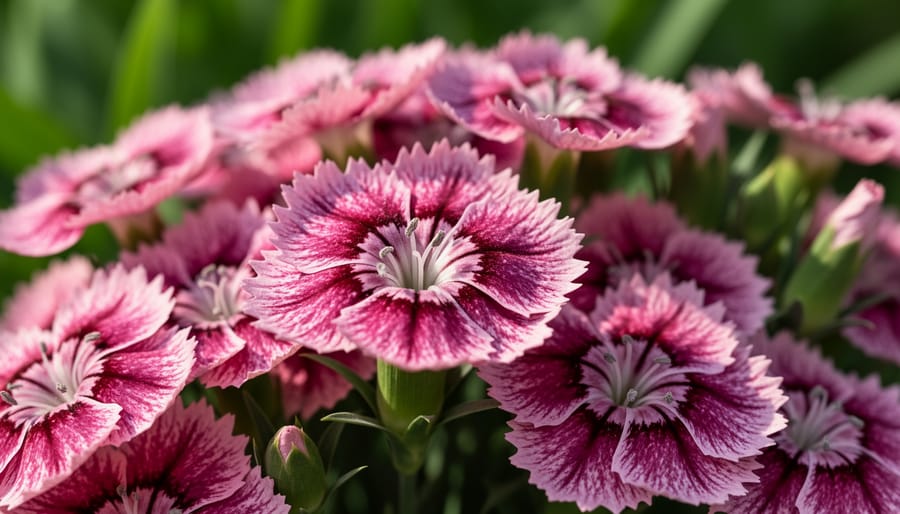
Dianthus attracts pollinators through a combination of physical and chemical features that make the flowers rewarding targets for nectar-seeking insects. The flowers produce accessible nectar at the base of their tubular petals, where it accumulates in quantities that butterflies and long-tongued bees can reach. Unlike some ornamentals bred solely for appearance, dianthus maintains functional reproductive structures that deliver pollen and nectar, which keeps pollinators returning throughout the bloom period.
The bloom structure of dianthus offers what pollinators need most: easy landing platforms and visible targets. The five-petaled flowers open flat or slightly cupped, giving butterflies stable surfaces to perch while they feed. Bumblebees and smaller native bees land on the fringed petals and work their way into the flower’s center, collecting pollen as they move. The fringed or serrated petal edges, characteristic of many dianthus varieties, increase the flower’s visual complexity and help insects distinguish it from surrounding foliage.
Color plays a significant role in pollinator attraction. Most dianthus cultivars bloom in shades of pink, magenta, red, and white, colors that butterflies perceive easily. Bees see these hues differently than we do, detecting ultraviolet patterns on the petals that act as nectar guides, directing them to the flower’s center where pollen and nectar wait. Red dianthus varieties attract hummingbird moths in addition to butterflies, broadening the range of visitors.
Fragrance amplifies the attraction. Dianthus produces a spicy, clove-scented aroma that carries on warm afternoons, advertising the flowers to pollinators working nearby plants. This scent acts as a long-range signal, drawing insects from beyond visual range and concentrating pollinator activity in areas where dianthus is planted in groups.
Bloom timing extends the value. Most dianthus varieties flower from late spring through early summer, with deadheading triggering rebloom into fall. This extended availability means pollinators find nectar during both the main spring flush and the late-season period when fewer flowers compete for their attention. In mixed plantings, dianthus fills gaps between the spring bulb season and summer perennial peak, maintaining a continuous food source that keeps pollinator populations stable in your garden.
Varieties of Dianthus for Pollinator Gardens
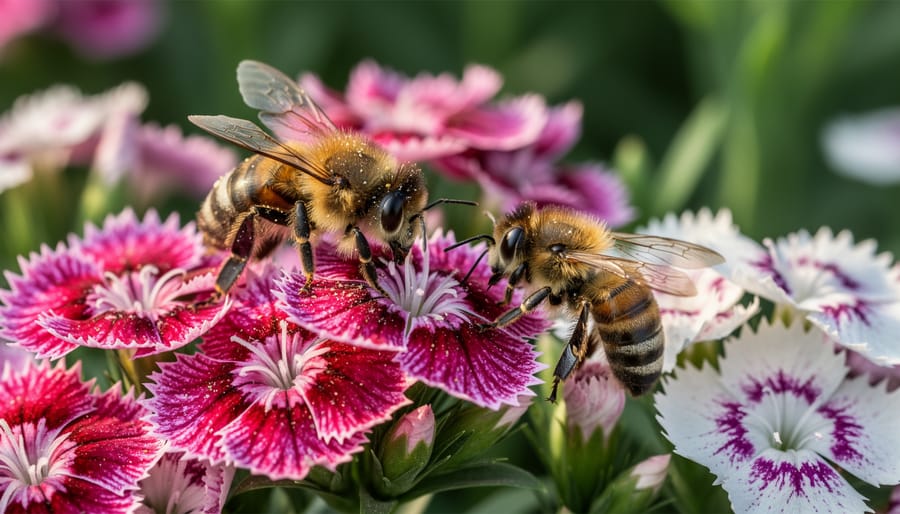
Perennial Dianthus for Long-Term Pollinator Support
Perennial dianthus varieties establish root systems that return stronger each season, creating reliable nectar stations that pollinators learn to revisit year after year. Dianthus gratianopolitanus, commonly called cheddar pinks, forms low, mat-like clumps of blue-green foliage topped with intensely fragrant single or semi-double flowers in late spring. The tight growth habit makes it ideal for rock gardens and edging, where its 6- to 12-inch height won’t block taller companions. Dianthus plumarius, or cottage pinks, offers slightly larger plants with feathery, fringed petals and a long flowering window that blooms May through August in many climates, ensuring food availability during peak pollinator activity. Both species tolerate drought once established, reducing maintenance while keeping flowers coming. Perennials rebloom more reliably when you shear spent blooms by a third, stimulating fresh flushes that extend the nectar supply into late summer. These varieties naturalize slowly through self-seeding or division, gradually expanding your pollinator habitat without annual replanting costs or effort.
Annual and Biennial Options
Sweet william (Dianthus barbatus) stands out as the most popular biennial dianthus for pollinator gardens, producing dense clusters of fragrant blooms from late spring through early summer. These flowers attract butterflies, bumblebees, and small native bees with their accessible nectar and vivid colors ranging from deep burgundy to pink and white. Sweet william typically grows 12-24 inches tall, making it ideal for mid-border plantings where pollinators can easily spot the blooms.
Annual pinks like Dianthus chinensis provide continuous flowering from late spring until frost, offering an extended feeding season that perennial varieties can’t match. These compact plants (6-12 inches) work well as edging or container specimens, maintaining fresh blooms with regular deadheading. The single-flowered cultivars like ‘Telstar’ and ‘Ideal’ series prove more valuable to pollinators than double-flowered types, which often produce less accessible nectar.
Both groups thrive in full sun with well-drained soil and tolerate heat better than many spring-blooming perennials. Plant them in drifts of five or more for visual impact and to create concentrated nectar stations that attract passing pollinators. Their clove-scented blooms also make excellent cut flowers without reducing the garden’s pollinator value significantly.
Using Dianthus in Companion Planting Schemes
Vegetable Garden Companions
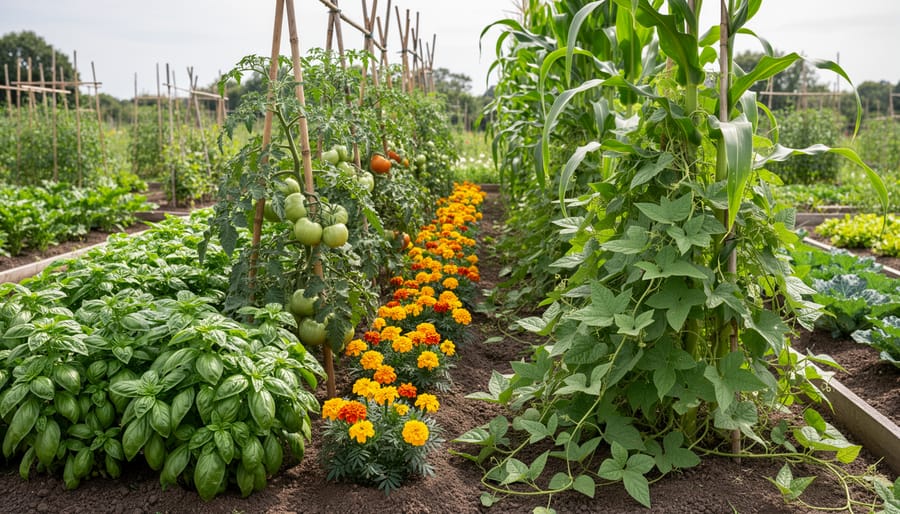
Tuck dianthus along the edges of raised beds or between rows of tomatoes, peppers, and squash to draw bees and butterflies where pollination matters most. The compact varieties stay under 12 inches, so they won’t crowd out vegetables, and their early-summer blooms overlap with the flowering period of many edible crops. Space plants 8 to 10 inches apart at bed borders or nestle a few clumps near sprawling squash vines, pollinators visiting the dianthus will naturally move to nearby vegetable blossoms.
Pair dianthus with alliums, basil, and marigolds for a layered approach that attracts beneficial insects while deterring pests; check a companion planting chart to avoid pairing mistakes that might limit growth or attract unwanted visitors. These proven plant combinations work because dianthus tolerates the same full-sun, well-drained conditions most vegetables prefer and blooms without heavy fertilizer that can promote excessive foliage over fruiting. Deadhead spent flowers every few days to keep new buds opening throughout the main harvest window.
Pollinator Garden Design with Dianthus
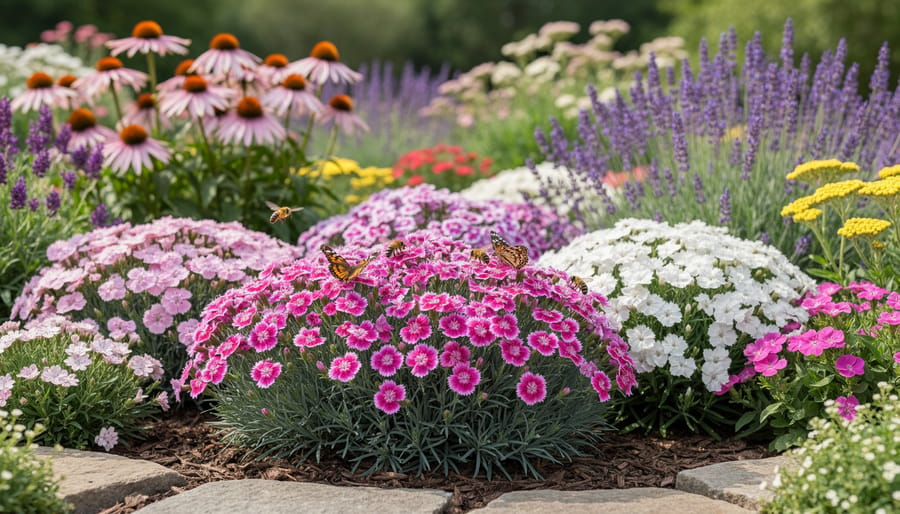
Start by positioning dianthus in the middle or front third of your bed where its compact form, typically 8 to 18 inches tall, won’t block taller plants behind it. Group at least three to five plants together rather than scattering singles; pollinators spot massed blooms more easily and feed more efficiently when they can move from flower to flower without flying long distances. Pair dianthus with staggered-bloom companions: early-season bulbs like crocus and allium, mid-season options such as lavender and salvia, and late performers like sedum and asters. This succession ensures nectar is available from spring through fall, keeping beneficial insects in your garden longer.
In a dedicated pollinator bed, combine dianthus with plants that offer different flower shapes to attract a wider range of species. Flat-topped yarrow and coneflowers draw butterflies, while tubular penstemons appeal to long-tongued bees that might skip dianthus but stay in the vicinity. Leave some bare ground or mulch lightly; many native bees nest in soil and won’t thrive in heavily mulched beds. Apply principles of pollinator garden design by planting in drifts rather than rigid rows, which creates visual impact and makes foraging more rewarding for insects moving through the space.
Growing Dianthus for Maximum Pollinator Benefit
Start with well-draining soil and a sunny spot, dianthus needs at least six hours of direct sunlight daily to produce the nectar-rich blooms pollinators crave. If your soil is heavy clay, work in coarse sand or fine gravel to improve drainage, since waterlogged roots lead to weak plants and sparse flowering. Aim for a slightly alkaline pH between 6.5 and 7.5; a handful of lime mixed into acidic soil at planting time helps.
Plant in spring after the last frost or in early fall, spacing plants 8 to 12 inches apart to allow air circulation. Dig a hole just deep enough to match the root ball’s height, firm the soil gently around the base, and water thoroughly to settle roots. A thin layer of mulch keeps weeds down, but pull it back an inch from the stems to prevent rot.
Water newly planted dianthus every few days until established, then reduce frequency. Established plants tolerate dry spells better than constant moisture, which can promote fungal issues and reduce bloom quality. Water at the base rather than overhead to keep foliage dry and discourage disease.
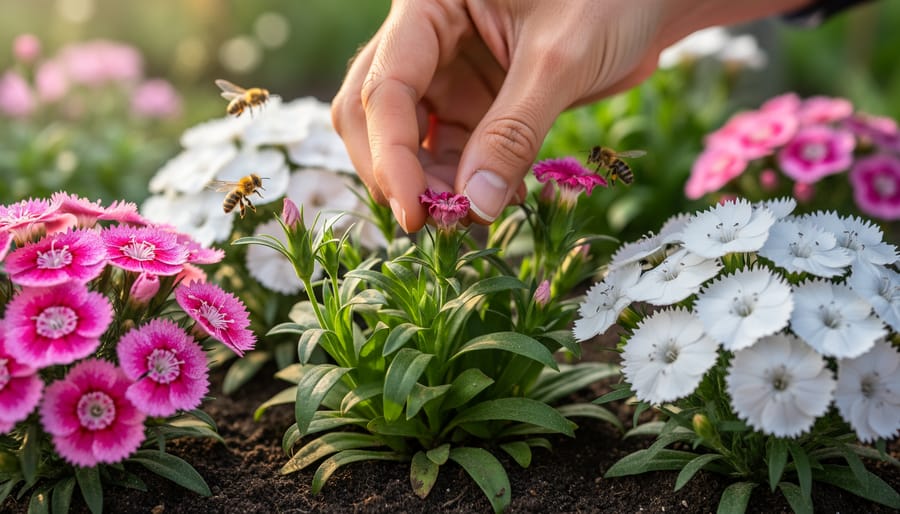
Deadhead spent flowers by snapping them off just above the next set of leaves. This simple step redirects energy into producing fresh blooms instead of seeds, extending the flowering window and keeping pollinators visiting throughout the season. Shear back leggy growth by one-third in midsummer if plants start to look ragged, they’ll rebound with a new flush of flowers.
Skip high-nitrogen fertilizers that push leafy growth at the expense of blooms. A light application of balanced organic fertilizer in early spring is enough. Most importantly, avoid using any systemic pesticides or neonicotinoids, which remain in plant tissues and can harm the very pollinators you’re trying to attract. If aphids appear, a strong spray of water or hand-picking handles the problem without poisoning bees and butterflies.
Expert Insight: A Pollinator Gardener’s Perspective on Dianthus
I’ve watched pollinators working through my garden for over twenty years, and dianthus consistently proves itself as a reliable draw. What strikes me most is the deliberate way butterflies approach the blooms, they’ll pass over showier flowers to land on dianthus, especially the older heirloom varieties with strong fragrance.
The sweet william beds I planted five years ago have become morning gathering spots for small native bees. They arrive early, well before the larger bumblebees show up at the salvias. I suspect the shallow bloom structure makes nectar easily accessible for insects with shorter tongues. I’ve counted six different bee species on a single patch during peak bloom in late spring.
One lesson I learned through trial: modern double-flowered cultivars look stunning but offer almost nothing to pollinators. The petals obscure the nectar, and I’ve seen butterflies land, probe unsuccessfully, then leave. Now I stick with single or semi-double forms. Dianthus gratianopolitanus varieties with their simple five-petaled flowers consistently outperform the fancy hybrids for actual pollinator activity.
Timing matters more than most gardeners realize. I stagger plantings of perennial pinks with biennial sweet williams to bridge the gap between spring bulbs and summer perennials. This creates continuous bloom from April through July in my zone 6 garden. The moths appreciate dianthus too, I’ve spotted them visiting at dusk when the clove scent intensifies.
My advice: plant in drifts rather than single specimens. Three plants minimum creates enough visual and olfactory signal to pull pollinators in from a distance. Place them where you can watch the action unfold.
How Dianthus for Pollinators Works
Dianthus operates as a pollinator magnet through a coordinated system of visual and chemical signals. The petals reflect ultraviolet light in patterns invisible to us but highly visible to bees, creating a landing-pad effect that guides insects directly to the flower’s center where nectar sits in a shallow pool at the base of the petals.
When a pollinator lands, the flower’s structure forces contact. The stamens and pistil position themselves so a visiting bee or butterfly must brush against them while reaching for nectar. Pollen grains stick to the insect’s body through tiny barbed structures, then transfer to the next flower when the pollinator repeats the process.
The fragrance compounds dianthus produces, primarily eugenol and methyl salicylate, travel on air currents up to several meters, advertising the plant’s location before pollinators even see it. This scent intensifies during peak nectar production hours, typically mid-morning through early afternoon, synchronizing the plant’s strongest signals with pollinators’ most active foraging periods.
The plant replenishes nectar reserves continuously throughout its bloom cycle, ensuring repeat visits. This reward consistency trains pollinators to return, establishing feeding routes that incorporate your dianthus plants as reliable stops.
Common Questions About Dianthus and Pollinators
The appeal of dianthus for pollinators raises practical questions that gardeners encounter when planning their planting schemes. Understanding these specifics helps you make informed decisions about incorporating dianthus into your pollinator-supportive landscape.
Do all dianthus varieties attract pollinators equally?
No, single-flowered varieties with accessible blooms attract far more pollinators than heavily doubled cultivars, which often hide nectar and pollen beneath layers of petals. Native and heirloom types generally outperform modern hybrids bred primarily for appearance.
Which pollinators visit dianthus most frequently?
Butterflies, particularly swallowtails and painted ladies, are the most common visitors, followed by small native bees and beneficial hoverflies. Honeybees visit occasionally, but dianthus isn’t their preferred nectar source compared to plants with more abundant flowers.
How long does dianthus bloom for pollinator support?
Most perennial dianthus bloom heavily for four to six weeks in late spring to early summer. Deadheading spent flowers encourages a lighter second flush in late summer, extending the pollinator feeding window by several weeks.
Why aren’t pollinators visiting my dianthus plants?
Common causes include heavily doubled flowers that block access, nearby pesticide use that repels insects, insufficient sun leading to weak blooms, or competition from more attractive nectar sources blooming simultaneously. Switching to single-flowered varieties and eliminating chemical treatments typically resolves the issue.
Deer resistance is another factor that makes dianthus practical for pollinator gardens in areas with browsing pressure. The plant’s spicy fragrance and slightly bitter foliage deter most deer, allowing your pollinator-supporting blooms to remain intact throughout the season. This protection means you can plant dianthus in exposed garden edges without fencing, creating accessible feeding stations for butterflies and bees while keeping the plants themselves safe from damage that would reduce their value to pollinators.
Dianthus earns its place in any pollinator garden through a combination of reliable blooms, easy care, and genuine appeal to beneficial insects. From the first flush of flowers in late spring through deadheaded repeat blooms in fall, these plants deliver consistent nectar sources when pollinators need them most. The spicy-sweet fragrance and accessible flower structure make dianthus particularly attractive to butterflies, while bees appreciate the steady pollen supply.
What makes dianthus especially valuable is how effortlessly it integrates into existing garden designs. Tucked along vegetable bed edges, it draws pollinators to crops that depend on them. Planted in drifts through perennial borders, it creates visual rhythm while supporting insect populations throughout the season. The compact growth habit of most varieties means you won’t sacrifice precious garden space to achieve meaningful pollinator impact.
Starting with dianthus requires minimal investment and even less expertise. These tough plants tolerate lean soils, shrug off drought once established, and ask little beyond occasional deadheading to keep blooms coming. For gardeners building pollinator habitat on any scale, dianthus offers an accessible entry point that delivers results in the first season.
The butterflies and bees visiting your garden don’t distinguish between elaborate landscapes and modest efforts. They respond to what blooms, what feeds them, and what returns reliably each year. Dianthus checks every box, making it a practical choice for supporting the insects your garden depends on.