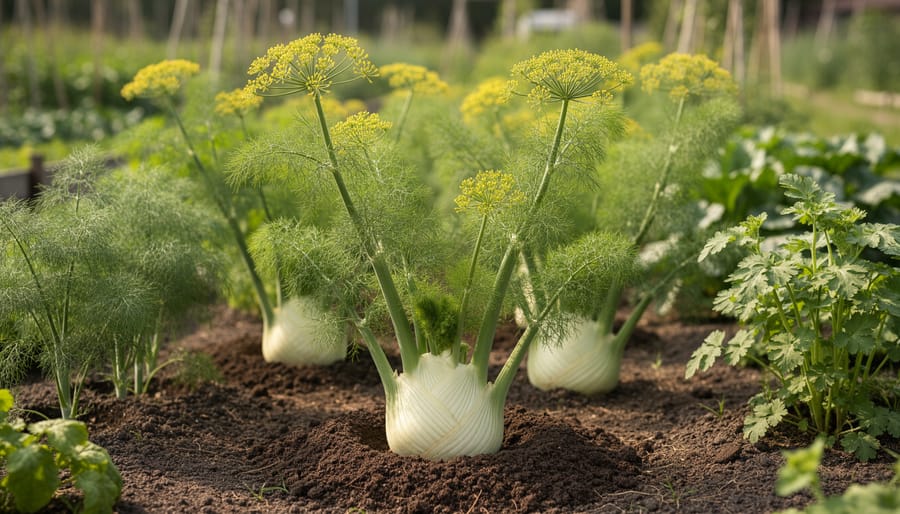
Fennel can be a powerful ally in building healthy garden soil, but only if you pair it carefully. This tall, aromatic herb attracts beneficial insects like ladybugs and lacewings that keep pest populations in check, while its deep taproot breaks up compacted earth and pulls nutrients from deep soil layers. Plant fennel with dill, coriander, and tansy for the best results, but keep it far away from tomatoes, beans, kohlrabi, and most vegetables in the brassica family, which it actively suppresses through chemical compounds released from its roots. The reward for getting companion planting right with fennel goes beyond pest control: you’ll see improved soil structure, increased beneficial insect activity, and healthier microbial communities in the root zone.
Understanding fennel’s reputation as a difficult companion doesn’t mean you should skip it entirely. I learned this lesson the hard way in 2024 when I planted fennel too close to my tomato bed and watched those plants struggle for weeks before I made the connection. Seasoned gardener Maria Hernandez, who’s managed community gardens in the Pacific Northwest for over two decades, puts it plainly: “Fennel is your soil’s friend but your vegetable garden’s enemy. Give it space, pair it wisely, and you’ll harvest both its benefits and your crops successfully.”
The secret lies in treating fennel as a soil-building specialist rather than a traditional garden companion, positioning it where its allelopathic properties won’t harm sensitive crops while its ecological benefits can still radiate through your garden ecosystem.
Understanding Fennel’s Role in the Garden Ecosystem
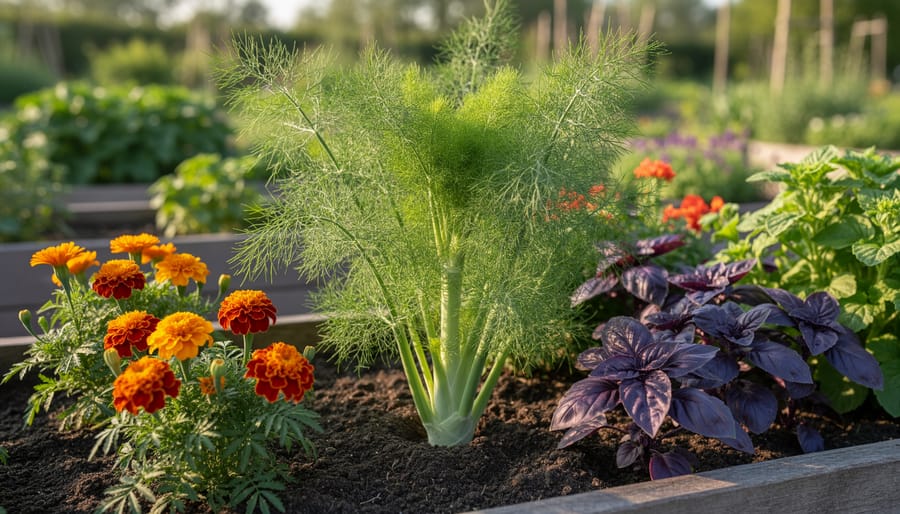
Why Fennel Is Both Friend and Foe
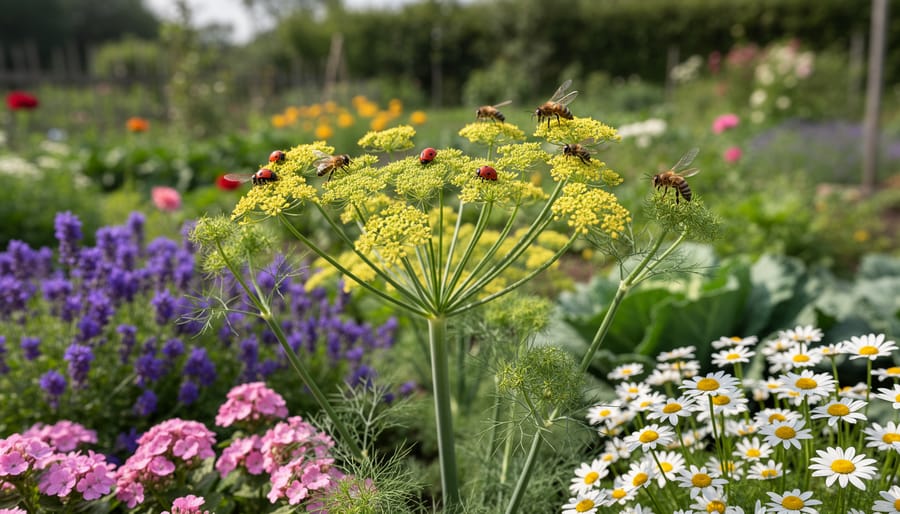
Fennel sits in an unusual position in the garden: it’s a magnet for beneficial insects yet notorious for stunting or killing nearby plants. Its feathery foliage and umbrella-shaped flowers attract ladybugs, lacewings, and parasitic wasps, some of the best natural pest defenders you can recruit. These allies improve soil health indirectly by reducing pest pressure without chemicals, which preserves beneficial soil microbes.
But fennel releases compounds from its roots that inhibit many common vegetables. I learned this several years ago when I planted fennel too close to my tomato bed. Within weeks, the tomatoes yellowed and stalled while the fennel thrived. That expensive mistake taught me fennel needs physical distance from sensitive crops, at least three to four feet, and preferably its own dedicated space. Think of fennel as a specialist plant: powerful in the right role, disruptive when miscast. Respect its quirks, and it becomes an asset rather than a liability.
What You’ll Need to Get Started
Before you dig in, gather everything you need for a successful fennel companion planting project. Having the right materials on hand makes the process smoother and sets your garden up for long-term soil health.
Essential Tools and Materials:
- Garden spade or shovel for preparing planting beds
- Hand trowel for transplanting and detailed work
- Garden fork to loosen compacted soil and improve aeration
- Watering can or hose with gentle spray attachment
- Organic compost (2-3 inches for top-dressing planting areas)
- Organic mulch such as straw, shredded leaves, or wood chips
- Measuring tape or garden markers for proper spacing
- Garden journal and pen to track companion combinations and results
Fennel Varieties to Consider:
Choose Florence fennel (also called bulbing fennel) if you want edible bulbs and a compact plant, or common fennel (bronze or green) if you’re primarily after beneficial insect attraction and feathery foliage. Bronze fennel tolerates slightly cooler climates and adds gorgeous color to your garden.
Companion Plants for Fennel:
Stock up on dill, coriander (cilantro), nasturtiums, marigolds, and perennial herbs like thyme or oregano. These companions either tolerate fennel’s allelopathic compounds or actively benefit from sharing space with it.
Optional but Helpful:
A basic soil test kit helps you check pH and nutrient levels before planting. While not strictly necessary, it takes the guesswork out of soil amendments and confirms whether your conditions suit fennel’s preferences.
Important Precautions Before You Plant
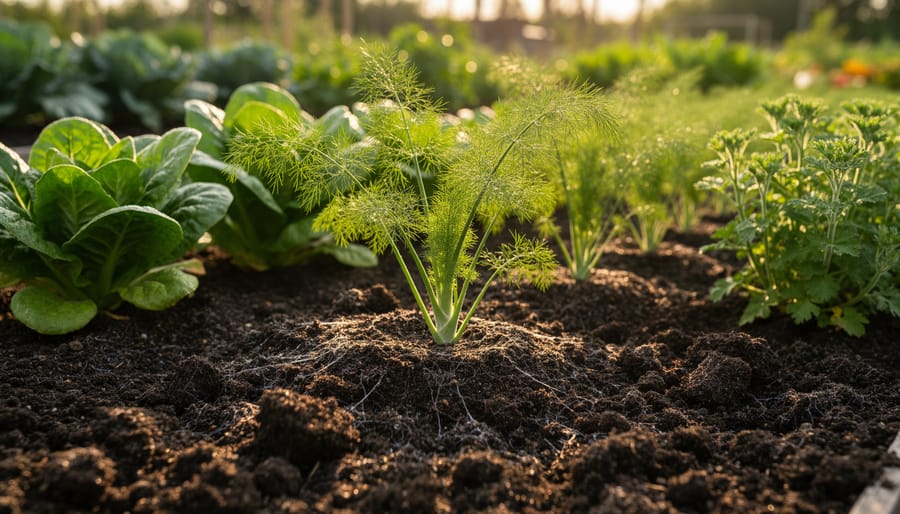
Before you dig in, understand that fennel can be one of the trickiest herbs to place. Its allelopathic compounds inhibit the growth of many common vegetables, and getting too enthusiastic about placement is among the most common pairing mistakes in the garden.
Keep fennel at least three to four feet away from any sensitive crops. This distance minimizes the spread of allelopathic chemicals through the soil while still allowing you to enjoy fennel’s benefits in a dedicated zone. If your garden is small, consider growing fennel in a container or placing it at the far edge of your plot, well away from vegetable beds.
Check your soil drainage before planting. Fennel despises wet feet and will rot in heavy clay or poorly draining areas. If water pools after rain, amend with compost and sand or choose a different location.
Finally, be ready to manage fennel’s self-seeding habit. One plant can scatter hundreds of seeds if you let the flowers mature. Deadhead spent blooms unless you want fennel popping up everywhere next season, potentially crowding out the companions you’ve carefully chosen.
Step-by-Step: Planting Fennel with Companion Plants for Soil Health
Step 1: Choose and Prepare Your Planting Site
Pick a spot that gets at least six hours of direct sunlight daily, fennel is a sun lover and won’t thrive in shade. The site needs well-draining soil since fennel hates wet feet and will quickly rot in waterlogged conditions.
Before you plant anything, grab a simple soil test kit and check your pH. Fennel tolerates a fairly wide range, from soil pH 6.0 to 8.0 but aiming for 6.5 to 7.0 gives you the sweet spot for both fennel and most companion herbs.
Once you know your pH, work in a 2-inch layer of finished compost across the planting area. This isn’t just about feeding your fennel. Compost introduces billions of beneficial microorganisms, bacteria, fungi, protozoa, that break down organic matter, cycle nutrients, and create soil aggregates. Those aggregates improve water infiltration and root penetration, which means healthier plants and living soil that gets better every season.
Step 2: Select Compatible Companion Plants
Select companions that can coexist with fennel’s strong personality while contributing to your soil’s vitality. Dill and coriander are natural allies, both tolerate fennel’s allelopathic compounds and attract the same beneficial insects. Their shallow, fibrous roots create different soil layers than fennel’s taproot, maximizing nutrient access without direct competition.
Nasturtiums serve double duty as living mulch and pest deterrents. Their spreading habit shades soil, keeping it cool and moist while their roots loosen compacted areas. As they decompose, they add nitrogen back into the soil. Marigolds similarly protect fennel from nematodes while their dense root systems improve soil structure.
Certain perennial herbs like thyme and oregano make excellent fennel neighbors. These low-growing plants create a protective carpet that reduces moisture loss and feeds soil microbes as their leaves naturally shed. For more strategic herb pairings that enhance soil biology, consider adding chamomile or yarrow around your fennel patch, both accumulate minerals that eventually enrich the surrounding earth.
Step 3: Plan Your Layout with Proper Spacing
With your site prepared and companions chosen, it’s time to map out where everything goes. Grab a piece of paper or your garden journal, I can’t stress enough how helpful it is to sketch your layout. You’ll thank yourself next season when you’re trying to remember what worked.
Position fennel at least 3-4 feet away from any sensitive vegetables like tomatoes or beans. I’ve found the best spot is often a dedicated herb or pollinator corner, away from your main vegetable beds. This keeps fennel’s allelopathic compounds from interfering while still letting you enjoy its benefits.
Place taller companions like dill toward the back if you’re working with a border, and shorter plants like nasturtiums at the front. Think about sun exposure too, fennel won’t shade out low-growing companions if you position it thoughtfully. Mark your zones clearly so you can track how different plants perform together over time.
Step 4: Plant Fennel and Companions
Start with fennel, whether from seed or transplant. If direct-seeding, sow seeds quarter-inch deep in loose, crumbly soil after your last frost date. Space them 12 inches apart in rows 18 inches wide. For transplants, dig holes slightly larger than the root ball and set plants at the same depth they grew in their containers.
Plant your companions next. Position dill and coriander seeds half-inch deep, spacing them 8-10 inches from fennel. Tuck nasturtium transplants around the perimeter, their trailing roots help break up compacted layers. Set marigolds 10 inches away; their fibrous roots work closer to the surface while fennel’s taproot dives deep, creating multiple soil zones that improve water infiltration and aeration.
This layered root architecture does the real work. Shallow feeders occupy the top inches while taproots crack through hardpan below, opening channels for air, water, and earthworms that build soil structure naturally.
Step 5: Mulch and Water Strategically
Once your fennel and companions are in the ground, spread a 2-3 inch layer of organic mulch, shredded leaves, straw, or aged wood chips work beautifully, around each plant, keeping it a few inches away from the stems to prevent rot. This mulch blanket does triple duty: it holds moisture during dry spells, blocks weed seeds from germinating, and slowly decomposes to feed the microbes and fungi that build healthy soil structure.
Water deeply but less frequently, aiming for about an inch per week including rainfall. Instead of daily sprinkling, soak the soil thoroughly every few days so moisture penetrates 6-8 inches down. This approach trains fennel and companion roots to dive deep rather than hovering near the surface, naturally aerating your soil as they grow and creating channels for air, water, and beneficial organisms to move through the soil layers.
Step 6: Monitor and Maintain the Planting
Once your fennel and companions are established, check weekly for yellowing leaves or stunted growth in neighboring plants, clear signs fennel’s allelopathy is too strong. If this happens, increase spacing next season. Snip fennel flower stalks before they set seed to prevent aggressive self-sowing, unless you want volunteers popping up everywhere. Skip chemical pesticides entirely; they’ll wipe out the beneficial insects fennel attracts. Instead, let a few dill or coriander plants flower alongside your fennel, these blooms feed parasitic wasps and hoverflies that keep aphids in check while their roots continue feeding soil microbes. I’ve found that this hands-off approach, just observing and tweaking rather than controlling, creates the healthiest soil over time.
How to Know Your Companion Planting Is Working
You’ll see the first signs of success within a few weeks, but the real magic unfolds over months and years as your soil comes alive. Healthy fennel grows upright with feathery, vibrant green foliage and sturdy stems, while thriving companions show no yellowing or stunted growth near the fennel, a clear sign you’ve chosen compatible partners and spaced them properly.
Watch for these key indicators that your companion planting strategy is building healthier soil:
- Increased earthworm activity when you dig near the planting area
- Soil that crumbles easily in your hand rather than compacting into hard clumps
- Water soaking in quickly after rain or irrigation instead of pooling on the surface
- Dark, rich color developing in the topsoil as organic matter breaks down
- Regular visits from ladybugs, lacewings, hoverflies, and other beneficial insects
By mid-season, you should notice your pollinator garden buzzing with activity around fennel’s umbel flowers. This biodiversity feeds the soil food web below ground. Dig down six inches and you’ll likely find improved soil structure compared to earlier in the year, the roots from your diverse plantings work together to aerate and enrich the earth.
Into the second and third years, expect even more dramatic improvements: deeper topsoil layers, plants that bounce back faster from stress, and reduced need for fertilizers as your soil ecosystem matures. Keep notes each season so you can track these changes and celebrate your progress.
Expert Insights: A Conversation with Sarah Chen on Fennel Companion Planting
I reached out to Sarah Chen, a permaculture designer with over 15 years of experience in regenerative agriculture, to get her perspective on fennel’s often-misunderstood role in the garden.
What’s your take on fennel in a soil-building system?
“Fennel gets a bad reputation, but it’s actually brilliant for long-term soil health if you understand what it’s doing,” Sarah explains. “Yes, it suppresses some plants, but that allelopathic quality also means it’s pumping secondary metabolites into the soil, compounds that shift microbial communities in ways we’re only beginning to understand.”
How do you work around its challenging nature?
“I position fennel strategically in zones where I want insect diversity first and foremost. The lacewings and parasitic wasps it attracts don’t just control pests, they die and decompose in your soil, adding nitrogen and feeding microbes. That’s a nutrient cycle most gardeners overlook.”
Any advice for someone nervous about trying fennel?
“Start small. Plant one fennel in your pollinator strip, away from annual vegetables. Watch what happens around it over a full season. You’ll see the soil beneath fennel stays cool and moist, earthworm activity increases, and the microbial life becomes incredibly active. That’s regenerative gardening in action, letting plants do the work.”
Common Questions About Fennel Companion Planting
Can I grow fennel in containers with companions? Yes, container growing actually helps manage fennel’s allelopathic effects. Use a large pot (at least 12 inches deep) and plant fennel with shallow-rooted companions like nasturtiums or marigolds, which tolerate the confined space and benefit from fennel’s pest-deterring properties. Keep the container separate from sensitive vegetables, and be prepared to refresh the potting mix more frequently as fennel is a heavy feeder.
Does fennel deplete soil nutrients?
Fennel is moderately hungry for nutrients but doesn’t deplete soil more than other herbs. It actually contributes to soil health by attracting beneficial insects and adding organic matter when spent plants are composted back into the garden.
What happens if I plant fennel near vegetables accidentally?
You’ll likely see stunted growth, yellowing leaves, or reduced yields in nearby vegetables, especially tomatoes and beans. Dig up the fennel promptly and relocate it at least four feet away, then amend the affected area with compost to help neighboring plants recover.
How does fennel improve soil compared to other herbs?
Fennel’s deep taproot breaks up compacted layers and brings nutrients to the surface, while its umbrella-shaped flowers attract predatory insects that reduce pest pressure and eliminate the need for soil-damaging pesticides. This combination makes it particularly valuable for long-term soil regeneration.
Will fennel’s allelopathic effects linger in the soil after I remove it?
The compounds break down relatively quickly, usually within a few weeks. Adding compost and planting a cover crop like clover can speed up the process and restore soil balance before your next planting.
The beauty of fennel companion planting lies in working with its quirks rather than against them. Once you understand its spacing needs and compatible partners, you can harness its soil-building benefits without sacrificing your vegetable harvests.
Fennel companion planting isn’t about perfection, it’s about observation, adaptation, and building healthier soil one season at a time. Yes, fennel demands thoughtful placement away from sensitive vegetables, but the benefits it brings to your garden ecosystem make it absolutely worth the effort. The beneficial insects it attracts, the soil life it supports, and the diversity it adds to your planting beds all contribute to a more resilient, thriving garden.
Start small if you’re hesitant. Plant fennel in a dedicated herb zone this season and watch what happens. Notice the lacewings hovering around the flowers, check your soil’s texture after a few months, and pay attention to which companions genuinely thrive alongside it. Take notes, snap photos, and don’t be afraid to adjust your layout next year based on what you learn.
Expand your companion planting experiments to other areas as your confidence grows. Share your successes and failures with fellow gardeners, we’re all learning together. Your journey toward healthier garden soil is uniquely yours, and every step you take enriches both your plot and your knowledge.