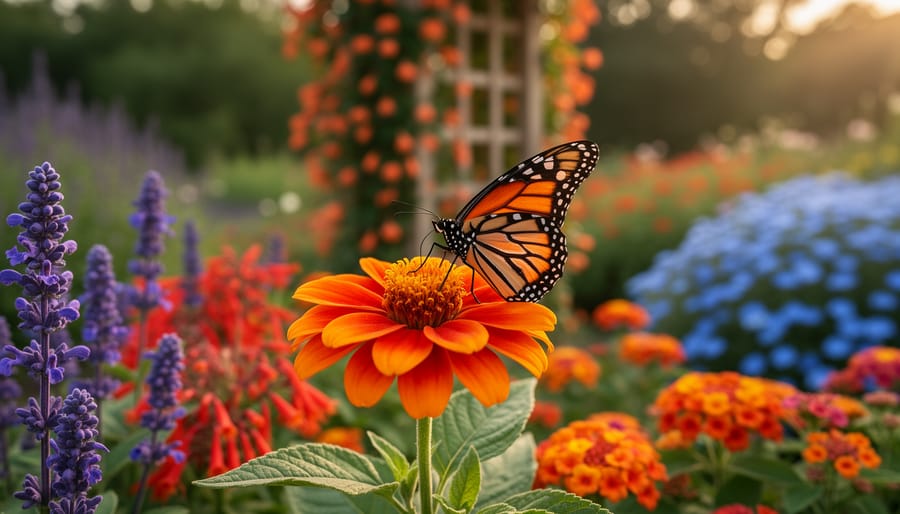
Transform your Zone 6 garden into a thriving local ecosystem by creating a pollinator paradise that blooms from early spring through late fall. Plant native perennials like purple coneflower, black-eyed susan, and bee balm in clusters of at least three to five plants, maximizing nectar availability for butterflies, bees, and hummingbirds. Position your garden in a sheltered spot that receives 6-8 hours of direct sunlight, incorporating both early-season bloomers like columbine and late-season favorites such as New England asters to provide continuous food sources. Layer your plantings with varying heights—tall joe-pye weed at the back, mid-height butterfly weed in the middle, and creeping thyme at the edges—creating diverse habitats that support different pollinator species through Zone 6’s distinct seasonal changes. With average winter temperatures between -10°F and 0°F, select hardy native species that will return year after year, establishing a sustainable sanctuary for local wildlife while requiring minimal maintenance.
Best Plants for Your Zone 6 Pollinator Paradise
Spring Bloomers That Pollinators Love
As winter fades, early spring bloomers become vital lifelines for emerging pollinators in Zone 6 gardens. These pollinator-friendly plants not only add vibrant colors to your garden but also provide essential nectar and pollen when food sources are scarce.
Crocus and snowdrops are among the first to emerge, often pushing through late snow to offer sustenance to early-rising bees. These hardy bulbs are followed by cheerful daffodils and grape hyacinths, which create waves of yellow and purple that butterflies find irresistible.
Don’t overlook the power of native spring ephemerals like Virginia bluebells and wild columbine. These natural beauties have evolved alongside local pollinators, making them perfect matches for your garden’s early-season visitors. Bleeding hearts and lungwort add both visual interest and valuable nectar sources, while spring-blooming shrubs like serviceberry and pussy willow provide essential pollen for native bees.
For reliable early-season color and pollinator appeal, consider adding:
– Hellebores (Lenten rose)
– Spring phlox
– Violets
– Early-blooming rhododendrons
– Redbud trees
Remember to plant these spring bloomers in clusters rather than individually. This arrangement makes it easier for pollinators to spot them and collect resources efficiently, ensuring your garden becomes a springtime haven for these essential creatures.
Summer Show-Stoppers for Maximum Activity
When summer hits its stride, your Zone 6 pollinator garden can become a bustling hub of activity with the right plant selections. Black-eyed Susans are absolute champions, producing waves of golden blooms that butterflies simply can’t resist. These hardy natives bloom from July through September, providing a reliable food source when many other plants are fading.
Purple coneflowers (Echinacea) are another summer superstar, offering both beauty and functionality. Their sturdy stems hold up well in Zone 6’s summer storms, while their prominent centers serve as perfect landing pads for bees and butterflies. Plant them in clusters of three or five for maximum impact.
Don’t overlook the power of native bee balm (Monarda). Its shaggy, crown-like flowers in vibrant reds and purples are hummingbird magnets, and they perform beautifully in our Zone 6 summers. For vertical interest and late-summer nectar, Joe Pye weed is unbeatable, growing up to 7 feet tall and creating a dramatic backdrop while attracting countless butterflies.
Consider adding blazing star (Liatris) for its unique vertical purple spikes that bloom from top to bottom, contrary to most flowers. Butterflies and bees work their way down these spectacular spires throughout July and August. For sunny spots, Russian sage offers drought-tolerant, silvery foliage and long-lasting purple blooms that pollinators buzz around all season long.

Late-Season Heroes for Fall Pollinators
As autumn approaches, your pollinator garden doesn’t have to wind down. Several hardy plants continue providing essential nectar and pollen well into the fall, supporting late-season pollinators like migrating monarchs and native bees preparing for winter.
Asters are absolute champions of the autumn garden, with their daisy-like blooms in purples, pinks, and whites attracting countless butterflies and bees. New England asters and aromatic asters are particularly well-suited for Zone 6 conditions, blooming reliably through October.
Goldenrod adds brilliant yellow sprays to the fall landscape and, contrary to popular belief, doesn’t cause hay fever. These native plants are pollinator magnets, especially for beneficial insects and late-season butterflies.
Sedum ‘Autumn Joy’ is another fall superstar, with its large flower heads starting pink and deepening to rich bronze. Its sturdy stems provide landing pads for bees and butterflies, while its nectar-rich blooms keep them coming back.
Don’t forget about herbs! Late-blooming varieties like Russian sage and anise hyssop continue flowering into fall, providing both beauty and sustenance for pollinators. These plants are particularly valuable as other food sources become scarce.
For ground cover, try planting creeping thyme or hardy chrysanthemums. These low-growing plants create carpets of color while offering essential late-season nectar. Remember to leave some stems standing through winter, as they provide crucial habitat for overwintering insects.
Design Your Zone 6 Pollinator Garden
Garden Layout Strategies
Creating an effective pollinator garden starts with smart layout planning. Following proven native garden design principles will help attract and sustain diverse pollinators throughout the growing season.
Arrange your plants in clusters or drifts of at least three to five specimens of the same species. This grouping strategy makes it easier for pollinators to spot their favorite flowers and move efficiently between blooms. Think of it as creating “pollinator pit stops” throughout your garden.
Layer your garden vertically by incorporating plants of different heights. Tall plants like Joe Pye weed can serve as backdrop anchors, while medium-height Black-eyed Susans fill the middle ground, and low-growing creeping thyme carpets the front edges. This multi-level approach provides various feeding zones for different pollinator species.
Create winding pathways between plant groupings rather than straight lines. These curved paths not only look more natural but also slow down wind, giving pollinators better flying conditions. Include some open areas for ground-nesting bees and leave a few bare soil patches they can use for nesting sites.
Remember to position your garden where it will receive at least six hours of sunlight daily, as most flowering plants that attract pollinators thrive in full sun. If possible, arrange plantings to provide continuous blooms from spring through fall, ensuring a reliable food source for your garden visitors.

Creating Pollinator Microclimates
Creating a welcoming microclimate for pollinators in Zone 6 is essential for their survival, especially during extreme weather conditions. Start by incorporating windbreaks using native shrubs and small trees along the north and west sides of your garden. These natural barriers not only protect pollinators from harsh winds but also provide additional nesting sites.
Layer your garden with plants of varying heights to create multiple shelter zones. Tall perennials like coneflowers and black-eyed susans can shield smaller plants and ground-dwelling insects, while also offering landing spots for butterflies and bees. Include rock piles and wooden features, which warm up quickly in spring and provide essential basking spots for butterflies and other insects.
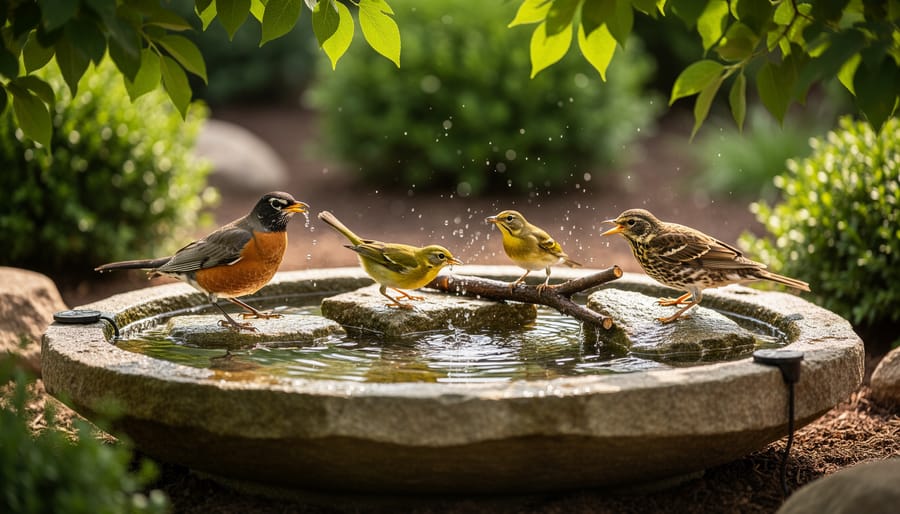
Water features are crucial in Zone 6 gardens, where summers can be quite warm. A shallow bird bath with landing stones or a small pond with gently sloping sides offers safe drinking spots. During winter, leave plant stems and fallen leaves in place to provide overwintering sites for beneficial insects.
Consider adding insect hotels or bee houses in sheltered locations facing southeast to catch morning sun. These structures should be positioned 3-6 feet off the ground and protected from prevailing winds. Remember to include patches of bare soil for ground-nesting bees, and maintain some damp, muddy areas for butterflies to gather minerals.
In Zone 6’s variable climate, these thoughtful microclimate considerations can make the difference between a garden that merely attracts pollinators and one that helps them thrive year-round.

Seasonal Care Tips for Zone 6 Success
Spring Preparation
As winter releases its grip, early spring is the perfect time to prepare your Zone 6 pollinator garden for the busy season ahead. Start by cleaning up winter debris, being careful not to disturb any overwintering beneficial insects that may still be sheltering in leaf litter or hollow stems. Wait until temperatures consistently reach 50°F (10°C) before removing protective mulch from perennial plants.
Test your soil once it’s workable, typically in March or early April. Zone 6 gardens often benefit from adding organic matter like compost to improve drainage and nutrient content. This is also the ideal time to map out new planting areas or expand existing ones, keeping in mind that pollinators prefer gardens with clusters of the same flower species.
Check your existing perennials for signs of life and prune away any dead or damaged growth. Early spring bloomers like crocus and hellebores should be emerging, providing crucial early-season nectar for awakening pollinators. Consider adding more spring-blooming natives to your garden to support these early visitors.
Set up or clean existing bee houses and ensure water sources are ready. A shallow dish with pebbles makes an excellent drinking station for pollinators. This is also the perfect time to start seeds indoors for summer-blooming pollinator favorites, giving them a head start before the last frost date, which typically falls in mid-April to early May in Zone 6.
Summer Maintenance
Summer is the peak season when your pollinator garden truly comes alive, and while low-maintenance pollinator gardens are designed to be self-sustaining, a few simple care tasks will keep your garden thriving and buzzing with activity.
Water deeply but infrequently, preferably in the early morning, focusing on the root zone rather than spraying the foliage. This encourages deep root growth and helps plants withstand the heat of Zone 6 summers. Most native pollinator plants are drought-tolerant once established, but they’ll appreciate extra water during extended dry spells.
Deadheading spent blooms from plants like coneflowers and black-eyed susans encourages continued flowering throughout the season. However, leave some seed heads intact, as they provide food for birds and create winter interest in your garden.
Keep an eye out for invasive plants that might try to muscle their way in, and remove them promptly. Mulch any bare spots with organic material to suppress weeds and retain moisture. Remember, a slightly messy garden is actually perfect for pollinators – they love natural hiding spots and nesting areas.
Monitor your garden for signs of stress or disease, but avoid using chemical pesticides that could harm beneficial insects. Instead, encourage natural pest control by attracting beneficial insects like ladybugs and praying mantises to your garden.
Fall and Winter Care
As autumn approaches, your Zone 6 pollinator garden requires thoughtful preparation for the colder months ahead. Leave spent flower heads standing through winter – they provide essential food for birds and create natural shelter for beneficial insects. Many native bees overwinter in hollow stems, so avoid cutting these back until early spring.
Layer 2-3 inches of mulch around your perennials, but be careful not to pile it against plant stems. This insulation helps protect root systems during freeze-thaw cycles common in Zone 6. Consider leaving some bare soil patches uncovered, as certain native bees need access to the ground for nesting.
Fall is also the perfect time to collect and store seeds from your favorite pollinator plants. Let seedheads dry completely on the plant before harvesting, then store them in paper envelopes in a cool, dry place for next season’s planting.
While it might be tempting to clear away all fallen leaves, consider creating small leaf piles in protected corners of your garden. These natural shelters provide crucial winter habitat for butterflies, beneficial insects, and other pollinators.
Keep your garden hydrated until the ground freezes, especially if autumn brings dry weather. Well-hydrated plants have a better chance of surviving winter’s challenges. Finally, use this dormant season to plan next year’s additions to your pollinator paradise, focusing on extending your garden’s blooming season even further.
Creating a pollinator garden in Zone 6 is an incredibly rewarding endeavor that benefits both your local ecosystem and your gardening experience. By incorporating the plant selections, seasonal care tips, and design strategies we’ve discussed, you can create a thriving haven for bees, butterflies, and other essential pollinators in your backyard.
Remember that success doesn’t require perfecting everything at once. Start with a small area, perhaps incorporating just a few native flowering plants, and gradually expand your garden as you gain confidence. The key is to provide continuous blooms throughout the growing season while ensuring a mix of flower shapes, sizes, and colors to attract diverse pollinator species.
Don’t forget the fundamental elements we covered: including water sources, creating shelter, avoiding pesticides, and maintaining your garden through the seasons. Even a modest-sized pollinator garden can make a significant impact on your local ecosystem.
As you embark on this exciting journey, keep in mind that every pollinator garden is unique, and it’s okay to adapt these guidelines to suit your specific yard and preferences. The most important step is simply to begin. Whether you’re transforming an existing garden bed or starting from scratch, your efforts will contribute to the larger movement of supporting pollinator populations in Zone 6 and beyond.
So grab your gardening tools and get started – the pollinators are waiting for your invitation to visit!