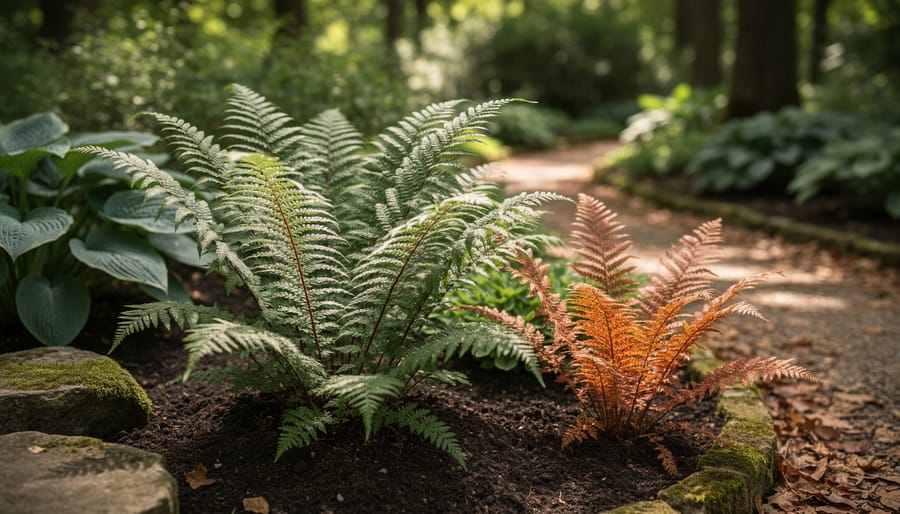
Transform shaded corners into lush green sanctuaries by selecting hardy fern varieties like Japanese Painted Ferns or Autumn Ferns that thrive in low-light conditions with minimal fuss. These ancient plants have survived millions of years by adapting to forest floors, making them perfect companions for modern gardens where other ornamental plants struggle to perform.
Plant ferns in moisture-retentive soil enriched with compost or leaf mold, positioning them where they’ll receive dappled shade or morning sun followed by afternoon protection. Most ornamental ferns establish quickly when their crown sits at ground level, not buried deep, and they’ll reward you with unfurling fronds that add movement and texture throughout the growing season.
Maintain consistent soil moisture during the first growing season by watering deeply twice weekly, then reduce frequency as root systems develop and plants become drought-tolerant. Apply a two-inch layer of organic mulch around the base to regulate temperature, retain moisture, and suppress weeds while mimicking the natural forest floor environment ferns love.
Whether you’re designing a woodland garden, filling problematic shady spots, or creating a low-maintenance landscape feature, ornamental ferns offer year-round interest with their elegant fronds and reliable performance. From compact varieties perfect for container gardens to towering specimens that command attention in border plantings, there’s a fern suited to every garden style and space constraint, making them invaluable additions to any plant collection.
What Makes Ornamental Ferns Special
There’s something almost magical about ferns that makes them unlike any other plant in your garden. These remarkable plants have been around for over 350 million years, predating even the dinosaurs! When you add a fern to your landscape, you’re welcoming a living connection to Earth’s ancient forests.
What truly sets ornamental ferns apart is their incredible foliage. Unlike flowering plants that come and go with the seasons, ferns offer months of continuous visual interest through their sculptural fronds alone. Each species presents a unique personality—from the delicate, lacy texture of maidenhair ferns to the bold, architectural presence of ostrich ferns. It’s this variety that makes them so versatile in garden design.
I’ve always appreciated how ferns bring a softness to garden spaces that’s hard to achieve with other plants. Their feathery fronds create movement and dimension, catching light and shadow in ways that change throughout the day. They’re natural problem-solvers too, especially for those tricky spots in shade gardens where little else will grow.
Master gardener Ellen Thompson shared with me during a recent interview that ferns are her go-to recommendation for beginner gardeners struggling with shady areas. “People often think shade means boring,” she explained, “but ferns prove that wrong. They’re incredibly forgiving and reward you with gorgeous texture all season long.”
Perhaps most impressive is their adaptability. While they prefer shade and moisture, many ferns tolerate a surprising range of conditions once established. They don’t need deadheading, rarely suffer from serious pests, and require minimal maintenance. For busy gardeners wanting maximum impact with minimum fuss, ornamental ferns deliver beautifully year after year.
The Most Beautiful Ornamental Ferns for Your Garden
Japanese Painted Fern
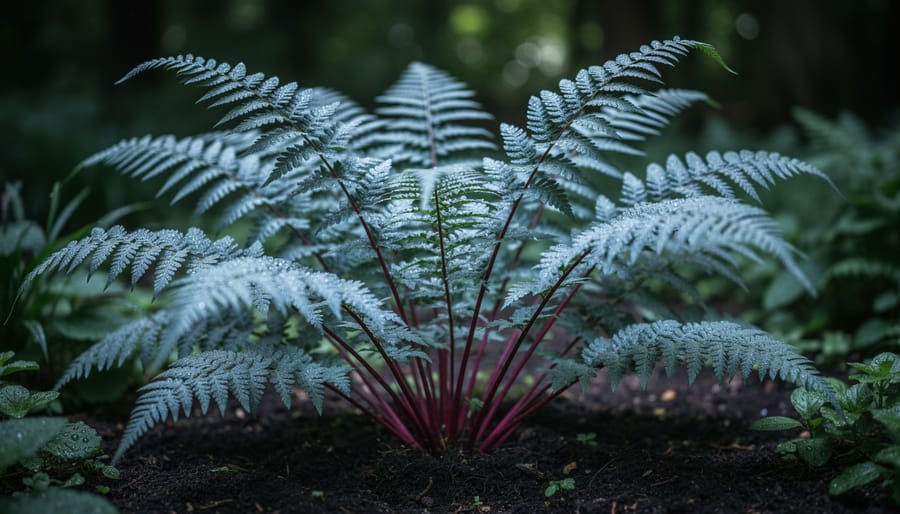
If you’ve been searching for a fern that breaks the mold of standard green foliage, the Japanese Painted Fern will absolutely steal your heart. This stunning variety transforms shady corners into living artwork with its metallic silvery-blue fronds that seem to shimmer in low light conditions. What makes it even more special are those gorgeous burgundy to wine-red stems that create a striking contrast against the cool-toned foliage.
I’ve seen gardeners literally stop in their tracks when they spot this beauty in a shade garden. It typically grows about 12 to 18 inches tall and spreads slowly to form attractive clumps that look elegant without being aggressive. The fronds emerge in spring with the most intense coloring, maintaining their show-stopping appearance throughout the growing season.
This fern thrives in partial to full shade and prefers consistently moist, well-draining soil enriched with organic matter. It’s surprisingly hardy for such a delicate-looking plant, tolerating cold down to USDA zone 4. Try pairing it with hostas, coral bells, or other shade-loving perennials for a knockout combination that’ll have your neighbors asking for cuttings.
Autumn Fern
If you’re looking for a fern that puts on a show throughout the growing season, the Autumn Fern is an absolute showstopper. This beauty earns its place in the garden through its remarkable color transformations that keep things interesting from spring through fall.
The magic begins in spring when new fronds emerge in a stunning coppery-red to bronze color that practically glows in morning light. It’s one of those moments that makes you grab your coffee and head outside just to watch nature do its thing. As these fronds mature over several weeks, they gradually shift through shades of bronze-green before settling into a rich, glossy deep green for summer.
What makes Autumn Fern particularly special is that it produces new growth throughout the growing season, which means you’ll often see multiple colors displayed simultaneously. The contrast between the coppery new fronds and mature green ones creates a beautiful tapestry effect that adds depth and visual interest to shaded areas.
This semi-evergreen fern typically grows 18 to 24 inches tall and wide, making it perfect for borders or as a specimen plant. It thrives in partial to full shade and appreciates consistent moisture, though it’s more drought-tolerant once established than many other ferns. The key is giving it that initial TLC while it settles in.
Lady Fern
If you’re new to ferns and want something reliably beautiful, the Lady Fern is your friend. I always recommend this one to beginners because it’s genuinely hard to mess up, yet it looks absolutely stunning in any shaded garden spot.
The Lady Fern earns its name honestly with those delicate, lacy fronds that arch gracefully upward, creating a soft, feathery fountain of green. Each frond is finely divided, giving it that classic ferny appearance we all love. Growing typically 2-4 feet tall, it fills space without overwhelming smaller gardens.
What makes this fern special is its adaptability. Unlike some fussier varieties, Lady Fern tolerates a range of conditions from partial shade to full shade, and it’s not picky about soil as long as it stays reasonably moist. I’ve seen it thrive in everything from rich woodland soil to slightly acidic conditions.
During a recent interview with master gardener Carol Henderson, she mentioned that Lady Fern is one of her go-to recommendations because “it forgives almost everything except full sun and complete drought.” That’s the kind of plant confidence every gardener needs.
The best part? It dies back gracefully in fall, making cleanup simple, then returns reliably each spring with fresh, bright green growth.
Ostrich Fern
If you’re looking to make a dramatic statement in your garden, the Ostrich Fern is your go-to choice. This North American native can reach an impressive height of 4 to 6 feet, creating a stunning architectural presence that transforms shady corners into lush, tropical-looking retreats.
What makes this fern particularly exciting is its elegant, vase-shaped growth habit. The fronds emerge in spring like tightly coiled fiddleheads (which are actually edible when properly prepared), then unfurl into graceful, feather-like plumes that resemble ostrich plumes, hence the name. I’ve found these ferns absolutely perfect for filling those awkward spaces along foundations or creating natural privacy screens in larger gardens.
Ostrich Ferns thrive in moist, rich soil and appreciate partial to full shade. They spread through underground rhizomes, so give them room to naturalize if you have the space. In smaller gardens, you can contain them with barriers or simply divide them every few years. During dry spells, keep the soil consistently moist to maintain their vibrant green color and prevent browning edges. Come fall, the fronds turn a lovely golden-brown before dying back completely for winter.
Maidenhair Fern
The maidenhair fern is truly one of nature’s most elegant offerings, and I never tire of watching visitors stop in their tracks when they first spot it in a garden. With its distinctive fan-shaped leaflets delicately balanced on wire-thin, dark stems, this fern brings an almost ethereal quality to shady spots. The foliage appears to float, creating a soft, airy texture that contrasts beautifully with bolder woodland plants.
These charming ferns thrive in woodland settings where they receive filtered light and consistent moisture. Think of them as the graceful dancers of the fern world, preferring protected locations away from harsh winds and direct sun. While they have a reputation for being slightly more particular than other ferns, don’t let that discourage you. Once you understand their simple needs, they’ll reward you with season-long beauty.
The secret to success with maidenhair ferns is maintaining even soil moisture without waterlogging. They appreciate rich, well-draining soil amended with plenty of organic matter. Consider planting them near a water feature or in areas where you can easily monitor moisture levels during dry spells.
Getting Started: Planting Your Ornamental Ferns
Ready to bring the enchanting beauty of ferns into your garden? I promise it’s easier than you might think! With a little preparation and these straightforward steps, you’ll have lush, graceful ferns thriving in no time.
First, let’s find the perfect spot. Most ornamental ferns are happiest in shaded to partially shaded areas, making them ideal for those tricky spots under trees or along north-facing walls where other plants struggle. Look for locations that receive dappled sunlight or just a few hours of gentle morning sun. A few varieties can tolerate more light, but when in doubt, shadier is better.
Now for the soil preparation, which truly makes all the difference. Ferns adore rich, moisture-retentive soil that drains well. Does that sound contradictory? Think of it like a wrung-out sponge – moist but not waterlogged. Mix generous amounts of compost or well-rotted leaf mold into your existing soil, aiming for a blend that’s loose and crumbly. If you’re working with heavy clay, consider raising your beds slightly or adding extra organic matter to improve drainage.
When it comes to spacing, give your ferns room to reach their full potential. Small varieties need about 12 inches between plants, while larger species appreciate 18 to 24 inches. Check the plant tag for mature size – it’s tempting to crowd them for instant impact, but patient spacing prevents competition and improves air circulation.
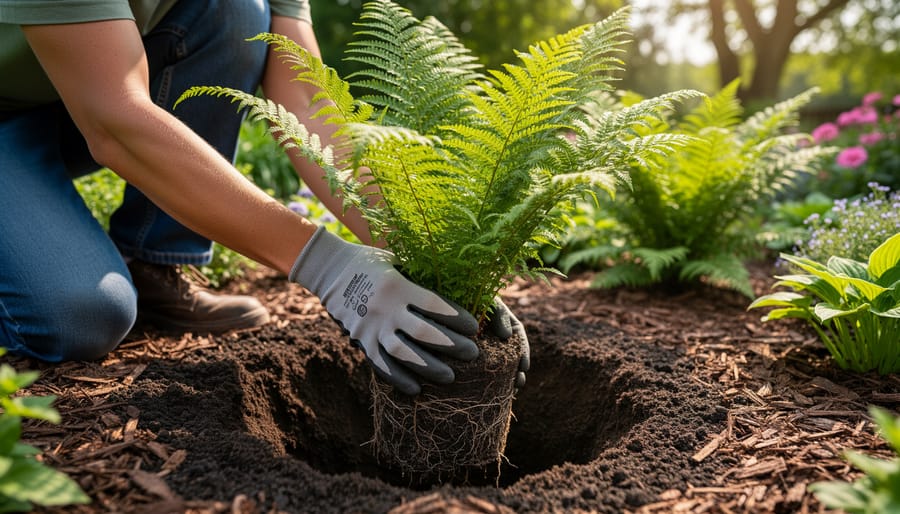
Ready for planting? Following proper planting techniques ensures success. Dig a hole twice as wide as the root ball but just as deep – you want the crown (where fronds meet roots) sitting at soil level, not buried. Gently loosen any circling roots, position your fern, and backfill with your amended soil mixture. Firm the soil gently around the base, creating a slight depression to hold water.
Water thoroughly after planting, soaking the entire root zone. This settles the soil and eliminates air pockets that can dry out roots. Continue watering regularly during the first growing season, especially during dry spells. A two to three-inch layer of mulch around your ferns helps retain moisture and keeps roots cool, but keep it away from the crown to prevent rot.
One encouraging tip from experienced gardeners: don’t panic if your newly planted ferns look a bit sad initially. They’re simply adjusting to their new home and will perk up beautifully with consistent care!
Simple Care That Keeps Ferns Thriving
Here’s the wonderful news that might surprise you: once you’ve planted your ferns in the right spot, they practically take care of themselves! I’ve watched my own shady garden flourish for years with minimal effort, and I’m excited to share just how simple fern care can be.
Watering is straightforward and intuitive. During their first growing season, keep the soil consistently moist as your ferns establish their root systems. I like to check by sticking my finger about an inch into the soil—if it feels dry, it’s time to water. Once established, most ferns tolerate dry spells surprisingly well, though they’ll look their best with regular moisture during hot summers. A deep watering once or twice weekly beats frequent shallow sprinkles, as it encourages deeper root growth. Morning watering works best, giving fronds time to dry before evening.
Mulching is your secret weapon for happy ferns. I spread a two to three-inch layer of organic mulch like shredded leaves, pine needles, or composted bark around my ferns each spring. This simple step mimics the forest floor, keeping roots cool, retaining moisture, and suppressing weeds. As the mulch breaks down, it feeds the soil naturally—exactly what happens in nature. Just keep mulch a few inches away from the crown to prevent rot.
Fertilizing ferns requires a light touch. These woodland natives thrive in lean conditions, so resist the urge to overfeed. I apply a balanced, slow-release fertilizer once in early spring, and that’s it for the year. Alternatively, a thin layer of compost worked into the soil provides gentle nutrition. Over-fertilizing can actually damage fern fronds and create lush growth prone to pest problems.
Seasonal maintenance is remarkably minimal. In late winter or early spring, I simply trim away any brown or damaged fronds before new growth emerges. For deciduous ferns, you can leave dead fronds through winter for added root protection, then remove them when temperatures warm. Evergreen varieties need even less attention—just remove any damaged fronds as needed. Dividing overcrowded clumps every few years keeps plants vigorous, but many ferns happily grow undisturbed for decades.
Creative Ways to Use Ferns in Your Landscape
Shade Garden Foundations
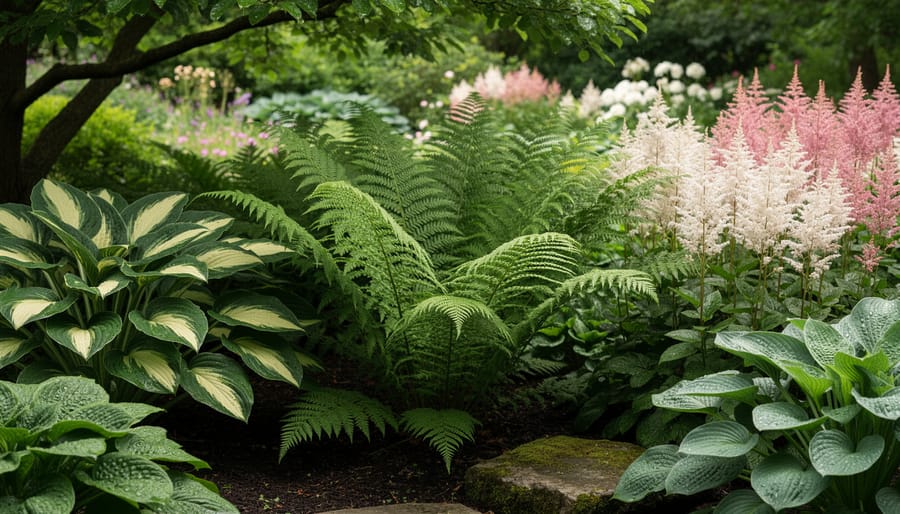
Ferns make exceptional foundation plants in a shade garden, providing reliable structure and texture throughout the growing season. Their feathery fronds create beautiful layered compositions when paired with the broad leaves of hostas and the delicate plumes of astilbes. I love positioning taller varieties like ostrich fern at the back of borders, with Japanese painted ferns mid-ground for their silvery accents, and low-growing maidenhair ferns tucking into front edges. This trio of ferns, hostas, and astilbes offers continuous interest from spring through fall. The ferns maintain their architectural presence even after astilbes finish blooming, while complementing hostas’ varied foliage colors. For best results, arrange them in odd-numbered groupings, allowing each plant enough space to reach its mature size without crowding. This simple formula creates effortlessly elegant plantings that feel naturally harmonious.
Woodland Border Magic
Transform a shady border into a tranquil woodland retreat by layering ferns just as nature does in forest settings. The secret lies in mimicking those peaceful understories where ferns grow in harmonious drifts rather than rigid lines.
Start by observing natural woodlands near you. Notice how ferns cluster in informal groups, their fronds overlapping and creating a tapestry of textures. Lady ferns make excellent foundation plants for this approach, their delicate fronds catching dappled sunlight. Tuck Japanese painted ferns into shady pockets where their silvery foliage can glow against darker backgrounds.
I learned this technique from Margaret Chen, a landscape designer who specializes in native plantings. She recommends planting in odd-numbered groups of three or five, spacing them slightly closer than traditional guidelines suggest. This creates that lush, established look more quickly.
Add leaf litter and woody debris around your ferns to complete the woodland effect. These materials break down slowly, enriching the soil while maintaining the natural aesthetic. Combine different fern heights and textures for visual interest throughout the season, letting taller varieties like ostrich ferns anchor the back while shorter wood ferns fill in front spaces.
Container Combinations
Ornamental ferns truly shine when paired with compatible companions in container arrangements. The key is choosing plants that share similar growing conditions—shade tolerance and consistent moisture—while offering contrasting textures and colors.
For a classic combination, try pairing Boston or maidenhair ferns with hostas and impatiens. The feathery fern fronds beautifully offset the bold hosta leaves, while impatiens add pops of color throughout the season. Begonias work wonderfully too, their waxy blooms complementing fern foliage perfectly.
Create stunning monochromatic displays by combining different fern varieties in a single large container. Mix a taller ostrich fern as a centerpiece with cascading Boston ferns around the edges and delicate maidenhair ferns filling the middle layer. This approach provides incredible texture while keeping care requirements simple since all plants need the same conditions.
Don’t overlook shade-loving trailing plants like sweet potato vine or creeping jenny to soften container edges. For year-round interest, add evergreen ferns alongside winter-blooming hellebores or early spring bulbs like snowdrops.
Remember to choose containers with drainage holes and use quality potting mix that retains moisture without becoming waterlogged. Group several containers together near entryways or on shaded patios to create an inviting, lush retreat that welcomes visitors and provides a cooling presence during warm months.
Troubleshooting Common Fern Challenges
Even the healthiest ferns occasionally show signs of stress, but here’s the good news: most problems are easy to fix, and ferns are wonderfully forgiving plants. Let’s walk through the most common issues you might encounter.
Brown or crispy leaf tips usually signal that your fern isn’t getting enough moisture. Before you panic, remember this is simply your plant’s way of communicating its needs. Check the soil moisture and increase watering frequency slightly. If the air in your home or garden is particularly dry, try misting your indoor ferns or grouping several plants together to create a more humid microclimate. I’ve learned that consistency matters more than perfection with watering.
Slugs and snails love ferns just as much as we do, especially in shady, damp gardens. You’ll notice irregular holes in the fronds or telltale slime trails. The simplest solution is to handpick these visitors during evening garden walks. Beer traps work wonderfully too, or you can create barriers using crushed eggshells or copper tape around prized specimens.
Winter dieback concerns many new fern gardeners, but it’s completely natural for deciduous varieties. Your ferns aren’t dying; they’re simply resting. Leave the brown fronds in place through winter as they protect the crown, then trim them away in early spring when new growth emerges. Evergreen ferns might look a bit tired after harsh winters, but they’ll bounce back beautifully with warmer weather.
Remember, ferns have survived for millions of years because they’re remarkably resilient. A few imperfections don’t mean you’re failing as a gardener—they’re just part of growing these ancient, adaptable beauties.
As we’ve explored throughout this guide, ornamental ferns truly are nature’s gift to gardeners seeking effortless elegance. Whether you’re drawn to the delicate fronds of a maidenhair fern, the architectural drama of an ostrich fern, or the reliable evergreen presence of a Christmas fern, there’s absolutely a variety that will thrive in your garden and bring you joy for years to come.
What makes ferns particularly special is their remarkable ability to transform challenging spaces into lush retreats. That shady corner where nothing else seems to grow? A perfect fern habitat. The area under your deck that stays perpetually moist? An ideal microclimate for these ancient plants. Rather than fighting against your garden’s natural conditions, ferns work harmoniously with them, making your job as a gardener so much easier.
I encourage you to start with just one fern this season. Visit your local nursery, feel the texture of the fronds, and choose a variety that speaks to you. Remember, there’s no wrong choice when it comes to ferns. They’re forgiving plants that reward even novice gardeners with consistent beauty and minimal fuss.
As part of the Bluestem Gardening community, you’re joining countless fellow enthusiasts who’ve discovered the quiet satisfaction of growing these prehistoric plants. Share your fern experiences with us, ask questions when you need guidance, and celebrate your successes along the way. Together, we’re creating gardens that are not only beautiful but also sustainable and full of life. Here’s to adding a touch of woodland magic to your landscape this year.