Zone 9 gardeners enjoy a remarkable advantage: your mild winters and long growing seasons create the perfect canvas for stunning ornamental plants that simply won’t survive in colder regions. With temperatures rarely dipping below 20°F, you can cultivate an extraordinary range of trees that offer year-round visual interest, from tropical-looking specimens to classic flowering favorites that bloom earlier and longer than anywhere else.
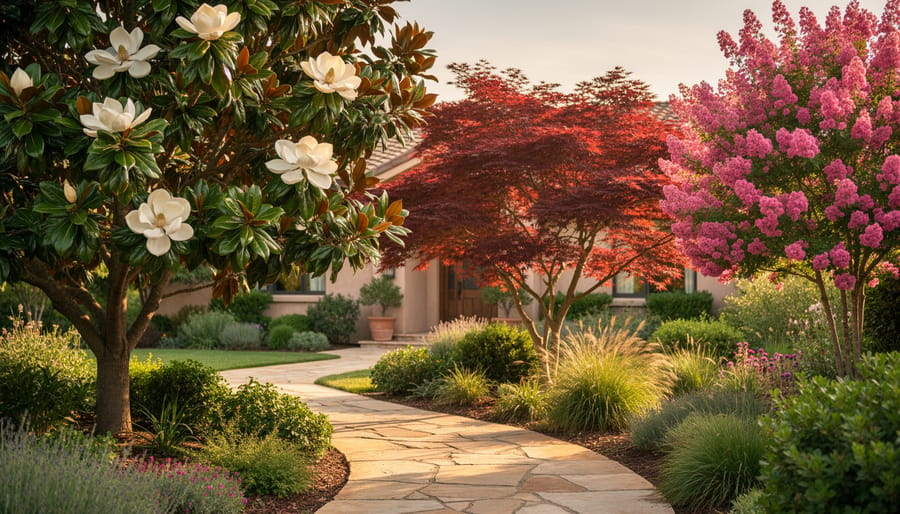
Consider your landscape as a living gallery where texture, color, and form work together throughout all four seasons. Whether you’re dreaming of fragrant magnolia blossoms greeting you each spring, the architectural drama of a Japanese maple providing dappled shade, or the vibrant berries of a crape myrtle brightening your winter garden, Zone 9 delivers exceptional opportunities for creativity.
The key to success lies in matching the right tree to your specific microclimate and landscape goals. While Zone 9 spans diverse regions from coastal California to central Florida and southern Texas, each area presents unique challenges like humidity levels, soil types, and summer heat intensity. Some locations experience dry summers requiring drought-tolerant selections, while others offer abundant rainfall supporting moisture-loving species.
This guide walks you through the best ornamental tree choices for Zone 9 gardens, helping you navigate options that deliver maximum beauty with minimal fuss. You’ll discover how to select trees that complement your space, enhance your property’s value, and create the outdoor sanctuary you’ve been imagining.
What Makes Zone 9 Special for Ornamental Trees
If you’re fortunate enough to garden in Zone 9, you’ve hit the horticultural jackpot! This climate zone offers some of the longest growing seasons in the United States, spanning roughly 10 to 11 months of active growth. With average minimum winter temperatures ranging from 20 to 30 degrees Fahrenheit, you can grow ornamental trees that gardeners in colder regions only dream about.
What truly sets Zone 9 apart is its mild winters and extended warm periods. Many ornamental trees that require winter dormancy elsewhere can remain semi-evergreen here, giving you year-round visual interest. The climate supports both subtropical beauties and traditional temperate favorites, opening up an incredibly diverse palette of choices for your landscape.
The extended growing season means you’ll enjoy longer blooming periods and faster tree establishment. Those gorgeous flowering trees you plant in spring might reward you with blooms in their very first season. Container-grown specimens typically adapt quickly, and root systems develop robustly in the warm soil temperatures.
However, Zone 9 does present some unique challenges worth mentioning. The intense summer heat can stress certain species, particularly those that prefer cooler climates. You’ll need to pay extra attention to irrigation during scorching months, as many ornamental trees require consistent moisture to thrive. Some classic favorites from northern zones, like certain flowering cherries and crabapples, may struggle with insufficient winter chill hours.
The good news? Once you understand these nuances, you can select ornamental trees perfectly suited to flourish in your climate. The trick is matching the right tree to your specific microclimate and conditions, which we’ll explore throughout this guide to help you create a stunning landscape that thrives year after year.
Evergreen Ornamental Trees That Thrive in Zone 9
Magnolia Varieties for Continuous Beauty
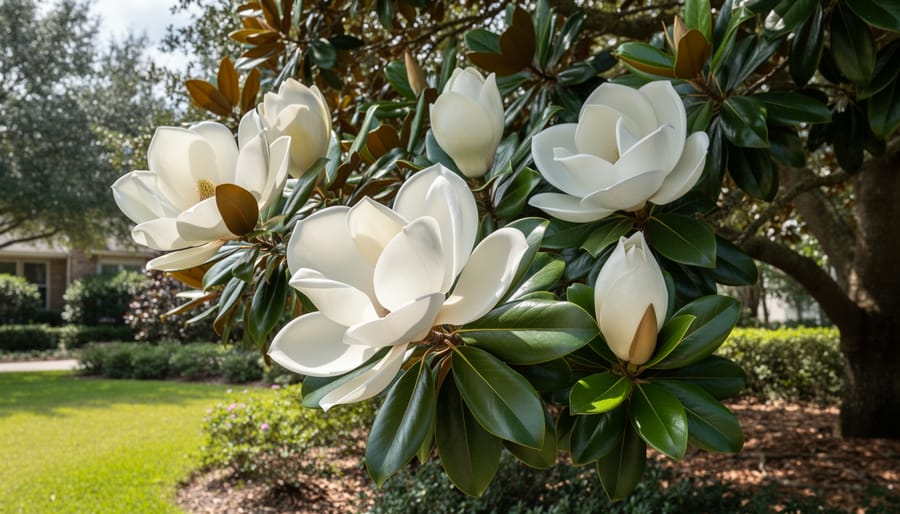
Magnolias bring timeless elegance to Zone 9 gardens, and I’m always amazed by how many varieties thrive in our warm climate. The Southern Magnolia stands as a classic favorite, growing 60-80 feet tall with glossy evergreen leaves that shimmer year-round. Those creamy white blooms, some reaching 12 inches across, fill the air with an intoxicating fragrance from late spring through summer. I’ve found they prefer slightly acidic soil and appreciate consistent moisture, especially during establishment.
For smaller spaces, consider the Little Gem Magnolia, a compact cultivar reaching just 20-25 feet. It offers the same stunning blooms and glossy foliage as its larger cousin but fits beautifully in tighter landscapes. This variety blooms intermittently throughout the growing season, giving you extended enjoyment.
Deciduous magnolias also perform wonderfully in Zone 9. The Saucer Magnolia produces spectacular pink and white cup-shaped flowers on bare branches in early spring, creating a breathtaking display before the leaves emerge. Growing 20-30 feet tall, it makes an excellent focal point for medium-sized yards.
Care requirements across magnolia varieties remain relatively straightforward. They appreciate well-draining soil enriched with organic matter and benefit from a 2-3 inch layer of mulch to keep roots cool and moist. Avoid heavy pruning, as magnolias heal slowly from cuts. Water deeply during dry spells, and you’ll be rewarded with years of magnificent blooms that make your garden truly special.
Colorful Conifers and Broadleaf Evergreens
Zone 9 gardeners are fortunate to have access to some truly stunning evergreens that provide year-round structure and unexpected pops of color. While many people think of evergreens as simply green, these beauties prove otherwise.
Italian Cypress stands as a true showstopper, with its dramatic columnar form reaching 40-60 feet tall but staying remarkably narrow at just 3-6 feet wide. I’ve seen these Mediterranean natives transform ordinary driveways into grand entrances and create living privacy screens that feel positively European. They’re surprisingly drought-tolerant once established, making them perfect for water-wise landscapes. Just give them full sun and well-drained soil, and they’ll reward you with decades of elegant evergreen presence.
Japanese Cedar, or Cryptomeria japonica, offers something completely different with its soft, feathery foliage that often develops bronze or reddish tints in winter. The cultivar ‘Yoshino’ stays compact at 30-40 feet and maintains better green color year-round, while ‘Elegans’ develops those gorgeous burgundy tones when temperatures drop. These trees appreciate consistent moisture and partial shade during the hottest part of the day.
Hollies deserve serious consideration for Zone 9 landscapes. The Nellie Stevens Holly creates a dense pyramidal form with glossy dark green leaves and abundant red berries that birds absolutely love. For something more compact, try Dwarf Burford Holly, which tops out around 8-10 feet. Both varieties tolerate pruning beautifully if you want to maintain specific shapes or sizes.
Don’t overlook Southern Magnolia’s evergreen cousins either. Little Gem Magnolia provides all the charm of its larger relative in a more manageable 20-25 foot package, with creamy white blooms and russet-backed leaves that add textural interest.
The key with these evergreens is understanding they’re not “set it and forget it” plants during establishment. Water deeply but infrequently to encourage strong root systems, and they’ll become reliable performers for years to come.
Flowering Deciduous Trees for Seasonal Drama
Spring Bloomers That Stop Traffic
Spring in Zone 9 brings an absolutely stunning parade of flowering trees that transform neighborhoods into botanical wonderlands. If you’ve ever driven past a street lined with blooming ornamentals and thought, “I need that in my yard,” you’re in for a treat with these showstoppers.
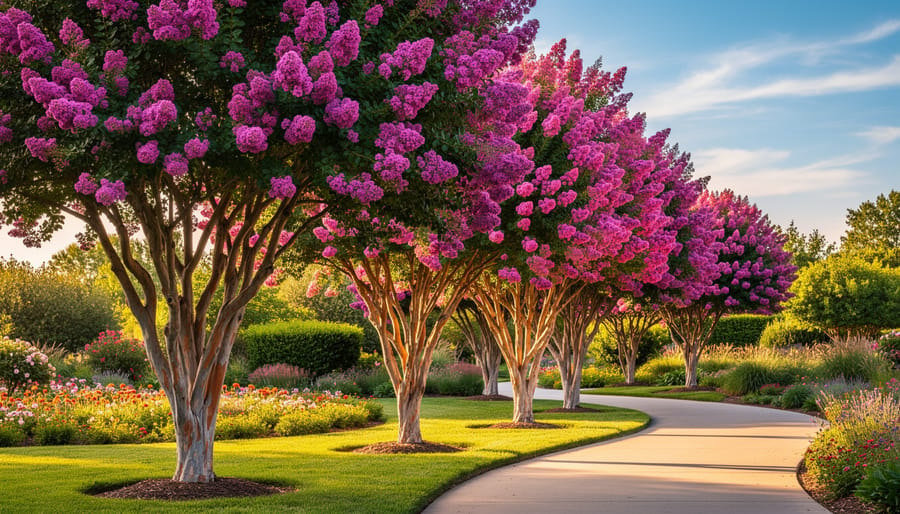
Crape myrtles reign supreme in Zone 9 gardens, and for good reason. These versatile beauties bloom from late spring through summer, offering clouds of ruffled flowers in shades of white, pink, red, and purple. They thrive in our warm climate and require minimal fussing once established. Plant them in full sun with good drainage, and they’ll reward you for years to come. The key is giving them room to breathe – space them at least 10-15 feet apart to prevent powdery mildew.
Eastern redbud trees create unforgettable displays with their magenta-pink blooms appearing directly on bare branches before leaves emerge. These native beauties appreciate afternoon shade in Zone 9 and prefer well-drained soil enriched with organic matter. They’re also deer-resistant, which many of us really appreciate!
For something truly romantic, consider weeping cherry trees, which cascade with delicate pink or white blossoms each spring. They need consistent moisture during their first year but become fairly drought-tolerant once established.
Here’s my top planting tip for all spring bloomers: plant in fall or early winter in Zone 9. This timing allows roots to establish during our mild winters, so trees can focus energy on spectacular spring blooms. Water deeply but infrequently, and apply a 2-3 inch layer of mulch around the base, keeping it away from the trunk to prevent rot.
Summer and Fall Showstoppers
While spring often steals the spotlight, some of my favorite ornamental trees save their show for summer and fall. These late-season performers bring fresh energy to your Zone 9 landscape when other plants are winding down.
The Golden Shower Tree (Cassia fistula) is absolutely breathtaking in late spring through summer, producing cascading clusters of bright yellow flowers that can stop traffic. I remember visiting a friend’s garden last June, and their Cassia was literally dripping with golden blooms. This tree reaches about 30-40 feet tall and prefers full sun. The flowering display lasts several weeks, making it well worth the wait.
Chitalpa trees are wonderful summer bloomers that deserve more attention. These hybrids combine the best traits of Desert Willow and Catalpa, producing trumpet-shaped flowers in pink or white from late spring through fall. They’re incredibly heat-tolerant and relatively low-maintenance, growing 20-30 feet tall. A landscape designer I interviewed swears by Chitalpas for adding vertical interest and continuous color without fussy care requirements.
For spectacular fall foliage, Chinese Pistache (Pistacia chinensis) is your champion. While it blooms insignificantly in spring, this tree transforms into a blaze of orange, red, and yellow come autumn. It’s drought-tolerant once established and grows 25-35 feet tall with a lovely rounded canopy. The fall color rivals anything you’d see in cooler climates, proving that Zone 9 gardeners can enjoy seasonal changes too.
These late-blooming beauties ensure your garden maintains interest throughout the entire growing season, giving you something to look forward to when summer heats up.
Unique Ornamental Trees for Distinctive Landscapes
Exotic Options That Love Zone 9
If you’re ready to add some wow-factor to your Zone 9 garden, these exotic beauties will make your neighbors stop and stare. I still remember the first time I saw a mature Jacaranda in full bloom – those ethereal purple-blue flowers looked like something from a dream!
The Jacaranda is perhaps the most stunning of this group, creating a spectacular canopy of fern-like foliage topped with brilliant lavender blooms in late spring. These South American natives can reach 40 feet tall and adapt beautifully to Zone 9’s warmth. Just give them plenty of space and well-draining soil, and they’ll reward you for decades.
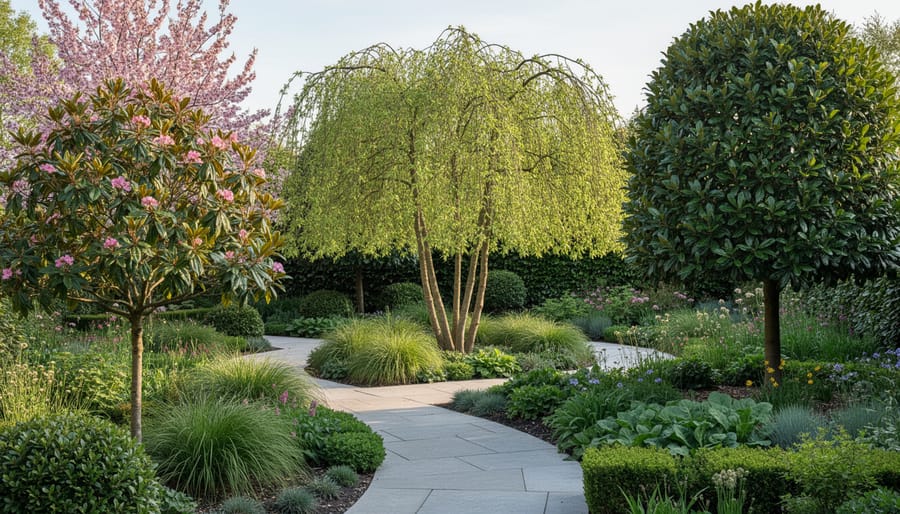
Australian Willow offers a completely different aesthetic with its weeping form and delicate, cascading branches. Despite its name, it’s not a true willow but performs similarly while being more drought-tolerant – perfect for water-conscious gardeners. It grows quickly to about 25 feet and makes an excellent shade tree.
The Palo Verde brings desert beauty to your landscape with its striking green trunk that photosynthesizes even when leafless. In spring, it explodes with brilliant yellow flowers that attract pollinators from all around. This Arizona native thrives in hot, dry conditions that might challenge other trees.
Don’t overlook the Silk Floss Tree either, with its peculiar spiny trunk and gorgeous pink flowers. These conversation-starters are surprisingly easy to grow in Zone 9, asking only for good drainage and occasional deep watering once established. They’re living sculpture that happens to bloom!
Multi-Season Interest Trees
Why settle for just one season of beauty when you can enjoy year-round interest? Multi-season trees are the hardworking stars of Zone 9 gardens, offering something spectacular in every season.
Japanese Maples are absolute favorites among gardeners I’ve spoken with, and for good reason. Their delicate, lacy foliage emerges in spring with colors ranging from lime green to burgundy, transitions through summer, then explodes into fiery autumn displays. Even in winter, their graceful branching structure adds architectural interest to your garden. Varieties like ‘Bloodgood’ and ‘Tamukeyama’ perform beautifully in Zone 9’s climate.
The Strawberry Tree (Arbutus unedo) is another multi-tasking champion. This Mediterranean native produces white or pink bell-shaped flowers in fall, alongside ripening red fruits from the previous year’s blooms. The cinnamon-colored peeling bark adds textural interest throughout the year, and it’s drought-tolerant once established—a real bonus in warmer climates.
Crape Myrtles deserve mention here too, offering summer flowers, fantastic fall foliage, and striking exfoliating bark that creates a patchwork of colors in winter. They’re low-maintenance and incredibly adaptable to Zone 9 conditions.
Choosing the Right Tree for Your Space
Size Matters: Small, Medium, and Large Options
Choosing the right tree size makes all the difference in creating a harmonious landscape. Let me share how to match trees with your available space.
For smaller gardens or patios, small ornamental trees reaching 10-15 feet work beautifully. Japanese maples, crape myrtles, and dwarf citrus varieties fit perfectly in compact areas without overwhelming your space. They’re also ideal for framing entryways or creating focal points in cozy courtyards.
Medium-sized trees, growing 15-30 feet tall, suit standard residential yards wonderfully. Consider options like flowering dogwood or Chinese fringe tree, which provide substantial shade and visual interest without dominating your property. These work particularly well for side yards or creating natural boundaries.
Large specimens exceeding 30 feet belong in spacious properties where they can reach their full potential. Southern magnolias and live oaks create impressive canopies that cool your home and establish a majestic presence.
Remember, always check mature size specifications before planting. A tree that seems manageable today can become problematic near structures or power lines tomorrow. Give your chosen tree adequate growing room from the start, and you’ll enjoy decades of beauty without headaches.
Solving Common Landscape Problems
Every garden has its unique challenges, and choosing the right ornamental tree can solve many common landscape problems beautifully. If you’re seeking shade for a sunny patio or deck, consider fast-growing options like the Desert Willow or Eucalyptus. These trees establish quickly and provide welcome relief from intense Zone 9 sunshine within just a few years.
For privacy screening, evergreen trees work wonderfully. Southern Magnolia creates a dense, year-round barrier that also offers gorgeous blooms, while Cryptomeria provides a softer, feathery texture. Plant them in staggered rows for maximum coverage along property lines.
Creating a stunning focal point? Japanese Maple steals the show with its delicate foliage and artistic branching structure, perfect for courtyards or entryways. Alternatively, a flowering Jacaranda becomes an unforgettable centerpiece when draped in purple blooms.
Challenging spots like near patios and driveways require careful selection. Avoid trees with aggressive roots or messy fruit drop. Crape Myrtles make excellent patio companions with their non-invasive roots and tidy growth habit. For driveway plantings, choose upright varieties like Columnar Italian Cypress that won’t interfere with vehicles or pavement.
Remember, matching the tree to your specific problem creates success. Take time to observe your space, noting sunlight patterns and soil conditions before making your final choice.
Planting and Care Essentials for Zone 9 Success
Best Planting Practices
In Zone 9, timing is everything when it comes to planting ornamental trees. The ideal window is fall through early spring, typically October through February. This gives your trees a chance to establish roots during the cooler months before facing the intense summer heat. I always tell fellow gardeners that fall planting is like giving your trees a head start in a marathon – they’ll thank you come July!
Before you dig, let’s talk soil preparation. Zone 9 soils vary widely, from sandy coastal areas to heavy clay inland. Take time to test your soil’s pH and drainage. Most ornamental trees prefer slightly acidic to neutral soil (pH 6.0-7.0). Amend heavy clay with compost to improve drainage, as soggy roots spell trouble in our warm climate. For sandy soils, work in organic matter to help retain moisture and nutrients.
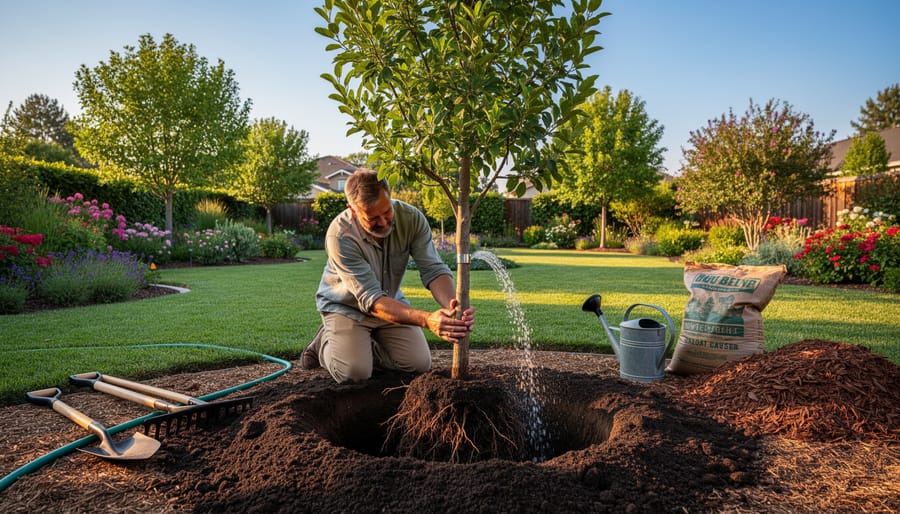
When planting, dig a hole twice as wide as the root ball but no deeper. This is crucial – you want the root flare (where the trunk widens at the base) sitting slightly above ground level. Planting too deep is one of the most common mistakes I see, and it can suffocate your tree over time.
After planting, water deeply and apply a 3-4 inch layer of mulch, keeping it away from the trunk. For the first growing season, water regularly to help newly planted trees thrive. In Zone 9’s heat, this typically means deep watering twice weekly until established.
Watering, Feeding, and Ongoing Maintenance
Establishing a sustainable care routine for your Zone 9 ornamental trees sets them up for long-term success and beauty. The good news? Once established, most ornamental trees become relatively low-maintenance companions in your landscape.
During the first year, consistent watering is essential while your tree develops a strong root system. Water deeply once or twice weekly, allowing the soil to dry slightly between sessions. Zone 9’s hot summers mean you’ll need to monitor moisture levels carefully, especially during heat waves. Once established, many ornamental trees become quite drought-tolerant, though occasional deep watering during extended dry spells keeps them looking their best.
Fertilization needs vary by species, but a balanced, slow-release fertilizer applied in early spring works wonders for most ornamental trees. I like to think of feeding as giving your trees a gentle boost rather than forcing rapid growth. Over-fertilizing can actually weaken trees and make them more susceptible to pests.
Pruning keeps your trees healthy and attractive while maintaining their desired shape. Learning proper ornamental tree pruning techniques prevents common mistakes that could harm your investment. Generally, prune during dormancy for deciduous trees and after flowering for spring bloomers. Remove dead, damaged, or crossing branches first, then shape as needed.
Remember, patience pays off. Your ornamental tree will reward your consistent care with years of beauty and shade, becoming a cherished part of your landscape story.
You’re now equipped with everything you need to transform your Zone 9 garden with stunning ornamental trees! Whether you’re drawn to the year-round elegance of evergreens, the spectacular blooms of flowering varieties, or the distinctive character of unique specimens, there’s a perfect tree waiting to become part of your landscape story.
Remember, successful ornamental tree gardening isn’t reserved for experts. With the right tree selection, proper placement, and consistent care, gardeners at any skill level can create beautiful outdoor spaces that bring joy for years to come. Start by assessing your garden conditions, considering your space limitations, and choosing trees that genuinely excite you. The trees that make your heart sing are the ones you’ll care for most lovingly.
Don’t be afraid to start small or experiment with something new. Every experienced gardener began with their first tree, and mistakes along the way simply teach us what works best in our unique garden environments.
We’d love to hear about your Zone 9 ornamental tree experiences! What trees have thrived in your garden? Are you considering adding a new variety this season? Drop your questions, success stories, or even challenges in the comments below. Let’s grow together as a community of passionate gardeners!