
Observe your garden at dusk and you’ll likely spot the real reason for those mysterious overnight disturbances: foxes are primarily nocturnal hunters, with peak activity occurring between sunset and sunrise when they search for food, mark territory, and navigate through residential areas with minimal human interference. These adaptable creatures have learned that darkness provides safety and abundant prey, from mice and insects to fallen fruit and accessible compost.
Understanding fox behavior transforms frustration into coexistence. Foxes visit gardens nocturnally because their natural prey—small rodents, earthworms, and beetles—are most active after dark. Rather than viewing them as pests, recognize that a fox patrolling your space actually provides free rodent control and helps maintain ecological balance within your wildlife-friendly garden.
The nocturnal schedule isn’t random; it’s evolutionary survival strategy. Foxes inherited this behavior from ancestors who avoided larger predators and human activity by operating under cover of darkness. In urban and suburban settings, this instinct remains strong, though you might occasionally see foxes during daylight hours, particularly during breeding season or when feeding young cubs.
Your garden presents an irresistible nighttime buffet: accessible water sources, shelter under sheds or dense vegetation, and protein-rich earthworms in freshly watered soil. By understanding what attracts foxes after dark, you can make informed decisions about whether to encourage or discourage their visits while respecting these remarkable animals’ place in your local ecosystem.
Understanding Your Nighttime Garden Visitor

Why Foxes Come Out After Dark
If you’ve noticed a sleek silhouette trotting through your garden after sunset, you’re witnessing foxes in their element. These clever creatures are crepuscular, meaning they’re most active during dawn and dusk, though they often extend their activities well into the night. This timing isn’t random—it’s a survival strategy honed over thousands of years.
Foxes possess remarkable sensory adaptations that make darkness their ally. Their large, sensitive ears can detect the faint rustle of earthworms moving underground, while their exceptional night vision helps them navigate even the shadiest corners of your property. Their keen sense of smell, roughly 40 times stronger than ours, allows them to locate everything from fallen fruit to compost bins with ease.
What draws foxes to your garden specifically? Urban and suburban landscapes offer a surprisingly rich buffet. They’re opportunistic feeders seeking insects, rodents, windfall apples, and yes, occasionally those prize strawberries you’ve been watching ripen. Gardens also provide shelter, water sources, and quieter conditions after humans retreat indoors. Understanding these motivations is your first step toward peaceful coexistence with these fascinating nighttime visitors.
What Attracts Foxes to Your Garden
Your garden might be more appealing to foxes than you realize! Understanding what draws these nighttime visitors can help you manage their presence thoughtfully.
Food is the primary attraction. Foxes are opportunistic feeders, so they’ll happily munch on insects, earthworms, and small rodents that inhabit your garden beds. Fallen fruit from trees is like a buffet invitation, especially apples, pears, and berries left to rot on the ground. Your compost heap can be particularly enticing if it contains food scraps, as the smell carries quite a distance during quiet evening hours.
Shelter opportunities also play a role. Overgrown areas, dense shrubbery, and spaces beneath garden sheds or decking provide perfect daytime resting spots for these clever creatures. Foxes appreciate somewhere safe and secluded to rest between their nocturnal adventures.
Don’t overlook water features either. Ponds, bird baths, and even puddles offer essential drinking water, especially during dry spells. A garden that provides food, water, and shelter becomes an irresistible destination for foxes seeking to establish their territory. Understanding these attractions helps you make informed decisions about coexisting with your nocturnal neighbors while protecting your beloved plants and outdoor spaces.
The Real Impact: What Foxes Actually Do to Your Garden
The Problems (They’re Not as Bad as You Think)
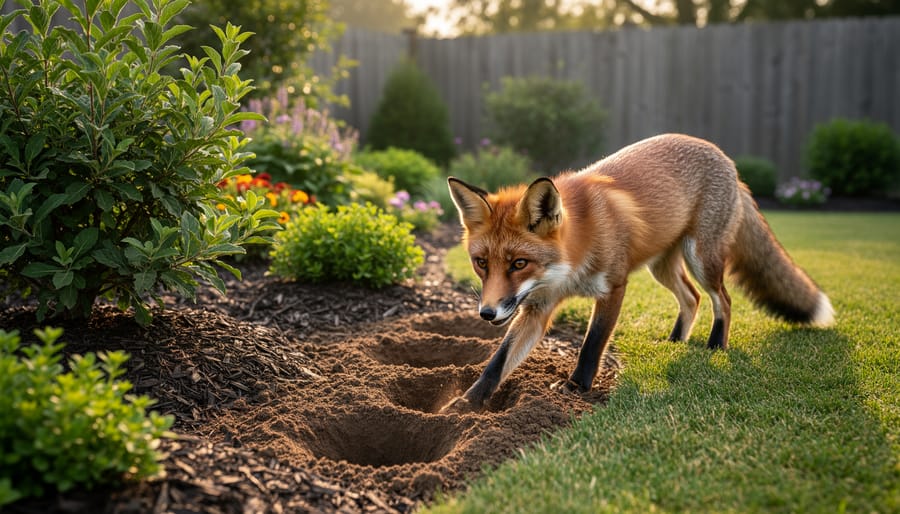
Let me be honest with you: most fox-related garden “damage” falls into the category of minor inconvenience rather than genuine destruction. Yes, you might find small holes where they’ve buried food scraps or dug for earthworms and grubs. You’ll likely spot droppings on lawn edges or raised beds, which they use as territory markers. And if you’ve carefully arranged your mulch, a fox might scatter it while investigating interesting scents underneath.
But here’s the reality check. Unlike deer that devour entire flower beds or rabbits that munch through vegetable crops, foxes aren’t interested in your plants. Those holes? Usually just a few inches deep and easily filled. The droppings? Smaller than dog waste and actually quite easy to remove with a trowel. The disturbed mulch? A quick rake fixes it.
I interviewed local wildlife expert Sarah Martinez, who manages a community garden that’s home to a resident fox family. “In three years, we’ve never lost a single plant to fox activity,” she told me. “Meanwhile, the slugs and rodents they hunt would have done far more damage.”
The key is perspective. Foxes are actually working the night shift as your garden’s pest control team, and the trade-off is remarkably fair.
The Benefits (Yes, There Are Some)
Before you completely write off those nocturnal visitors, let me share some genuinely good news about having foxes around your garden. These clever creatures are actually working the night shift as natural pest controllers, and they’re rather good at it.
Foxes have a hearty appetite for the very critters that might be munching on your vegetables. A single fox can consume dozens of rodents in a week, keeping mouse and vole populations in check without you needing to lift a finger. They’re also fond of rabbits, which many gardeners know can devastate a vegetable patch faster than you can say “lettuce.” I’ve spoken with several experienced gardeners who’ve noticed significantly less rabbit damage after foxes moved into their neighborhood.
But here’s something that might surprise you: foxes aren’t strictly carnivorous. They happily snack on beetles, grasshoppers, and other insects that could harm your plants. Think of them as furry, four-legged garden assistants working the night shift.
By incorporating foxes into your understanding of wildlife management practices, you’re supporting a balanced ecosystem. When predators like foxes thrive, they naturally regulate prey populations, reducing the need for chemical interventions. It’s nature’s way of keeping everything in harmony, and your garden benefits from this ancient partnership.
Creating a Nocturnal Wildlife Garden That Works for Everyone
Protect What Matters Most
Now that we understand why foxes visit after dark, let’s talk about keeping your most precious garden areas safe while respecting their natural behaviors.
Your vegetable patch deserves special attention during those productive nighttime hours when foxes are most active. A sturdy fence at least six feet tall works wonders, but here’s the trick: bury the bottom at least 12 inches deep or bend it outward at ground level. Foxes are impressive diggers, and this simple design tweak prevents them from tunneling underneath. I learned this lesson the hard way after losing an entire row of lettuce to a determined visitor!
For chicken coops, secure hardware cloth with half-inch mesh is your best friend. Regular chicken wire simply won’t cut it against clever fox paws. Make sure to cover all openings, including ventilation areas, and always lock your birds in before dusk. Remember, foxes start their hunting rounds right as the sun sets.
Raised beds offer natural protection for prized plantings and make it harder for foxes to disturb the soil. Adding decorative fencing around special flower beds or herb gardens creates both a physical barrier and an attractive garden feature.
Motion-activated sprinklers provide humane nighttime deterrence without any harm. They startle visiting foxes with a harmless spray of water, teaching them to avoid certain areas while keeping your garden watered. Many gardeners report excellent results with this gentle approach, especially when protecting newly planted areas during establishment.
Design a Fox-Friendly Zone
Here’s a wonderful way to keep everyone happy—create a dedicated space where foxes feel welcome, drawing them away from your prized flower beds and vegetable patches. Think of it as offering your nocturnal visitors their own corner of paradise.
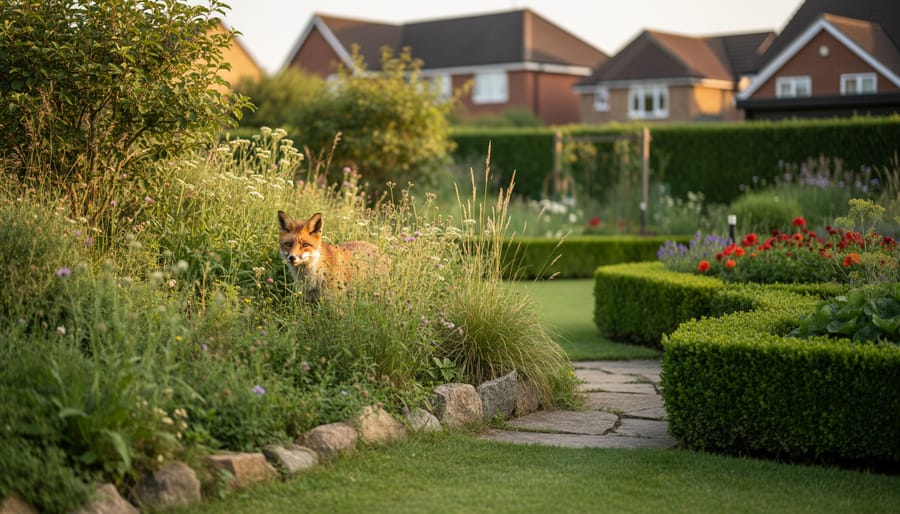
Start by choosing a quieter area of your property, preferably at the edges or back sections. This becomes your fox-friendly zone, filled with elements that naturally appeal to these creatures. Dense shrubs and native plants provide excellent cover, making foxes feel secure during their nighttime wanderings. They particularly appreciate low-growing groundcover like wild strawberries or native grasses that harbor the insects and small creatures they hunt.
Leave some wild areas unmowed—I know it goes against our tidy gardening instincts, but these naturalized spots become fox magnets. Add a log pile or brush heap, which not only attracts the prey foxes seek but also provides denning opportunities. A shallow water source, like a ground-level birdbath, offers them a convenient drinking spot.
The beauty of this approach is that you’re working with nature rather than against it. When foxes have their needs met in one area, they’re less likely to dig up your carefully tended beds elsewhere. Plus, these wild zones benefit countless other wildlife species, from beneficial insects to birds, creating a thriving ecosystem right in your backyard. It’s really about creating balance and giving foxes a reason to choose their designated area over your garden treasures.
Smart Plant Choices for Shared Spaces
When sharing your garden with nocturnal foxes, choosing the right plants makes all the difference. I’ve learned this firsthand after watching a determined fox repeatedly dig near my prized dahlias!
Start with sturdy groundcovers like periwinkle or creeping thyme that quickly recover from occasional paw traffic. These tough plants create green carpets that bounce back beautifully. For larger areas, consider robust shrubs such as spirea or potentilla that can handle some jostling without looking worse for wear.
Here’s where it gets interesting: you can actually work with fox behavior rather than against it. Foxes hunt small mammals, beetles, and earthworms, so planting species that support these creatures creates a natural ecosystem. Native grasses provide shelter for mice and voles, while berry-producing shrubs like elderberry attract insects that foxes enjoy. This approach might sound counterintuitive, but when foxes find adequate prey in designated wilder areas of your garden, they’re less likely to excavate your prized flower beds.
Keep more delicate plants in raised beds or containers where foxes naturally avoid treading. This simple strategy protects your investment while maintaining a fox-friendly environment that works for everyone.
Managing Common Fox Behaviors Without Warfare
Dealing With Digging and Den-Making
Foxes are natural excavators, and their nighttime digging can leave your garden looking like a construction zone by morning. The good news is that you can discourage this behavior without causing harm to these fascinating creatures.
Start by identifying why they’re digging. Foxes typically excavate to hunt for grubs and insects, cache food, or create dens for raising young. If they’re after invertebrates, consider this a compliment to your healthy soil ecosystem! To protect specific areas like vegetable beds or prized lawns, lay chicken wire flat on the soil surface and cover it with mulch. Foxes dislike the sensation underfoot and will move along.
For persistent digging near structures, try placing heavy rocks or paving slabs in problem spots. You can also sprinkle used coffee grounds or citrus peels around vulnerable areas, as foxes find these scents unpleasant.
If you have space and feel generous, consider designating a wild corner where foxes can dig freely. Leave this area undisturbed with loose soil and natural cover. This compromise often works beautifully, giving foxes what they need while protecting your cultivated spaces. Remember, their digging actually aerates soil and controls pest populations, making them helpful garden neighbors when managed thoughtfully.
Managing Droppings and Scent Marking
Finding fox droppings in your garden can be frustrating, but there are safe and effective ways to handle them. Always wear disposable gloves when cleaning up fox waste, and use a plastic bag to collect droppings. Dispose of them in your regular waste bin rather than composting, as fox feces can contain parasites harmful to humans and pets. Wash the affected area with a diluted bleach solution or specialized disinfectant afterward.
To discourage foxes from marking their territory in your favorite spots, focus on making those areas less appealing. Remove any potential food sources like fallen fruit or accessible compost bins. Foxes often mark along boundary lines, so consider placing prickly plant trimmings or chicken wire in these zones temporarily. Motion-activated sprinklers work wonderfully for high-traffic areas you want to protect, startling foxes without causing harm.
I’ve found that consistency matters most. One gardener I spoke with successfully redirected fox activity by maintaining a dedicated wild corner of her garden with longer grass, which the foxes preferred for their nighttime visits. This gentle approach respects their nocturnal nature while protecting your prized vegetable patches and seating areas.
When to Draw the Line (And How to Do It Humanely)
Sometimes, despite your best coexistence efforts, fox activity might genuinely become problematic. Perhaps they’re digging extensively under your shed, leaving excessive mess, or their nighttime visits are causing real concern. If you’ve reached this point, it’s important to address the situation humanely and ethically.
First, let’s be clear about what constitutes a real problem versus normal fox behavior. A few droppings or the occasional overturned pot isn’t a crisis, it’s just nature happening in your garden. However, persistent denning under structures, repeated damage to specific plants, or aggressive behavior toward pets warrants action.
Start with the gentlest approaches first. Motion-activated sprinklers work wonderfully for nighttime visitors, giving foxes a harmless but surprising shower when they enter problem areas. I spoke with wildlife gardener Sarah Thompson, who successfully redirected a family of foxes away from her vegetable beds using this method. “Within a week, they’d learned to avoid that section entirely,” she shared, “but they still visit other parts of the garden where they’re welcome.”
Scent deterrents can also be effective. Commercial fox repellents containing natural ingredients like citronella work well, though you’ll need to reapply after rain. Some gardeners swear by human hair clippings or predator urine products scattered around problem zones.
If foxes are denning where they shouldn’t, wait until they’ve left for their nightly activities, then block entry points with wire mesh or hardware cloth. Never seal a den without confirming it’s empty, especially during spring when cubs might be present.
Remember, the goal isn’t to eliminate foxes entirely but to encourage them to use different routes or areas. These intelligent creatures adapt quickly to gentle redirection while maintaining their valuable role in your garden ecosystem.
Your garden isn’t just yours—it’s a shared space where humans and wildlife can thrive together. Those nighttime fox visits aren’t invasions; they’re simply part of a balanced ecosystem at work. By understanding that foxes are naturally nocturnal creatures just going about their evening routines, you can shift from frustration to appreciation.
The beauty of coexisting with foxes lies in how little effort it truly takes. Secure your bins, protect vulnerable plants, and perhaps adjust your watering schedule—these small changes make all the difference. You’re not surrendering your garden; you’re enriching it by welcoming the natural rhythms of wildlife into your outdoor space.
Remember, foxes were likely visiting your area long before your garden existed. They’re part of the neighborhood’s fabric, contributing to pest control and adding a touch of wildness to suburban life. With patience and a few practical adjustments, you’ll discover that sharing your garden with these fascinating nocturnal visitors isn’t just possible—it’s genuinely rewarding.