Picture yourself walking through your garden on a warm summer evening, completely unaware of the invisible chemical conversations happening all around you. Right now, beneath your tomato plants and among your roses, insects are sending secret messages to one another using pheromones—nature’s own communication system. These chemical signals tell pests where to find food, when to mate, and which plants to target next. But here’s the exciting part: you can actually hijack these messages to protect your garden without reaching for harsh chemicals.
Pheromone-based pest control represents one of the most elegant eco-friendly alternatives to chemicals available to home gardeners today. Instead of killing beneficial insects alongside the harmful ones, pheromone traps and dispensers work like a radio jammer, disrupting the specific signals that pests use to reproduce and spread. The result? You stop infestations before they start, all while keeping your soil healthy and your harvests safe to eat.
What makes this approach particularly appealing is its precision. While broad-spectrum pesticides affect everything in their path, pheromones target only the species you want to control. Your ladybugs, bees, and earthworms continue their important work completely undisturbed. Even better, pests cannot develop resistance to their own biology the way they do with chemical pesticides, making this a sustainable long-term solution for your garden.
What Are Pheromones and How Do They Work?
Think of pheromones as the secret language of insects—invisible chemical messages they release to communicate with others of their species. Just as we might send a text message or call out to a friend, insects use these chemical signals to share important information. The fascinating part? We can tap into this natural communication system to manage garden pests without reaching for harsh chemicals.
In your garden right now, insects are constantly sending and receiving these chemical messages, though they’re completely undetectable to us. Different pheromones serve different purposes, and understanding the main types can help you become a more effective pest manager.
Sex pheromones are perhaps the most useful for gardeners. Female insects release these to attract males for mating. Think of codling moths in your apple trees—the females send out a chemical signal that males can detect from surprisingly long distances. When we use synthetic versions of these pheromones in traps, male moths follow the scent expecting to find a mate, but instead get caught, which disrupts the breeding cycle.
Aggregation pheromones work like a dinner bell, calling multiple insects to gather at a food source or suitable habitat. Bark beetles use these to coordinate mass attacks on trees. Understanding this helps explain why you might suddenly see a large concentration of certain pests in one area of your garden.
Alarm pheromones are the insect equivalent of shouting “danger!” When aphids are attacked by predators, they release alarm pheromones that warn nearby aphids to flee or drop from the plant. While we don’t typically use alarm pheromones in pest control, knowing they exist helps us understand insect behavior better.
The beauty of pheromone-based pest control is that it works with nature’s existing systems rather than against them, making it a perfect fit for sustainable gardening practices.
The Science Behind Mating Disruption (Made Simple)
Think of mating disruption like trying to find a friend in a crowded, noisy shopping mall during the holidays. Normally, male insects locate females by following the unique scent trail of pheromones she releases—it’s like following a clear path right to her. But when we use mating disruption, we’re essentially filling that entire mall with thousands of identical scents coming from every direction.
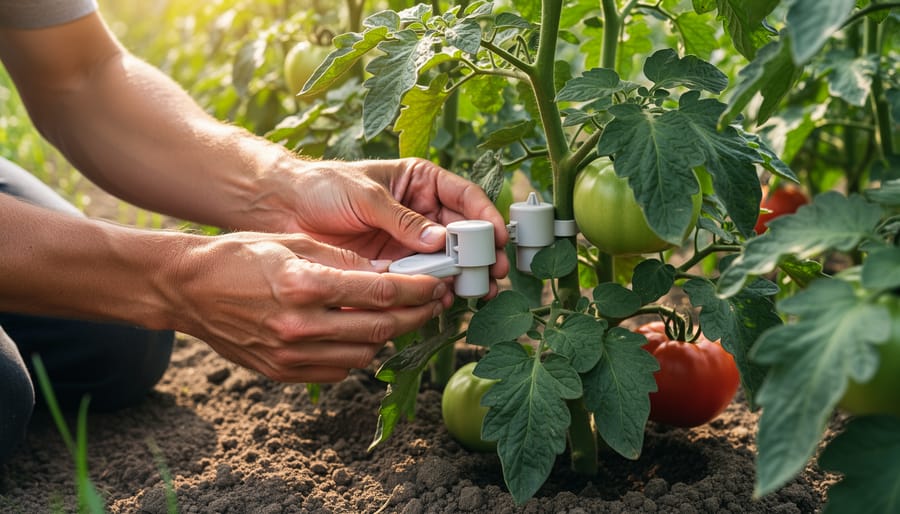
Here’s how it works in your garden: synthetic pheromones are placed throughout the area using special dispensers or twist-ties attached to plants. These dispensers slowly release the same chemical signals that female insects naturally produce. Male insects pick up these scents everywhere they turn, creating complete confusion. It’s sensory overload! Unable to distinguish the real female’s signal from the countless fake ones, the males simply can’t locate mates.
The beauty of this approach is that no actual killing happens. The insects aren’t poisoned or trapped—they just can’t reproduce effectively. It’s like jamming a radio signal rather than destroying the radio itself. Without successful mating, pest populations naturally decline over time, sometimes by as much as 90 percent in well-managed areas.
This method works particularly well because insect pheromones are incredibly specific. The synthetic version targets only the pest species you’re trying to control, leaving beneficial insects like bees, ladybugs, and butterflies completely unaffected. They’re tuned to different “frequencies,” so to speak, and go about their important work undisturbed.
What I find most encouraging is that pests can’t develop resistance to mating disruption the way they do with chemical pesticides. After all, you can’t evolve away from your own biology!
Common Garden Pests You Can Control with Pheromones
Codling Moths and Fruit Tree Pests
If you’re growing apples, pears, or stone fruits, you’ve likely encountered the frustration of finding wormy fruit. Codling moths are the usual culprits, and their larvae tunnel through your hard-earned harvest, making it inedible. The good news? Pheromone traps offer an elegant solution that’s perfect for home orchards.
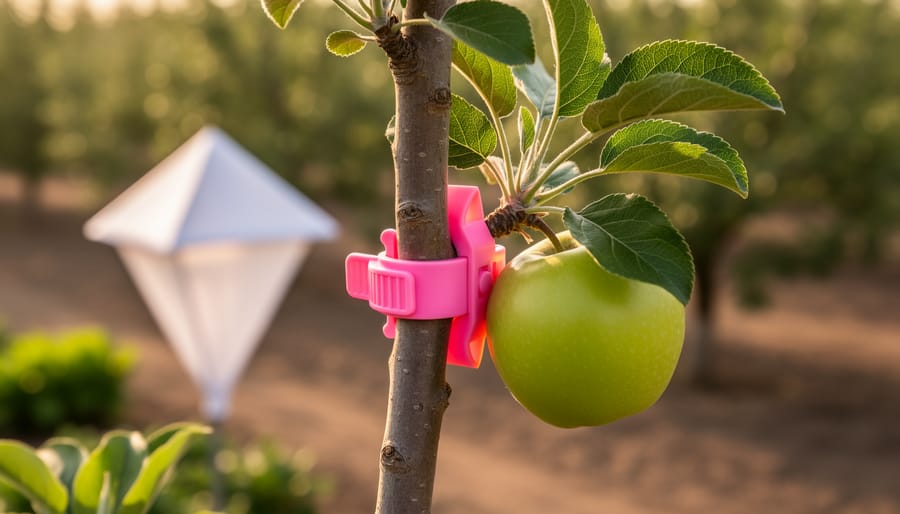
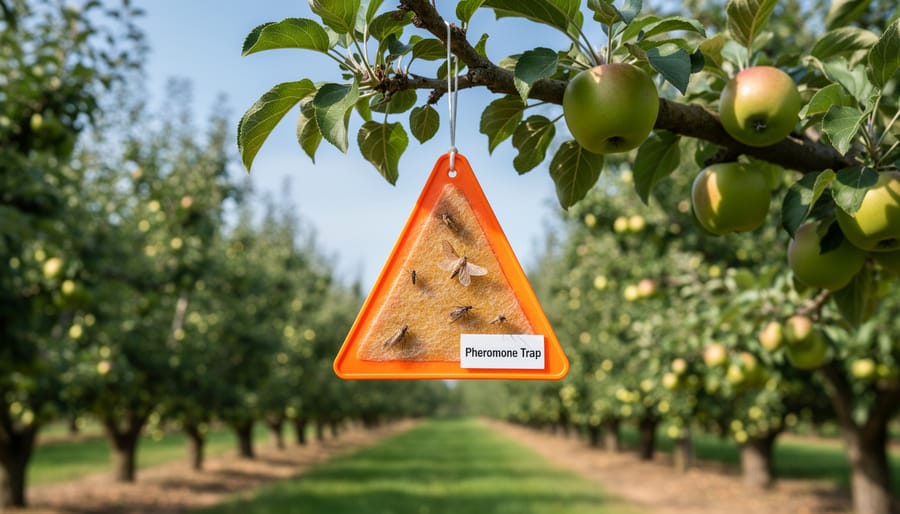
These traps work by mimicking the scent female moths release to attract males. When you hang a pheromone trap in your fruit tree during early spring, it lures male codling moths, preventing them from mating with females. This breaks the reproductive cycle before damage begins. Oriental fruit moths, which target peaches and plums, fall for the same strategy.
For best results, place one trap per dwarf tree or every three to four standard-sized trees before bloom time. I’ve learned from master gardener Sarah Chen that timing matters tremendously. She monitors her traps weekly, replacing the sticky inserts when they fill with moths or lose adhesion, typically every four to six weeks.
What makes this approach so appealing is that you’re not spraying anything on your trees. You’re simply outsmarting the pests using their own biology against them. It’s particularly satisfying when you see those traps working and know your fruit will be worm-free.
Tomato and Vegetable Garden Invaders
If you’ve ever felt the heartbreak of discovering fat, green hornworms munching through your prize tomato plants, you’re not alone. The good news? Pheromone traps offer a gentle way to protect your veggie patch without harsh chemicals.
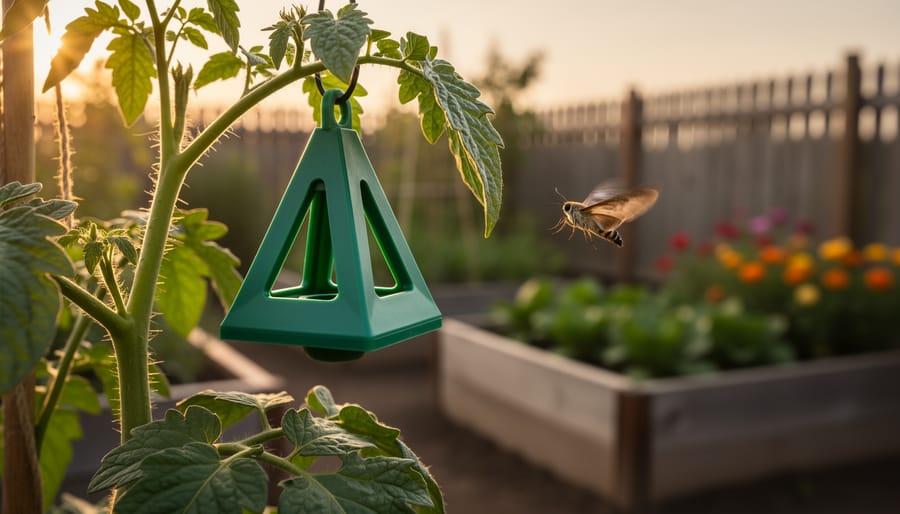
For tomato hornworms, their parent moths (sphinx moths) can be monitored using pheromone lures. While the caterpillars do the damage, tracking adult moth populations helps you know when to inspect plants more carefully and apply other controls like hand-picking or introducing beneficial wasps.
Cutworms and cabbage loopers respond even better to pheromone strategies. These sneaky pests can devastate everything from broccoli to peppers overnight. Pheromone traps attract male moths before they can mate, reducing the next generation of hungry caterpillars. I like placing traps around the garden perimeter in early spring, just as temperatures warm up.
The beauty of this approach is its precision. You’re targeting specific pests without harming ladybugs, lacewings, or other garden helpers. Many gardeners combine pheromone monitoring with row covers and companion planting for comprehensive protection. It takes a bit of planning, but watching your vegetables thrive pest-free makes it absolutely worthwhile.
Ornamental Plant Pests
If your beautiful ornamental garden is under attack, pheromone traps offer an elegant solution that protects your prized plants without harsh chemicals. I remember chatting with master gardener Patricia Chen last spring, and she shared how pheromone traps transformed her approach to ornamental pest management. “It’s like speaking the insects’ language,” she told me, beaming with excitement.
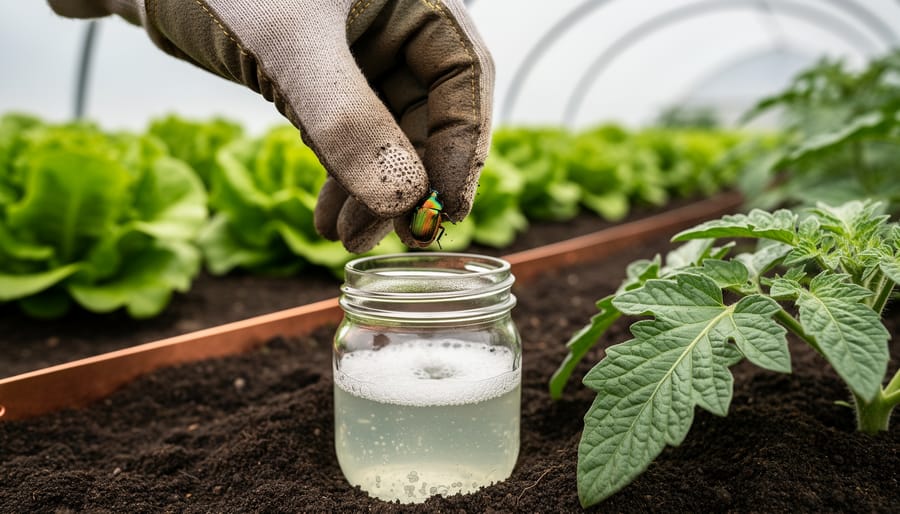
Japanese beetles are perhaps the most notorious ornamental pest, capable of decimating rose bushes and flowering shrubs in days. Pheromone traps specifically designed for these metallic green invaders use both floral lures and aggregation pheromones to draw them away from your plants. Place these traps at least 30 feet from the plants you’re protecting, as they’re incredibly effective and you don’t want to attract more beetles directly to your garden.
Gypsy moths present another significant challenge, particularly for trees and shrubs. Female gypsy moth pheromone traps help monitor populations and can significantly reduce mating success when used strategically around your property. These traps work best when deployed in early spring before the moths emerge.
For smaller ornamental gardens, consider starting with just a few strategically placed traps targeting your specific pest problem. Monitor them weekly, and you’ll quickly see how effective this method can be. The beauty of pheromone traps is their precision—they target only the problematic species, leaving beneficial pollinators and other garden helpers completely unharmed. This selective approach means your garden ecosystem stays balanced and healthy.
How to Use Pheromone Products in Your Garden
Choosing the Right Pheromone Product
When selecting pheromone products, think of it like choosing between a thermometer and a heater—both work with temperature, but they serve different purposes! Pheromone traps are your monitoring tools, perfect for keeping tabs on pest populations. These typically consist of a sticky card or container baited with synthetic pheromones that attract male insects. They’re excellent for beginners because they help you identify when pests arrive and determine if treatment is needed. You’ll know exactly what you’re dealing with and can track whether your control efforts are working.
Mating disruption dispensers, on the other hand, are your active defense system. These small devices release pheromones throughout your garden, creating a confusing cloud of scent that prevents male insects from finding females. This approach works wonderfully for larger gardens or when you’re facing persistent pest pressure. However, they require consistent coverage and work best when neighboring gardens also participate.
For most home gardeners starting out, I recommend beginning with monitoring traps. They’re affordable, easy to use, and provide valuable information about your specific pest challenges. Once you understand your pest patterns, you can graduate to mating disruption if needed.
Installation and Placement Tips
Getting your pheromone traps positioned correctly makes all the difference in protecting your garden! Let’s walk through how to set them up for success.
Start by placing traps at the edges of your garden rather than directly among your prized plants. Pheromones attract pests, so you want to intercept them before they reach your vegetables or flowers. Position traps about 3 to 4 feet off the ground, which works well for most flying insects like moths and fruit flies.
For a typical backyard garden, you’ll need one trap per 50 square feet, though you can adjust based on how severe your pest problem is. I learned this the hard way my first year – using just one trap for my entire vegetable patch wasn’t nearly enough!
Timing matters too. Install your traps in early spring, before you spot the first pests. This proactive approach catches the initial wave before populations explode. Replace lures every 4 to 6 weeks, as their effectiveness diminishes over time.
Keep traps away from outdoor lighting, which can confuse nocturnal pests and reduce trap effectiveness. Check them weekly to monitor pest activity and empty them when they fill up.
Monitoring and Maintenance
Think of monitoring your pheromone traps like tending your tomatoes—regular check-ins make all the difference! I recommend inspecting traps twice weekly during peak pest season and weekly during quieter times. This helps you spot population surges before they become full-blown infestations.
During each check, count and record the pests caught. Keep a simple garden journal noting dates, numbers, and weather conditions. These patterns reveal when specific pests are most active in your garden, helping you time other control measures perfectly.
Most pheromone lures need replacing every 4-8 weeks, though this varies by product. Mark your calendar when installing new lures so you don’t forget. If trap catches suddenly drop but you’re still seeing pest damage, it’s likely time for a fresh lure.
The sticky surfaces in traps typically need changing when they’re covered with insects or debris, usually every few weeks. I’ve learned the hard way that overfilled traps stop working effectively!
Use your monitoring data wisely. A sudden spike might mean it’s time to inspect vulnerable plants more closely or apply additional organic treatments. Remember, these traps are your early warning system, giving you the information needed to protect your garden proactively rather than reactively.
The Real Benefits (Beyond Just Fewer Pests)
If you’ve been hesitant to try pheromone traps because you’re not sure they’re worth the investment, let me share why so many gardeners I know have become enthusiastic converts. Yes, fewer pests is wonderful, but the real magic lies in what these traps don’t do.
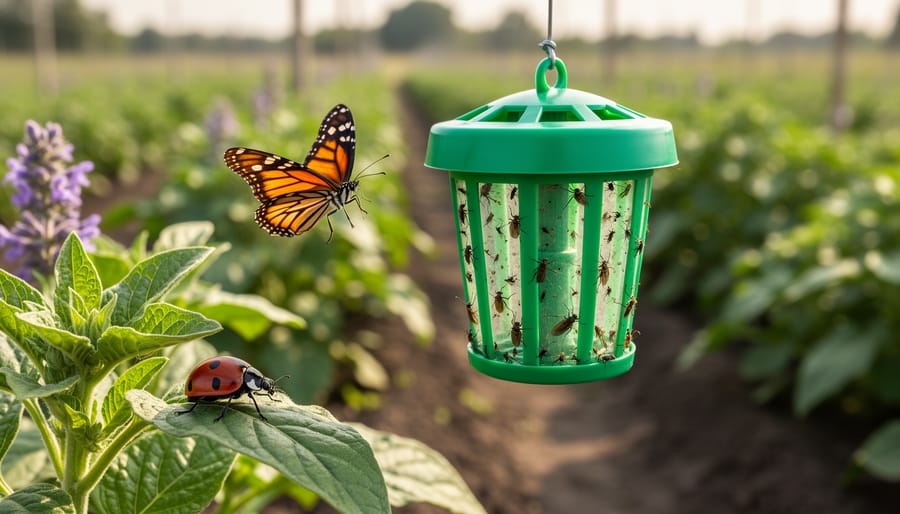
First, they’re incredibly selective. Unlike broad-spectrum insecticides that wipe out everything in sight, pheromone traps target only specific pest species. This means you’re protecting beneficial insects like ladybugs, lacewings, and pollinators that your garden desperately needs. I spoke with Master Gardener Patricia Chen last spring, and she told me her bee population actually increased after switching to pheromones because she stopped accidentally harming them with sprays.
Safety is another huge advantage. If you have children who love helping in the garden or pets who enjoy sniffing around your tomato plants, pheromone traps give you peace of mind. There are no toxic chemicals to worry about if curious hands touch them or if your dog investigates a little too closely.
For those of you growing food, here’s something to celebrate: no chemical residues on your harvest. You can pick a strawberry and pop it straight into your mouth without that nagging worry about what might be coating the surface. Your produce stays truly clean.
Finally, pheromone traps integrate seamlessly with organic gardening practices. They’re approved for organic certification, work alongside companion planting, and complement other natural pest management strategies. You’re not compromising your values or your garden’s ecosystem. You’re simply working smarter, using nature’s own communication system against the pests that threaten your plants.
What Pheromones Can’t Do (Setting Realistic Expectations)
Let’s be honest about what pheromones can realistically achieve in your garden. While they’re wonderful tools, they’re not magic solutions that work for every pest problem you’ll encounter.
First, pheromones are species-specific, meaning they only work on particular insects. You won’t find a one-size-fits-all pheromone solution for your entire garden. For instance, codling moth pheromones won’t help with your aphid problem, and cabbage looper attractants won’t deter Japanese beetles.
Additionally, pheromones work best when used as part of integrated pest management rather than standing alone. Think of them as one player on your garden’s defense team, working alongside companion planting, beneficial insects, and proper garden hygiene. They’re most effective when combined with other natural pest control methods.
Patience is essential too. Unlike chemical sprays that show immediate results, pheromone-based strategies work gradually by disrupting breeding cycles. You might not see dramatic overnight changes, but over time, you’ll notice pest populations declining.
Finally, timing matters tremendously. Pheromone traps and dispensers need to be in place before pest populations explode. If your garden is already heavily infested, you’ll likely need additional interventions to bring numbers down first.
Don’t let these limitations discourage you. Understanding what pheromones can and can’t do helps you use them more effectively, setting you up for genuine success in creating a healthier, more sustainable garden.
As you’ve discovered throughout this guide, pheromones represent one of the most elegant solutions in modern gardening. They work with nature’s own communication systems rather than against them, offering you a powerful way to protect your plants while keeping your garden ecosystem healthy and balanced.
I encourage you to start small. Pick one troublesome pest in your garden and try a pheromone trap this season. You might be surprised at how satisfying it feels to outsmart those codling moths or Japanese beetles using their own biology. There’s something deeply rewarding about working alongside nature rather than trying to overpower it with harsh chemicals.
Remember, you’re not just solving a pest problem when you choose earth-friendly pest solutions like pheromones. You’re creating a safer space for beneficial insects, protecting pollinators, and contributing to a healthier environment for your family and local wildlife.
So grab that first trap, hang it in your apple tree or vegetable garden, and watch what happens. Your garden will thank you, and you’ll have taken another step toward becoming the kind of gardener who works in harmony with nature’s wisdom.