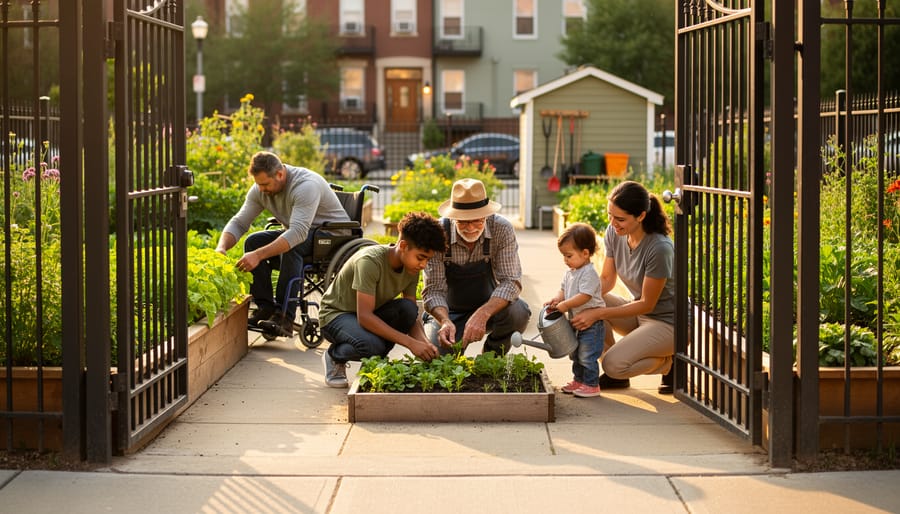
Examine who feels welcome in your garden space by conducting an honest accessibility audit—walk the pathways noting physical barriers like narrow gates or uneven terrain, observe who attends meetings and events, and ask directly whether gardeners from different backgrounds feel comfortable participating. Map out clear sight lines from street to plots so passersby can see themselves reflected in the community, ensuring your garden doesn’t become an exclusive club hidden behind fences or requiring insider knowledge to join.
Redistribute decision-making power by rotating leadership roles quarterly and establishing a transparent process where every gardener, regardless of experience or tenure, has equal voice in choices about plot allocation, rule changes, and resource distribution. When building a community garden, create a governance structure that actively prevents any single group from dominating conversations or controlling valuable resources like water access, sunny plots, or tool storage.
Address cost barriers immediately by eliminating membership fees or implementing sliding-scale contributions, providing tools and seeds through a free lending library, and partnering with local organizations to sponsor plots for low-income families. Many gardens inadvertently exclude people through seemingly small expenses that accumulate—annual dues, required work hours during business days, or expectations to purchase specific amendments or equipment.
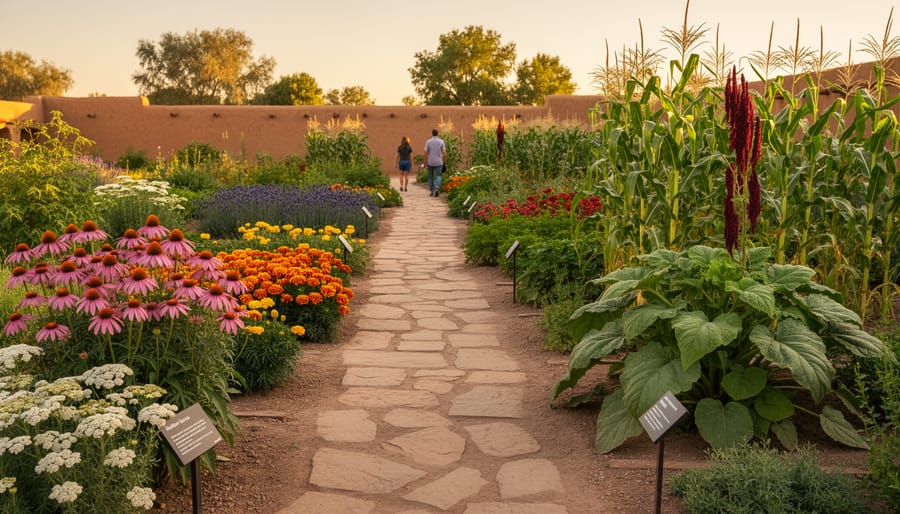
Document and share traditional growing knowledge from diverse cultural communities within your garden by inviting experienced gardeners to lead workshops on techniques from their heritage, dedicating space for crops that reflect your neighborhood’s actual demographics, and acknowledging that Western gardening methods aren’t universal standards. True equity means recognizing that the grandmother growing callaloo or bitter melon holds expertise as valuable as any certified master gardener, and your space should celebrate rather than erase these cultural practices.
What Makes a Community Garden Truly Equitable?
When I first started volunteering at my local community garden, I noticed something that didn’t quite sit right. We had the same plot size for everyone, charged the same membership fee, and expected everyone to volunteer the same number of hours. It seemed fair, right? Everyone getting exactly the same thing. But that’s equality, not equity, and there’s a world of difference between the two.
Equality means giving everyone identical resources and opportunities. Equity, on the other hand, recognizes that we all start from different places and face different challenges. An equitable community garden doesn’t just open its gates and hope everyone can participate. It actively works to remove barriers and provide support where it’s needed most.
Think of it this way: if everyone receives the same size plot but some gardeners are elderly or have physical limitations, are they truly getting equal access? What about families who can’t afford the membership fee, or neighbors who work multiple jobs and can’t commit to daytime volunteer shifts? An equitable garden meets people where they are.
During a conversation with Maria Chen, a garden coordinator in Portland, she shared a powerful insight: “True equity means asking questions and listening. We created sliding-scale fees after learning that cost was keeping families away. We added raised beds when we realized our aging members couldn’t bend down easily. We scheduled evening work parties for those with daytime commitments.”
Equitable gardens acknowledge that different people need different things to succeed. They recognize systemic barriers like transportation challenges, language differences, cultural food preferences, and varying levels of gardening knowledge. Rather than expecting everyone to fit into the same mold, they adapt their structures to welcome diverse participation.
The beautiful result? A garden that truly reflects and serves its entire community, where everyone has a genuine opportunity to grow food, build connections, and thrive.
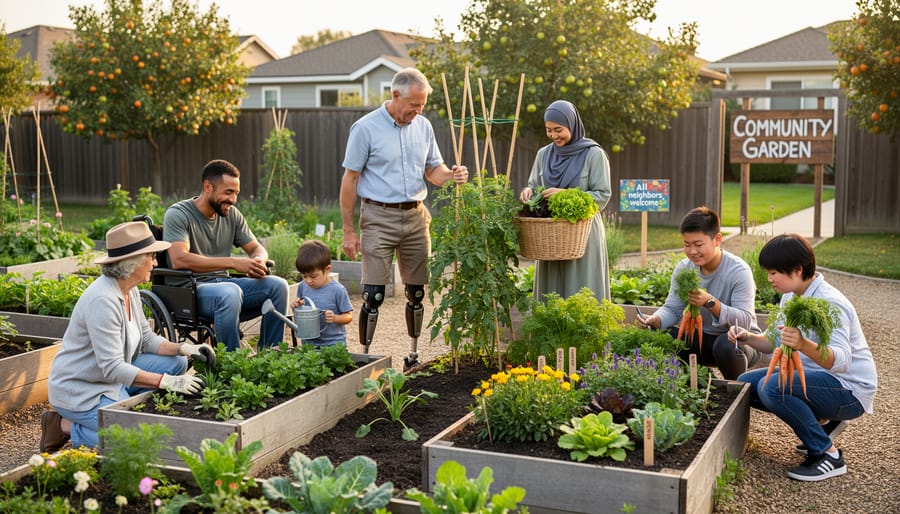
The Hidden Barriers in Community Gardens
Financial Barriers That Keep People Out
Financial barriers remain one of the most significant obstacles preventing full participation in community gardens. While we often think of gardens as free sources of fresh food, the reality is more complex. Annual plot fees, which can range from $25 to $100 or more, may seem modest but represent a real burden for families already struggling with rent and groceries.
Beyond plot fees, there’s the cost of getting started. Quality tools, seeds, soil amendments, and plants add up quickly. A basic gardening toolkit can easily cost $75-150, and many beginners don’t realize they’ll need these investments upfront.
Time is another hidden cost that disproportionately affects lower-income members. Those working multiple jobs or unpredictable schedules face genuine challenges maintaining a garden plot that requires regular watering and weeding. Weekend-only access policies can exclude shift workers entirely.
To address these barriers, successful gardens are implementing sliding-scale fees based on income, creating tool-sharing libraries, organizing seed swaps, and offering scholarship plots. Some gardens partner with local organizations to subsidize memberships for families receiving food assistance. By acknowledging these financial realities and creating flexible solutions, we ensure gardening remains accessible to everyone who wants to grow.
When Location Becomes an Obstacle
Picture this: a vibrant community garden tucked away three miles from the nearest bus stop, or nestled in a neighborhood where residents speak primarily Spanish but all signage appears only in English. These scenarios play out more often than we’d like to admit, creating invisible walls around spaces meant to bring people together.
Location choices significantly impact who feels welcome and able to participate. Gardens placed in affluent neighborhoods naturally attract nearby residents, while those in communities without reliable public transportation may exclude elderly gardeners, families without cars, or people with disabilities. I’ve spoken with organizers who discovered their “centrally located” garden was actually positioned near a busy highway, making walking access dangerous for families with young children.
Demographics matter too. When garden leadership doesn’t reflect the surrounding community’s diversity, certain groups may feel like outsiders looking in. A garden coordinator in Detroit shared how her predominantly white organization struggled to engage neighboring Black residents until they actively sought diverse leadership and redesigned their outreach approach.
The good news? Recognizing these obstacles is the first step toward dismantling them. Honest assessment of your garden’s accessibility, combined with genuine community input, helps identify barriers you might not see from the inside.
Cultural and Language Exclusions
Community gardens can unintentionally create barriers when they center only one cultural perspective on gardening. I learned this firsthand when a longtime gardener from Korea quietly stopped attending our monthly meetings. When I reached out, she explained that all our communications were English-only emails, and the garden rules prohibited the traditional companion planting methods she’d practiced for decades.
Language barriers extend beyond simple translation needs. Consider whether your garden’s signage, newsletters, and policy documents are available in the languages your community speaks. One garden coordinator I interviewed shared how they started hosting multilingual orientations and created picture-based planting guides, which welcomed non-English speakers and made everyone feel more comfortable asking questions.
Garden rules themselves can exclude cultural practices. Some communities have strict regulations about plant heights, specific crops allowed, or designated planting schedules that don’t accommodate diverse growing traditions. For example, rules against “messy” gardens might discourage the dense, intercropped beds common in many Asian and African gardening systems, while restrictions on certain herbs or vegetables can alienate communities who grow food central to their cultural identity.
The dominance of European-style gardening education can also create invisible walls. When workshops only teach raised bed techniques or focus exclusively on tomatoes and lettuce, gardeners from other backgrounds may feel their knowledge isn’t valued. Try inviting diverse gardeners to lead sessions on their traditional methods. These exchanges enrich everyone’s experience while honoring the varied wisdom different cultures bring to growing food.
Building Access Into Your Garden’s DNA
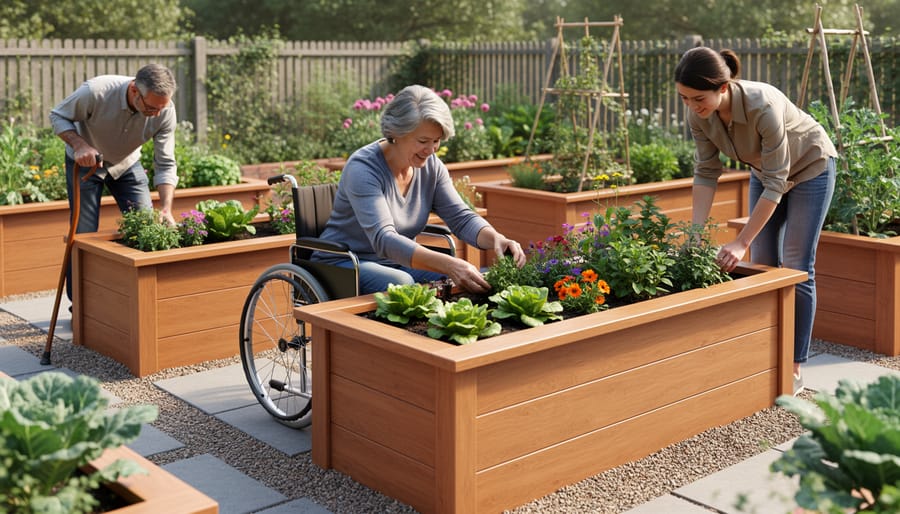
Making Gardens Physically Welcoming
Creating a welcoming garden space means thinking beyond just plant selection. Physical accessibility should be at the heart of your design decisions so everyone can participate fully, regardless of mobility differences.
Raised beds are game-changers for many gardeners. By elevating planting surfaces to waist or wheelchair height, you eliminate the need for bending or kneeling. Aim for beds that are 24-30 inches tall with a maximum width of 4 feet, allowing folks to reach the center comfortably from either side. During our recent visit to Riverside Community Garden, coordinator Maria Chen shared how their wheelchair-accessible beds transformed participation: “We went from two members using mobility aids to twelve in just one season.”
Pathways deserve equal attention. Make them at least 4 feet wide to accommodate wheelchairs and walkers, using firm, level surfaces like packed gravel or pavers rather than loose mulch. Gentle slopes beat stairs every time.
Stock your tool shed with adaptive tools featuring ergonomic grips, extended handles, and lightweight materials. These modifications support gardening with limited mobility while benefiting everyone who uses them.
Consider adding shaded seating areas, accessible water sources at multiple heights, and clear signage. These thoughtful touches signal that your garden truly belongs to the whole community.
Removing Financial Roadblocks
Money shouldn’t determine who gets to grow food and connect with nature. Fortunately, many community gardens have found creative ways to remove financial barriers and welcome everyone to the table.
Start by implementing sliding-scale membership fees based on household income. Some gardens ask members to self-select their rate, while others work with local social service agencies to verify eligibility. The key is creating a system that feels dignified and doesn’t require extensive paperwork.
Tool-sharing programs eliminate the need for expensive individual purchases. Set up a central shed stocked with basic equipment and accessible gardening tools that members can check out as needed. Include items like wheelbarrows, hoses, and hand tools that newcomers might not own yet.
Seed libraries are another game-changer. Members can “borrow” seeds at the beginning of the season and return seeds from their harvest, creating a self-sustaining exchange that costs nothing. Partner with local gardening groups to build your initial collection.
Don’t forget to explore grant opportunities. Many municipalities, nonprofits, and corporate foundations offer funding specifically for community garden initiatives. Apply for grants that cover plot fees for low-income families, purchase communal supplies, or sponsor educational workshops. These resources transform financial obstacles into opportunities for growth and connection.
Creating Culturally Responsive Spaces
A thriving community garden celebrates the rich tapestry of growing traditions that members bring from their diverse backgrounds. Creating culturally responsive spaces means recognizing that there’s no single “right way” to garden—whether someone prefers raised beds, traditional row planting, or companion planting methods passed down through generations, each approach deserves respect and space to flourish.
Start by inviting gardeners to share their cultural traditions and family practices. I once visited a community garden where a Vietnamese grandmother taught neighbors her method of growing lemongrass and Thai basil, while a Mexican family shared their three sisters planting technique with corn, beans, and squash. These exchanges enriched everyone’s knowledge and strengthened community bonds.
Multilingual resources make a tremendous difference in welcoming participation. Translate signage, garden guidelines, and workshop materials into the languages spoken by your community members. Even basic translations show you value everyone’s involvement. Consider hosting bilingual garden tours or creating visual guides with photos and diagrams that transcend language barriers.
Embrace different aesthetic preferences too. Not everyone wants a manicured English cottage garden—some cultures value densely planted spaces or prefer certain flowers for their cultural significance. Create flexible plot guidelines that allow personal expression while maintaining community standards.
Listen actively to what gardeners need. Perhaps someone requests space for cultural ceremonies, or another wants to grow traditional medicinal herbs. These requests offer opportunities to learn and expand your garden’s inclusivity. When we honor diverse traditions, we create spaces where everyone truly belongs.
Anti-Racism Practices That Transform Garden Culture
Examining Your Garden’s Power Structures
Take a moment to look at who’s really steering your community garden. Who shows up at planning meetings? Whose ideas become garden policies? This honest assessment isn’t about assigning blame—it’s about opening our eyes to patterns we might not have noticed.
Start by examining your leadership team. Does it reflect the diversity of your neighborhood, or does it lean toward one demographic? I learned this lesson when our garden’s steering committee realized we were all retired homeowners, completely missing the perspectives of working parents and younger gardeners who used our space differently.
Next, trace how decisions actually get made. Are important choices discussed only at weekday morning meetings that exclude people with traditional work schedules? Do conversations happen primarily through email, leaving out those without regular internet access?
Pay attention to whose voices dominate discussions and whose ideas get implemented. When someone suggests a new project, does the response depend on who’s speaking? One gardener I interviewed shared how her Latino neighbors stopped attending meetings because their suggestions for culturally significant plants were repeatedly overlooked, while others’ requests received immediate enthusiasm.
Create a simple checklist: Who attends meetings? Who speaks? Whose concerns become action items? These patterns reveal your garden’s true power structures.
Building Intentional Inclusivity
Creating a truly inclusive community garden requires intentional action, not just good intentions. Start by examining your recruitment efforts—are you reaching beyond your usual networks? Partner with local community centers, faith organizations, and cultural groups that serve BIPOC communities. Post flyers in multiple languages and on platforms these communities actually use.
Leadership matters tremendously. If your garden’s decision-makers all look the same, that’s a red flag. Actively mentor and support gardeners from underrepresented backgrounds to take on leadership roles. This might mean providing leadership training, creating co-chair positions, or adjusting meeting times to accommodate different work schedules.
Addressing microaggressions is equally important. These small, often unintentional slights—like assuming someone doesn’t speak English, touching someone’s hair, or questioning whether they “really garden”—create hostile environments. Establish clear community agreements about respectful behavior and train members to recognize and address these moments when they occur.
I spoke with Maria Santos, who transformed her garden’s culture by implementing quarterly inclusivity check-ins. “We created a simple feedback system where members could anonymously share concerns,” she explained. “It opened our eyes to barriers we’d been blind to.”
Remember, building inclusivity is ongoing work. Celebrate progress, stay humble when you make mistakes, and keep learning together.
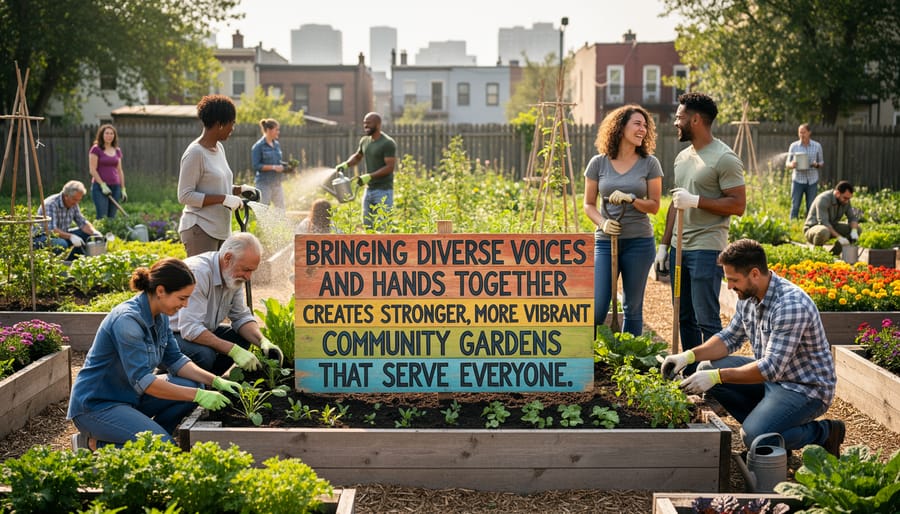
Honoring Land and Cultural Histories
Creating truly equitable gardens means honoring the people and practices that came before us. Start by acknowledging whose Indigenous land your garden sits on and research traditional plant knowledge from those communities. Consider inviting local Indigenous educators to share stewardship practices that sustained the land for generations.
Celebrate the rich tapestry of agricultural traditions within your community. Perhaps a member’s family has been growing collard greens for decades, or another brings seed-saving techniques from their homeland. Make space for these stories through garden signage, seasonal potlucks featuring heritage recipes, or informal skill-sharing sessions.
Gardens can also serve as healing spaces, particularly for communities affected by displacement, food apartheid, or environmental racism. Some gardens dedicate quiet areas for reflection, while others host circles where members share experiences and build trust. When you honor diverse histories and create room for healing, you’re not just growing vegetables—you’re nurturing belonging and restoration.
Real Gardens Making Real Change
Across North America, community gardens are proving that equity isn’t just an ideal—it’s achievable. These inspiring spaces show us what happens when gardens intentionally welcome everyone.
The Beacon Food Forest in Seattle transformed how community gardens think about access. After conducting surveys in multiple languages, they discovered many immigrant families felt uncertain about joining. The garden responded by creating a multilingual welcome committee and hosting cultural harvest celebrations. Within two years, their membership reflected the neighborhood’s true diversity, with families from over 30 countries growing traditional foods side by side.
In Detroit, the Plum Street Community Garden tackled economic barriers head-on. They established a sliding-scale plot fee system and created a tool-sharing library, eliminating the need for gardeners to purchase expensive equipment. The results? Plot waitlists disappeared, and families who’d never gardened before were growing vegetables within months. One grandmother shared that she hadn’t been able to afford fresh produce regularly, but now her grandchildren help her harvest greens every week.
The North Carolina Community Garden Network addressed racial equity by examining their leadership. They realized all their board members were white, despite serving diverse neighborhoods. Through intentional recruitment and mentorship programs, they shifted power to reflect their community. Their new leaders brought fresh perspectives on everything from plot allocation to engaging diverse age groups in garden activities.
Philadelphia’s Eastwick Garden created pathways for people with disabilities by installing raised beds at wheelchair height and adding sensory gardens with fragrant herbs and textured plants. Their accessibility consultant, who uses a wheelchair, helped design wide pathways and adaptive tool stations. Now the garden buzzes with activity from gardeners of all abilities.
These gardens didn’t achieve equity overnight. They listened to their communities, acknowledged past exclusions, and made concrete changes. Their success shows that when gardens prioritize equity, everyone flourishes. The harvest includes not just vegetables, but stronger, more connected communities where all neighbors truly belong.
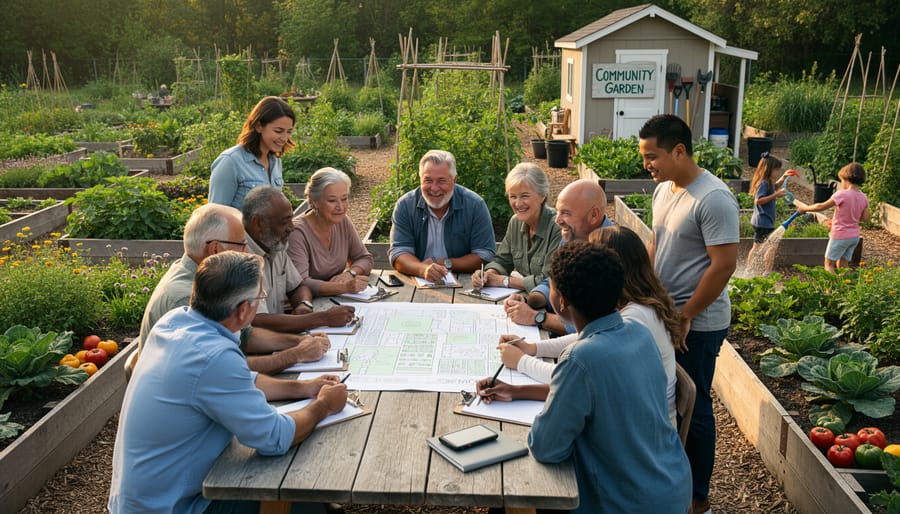
Starting Your Equity Journey Today
Ask the Right Questions First
Before transforming your community garden into a truly welcoming space, you need to understand where things stand today. Think of this as taking stock of your garden beds before planning next season’s crops. Grab a notebook and gather a small group of honest friends or fellow gardeners to explore these essential questions together.
Start by looking around: Who actually uses your garden? Walk through on different days and times, noting the faces you see. Now ask the harder question: Who doesn’t show up? Are there neighborhoods nearby that aren’t represented? What about different age groups, abilities, or cultural backgrounds?
Next, investigate the barriers that might be invisible to regular members. Is there a membership fee that seems small to some but prohibitive to others? Do meeting times conflict with certain work schedules? Is the application process only available online? Are the garden beds raised high enough for wheelchair users or folks with mobility challenges?
Finally, examine your decision-making structure. Who sits on the leadership committee? Whose voices shape garden rules and priorities? If the same handful of people have held positions for years, newer or marginalized members might not feel their input matters.
These questions aren’t meant to discourage you. They’re your roadmap to positive change, helping you see opportunities you might have missed.
Take One Meaningful Action
The journey toward a more equitable community garden doesn’t require transforming everything overnight. In fact, starting with one thoughtful change often creates more lasting impact than attempting a complete overhaul that leaves everyone exhausted.
Consider beginning with something as simple as adjusting your meeting schedule. If your garden committee always meets on Tuesday evenings, you might be excluding parents with childcare responsibilities or people working second shifts. Try rotating meeting times or offering childcare at gatherings. One garden in Portland made this single change and saw participation from working families triple within two months.
Another powerful first step is examining your garden’s physical accessibility. Walk through your space and notice: Are the pathways wide enough for wheelchairs or walkers? Could you designate just two raised beds at wheelchair-accessible height? Even converting one traditional plot shows members with mobility challenges that they truly belong.
Language access offers another meaningful starting point. If you have Spanish-speaking families in your neighborhood, translate your welcome signs and plot application. You don’t need a professional translator right away. Many garden members would happily help, and this gesture signals genuine openness to diverse participation.
The key is choosing one action that addresses a real barrier in your specific community, then committing to it fully. Success with that first step builds confidence and momentum for the next. You’ll learn what works, gather allies, and discover that creating equity isn’t about perfection. It’s about consistent, genuine effort.
Creating an equitable community garden is much like tending a diverse perennial bed—it requires patience, consistent care, and a willingness to adapt as conditions change. The journey toward inclusivity isn’t something we complete and check off our list. Rather, it’s an ongoing practice that evolves alongside our community and deepens with each season.
The beautiful truth is that every step you take toward equity strengthens your garden in ways you might not immediately see. When you remove a barrier for one person, you often open the door for many others. When you listen to voices that haven’t been heard, you gain insights that make your entire space more welcoming and functional. These efforts create ripple effects that transform not just your garden beds, but the relationships and sense of belonging that make community gardens truly thrive.
Remember, you don’t need to implement every change at once. Start where you are, with what you have. Maybe it’s translating your newsletter, hosting a cultural celebration, or simply asking someone new about their gardening traditions. Each conversation, each thoughtful adjustment, each moment of genuine inclusion adds to the vibrant tapestry of your shared space.
As you continue this work, lean on your fellow gardeners for support and celebrate your progress together. The most resilient gardens are those where everyone feels they have a stake in the soil and a voice in the vision. By committing to equity as an ongoing practice, you’re cultivating something far more valuable than vegetables—you’re growing community.