Picture this: a sun-drenched space where your seedlings thrive year-round, your morning coffee tastes better surrounded by thriving herbs, and January doesn’t mean saying goodbye to your indoor garden oasis. That’s the magic of a sunroom, but before you start sketching plans, let’s talk numbers.
In the Tri-Cities area, sunroom additions typically range from $15,000 to $75,000, depending on size, materials, and how elaborate you want to get. A basic three-season room might run you $15,000 to $30,000, while a fully insulated four-season addition with premium glazing can easily hit $50,000 or more. These aren’t just construction costs. They’re investments in extending your growing season, protecting tender plants from harsh Ontario winters, and creating a space where gardening becomes a year-round passion rather than a seasonal hobby.
Local factors matter significantly. Tri-Cities contractors face unique considerations like our freeze-thaw cycles, snow load requirements, and municipal permit processes that differ from city to city. Foundation work costs more here than in milder climates because frost lines run deep. Your choice between a simple glass enclosure and a climate-controlled greenhouse-style sunroom will dramatically shift your budget.
The good news? Many gardening enthusiasts who’ve added sunrooms report they wish they’d done it sooner. The ability to start seedlings in February, overwinter citrus trees, and enjoy your plant collection during snowstorms makes the investment feel worthwhile quickly. If you’re ready to explore specific breakdowns by sunroom type and real local examples, read the full guide for detailed pricing and planning insights.
Why Gardeners Love Sunrooms (And Why They’re Worth the Investment)
For gardening enthusiasts in the Tri-Cities, a sunroom isn’t just another home addition. It’s a game-changing space that extends your growing season and transforms how you interact with your plants year-round.
I spoke with Patricia Kowalski, a Master Gardener from Kennewick who added a three-season sunroom to her home three years ago. “I used to lose half my houseplants every winter,” she told me. “Now my orchids, citrus trees, and succulents thrive through the coldest months. The difference is remarkable because sunlight is best for plant growth and my sunroom delivers that in abundance.”
The practical benefits stack up quickly. Your sunroom becomes dedicated seed starting areas in late winter, giving you a head start on the growing season without cluttering your kitchen counters. You can pot and repot without worrying about making a mess on your living room carpet. Those frost-sensitive perennials that usually require special winter protection? They simply move into the sunroom when temperatures drop.
Temperature control is easier than you might think. Jason Martinez, a landscaper from Richland, converted his sunroom into a productive winter garden space. “I installed a small space heater and some basic ventilation fans,” he explained. “Even during our January cold snaps, I keep the space between 50 and 65 degrees. My cool-season greens grow beautifully, and I’m harvesting fresh salad through winter.”
Beyond the practical growing benefits, sunrooms create that perfect garden-adjacent relaxation spot. You get to enjoy your morning coffee surrounded by greenery, even when it’s 28 degrees outside. The return on investment goes beyond dollars. You’re buying time with your plants, extended growing capabilities, and a connection to your garden that doesn’t end when October arrives.
Breaking Down Tri-Cities Sunroom Addition Costs
Three-Season Sunrooms: The Budget-Friendly Option
If you’re looking to extend your growing season without breaking the bank, a three-season sunroom might be your perfect match. These additions typically run between $8,000 and $25,000 in the Tri-Cities area, making them the most accessible entry point for gardeners dreaming of a protected space.
The construction is simpler than year-round options. You’re looking at aluminum frames, single-pane or double-pane windows, and concrete slab or deck flooring. There’s no need for extensive HVAC integration or heavy-duty insulation, which keeps both initial costs and installation time down. Most three-season rooms go up in just a few weeks.
Here’s what makes them ideal for Tri-Cities gardeners: they shine during our beautiful spring through fall months when temperatures are moderate. I spoke with Linda Chen, a master gardener in Richland, who converted her three-season sunroom into a seedling nursery. “I start my tomatoes and peppers in March, weeks before I could risk them outdoors,” she told me. “The room heats up naturally during the day, and I just bring in a space heater on chilly evenings.”
The limitation? Once winter truly arrives, these spaces typically get too cold for tender plants unless you’re willing to add supplemental heating. But for hardening off seedlings, overwintering herbs like rosemary and bay laurel, or storing garden tools where you can actually reach them, they’re wonderfully practical.
The cost savings compared to four-season rooms (often double the price) means you might have budget left over for raised beds, grow lights, or that fancy potting bench you’ve been eyeing.
Four-Season Sunrooms: Year-Round Growing Space
For serious gardeners who dream of tending tomatoes in January or starting seedlings any time of the year, four-season sunrooms deliver true year-round growing space. These aren’t your basic three-season additions. They’re fully insulated structures built to withstand Tri-Cities winters while keeping plants cozy and thriving.
The investment reflects that capability. In the Tri-Cities area, four-season sunrooms typically run between $300 and $500 per square foot, putting a 200-square-foot space at $60,000 to $100,000. That’s considerably higher than three-season options, but you’re getting a climate-controlled environment with proper heating, cooling, and ventilation systems.
What makes them worth the premium? The construction meets standard insulation requirements for sunrooms designed for year-round use, including insulated walls, thermal-break window frames, and often radiant floor heating. You can maintain consistent temperatures regardless of what’s happening outside.
Local gardener Maria Chen uses her four-season sunroom to grow herbs, peppers, and citrus trees through our coldest months. “I’m harvesting fresh basil in February,” she told me during a recent visit. “The upfront cost made me hesitate, but three years in, I can’t imagine my gardening life without it.”
If you’re planning to use your sunroom primarily during mild weather, the extra expense may not make sense. But for dedicated growers wanting a genuine greenhouse experience, four-season construction transforms your gardening calendar completely.
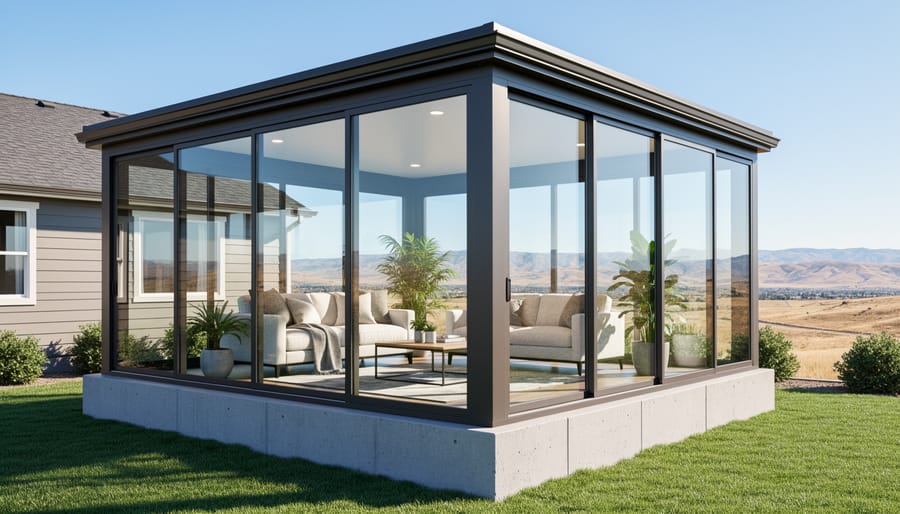
Custom Conservatory-Style Additions
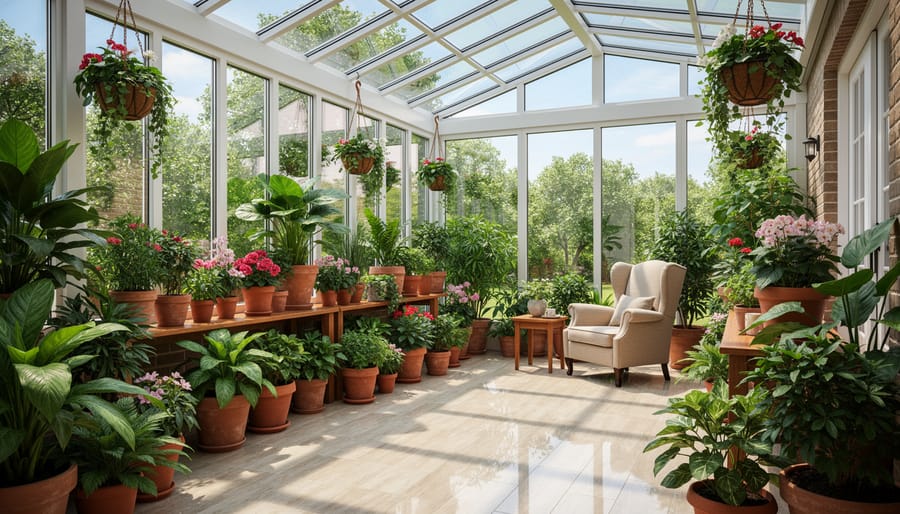
For serious plant collectors and gardeners ready to invest in the ultimate growing space, custom conservatory-style additions represent the gold standard. These structures feature floor-to-ceiling glass walls and fully glazed roofs, creating an environment that maximizes natural light from every angle. In the Tri-Cities area, expect to budget $50,000 to $120,000 or more for a true conservatory addition.
The higher price reflects specialized materials and construction. Tempered or laminated glass panels, aluminum or steel structural frameworks designed to support significant weight, and sophisticated ventilation systems all contribute to the cost. You’ll also need climate control that can handle the temperature swings these glass-heavy spaces experience. Many conservatory owners in our region install automated shade systems and humidity controls to protect delicate plants.
I spoke with Patricia Chen, a local orchid collector who completed a 200-square-foot conservatory addition last year. “The investment was substantial at $85,000, but I can finally grow my entire collection year-round without worrying about winter temperatures,” she told me. “The key was finding a contractor experienced with greenhouse-grade materials who understood proper drainage and ventilation requirements.”
These additions make financial sense if you’re housing valuable plant collections, running a small plant business, or simply passionate about creating a dedicated botanical sanctuary. The year-round growing capability and showpiece quality can add significant property value. Just remember that ongoing costs for heating, cooling, and maintenance will be higher than standard sunrooms due to the all-glass construction.
What Impacts Your Final Price Tag
Planning your sunroom budget requires understanding the pieces that make up the puzzle. I sat down with Sarah Chen, a local contractor who’s built dozens of sunrooms across the Tri-Cities, and she walked me through exactly where your investment goes.
The foundation you choose sets the tone for everything else. A concrete slab foundation typically runs $4,000 to $7,000 for an average sunroom, while a crawl space or full basement foundation can double that cost. Sarah tells me that many Tri-Cities homeowners opt for the slab when adding sunrooms primarily for plants and garden starts, since the simpler foundation still provides excellent stability without breaking the bank.
Your climate control decisions create another major price swing. Basic sunrooms without heating or cooling might save you $3,000 to $5,000 upfront, but think about those scorching August afternoons or February freezes. Tying into your existing HVAC system adds $2,500 to $5,000, depending on how far your ductwork needs to run. A dedicated mini-split system costs about the same but gives you independent temperature control, perfect for keeping seedlings warm while the rest of your house stays cooler.
- Foundation Requirements
- The structural base supporting your sunroom, ranging from basic concrete slabs ($4,000-$7,000) to more complex crawl spaces or basements that can double costs. Your choice affects both immediate expense and long-term functionality.
- HVAC Integration
- Connecting your sunroom to heating and cooling systems, adding $2,500-$5,000 to your project. Independent mini-split systems cost similarly but offer separate climate zones ideal for plant cultivation.
- Window Quality
- Glass options spanning from standard double-pane ($200-$300 per window) to energy-efficient Low-E glass ($400-$600 each). Higher grades reduce utility costs while protecting delicate plants from UV damage.
- Roofing Materials
- Covers range from polycarbonate panels ($15-$25 per square foot) to insulated glass ($35-$50 per square foot). Material choice dramatically affects both natural light quality and temperature stability for your garden space.
- Permits and Inspections
- Required local approvals typically costing $500-$1,500 in the Tri-Cities. These ensure your addition meets building codes and won’t complicate future home sales.
Window selection deserves serious thought. Standard double-pane glass costs $200 to $300 per window, while Low-E glass with UV protection runs $400 to $600 each. For gardeners, that upgrade matters. The UV filtering protects both you and sensitive plants during long afternoons tending to your indoor garden.
Roofing materials create dramatic price differences too. Polycarbonate panels cost $15 to $25 per square foot and provide good light diffusion for plants. Glass roofs jump to $35 to $50 per square foot but offer superior insulation and that incredible feeling of sitting under open sky while watching your herbs flourish below.
Don’t forget the unsexy stuff. Electrical work for outlets, lighting, and maybe a small heater for seedling trays runs $800 to $2,000. Adding a water source for your potted plants costs another $1,000 to $2,500 for plumbing. Permits and inspections in the Tri-Cities typically add $500 to $1,500.
Location on your property matters more than you’d think. A sunroom attached to your kitchen or living room costs less than one requiring a long hallway connection. Every foot of distance means more materials, more labor, more money.
Hidden Costs Most Tri-Cities Homeowners Don’t Expect
Let’s talk about the expenses that blindside most homeowners after they’ve already committed to their sunroom project. I spoke with Maria Chen, a local landscape designer who’s worked with dozens of Tri-Cities families through sunroom additions, and she shared the costs that catch people off guard.
Permit fees in the Tri-Cities typically run $800 to $1,500, depending on your city and the project scope. Kennewick and Richland have different requirements, and if your property sits in a newer development with HOA restrictions, you might need architectural review approval too.
Here’s where things get expensive: foundation work. The Tri-Cities sits on varied soil conditions, from sandy loam to heavier clay deposits near the Columbia River. One homeowner in West Richland discovered their chosen sunroom location had unstable soil requiring additional excavation and compacted fill. That added $3,200 to their budget. Foundation inspections before breaking ground can prevent these surprises, but many contractors skip this step in their initial estimates.
Electrical upgrades surprise nearly everyone. Your existing panel might need expansion to handle the sunroom’s lighting, outlets, and ceiling fans. Budget $1,200 to $2,800 for electrical work beyond basic wiring. If you’re planning grow lights for seedlings or a small heating system for winter propagation, that number climbs higher.
HVAC extensions are another hidden expense. Extending your existing ductwork costs $2,500 to $4,500 in most Tri-Cities homes. Some homeowners opt for ductless mini-splits instead, which run $3,000 to $5,000 installed but offer better temperature control for plant-focused sunrooms.
Finally, landscaping restoration. Construction vehicles compact soil, damage existing plants, and create drainage issues. Maria recommends setting aside 10 to 15 percent of your total project cost for yard repairs. That means replanting trampled perennials, regrading soil, and sometimes replacing irrigation lines crushed during construction.
Add these together, and you’re looking at $8,000 to $15,000 in costs beyond the base sunroom price.
How Tri-Cities Sunroom Costs Compare to Other Home Additions
When you’re planning to invest in your home, understanding how different projects stack up financially makes all the difference. In the Tri-Cities area, sunrooms generally offer one of the most cost-effective ways to expand your living space, especially when you consider the square footage you gain.
| Addition Type | Average Tri-Cities Cost | Typical ROI |
|---|---|---|
| Three-Season Sunroom | $15,000 – $35,000 | 50-65% |
| Four-Season Sunroom | $30,000 – $70,000 | 55-70% |
| Bedroom Addition | $45,000 – $85,000 | 50-60% |
| Bathroom Addition | $35,000 – $75,000 | 55-65% |
| Kitchen Extension | $50,000 – $100,000 | 60-75% |
Looking at these numbers, sunrooms shine as budget-friendly options compared to other home additions. A three-season sunroom costs roughly half what you’d spend on a bedroom addition, yet provides comparable square footage. For gardening enthusiasts, that’s space you can use almost immediately to start seedlings, overwinter tender plants, or simply enjoy your garden view year-round.
Local contractor Sarah Mitchell from Kennewick explains the value proposition: “Sunrooms require less foundation work and fewer utilities than standard additions. You’re not running full HVAC, complex plumbing, or extensive electrical. That’s where homeowners save.”
The ROI numbers tell an interesting story too. While kitchen extensions typically recoup the highest percentage at sale time, sunrooms aren’t far behind and cost significantly less upfront. For homeowners planning to stay put and enjoy their investment rather than flip immediately, a sunroom delivers daily value through natural light, garden access, and flexible growing space that’s hard to quantify in pure resale terms.
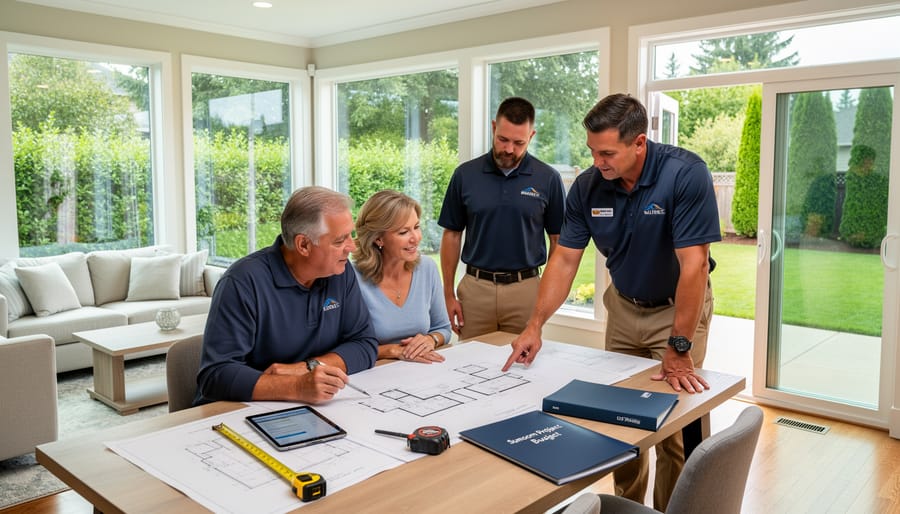
Real Tri-Cities Sunroom Projects: What Homeowners Actually Paid
We sat down with three Tri-Cities gardening enthusiasts who recently added sunrooms to their homes. Here’s what they shared about their experiences and actual costs.
Maria Chen, West Richland: The Orchid Collector
Maria completed her 12×14 three-season sunroom in spring 2023. “I needed space for my orchid collection without turning my living room into a jungle,” she laughs.
Total cost: $28,400
Her breakdown included the basic structure ($22,000), upgraded insulated glass for better temperature control ($3,200), electrical work for grow lights and outlets ($1,800), and permits ($1,400). “The biggest surprise was the electrical. I thought it would be maybe $800, but bringing power out there properly cost more than double.”
Maria’s sunroom houses 47 orchids on custom shelving. “I added a small humidifier and some LED grow lights. The natural light is incredible, but I needed supplemental lighting for the north-facing shelves.”
Would she do it again? “Absolutely. My orchids have never been happier, and I get to enjoy my morning coffee surrounded by flowers year-round.”
Tom and Jennifer Pasco, Kennewick: The Year-Round Growers
This couple invested in a four-season sunroom specifically for winter gardening. Their 14×16 addition was completed in fall 2023.
Total cost: $47,800
The detailed costs: base construction ($32,000), HVAC extension to heat and cool the space ($8,500), tempered glass upgrade ($4,200), building permits ($1,900), and a water line for easy plant care ($1,200).
“The HVAC was non-negotiable for us,” Jennifer explains. “We wanted to grow lettuce and herbs through January, which meant keeping it at least 50 degrees overnight.”
Their setup includes raised beds along two walls and hanging baskets for trailing tomatoes. “Last winter, we harvested fresh salad greens every week. The investment paid for itself in happiness alone,” Tom says.
The unexpected challenge? “Finding a contractor who understood what we wanted. The third contractor we interviewed actually grew vegetables himself and got it immediately.”
Sarah Rodriguez, Pasco: The Budget-Conscious Greenhouse Convert
Sarah chose a lean-to sunroom design to save money. Her 10×12 space was finished in summer 2024.
Total cost: $18,900
This included construction ($15,500), electrical for fans and lighting ($1,800), permits ($900), and a ceiling fan installation ($700). “I originally looked at standalone greenhouses, but they were either flimsy or expensive. This felt more permanent.”
She uses the space for seed starting and overwintering tender perennials. “I’ve got benches on three sides and use every inch. It’s transformed my gardening.”
Her advice? “Get multiple quotes. My first estimate was $26,000 for the same size space.”
Step-by-Step: Planning Your Sunroom Addition Budget
Creating a realistic budget for your Tri-Cities sunroom addition starts with honest self-assessment. Sit down with a notebook and sketch out exactly what you want this space to do for you. Will it house tropical plants through our chilly winters? Do you need dedicated propagation areas with heat mats and grow lights? Maybe you’re dreaming of a citrus grove that perfumes the house in February. These details matter because they directly impact your bottom line.
Start by getting three quotes from local contractors. I learned this the hard way when my neighbor Mary jumped at the first estimate she received, only to discover later that contractor had dramatically underquoted and couldn’t finish the job. The middle quote isn’t always the best, but having multiple numbers gives you a realistic baseline. In the Tri-Cities, expect quotes to vary by 15-25 percent based on contractor availability and specific experience with garden-focused additions.
Next, break down your gardening-specific costs. This is where things get exciting. Those beautiful glass walls will showcase your plants, but what about the infrastructure? Budget separately for electrical work if you need outlets every six feet for grow lights, fans, and propagation equipment. One electrician told me that gardeners consistently underestimate power needs by half.
Calculate your shelving and storage requirements before construction begins. Measure your current plant collection, then double that number because we all know how quickly plant families grow. Heavy-duty shelving that can handle waterlogged trays and large containers runs $150-400 per unit. Budgeting for shelving upfront prevents the frustration of makeshift solutions later.
Water access is non-negotiable. Running a water line costs $500-1,200 depending on distance from existing plumbing, but hauling watering cans across the house three times daily will make you regret skipping this step. Consider a small utility sink too, around $300-600 installed. Trust me, you’ll use it constantly.
Don’t forget climate control beyond basic heating and cooling. Humidity control matters enormously for successful indoor gardening. A good humidifier runs $200-500, and ventilation fans cost $150-300 each. I recommend at least two fans for air circulation.
Set aside a contingency fund of 15-20 percent. Construction always reveals surprises. Maybe your soil drainage needs attention, or you discover the perfect spot for your sunroom requires moving a downspout. These aren’t disasters, just realities.
Finally, plan for finishing touches after construction. Flooring that handles water spills, UV-filtering window treatments to protect sensitive seedlings, and proper drainage solutions all deserve their own budget lines. You’re not just building a room. You’re creating a year-round growing paradise that’ll transform your gardening life.
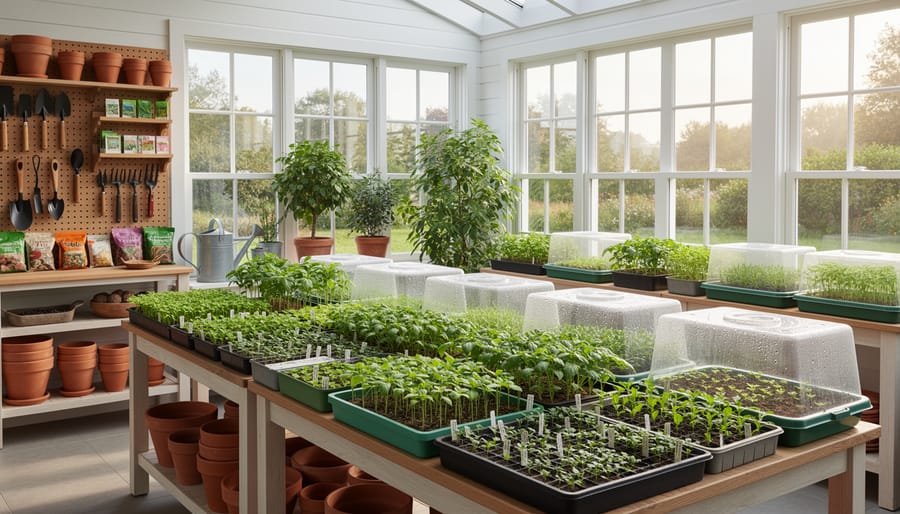
Smart Ways to Save Without Sacrificing Quality
Here’s the reality: you can absolutely build a beautiful, functional sunroom without emptying your retirement fund. I learned this firsthand when I spoke with Janet Morrison, a Kennewick-based contractor who specializes in garden room additions. She told me that her savviest clients save 15-25% on their projects by making strategic choices, not cheap ones.
Timing matters more than most people realize. Construction during late fall or winter (October through February in the Tri-Cities) often yields 10-15% lower labor costs because contractors are hungry for work. Yes, you’ll wait a bit longer to enjoy your space, but the savings can pay for those beautiful south-facing windows you’ve been eyeing for your seedling operation.
The materials you choose create the biggest opportunity for smart savings. Standard-sized windows cost substantially less than custom dimensions. If you can design your sunroom around stock window sizes, you’ll pocket the difference without sacrificing quality or light. Similarly, polycarbonate panels offer excellent insulation for a fraction of what glass costs, though you’ll trade some clarity.
- Off-season construction can reduce labor costs by 10-15% with minimal wait time impact
- Standard window sizes deliver identical performance to custom at significantly lower prices
- DIY site preparation and demolition can save $2,000-4,000 on contractor fees
- Polycarbonate panels provide better insulation than glass while costing 30-40% less
- Winter construction may extend project timelines by 2-3 weeks due to weather delays
- Standard windows limit your design flexibility and may not suit every garden view
- DIY prep work requires significant time investment and proper safety equipment
- Polycarbonate scratches more easily and may yellow after 10-15 years of sun exposure
You can handle site preparation yourself if you’re reasonably handy. Clearing the area, removing old decking, and basic excavation are straightforward tasks that contractors charge $50-75 per hour to complete. Just know your limits.
Here’s where you shouldn’t cut corners: foundation work, electrical systems, and proper insulation. These determine whether your sunroom becomes a year-round growing paradise or an expensive disappointment. A $500 savings on substandard insulation will cost you $200 yearly in heating bills. That math never works out.
Consider a phased approach too. Build the essential structure now, then add features like ceiling fans, built-in shelving, or automated blinds later when your budget recovers.
Yes, adding a sunroom to your Tri-Cities home represents a significant investment. You’re looking at anywhere from $15,000 for a basic three-season structure to well over $80,000 for a custom four-season retreat. That’s real money, and the decision deserves careful consideration.
But here’s what makes this different from other home improvements: a sunroom doesn’t just add square footage. For gardeners, it fundamentally changes how you interact with your passion throughout the year. Those cold February mornings when you’re starting seeds under perfect natural light? The rainy October afternoons spent among your potted herbs and overwintering tropicals? These moments transform your gardening from a seasonal hobby into a year-round joy.
The Tri-Cities climate creates unique opportunities here. Our relatively mild winters mean a well-designed three-season sunroom can extend your growing season by months, not just weeks. Local contractors understand these conditions and can help you maximize that benefit while staying within budget.
Start by getting three quotes from experienced local builders. Ask about energy-efficient options that’ll pay dividends during our hot summers and chilly winters. Consider starting smaller if needed. You can always enhance the space later with better climate control or additional features.
Your garden has given you countless hours of satisfaction. A sunroom lets you nurture that relationship during months when you’d otherwise be stuck inside dreaming about spring. That’s not just an addition to your home. That’s an investment in what brings you genuine happiness.