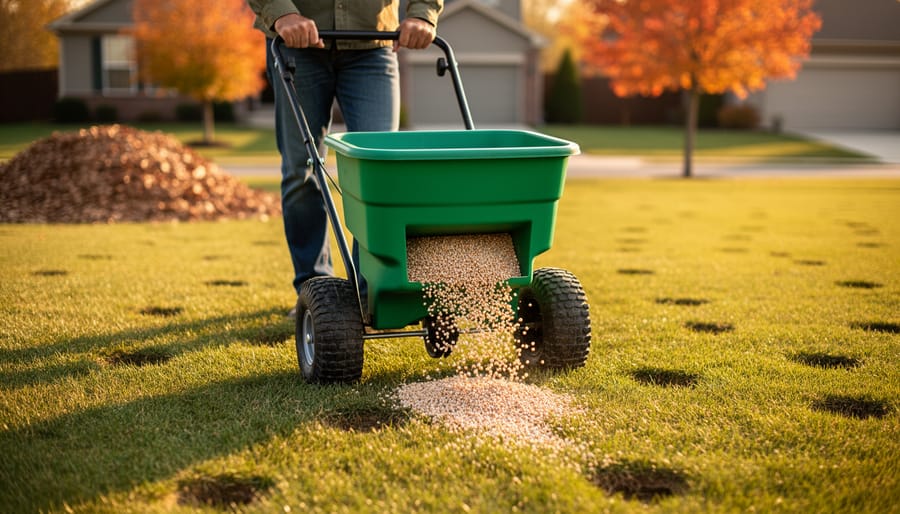
Fertilize your lawn one final time in late fall with a winterizer formula high in potassium, which strengthens grass roots and improves cold tolerance. This crucial feeding, typically applied six to eight weeks before your first hard freeze, gives your lawn the nutrients it needs to survive dormancy and green up quickly come spring.
Mow your grass shorter than usual for the final cut of the season, dropping your blade to about two inches. Taller grass invites snow mold and provides shelter for voles and other pests, while grass cut too short exposes roots to freezing damage. Time this last mow after growth has slowed but before the ground freezes.
Aerate compacted soil in early fall to allow oxygen, water, and nutrients to penetrate deep into the root zone. This step is especially important if your lawn experiences heavy foot traffic or clay soil conditions. Follow aeration immediately with overseeding to fill in bare patches and thicken your turf before winter arrives.
Remove fallen leaves promptly throughout autumn rather than waiting for trees to fully drop. A thick leaf layer blocks sunlight and traps moisture, creating perfect conditions for fungal diseases and suffocating your grass. These tasks, along with other winter preparations for the home and garden, ensure your lawn emerges healthy and vibrant when warm weather returns.
Why Your Grass Needs Special Attention Before Winter
You might think your lawn simply shuts down when temperatures drop, but there’s actually a fascinating transformation happening beneath the surface. Understanding this process is key to giving your grass the care it needs right now.
Here’s what’s really going on: as autumn arrives, your grass enters a preparation phase rather than true dormancy. While the visible blades slow their growth, the roots are working overtime, spreading deeper and storing vital nutrients for the months ahead. Think of it as your lawn stockpiling energy for winter survival and that glorious spring comeback you’re hoping for.
I learned this the hard way during my first year of homeownership. I figured mowing less in fall meant less maintenance overall, so I basically ignored my lawn from September onward. Come spring, I was greeted with patchy brown spots, aggressive weeds, and grass that looked utterly exhausted. My neighbor, a retired landscaper named Joe, kindly explained that I’d starved my lawn during its most important growth period.
The attention your grass needs depends largely on what type you have. Cool-season grasses like Kentucky bluegrass, fescue, and ryegrass actually thrive in fall temperatures between 60-75°F. This is their prime growing season, making autumn lawn care absolutely essential. They’re actively building root systems and recovering from summer stress.
Warm-season grasses such as Bermuda, zucchia, and St. Augustine behave differently. They begin their dormancy process earlier as temperatures cool, shifting their focus to root development and nutrient storage rather than blade growth.
Skipping fall preparation means your grass enters winter weakened, vulnerable to disease, and unable to bounce back quickly when warmth returns. Those few weeks of attention now translate to months of better lawn health ahead.
The Perfect Timing: When to Start Your Winter Prep
Timing is everything when it comes to winter grass preparation, and getting it right can mean the difference between a thriving spring lawn and one that struggles to recover. The golden rule? Start your winter prep about six weeks before your area’s first expected frost date. This gives your grass enough time to absorb nutrients, develop stronger roots, and build up its natural defenses before the cold weather hits.
Your lawn will actually tell you when it’s ready for winter care if you know what to look for. When you notice growth slowing down and the grass requiring less frequent mowing, that’s your cue to begin. The soil temperature is equally important—aim to complete most tasks while the ground temperature stays above 50°F, as this is when grass roots remain active and can still take up nutrients.
Here’s a simple timeline to follow: Eight weeks before frost, overseed any bare patches. Six weeks out, apply your fall fertilizer—this is crucial for root development. Four weeks before frost, complete your final aeration session. Two weeks prior, gradually lower your mowing height to about 2.5 inches for the last cut of the season.
For region-specific guidance, keep in mind that northern zones typically start preparations in late August to early September, while southern regions can wait until October or even November. The key is working backward from your local frost date and staying flexible—if autumn arrives early or late, adjust your schedule accordingly.
Essential Fall Lawn Care Tasks
Aeration: Give Your Grass Room to Breathe
Aeration is like opening windows in a stuffy room—it lets your lawn breathe deeply before winter arrives. When soil becomes compacted from foot traffic and summer activity, grass roots struggle to access the oxygen, water, and nutrients they need. Fall aeration, ideally done six weeks before your first hard frost, gives roots time to recover and strengthen before dormancy.
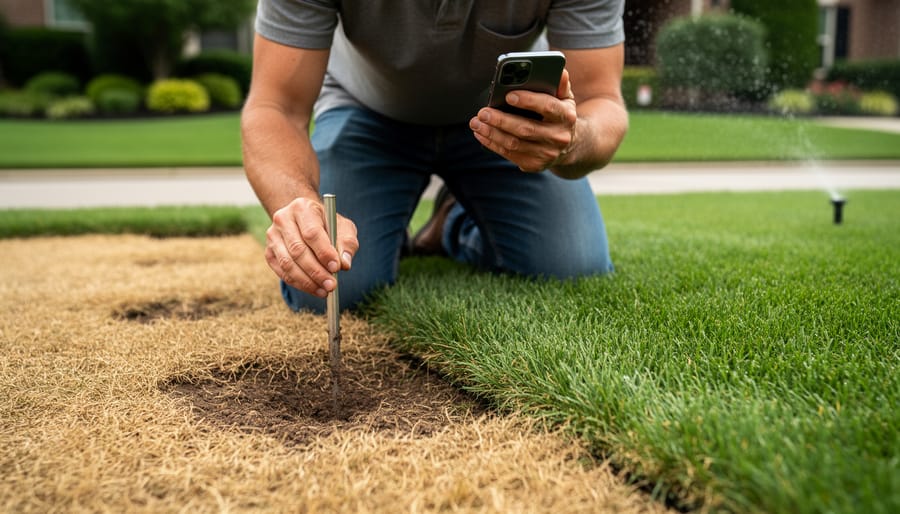
How do you know if your lawn needs it? Try the screwdriver test: push a standard screwdriver into your soil. If it slides in easily, you’re good. If it takes serious effort, your lawn is calling for help. Thatch buildup over half an inch thick is another telltale sign.
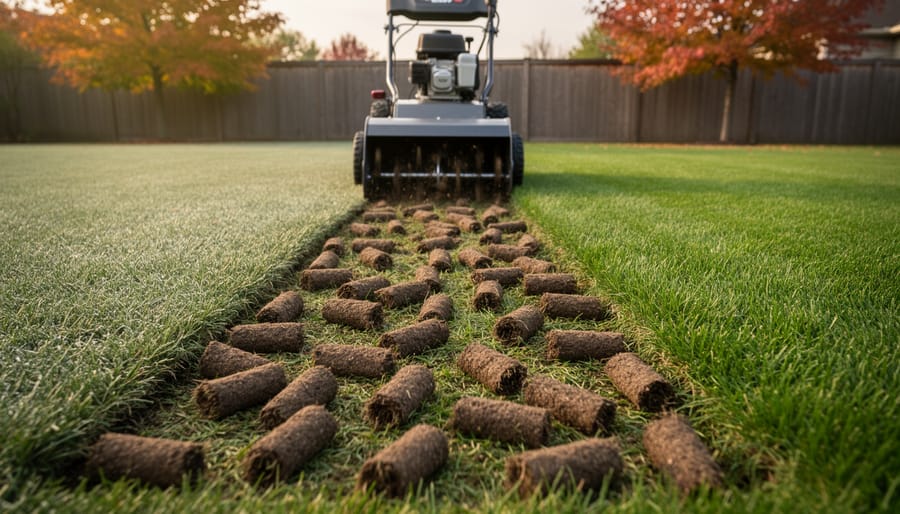
For larger lawns, renting a core aerator from your local garden center makes the job manageable in an afternoon. These machines pull small plugs of soil, creating channels for air and water. Smaller spaces work fine with a manual aerator or garden fork—just ensure you penetrate three to four inches deep. I chatted with master gardener Ellen Chen, who recommends aerating when soil is slightly moist, not bone-dry or soggy.
Leave those soil plugs on the surface—they’ll break down naturally, actually improving soil health. Within days, you’ll notice better water absorption, setting your grass up for winter success.
Fertilizing for Winter Strength
Think of winterizing fertilizer as a nutritional insurance policy for your lawn—it’s all about feeding the roots while the blades rest. Unlike spring fertilizers that fuel top growth, fall feeding focuses on building a robust underground network that will emerge stronger come spring.
The secret lies in the NPK ratio. Look for fertilizers higher in potassium (the third number) and lower in nitrogen (the first number). A ratio like 13-0-44 or 10-0-20 works beautifully. Potassium strengthens cell walls, improves cold tolerance, and helps your grass withstand winter stress without pushing leafy growth that would be vulnerable to frost damage.
Timing is everything here. Apply your winterizing fertilizer between late October and early November, after your grass has slowed its growth but before the ground freezes solid. This gives the nutrients time to reach the roots, where they’ll be stored and used throughout winter dormancy.
For application rates, follow your product’s instructions closely—typically one to one and a half pounds of nitrogen per thousand square feet. I always tell gardening friends to use a spreader for even coverage and water lightly afterward if rain isn’t forecasted. This simple step builds winter resilience from the ground up, literally.
Overseeding Bare Patches
Fall is hands-down the best time to overseed those bare patches in your lawn. Cooler temperatures and natural rainfall create perfect conditions for grass seed to germinate and establish strong roots before winter dormancy sets in. I learned this the hard way after trying to patch my lawn in spring, only to watch new seedlings struggle against heat and weeds.
Start by choosing a grass seed variety that matches your existing lawn and climate zone. Cool-season grasses like fescue and ryegrass thrive in northern regions, while warm-season varieties work better in the South. Your local garden center can help you select the right blend.
Preparation is key to success. Rake bare areas vigorously to remove dead grass and loosen the top quarter-inch of soil. This creates tiny grooves where seeds can nestle in and make good contact with the earth. Spread seed evenly at the rate recommended on the package, then lightly rake again to cover seeds with a thin layer of soil.
Water gently but consistently, keeping the soil moist until seedlings are about two inches tall. You’ll typically see sprouting within seven to fourteen days. By tackling overseeding now, you’re giving new grass a six-week head start to develop roots that will survive winter and flourish come spring.
Managing Thatch and Debris
Think of thatch as a cozy blanket—a thin layer protects your grass roots, but too much smothers them. Before winter sets in, check your lawn for excessive thatch buildup. Run your fingers through the grass down to the soil; if you feel more than half an inch of spongy, matted material, it’s time to dethatch. This allows water, nutrients, and air to reach the roots during those critical fall weeks.
Fallen leaves deserve special attention too. While a light scattering won’t hurt, thick leaf layers create a suffocating barrier that blocks sunlight and traps moisture, inviting disease and pest problems. I learned this the hard way one autumn when I let leaves pile up—come spring, I had unsightly dead patches everywhere!
Your best approach? Rake or mulch leaves regularly throughout fall. A mulching mower chops them into tiny pieces that actually benefit your soil as they decompose. For heavier debris like twigs and branches, hand-pick these gently to avoid tearing up grass. Use a lightweight rake with flexible tines rather than a heavy metal one, working in the direction of grass growth. Your lawn will thank you with vigorous spring growth.
The Final Mow Strategy
Your final mow of the season deserves thoughtful attention—it’s your lawn’s last haircut before its winter rest. The key is gradually lowering your mower blade over the last few mowing sessions rather than shocking your grass with one dramatic cut. Drop the height by about half an inch each week until you reach the ideal length for your grass type.
For cool-season grasses like Kentucky bluegrass and fescue, aim for 2 to 2.5 inches in that final cut. Warm-season grasses such as Bermuda prefer a shorter 1 to 1.5 inches. This sweet spot matters more than you might think. Grass left too long creates a cozy blanket where snow mold and fungal diseases thrive during winter’s damp, cold conditions. Those matted-down patches you discover in spring? That’s often the result of grass that went into winter too tall.
On the flip side, scalping your lawn weakens it and exposes roots to harsh conditions. Think of it like tucking your lawn in with just the right blanket—not too heavy, not too light. Schedule this final mow after your grass has mostly stopped growing but before the first hard freeze arrives.
Protecting Your Lawn Through Winter
Once winter settles in, your lawn still needs some gentle care and protection. Think of it as keeping watch over a sleeping friend—you want to minimize disturbances while preventing potential harm.
The cardinal rule during winter? Stay off frozen grass as much as possible. When grass blades are frozen, they become incredibly brittle, and foot traffic can break them, causing permanent damage to the crown of the plant. I learned this the hard way when my kids created a shortcut across our lawn one January, leaving brown footprint trails that didn’t green up until late spring. If you need a path, designate one using stepping stones or pavers instead.
Snow acts as a wonderful insulating blanket for your lawn, so there’s no need to shovel it off unless it becomes excessively deep or icy. However, avoid piling heavy snow from driveways or walkways onto your grass, as the weight can compact the soil and suffocate the turf beneath.
Salt damage is one of winter’s sneakiest threats. Rock salt used on sidewalks and driveways can wash onto your lawn, creating dead patches come spring. Consider switching to calcium chloride or sand-based alternatives near lawn edges, and if you must use salt, apply it sparingly and as far from grass as possible.
During those tempting warm spells, resist the urge to mow or fertilize. Your grass is still dormant even if temperatures briefly rise, and disrupting it can cause more harm than good. Simply enjoy the sunshine and trust that spring will arrive soon enough.
Common Winter Grass Preparation Mistakes
We’ve all been there—trying our best to prep the lawn for winter, only to accidentally create more work for spring! Let’s chat about some common slip-ups so you can sidestep them entirely.
Over-fertilizing is a biggie. It’s tempting to give your grass one last nutrient boost, but too much nitrogen late in the season can actually weaken grass before freezing temperatures hit. Stick to a slow-release formula specifically designed for fall application, and always follow package directions.
Another timing mistake? Aerating too late in the season. Your grass needs at least 4-6 weeks to recover before the first hard freeze, so don’t wait until November rolls around. Mark your calendar for early fall, and your lawn will thank you.
Scalping the lawn is another well-intentioned error. Cutting grass too short before winter exposes roots to harsh conditions and invites weeds. Keep your final mowing height around 2-3 inches—just enough to discourage snow mold without leaving grass vulnerable.
Don’t forget about soil pH testing! Many gardeners skip this simple step, but pH affects nutrient absorption dramatically. A quick test can save you from months of struggling with lackluster growth.
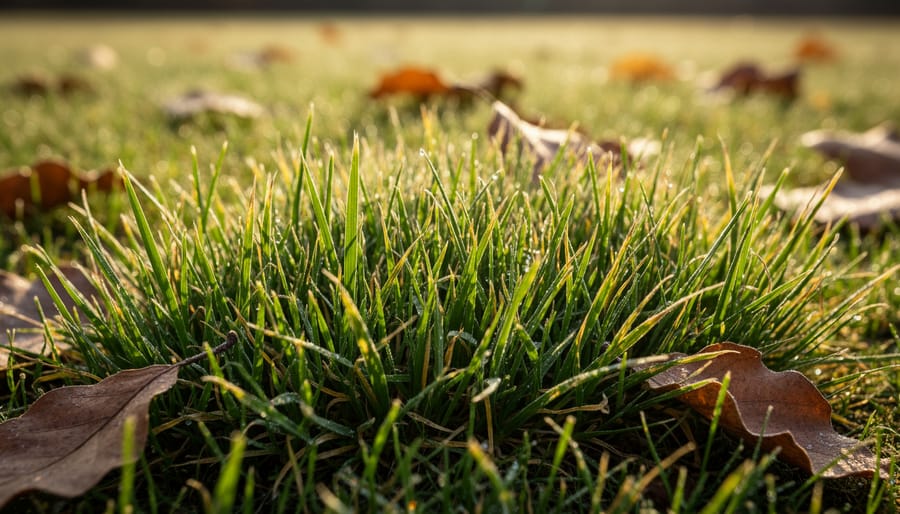
Finally, letting leaves pile up might seem harmless, but thick layers block sunlight and trap moisture, creating the perfect environment for disease. Rake regularly or mulch them into smaller pieces your lawn can actually use.
What Success Looks Like Next Spring
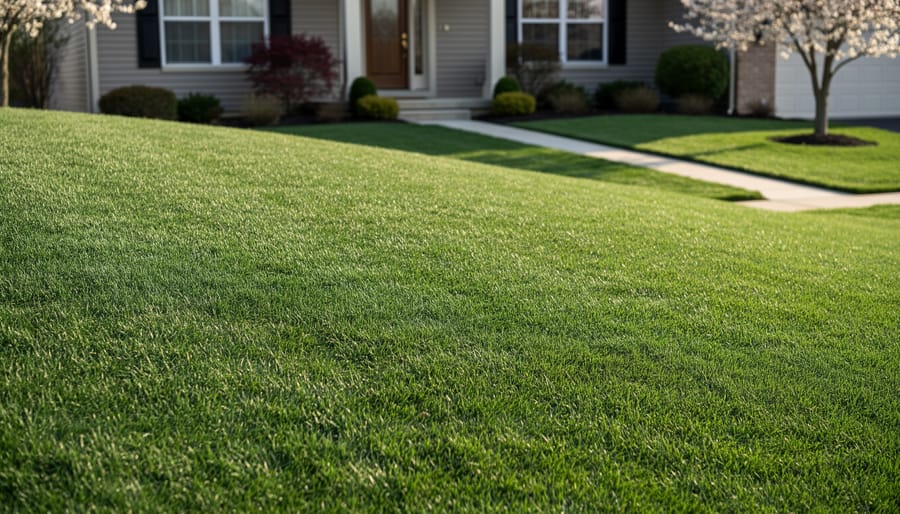
Picture this: as the last snow melts away, your lawn awakens with vibrant green blades that are thick, resilient, and free from bare patches. That’s the reward for your autumn preparation work! Properly winterized grass emerges stronger because its roots spent the cold months storing energy rather than struggling to survive. You’ll notice fewer weeds competing for space, since your dense turf naturally crowds them out. The grass will green up faster than your neighbors’ lawns, requiring less emergency repair work in spring. Come early April, a light raking to remove any remaining debris and a gentle first mowing will set the stage for months of healthy growth. Your early spring follow-up care becomes simpler when you’ve done the groundwork in fall, letting you enjoy your outdoor space sooner.
The truth is, the work you put into your lawn this fall is the best investment you can make for next spring’s lush, green carpet. While your neighbors are scrambling to repair winter damage in March, you’ll be enjoying a lawn that wakes up vibrant and ready to thrive. The beauty of fall preparation is that these tasks don’t require expert knowledge or fancy equipment—just a willingness to dedicate a few autumn weekends to your lawn’s future.
There’s no perfect moment to start, but waiting often means missing the ideal window altogether. Even if you can only tackle one or two tasks from this guide, you’re already ahead of the game. Remember, every experienced gardener was once a beginner who simply decided to start. Your lawn doesn’t need perfection; it needs your attention and care during these crucial fall months. So grab your rake, mark your calendar for those final mowing sessions, and take pride in knowing you’re setting the stage for a spectacular spring lawn.