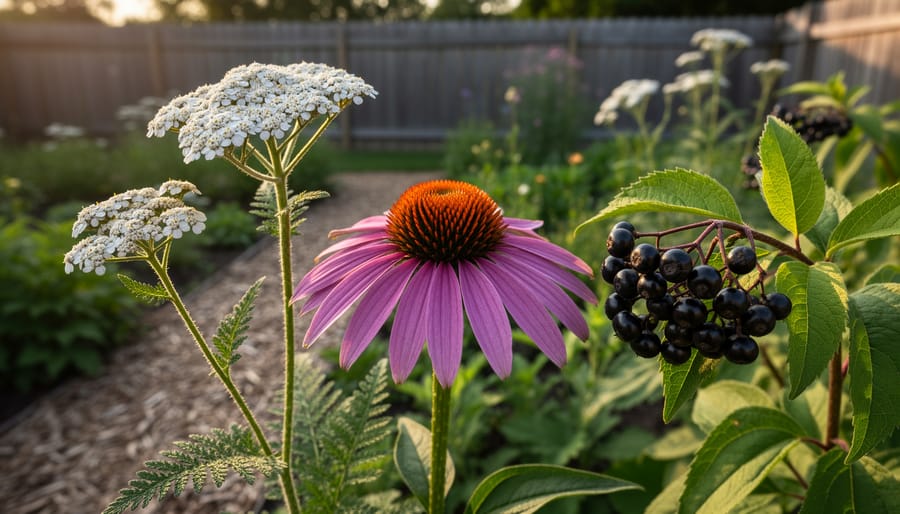
Transform your garden into a healing sanctuary by selecting native medicinal plants that thrive naturally in your region’s climate and soil conditions. Start with echinacea, a powerhouse immune booster that produces stunning purple flowers while requiring minimal maintenance in full sun and well-drained soil. Position yarrow along garden borders where its feathery leaves and white flower clusters can spread comfortably, offering anti-inflammatory properties you can harvest throughout the growing season. Plant elderberry shrubs in partial shade near your garden’s edge, ensuring they receive adequate moisture to produce the antiviral berries traditional healers have valued for centuries.
Native medicinal plants offer advantages conventional gardening simply cannot match. These species have spent millennia adapting to local conditions, meaning they resist regional pests naturally, tolerate weather extremes your area experiences, and support beneficial insects that keep your entire garden ecosystem balanced. You’ll spend less time fighting nature and more time enjoying the process of growing your own pharmacy.
The journey from seed to remedy connects you directly with healing traditions that predate modern medicine. Each plant you cultivate carries knowledge passed down through generations, waiting for you to discover its potential. Whether you’re looking to reduce pharmacy visits, deepen your self-sufficiency, or simply enjoy the satisfaction of harvesting homegrown remedies, native medicinal plants provide accessible entry points for gardeners at every skill level. Your first harvest might feel small, but it represents a meaningful step toward reclaiming ancient wisdom in your own backyard.
Why Native Medicinal Plants Are Your Best First Choice
When I first started growing medicinal plants, I made the common mistake of filling my garden with exotic herbs I’d read about online. Sure, they looked beautiful in the catalog photos, but within weeks I was battling with watering schedules, soil amendments, and temperature concerns. Then a neighbor introduced me to native medicinal plants, and everything changed.
Native plants are wonderfully forgiving teachers for anyone beginning their medicinal gardening journey. Because they’ve evolved alongside our local climate, soil, and weather patterns for thousands of years, they naturally thrive without the fuss that exotic species demand. You won’t find yourself constantly adjusting pH levels or creating special microclimates. They’re adapted to local rainfall patterns, meaning less watering, and they’re naturally resistant to regional pests and diseases.
Beyond the practical advantages, choosing natives means you’re actively supporting your local ecosystem. These plants have co-evolved with native pollinators, birds, and beneficial insects, creating relationships that simply don’t exist with imports. When you establish perennial herb gardens using native medicinal plants, you’re essentially building a wildlife sanctuary that also happens to support your health.
There’s something deeply meaningful about preserving native biodiversity while reconnecting with traditional plant knowledge. Many native medicinal plants carry centuries of indigenous wisdom about healing and wellness. By growing them, you’re not just cultivating a garden but participating in the preservation of cultural heritage.
For beginners especially, natives offer a confidence boost that’s hard to overstate. They’re remarkably resilient, bouncing back from beginner mistakes that might kill more temperamental exotic plants. This forgiveness gives you room to learn, experiment, and develop your skills without the discouragement of constant failures. Your garden becomes a place of discovery rather than stress.
Five Powerful Native Medicinal Plants You Can Start Growing Today
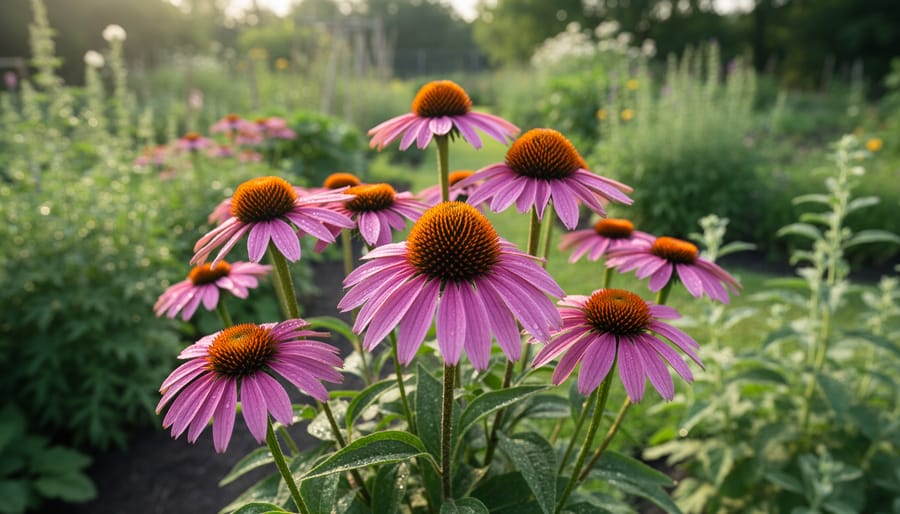
Echinacea (Purple Coneflower) – Your Immune System’s Garden Ally
If you’re looking for a powerhouse perennial that practically grows itself while boosting your wellness routine, purple coneflower deserves a prime spot in your garden. I’ve watched these cheerful purple-pink blooms stand tall through scorching summers and come back stronger each year, all while quietly supporting my family’s immune health.
Growing echinacea is wonderfully straightforward. This prairie native thrives in full sun and well-drained soil, tolerating drought once established. Plant it in mid-spring after your last frost, spacing plants 18-24 inches apart. The first year focuses on root development, so don’t worry if blooms are sparse. By year two, you’ll have robust plants reaching 2-4 feet tall.
For medicinal potency, harvest roots in fall after three years of growth, when they’re most concentrated with active compounds. Flower heads and leaves can be gathered during peak bloom in summer. Simply dig roots carefully, wash thoroughly, and chop while fresh for maximum effectiveness.
I prepare echinacea tea by steeping one teaspoon of dried root or flowers in hot water for 10-15 minutes at the first sign of a cold. The slightly earthy, tingling sensation tells you it’s working.
Companion plant echinacea with black-eyed Susans and bee balm for a stunning, pollinator-friendly display. Position these tall beauties toward the back of borders where their sturdy stems create structure and their roots won’t compete with smaller plants.
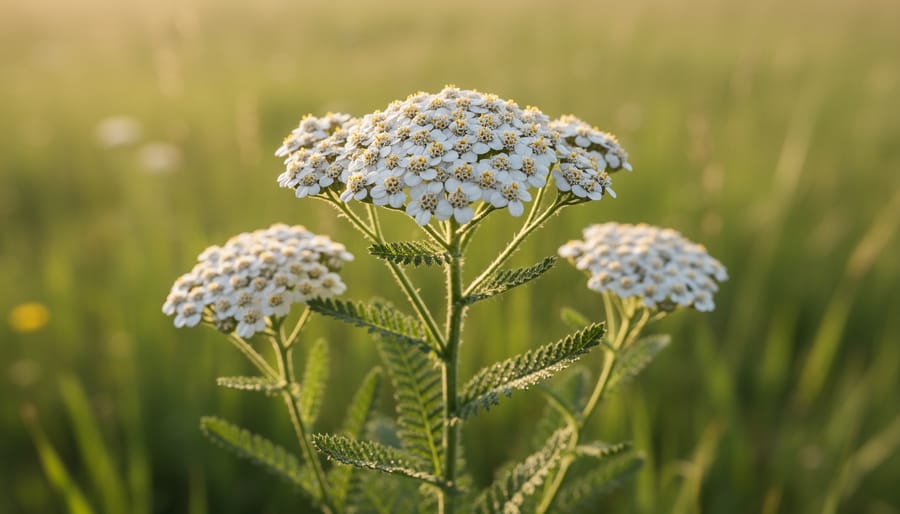
Yarrow – The Emergency First Aid Plant
I still remember the first time I saw yarrow in action—a gardening mentor pressed the fresh leaves against a minor cut, and the bleeding stopped almost immediately. That moment turned me into a true believer in this remarkable plant’s healing powers.
Yarrow grows easily in most gardens, thriving in full sun and well-drained soil. This drought-tolerant perennial actually prefers poor to average soil conditions, making it perfect for neglected corners. Once established, it requires minimal care and spreads readily through underground rhizomes.
For centuries, people have turned to yarrow for wound healing and fever reduction. The leaves contain natural compounds that help stop bleeding and reduce inflammation. During fever, yarrow tea encourages sweating to help break the fever naturally. Simply steep fresh or dried flowers and leaves in hot water for ten minutes.
Identifying true yarrow is crucial since poisonous lookalikes exist. Genuine yarrow has feathery, fern-like leaves that feel soft to the touch and feature a distinctive aromatic scent when crushed. The flat-topped flower clusters appear in white, pink, or yellow, depending on the variety. Queen Anne’s lace and hemlock can be confused with yarrow, but their leaves are completely different—always check the foliage carefully.
For processing, fresh plant material works wonderfully for immediate wound care. Dried yarrow maintains potency for up to a year when stored properly in airtight containers away from direct sunlight.
California Poppy – Nature’s Gentle Sleep Aid
California poppies are wonderfully forgiving plants that reward gardeners with golden-orange blooms and gentle calming properties. I’ve grown these beauties for years, and they’re honestly one of the easiest medicinal natives to start with.
Starting from seed couldn’t be simpler. Scatter seeds directly in your garden after the last frost, barely covering them with soil. They actually prefer poor soil and need little water once established, making them perfect for low-maintenance medicinal gardens. Within 10-12 weeks, you’ll have flowering plants ready for harvest.
The aerial parts contain mild sedative compounds that traditional herbalists have used for centuries to ease occasional sleeplessness and nervous tension. While not as potent as pharmaceutical sleep aids, many people find them helpful for gentle relaxation.
For a basic tincture, fill a clean jar with fresh or dried flowers and leaves, cover completely with vodka (at least 80 proof), and let steep for 4-6 weeks in a cool, dark place. Strain and store in amber bottles. Always start with small amounts to test your body’s response.
Important safety note: California poppy is legal to grow in most areas, but always verify local regulations. Pregnant or nursing women should avoid use, and never combine with prescription medications without consulting a healthcare provider. When harvesting from wild populations, take only what you need and leave plenty for regeneration and wildlife.
Elderberry – The Antiviral Powerhouse
Elderberry shrubs are surprisingly easy to establish and reward you with both beautiful blooms and powerful medicinal berries. These adaptable plants prefer full sun but tolerate partial shade, and they thrive in moist, well-drained soil. Give them plenty of room—mature shrubs can reach 8-12 feet tall and wide, though regular pruning keeps them manageable.
Here’s something crucial: never eat raw elderberries. They contain compounds that can cause nausea and digestive upset. Cooking destroys these compounds completely, making the berries safe and beneficial. The flowers, however, are safe to use fresh or dried for immune-supporting teas.
Elderberry syrup has become famous for its antiviral properties, particularly during cold and flu season. To make your own, simmer fresh or dried berries with water until reduced by half, strain thoroughly, then add honey once cooled. The dark purple syrup tastes wonderful and provides excellent immune support for the whole family.
Pruning elderberries is straightforward and forgiving. In late winter, remove any dead or damaged canes and cut back about one-third of the oldest stems to ground level. This encourages vigorous new growth and better berry production. Second-year canes produce the most abundant flowers and fruit, so you’ll want that continuous renewal happening naturally.
With minimal care, your elderberry shrub becomes a reliable medicine cabinet in the garden, offering year after year of protective benefits.
Bee Balm (Monarda) – Soothing Digestive Troubles
Bee balm is one of those cheerful garden friends that gives back in so many ways! This native North American perennial spreads readily through underground rhizomes, making propagation wonderfully simple. Just divide mature clumps in spring or fall, and you’ll have plenty to share. You can also start plants from seed, though division is faster and more reliable.
For centuries, Indigenous peoples and settlers used bee balm to ease digestive upset, from stomach cramps to nausea. The leaves contain thymol, a compound that helps relax digestive muscles and reduce gas. Steep fresh or dried leaves in hot water for about 10 minutes to create a minty, aromatic tea that soothes both digestion and respiratory congestion. It’s a wonderful addition to your medicinal tea garden.
Now, bee balm does have wandering tendencies! To prevent it from taking over, plant it in containers or install root barriers around your patch. Regular division every few years also keeps it in check while maintaining plant vigor.
The real bonus? Those vibrant red, pink, or purple blooms are absolute magnets for hummingbirds, butterflies, and bees. You’ll harvest medicine while supporting essential pollinators, creating a garden that heals both people and planet. Just ensure you’re growing true Monarda species rather than ornamental hybrids for medicinal use.
Setting Up Your Medicinal Plant Garden for Success
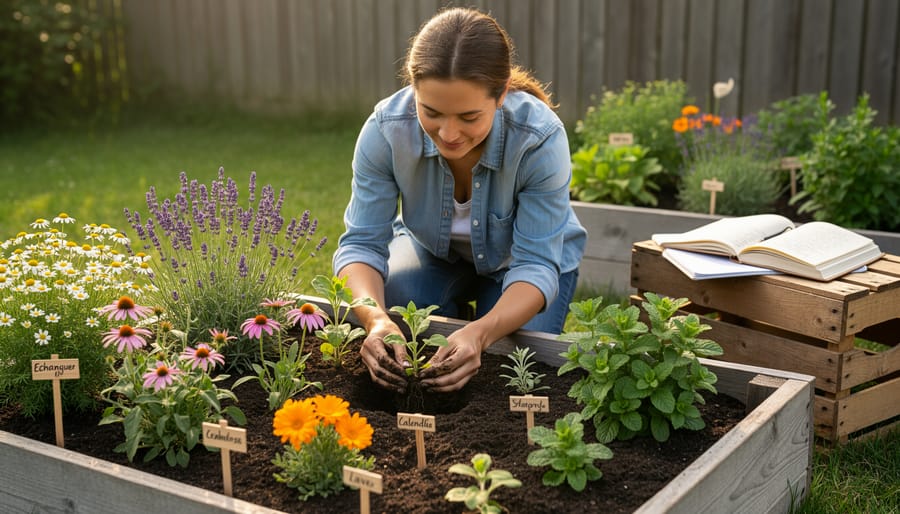
Creating a successful medicinal plant garden starts with thoughtful preparation that considers both the plants’ needs and your future harvesting routines. I’ve learned from my own experience that a little extra planning upfront saves considerable effort down the road.
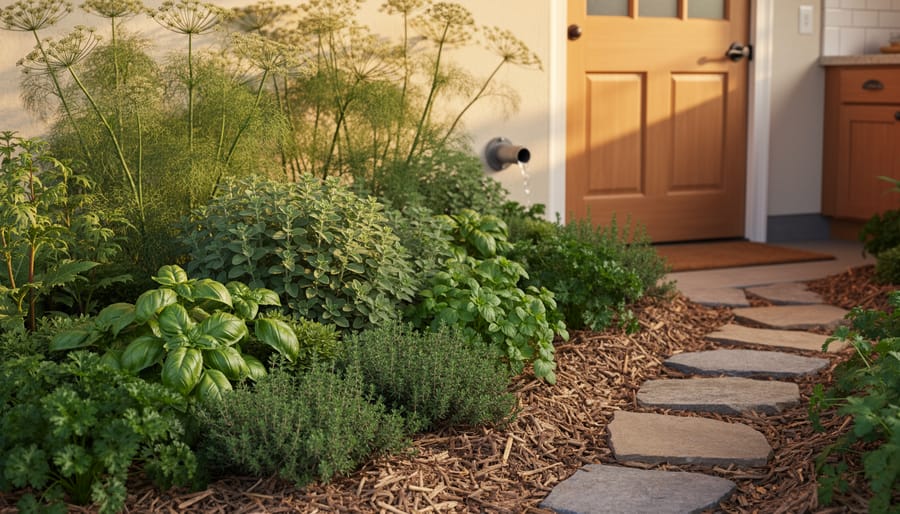
Begin by selecting a site that receives at least six hours of sunlight daily, as most native medicinal plants thrive in bright conditions. When planning your garden, position it within easy reach of your home. You’ll be visiting frequently to monitor growth, harvest fresh leaves, or gather roots, so accessibility matters more than you might initially think.
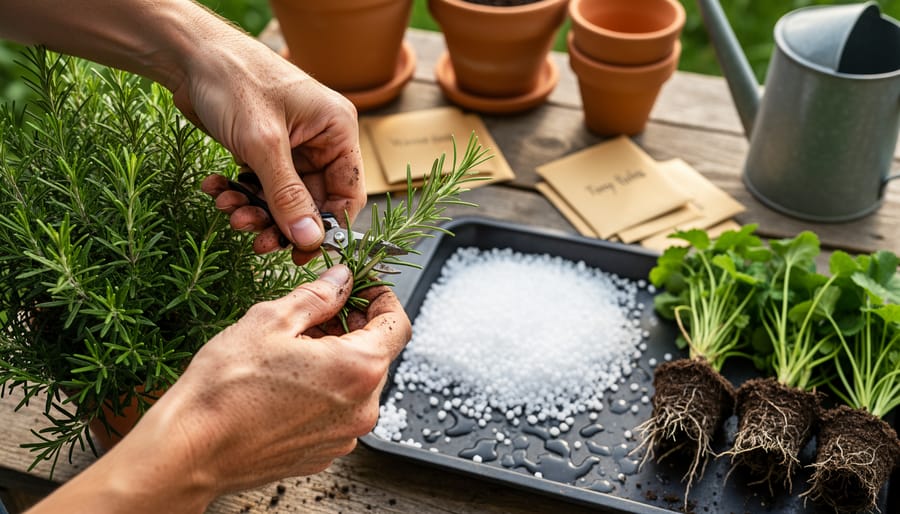
Soil preparation deserves special attention for medicinal plants. Unlike ornamental gardens where lush growth is the goal, medicinal plants often produce more potent compounds when grown in leaner soil conditions. Test your soil’s pH and drainage first. Most native medicinal species prefer well-draining soil with moderate fertility. Adding compost improves structure without over-enriching, while incorporating sand or perlite helps prevent waterlogging that can diminish medicinal properties.
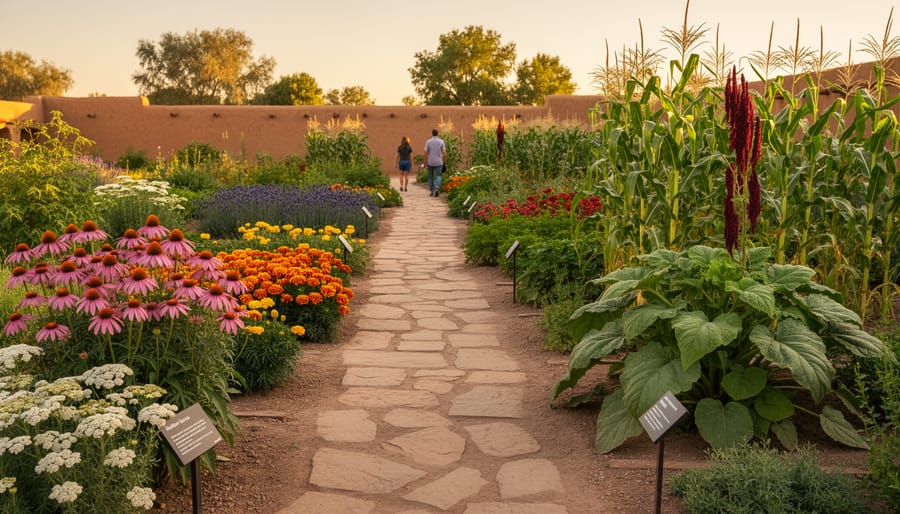
Design your garden with harvesting in mind. Create pathways wide enough to kneel comfortably beside plants without compacting surrounding soil. Consider raised beds if you have mobility concerns or heavy clay soil. Group plants by their harvest times and methods. For instance, place root crops like echinacea together in one area, while leafy herbs like bee balm occupy another section.
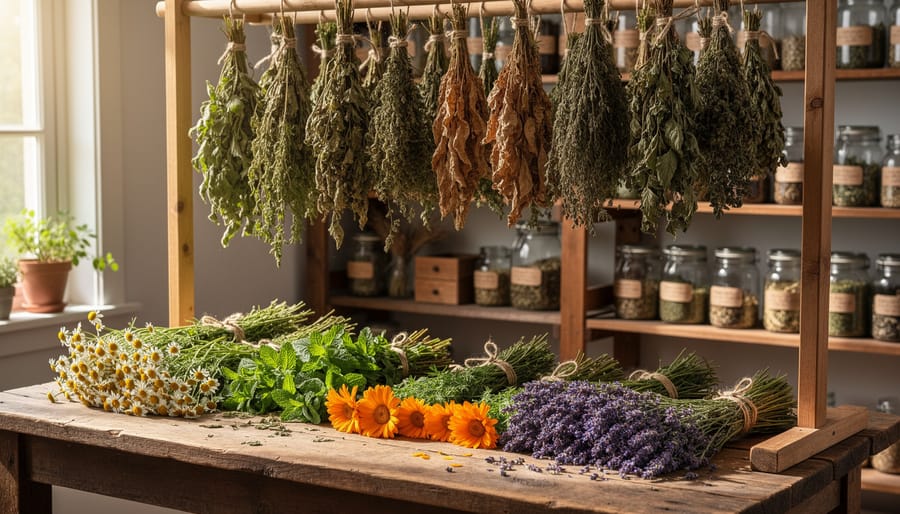
One aspect often overlooked is establishing a dedicated processing space before your first harvest arrives. I discovered this the hard way when I had armfuls of fresh herbs with nowhere to dry them properly. Set up a clean, dry area away from direct sunlight where you can hang bundles or lay out plant material on screens. Good airflow is essential to prevent mold. A covered porch, garage corner, or even a spare closet with a small fan works beautifully.
Consider installing hooks or a simple drying rack system. Label everything clearly with the plant name and harvest date. Keep your processing tools, clean scissors, string, and storage containers nearby so you’re ready when harvest time comes.
Growing Tips That Make All the Difference
Timing Your Harvest for Maximum Potency
Timing your harvest can make the difference between a potent remedy and a lackluster one. I learned this lesson years ago when I harvested echinacea roots in early summer, only to discover later that fall is when they’re at their medicinal peak!
Here’s what I’ve found works best: roots contain the most beneficial compounds in fall after the plant has gone dormant, or in early spring before new growth begins. During these times, the plant stores maximum energy underground. Think of it as the plant’s savings account being fullest right before and after winter.
Leaves are most potent just before the plant flowers, typically mid-morning after the dew has dried but before the afternoon heat. This is when essential oils are most concentrated. I always pick my lemon balm and plantain leaves during this sweet spot.
Flowers should be harvested when they’ve just fully opened, usually in the morning. Once they start fading, their medicinal properties decline rapidly. Calendula and elderflowers are perfect examples where timing matters tremendously.
Seeds need to be fully mature but collected before they disperse naturally. Watch for color changes from green to brown or black, and harvest on a dry day to prevent mold during storage.
A simple rule I follow: observe your plants closely throughout the season. They’ll tell you when they’re ready through visual cues like color, fullness, and that unmistakable aromatic intensity that signals peak potency.
Organic Practices That Protect Medicinal Quality
When you’re growing plants for medicine, keeping them free from synthetic chemicals isn’t just a nice-to-have—it’s absolutely essential. Chemical residues can concentrate in the very parts of the plant you’re planning to use for healing, potentially doing more harm than good. I learned this lesson early on when a fellow gardener shared how she’d accidentally contaminated her echinacea harvest with a seemingly harmless fungicide. The whole season’s worth of medicine had to be composted.
The good news? Native medicinal plants are naturally adapted to local conditions, which makes them surprisingly resistant to pests and diseases when grown in the right spot. Start by building healthy soil rich in organic matter. I add well-aged compost and leaf mold each season, creating a living ecosystem beneath the surface. Healthy soil produces stronger plants with higher concentrations of beneficial compounds—exactly what you want in your medicine.
For pest management, embrace companion planting. I grow yarrow alongside my medicinal herbs, and it attracts beneficial insects that keep problem bugs in check. If aphids appear, a strong spray of water usually handles them. For persistent issues, neem oil or insecticidal soap works wonders without leaving harmful residues.
Remember, diversity is your friend. A mixed planting of different medicinal species creates natural balance, reducing pest pressure and disease spread. Think of your medicinal garden as a mini-ecosystem where everything works together, just as it does in nature.
From Garden to Medicine: Basic Processing and Storage
Once you’ve harvested your medicinal plants, proper processing makes all the difference between potent remedies and moldy disappointment. The good news? You don’t need fancy equipment to get started. Most of us already have everything we need right in our kitchens.
Air drying remains the simplest and most cost-effective method. Bundle stems loosely with twine and hang them upside down in a warm, dry space with good air circulation. I like to use a spare closet or even a corner of my garage. The key is keeping them away from direct sunlight, which can degrade beneficial compounds. Leaves and flowers typically dry within a week, while roots might take two to three weeks. They’re ready when they crumble easily between your fingers.
For plants you’ll use in medicinal teas, a simple drying rack works wonderfully. You can make one by stretching clean window screens over wooden frames, or invest in inexpensive stackable herb drying racks available at garden centers.
Storage is where many beginners stumble. Always use clean, dry glass jars with tight-fitting lids. Mason jars work perfectly and protect your herbs from moisture and light. Skip plastic containers, as they can trap moisture and leach chemicals over time.
Labeling might seem tedious, but trust me on this one. Include the plant name, part used, harvest date, and location. After a few months, dried leaves start looking remarkably similar, and guessing games with medicinal plants aren’t wise.
Most properly dried and stored herbs maintain their potency for one year, though roots can last two to three years. Check periodically for any signs of moisture or musty odors.
Remember, proper identification before processing is absolutely critical. When in doubt, consult multiple reliable sources or experienced herbalists. Your safety depends on knowing exactly what you’re working with.
What You Need to Know Before You Start
Before you begin growing and using native medicinal plants, there’s some essential information that will keep you and your family safe while you explore this rewarding practice.
First and foremost, proper plant identification is absolutely critical. Many medicinal plants have look-alikes that can be harmless or, in some cases, toxic. I always recommend working with field guides specific to your region, attending workshops with experienced herbalists, or consulting with local native plant societies before harvesting anything. When in doubt, don’t use it. Even experienced foragers sometimes need a second opinion.
If you’re currently taking prescription medications or have existing health conditions, please talk with your healthcare provider before using any medicinal plants. Native remedies can interact with conventional medicines in unexpected ways. For example, some plants may increase bleeding risk if you’re taking blood thinners, while others might interfere with blood pressure medications.
When you’re ready to try a new plant remedy, start with very small amounts. Think of it like testing a new food—you want to see how your body responds before consuming more. This approach helps you identify any allergies or sensitivities early on.
Special populations require extra caution. Pregnant and nursing women should avoid most medicinal plants unless specifically approved by their healthcare provider, as many can affect pregnancy or pass through breast milk. Similarly, children’s developing bodies process plant compounds differently than adults, so consult a pediatric healthcare professional before giving medicinal plants to young ones.
Finally, be aware that some native plants are protected by law or require permits for harvesting, even on private property. Check your local regulations before collecting wild plants, and always practice sustainable harvesting techniques to ensure these valuable plants remain available for future generations.
Starting your journey with native medicinal plants doesn’t have to be overwhelming. I always recommend beginning with just one or two plants that genuinely excite you. Maybe it’s the cheerful purple coneflower that caught your eye at a local nursery, or perhaps you’ve been curious about growing your own calendula for skin salves. Starting small lets you really get to know each plant’s personality, understand its growing needs, and build confidence in both cultivation and preparation.
There’s something deeply rewarding about stepping into your garden with a basket to harvest plants you’ve nurtured from seed or seedling, knowing they’ll help support your family’s wellness. You’re not just growing plants; you’re cultivating a connection to ancient wisdom that has sustained communities for generations. Each time you brew a cup of echinacea tea or apply a comfrey poultice, you’re participating in a tradition that spans centuries.
Don’t forget that you’re part of a vibrant community of fellow gardeners eager to share their experiences. Local gardening clubs, plant swaps, and online forums are wonderful places to exchange seeds, compare notes on what thrives in your region, and learn from others’ successes and mistakes. Many experienced medicinal gardeners are incredibly generous with their knowledge.
As you develop these practical skills, you’re building genuine self-sufficiency while honoring the traditional plant wisdom that our ancestors relied upon. Your garden becomes a living pharmacy, a teaching space, and a bridge between past and present. What could be more rewarding than that?