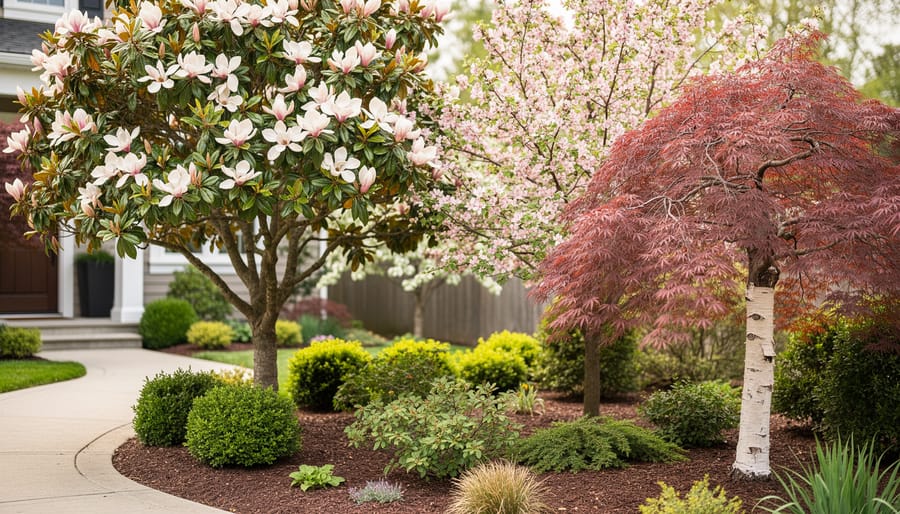
Ornamental trees are woody plants grown primarily for their aesthetic appeal rather than for fruit, timber, or other practical harvest. They enhance landscapes through striking flowers, vivid foliage, sculptural form, colorful bark, or seasonal interest that transforms gardens into living art.
These trees earn their place in your yard by doing more than just looking beautiful. They frame entryways, provide focal points that draw the eye, create shade without overwhelming smaller spaces, and often support pollinators through blossoms that double as ecological assets. Unlike shade trees chosen mainly for their canopy or fruit trees planted for their harvest, ornamental trees bring visual drama first. That doesn’t mean they lack function. Many offer spring blooms that feed early bees, autumn color that rivals any perennial border, and winter structure that keeps gardens interesting year-round.
The category is broad. Flowering ornamentals like magnolias and crabapples deliver seasonal spectacle. Foliage specimens such as Japanese maples hold attention with delicate, colorful leaves. Bark-interest trees, including birches and certain cherries, shine in winter when their peeling or glossy trunks take center stage. Dwarf and weeping forms suit compact gardens, while specimen trees anchor larger properties with commanding presence.
Choosing the right ornamental tree means matching your site conditions to each tree’s needs and understanding what you want that tree to accomplish. This guide walks you through what defines ornamental plants in tree form, the major types available, how they function in designed landscapes, and practical selection advice that sets you up for long-term success.
What Ornamental Trees Are (and Why Gardeners Love Them)
Ornamental trees are landscape plants chosen primarily for their beauty rather than what they produce. Unlike fruit trees grown for harvests or timber trees cultivated for lumber, ornamental varieties earn their place in gardens through stunning visual features: show-stopping spring blooms, dramatic fall foliage, striking bark that glows in winter light, or architectural forms that catch the eye year-round.
That’s not to say ornamental trees lack practical benefits. Many provide shade, some offer edible fruits as a bonus, and plenty attract pollinators and songbirds. The distinction lies in selection criteria. When you plant an ornamental tree, you’re prioritizing how it looks over what it yields.
- Specimen tree
- A single ornamental tree planted as a standalone focal point, chosen to showcase its unique visual qualities and command attention in the landscape.
- Focal point
- A garden feature that draws the eye and anchors a design, often fulfilled by an ornamental tree with distinctive flowers, form, or seasonal color.
- Ornamental features
- The aesthetic qualities that make a tree decorative: blooms, colorful foliage, textured bark, weeping branches, or striking silhouettes.
- Multi-season interest
- A tree’s ability to offer visual appeal across multiple seasons, such as spring flowers followed by fall color and attractive winter bark.
- Cultivar
- A cultivated variety of a tree species, selected and propagated for specific ornamental traits like flower color, compact size, or disease resistance.
Gardeners gravitate toward ornamental trees for deeply personal reasons. There’s the pure joy of watching a magnolia erupt into bloom each spring, the pride that comes with a well-designed landscape, and the satisfaction of creating habitat for butterflies and birds. These trees also deliver measurable value, enhancing curb appeal and property worth while transforming outdoor spaces into places you actually want to spend time.
The best part? Ornamental trees work in gardens of every size and style. A flowering dogwood can anchor a suburban front yard, a Japanese maple fits perfectly on a condo patio, and a weeping cherry creates drama in the smallest courtyard. You’re not just planting a tree; you’re adding a living sculpture that changes with the seasons and improves with age.
How Ornamental Trees Work in Your Landscape
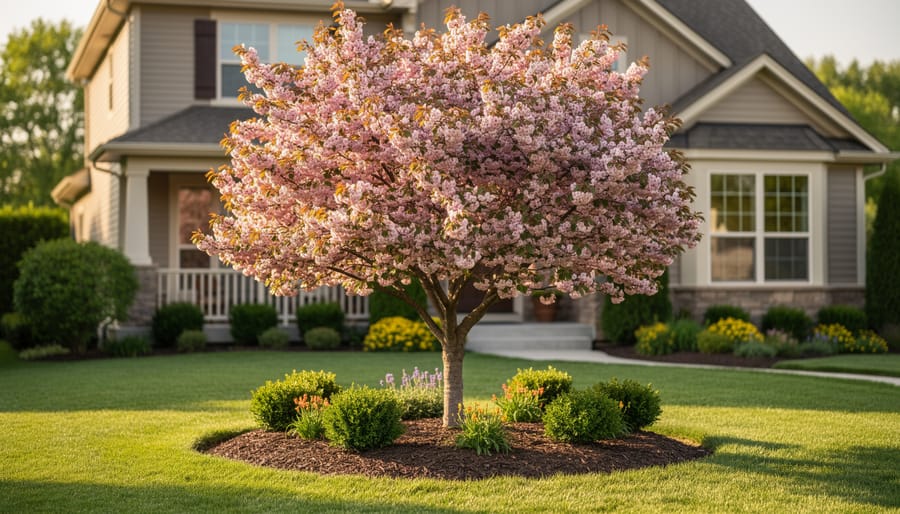
Ornamental trees function as the backbone of thoughtful garden design, providing vertical structure that transforms flat landscapes into layered, dimensional spaces. Where perennials and shrubs fill ground-level roles, ornamental trees lift the eye upward, creating a sense of scale and permanence that smaller plants simply can’t deliver. A well-placed ornamental tree becomes an anchor point, the element around which everything else in your garden finds its place.
The magic lies in their ability to serve multiple design purposes simultaneously. A single flowering dogwood, for instance, creates a stunning spring focal point with its blooms, offers dappled shade for understory plants in summer, and delivers fiery autumn color before revealing elegant branch structure in winter. This seasonal progression keeps gardens visually interesting throughout the year, preventing the monotony that often strikes landscapes relying solely on evergreen plantings or summer annuals.
Positioning is everything. Smart gardeners consider sightlines from windows, patios, and entry paths when selecting ornamental tree locations. A Japanese maple placed where morning light filters through its delicate leaves becomes a living art piece. A weeping cherry positioned at the end of a walkway draws visitors forward with curiosity. These aren’t accidents, they’re intentional design choices that make ornamental trees work harder in your landscape.
Ornamental trees contribute essential functions to your garden ecosystem:
- Vertical interest and height variation that breaks monotonous horizontal lines
- Seasonal drama through blooms, foliage changes, and winter silhouettes
- Wildlife attraction, providing nesting sites and food sources for birds and pollinators
- Screening and privacy without the fortress feel of solid fences
- Architectural framing that highlights home features or garden focal points
Mature size dictates much of this functionality. A tree reaching 25 feet suits a spacious yard where it can spread freely, while a 10-foot specimen works beautifully in tighter quarters or near structures. Growth rate matters too, fast growers like certain crabapples deliver quick impact, whereas slow-developing Japanese maples reward patient gardeners with decades of refined beauty. The key is matching tree characteristics to your specific space and timeline, ensuring your ornamental investment enhances rather than overwhelms its surroundings as it matures.
Types of Ornamental Trees for Every Garden
Flowering Ornamental Trees
Flowering ornamental trees deliver some of the most dramatic moments in the garden calendar. These trees earned their place in landscapes purely on bloom power, think clouds of pink cherry blossoms in April, creamy magnolia flowers the size of dinner plates, or the vivid magenta of a redbud in early spring.
Dogwoods offer layered branches covered in white or pink bracts that look like floating petals. They bloom mid-spring and thrive in partial shade, making them perfect for woodland gardens. Magnolias steal the show even earlier, with varieties blooming as early as March, their thick petals releasing a sweet, almost lemony fragrance. Crabapples follow with a riot of white, pink, or red flowers in late April, plus the bonus of colorful fruit that birds love.
Cherry trees, especially ornamental varieties like ‘Kwanzan’ and ‘Yoshino’, transform streets and yards into pink canopies each spring. Eastern redbuds surprise you with their purple-pink flowers appearing directly on branches before leaves emerge, creating an almost otherworldly effect.
Bloom timing matters. Pair early magnolias with mid-season dogwoods and late-blooming crabapples, and you’ll stretch floral interest across two months instead of two weeks.
Foliage Trees
Foliage trees captivate through the sheer drama of their leaves rather than flowers. Japanese maples lead this category with palmate leaves in shades ranging from burgundy to chartreuse, many transforming into brilliant orange and scarlet as autumn arrives. Their delicate, layered texture creates a refined focal point that changes character with the seasons.
Purple-leaf plums deliver bold, wine-colored foliage that holds its intensity through summer, providing striking contrast against green-leaved neighbors. These trees make garden beds appear more vibrant simply by proximity, the deep purple amplifies surrounding colors.
Variegated specimens add complexity through leaves patterned with cream, white, or gold. A variegated dogwood lights up shaded corners where solid-colored trees might recede into the background.
Texture matters as much as color. The fine, feathery leaves of cutleaf Japanese maples create an entirely different visual effect than the broad, glossy foliage of a purple smokebush. Consider how leaf size and shape will interact with your existing plantings. Foliage trees reward close observation, their beauty compounds as you notice seasonal shifts, morning dew on textured leaves, or how light filters through their canopy at different times of day.
Trees with Ornamental Bark or Form
Some ornamental trees earn their keep when everything else goes dormant. Their standout bark or dramatic silhouettes become the garden’s main attraction once leaves drop, proving that winter doesn’t have to mean visual emptiness.
Paperbark maples (Acer griseum) steal the show with cinnamon-colored bark that peels in thin, papery sheets, catching low winter sunlight beautifully. River birches (Betula nigra) offer salmon-pink exfoliating bark that looks especially striking against snow. For pure white contrast, paper birches can’t be beat, though they’re pickier about growing conditions.
Weeping forms turn trees into living sculptures. Weeping cherry, weeping redbud, and weeping crabapples create graceful cascades that look intentional year-round, not just during bloom time. Harry Lauder’s walking stick (Corylus avellana ‘Contorta’) takes the sculptural approach further with wildly twisted branches that look like they belong in a storybook.
These trees work hardest when your garden needs them most. Plant them where you’ll see them from indoor windows during winter months, and position them to catch afternoon light that highlights texture and form.
Small and Dwarf Ornamental Trees
Compact ornamental trees pack all the visual drama of their larger cousins into a space-friendly package. If your yard measures more in feet than acres, dwarf and small ornamental trees let you enjoy specimen beauty without sacrificing your entire garden to one plant.
Japanese maples top the list for small-space glamour. Varieties like ‘Crimson Queen’ stay under eight feet tall, offering lacy foliage that shifts from burgundy to crimson as seasons change. Dwarf flowering cherries, including ‘Snow Fountains’ with its weeping white blooms, thrive in containers or narrow planting beds where standard trees wouldn’t fit.
Crabapples such as ‘Tina’ reach just five feet tall yet deliver spring flowers and persistent winter fruit. Dwarf serviceberries offer spring blooms, summer berries, and fall color in a tidy ten-foot frame. Even miniature conifers like weeping blue atlas cedar provide year-round structure without overwhelming patios or courtyards.
Container culture extends ornamental tree possibilities further. A potted star magnolia can anchor a deck corner, while a dwarf crape myrtle brings summer blooms to a sunny balcony. These pint-sized performers prove that limited square footage doesn’t mean settling for limited beauty.
Where and How Ornamental Trees Shine
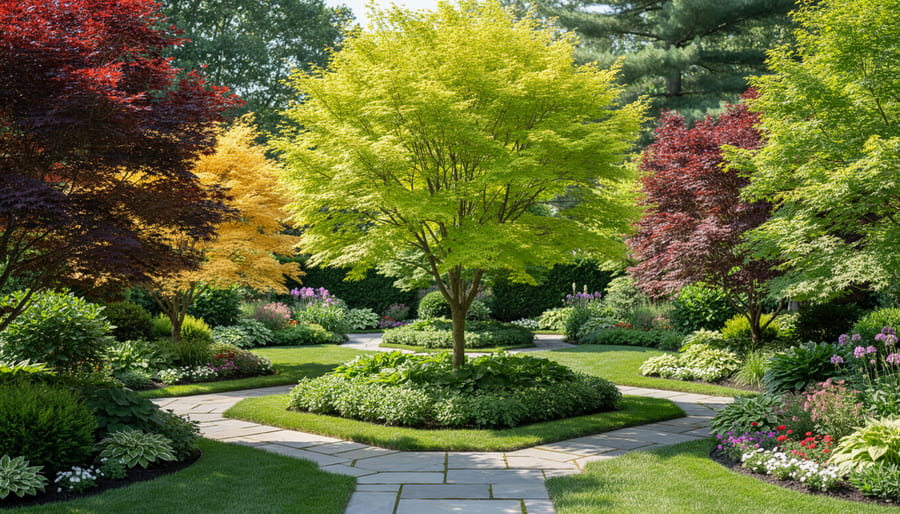
Ornamental trees earn their keep in a surprising variety of roles, and thinking through placement before you plant helps you get the most from their beauty. The right tree in the right spot can transform a neglected corner into a seasonal showstopper or turn a blank lawn into a layered, inviting landscape.
In front yards, ornamental trees typically serve as welcoming focal points near entryways or along walkways. A well-chosen specimen, like a flowering dogwood or a compact redbud, draws the eye and frames your home’s entrance with color and structure. These trees work best when they complement rather than overwhelm the scale of your house, creating balance without blocking windows or crowding foundations.
Backyards offer more flexibility for creative placement. Use ornamental trees to anchor seating areas, punctuate garden beds, or provide a visual endpoint to a sightline. They’re equally effective as privacy screens when planted in multiples or as standalone specimens that command attention in open lawn areas. For gardeners in colder climates, exploring zone 5 picks ensures you’re choosing varieties proven to handle harsh winters while delivering year-round interest.
Common uses include:
- Entryway accent to create an inviting first impression
- Foundation planting to soften building lines and add vertical interest
- Specimen on lawn as a standalone centerpiece
- Container gardening on patios and decks for portable seasonal color
- Pollinator support through nectar-rich blooms and wildlife-friendly structure
Containers extend ornamental trees to balconies, patios, and tight urban spaces where in-ground planting isn’t an option. Dwarf varieties thrive in large pots, letting you enjoy seasonal flowers and foliage even without a traditional yard. For wildlife-focused gardens, position ornamental trees near bird feeders or native plant beds to create habitat corridors. Strategic placement amplifies their visual impact while serving practical goals, shade, screening, or seasonal drama, making every square foot of your landscape work harder.
Choosing the Right Ornamental Tree: What to Consider
Picking the right ornamental tree starts with knowing your garden’s conditions and your own preferences. A tree that thrives in your neighbor’s yard might struggle in yours, so take time to match characteristics with your reality.
First, check your USDA Plant Hardiness Zones to ensure the tree can handle your winter temperatures. A magnolia rated for Zone 7 won’t survive a Zone 4 winter, no matter how much you love its blooms.
Mature size matters more than you think. That adorable sapling will grow, and planting a tree destined to reach 40 feet under power lines or too close to your house creates future headaches. Measure the space you have, both horizontally and vertically, and choose accordingly. Small gardens often benefit from dwarf varieties that deliver full ornamental impact without overwhelming the space.
Consider growth rate alongside your patience level. Fast growers like certain maples give quick results but may require more frequent ornamental tree pruning. Slower trees take years to reach their potential but often need less intervention.
Evaluate your soil and light honestly. Full sun means six-plus hours of direct sunlight, not filtered shade through other trees. Clay soil drains differently than sandy loam, and some trees adapt better to challenging conditions than others.
Think about seasonal interest and maintenance. Do you want spring flowers, fall color, or winter bark? Are you prepared for leaf cleanup, or do you prefer evergreen options? Match the tree’s care requirements with the time and effort you’re willing to invest, and you’ll enjoy years of beauty without frustration.
Expert Perspective: A Conversation with a Landscape Designer
I sat down with Maria Chen, a landscape designer with over 15 years transforming residential gardens across the Pacific Northwest, to get her take on ornamental trees.
What’s your go-to ornamental tree recommendation?
“Hands down, Japanese maples. They work in almost any garden size, offer incredible seasonal change, and homeowners fall in love with them instantly. For small spaces, I lean toward paperbark maples, that cinnamon bark is stunning year-round.”
What mistakes do you see most often?
“Planting too close to the house or driveway. People see a cute four-foot tree at the nursery and forget it’ll reach twenty feet. I always tell clients to research mature size first. Also, neglecting newly planted trees consistent watering that first year makes all the difference.”
Any tips for maximizing ornamental impact?
“Think about what you’ll see from your windows in winter. A tree with interesting bark or structure becomes a living sculpture when the leaves drop. And don’t be afraid to underplant with spring bulbs or shade perennials, layering creates depth and extends the show.”
Frequently Asked Questions About Ornamental Trees
Do ornamental trees produce fruit?
Some do, though it’s typically small and ornamental rather than edible. Crabapples, for example, produce tiny fruits that benefit wildlife, while flowering cherries may drop small cherries that attract birds. Many ornamental trees, like Japanese maples and dogwoods, either produce minimal fruit or varieties bred specifically for reduced fruiting.
How fast do ornamental trees grow?
Growth rates vary widely by species. Fast growers like weeping willows and certain maples can add several feet per year, reaching maturity in 10-15 years, while slow-growing varieties like Japanese maples and dwarf conifers may take 20-30 years to reach full size. Your climate, soil quality, and care practices all influence growth speed.
Can I plant an ornamental tree in a small yard?
Absolutely. Dwarf and compact varieties are specifically bred for small spaces, with mature heights of 8-15 feet and narrow spreads. Look for trees labeled “dwarf,” “compact,” or “columnar,” and always check the mature size before planting to ensure it fits your space without overwhelming it.
Are ornamental trees hard to maintain?
Most are quite low-maintenance once established. They typically need regular watering for the first year or two, occasional pruning to maintain shape, and mulching to retain moisture. Some varieties, like magnolias and crabapples, are particularly carefree, while others may require more attention to pests or specific soil conditions.
Do ornamental trees attract wildlife?
Many do, which most gardeners consider a bonus. Flowering trees provide nectar for pollinators, while those with berries or small fruits feed birds throughout fall and winter. Trees with dense branching offer nesting sites, and bark crevices shelter beneficial insects.
These questions reflect what most new ornamental tree gardeners wonder about, and the answers should help you feel more confident moving forward. Remember that your local nursery staff can address specific concerns about varieties suited to your region and garden conditions.
Ornamental trees bring beauty, structure, and year-round interest to gardens of every size and style. Whether you’re drawn to the delicate blooms of a flowering cherry, the fiery foliage of a Japanese maple, or the architectural elegance of a weeping birch, there’s an ornamental tree that fits your vision and growing conditions.
The best part? You don’t need acres of land or years of experience to enjoy these transformative plants. Small varieties thrive in containers on patios. Dwarf specimens anchor modest front yards. Even challenging spots can host the right ornamental tree when you match its needs to your conditions.
Start by exploring what thrives in your hardiness zone and what appeals to your personal taste. Visit local nurseries to see mature specimens. Talk to neighbors about what performs well in your area. Consider what your garden needs most, a spring focal point, summer shade, autumn color, or winter structure.
Your garden is waiting for that one special tree that makes you smile every time you look out the window. The ornamental tree world is wonderfully diverse and surprisingly accessible. Pick one that speaks to you, plant it with care, and watch it transform your landscape season after season.