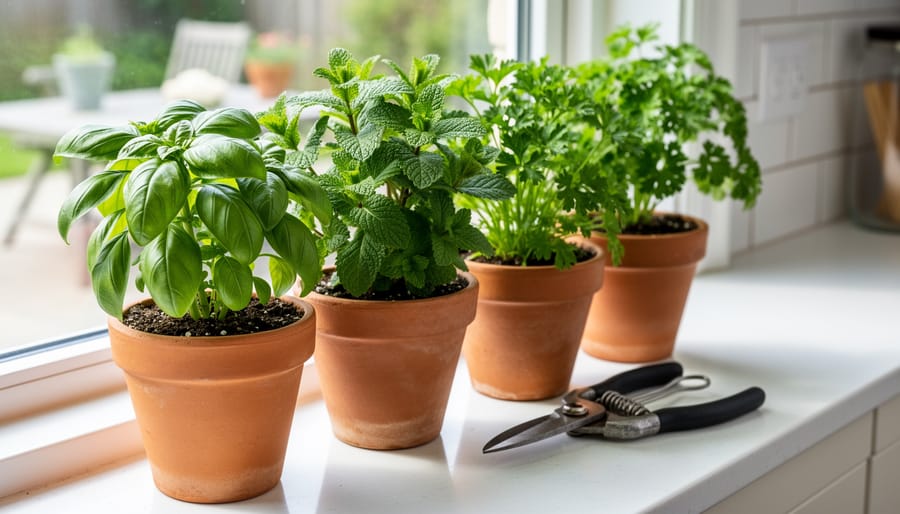
Start with three to five herbs in six-inch pots placed on a sunny windowsill or patio—basil, mint, and parsley thrive with minimal fuss and forgive beginner mistakes. Choose a spot that receives at least six hours of sunlight daily, use quality potting mix instead of garden soil, and water only when the top inch feels dry to your touch.
Your herb garden doesn’t need fancy equipment or a large space. A simple container setup costs less than twenty dollars and takes under an hour to arrange. The real secret beginners miss is this: herbs actually prefer slight neglect over constant attention, making them more forgiving than traditional houseplants.
Within two weeks, you’ll snip fresh leaves for your meals. Within a month, you’ll understand each plant’s rhythm—when basil needs pinching back, how aggressively mint spreads, why parsley takes forever to germinate but then grows reliably. This hands-on learning builds genuine confidence that no amount of reading can replace.
Whether you’re working with a sunny balcony, a kitchen counter, or a small backyard patch, growing herbs teaches you to trust your instincts. You’ll make mistakes—overwatering, underwatering, placing shade-lovers in full sun—but herbs bounce back quickly, giving you multiple chances to learn what works in your specific environment.
Why Herbs Are Perfect for Beginning Gardeners
If you’re feeling nervous about starting your first garden, let me share some wonderful news: herbs are genuinely the perfect place to begin, and I’ve seen countless new gardeners transform their confidence by starting with these remarkable plants.
Herbs offer some unique advantages that make them ideal training wheels for your gardening journey:
- They bounce back quickly from watering mistakes or occasional neglect
- Most varieties grow rapidly, giving you visible results within weeks
- They tolerate beginner errors like inconsistent care or less-than-perfect soil
- You get both culinary uses and ornamental benefits from the same plants
What makes herbs especially encouraging is their forgiving nature. Unlike fussier vegetables that might sulk if conditions aren’t perfect, herbs like basil, mint, and parsley genuinely want to thrive. They’re bred to be resilient and adaptable, which means your small mistakes rarely spell disaster.
The rapid growth cycle is another confidence booster. Within just a few weeks, you’ll see your tiny seedlings transform into lush, fragrant plants you can actually harvest and use. There’s something deeply satisfying about snipping fresh basil for your pasta or adding homegrown rosemary to roasted potatoes. This immediate connection between your efforts and tangible results keeps you motivated and engaged.
Perhaps most importantly, herbs teach you fundamental gardening skills without the pressure. You’ll learn about watering schedules, sunlight requirements, and plant care in a low-stakes environment, building the foundation for more ambitious gardening projects down the road.
Choosing the Right Location for Your Herb Garden
Finding the perfect spot for your herb garden is honestly one of the most important decisions you’ll make, and I promise it’s easier than you might think. Let me walk you through what to look for, whether you’re working with a sprawling backyard or a sunny windowsill.
Sunlight is your number one consideration. Most culinary herbs like basil, rosemary, and thyme are sun-worshippers that need at least six hours of direct sunlight daily. Take a day to observe your space – check it in the morning, midday, and afternoon to see where the sun lingers longest. If you’re working with shadier conditions, don’t worry. Some herbs like parsley, chives, and mint actually tolerate partial shade beautifully, and you can explore options for plants for low light environments.
Accessibility matters more than you might realize. Position your herbs within easy reach of your kitchen door, because let’s be honest – you’re much more likely to snip fresh oregano for Tuesday night pasta if you don’t have to trek across the yard in your slippers. For indoor herbs, applying general indoor plant care principles near a south-facing window works wonderfully.
Drainage is crucial but straightforward. If you’re planting outdoors, avoid low spots where water pools after rain. Notice where puddles form and steer clear of those areas. For containers and balcony gardens, simply ensure your pots have drainage holes – it’s that simple.
Finally, start small. A 3×3 foot plot or even three to five containers is plenty for beginners. You can always expand once you’ve got the hang of things.
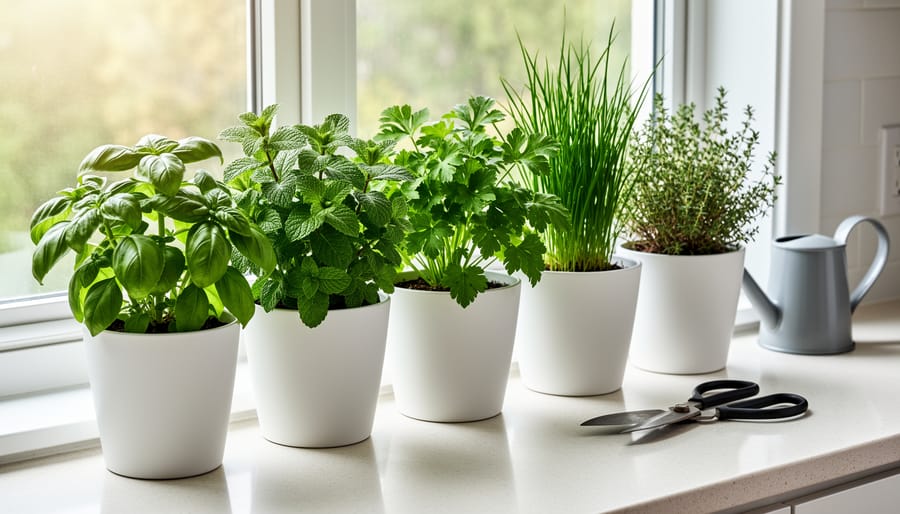
The Five Easiest Herbs for First-Time Growers
Starting your herb garden with the right plants makes all the difference between frustration and success. I’ve seen countless beginners light up with confidence after their first harvest, and it almost always starts with these five reliable herbs that practically grow themselves.
Let me introduce you to your new garden friends. These herbs are forgiving, productive, and incredibly useful in the kitchen, which means you’ll actually use what you grow. I always tell newcomers that there’s nothing quite like the moment you snip fresh basil for dinner and realize you’re officially a gardener.
| Herb | Sunlight Needs | Water Frequency | Growth Speed | Best Uses |
|---|---|---|---|---|
| Basil | 6-8 hours direct sun | When soil feels dry | Fast (6-8 weeks) | Italian dishes, pesto, salads |
| Mint | Partial shade to full sun | Keep consistently moist | Very fast, spreads aggressively | Teas, cocktails, desserts |
| Parsley | 4-6 hours sun | Regular, even moisture | Moderate (10-12 weeks) | Universal garnish, sauces |
| Chives | 6 hours sun | Moderate, drought-tolerant | Fast, returns yearly | Eggs, potatoes, dips |
| Thyme | 6-8 hours sun | Let dry between watering | Slow but steady | Roasted meats, soups, breads |
Basil is the superstar of beginner gardens because it rewards you quickly and generously. This warm-weather lover grows lush and fragrant in sunny spots, and the more you harvest, the bushier it becomes. Just remember to pinch off flower buds when they appear to keep the leaves flavorful.
Mint deserves special mention for being nearly indestructible. It grows so enthusiastically that experienced gardeners actually worry about containing it. For beginners, though, this vigor is a blessing. Plant mint in containers to prevent it from taking over, and you’ll have fresh leaves for mojitos all summer long.
Parsley might test your patience during germination, sometimes taking three weeks to sprout, but once established, it’s incredibly reliable. Both curly and flat-leaf varieties thrive with minimal fussing, and they tolerate cooler temperatures better than basil.
Chives are the set-it-and-forget-it option. These onion-flavored grass-like herbs are perennials, meaning they’ll return year after year without replanting. They’re also one of the first herbs to emerge in spring, giving you an early harvest when you need that gardening motivation most.
Thyme rounds out our list as the ultimate low-maintenance herb. It actually prefers being slightly neglected, thriving in drier conditions that would stress other plants. This Mediterranean native handles heat beautifully and stays evergreen in many climates, providing year-round harvests.
Container vs. Ground Planting: What’s Best for You?
Choosing between containers and ground planting is one of your first big decisions, and honestly, there’s no wrong answer here. Let me help you figure out what works best for your situation.
Container gardening is perfect if you’re working with limited space like a balcony, patio, or even a sunny windowsill. You’ll love the flexibility – containers can move indoors when frost threatens or shift to sunnier spots as seasons change. They also give you complete control over soil quality, which is fantastic if your yard has heavy clay or poor drainage. The downside? You’ll need to water more frequently since containers dry out faster, and roots have less room to spread, meaning some herbs may not grow as large.
Ground planting really shines when you have garden space and want a lower-maintenance setup. Once established, your herbs will need less frequent watering because they can tap into deeper soil moisture. Perennial herbs like rosemary and thyme will develop stronger root systems and come back bigger each year. However, you’re committed to that location, and improving poor soil takes more effort upfront.
I usually recommend containers for absolute beginners. They’re more forgiving, easier to manage, and you can start small with just three or four pots. As master gardener Linda Schaffer told me, “Containers let you learn each herb’s personality before committing to a full garden bed.” You can always expand into ground planting once you’ve gained confidence and know which herbs you truly use regularly.
Essential Supplies You Actually Need (and What You Don’t)
Here’s the honest truth: you need far less than those glossy garden catalogs want you to believe. I started my first herb garden with just five items, and you can too.
For containers or garden space, choose whatever suits your situation. Terracotta pots (6-8 inches deep minimum) work beautifully and are affordable, but plastic containers, repurposed buckets with drainage holes, or a small plot of ground all do the job perfectly well. You’ll need one container per herb, or if planting in the ground, about 12-18 inches of space between plants.
Quality potting mix is where you should invest. Don’t grab garden soil from your yard—it compacts in containers and may harbor pests. A bag of organic potting mix designed for vegetables and herbs will run you around $10-15 and will likely handle several pots. That’s genuinely worth it.
For tools, keep it simple. A hand trowel for digging and transplanting is essential. That’s it for starters. Those fancy tool sets can wait.
Watering equipment can be as basic as a watering can or even a recycled milk jug with holes poked in the lid. If you’re planting outdoors in the ground, a garden hose works fine.
What you don’t need: fertilizer spikes (herbs are light feeders), expensive pH testers, specialty herb scissors, plant food (not yet anyway), or those moisture meters. Seriously. Your finger works brilliantly for checking soil moisture—just stick it an inch deep. If it’s dry, water. If it’s moist, wait.
Start simple, learn what works for your space, then expand your collection as needed.
Step-by-Step: Planting Your Herbs
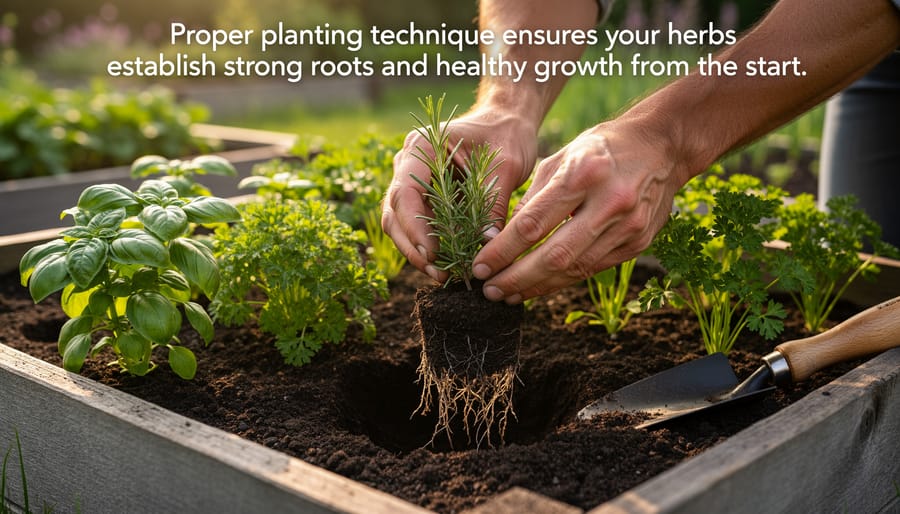
Starting from Seeds vs. Transplants
Here’s a truth that’ll save you time and frustration: some herbs practically beg to be grown from seed, while others will test your patience until you’re ready to give up gardening altogether.
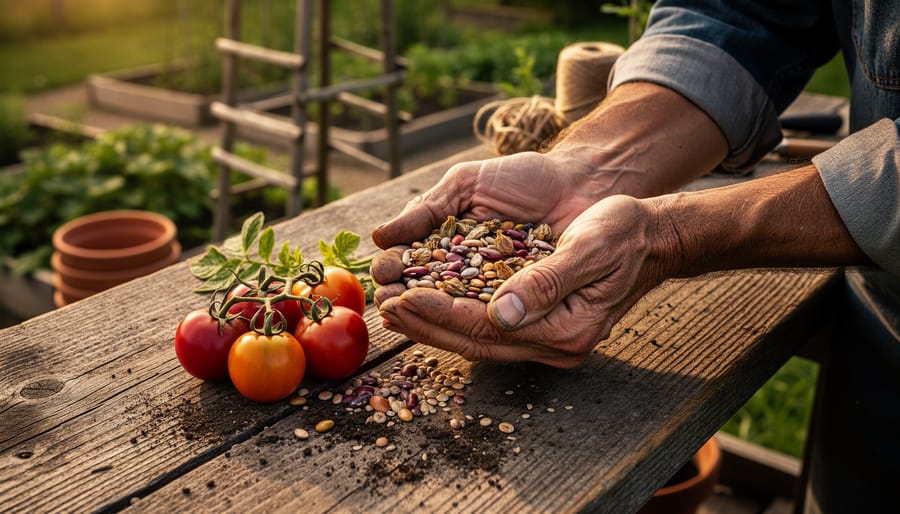
For beginners, I strongly recommend starting most of your herbs as transplants from a nursery. Basil, rosemary, thyme, oregano, and mint are all much easier as starter plants. You’ll have harvestable herbs within weeks instead of months, and you’ll skip the tricky germination phase where many new gardeners lose confidence.
That said, some herbs are actually delightful from seed. Cilantro, dill, and parsley have such quick germination that you’ll feel like a gardening wizard watching them sprout. These also don’t love having their roots disturbed, so direct seeding works beautifully.
My advice? Start your first herb garden with about 80% transplants and maybe try one or two herbs from seed. This gives you quick wins while letting you experiment with the satisfaction of growing from scratch. There’s no shame in choosing transplants—even experienced gardeners do it for convenience. The goal is enjoying fresh herbs, not proving anything to anyone.
The Right Way to Water New Herbs
Here’s the truth about watering herbs: more beginners kill their plants with overwatering than underwatering. I learned this the hard way when my first basil plant turned into a sad, wilted mess after I lovingly drenched it every single day.
The golden rule is simple: water deeply but infrequently. Stick your finger about two inches into the soil—if it feels dry, it’s time to water. If it’s still moist, wait another day or two. Most herbs prefer their soil to dry out slightly between waterings rather than staying constantly damp.
When you do water, aim for the soil, not the leaves. Pour slowly until water begins draining from the bottom of your container, ensuring the roots get thoroughly soaked. For outdoor gardens, this typically means watering once or twice a week, though you’ll need to adjust based on your climate and rainfall.
Watch your herbs for signs they’re thirsty: wilting leaves, dry soil pulling away from pot edges, or a lighter container weight. Mediterranean herbs like rosemary and thyme actually prefer drier conditions, while basil and parsley appreciate slightly more moisture. Early morning watering is ideal, giving plants time to absorb moisture before the day’s heat arrives.
Simple Care Routines That Keep Herbs Thriving
Here’s the good news: herbs are remarkably forgiving plants that practically want to thrive for you. With just a few simple habits, you’ll keep your garden productive all season long.
Water your herbs when the top inch of soil feels dry to the touch—that’s usually every 2-3 days for containers and weekly for garden beds, though this varies with weather. The finger test never fails: stick your finger into the soil, and if it comes out dry, it’s time to water. Most herbs prefer a “drink deeply, then dry out” approach rather than constant moisture. Water at the base of plants in the morning to prevent fungal issues.
Feeding doesn’t need to be complicated. A monthly dose of diluted liquid fertilizer during the growing season keeps herbs happy, though many do fine with just compost worked into the soil at planting time. Remember, herbs grown for flavor actually develop stronger taste when not overfed—you’re growing them for essential oils, not lush foliage.
Pruning sounds intimidating, but it’s actually your secret weapon for bushier, more productive plants. Simply pinch off the top sets of leaves once your herbs reach about 6 inches tall. This encourages side branching and prevents them from getting leggy. Regular harvesting serves the same purpose, so don’t be shy about snipping what you need for dinner.
Keep an eye out for pests during your morning coffee stroll through the garden. Catching aphids or whiteflies early means you can simply spray them off with water or remove affected leaves. Most herb gardens remain relatively pest-free thanks to their aromatic oils, which is another reason we love them so much.
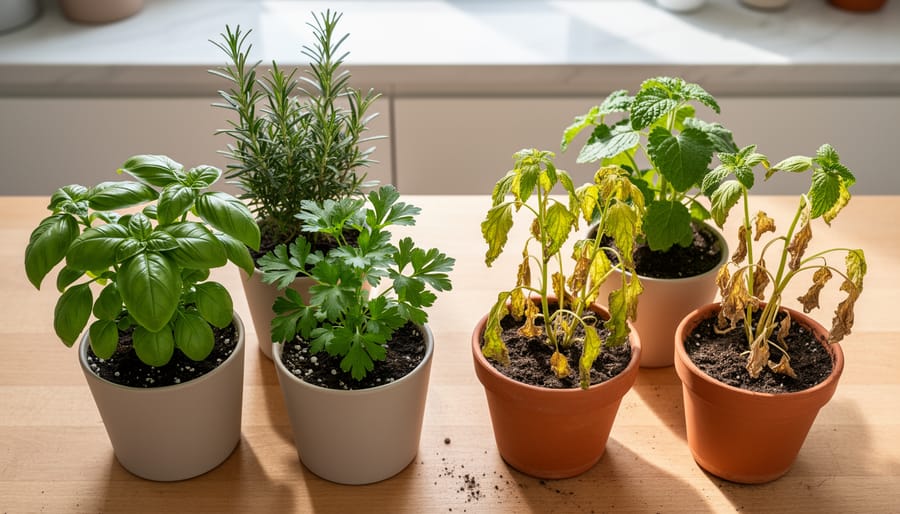
Troubleshooting Common Beginner Problems
Don’t worry – every gardener has faced a droopy basil plant or mysteriously yellowing leaves at some point! These hiccups are simply part of your learning journey, and the good news is that most problems have straightforward fixes.
Yellowing leaves usually signal watering issues or nutrient deficiency. If the soil feels soggy, you’re overwatering – let it dry out between waterings. If it’s bone dry, increase your watering frequency. For nutrient-starved herbs, a gentle application of balanced liquid fertilizer every few weeks should restore that vibrant green color.
Leggy, stretched-out growth means your herbs are literally reaching for more light. Move them closer to a window or consider supplemental grow lights. Pinch back those long stems to encourage bushier growth – you can use those trimmings in tonight’s dinner!
Wilting can happen for opposite reasons: too much or too little water. Check the soil moisture first. If it’s wet but your plant is still drooping, the roots might be waterlogged and need better drainage. If it’s dry, give it a good drink and it should perk up within hours.
What should I do about aphids or other small pests?
Spray affected plants with a mixture of water and a few drops of dish soap, or simply blast them off with a strong stream of water. For persistent problems, try neem oil as a natural solution.
Is it normal for my herbs to look worse before they get better?
Absolutely! Transplant shock is common, and herbs often need a week or two to adjust to their new environment before showing vigorous growth.
Remember, even experienced gardeners lose plants occasionally. Each challenge teaches you something valuable about your specific growing conditions, making you a better gardener with every season.
Congratulations on taking your first steps into herb gardening! You’ve just opened the door to a rewarding journey that will bring fresh flavors to your kitchen and joy to your daily routine. Remember, every experienced gardener started exactly where you are now, with a mixture of excitement and uncertainty.
The beauty of herb gardening is that it’s truly a learning experience that unfolds season by season. Some herbs will thrive beyond your expectations, while others might teach you valuable lessons about your specific growing conditions. That’s perfectly normal and part of the adventure. Don’t be afraid to experiment with new varieties or try different growing locations.
As your confidence grows, you might find yourself drawn to perennial herb gardens that return year after year, or expanding your garden with more challenging herbs. For now, enjoy tending your starter herbs, celebrate each harvest, and savor the satisfaction of cooking with ingredients you’ve grown yourself. Your herb garden is just the beginning of a wonderful gardening journey ahead.