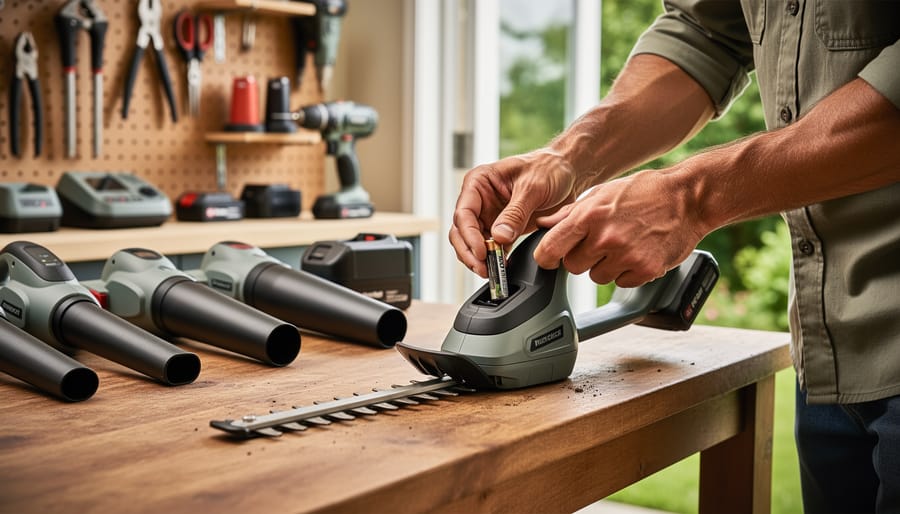
Choose one battery platform and commit to it before buying your second tool—this single decision will save you hundreds of dollars and eliminate the frustration of managing multiple incompatible chargers cluttering your shed. The major manufacturers like DeWalt, Makita, Ryobi, and EGO have built extensive ecosystems where one battery powers everything from hedge trimmers to leaf blowers, but mixing brands means you’re essentially starting from scratch with each purchase.
Calculate your total cost of ownership by adding up tools, batteries, and chargers as a complete system rather than individual items. A slightly more expensive tool that shares batteries with your existing collection always costs less than a cheaper option requiring new power sources. Most seasoned gardeners I’ve spoken with wish they’d understood this before accumulating their first three or four tools.
Map out your ideal tool collection now, even if you’re only buying one item today. Check whether your chosen brand offers the specialized equipment you’ll eventually need—scarifiers, pole saws, or pressure washers—because discovering your platform doesn’t support a must-have tool means either compromising your choice or maintaining two separate battery systems.
Start with a kit that includes two batteries and a charger, then purchase tool-only versions afterward. The initial investment feels steeper, but you’ll quickly appreciate swapping a fresh battery into any tool without waiting for charges. This approach transforms how you work in the garden, letting you move seamlessly between tasks while one battery recharges and another keeps you productive.
The Battery Revolution in Your Garden Shed
From Gas Fumes to Fresh Air
Remember the days when firing up the lawn trimmer meant yanking a stubborn pull cord, breathing in exhaust fumes, and wearing ear protection? Those days are quickly becoming a thing of the past, and good riddance! Making the switch to battery-powered gardening tools is like opening a window to fresh air—literally.
The most immediate benefit you’ll notice is the peaceful quiet. Battery tools operate at a fraction of the noise level of gas engines, meaning you can trim hedges early in the morning without waking the neighbors or needing to shout conversations across the yard. For those looking for ergonomic gardening tools, the reduced vibration of battery models also means less hand fatigue during extended use.
Beyond comfort, there’s the environmental win. Battery tools produce zero emissions during operation, keeping your garden air clean and reducing your carbon footprint. And here’s a bonus many people overlook: maintenance becomes incredibly simple. No more oil changes, spark plug replacements, or winterizing rituals. Just charge, use, and store. It’s gardening made simpler and healthier for you and the planet.
What Makes Today’s Battery Tools Different
The transformation in battery-powered garden tools really comes down to one breakthrough: lithium-ion technology. If you tried cordless tools a decade ago and found them disappointing, I completely understand your skepticism. But today’s tools are genuinely different.
Modern lithium-ion batteries pack significantly more power into lighter packages. Where older batteries might have given you 15-20 minutes of runtime, today’s versions can power a string trimmer for 45 minutes or more on a single charge. That’s enough to tackle most residential yards without stopping.
Power output has improved dramatically too. I’ve spoken with professional landscapers who’ve switched entirely to battery systems because they deliver performance that rivals gas engines, without the noise, fumes, or maintenance headaches. You’ll find battery-powered mowers handling thick grass and leaf blowers moving serious debris.
Charging speed has also accelerated. Fast-charging systems can restore a depleted battery to 80% capacity in under 30 minutes, meaning a quick lunch break gets you back to work. Some platforms offer batteries ranging from compact 2.0Ah options for light pruning to hefty 9.0Ah powerhouses for demanding jobs, giving you flexibility to match the battery to your task.
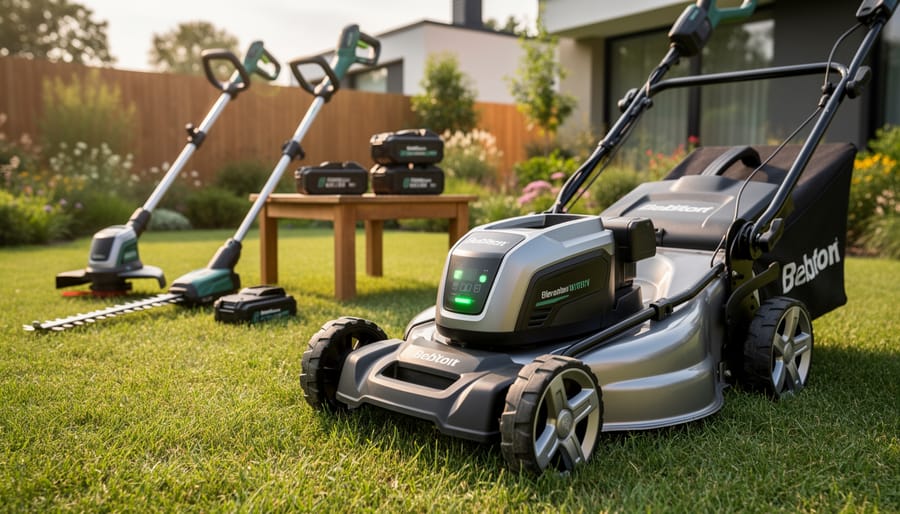
Understanding Battery Systems: The Compatibility Problem
Why Every Brand Has Different Batteries
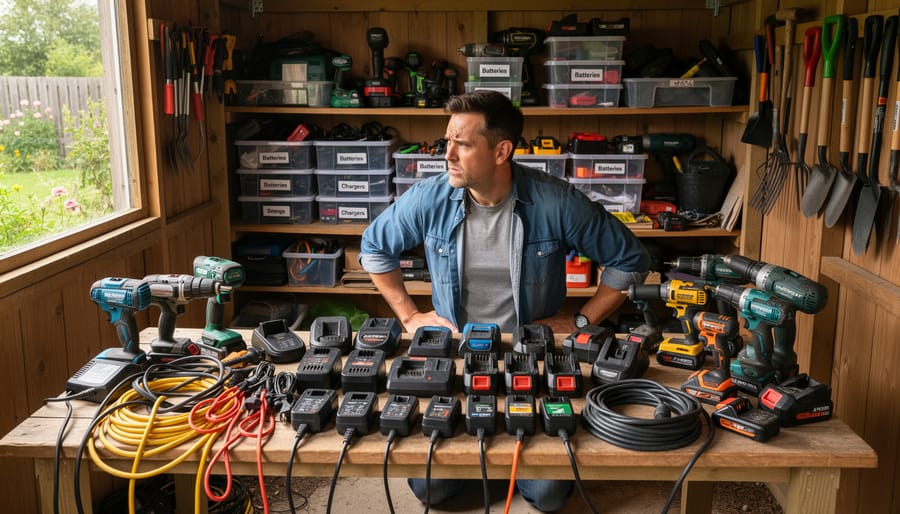
If you’ve ever wondered why you can’t just pop a DeWalt battery into your Ryobi trimmer, you’re not alone! The incompatibility between brands isn’t just to frustrate us gardeners—there are genuine technical and business reasons behind it.
First, let’s talk voltage. Different manufacturers design their tools to run on different power systems. While one brand might build their hedge trimmer around an 18-volt platform, another optimizes theirs for 20 volts or even 40 volts. These aren’t arbitrary numbers—they reflect engineering choices about balancing power, runtime, and tool weight. Your battery needs to match your tool’s voltage requirements, or it simply won’t work safely.
Physical design plays a big role too. Each company creates unique shapes, sizes, and connection points for their batteries. The rail system, locking mechanism, and contact points are all proprietary. This isn’t just about looks—these designs protect against incorrect battery insertion and ensure secure connections during vigorous tasks like hedge trimming or leaf blowing.
Here’s where it gets more technical, but stick with me: modern batteries communicate with their tools through electronic chips. These smart batteries send information about charge level, temperature, and health status to the tool. Each brand uses its own communication protocol, like different languages between the battery and tool.
From a business perspective, these proprietary systems do help manufacturers build customer loyalty. Once you’ve invested in one battery platform, you’re more likely to stay within that ecosystem. However, this also drives innovation, as brands compete to offer better battery technology and more efficient tools.
The Real Cost of Multiple Battery Platforms
Let me share something that happened to my neighbor Sarah. She started with a DeWalt hedge trimmer because it was on sale, then picked up a Ryobi leaf blower at a different store, and later added a Makita string trimmer. Three tools, three different battery platforms. The hidden cost? She needed six batteries total (two per tool for continuous work), three separate chargers, and three different storage solutions. When we calculated everything together, she’d spent nearly $800 on batteries and chargers alone—more than the tools themselves cost.
This scenario plays out in garages across the country. Each battery platform comes with its own ecosystem of costs. A single 4.0Ah lithium-ion battery typically runs between $80 and $150, depending on the brand. Chargers add another $40 to $100 each. If you own four tools across three different brands, you’re looking at a minimum investment of $600 just in power sources, and that’s before considering replacement batteries down the line.
The storage issue compounds the problem too. Multiple battery systems mean cluttered workshop spaces, with different chargers competing for outlet space and batteries scattered across various cases and shelves. I’ve interviewed gardeners who’ve resorted to labeling systems and dedicated storage bins just to keep track of which battery belongs to which tool. It’s not just about money—it’s about the mental load of managing multiple incompatible systems when you’d rather be out enjoying your garden.
Major Battery Platform Ecosystems for Garden Tools
Professional-Grade Platforms
If you’re looking for serious power and reliability, it’s worth considering battery platforms from construction tool giants like Milwaukee, DeWalt, and Makita. These brands have leveraged their decades of experience building professional-grade equipment for tradespeople to create impressively robust outdoor power tools.
What sets these platforms apart is their high-capacity battery systems. Milwaukee’s M18 line, for instance, offers batteries up to 12.0Ah that can power everything from hedge trimmers to lawn mowers without breaking a sweat. I’ve chatted with landscape professionals who swear by these systems because they deliver consistent power throughout the day, matching the performance of gas tools without the fumes and maintenance headaches.
DeWalt’s 20V MAX and FlexVolt systems are particularly clever. The FlexVolt batteries automatically adjust voltage based on which tool you’re using, meaning the same battery pack works seamlessly across their entire range of 20V, 60V, and even 120V tools. That’s remarkable versatility if you’re building a collection.
Makita’s 18V X2 approach doubles up batteries for demanding tasks like mowing, giving you professional-level runtime. Their outdoor tool selection has expanded rapidly, now including everything from string trimmers to chainsaws.
The trade-off? These platforms typically cost more upfront than consumer brands. However, if you already own power tools from these manufacturers, you’re halfway there. Your existing batteries will work with their garden tools, making expansion surprisingly affordable.
Garden-Focused Battery Systems
Several major manufacturers have developed comprehensive battery platforms specifically with gardeners in mind, and understanding what sets each apart can really help you make the right choice for your outdoor space.
Ego Power Plus has earned a devoted following among serious gardeners, and for good reason. Their 56-volt Arc Lithium batteries pack serious power—I’ve spoken with landscapers who swear they rival gas equipment performance. The platform includes everything from string trimmers to snow blowers, and their innovative rapid charger can fill a 5.0Ah battery in about 40 minutes. One weekend gardener I interviewed told me she completed her entire half-acre property on a single charge.
Ryobi’s 40-volt system takes a different approach, prioritizing affordability and variety. With over 75 tools in their lineup, you’ll find options for nearly every garden task imaginable. Their batteries work across the entire range, which means the same battery powering your hedge trimmer can also run your leaf blower or even workshop tools if you expand beyond the garden.
Greenworks offers multiple voltage options—24V, 40V, and 80V—giving you flexibility based on your property size. Their 80-volt system particularly shines for larger yards, delivering commercial-grade performance without the weight and noise of gas engines.
Don’t overlook brands like Makita and Milwaukee either. While traditionally known for construction tools, their garden equipment lines have expanded significantly, and if you already own their power tools, the battery compatibility becomes incredibly convenient.
Big Box Store Exclusive Platforms
Several major retailers have developed exclusive battery platforms that you won’t find anywhere else. Lowe’s carries the Kobalt 24V and 80V systems, while Home Depot offers the Ryobi and Hart brands. Walmart has its own Hart lineup as well. These store-specific systems often provide excellent value for your money, but there’s a trade-off to consider.
The biggest advantage? These platforms typically cost less than premium brands, making them perfect if you’re just starting your cordless tool collection. I’ve talked with gardeners who’ve built complete tool arsenals through these exclusive brands without breaking the bank.
However, availability depends entirely on that retailer’s presence in your area. If your nearest Lowe’s is an hour away, getting warranty service or replacement batteries becomes less convenient. Customer support is generally solid since these retailers stand behind their exclusive brands, but you’re locked into shopping at one store for all your battery-compatible tools and accessories.
Building Your Battery-Powered Garden Tool Collection Strategically
Start With Your Most-Used Tools
Making the switch to battery-powered gardening doesn’t mean replacing everything at once. Start by identifying which essential garden tools you reach for most often during your weekly routine.
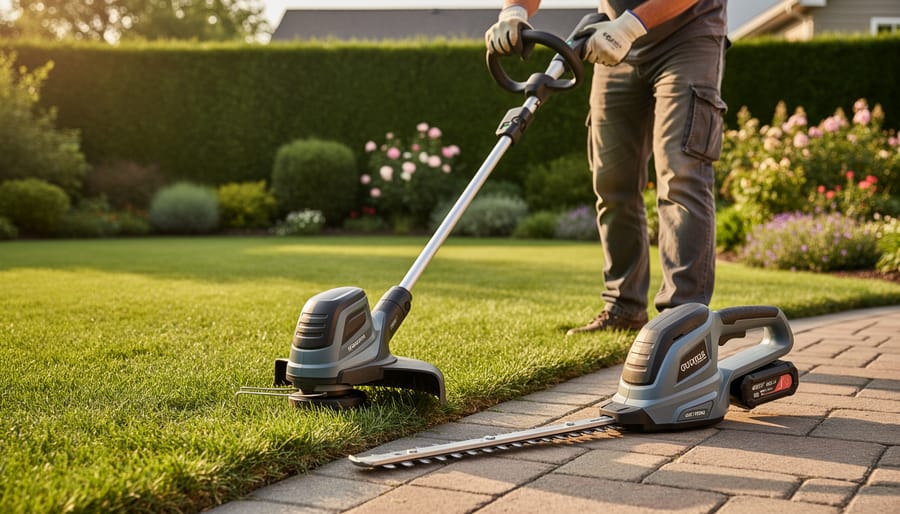
For small gardens and balconies, a string trimmer and handheld pruner typically see the most action. These are perfect starter tools that’ll give you a feel for battery performance without a major investment.
Medium-sized gardens benefit from converting the lawn mower first, especially if you’re mowing weekly. This single switch eliminates the hassle of gas, oil changes, and pull-starts. Pair it with a leaf blower for quick cleanup, and you’ve covered your most frequent tasks.
Large property owners should prioritize their hedge trimmer and chainsaw if they have extensive pruning needs, or consider a riding mower as their anchor purchase within a battery platform.
Here’s a practical tip from experienced gardener Maria Chen: “I tracked my tool usage for one month and realized my string trimmer came out three times more than anything else. That became my first battery purchase, and I built my collection from there.” This simple tracking approach prevents buyer’s remorse and ensures your investment matches your actual gardening patterns.
The One-Platform Strategy vs. Mix-and-Match Approach
When building your battery-powered tool collection, you’ll face an important choice: commit to one manufacturer’s ecosystem or mix and match based on what each brand does best.
The one-platform approach offers simplicity and cost savings. Once you’ve invested in batteries from a single manufacturer, each new tool purchase is less expensive since you’re only buying the bare tool. You’ll have fewer chargers cluttering your workspace, and batteries become interchangeable across your entire collection. This streamlined approach works beautifully if one brand offers all the tools that simplify maintenance in your garden.
The mix-and-match strategy lets you choose the best-performing tool in each category, regardless of brand. Maybe Makita makes your favorite hedge trimmer, but DeWalt’s leaf blower is unbeatable. The downside? You’ll accumulate multiple battery types and chargers, increasing your upfront costs and storage needs.
Most experienced gardeners I’ve spoken with recommend starting with one platform for your core tools. As your needs expand, you can strategically add a second ecosystem only if there’s a truly exceptional tool your primary brand doesn’t offer. This balanced approach gives you flexibility without overwhelming complexity.
When to Break Your Own Rules
While platform loyalty makes practical sense, sometimes a tool is simply too good to pass up—even if it means owning a second battery system. I learned this firsthand when I needed a quality pole saw. My primary battery platform didn’t offer one that could handle my mature oak trees, but a competitor’s model had outstanding reviews from professional arborists I’d interviewed.
Here’s when breaking your own rules makes sense: if you need a specialized tool for frequent use and the best option sits outside your ecosystem, it might justify the investment. This particularly applies to hedge trimmers, pole saws, or larger lawn mowers where performance differences are substantial.
However, be strategic about these exceptions. Limit yourself to one or two “orphan” tools maximum, and consider whether you could rent instead for occasional tasks. If you do buy outside your platform, choose tools with longer battery life to minimize charging frequency. I keep my pole saw battery on a dedicated shelf with its charger, treating it as a complete standalone system rather than trying to integrate it with my main collection. This mental separation helps avoid the frustration of battery juggling during busy gardening days.
Battery Management for Garden Enthusiasts
How Many Batteries Do You Really Need?
Here’s the honest truth: most gardeners get by beautifully with just two batteries per tool platform. I learned this from my friend Sarah, a landscape designer who manages multiple properties. She swears by the two-battery rule, and after years of testing, I completely agree.
Think about your typical gardening session. If you’re maintaining a small to medium yard (under half an acre), one battery will usually see you through most tasks. Having a second battery charging means you’ll never be stuck waiting. For larger properties or marathon weekend sessions, three batteries give you that comfortable buffer.
Here’s a practical calculation method: Consider your longest gardening day. If you’re running a hedge trimmer for 45 minutes and a leaf blower for 30 minutes, you’re looking at roughly 75 minutes of runtime. Most quality batteries deliver 45-60 minutes per charge, so two batteries should cover you comfortably.
The charging time factor matters too. If your batteries recharge in under an hour, two is plenty. Slower chargers (90+ minutes) might justify that third battery, especially if you tackle big projects in single sessions.
My advice? Start with two batteries and one fast charger. You can always add more later, but most gardeners find they rarely need that extra capacity.
Extending Battery Life and Performance
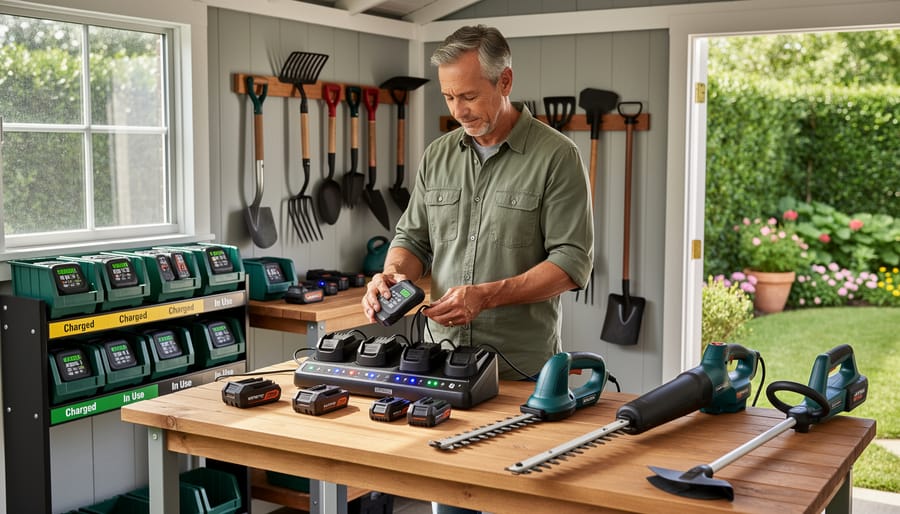
Your battery investment deserves protection, and a few simple habits can keep those power packs performing beautifully for years to come. I learned this lesson the hard way when my first lithium-ion battery lost half its capacity after just two seasons of neglect!
Temperature is your battery’s biggest friend or foe. Store batteries in a cool, dry place between 40-80°F—never in freezing garages or sweltering sheds. Before winter storage, charge them to about 40-50% rather than full, which reduces stress on the cells. I keep mine on a shelf in my basement, and they’re still going strong after five years.
Avoid running batteries completely flat whenever possible. Modern lithium-ion batteries prefer partial discharge cycles, so recharge when you notice power dropping rather than waiting for total depletion. Similarly, don’t leave them on the charger for days after they’re full—most quality chargers stop automatically, but it’s still good practice to unplug them.
Keep battery contacts clean by wiping them occasionally with a dry cloth, removing any grass clippings or dirt that might interfere with connection. And here’s a tip from my gardening mentor: if you have multiple batteries in your collection, rotate their use regularly so they age evenly. This simple rotation ensures you won’t suddenly find yourself with one excellent battery and several degraded ones.
The Future of Cross-Compatible Garden Tool Batteries
The landscape of battery-powered garden tools is evolving rapidly, and the future looks promising for those of us who’ve been juggling multiple battery systems. Major manufacturers are finally recognizing what gardeners have been asking for all along: greater flexibility and compatibility across brands.
One of the most exciting developments is the emergence of universal adapter solutions. Several third-party companies are now producing adapters that allow batteries from one brand to work with tools from another. While these aren’t officially endorsed by manufacturers, they’re gaining traction among practical gardeners who want to maximize their existing battery investments. Think of them as the USB-C moment for gardening tools, slowly but surely creating connections where none existed before.
Industry insiders I’ve spoken with hint at broader standardization efforts happening behind the scenes. The European Union’s recent push for universal charging standards in electronics has sparked conversations about similar requirements for power tool batteries. While we’re not there yet, this regulatory pressure could accelerate change faster than market forces alone.
Some innovative partnerships are already emerging. Certain manufacturers are beginning to license their battery platforms to complementary brands, creating mini-ecosystems of compatible tools. This represents a middle ground between complete proprietary control and universal standardization.
Looking ahead, advances in innovative gardening technology suggest we might see smart batteries that can communicate with different brands through standardized protocols. Imagine batteries that automatically adjust their output based on the tool’s requirements, regardless of manufacturer.
For now, the best strategy is staying informed about these developments while building your collection thoughtfully. The days of being locked into a single brand ecosystem may not be over completely, but they’re definitely numbered.
Choosing the right battery platform might feel overwhelming at first, but trust me—taking the time to think strategically now will save you money, storage space, and plenty of frustration down the road. Before you purchase your first battery-powered tool (or add to your existing collection), sit down and honestly assess both your current gardening needs and what you might tackle in the future. Will you stick with basic lawn maintenance, or do you dream of those bigger weekend projects with hedge trimmers and pole saws?
Remember, you’re not just buying a tool—you’re investing in an ecosystem. Once you’ve committed to a platform, you’ll find it much easier and more economical to expand within that same family. Don’t rush this decision. Read reviews, visit your local garden center to hold the tools, and talk to fellow gardeners about their experiences. I’ve interviewed countless gardeners who wish they’d done more homework before diving in.
Here’s the encouraging news: despite the compatibility challenges, battery-powered gardening tools have genuinely revolutionized how we care for our outdoor spaces. They’re quieter, cleaner, surprisingly powerful, and make gardening more accessible to everyone. No more wrestling with pull cords or breathing exhaust fumes while you work. The technology keeps improving, batteries last longer than ever, and you’ll love the freedom of cordless convenience. Choose wisely, start with versatile core tools, and enjoy the journey toward a quieter, greener garden.