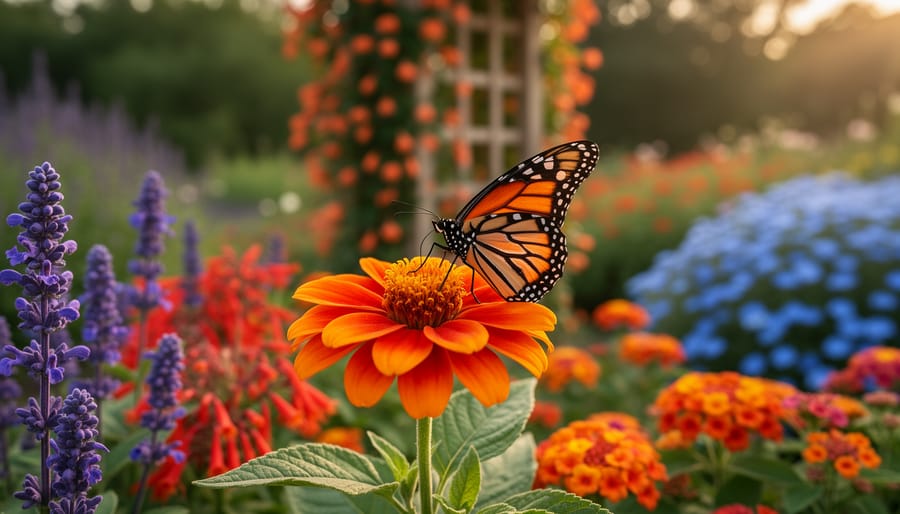
Choose native California fuchsia, salvia, and penstemon as your foundation plants—they bloom reliably in Zone 9’s mild winters and blazing summers while providing nectar when pollinators need it most. Plant lantana and Mexican sunflowers in full sun areas where temperatures regularly exceed 95°F, as these heat-lovers actually produce more blooms during your hottest months. Stagger bloom times by combining spring-flowering ceanothus with summer verbena and fall asters, ensuring your pollinator paradise offers continuous food sources throughout the year. Position hummingbird-attracting plants like coral honeysuckle near windows or patios where you can observe their frequent visits.
Zone 9 gives you an incredible advantage that northern gardeners envy: the ability to grow pollinator plants year-round without losing everything to hard freezes. Your mild winters mean many perennials behave like evergreens, and you can establish gardens that bloom in January when bees desperately need early nectar sources.
The trick is matching plants to your specific Zone 9 microclimate. Coastal Zone 9 gardens face salt spray and fog, while inland areas battle scorching heat and occasional frost. Understanding these differences helps you select plants that won’t just survive but will actually thrive and attract steady streams of butterflies, bees, and hummingbirds to your garden. The following seasonal guide breaks down exactly which plants to choose and when to plant them for maximum pollinator activity.
Why Zone 9 is a Pollinator Paradise
If you’re gardening in Zone 9, you’ve hit the pollinator jackpot! This climate zone, stretching across parts of California, Arizona, Texas, Florida, and the Gulf Coast, offers something most gardeners can only dream about: the opportunity to support pollinators throughout the entire year.
The magic of Zone 9 lies in its mild winters and extended growing season. While gardeners in colder zones watch their gardens go dormant for months, you can provide continuous food sources for bees, butterflies, and hummingbirds even in January and February. This year-round availability is crucial because pollinators don’t simply disappear in winter. Many native bees remain active during warmer winter days, and migrating butterflies and hummingbirds depend on nectar sources during their seasonal journeys.
Zone 9’s climate also supports an incredible diversity of flowering plants. You can grow everything from cool-season bloomers like salvias and penstemons to heat-loving summer champions like lantana and zinnias. This means you can create overlapping bloom times that ensure pollinators always have something to visit in your garden. The extended bloom seasons also give plants more time to produce the nectar and pollen that sustain pollinator populations.
But why does supporting pollinators matter so much? These hardworking insects are essential to our local food systems and ecosystem health. Approximately one-third of the food we eat depends on pollination, including many fruits, vegetables, and nuts. In your own garden, healthy pollinator populations mean better harvests from your tomatoes, squash, berries, and fruit trees. By choosing native plants for butterflies and other pollinators, you’re also supporting local biodiversity and helping maintain the delicate ecological balance in your region.
Master gardener Susan Chen from Phoenix puts it perfectly: “When I started focusing on pollinator plants five years ago, my entire garden came alive. I’m not just growing flowers anymore. I’m supporting an entire ecosystem, and my vegetable yields have never been better.”
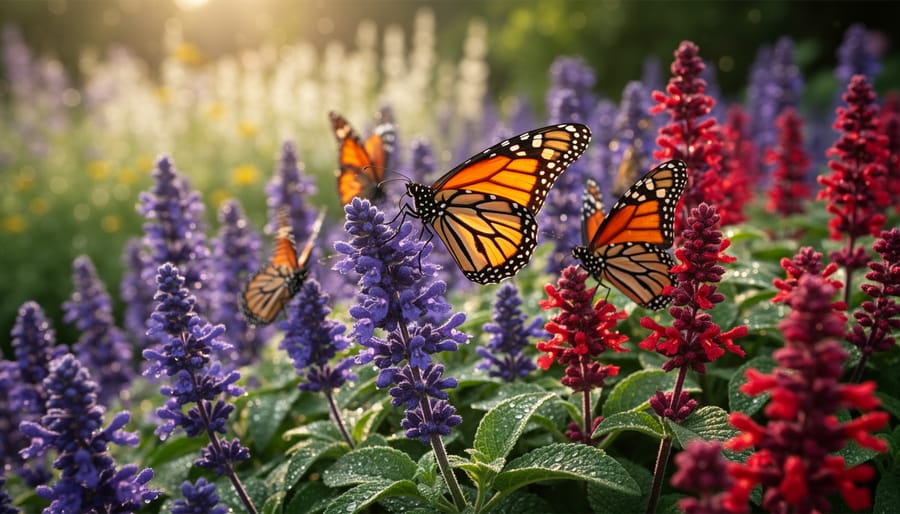
Spring Bloomers That Kick Off Pollinator Season
California Poppy and Native Wildflowers
If you’re looking for low-maintenance pollinator plants that practically take care of themselves, California poppies are your garden’s best friends. These cheerful orange blooms are true survivors, thriving in poor soil and requiring almost no water once established. I’ve watched them transform neglected garden corners into vibrant pollinator havens without any fussing on my part.
What makes California poppies especially valuable is their early blooming period, typically starting in late winter or early spring. When native bees emerge from dormancy, these flowers provide crucial nectar and pollen when food sources are scarce. The plants self-seed enthusiastically, creating natural drifts that expand year after year.
Pair your poppies with other native wildflowers like lupines, clarkia, and tidytips for extended bloom times. These companions share similar low-water needs and attract different pollinator species, from mason bees to syrphid flies. Simply scatter seeds in fall, rake lightly into the soil, and let winter rains do the work.
The beauty of this approach is its simplicity. Once your native wildflower patch establishes itself, it becomes a self-sustaining ecosystem. You’ll spend less time watering and more time enjoying the parade of pollinators visiting your garden from February through June.
Salvias and Sages for Hummingbirds
If you want to roll out the red carpet for hummingbirds, salvias are your go-to stars! These remarkable plants thrive in Zone 9’s warm conditions and bloom prolifically when many other flowers are taking a heat break.
For spring color that extends well into summer, Mexican bush sage (Salvia leucantha) offers stunning purple spikes that hummingbirds absolutely adore. It handles our hot afternoons like a champion and requires minimal water once established. I planted mine three years ago, and it’s become a hummingbird highway in my garden!
Pineapple sage (Salvia elegans) brings bright red tubular flowers that emerge in late spring, and here’s a bonus – the leaves smell exactly like pineapple when brushed. It grows quickly in partial shade and appreciates afternoon protection from intense sun.
For a more compact option, try autumn sage (Salvia greggii), which blooms nearly year-round in Zone 9. Available in red, pink, white, and coral, these tough little plants handle drought beautifully once established.
Care tips are wonderfully simple: plant salvias in well-draining soil, water deeply but infrequently to encourage strong roots, and trim back spent flowers to promote continuous blooming. Most varieties appreciate a light pruning in early spring to maintain their shape. Feed sparingly – these Mediterranean natives don’t need rich soil to perform magnificently.
Summer Stars That Handle the Heat
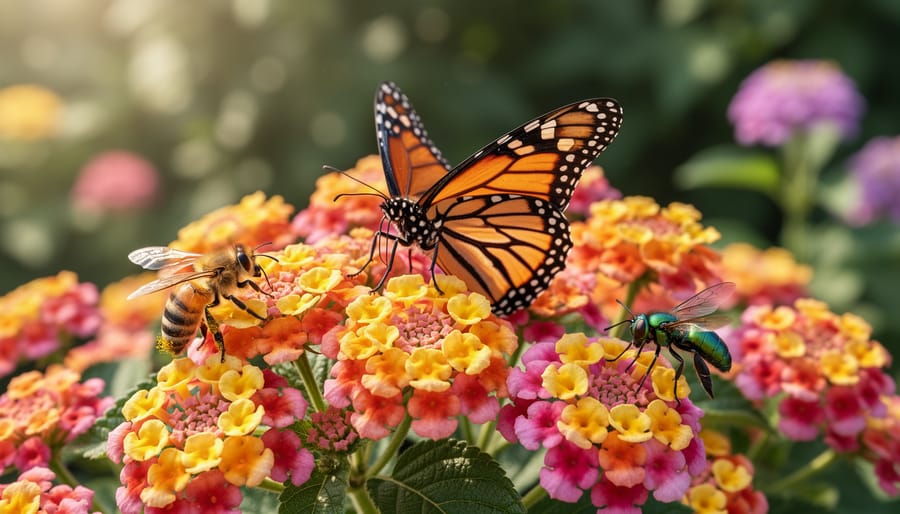
Lantana: The Butterfly Magnet
If you’re looking for a heat-loving superstar that laughs in the face of Zone 9 summers, lantana is your answer! This resilient beauty thrives in scorching temperatures that send other plants wilting, making it absolutely perfect for our climate. Butterflies can’t resist lantana’s nectar-rich flower clusters, and you’ll often find them fluttering around from dawn to dusk.
For Zone 9 gardens, I recommend varieties like ‘New Gold’ for its compact growth and brilliant yellow blooms, or ‘Miss Huff’ if you want something more cold-hardy that can handle our occasional winter dips. The trailing varieties work wonderfully in hanging baskets or as ground covers, while upright types make excellent border plants.
Here’s what makes lantana so easy to love: it actually prefers our heat and handles drought like a champ once established. Water deeply but infrequently, and resist the urge to fertilize too much—lantana blooms better when it’s not overfed. Deadheading spent blooms encourages more flowers, though honestly, lantana keeps pumping out color even if you forget this step.
One word of caution: lantana can be aggressive in some areas, so check with your local extension office about recommended varieties for your specific location.
Zinnias and Sunflowers for Non-Stop Color
If you’re looking for foolproof flowers that deliver vibrant color from spring through fall, zinnias and sunflowers are your go-to choices in Zone 9. These cheerful annuals are practically guaranteed to succeed, even if you’re just starting your gardening journey.
Zinnias are absolute workhorses in the pollinator garden. They produce wave after wave of blooms in every color imaginable, from soft pastels to eye-popping neons. Butterflies adore them, and you’ll often find several species visiting a single plant at once. The best part? They actually bloom more profusely when you cut them for bouquets, so you can enjoy them indoors and out. Plant them in full sun after your last frost date, and they’ll reward you with flowers until the first freeze.
Sunflowers bring a joyful presence to any garden while serving up pollen and nectar that native bees find irresistible. In Zone 9, you can succession plant them every few weeks from early spring through summer for continuous blooms. Try branching varieties like Lemon Queen for multiple flowers per plant, or go bold with towering Mammoth Russian types that create dramatic focal points. Goldfinches will thank you later when they feast on the seed heads, giving you a bonus show of wildlife activity well into autumn.
Penstemons and Desert-Adapted Perennials
If you’re looking for tough-as-nails perennials that laugh in the face of summer heat, penstemons are your new best friends! These native beauties produce tubular flowers that hummingbirds absolutely adore, and they thrive with just occasional watering once established. Try Penstemon parryi with its hot pink blooms or Penstemon eatonii for brilliant red spikes.
Pair them with other desert champions like autumn sage, which blooms almost year-round in zone 9, and Mexican bush sage with its velvety purple flower spikes. Desert marigold adds cheerful yellow daisies that butterflies can’t resist, while blanket flower provides months of fiery blooms.
The secret to success with these water-wise warriors is excellent drainage and resisting the urge to overwater. Plant them in full sun, give them a deep watering every week or two during establishment, then step back and let them do their thing. These perennials actually prefer a bit of neglect once settled in!
Fall and Winter Bloomers for Year-Round Support
Autumn Sage and Fall-Blooming Asters
As summer’s blooms begin to fade, your pollinator garden can become a crucial rest stop for migrating monarchs and a lifeline for local bees and butterflies preparing for cooler weather. This transitional period is where autumn sage and fall-blooming asters truly shine.
Autumn sage, or Salvia greggii, is an absolute workhorse in zone 9 gardens. These tough-as-nails plants bloom from late summer straight through the first frost, producing tubular flowers in shades of red, pink, coral, and white. I’ve watched monarchs tank up on nectar from these beauties during their journey south, sometimes visiting the same plant repeatedly throughout the day. They’re drought-tolerant once established and require minimal care beyond occasional pruning to maintain their shape.
Fall-blooming asters complement autumn sage perfectly with their daisy-like purple, pink, or white flowers that emerge just when monarchs need them most. Native varieties like the aromatic aster thrive in zone 9 and create stunning masses of color from September through November. Plant them in clusters of three or five for maximum visual impact and to make it easier for pollinators to spot them.
Together, these plants create a reliable food source during a critical time. Remember, the monarch butterflies you see in autumn might be the grandchildren of those that visited your spring blooms, making their way to overwintering sites in Mexico.
Winter Bloomers: Alyssum and Snapdragons
While many gardens go dormant in winter, Zone 9 gardeners have a wonderful advantage—you can keep the nectar flowing when pollinators need it most! Two champions of the cool season are sweet alyssum and snapdragons, both of which will reward you with months of color and pollinator activity.
Sweet alyssum is a delightful low-growing annual that forms clouds of tiny white, pink, or purple flowers. I love watching small bees practically disappear into these fragrant blooms on sunny winter afternoons. Plant alyssum in fall for best results, and it’ll bloom reliably through spring. It’s incredibly forgiving and even self-seeds in many Zone 9 gardens, giving you free plants year after year.
Snapdragons are another cool-season superstar that really shine from November through April. These charming flowers attract bumblebees, who are strong enough to pry open the “dragon mouth” blooms. Plant transplants in October or November, spacing them about 8 inches apart. They prefer full sun and well-draining soil, but aren’t particularly fussy otherwise.
Both plants appreciate occasional deadheading to encourage more blooms, though alyssum will often rebound on its own if you simply shear it back lightly when it gets leggy. Together, they create a reliable winter buffet that keeps your local pollinators happy and healthy during the cooler months.
Essential Herbs That Double as Pollinator Plants
Here’s a secret that makes Zone 9 gardening even more rewarding: many of your favorite culinary herbs are absolute magnets for pollinators! By creating pollinator-friendly herb gardens, you’ll harvest fresh flavors for your kitchen while supporting bees, butterflies, and other beneficial insects.
Basil tops the list as a dual-purpose superstar. While you might be tempted to pinch off every flower to keep leaves tender, let a few plants bloom. Those small white or purple flowers attract native bees and hover flies that help control aphids in your garden. Plant successive crops every few weeks so you can harvest from some while others bloom freely.
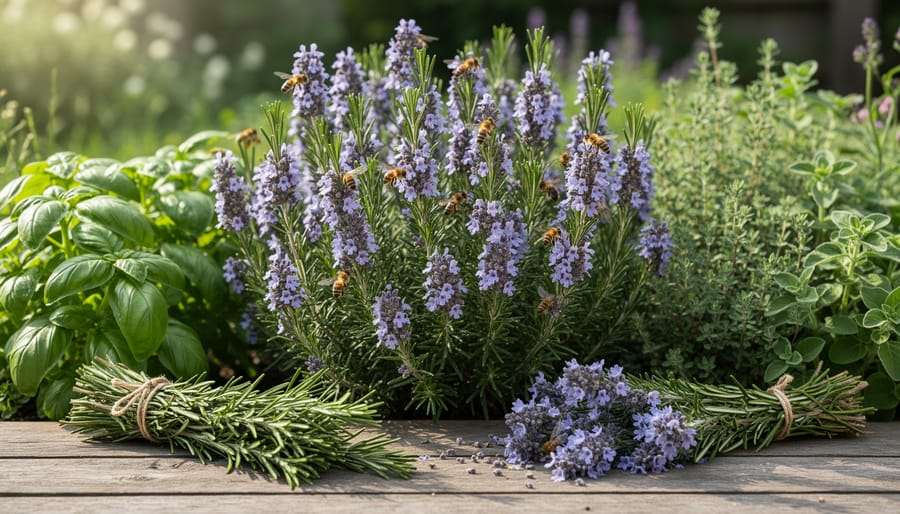
Rosemary thrives in Zone 9’s mild winters and produces lovely blue flowers that hummingbirds and bees adore. The trick is strategic pruning: harvest sprigs for cooking from late fall through early spring, then reduce harvesting in late spring to allow summer blooming.
Oregano and thyme become pollinator powerhouses when allowed to flower. Both produce masses of tiny blooms that small native bees especially love. Here’s my approach: designate some plants strictly for harvesting and others for blooming. This way, you’ll have fresh leaves when you need them and a continuous flower display.
Lavender deserves special mention for Zone 9 gardens. Spanish and French varieties handle our heat beautifully, blooming prolifically from spring through fall. Harvest flower stalks just as they open for maximum fragrance, leaving some for pollinators.
The beauty of herb gardens is their forgiving nature. Even beginners can succeed with these hardy plants that require minimal water once established, making them perfect for sustainable Zone 9 landscapes that work double duty.
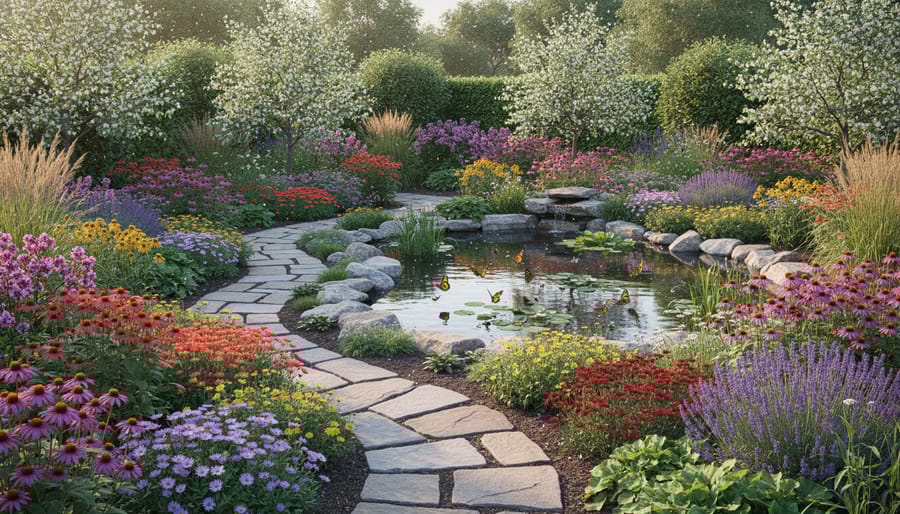
Design Tips for a Thriving Pollinator Garden
Creating a thriving pollinator garden in Zone 9 is all about working with your climate’s unique advantages. Let me share some design strategies that have worked beautifully for gardeners in this warm, sunny region.
Start by thinking in clusters rather than singles. Pollinators are attracted to bold displays of color, so plant in groups of at least three to five of the same species. This creates visual impact and makes it easier for bees and butterflies to find their favorite blooms. I’ve noticed that gardeners who plant in drifts rather than scattered dots always see more pollinator activity.
One of Zone 9’s greatest gifts is the ability to provide blooms nearly year-round. Take advantage of this by planning succession planting. Start with spring bloomers like California poppies, transition to summer stars like blanket flower and zinnias, then keep the party going into fall and winter with salvias and alyssum. Your goal is to have something flowering every month, ensuring pollinators always have a reason to visit.
Layer your garden vertically for maximum habitat value. Think tall plants in back, medium heights in the middle, and ground covers in front. This creates different levels where various pollinators can feed and rest. In Zone 9’s intense summer heat, taller plants can provide crucial afternoon shade for more delicate bloomers.
Don’t forget the supporting cast of habitat features. A shallow dish with pebbles and fresh water gives tired pollinators a safe drinking spot. Leave some bare ground patches where native bees can nest underground. Consider adding a small brush pile in a corner where beneficial insects can overwinter.
Since Zone 9 can get quite hot, morning sun with afternoon shade is often ideal for many pollinator plants. This positioning helps prevent heat stress while still providing plenty of flowering power. Mulch generously around plants to conserve moisture and keep roots cool during those scorching summer months.
Finally, resist the urge to tidy up too much. Leave seed heads standing through winter for birds, and delay cutting back dried stems until spring since many beneficial insects use hollow stems for nesting.
Common Mistakes Zone 9 Gardeners Make (And How to Avoid Them)
We’ve all been there – you plant with the best intentions, only to watch your pollinator garden struggle. The good news? Most Zone 9 mistakes are incredibly easy to fix once you know what to look for.
The biggest culprit I see is overwatering, especially during our mild winters. Many gardeners assume plants need consistent moisture year-round, but native pollinator favorites like salvias and penstemons actually prefer drier conditions once established. A simple fix: water deeply but infrequently, and always check soil moisture before reaching for the hose. Your plants will develop stronger root systems and reward you with more blooms.
Another common pitfall is ignoring microclimates in your own yard. That sunny spot against your south-facing wall? It’s probably more like Zone 10 in summer! I learned this the hard way when my butterfly milkweed fried in reflected heat. Now I save heat-sensitive pollinator plants for shadier locations and reserve those hot spots for true sun-lovers like lantana.
Using pesticides is perhaps the most counterproductive mistake. Even organic options can harm the very pollinators you’re trying to attract. Instead, embrace a few aphids or caterpillars – they’re actually food for beneficial insects and birds. If you must intervene, try a strong spray of water or hand-picking pests.
Finally, many gardeners forget to plan for our intense summer heat. Choose heat-tolerant plants like zinnias and cosmos that bloom through the dog days, and don’t hesitate to provide afternoon shade for struggling plants. Remember, gardening is all about learning and adjusting. Every mistake teaches you something valuable about your unique garden space.
You don’t need to transform your entire yard to make a difference. Even a small corner dedicated to pollinator-friendly plants can become a bustling hub of activity. Start with just three or four varieties that caught your attention as you read through this guide—perhaps a patch of salvia for the hummingbirds, some coneflowers for the butterflies, and lantana to keep the bees happy. Within weeks, you’ll notice the magical transformation as your garden awakens with wings and buzzing.
The beauty of Zone 9 is that you can plant almost any time of year, so there’s no need to wait for the perfect moment. Choose plants that excite you, prepare your soil well, and enjoy the process. Remember, you’re not just creating a beautiful garden—you’re supporting local ecosystems and providing vital resources for creatures that need our help.
So take that first step today. Pick your favorites from the seasonal lists, head to your local nursery, and get those plants in the ground. Your pollinator friends are waiting, and the joy of watching your garden buzz with life is just a few plants away.