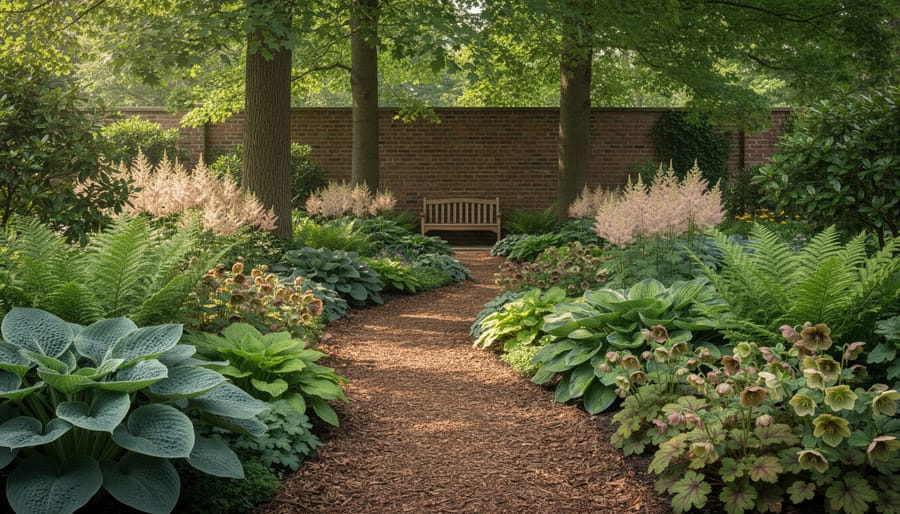
Stop fighting your soggy yard and start working with it instead. That persistent puddle near your patio or the marshy corner by the fence doesn’t have to end your gardening dreams—it just means you need a different approach.
Install a simple French drain by digging a shallow trench from your problem area toward a lower spot in your yard, lining it with landscape fabric, filling it with gravel, and covering with soil. This moves water away from planting areas within a weekend.
Create raised beds eight to twelve inches high using untreated lumber or stone, filling them with quality garden soil that drains well while your native soil stays saturated below. You’ll garden successfully above the water table without expensive grading work.
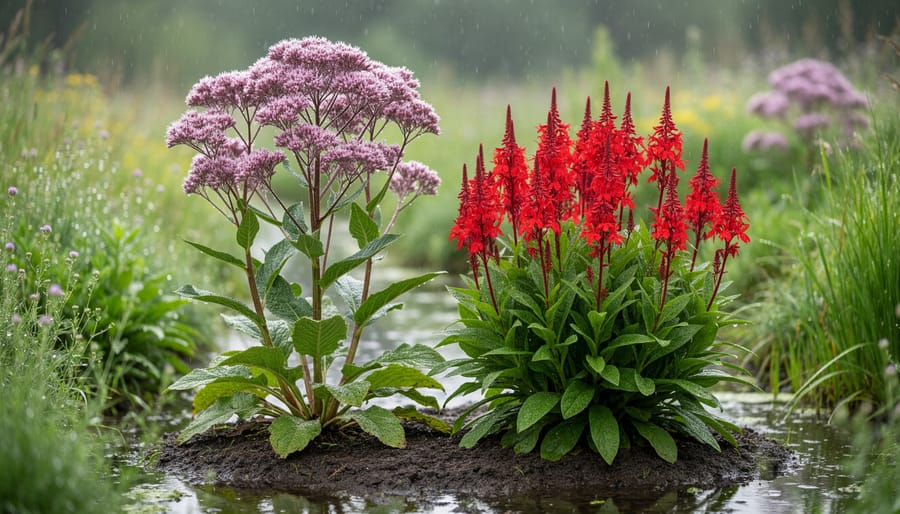
Choose plants that thrive in wet conditions rather than watching water-hating varieties struggle and die. Native species like cardinal flower, Joe Pye weed, swamp milkweed, and iris actually prefer those damp spots you’ve been cursing.
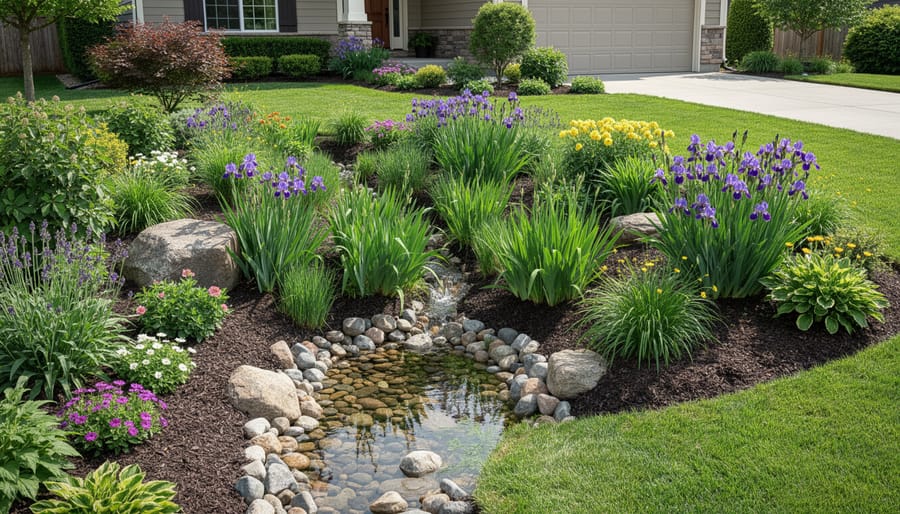
Transform boggy areas into rain gardens by excavating a shallow depression, amending the soil with compost, and planting moisture-loving perennials that filter runoff while creating beautiful focal points. You’ll solve drainage issues while supporting pollinators and wildlife.
Many challenging garden spaces become stunning features once you shift your perspective from problem to possibility. Your wet yard isn’t a limitation—it’s an invitation to explore water-wise gardening techniques that most gardeners never discover. With the right strategies, that frustrating flooding becomes your garden’s most interesting asset.
Why Your Yard Floods (And Why It Matters for Your Garden)
If your yard turns into a temporary lake every time it rains, you’re not alone—and you’re definitely not imagining things! Understanding why water pools in your garden is the first step toward creating a thriving outdoor space, even in challenging conditions.
The most common culprit is poor drainage. When water has nowhere to go, it simply sits there. This might be due to compacted soil that won’t absorb moisture, a high water table in your area, or low spots where water naturally collects. Think of your yard like a bathtub—if there’s no drain, the water stays put.
Soil composition plays a huge role too. Clay-heavy soil acts like a waterproof barrier, refusing to let water percolate through. I learned this the hard way in my first garden when I discovered my beautiful flower bed was actually sitting on a layer of dense clay just six inches down. Meanwhile, sandy soil drains quickly but can still flood if water arrives faster than it can absorb.
Hardscaping decisions also contribute. Patios, driveways, and walkways create impermeable surfaces that force water to flow elsewhere—often straight into your garden beds. If your property slopes toward your yard rather than away from it, you’ve got water rushing in from multiple directions.
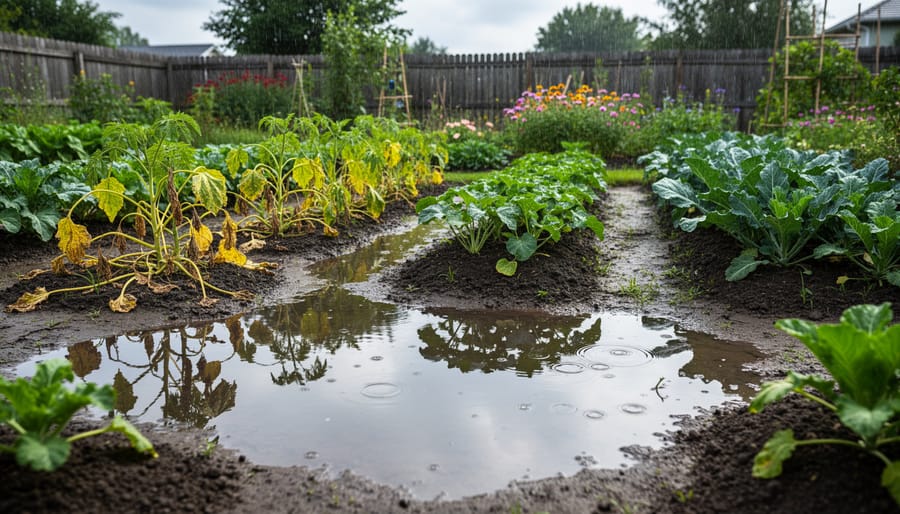
Now here’s why this matters for your garden dreams: standing water is terrible news for most plants. Their roots need oxygen to survive, and waterlogged soil essentially suffocates them. You’ll notice yellowing leaves, stunted growth, and eventually plant death. Standing water also invites fungal diseases, encourages mosquito breeding, and creates compaction issues that worsen drainage over time.
But don’t lose heart! Understanding your specific flooding situation means you can work with it rather than fighting against it. Whether you’ve got clay soil collecting water in a low corner or runoff from your neighbor’s property, there’s a solution that’ll let you garden successfully.
Quick Fixes to Reduce Flooding Before You Plant
Create Simple Drainage Channels
Creating simple drainage channels is easier than you might think, and it’s one of the most effective ways to manage standing water in your garden. I remember the first time I dug a shallow swale—I was amazed at how quickly water found its new path!
Start by observing where water naturally flows during a rainstorm. Mark the problem areas with stakes or spray paint. Your goal is to create gentle channels that guide water away from garden beds and toward a better drainage area, like a rain garden or storm drain.
Grab a flat spade and dig a shallow trench about 4-6 inches deep and 6-8 inches wide. The key is maintaining a slight downward slope—just 1-2% grade works perfectly. You don’t need surveying equipment; simply eyeball it or use a long board with a level on top.
For a more natural look, consider creating swales, which are wider, gentler depressions that blend into your landscape. Line the bottom with small river rocks if you’d like, though it’s not necessary. The earth itself will do the job beautifully.
As water flows through these channels during the next rainfall, you’ll feel such satisfaction watching it follow your carefully planned route instead of pooling around your prized plants.
Improve Your Soil Structure
One of the most effective long-term solutions for a waterlogged yard is to improve your soil structure by adding organic matter. Heavy clay soils are notorious for poor drainage because their tiny, tightly packed particles leave little room for water to flow through. By working in compost, aged manure, or leaf mold, you create air pockets that allow water to percolate down instead of pooling on the surface.
I’ve seen remarkable transformations in my own garden by consistently adding a few inches of compost each season. The key is patience and persistence. Start by spreading two to three inches of organic matter over problem areas and gently working it into the top six inches of soil. You can also try adding coarse sand or perlite to particularly stubborn clay patches, though organic matter alone often does the trick.
Think of it as building a sponge that holds moisture when plants need it but releases excess water efficiently. Over time, you’ll notice the ground becoming easier to work and plants developing healthier root systems.
Install a Rain Garden
A rain garden might just become your favorite solution to yard flooding—it’s both practical and beautiful! Think of it as a shallow depression in your landscape that captures runoff from downspouts, driveways, or slopes, then naturally filters and absorbs the water instead of letting it puddle.
The magic happens through careful placement and plant selection. Position your rain garden at least 10 feet from your home’s foundation, ideally where water naturally flows during rainstorms. The garden should be about 4-6 inches deep and sized according to your drainage needs—a general rule is making it about 20% of the size of the area draining into it.
I’ll be honest, digging out a rain garden takes some elbow grease, but it’s a weekend project that pays dividends for years. After excavating, amend the soil with compost to improve absorption. The real fun begins when you select plants that thrive in alternating wet and dry conditions.
Choose native perennials like Joe Pye weed, cardinal flower, and black-eyed Susans for the center where water collects. Around the edges, plant varieties that tolerate occasional moisture, such as daylilies and ornamental grasses. These plants don’t just handle excess water—they actively drink it up while attracting pollinators and adding year-round interest to your yard.
Within a few growing seasons, you’ll have transformed a problem area into a gorgeous focal point that actually solves your flooding issues.
The Best Plants That Actually Love Wet Feet
Vegetables and Herbs for Waterlogged Gardens
If you’ve got a waterlogged garden, you’re actually sitting on a wonderful opportunity to grow some fantastic edibles that most gardeners can’t! Instead of fighting the water, let’s embrace it with plants that genuinely love getting their feet wet.
Watercress is your new best friend in soggy spots. This peppery green thrives in shallow standing water and gives you fresh salads throughout the growing season. Just tuck it along the edges of your wettest areas, and it’ll practically grow itself.
For something more substantial, consider taro. This tropical plant produces starchy, nutritious roots and grows beautifully in consistently moist to wet soil. The large leaves add dramatic texture to your garden too! If you’re feeling adventurous, you could even try growing rice in a dedicated wet patch. It’s easier than you might think and makes for a wonderful conversation starter.
Celery absolutely adores moisture and will reward your waterlogged conditions with crisp, flavorful stalks. Plant it in your dampest vegetable beds, and you’ll finally understand what fresh celery is supposed to taste like.
Don’t forget moisture-loving herbs like mint, which can be invasive in regular gardens but finds its happy place in wet soil where it’s easier to contain. Water mint and Vietnamese coriander are other excellent choices that bring fresh flavors to your kitchen while thriving in conditions that would drown most herbs. Your soggy garden might just become your most productive growing space!
Ornamental Plants That Thrive in Soggy Soil
Instead of fighting your soggy soil, why not celebrate it with plants that genuinely love getting their feet wet? I’ve discovered some absolutely stunning options that will transform your waterlogged areas into showstoppers.
Let’s start with irises, particularly the Siberian and Japanese varieties. These beauties produce elegant blooms in shades of purple, blue, yellow, and white, and they absolutely thrive where the ground stays moist. I once interviewed a gardener in Oregon who created an entire boggy border filled with irises, and it looked spectacular from spring through early summer.
Cardinal flower is another gem for soggy spots. This native perennial produces vibrant red spikes that hummingbirds can’t resist. It naturally grows along stream banks, so your wet yard is perfect for it. The similar blue lobelia offers gorgeous blue flowers if you prefer cooler tones.
For foliage interest, hostas handle moisture beautifully and provide lush greenery in shaded wet areas. Ligularia offers dramatic leaves and bright yellow or orange flowers on tall stems, creating real drama in damp gardens.
Don’t overlook shrubs either. Buttonbush produces unique spherical white flowers that pollinators adore, while red twig dogwood gives you year-round interest with brilliant red stems in winter. Summersweet offers fragrant white or pink flowers and handles both wet soil and shade.
The key is working with your conditions rather than against them. These plants don’t just tolerate wet soil, they genuinely prefer it, which means less work and more success for you.
Trees and Shrubs for Flood-Prone Areas
When dealing with a flood-prone yard, choosing the right trees and shrubs can make all the difference. These larger plants not only tolerate wet conditions but actively help absorb excess water through their extensive root systems. Think of them as natural drainage partners working alongside you to manage your yard’s water challenges.
River birch is a standout choice, with its beautiful peeling bark and ability to thrive in consistently moist soil. I’ve seen these graceful trees transform soggy corners into attractive focal points. Willows are another excellent option, though they do need space since their roots spread widely. For smaller yards, consider the compact varieties.
Red maple and bald cypress are true water warriors that can handle standing water for extended periods. The bald cypress, despite being a conifer, actually drops its needles in winter, but its tolerance for flooding is unmatched. Sweetbay magnolia offers lovely fragrant flowers while managing wet feet beautifully.
For shrub options, look to buttonbush, which produces unique spherical blooms that attract pollinators even in soggy spots. Elderberry and winterberry holly provide both beauty and function, with bonus wildlife benefits. Smooth hydrangea varieties adapt well to moisture-rich environments and bring gorgeous summer blooms.
When planting, remember that even water-loving plants need proper establishment. Water them regularly during their first season to help roots develop, ironically enough. Position them strategically where water naturally collects, and they’ll reward you by helping control future flooding while adding structure and year-round interest to your landscape.
Raised Beds and Berms: Your Secret Weapons
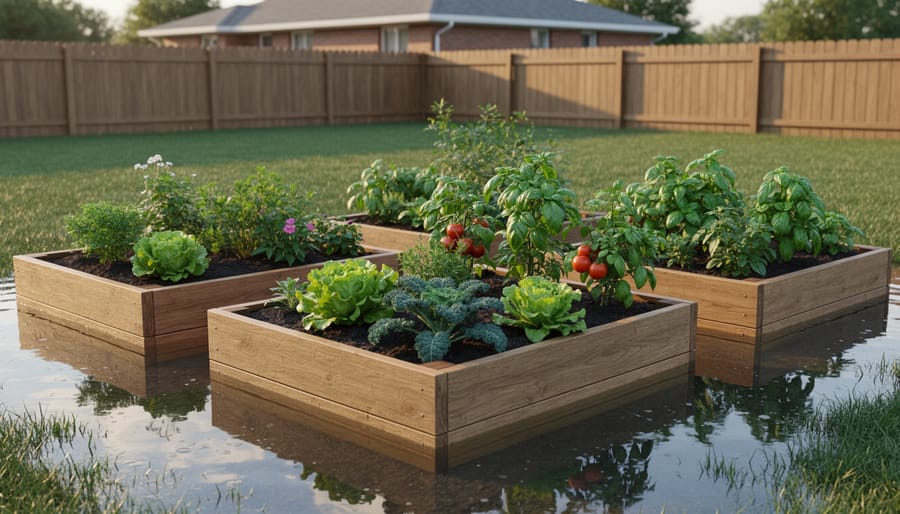
Building Effective Raised Beds in Wet Areas
When flooding keeps threatening your garden dreams, raised beds become your best friend—and in wet areas, building them properly makes all the difference between success and soggy disappointment.
Let’s start with height, because this is where many gardeners don’t go far enough. While a standard raised bed might be 8-12 inches tall, flood-prone areas benefit from beds that are at least 18-24 inches high. I learned this the hard way after watching my first 10-inch beds turn into swimming pools during a spring deluge. The extra height gives your plant roots breathing room above the waterline and provides better drainage overall.
For materials, cedar and redwood reign supreme in wet conditions because they naturally resist rot. Yes, they cost more upfront, but they’ll outlast pressure-treated lumber by years. If budget is tight, consider composite lumber designed for ground contact—it’s practically indestructible. Avoid untreated pine unless you’re prepared to rebuild in two years.
Here’s a construction tip that changed everything for me: don’t place your raised bed directly on saturated ground. Instead, excavate 4-6 inches down, fill that space with coarse gravel or crushed stone, then build your frame on top. This creates a drainage layer that prevents water from pooling underneath. Think of it as giving your bed a foundation that breathes.
Line the bottom with hardware cloth to keep out burrowing pests, then add a layer of landscape fabric before filling. For the growing medium, use a mix of 50 percent topsoil, 30 percent compost, and 20 percent perlite or coarse sand. This creates excellent drainage while retaining enough moisture for growing vegetables in raised beds.
Consider adding drainage holes along the lower sides of your bed walls—drill 1-inch holes every foot or so, about 2 inches from the bottom.
Creating Berms and Mounds
Creating berms and mounds is one of my favorite solutions for soggy yards because it feels like you’re working with nature rather than fighting it. Essentially, you’re redistributing existing soil to create gentle hills that provide well-drained planting zones while maintaining your landscape’s natural flow.
Start by identifying where you want your elevated areas. For a natural look, avoid perfectly symmetrical shapes and instead opt for kidney or irregular curves. You’ll need to move soil from lower areas to build up your mounds, typically raising them 12 to 24 inches above the surrounding grade.
Here’s a simple approach: Use a garden spade to strip away the top layer of grass or vegetation. Then, pile subsoil to create your basic shape, ensuring the sides slope gradually at about a 3:1 ratio for stability. Mix in compost as you build to improve drainage and fertility. Finally, replace the topsoil layer and smooth everything out.
The beauty of berms is they create instant drainage for your plants while the surrounding depressions can actually help channel water away from problem areas. Plus, they add visual interest and dimension to flat yards. Within one growing season, your new mounds will look like they’ve always been part of your landscape.
Container Gardening: When the Ground Stays Too Wet
When persistent flooding keeps your yard too soggy for traditional garden beds, container gardening becomes your secret weapon. I’ve seen countless gardeners transform their waterlogged spaces into thriving container gardens, and the beauty of this approach is that you control the soil conditions completely.
Start by selecting containers with excellent drainage holes. In wet environments, you want water to escape freely, so drill extra holes if needed. Elevate your pots on bricks, pot feet, or specialized risers to prevent them from sitting in puddles. This simple step makes a tremendous difference in plant health. Terra cotta pots work wonderfully because they’re naturally porous and allow soil to dry faster between waterings, though they may crack in freezing temperatures.
Strategic placement is everything. Position your containers on patios, decks, or gravel areas where water drains away quickly. If you’re setting pots directly on grass, create small gravel pads underneath to improve drainage. Group containers together for visual impact and easier maintenance during wet spells.
For soggy yards, choose plants that tolerate humidity and occasional overwatering. Herbs like mint, parsley, and lemon balm thrive in containers even when conditions are damp. Coleus, impatiens, and fuchsias flourish in humid environments. Vegetables like lettuce, spinach, and Swiss chard adapt well to container life and don’t mind the extra moisture in the air.
Use quality potting mix rather than garden soil, which becomes waterlogged easily. Add perlite or coarse sand to improve drainage further. Remember, even moisture-loving plants need air around their roots. By implementing these container gardening strategies, you’re not giving up on gardening but simply adapting to your unique conditions. Your flooded yard won’t stop you from growing beautiful plants.
Timing Your Garden Around Flood Cycles
Understanding your yard’s flooding patterns is like learning your garden’s natural rhythm—once you know when the water comes and goes, you can work with it beautifully rather than fighting a losing battle.
Start by observing your yard through different seasons. Spring snowmelt and fall rains often bring the heaviest flooding, while summer may offer drier periods perfect for planting. Keep a simple journal noting when water accumulates, how long it stays, and which areas dry out first. This knowledge becomes invaluable for planning.
Time your major planting for dry periods when soil is workable and roots can establish before the next flood. In flood-prone areas, late spring or early summer planting often works best, giving plants time to develop strong root systems. For fall planting, choose spots that drain quickly or use containers that can be moved if necessary.
Consider the changing weather patterns we’re all experiencing. Traditional planting calendars might need adjusting as rainfall becomes less predictable. Build flexibility into your schedule and keep backup plans ready.
When unexpected flooding threatens, quick action saves plants. Harvest ready vegetables immediately—they’re better on your table than underwater. For perennials and shrubs, creating temporary berms with sandbags or soil can redirect water. Move containers to higher ground, and if plants are partially submerged, gently stake them to prevent lodging.
After floodwaters recede, wait for soil to drain before walking on beds. Compaction during soggy conditions damages soil structure for months. Instead, use boards as temporary pathways to distribute your weight.
Remember, working with your yard’s natural water cycle isn’t surrender—it’s smart gardening. You’re not battling nature; you’re dancing with it, and that makes all the difference.
Here’s the truth that might surprise you: a yard that floods isn’t a gardening failure—it’s an invitation to create something most gardeners never get to experience. You have the chance to build a dynamic, water-loving landscape that practically takes care of itself once established.
Think about it this way. Instead of spending every spring fighting against puddles and soggy soil, you can choose plants that actually thrive in those conditions. Native wetland perennials, moisture-loving shrubs, and rain garden beauties will flourish where traditional garden plants struggle. You’ll spend less time watering during dry spells, less money on irrigation, and less energy worrying about plant survival.
The gardeners I’ve interviewed who’ve made peace with their wet yards always say the same thing: they wish they’d embraced the water sooner. Working with nature rather than against it isn’t just easier—it creates healthier, more resilient gardens.
So start small. Pick one soggy spot and try three water-tolerant plants this season. Observe how the water moves through your yard during different seasons. Experiment with a simple rain garden or a small raised bed. Every successful garden begins with a single step, and yours starts right where the water pools.