Transform your sun-baked rock garden into a thriving oasis with drought-tolerant plants that combine rugged beauty with minimal water needs. Sedums, sempervivums, and lavender naturally thrive in rocky, well-draining soil, creating a stunning tapestry of colors and textures while demanding little maintenance. These resilient plants not only survive but flourish in challenging conditions, offering year-round interest and supporting local pollinators.
Rock gardens represent the perfect marriage of sustainable landscaping and artistic expression, especially in regions where water conservation is crucial. By selecting the right drought-resistant varieties, you’ll create a low-maintenance landscape that captures the natural beauty of alpine environments while significantly reducing your water usage. Whether you’re dealing with steep slopes, poor soil, or simply want to embrace eco-friendly gardening practices, drought-tolerant rock garden plants offer an elegant solution that grows more beautiful with each passing season.
Beyond their practical benefits, these hardy plants bring a sophisticated, architectural quality to any garden space. Their diverse forms – from cascading creepers to upright growers – create dynamic visual interest while their adaptability ensures lasting success in even the most challenging garden environments.
Why Rock Gardens Excel in Drought Conditions

Natural Water Management
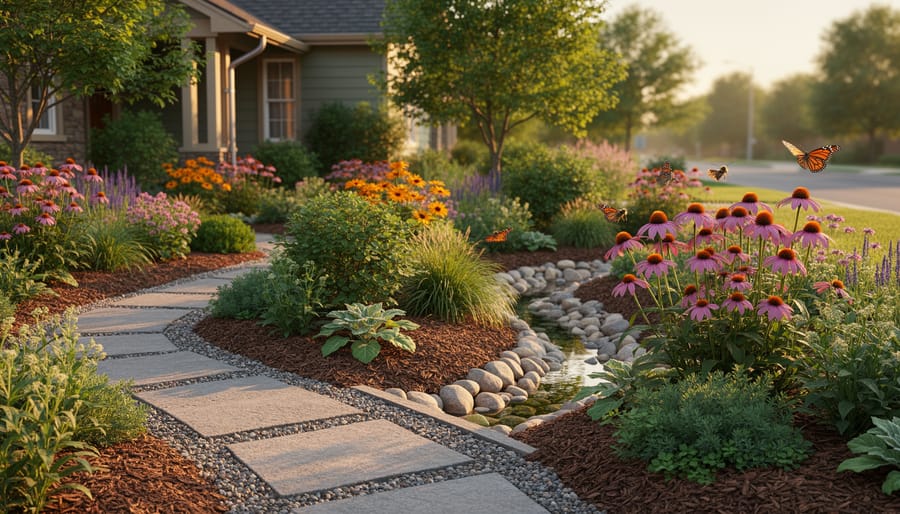
Rocks play a crucial role in helping drought-tolerant plants thrive in dry conditions by creating a natural water management system. When strategically placed, rocks help retain precious moisture in several ways. Large rocks act as natural mulch, shading the soil and reducing water evaporation during hot days. They also collect morning dew and channel it directly to plant roots, creating mini-reservoirs of moisture.
The spaces between rocks trap water and direct it downward, allowing plant roots to access moisture even when the surface appears dry. Additionally, rocks help regulate soil temperature, keeping roots cooler during summer and warmer in winter. As rocks heat up during the day, they release warmth gradually at night, creating a beneficial microclimate that helps reduce water stress on plants.
For best results, place larger rocks partially buried in the soil, allowing them to conduct moisture more effectively while creating natural-looking formations that enhance your garden’s beauty.
Perfect Drainage Solutions
Rock gardens excel at providing the perfect balance of moisture for drought-tolerant plants, thanks to their clever design and natural drainage properties. The key lies in the layered construction, where larger rocks and gravel create spaces that allow excess water to flow freely while retaining just enough moisture for plant roots.
The sloped nature of most rock gardens naturally channels water away from plant crowns, preventing the dreaded root rot that can affect even the hardiest specimens. When you arrange rocks strategically, they create pockets of well-draining soil that maintain ideal growing conditions. These pockets allow roots to establish themselves firmly while ensuring they never sit in waterlogged soil.
Additionally, rocks serve as natural mulch, helping to regulate soil temperature and reduce evaporation. During hot spells, they release stored moisture slowly, providing plants with a steady supply of water without oversaturation. This natural irrigation system makes rock gardens particularly effective for drought-tolerant plants, allowing them to thrive with minimal intervention.
Best Drought-Tolerant Plants for Rock Gardens
Low-Growing Succulents
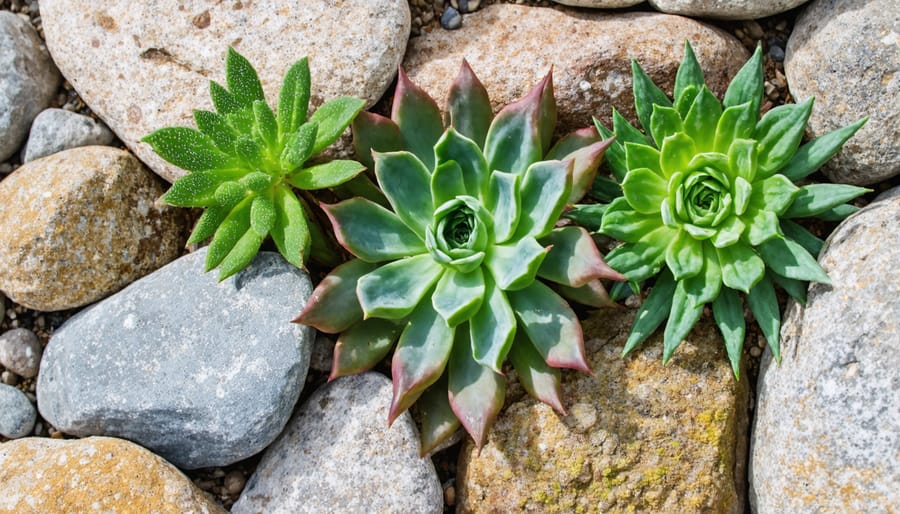
Among the many plants that thrive in dry gardens, low-growing succulents are true champions of water conservation and visual appeal. Sedums, also known as stonecrop, are perfect for rock gardens with their vibrant colors and carpet-forming habits. ‘Dragon’s Blood’ sedum offers striking red foliage, while Sedum spathulifolium ‘Cape Blanco’ features silvery-blue rosettes that seem to glow in the sunlight.
Sempervivums (hen and chicks) are another excellent choice, forming tight clusters of rosettes that multiply freely. These hardy succulents come in various colors, from deep purple to bright green, and can survive in the tiniest cracks between rocks.
For best results, plant your succulents in well-draining soil mixed with coarse sand or fine gravel. While these plants are incredibly drought-tolerant, they’ll need occasional watering during their first growing season to establish strong roots. After that, they’ll largely take care of themselves, needing only minimal attention.
To keep your succulent display looking its best, remove any dead leaves in spring and divide overcrowded clusters every few years. Most low-growing succulents will spread naturally, creating a living carpet that suppresses weeds and adds year-round interest to your rock garden.
Hardy Mediterranean Herbs
Mediterranean herbs are the perfect choice for rock gardens, combining drought tolerance with delightful fragrances and culinary uses. These aromatic plants have adapted to thrive in poor, rocky soil and intense sunlight, making them incredibly resilient in challenging conditions.
Lavender stands out as a rock garden superstar, with its silvery foliage and purple blooms attracting pollinators while requiring minimal water. Both English and French varieties excel in well-draining soil and hot, dry conditions. Rosemary, another Mediterranean classic, develops deep roots that help it survive drought while providing year-round greenery and distinctive flavor.
Oregano and thyme create excellent ground covers between rocks, spreading naturally while remaining low-maintenance. These herbs actually develop more intense flavors when grown in slightly stressed conditions. Sage, with its soft, gray-green leaves, adds both texture and drought resistance to your garden, while its purple blooms create visual interest.
For vertical interest, consider planting bay laurel, which can be pruned to maintain a compact shape suitable for rock gardens. Winter savory and marjoram are lesser-known options that deserve attention, offering both drought tolerance and culinary value.
These herbs not only survive with minimal water but also create a Mediterranean atmosphere in your garden. Plant them near pathways where you can brush against them to release their wonderful aromas.
Flowering Perennials
When it comes to adding vibrant color to your rock garden, drought-resistant perennials offer stunning options that return year after year. Lavender stands out as a favorite, producing fragrant purple spikes that attract pollinators while thriving in hot, dry conditions. The silver-gray foliage adds beautiful contrast to your rock garden even when not in bloom.
Sedum varieties, particularly ‘Autumn Joy’ and ‘Dragon’s Blood,’ showcase clusters of tiny flowers in shades of pink and red, while their succulent leaves store water efficiently. Blanket flower (Gaillardia) brings cheerful daisy-like blooms in warm sunset colors, blooming continuously through summer and fall with minimal water needs.
For dramatic vertical interest, consider Russian sage with its airy purple spires or yarrow, which offers flat-topped flower clusters in various colors from white to deep red. Both plants establish deep root systems that help them survive dry spells beautifully.
Don’t overlook the charm of creeping phlox, which creates a stunning carpet of pink, purple, or white flowers in spring, or ice plant, whose daisy-like blooms seem to sparkle in the sun. These low-growing options are perfect for cascading over rocks and filling spaces between larger specimens.
Native Ground Covers
Native ground covers offer the perfect solution for rock gardens, as these plants have already adapted to your local climate and rainfall patterns. By choosing species that naturally grow in your area, you’re working with nature rather than against it. These plants have developed deep root systems and natural drought resistance through centuries of adaptation to local conditions.
Look for low-growing natives that spread naturally across the ground, such as wild thyme, creeping phlox, or sedum varieties native to your region. These plants not only require less water but also provide essential habitat for local pollinators and wildlife. In western regions, plants like kinnikinnick and creeping mahonia excel, while eastern gardeners might find success with wild ginger or pussy toes.
Before selecting plants, observe what grows naturally in rocky areas near your home. These observations can guide your choices and ensure success. Local native plant nurseries and extension offices can help identify suitable species for your specific area. They can also provide valuable advice about growth patterns and maintenance requirements.
Remember that native ground covers typically need minimal maintenance once established. While they may take a season or two to spread and fill in, their deep roots and natural resilience make them excellent long-term investments for your rock garden. Plus, they’ll create a seamless connection between your garden and the surrounding landscape.
Creating Your Drought-Proof Rock Garden
Site Selection and Preparation
Success with a drought-tolerant rock garden starts with choosing the perfect location and preparing the ground properly. Select a spot that receives at least 6 hours of direct sunlight daily, as most drought-resistant plants thrive in full sun. South or west-facing locations are typically ideal, offering both warmth and excellent drainage.
Your rock garden should be situated on a gentle slope if possible, as this promotes natural water drainage. If your yard is flat, consider creating an artificial slope using additional soil and rocks. Avoid areas where water tends to pool or where strong winds might damage delicate plants.
Before you begin planting, remove all existing vegetation and weeds from the site. Next, improve your soil drainage by incorporating coarse sand, gravel, or crushed stone into the native soil. A ratio of about 30% amendment to 70% existing soil usually works well. This mixture helps prevent water-logging while still retaining enough moisture for plants to establish themselves.
When laying out your rocks, place the largest ones first and bury them slightly to create a natural look. Leave spaces between rocks for planting pockets, and ensure these pockets are deep enough to accommodate root systems. Remember to angle any slopes away from your home’s foundation to prevent water damage during rare heavy rains.
Rock Placement Techniques
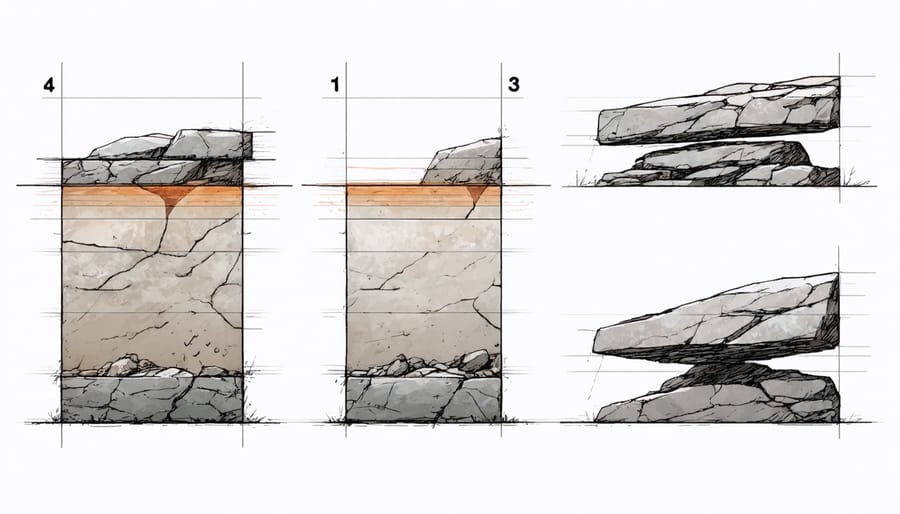
Strategic rock placement is key to creating a water-efficient rock garden that both looks beautiful and helps conserve moisture. Start by placing larger rocks partially buried in the soil, which helps prevent water runoff and creates cool, shaded pockets where plants can thrive. Position these anchor rocks at slight angles to direct water flow toward your plants’ root zones rather than away from them.
Create small berms or shallow depressions around your plants using medium-sized rocks. This technique, often called “rock mulching,” helps capture and retain precious rainfall or irrigation water. Consider arranging rocks in a slight horseshoe pattern on slopes, with the opening facing uphill – this natural catchment system slows water flow and increases absorption.
For maximum efficiency, layer smaller rocks and gravel around your plants as a natural mulch. This rock mulch helps reduce evaporation, keeps root zones cool, and prevents soil erosion. When placing rocks near plants, leave enough space for growth while ensuring the rocks are close enough to provide shelter from harsh winds and intense afternoon sun.
Remember to position flat rocks strategically throughout your garden. These act as natural stepping stones and minimize soil compaction from foot traffic, which helps maintain good drainage and healthy root systems.
Planting and Maintenance Tips
Creating a successful rock garden starts with proper soil preparation. Mix equal parts of garden soil, coarse sand, and fine gravel to ensure excellent drainage. When planting, space your drought-tolerant selections according to their mature size, typically 12-18 inches apart, allowing room for growth while maintaining visual appeal.
Water deeply but infrequently during the first growing season to establish strong root systems. Once established, most rock garden plants only need watering during extended dry spells. Adding a 2-inch layer of gravel mulch helps retain moisture and prevents soil erosion while enhancing the garden’s aesthetic appeal.
Prune spent blooms and trim back overgrown plants in early spring to maintain shape and encourage healthy growth. Most rock garden plants are low-maintenance, but occasional weeding is necessary – tackle weeds while they’re small to prevent them from establishing deep roots.
Watch for signs of overwatering, such as yellowing leaves or root rot. These plants prefer to be slightly under-watered rather than over-watered. In regions with heavy winter rainfall, consider adding extra drainage material or creating slight slopes to prevent water pooling around plant roots.
For optimal growth, fertilize sparingly using a low-nitrogen, slow-release fertilizer once yearly in early spring.
Creating a drought-tolerant rock garden is more than just a landscaping choice – it’s a sustainable solution that brings beauty and resilience to your outdoor space. By incorporating these hardy plants into your garden design, you’re not only reducing water consumption but also creating a low-maintenance oasis that thrives in challenging conditions.
The beauty of rock gardens lies in their versatility and adaptability. Whether you have a small corner or an expansive yard, these gardens can be scaled to fit your space while providing year-round interest through varying textures, colors, and blooming seasons. The combination of carefully selected rocks and drought-resistant plants creates a natural, harmonious landscape that looks as though it’s always been there.
Remember that starting small is perfectly fine – you can always expand your rock garden as your confidence grows. Begin with a few key plants and gradually add more varieties as you become comfortable with their care requirements. The satisfaction of watching your drought-tolerant garden flourish with minimal water input is truly rewarding.
By embracing drought-tolerant rock gardening, you’re not just creating a beautiful outdoor space; you’re also contributing to water conservation efforts and supporting local wildlife. So why wait? Start planning your rock garden today and join the growing community of gardeners who are proving that water-wise gardening can be both environmentally responsible and stunningly beautiful.