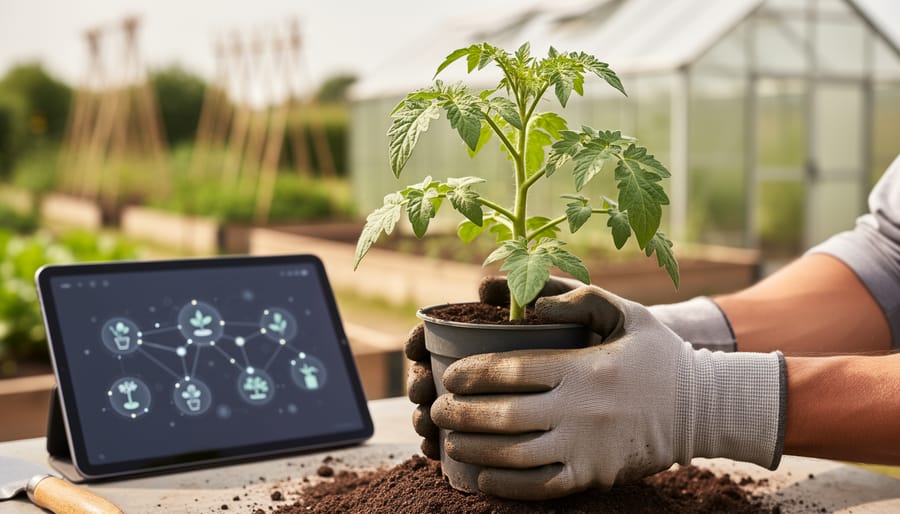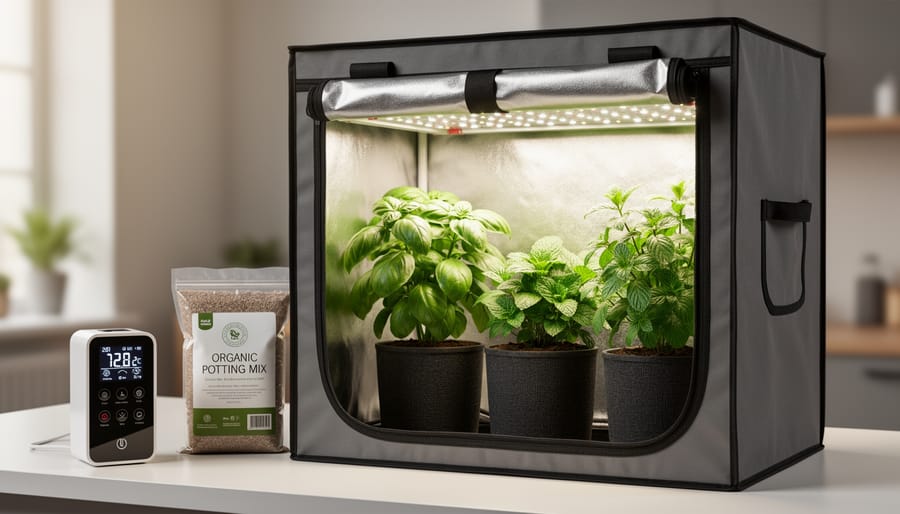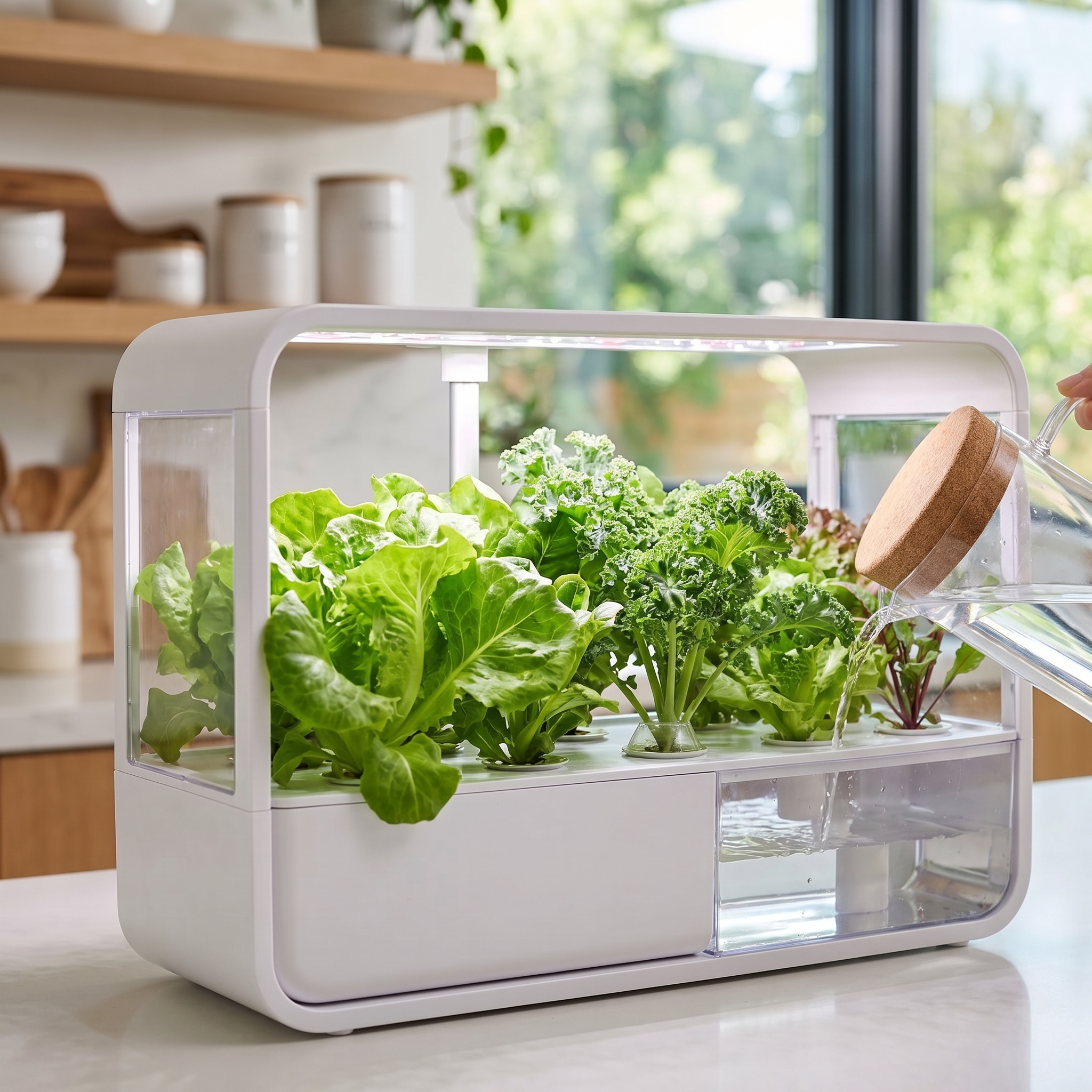
Most gardeners never think twice about what comes out of the tap. You fill the watering can, water the basil, and move on. For established outdoor beds, that’s usually fine. But indoor herbs, delicate seedlings, and hydroponic setups are different. Their roots sit in small volumes of soil or water, so whatever is in your tap water has a much bigger effect.
What’s Actually in Your Tap Water
Municipal water is safe to drink, but it isn’t pure. Several things are worth knowing about:
- Chlorine is the traditional disinfectant. It’s reactive and will slowly off-gas if you leave a jug of water on the counter.
- Chloramine is chlorine bonded to ammonia. Many Canadian utilities use it because it lasts longer in the distribution system. Unlike chlorine, it doesn’t evaporate from standing water, so the “let it sit overnight” trick doesn’t work.
- Disinfection by-products and VOCs include trihalomethanes (THMs), which form when chlorine reacts with organic matter in source water.
- PFAS, the “forever chemicals,” come from industrial discharge, firefighting foam, and landfill runoff. They’re persistent and found in water supplies worldwide.
Do Chlorine and Chloramine Hurt Plants?
The honest answer is that it depends on the plant and the setup.
In healthy potting soil, chlorinated or chloraminated tap water rarely causes obvious damage. Soil buffers and dilutes disinfectants, and many people water their houseplants with tap water for years without problems. That said, disinfectant residuals are designed to kill microbes, and some gardeners worry that repeated watering may gradually stress the beneficial bacteria and fungi in organic potting mixes. Sensitive plants such as calatheas, spider plants, and peace lilies are often reported to develop leaf-tip browning under sustained exposure, though the evidence here is mostly anecdotal.
Hydroponics is where the science is clearer. A study in the Journal of the Japanese Society for Horticultural Science found that chloramine caused root browning in hydroponically grown lettuce and inhibited growth at concentrations well within the range found in chloraminated tap water. When roots sit in a recirculating nutrient solution, they’re in constant contact with any residual disinfectant. Seedlings, with their tiny, delicate root systems, are also more vulnerable than mature plants.
Why Herb Growers Should Care About PFAS and VOCs
Herbs and salad greens are eaten, which changes the calculation. A greenhouse study published in Environmental Science & Technology found that PFAS concentrations in lettuce leaves and strawberry fruit rose in step with the concentration in the irrigation water, and that shorter-chain PFAS accumulated more readily in the edible parts than longer-chain ones. The researchers used reclaimed water spiked with PFAS at concentrations higher than most tap water contains, so the results don’t mean your windowsill basil is contaminated. They do show that PFAS in water can end up in the plant, and that the effect depends on how much is in the water to begin with. If you’re growing basil, parsley, or cilantro and watering with the same tap water you use in your kitchen, filtering that water is a reasonable precaution.
VOCs and THMs are more of a household water-quality concern than a plant-health one, but the same logic applies. Filtering the water at your home’s entry point handles your drinking water, cooking water, and the water you use on your indoor garden in one step.
How Carbon Filtration Helps
Activated carbon works by adsorption: contaminants stick to the carbon’s huge internal surface area as water passes through. It’s especially good at:
- Chlorine and the taste and odor that come with it
- VOCs, including THMs
- Pesticides, herbicides, and industrial solvents
- Many PFAS compounds, depending on the carbon quality and contact time
Carbon block filters are made by bonding fine carbon particles into a solid block. Compared with loose granular carbon, blocks force water through a longer, more uniform path. This provides better contact time and reduces channeling, where water finds a shortcut and bypasses the carbon. Coconut shell carbon is popular because it’s dense, has a high proportion of fine pores, and is renewable.
Choosing among carbon water filters comes down to size, micron rating, flow rate, and what you need to remove. This guide to choosing the right carbon water filter covers 10-inch and whole-house sizing and micron ratings in detail.
A Whole-House Example: The PCBX1005
For homeowners who want filtered water at every tap, a big-bore whole-house cartridge is a practical option. The PCBX1005 is a 4.5 x 10 inch, 5 micron coconut shell carbon block. It’s designed to reduce chlorine, sediment, taste, and odor, and its manufacturer states it’s formulated to reduce VOCs and PFAS by more than 95 percent. The carbon is hydrophilic, meaning it wets quickly and uses its pore space more efficiently, and a specialized binder is intended to prevent early clogging.
Two practical notes. First, the NSF/ANSI 42 certification on these cartridges covers material safety, so the VOC and PFAS reduction figures are the manufacturer’s stated performance. Check the data sheet, and look for independent performance certification if you need it for a specific contaminant. Second, a 5 micron block also filters sediment, which is useful if you’re on a well or have older pipes.
The Chloramine Caveat
If your utility uses chloramine, a standard carbon block isn’t the complete answer. Chloramine is more stable than chlorine, so ordinary carbon removes it slowly and incompletely. To remove it effectively, you need catalytic carbon, which breaks the molecule down rather than simply adsorbing it. In practice, many homes pair a carbon block for chlorine, VOCs, and PFAS with a catalytic carbon stage for chloramine.
Find out which disinfectant your water supplier uses. It’s listed in your utility’s annual water quality report, or you can call them.
Practical Tips for Indoor Growers
- Check your water report for the disinfectant type and any PFAS testing.
- Filter at the source. Use water from a filtered tap or whole-house system for herbs, seedlings, and hydroponic reservoirs.
- Don’t rely on standing water for chloramine. It won’t dissipate the way chlorine does.
- Use room-temperature water so you don’t shock small roots.
- Replace cartridges on schedule. A saturated carbon filter can stop working and, in some cases, release what it has captured.
The Bottom Line
For a mature outdoor garden, tap water is rarely a problem. For indoor herbs, seedlings, and hydroponic systems, especially those you plan to eat, water quality matters more. Carbon filtration is one of the most practical ways to improve it, and a quality carbon block cartridge is a good place to start. Just match the filter to your water: carbon block for chlorine, VOCs, and PFAS, and catalytic carbon if your utility uses chloramine.