Renewable energy integration means designing and combining solar, wind, or water-based power systems with your garden and property so they work together to reduce reliance on the electrical grid while supporting food production and sustainable living. Rather than treating energy and gardening as separate concerns, this approach weaves power generation into the landscape itself, turning your growing space into a self-sustaining ecosystem that feeds both your household and your plants.
For home gardeners exploring the 12 permaculture principles renewable energy integration offers a practical way to close resource loops and build resilience. You’re not just installing solar panels on a roof and calling it done. You’re thinking about how that panel array might provide afternoon shade for cool-season greens, or how a small wind turbine could power an automated drip irrigation system during dry spells, or how a solar water heater could extend your greenhouse season without burning fossil fuels.
This article walks you through the fundamentals of renewable energy integration in a permaculture context, starting with how these systems actually work in garden settings. You’ll explore the main types of renewable energy that make sense for home-scale projects, discover specific ways to blend power generation with food production, and follow a step-by-step guide to your first integrated energy project. We’ll also hear from a gardener who transformed a sunny slope into both a growing bed and a power source, and answer the most common questions about cost, maintenance, and getting started without an engineering degree.
What Renewable Energy Integration Means for Your Garden
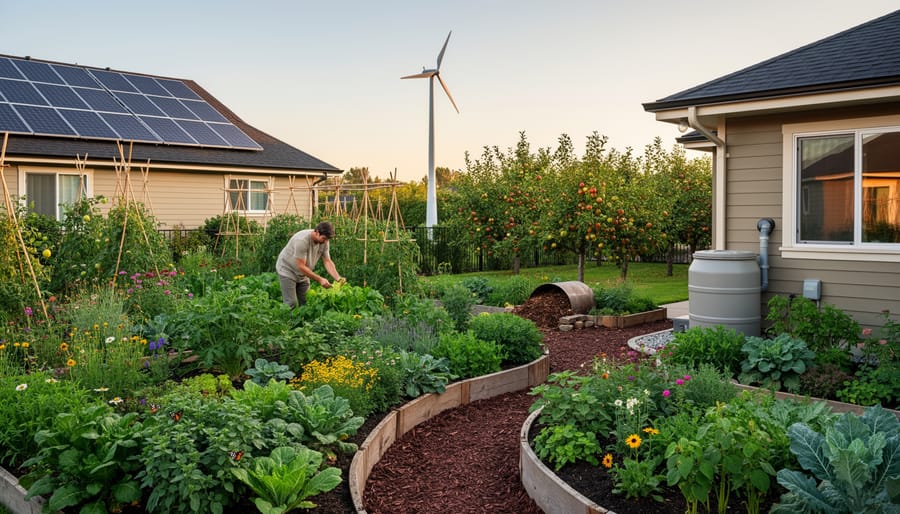
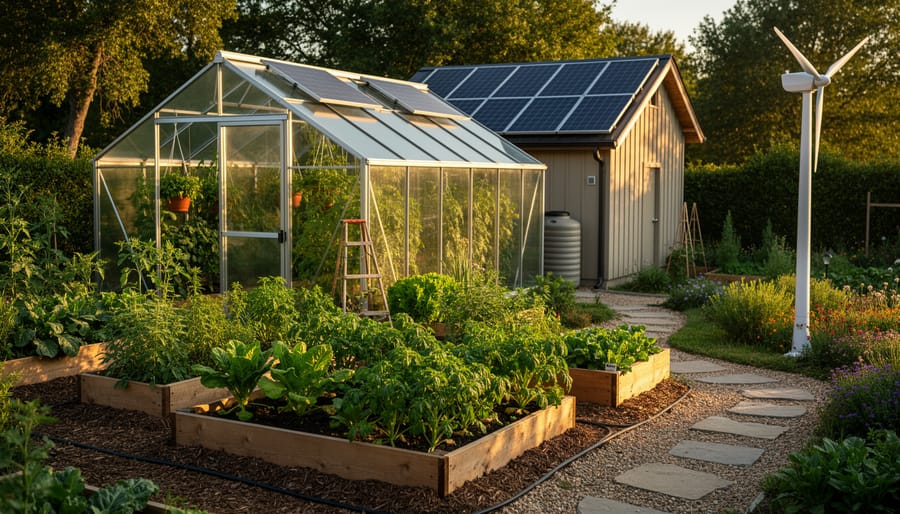
Renewable energy integration in your garden means powering everyday growing systems with clean, site-generated energy while designing your space so both food production and energy capture work together. Instead of treating your solar panels or small wind turbine as separate from your garden, you weave them into the layout itself, mounting panels where they provide afternoon shade for lettuce, running drip lines from a solar-powered pump, or using a greenhouse positioned to maximize passive solar gain while hosting a small photovoltaic array on its south-facing roof.
This approach turns your garden into a self-sustaining ecosystem where energy and food production support each other rather than compete for space. You’re not just adding renewable technology to an existing garden. You’re designing elements that serve multiple purposes: a trellis that holds solar panels, a windbreak that houses a small turbine, a rain barrel system powered by a solar pump that also waters your raised beds during dry spells.
- Renewable Energy
- Power generated from naturally replenishing sources like sunlight, wind, or flowing water that can be captured on-site without fossil fuels.
- Permaculture Zones
- Spatial planning areas in permaculture design, from Zone 1 (closest to the house, visited daily) to Zone 5 (wild areas), that help determine where to place energy systems based on access needs and maintenance requirements.
- Energy Stacking
- The practice of layering multiple functions into a single garden element, such as a solar panel that generates electricity while providing shade or rain protection for plants below.
- Closed-Loop System
- A garden design where outputs from one element become inputs for another, like using solar power to run irrigation that waters plants whose trimmings feed compost that improves soil for more growth.
This matters because it reduces your dependence on grid electricity for garden tasks, cuts operating costs over time, and creates a more resilient growing space that functions even during power outages. Small-scale renewable systems sized for garden use have become affordable and accessible enough that home gardeners can realistically install them without specialized skills or huge budgets.
How Renewable Energy Works Within Permaculture Design
Zone Planning for Energy and Food Production
Thinking about renewable energy placement in permaculture terms starts with the same zone logic you already use for your crops and activities. Position your solar panels, battery storage, and charging stations in Zone 1, the area you visit daily. This makes practical sense: you’ll check on systems more often, notice issues faster, and reduce energy loss through shorter cable runs to your most-used garden features like drip irrigation controllers or greenhouse fans.
Zone 2 works well for semi-permanent energy infrastructure that supports regular harvesting areas. A small ground-mounted solar array here can power weekly watering systems or cold frame automation without eating up your prime growing beds. The key is integrating these elements so they serve double duty, panels angled to provide afternoon shade for heat-sensitive crops, or mounting brackets that support climbing beans.
Passive energy systems suit the outer zones perfectly. Zone 3 might host a small wind turbine where taller structures won’t shade vegetables, or swales that capture water for a future micro-hydro project. Zone 4 can accommodate larger solar thermal collectors for heating water used in propagation areas, since you’re already making less frequent trips out there.
These garden design strategies keep your most productive garden space available for food while ensuring energy infrastructure stays accessible and functional. Map your daily garden flow first, then fit renewable systems into that pattern rather than working around awkwardly placed panels.
Energy Flow and Garden Cycles
Solar panels generate most power during midday hours, which happens to align perfectly with your garden’s peak energy demands. When the sun is strongest, that’s exactly when irrigation pumps need to run, greenhouse ventilation fans kick in, and shade cloth systems operate. This natural synchronization means you’re using energy as it’s produced, reducing the need for expensive battery storage.
Your garden’s energy appetite shifts with the seasons in predictable patterns. Spring brings intensive watering needs for seedlings and transplants, while summer demands constant irrigation and cooling. Fall requires less active energy but more for heating propagation areas and extending the growing season. Winter sees the lowest generation from solar systems but also minimal energy requirements unless you’re running heated beds or indoor growing lights.
Understanding these cycles helps you design smarter systems. Installing a simple rain barrel with overflow capacity stores water during high-production periods, letting your solar pump work when generation peaks rather than when you manually remember to water. Passive solar greenhouse design captures and stores daytime heat in thermal mass, releasing it overnight without drawing power. Even small adjustments like shifting heavy energy tasks to sunny afternoon hours rather than morning or evening improve your system’s efficiency.
The goal isn’t perfect energy independence overnight. It’s matching your garden’s natural rhythms with renewable energy availability so both systems support each other throughout the year.
Common Renewable Energy Systems for Home Gardens
Solar Power for Garden Systems
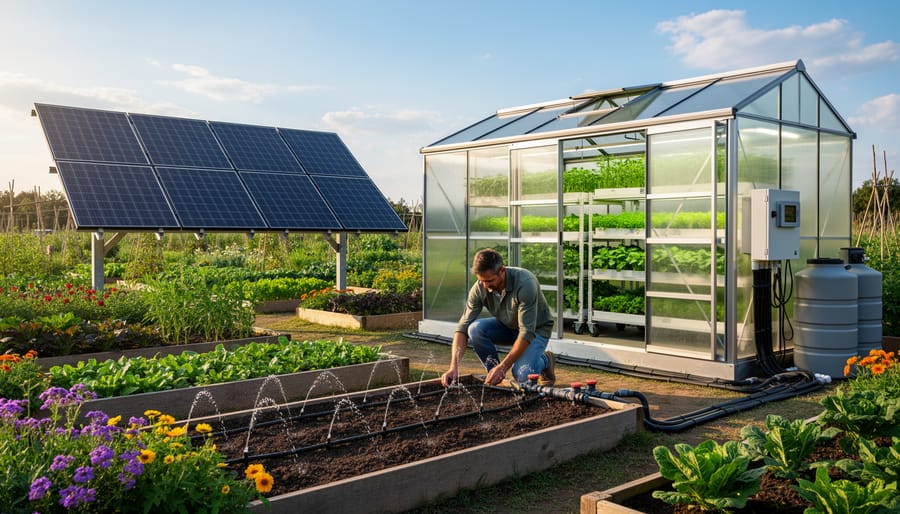
Solar panels offer the most accessible entry point for powering garden infrastructure. A basic setup can run drip irrigation pumps during daylight hours when plants need water most, eliminating the need for grid power or battery timers. For greenhouses, small panels paired with vent fans automatically increase airflow as temperatures rise, the hotter the day, the more power generated and the more cooling provided.
Outdoor lighting presents another straightforward application. Solar pathway lights and work area illumination charge during the day and illuminate evening garden tasks without trenching electrical lines. Tool charging stations using panels mounted on shed roofs keep batteries topped up for pruners, tillers, and other cordless equipment.
Ground-mounted panels maximize sun exposure but occupy growing space, making them better suited for larger properties or unplantable areas. Structure-integrated installations, on shed roofs, greenhouse glass, or pergolas, preserve ground-level real estate while generating power. These dual-purpose structures work especially well in permaculture designs where every element serves multiple functions. Even a modest 50-watt panel can transform how you manage daily garden operations without overwhelming initial costs.
Wind and Water Options for Larger Properties
If your property spans an acre or more, or includes a stream, creek, or steep slope with reliable water flow, you might have room for wind or micro-hydro systems that go beyond solar. These options won’t power your whole house, but they can handle specific garden tasks like pumping water uphill to storage tanks or running aeration systems in ponds.
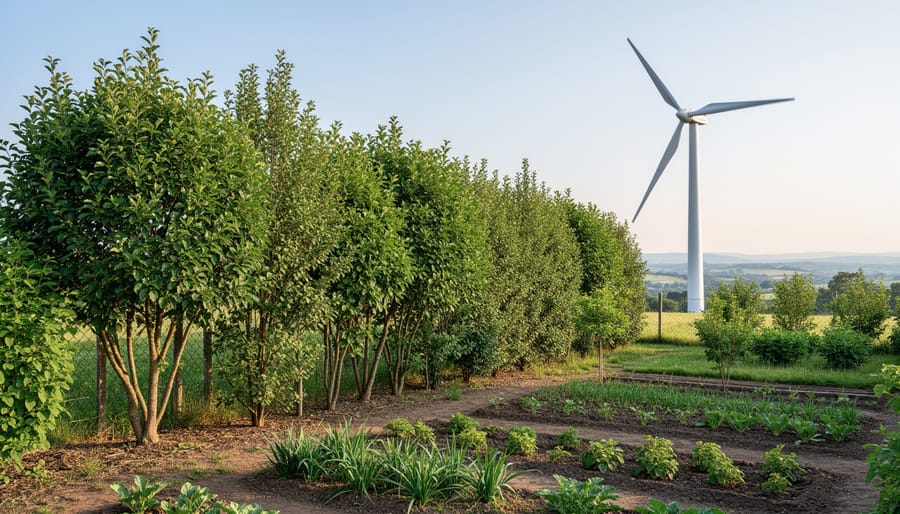
Small wind turbines (typically 400-1000 watts) need consistent winds above 10 mph and clear space away from turbulence caused by trees or buildings. Expect them to generate power intermittently rather than continuously. They work best for charging batteries that run low-draw equipment overnight or during cloudy periods when solar production drops.
Micro-hydro systems offer more predictable output if you have year-round water flow with at least 2 feet of vertical drop. A small turbine in a stream can produce 100-500 watts continuously, making it more reliable than wind for powering refrigeration in root cellars or running greenhouse circulation fans.
Both systems require more maintenance than solar panels, clearing debris from turbines, checking bearings, managing battery banks, and upfront costs run higher per watt generated. They make sense when you already have the natural resource and specific energy needs that match their output patterns.
Biomass and Passive Solar Design
Garden waste becomes a heat source when you turn it into biogas or feed it to a rocket mass heater. A simple biogas digester converts kitchen scraps and plant trimmings into cooking fuel while producing nutrient-rich liquid fertilizer as a byproduct. Rocket mass heaters burn small amounts of woody prunings extremely efficiently, releasing heat through a thermal mass bench or wall that radiates warmth for hours after the fire dies.
Passive solar greenhouse design eliminates most active heating needs by capturing and storing the sun’s energy. Position your greenhouse to face south with a thermal mass wall, water barrels, stone, or cob, on the north side. The mass absorbs daytime heat and releases it overnight, maintaining stable temperatures without electricity. Insulated north walls, proper glazing angles, and ventilation openings you can manually control cost nothing to operate and work reliably year after year.
These approaches require upfront planning rather than purchased energy. You’re designing the system to work with natural flows instead of fighting them with powered equipment.
Practical Applications: Powering Your Garden Activities
Once you’ve set up your renewable energy systems, the real payoff comes in daily garden operations. Instead of running extension cords from the house or hand-watering every evening, integrated renewable power automates and simplifies the tasks that keep your garden thriving.
Automated Irrigation on Solar Power
Drip irrigation systems paired with small solar panels and timers eliminate the most time-consuming garden chore. A 50-watt panel charges a battery that runs a 12-volt pump, delivering consistent moisture to raised beds or container gardens without grid connection. You set the schedule once, and the system handles daily watering even when you’re away. For larger properties, solar-powered irrigation can cover multiple zones with valve controllers that open and close based on soil moisture sensors, using only the energy captured that day.
Season-Extension Structures That Run Themselves
Greenhouses and cold frames need ventilation, heating, and sometimes supplemental lighting to extend growing seasons. Solar panels mounted on the south-facing roof provide power for exhaust fans that prevent overheating, small circulation fans that reduce disease pressure, and LED grow lights that support seedlings in early spring. In colder climates, a solar-charged battery bank can run a small electric heater or heat mat overnight, protecting transplants from late frosts without increasing your electricity bill.
Common garden systems that benefit from renewable power integration:
- Automated drip irrigation with moisture sensors and timers
- Greenhouse ventilation fans and temperature controls
- LED grow lights for seedlings and season extension
- Electric composting tumblers or aeration systems
- Outdoor workspace lighting and power tool charging stations
- Water feature pumps for ponds or aquaponics systems
- Electric fencing or pest deterrent devices
Composting Systems and Garden Power Centers
Active composting accelerates when you can run an electric tumbler or power an aeration blower that introduces oxygen into static piles. A dedicated solar panel near your compost area provides enough energy for these periodic tasks. Similarly, creating an outdoor work hub with solar-charged batteries lets you run drills, saws, and other cordless tools without dragging equipment from indoor outlets. String lights powered by a small solar array extend productive hours into evening, making spring and fall planting sessions more flexible. These applications transform renewable energy from an abstract concept into tangible daily convenience.
Step-by-Step: Planning Your First Integration Project
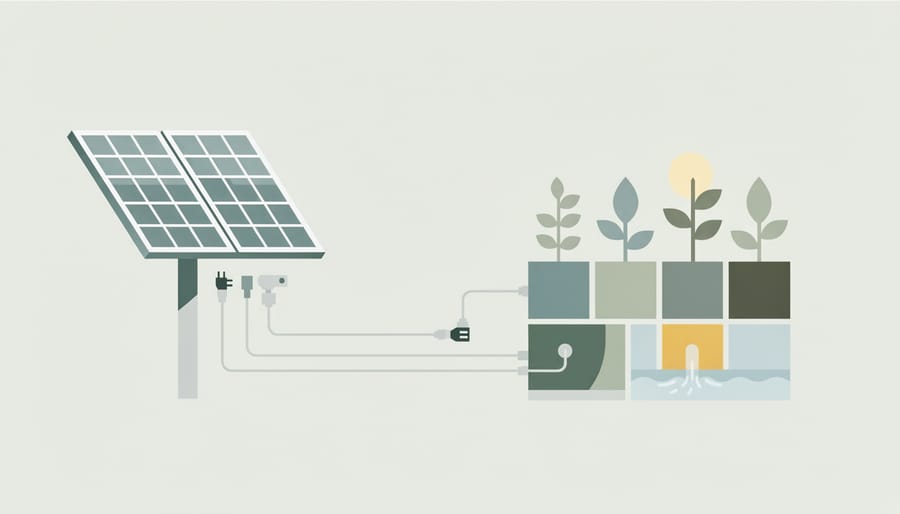
Starting with a single solar-powered project lets you learn the basics of renewable energy integration without overwhelming your garden design or your budget. A rain barrel irrigation system makes an excellent first project because it addresses a real need, works with equipment you might already have, and teaches you fundamental lessons about energy assessment and system sizing.
Assess Your Energy Needs
Begin by understanding what you’re actually powering. For a rain barrel setup, you’ll need to run a small pump that moves water through drip lines or soaker hoses. Measure your garden bed length to calculate how many feet of irrigation tubing you need, then check pump specifications to find one rated for your flow requirements. Most small garden pumps draw between 10 and 30 watts. Run a simple test: time how long your beds need watering on a typical summer day. If you water for 20 minutes daily using a 20-watt pump, that’s about 7 watt-hours per day, a modest amount that a small solar panel can easily provide.
Size Your Solar Components
Match your panel capacity to your daily energy use, then add a buffer for cloudy days and system losses. For that 7 watt-hour daily requirement, a 10 to 20-watt solar panel gives you comfortable headroom. You’ll also need a small 12-volt battery (a 7 to 10 amp-hour sealed lead-acid or lithium battery works well) to store energy for morning or evening watering when the sun isn’t shining. Add a charge controller, even an inexpensive 5-amp PWM controller will protect your battery from overcharging. Total cost for this complete system typically runs $60 to $150 depending on component quality.
Install and Position Thoughtfully
Mount your solar panel where it receives full sun for at least six hours daily, ideally facing south if you’re in the Northern Hemisphere. Even partial shade from a tree branch or fence cuts output dramatically. Secure the panel at a tilt roughly equal to your latitude for year-round efficiency, or adjust seasonally if you can easily access the mounting. Place your battery and controller in a weatherproof box near the rain barrel, keeping wiring runs short to minimize voltage loss. Connect components following the manufacturer’s sequence: controller to battery first, then panel to controller, finally pump to controller’s load terminals.
Maintain and Monitor
Check your system weekly during the first month to spot any issues early. Wipe dust or pollen off the panel surface every few weeks, dirty panels lose 20% or more of their output. Watch the battery voltage if your controller has an indicator; consistent low readings mean you need more panel capacity or less daily runtime. Expect to replace the battery every three to five years, while the panel itself should last 20 years with minimal care.
This single project teaches you practical lessons about energy budgets, component matching, and weather variability that apply to every renewable energy integration you’ll tackle next.
Insights from a Permaculture-Energy Pioneer
I started integrating solar power into my garden almost ten years ago, and it completely changed how I think about garden design. My name is Marcus Chen, and I run a two-acre permaculture homestead in southern Oregon where every irrigation pump, greenhouse fan, and outdoor light runs on renewable energy.
The biggest lesson I learned early on: start with your highest-impact, most-used systems first. I wasted money on a fancy solar pathway lighting setup when I should have focused on my irrigation pump. Once I got that sorted, everything else fell into place. Your garden will tell you where energy matters most if you pay attention to what tasks you’re doing constantly.
What surprised me most was how renewable energy forced me to become a better designer. When you have limited power, you start thinking about passive solutions and natural systems first. I redesigned my whole greenhouse layout to maximize passive solar heating, which meant I needed much less active fan ventilation. That’s when I realized regenerative gardening and renewable energy aren’t separate goals, they’re completely intertwined.
My advice for beginners: don’t try to power everything at once. Pick one annoying task that currently requires running an extension cord or hauling water manually. Solve that problem with solar or another renewable source, live with it for a full growing season, and learn from the experience. I started with a simple 100-watt panel charging a battery that ran my drip irrigation timer. Cost me about $200, taught me everything I needed to know about system sizing and battery management.
The unexpected benefit nobody talks about? You become intensely aware of energy cycles in your garden. You notice when peak sun hours align with peak watering needs, how seasonal changes affect both plant growth and power generation. That awareness makes you a smarter, more observant gardener overall.
Common Questions About Renewable Energy in Gardens
Many gardeners hesitate to add renewable energy to their gardens because they imagine complicated installations, hefty price tags, or systems that only work in perfect conditions. The reality is far more approachable, especially when you start with projects matched to your actual needs rather than aiming for complete energy independence from day one.
What’s the realistic starting cost for a garden energy project?
A basic solar setup for drip irrigation or outdoor lighting typically runs $150-$400 for beginner-friendly kits, while DIY approaches using individual components can start around $75-$100. Large-scale systems cost more, but most gardeners find value in starting small and expanding as they learn what works.
Do these systems require constant maintenance?
Solar panels need occasional cleaning (rainfall handles much of this), and battery terminals should be checked yearly, but modern systems are remarkably low-maintenance. Most gardeners spend less time on energy system upkeep than they do sharpening tools or cleaning pots.
What happens during cloudy weeks or calm periods?
Battery storage smooths out daily fluctuations, and properly sized systems account for seasonal variations in your climate. The key is matching system capacity to your least productive months rather than peak conditions, or designing garden activities that flex with available energy.
How much space do I actually need?
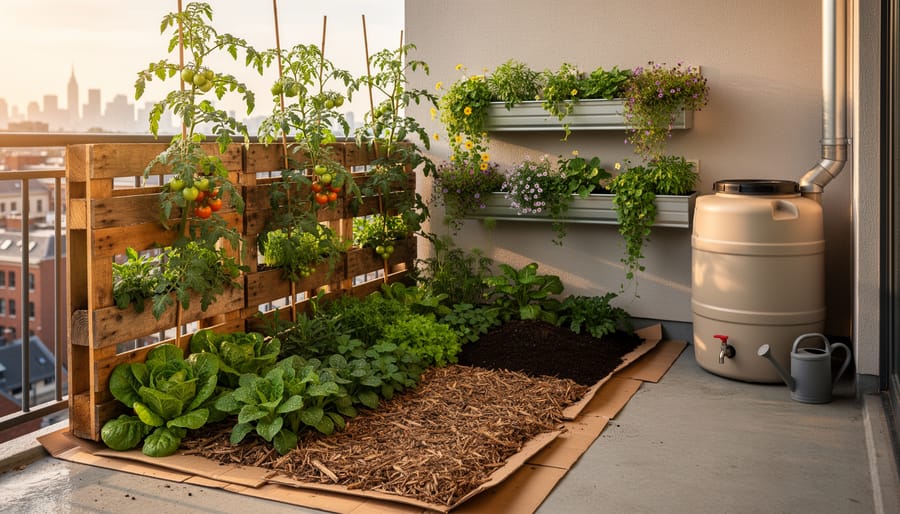
A small solar panel powering basic irrigation fits in less space than a tomato cage, and many systems mount on existing structures like shed roofs or fence posts. You don’t need acreage; even balcony gardeners successfully use compact solar setups.
Is this worth it for a hobby garden that’s not producing income?
The value extends beyond dollars saved on electricity bills. These systems make low-effort permaculture practices more accessible by automating irrigation and ventilation, they teach you how energy and garden systems interact, and they keep producing long after the initial investment pays for itself.
What about battery storage, is it necessary?
It depends on your application. Direct solar pumping during sunny hours works fine for many irrigation needs, while systems running lights or fans after dark need batteries. Starting without storage and adding it later as your needs evolve is perfectly reasonable.
The biggest barrier is often overthinking the first step. You don’t need to power your entire property or achieve perfect efficiency right away. A single solar panel running one useful garden function teaches you more about integration than months of research, and it gives you a foundation to build on as your confidence and garden evolve together.
You don’t need a sprawling solar array or a wind turbine to start integrating renewable energy into your garden. A single solar-powered pump for a rain barrel or a small panel charging your tool batteries teaches you how energy flows through your space and where it matters most. These modest projects reveal patterns you wouldn’t otherwise notice: how much power your watering routine actually uses, which garden tasks drain the most energy, where sunlight hits strongest throughout the day.
Every small integration builds your confidence and knowledge. You learn to think in systems rather than isolated tasks, spotting opportunities to stack functions and reduce waste. That solar panel shading your cold frame while powering its ventilation fan does double duty. The windbreak you planted years ago might support a small turbine. Each addition makes your garden more self-reliant and responsive to natural cycles rather than grid-dependent schedules.
Combining renewable energy with permaculture design creates gardens that produce more than vegetables and flowers. They generate their own power, manage their own water, moderate their own climate. These systems bounce back faster from disruptions, cost less to maintain over time, and tread lighter on the planet while yielding more abundantly. The environmental benefit compounds with every growing season.
Start where you are with what you have. Pick one energy-hungry task in your garden and find a renewable solution for it. Learn from that experience, then add another layer when you’re ready.