Growing the right herbs side by side does more than save space. It cuts down on pest trouble, supports steady growth, and can noticeably improve flavor. This companion planting for herbs chart shows which pairings work, which ones to keep apart, and why, so you can plan a herb bed that looks after itself far better than a random mix would.
The reasons behind the pairings are fairly simple. Strongly scented herbs like rosemary, thyme and sage give off aromatic oils that confuse or repel many common pests. Flowering herbs such as chamomile and dill bring in pollinators and beneficial insects. Shallow-rooted and deep-rooted plants share soil without competing for the same nutrients, which keeps the ground healthier over time.
Whether you’re growing culinary staples like basil and oregano or medicinal plants like echinacea and chamomile, a little planning goes a long way. Basil beside tomatoes is the classic example, but not every pairing is a winner. Mint, for instance, will take over any bed you give it, so it’s usually better in its own container. The chart below lays out the good neighbors and the bad ones so you can skip the trial and error.
Why Herbs Make Excellent Companion Plants
Natural Pest Control Properties
Many herbs serve as powerful natural garden defenders, protecting your garden through their aromatic compounds and essential oils. Basil naturally repels mosquitoes and flies, while also protecting tomatoes from hornworms. Rosemary’s strong scent keeps cabbage moths and carrot flies at bay, making it an excellent guardian for your vegetable patches. Mint deters ants and cabbage moths, though it should be contained to prevent spreading. Lavender’s lovely fragrance isn’t just for us – it effectively repels many garden pests, including moths and fleas. Sage helps protect your cabbage family plants from destructive butterflies, while oregano acts as a general pest deterrent throughout the garden. These herbs not only enhance your cooking but create a natural pest management system that’s both effective and environmentally friendly.
- Basil – mosquitoes, flies, aphids, and tomato hornworms
- Rosemary – cabbage moths and carrot flies
- Lavender – moths, fleas, and beetles
- Mint – ants, aphids, and flea beetles
- Sage – cabbage butterflies and beetles
- Oregano – general pest deterrent, particularly aphids
Soil Enhancement Benefits
Herbs do a lot of quiet work below the surface. Deep-rooted types like comfrey and yarrow act as natural tillers, breaking up compacted soil and opening pathways for water and nutrients. Comfrey is the standout here, since its long taproots pull minerals up from the subsoil and its leaves make a rich mulch when cut back. The basil with tomatoes pairing gets plenty of attention, but a patch of comfrey near your beds does more for the soil itself.
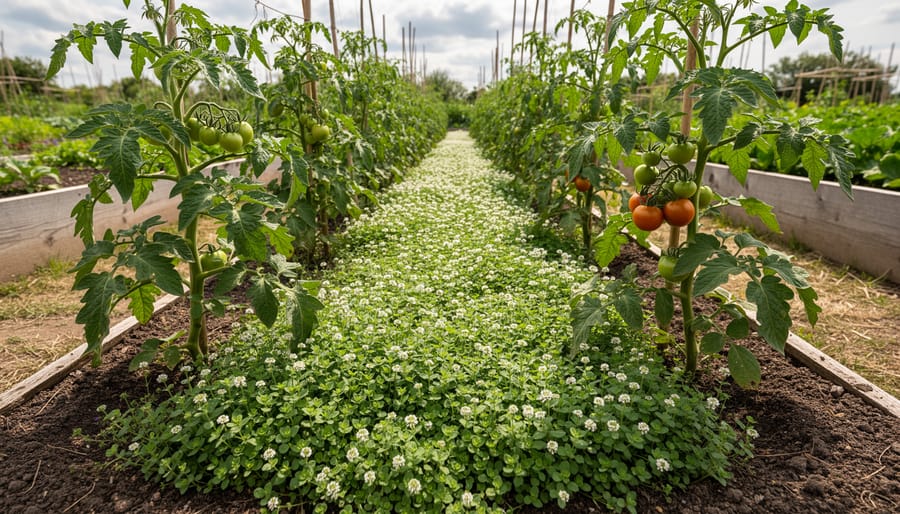
Clover isn’t a culinary herb, but it earns a spot in herb borders because, like other legumes, it partners with soil bacteria to fix nitrogen. Mediterranean herbs such as lavender and sage hold slopes and bed edges together with their extensive root systems, and they add organic matter as their leaves drop and break down. Mint and lemon balm help the soil hold moisture under their dense growth. Keep them in containers or sunken pots, though, because both will spread aggressively if you let them.
As these plants die back each fall, they feed the soil that supports next season’s crops. Over a few years, you’ll notice looser, darker ground and a lighter need for synthetic fertilizer. Pairing choices still matter, and it helps to know plant pairing mistakes that can ruin your garden and how to avoid them before you plant a mixed bed. For pest protection alongside soil building, see these natural garden defenders to keep pests away.
Visual companion planting chart showing herbs and their compatible partners with color-coded connections
Essential Herb Companion Planting Combinations
Basil and Its Companions
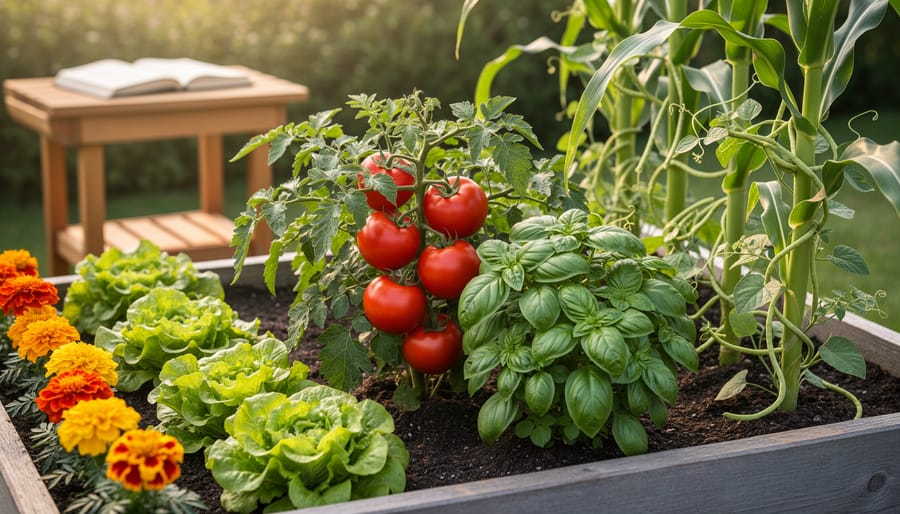
Basil, a beloved Mediterranean herb, thrives when planted alongside several garden companions. Tomatoes are basil’s best friends – not only do they enhance each other’s flavors, but basil also helps repel tomato hornworms and improves tomato growth. Plant these two within 12 inches of each other for optimal results.
Peppers and basil make another winning combination. Basil’s natural oils help keep harmful insects away while attracting beneficial pollinators to your pepper plants. For added diversity, try planting basil near asparagus, oregano, or parsley – these herbs share similar soil and sunlight requirements.
Marigolds complement basil beautifully, as both plants naturally deter pest insects while adding vibrant colors to your garden. The combination also helps improve soil health through their different root structures. However, keep basil away from rue and sage, as these herbs can inhibit each other’s growth.
For container gardening, try grouping basil with lettuce and spinach. The tall basil provides light shade for these leafy greens while maximizing your growing space. Remember to maintain well-draining, nutrient-rich soil for all these combinations to flourish.

Sage Partnerships
Sage, a Mediterranean herb known for its aromatic leaves and culinary uses, thrives when paired with specific garden companions. Brassicas, including cabbage, broccoli, and cauliflower, make excellent neighbors for sage, as the herb’s strong scent helps deter cabbage moths and other pests. Carrots also benefit from sage’s proximity, growing more vigorously when planted nearby.
For optimal soil health, consider planting sage alongside strawberries and rosemary. These combinations not only look attractive but also help maintain soil moisture levels and provide ground cover that reduces weed growth. Strawberries particularly benefit from sage’s pest-repelling properties, while rosemary shares similar soil and sunlight requirements.
However, avoid planting sage near cucumbers, as these plants compete for nutrients and can inhibit each other’s growth. The same goes for basil and rue, which may struggle when grown too close to sage. Instead, create a harmonious herb garden by grouping sage with thyme and oregano, as they share similar growing conditions and contribute to overall soil structure through their deep root systems.
Remember to give sage enough space to grow, as it can become quite bushy and needs good air circulation to thrive.
Rosemary Relationships
Rosemary, with its aromatic presence and Mediterranean charm, proves to be an excellent companion for several garden favorites. This woody herb thrives alongside plants like sage, thyme, and oregano, as they share similar growing requirements and actually enhance each other’s flavors. Brassicas, including cabbage and broccoli, benefit greatly from rosemary’s natural pest-deterrent properties, which help keep cabbage moths and other unwanted insects at bay.
When it comes to soil health, rosemary’s deep root system helps prevent erosion and improves soil structure. Its roots create natural pathways for water and nutrients to reach deeper soil layers, benefiting nearby plants. The herb also releases beneficial compounds that can enhance the growth and flavor of carrots and beans.
However, avoid planting rosemary near potatoes or pumpkins, as these plants compete for similar nutrients and can inhibit each other’s growth. For best results, position rosemary on the north side of your herb garden to prevent it from shading shorter herbs, and maintain well-draining soil to keep both rosemary and its companions happy.
Thyme and Mint Combinations
Thyme and mint, while both aromatic favorites, have distinct companionship needs in the garden. Thyme thrives alongside rosemary, sage, and lavender, as they all prefer well-draining, slightly alkaline soil and similar sunlight conditions. Its low-growing nature makes it an excellent border plant that helps suppress weeds around taller herbs.
Mint, however, needs careful consideration when companion planting. Due to its vigorous spreading habit, it’s best grown in containers or with natural barriers. When properly contained, mint pairs wonderfully with oregano and cabbage family plants. The strong scent of mint helps deter many garden pests, making it a valuable companion despite its invasive tendencies.
For soil health, thyme helps improve drainage and adds calcium to the soil as its leaves decompose. Mint’s deep roots help prevent soil erosion, though they can overwhelm other plants if not managed. Both herbs attract beneficial pollinators, with thyme particularly appealing to honeybees.
Remember to plant mint at least 2 feet away from other herbs, or better yet, keep it contained. Thyme, being more neighborly, can be planted 12 inches apart from its companions.
Implementation Tips for Success
Spacing and Layout Guidelines
Proper spacing is crucial for successful companion planting with herbs. As a general rule, most herbs should be planted 12-18 inches apart to allow adequate room for growth and root development. However, some compact herbs like thyme and oregano can be placed closer together, around 6-8 inches apart.
When arranging your herb garden, consider creating tiers based on plant height. Tall herbs like dill and fennel should be positioned at the back or center of your garden to prevent shading smaller companions. Medium-height herbs such as sage and basil work well in the middle row, while low-growing herbs like thyme and oregano are perfect for the front edges.
To maximize soil benefits, avoid overcrowding your herbs, as this can lead to competition for nutrients and moisture – one of the most common companion planting mistakes. Leave enough space between plants to allow for good air circulation, which helps prevent fungal diseases.
For container gardens, choose pots at least 12 inches deep and wide enough to accommodate multiple herbs while maintaining proper spacing. Remember that some aggressive spreaders like mint should be given their own containers to prevent them from overwhelming their companions.

Seasonal Considerations
Successful herb companion planting isn’t just about knowing which plants work well together – timing is everything! Most herbs thrive when planted in spring after the last frost, but there are some clever ways to extend your growing season through companion planting.
Cool-season herbs like cilantro, dill, and parsley can be planted in early spring or fall. These make excellent companions for spring lettuce and other cool-weather crops. Mediterranean herbs such as rosemary, thyme, and sage prefer warmer conditions and should be planted after soil temperatures reach about 70°F (21°C).
Consider creating seasonal “waves” in your garden. Plant basil alongside tomatoes in late spring, then as summer wanes, introduce second plantings of cilantro and dill. This succession planting maintains beneficial relationships throughout the growing season.
Some herb companions offer seasonal protection to each other. Tall herbs like fennel can shelter tender seedlings from harsh spring winds, while low-growing thyme helps retain soil moisture during hot summer months. In autumn, sturdy perennial herbs can protect more delicate companions from early frosts.
Remember to adjust your companion planting schedule based on your local climate and growing zone. What works in spring might need modification for summer or fall plantings.
Companion planting with herbs is a rewarding journey that can transform your garden into a thriving ecosystem. By following the pairing suggestions in this guide, you’ll create a garden that not only produces abundant harvests but also naturally repels pests and supports beneficial insects. Remember that successful companion planting is about observation and experimentation – don’t be afraid to try new combinations while keeping these basic principles in mind. Start small by combining two or three compatible herbs, then gradually expand your garden as you gain confidence. Whether you’re growing herbs in containers on your patio or in a dedicated herb garden, these natural partnerships will help your plants flourish. Take the first step today by selecting your favorite herb combinations and watch as your garden becomes a harmonious, productive space where plants support each other’s growth and vitality.
Complete Herb Companion Planting Chart
A good herb companion planting chart saves you from guessing at the garden center. It shows at a glance which plants help each other and which ones sulk when planted side by side. This one pulls together the relationships gardeners lean on most, with a focus on pest management, nutrient cycling, and healthier soil over the long run.
| Herb | Good Companions | Avoid Planting With | Benefits |
|---|---|---|---|
| Basil | Tomatoes, peppers, oregano | Rue, sage | Repels aphids and thrips; improves flavor |
| Rosemary | Sage, thyme, beans, cabbage | Basil, cucumber | Deters cabbage moths and bean beetles |
| Thyme | Cabbage, rosemary, strawberries | None known | Attracts beneficial insects; ground cover |
| Sage | Rosemary, carrots, cabbage | Cucumber, onions | Repels carrot fly and cabbage moths |
| Oregano | Basil, peppers, tomatoes | None known | Provides ground cover; deters pests |
| Mint | Cabbage, tomatoes (in pots) | Parsley, chamomile | Repels aphids; contains spreading roots |
| Parsley | Tomatoes, asparagus, chives | Mint, alliums | Attracts beneficial wasps and hoverflies |
| Cilantro | Spinach, anise, potatoes | Fennel | Attracts pollinators and predatory insects |
| Dill | Lettuce, onions, cucumbers | Carrots, tomatoes | Attracts beneficial insects; self-sows |
| Chives | Carrots, tomatoes, roses | Beans, peas | Prevents aphids; improves growth |
| Lavender | Rosemary, sage, fruit trees | None known | Attracts pollinators; repels moths |
| Chamomile | Cabbage, onions, cucumbers | Mint | Improves flavor; attracts beneficial insects |
Treat the chart as a starting point, not a rulebook. Local soil, microclimate, and the specific variety you grow all shift the results. Mint is a good example: it’s listed as a companion for cabbage, but only if you keep it in a pot, because it will run through a bed in a single season.
If you’re building a pest-focused herb layout, our guide to natural garden defenders goes deeper on which plants earn their spot. And before you commit to a bed plan, it’s worth reading about the plant pairing mistakes that can ruin your garden since a few of the “avoid” pairings above are easy to make by accident.
Keep notes across a few seasons. Jot down what you planted where, how it performed, and how the soil looked and felt at the end of the year. Your own beds will tell you more than any chart can, and after two or three seasons you’ll know which combinations are actually building soil health in your garden.
List items
The chart above is easiest to use when you break it into pairings you can actually plant this season. Here are the herb combinations that earn their space in a bed, with the reason each one works.
- Basil with tomatoes. The classic pairing. Basil’s strong scent can confuse pests like aphids and whiteflies, and many gardeners swear the tomatoes taste better alongside it. Keep basil away from rue.
- Rosemary with sage. Both want lean, well-drained soil and full sun, so they share a bed without fighting over water. Plant them near cabbage family crops to help discourage cabbage moths.
- Thyme with brassicas. Low-growing thyme works as a living mulch around cabbage and broccoli, holding moisture in the soil while its flowers draw hoverflies and other beneficial insects.
- Dill with cabbage and onions. Dill flowers attract predatory wasps and lacewings that go after caterpillars and aphids. Keep it away from carrots, since the two can cross-pollinate and hurt each other’s growth.
- Mint in its own container. Mint repels ants and cabbage pests, but it spreads aggressively through runners. Sink a pot into the ground beside your brassicas and you get the benefit without the takeover.
- Chives with carrots and roses. The onion scent masks carrot from carrot rust fly, and chive blossoms bring in pollinators all spring.
- Fennel on its own. Fennel is the odd one out. It suppresses growth in most neighbors, so give it a dedicated corner of the garden rather than pairing it.
Start with two or three of these, note what happens, and add more once you know how they behave in your soil.
How the list was chosen
A herb chart is only useful if you know what’s behind it, so here’s how the pairings above were put together. Each herb earned its spot by clearing a few practical tests, not by showing up in every gardening forum.
First, the herb had to be one that home gardeners actually grow. Basil, rosemary, thyme, sage, mint, and dill made the cut because they’re easy to find as starts, they thrive in ordinary garden beds and containers, and they show up in most kitchens.
Second, each pairing needed a clear, repeatable reason. We looked for companions that did one of three things:
- Deter pests through strong scent, as with thyme and rosemary near brassicas.
- Draw beneficial insectslike dill flowers pulling in hoverflies and parasitic wasps.
- Share growing conditionssuch as drought-tolerant herbs sitting together so you’re not overwatering one to keep another happy.
Third, we flagged conflicts, not just friends. Mint’s runners and dill’s tendency to cross with fennel are good reasons to keep certain plants apart, so the “avoid” column got equal attention.
Finally, pairings were kept only when they fit this article’s focus on soil health. Herbs that cover ground, attract pollinators, or loosen compaction with deep roots were favored over ones with a purely cosmetic benefit.
Final takeaway
A companion planting chart for herbs is a map, not a rulebook. The real payoff comes from what the pairings do beneath the surface: keeping roots active, covering bare ground, and giving beneficial insects a reason to stay in your beds all season.
If you take three things from the chart, make them these:
- Start small. Pick two or three pairings from the chart, such as basil beside tomatoes or thyme near brassicas, and test them in one bed before reworking the whole garden.
- Watch the problem children. Mint and fennel are the usual troublemakers. Keep mint in a container, and give fennel its own corner, since it stunts many neighbors.
- Keep notes. Jot down what you planted, where, and how it performed. A simple notebook beats memory every time.
Your soil and microclimate will always have the final say. A pairing that thrives in a sheltered raised bed might sulk in a windy, clay-heavy plot. That’s not failure. It’s data.
Give each combination a few seasons before you judge it. By 2026 you’ll have a chart that’s no longer generic, but built around your own garden, and that’s the version worth keeping.