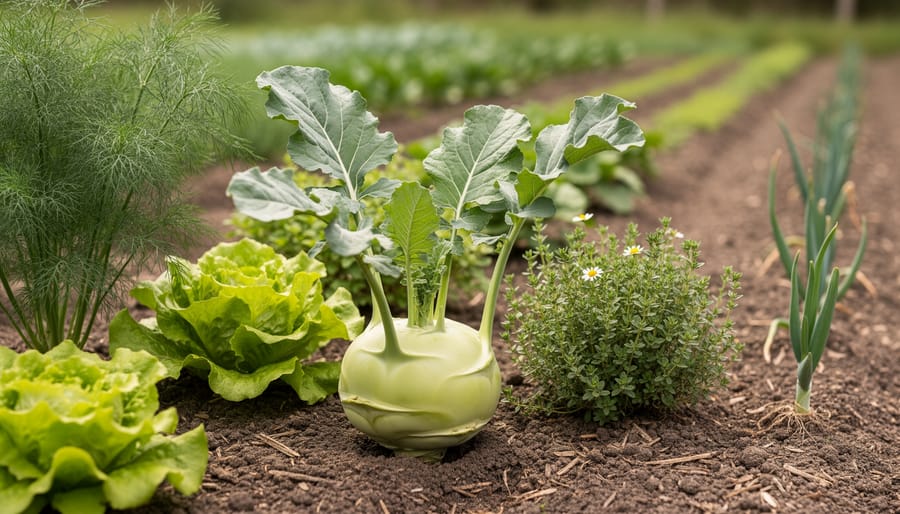
Plant kohlrabi alongside onions, beets, cucumbers, dill, chamomile, and aromatic herbs like mint and thyme, and keep it away from pole beans, tomatoes, strawberries, and other brassicas. Set the plants about 6 inches apart in rows 18 inches wide, and tuck the helpers in around the edges. You can have the whole layout planned in under an hour, and it’s an easy project for any skill level.
Why does this work? Kohlrabi grows fast and stays compact, so it slots neatly between slower crops without hogging space. Onions and strong-scented herbs confuse the cabbage worms and flea beetles that love brassicas. Dill and chamomile bring in tiny beneficial insects that do the pest patrol for you. Tomatoes and pole beans, on the other hand, compete for the same nutrients or shade your bulbs, and strawberries tend to stunt kohlrabi’s growth.
Think of it as a few small choices that make your whole bed work together, and it fits right into broader companion planting strategies. Below, we’ll cover the tools you need, a simple step-by-step layout, and how to check that your pairings are paying off.
Why Kohlrabi Pairs So Well With Other Plants
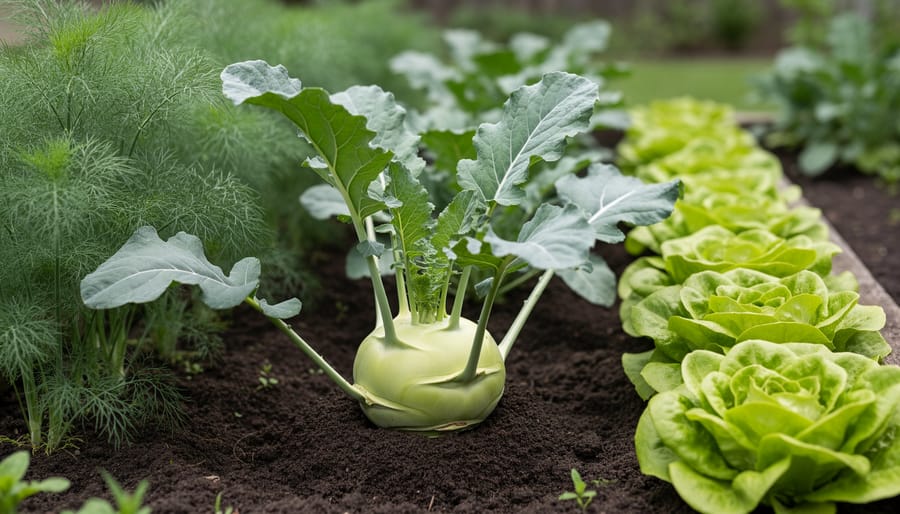
Companion planting simply means growing different plants side by side so they help each other out. A few things happen when you do it well. Strong-smelling herbs and flowers can confuse pests that hunt by scent, so they have a harder time finding their favorite meal. Plants with different root depths and growth habits share a bed without fighting over the same space. And some neighbors keep the soil shaded, cool, and covered, which holds moisture and cuts down on weeds.
Kohlrabi is a great candidate for all of this. It belongs to the brassica family, the group that also includes cabbage, broccoli, and kale. That family is a favorite snack for cabbage worms, aphids, and flea beetles, so kohlrabi can use some friendly protection.
It also happens to be easy to fit into a crowded bed. Its roots stay fairly shallow, and the plant stays compact, so it won’t shade out or crowd its neighbors. It matures quickly too, often in just 45 to 60 days. That speed makes it perfect for interplanting, which just means tucking one crop in among others to make the most of your space. You can slip kohlrabi between slower growers, harvest it, and leave those neighbors with more room to spread.
Once you see how well kohlrabi plays with others, the next step is choosing the best partners.
Best Companion Plants for Kohlrabi
Herbs and Flowers That Help Deter Pests
Aromatic herbs and bright flowers are some of the easiest helpers you can tuck beside kohlrabi, and they work in a few different ways.
Dill is a favorite of mine. Its feathery flowers draw in small beneficial insects like parasitic wasps and hoverflies, whose larvae feed on aphids. Plant it a few inches from your kohlrabi, not right against it, so it doesn’t shade the bulbs. Chamomile does something similar. Its tiny daisy-like blooms attract hoverflies and lacewings, and many gardeners say it’s a calm, tidy neighbor for leafy and bulb crops.
Mint’s strong scent can help mask the smell of your kohlrabi, making it harder for cabbage moths to find the plants and lay eggs. Just be careful, because mint spreads fast. Grow it in a pot and set the pot right in your bed, or sink the pot into the soil so the roots can’t wander.
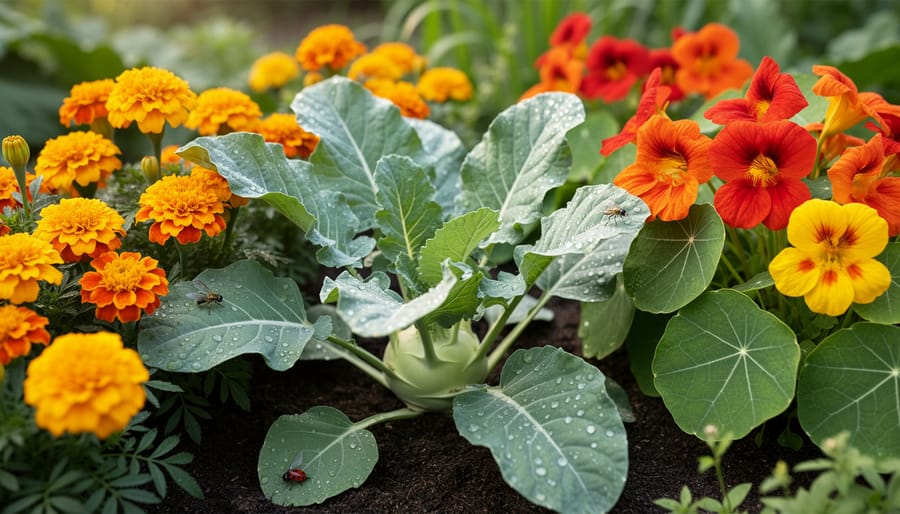
Nasturtiums work as a trap crop. Aphids tend to go for them first, which can pull pressure off your kohlrabi. Marigolds add color and a pungent scent that may discourage flea beetles and other pests.
A few tips:
– Space flowers and herbs about 6 to 8 inches from your kohlrabi.
– Scatter them along the edges and between plants rather than clumping them.
– Pinch back herbs now and then to keep them compact.
Vegetables That Share Space Nicely
Kohlrabi is a polite neighbor because its roots stay shallow, mostly in the top few inches of soil. That makes it easy to pair with vegetables that grow at a different depth or with a different shape, so you can squeeze more into a small bed without anyone fighting over space.
Onions and garlic are classic partners. Their upright, narrow leaves take up very little room, and their strong scent can confuse pests that hunt kohlrabi by smell. Plant them a few inches from each bulb and you’ll barely notice they’re there.
Beets are another good fit. They send roots deeper than kohlrabi does, so the two draw from different layers of soil. Their leafy tops stay low and compact, which keeps things tidy.
Lettuce works well as a living ground cover. It grows quickly in the same cool weather kohlrabi loves, and you can harvest it before the bulbs need the extra room. Its shallow roots also help shade the soil and keep it moist.
A few quick pairing ideas:
– Tuck lettuce into gaps between young kohlrabi plants.
– Run a row of onions along the bed edge.
– Alternate beets and kohlrabi in a staggered pattern.
The trick is to mix tall, short, shallow, and deep, so every inch of the bed has a job. Just keep about six inches between plants so air can move and leaves stay dry.
Plants to Keep Away From Your Kohlrabi
Kohlrabi is easygoing, but a few plants will crowd it, drain the soil, or invite the same pests. The fix is simple: give these crops their own bed rather than banishing them from your garden.
Heavy feeders and climbers are the usual troublemakers. Pole beans can shade young kohlrabi and tangle around its stems, and tomatoes cast the same kind of shade while pulling lots of nutrients from the soil. Strawberries sprawl and compete for water and space at root level. Since kohlrabi’s roots are shallow, it doesn’t take much competition to stunt those tender bulbs.
Other brassicas are the trickier case. Cabbage, broccoli, kale, and cauliflower all belong to the same family as kohlrabi, so they attract the same cabbage worms, flea beetles, and aphids. Planting them side by side is like setting out a buffet for pests. If you love growing the whole family, rotate them to a different bed each season so pests and diseases can’t build up.
If your garden is small, consider growing climbers up a trellis and away from your kohlrabi, and a few vertical gardening ideas can keep pole beans overhead rather than in your kohlrabi’s sunlight.
What You’ll Need Before You Plant Your Kohlrabi Companions
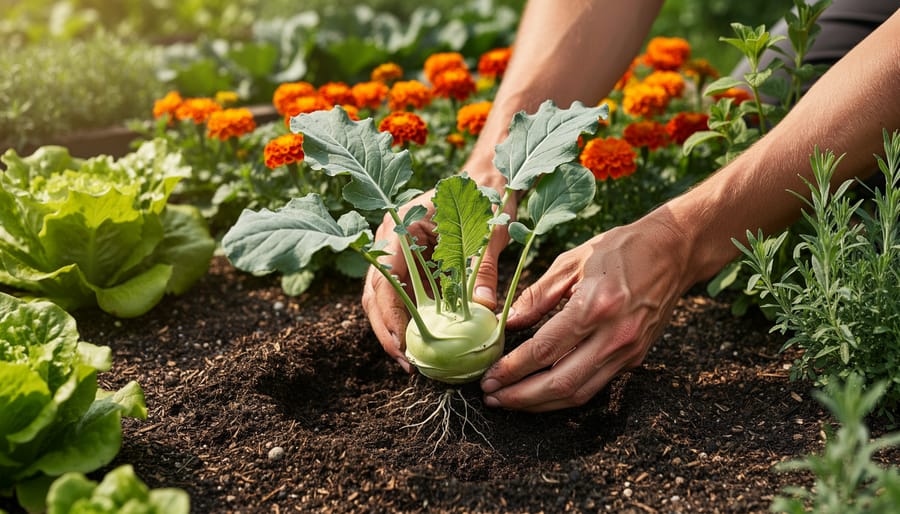
Before you dig in, gather everything in one spot. Nothing slows down planting day like a trip back to the shed for a forgotten trowel.
Here’s your checklist:
- Kohlrabi seedlings or seeds (seedlings give you a head start in cool weather)
- Companion plant starts or seeds, such as dill, onions, beets, or marigolds
- Finished compost to enrich the bed
- A hand trowel for digging holes and working in amendments
- A ruler or measuring stick to keep your spacing honest
- Mulch, like straw or shredded leaves, to hold in moisture
- A watering can with a gentle rose head
- Optional row cover to shield young plants from cabbage moths and flea beetles
- Garden gloves, for handling compost and other soil amendments
A quick word on safety first. Wear gloves when you handle compost or any soil amendments, and wash your hands well once you’re done working in the garden. If you plan to use any pest controls, double-check that they’re safe around edible plants, pets, and kids before you apply them.
Also, take a moment to check your soil. If it’s waterlogged or still frozen, stop and wait. Working wet soil compacts it and squeezes out the air your kohlrabi roots need, so give the bed a few days to dry out and thaw before you plant.
Step-by-Step: Planting Kohlrabi With Its Companions
Kohlrabi is a cool-season crop, so aim to plant it in early spring (about four weeks before your last frost) or again in late summer for a fall harvest. If you’ve never tried it, a small bed is the perfect place to start, and it works beautifully whether you’re in the ground or enjoying raised bed gardening.
Here’s the simple sequence I follow:
- Choose a spot that gets six or more hours of sun, ideally with a little afternoon shade as summer heats up.
- Loosen the top 8 to 10 inches of soil with a trowel or fork, then mix in an inch or two of compost.
- Mark your spacing with a ruler or stick: kohlrabi needs about 6 inches between plants and 12 inches between rows.
- Plant your kohlrabi seedlings at the same depth they grew in their pots, or sow seeds about half an inch deep.
- Tuck in your companions: onions between kohlrabi plants and dill at the row ends, so nothing crowds the bulbs.
- Water gently but thoroughly to settle the soil around every root.
- Spread a 2-inch layer of mulch, keeping it a little back from the stems to prevent rot.
- Cover the bed with row cover if cabbage moths or flea beetles are already active.
An easy layout to picture is a row of kohlrabi, a row of onions, then a row of dill, repeating across the bed. The onions and dill share the kohlrabi’s space without competing, and their scent helps keep pests guessing.
My own first attempt at interplanting was a bit chaotic. I squeezed dill right up against the kohlrabi, and by midsummer the feathery fronds were shading the bulbs. A little extra room fixed it the following year, and that kind of small adjustment is what leads to bountiful harvests over time.
Gardener Spotlight: Tips From an Experienced Grower
Every garden teaches its own lessons, and a seasoned grower’s hard-won experience can save you a few seasons of trial and error. This is the spot where we share an experienced vegetable gardener’s perspective on pairing kohlrabi with its neighbors. Here are the questions we put to them.
Q: Which companion plants do you reach for first when growing kohlrabi, and why?
A: Ask your interviewee to name their top two or three pairings and explain what each one does in the bed, such as deterring pests or sharing space.
Q: Is there a pairing you tried that didn’t work out?
A: Invite them to describe one combination that fell flat, what went wrong, and what they’d do differently next time.
Q: What’s your best tip for a beginner planting kohlrabi this season?
A: Capture their single most practical piece of advice on spacing, timing, or layout, in their own words.
Q: How do you know when your kohlrabi is ready to harvest?
A: Ask what signs they look for, including bulb size and texture, and how they handle succession planting.
How to Tell Your Companion Planting Is Working (and What to Do Next)
About three to four weeks after planting, take a slow walk down your row and look closely. Healthy companion planting shows up in small, steady ways: fewer chewed leaves, no clusters of aphids on the undersides, and leaves that stay a deep, even green. The best sign of all is a bulb that swells smoothly above the soil. Aim to harvest when it’s about the size of a tennis ball, when it’s still tender and sweet.
Now look for signs to adjust. Crowded leaves that overlap and shade each other mean it’s time to thin your companions. Yellowing leaves often point to competition for nutrients or soggy soil, so loosen the mulch and ease off the watering. If pests keep returning, add another pot of dill or a few more marigolds nearby, and tuck on a row cover.
Next season, rotate your bed so kohlrabi doesn’t land where brassicas grew this year, and sow a new small batch every two to three weeks for a steady harvest. If garden space is tight, container gardening gives you another way to try these pairings.
Can I grow kohlrabi in containers with companions?
Yes. Choose a wide, deep pot and pair kohlrabi with compact partners like chives, lettuce, or marigolds. Water a little more often than you would in the ground, since pots dry out fast.
How close should companions be?
Keep them within a hand’s width or two of the kohlrabi so their scent and cover can help, but leave enough room for air to move between leaves.
Do companions fully prevent pests?
No, they reduce pressure rather than eliminate it. Pair them with row cover and regular checks for the best results.
Can I plant kohlrabi after other brassicas?
It’s best to wait a year or more, since brassicas share pests and diseases that linger in the soil.
Companion planting is one of the simplest, cheapest ways to give your kohlrabi a head start. A few herbs tucked beside your bulbs, a row of onions nearby, and some careful spacing can mean fewer chewed leaves, steadier growth, and a bed that works harder for you.
You don’t need a big plan. Pick one or two pairings this season, maybe dill and onions, and see what you notice. Gardening is all about learning by doing, and every bed teaches you something new.
When your bulbs reach tennis-ball size, come share how it went with the Bluestem Gardening community. We’d love to hear your results!