The artistry of flowers is the practice of arranging, combining, and growing blooms with the same design principles an artist brings to a canvas: color, form, texture, balance, and rhythm. In a garden, that means treating every plant as a brushstroke and every bed as a composition you can walk through, touch, and smell.
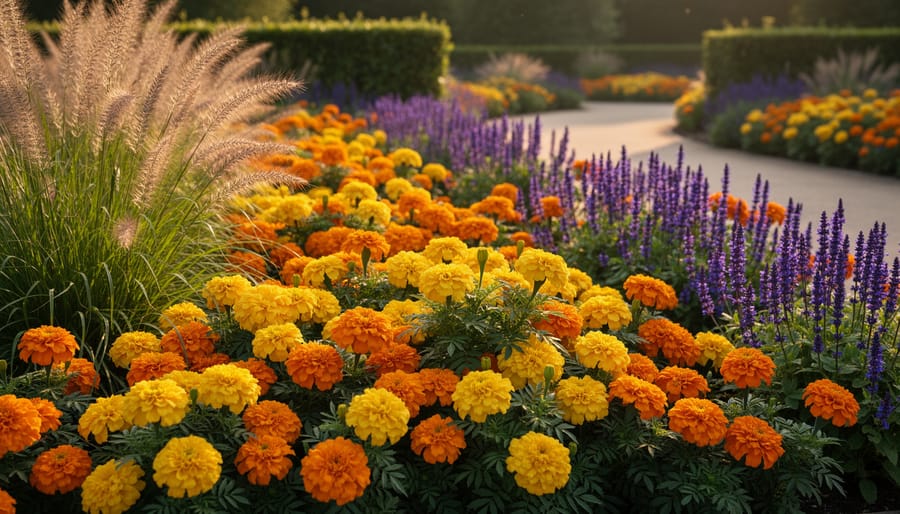
This is what makes a garden feel like a living masterpiece. A row of marigolds is simply a row of marigolds. Pair them with the feathery plumes of ornamental grass and the deep purple of salvia, and suddenly your eye has somewhere to travel. Your garden has a mood.
You don’t need formal training or a big yard to get there. A single container can hold a tiny work of art. The craft comes down to a handful of ideas you can learn in an afternoon and refine for a lifetime, and plenty of experienced gardeners are still experimenting with them every season.
In this guide, you’ll find a clear breakdown of what flower artistry really means, the design principles behind it, and the main styles you can choose from, from relaxed cottage borders to clean, modern plantings. We’ll also share advice from a gardener who shapes her beds like paintings, plus a step-by-step project to try this weekend. Grab your gloves. Your garden is ready to become your favorite piece of art.
What the Artistry of Flowers Really Means
The artistry of flowers is simply the practice of making deliberate choices about the plants you grow. It’s the difference between dropping blooms wherever there’s a bare patch and standing back to ask, “What do I want someone to feel when they see this?” No special talent required, just a willingness to look at a flower bed the way an artist looks at a blank canvas.
Think about it: you’re already choosing colors when you pick a pot of petunias, and you’re already thinking about shape when you decide where the tall sunflowers should go. Flower artistry just invites you to do that on purpose.
Here’s the beautiful twist. A painting stays put once it’s finished, but a garden never does. Morning light turns a soft pink rose almost glowing, a summer storm bends the grasses, and by autumn the whole scene has shifted again. That’s what makes a garden a living masterpiece. You’re never really finished, and that’s the fun of it.
A few everyday terms will help you talk about your garden like an artist:
- Color harmony
- Colors that look good together, such as soft purples with silvery foliage or a bold mix of oranges and yellows.
- Form
- The overall shape of a plant or bloom, like a tall spike, a round globe, or a flat daisy face.
- Texture
- How a plant looks and feels, from feathery fern fronds to glossy leaves and ruffled petals.
- Focal point
- The eye-catching plant or spot that draws you in first, like a bright dahlia among softer neighbors.
- Repetition
- Using the same plant or color more than once so the bed feels connected and calm.
- Bloom succession
- Planning flowers to open at different times so something is always in color from spring to fall.
Don’t worry about memorizing any of these. You’ll pick them up naturally as you play with your own garden.
How Flowers Become Art: The Design Principles Behind a Beautiful Bed
Painting With Color
Color is the easiest place to start, because you already have opinions about it. Try one of four simple schemes.
A warm scheme pairs reds, oranges, and golden yellows, like orange zinnias beside yellow marigolds. It feels lively and sunny. A cool scheme leans on blues, purples, and soft pinks, such as lavender with catmint, and it tends to feel calm and spacious. Going single-color, say an all-white bed, looks polished with very little effort. For contrast, set opposites side by side: purple salvia against yellow coreopsis makes both colors pop.
Light changes everything. Morning sun warms up pale blooms, while the flat light of an overcast day deepens purples and blues. Bright midday sun can wash out soft pastels, but evening light makes reds and oranges glow. Before you commit, notice when you’ll actually be out there enjoying the bed.
Don’t forget the green. Foliage is your neutral background, the way a painter leaves white space on a canvas. Silvery leaves calm a busy mix, and deep green makes bright flowers stand out.
If you’re unsure, start with two bloom colors and plenty of green. You can always add a third next season once you see how your garden looks.
Shape, Texture, and Height
Think of shape as the beat in your garden’s music. Spiky blooms like salvia and delphinium draw the eye upward. Round globes, such as alliums or hydrangeas, make a place to rest. Flat, daisy-style flowers like coneflowers and black-eyed Susans feel open and friendly, while airy sprays of baby’s breath or gaura soften everything around them.
Leaves matter just as much as petals. Glossy foliage reflects light, fuzzy lamb’s ear feels almost velvety, and feathery fennel adds a wispy contrast to bold hostas. When you pair a fine texture with a coarse one, each makes the other look better.
Then there’s height, which gives a bed its sense of depth. Place taller plants toward the back or center, mid-height ones in the middle, and low growers along the edge, so your eye travels through the planting instead of bumping into a wall of blooms.
Here’s the trick for avoiding a busy, jumbled look: choose just three or four shapes and stick with them. Then repeat your favorites in groups of three or five. Repetition creates rhythm, and rhythm tells the eye, “This was planned.” Odd numbers feel natural rather than staged, which is exactly the effect you want.
Timing, Scent, and the Fourth Dimension
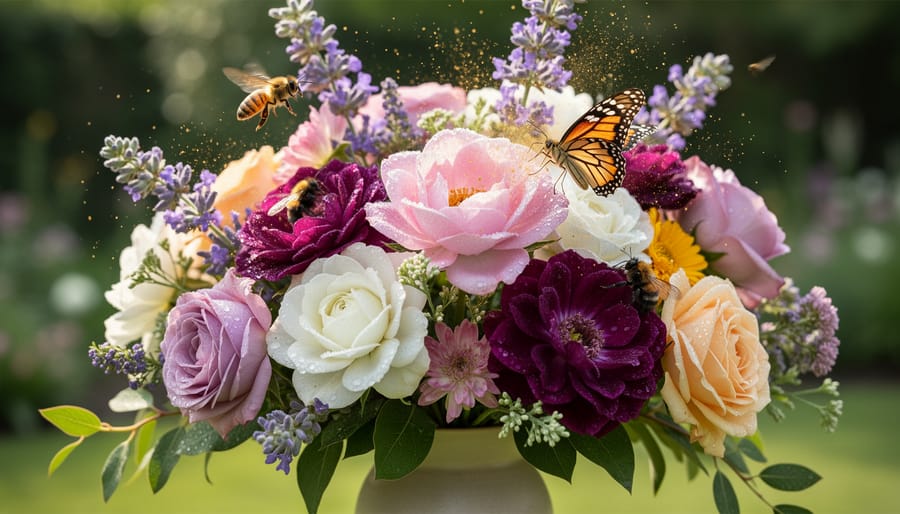
A painting is finished the day the artist signs it. A garden never is, and that’s the secret ingredient most beginners overlook. Think of time as a fourth dimension you get to design.
Start with bloom succession. Early risers like crocus, daffodils, and primroses wake the bed up in spring. Peonies, salvia, and coneflowers carry the middle of the season. Then asters, sedum, and goldenrod take the stage as days shorten. If you sketch out three or four plants for each stretch, there’s always something to look at, and the bed never goes quiet.
Scent adds another layer entirely. Plant a fragrant favorite like lavender, sweet alyssum, or old-fashioned roses near a path or seating spot, where you’ll actually catch it. A breeze does the rest.
Then there’s movement. Ornamental grasses sway and shimmer, and a patch of bee balm hums with visiting pollinators, bringing the whole scene to life. Butterflies drifting through feel like brushstrokes nobody planned.
A simple habit helps: snap a photo of your bed each month. Gaps in color will jump out, and you’ll know exactly where to tuck in something new next season.
Styles of Flower Artistry: From Cottage Charm to Modern Minimalism
Think of garden styles the way you’d think of art movements. Each one has its own mood, its own favorite materials, and its own way of making you feel when you step outside. You don’t have to pick just one forever, either. Plenty of gardeners borrow a bit from here and there until the garden feels like theirs.
Here are five styles worth knowing:
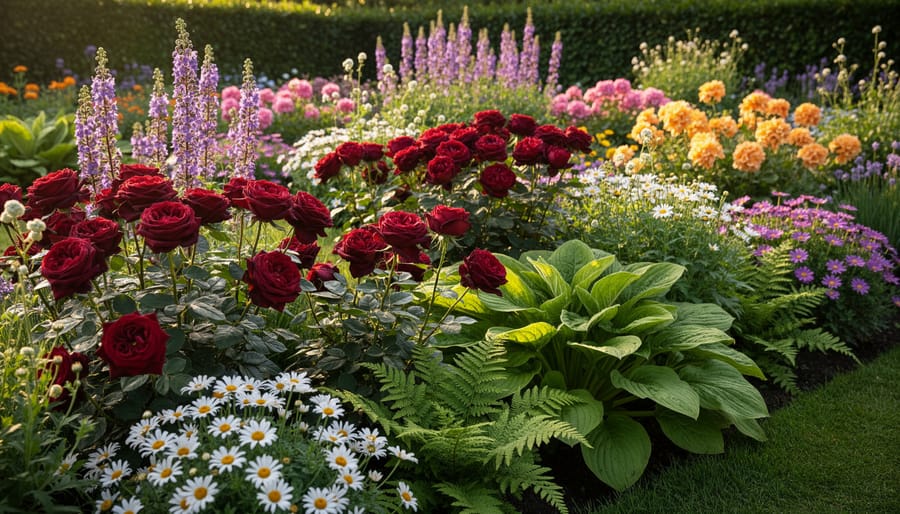
- Cottage: Foxgloves, hollyhocks, delphiniums, and old-fashioned roses spill over each other for a feeling of generous, happy abundance.
- Prairie or naturalistic: Purple coneflower, black-eyed Susan, and swaying native grasses create a loose, wild-meadow calm that hums with pollinators.
- Formal: Clipped boxwood edges, tulips, and rows of matching roses or salvias bring order, symmetry, and a sense of quiet elegance.
- Cutting garden: Zinnias, cosmos, dahlias, and snapdragons grow in tidy working rows, bringing a cheerful, bountiful energy you can carry indoors.
- Modern minimalist: A few bold plants like alliums, ornamental grasses, and white hydrangeas repeat in clean masses for a feeling of calm and restraint.
Notice how much the palette changes the personality. Cottage gardens love a soft, mixed riot of pinks, purples, and creams. Prairie beds lean on warm golds and rosy purples that echo late summer light. Formal and minimalist gardens usually stick to two or three colors, which is exactly what makes them feel so deliberate.
Sustainability fits into every one of these styles, and it’s easier than it sounds. In a cottage bed, swap some imported favorites for native lookalikes, such as using native columbine or penstemon where you might have planted a fussier perennial. A prairie garden is already built around natives, so it’s practically a pollinator buffet. Even a formal or minimalist design can welcome bees if you choose single-petal flowers over heavily doubled ones, since the open centers give pollinators easy access to nectar.
If you’re unsure where to begin, look around your own yard first. Sunny and open? Prairie might love it. Small and tucked beside the house? A cottage corner could be perfect. Let the space nudge you toward the style that fits.
A Conversation With a Master Gardener: Seeing Flowers as Art
Placeholder: this interview is to be sourced and confirmed with a real master gardener before publishing. The Q&A below is a draft format only.
Q: How do you start composing a garden?
[Interviewee’s answer to be confirmed. Draft direction: they begin with the view from the window or patio chair, picturing the garden the way someone will actually experience it, then choose one anchor plant and build outward.]
Q: What’s a favorite flower combination?
[Interviewee’s answer to be confirmed. Draft direction: a pairing built on contrast in shape and texture, such as airy spikes against rounded blooms, with repeating color to tie it together. Ask them to explain why it works and when it peaks.]
Q: Tell us about a planting that didn’t go as planned.
[Interviewee’s answer to be confirmed. Draft direction: a bed that looked lovely in spring but fell flat by midsummer because everything bloomed at once. Ask what they changed the following year, such as layering early, mid, and late bloomers.]
Q: What’s one piece of advice for beginners?
*[Interviewee’s answer to be confirmed. Draft direction: start small, watch what thrives in your own conditions, and treat every mistake as a sketch rather than a failure. If they mention favoring regional plants, this is a natural spot to point readers toward native plants as hardy, pollinator-friendly choices that suit your local garden.]*
Editor’s note for publishing: Once the interview is recorded, replace each bracketed prompt with the gardener’s own words, keeping answers to two or three sentences so the section stays short and easy to scan. Add one human detail, like a favorite tool or a garden memory, to keep the tone warm. Please remove this note and the placeholder banner before the article goes live.
Putting Flower Artistry to Work: From Garden Beds to Your Own Home
Once you see flowers as art, you can put that eye to work almost anywhere. The same ideas of color, shape, and timing scale from a whole front yard down to a single pot by the door.
A front-yard bed is your biggest canvas. Choose one tall focal plant, like a coneflower or a peony, and let shorter plants frame it. Passersby will notice the repetition of color before they notice any single bloom.
Containers on a patio are the easiest place to practice. A pot gives you a built-in frame, so even a beginner can build a tidy composition. A small cutting garden tucked into a sunny corner lets you bring the art indoors, since zinnias, cosmos, and snapdragons all reward regular snipping with more blooms. A pollinator border along a fence adds movement and buzzing life, and it feeds the bees and butterflies that keep your garden humming.
If you’re new to all this, it helps to start small with one bed or one container. Gardeners who plan their space around how they actually use it often borrow ideas from kitchen-to-garden design placing the things they love closest to the door.
Mini project: your first “painted” bed or container
1. Pick a focal plant. Choose one star, such as a dahlia, geranium, or salvia, and place it where the eye will land first.
2. Add fillers. Plant mounding companions around the focal plant to fill gaps and give the display body.
3. Tuck in spillers. Trailing plants like sweet potato vine or lobelia soften the edges and spill over the rim or border.
4. Repeat your colors. Echo one or two shades in groups of three or five so the whole piece feels connected.
5. Mulch. Spread a two-inch layer to hold moisture, calm weeds, and give the plants a clean backdrop.
6. Water in. Give everything a deep, slow drink to settle the roots.
Then step back and enjoy it. Notice what works, and make a note of what you’d move next time.
Common Questions About Flower Artistry
Every season, readers ask us the same handful of questions about turning a plain bed into something beautiful. Here are the ones that come up most, answered in plain language.
Do I need design training to make my garden look artistic?
Not at all. If you’ve ever picked out a favorite shirt or arranged a bouquet on your kitchen table, you already have an eye for it. Start with plants you love and trust your instincts.
How many colors should I use?
Two or three is a comfortable starting point, plus green foliage as your calm backdrop. Repeating those colors in a few spots ties the whole bed together.
Can I make a small space feel artistic without spending much?
Absolutely. A single pot with a tall focal plant, a mounding filler, and a trailing spiller can feel like a finished painting. Seeds, divisions swapped with neighbors, and cuttings are budget-friendly ways to build the look over time.
What if my plants don’t bloom when I expected?
It happens to every gardener, and it’s rarely a failure. Weather, sun exposure, and plant age all shift bloom timing, so check the light and give it another season before judging. Mixing early, mid, and late bloomers means there’s usually something in flower to enjoy.
If you’re still wondering about something specific, you’re in good company. Browse our other gardening guides for deeper dives, or share your question with our community. Chances are another gardener has wrestled with the same puzzle and would love to swap notes.
Every garden you’ve ever loved started the same way: someone looked at a patch of ground and imagined what it could become. That’s the heart of cultivated artistry. You don’t need a studio, a degree, or a perfect plan. You need a few plants, a little curiosity, and the willingness to try.
So pick one idea from this article and make it yours this season. Maybe it’s pairing two colors you’ve never put together, repeating a favorite bloom in a drift of three, or tucking a container of fragrant flowers beside your door. Small experiments teach more than any amount of planning, and even the ones that don’t go as expected leave you wiser for next year.
Your garden is a canvas that keeps changing, and you’re the artist who gets to watch it unfold. We’d love to see what you create, so share photos of your beds, borders, and pots with the Bluestem Gardening community. Your living masterpiece might be just the spark someone else needs to start theirs.