Five renewable energy sources can transform the way you power your garden maintenance: solar, wind, hydropower, biomass, and geothermal energy. Each offers practical applications for everyday tasks, from charging electric mowers and hedge trimmers to running irrigation systems and greenhouse heaters, all while cutting your carbon footprint and reducing energy costs over time.
The shift to renewable energy in your outdoor spaces isn’t just about environmental responsibility. It’s about gaining energy independence and discovering how well clean power actually works for the hands-on tasks you do every week. When you pair renewable energy with greener garden tools you’re creating a maintenance system that works with nature rather than against it.
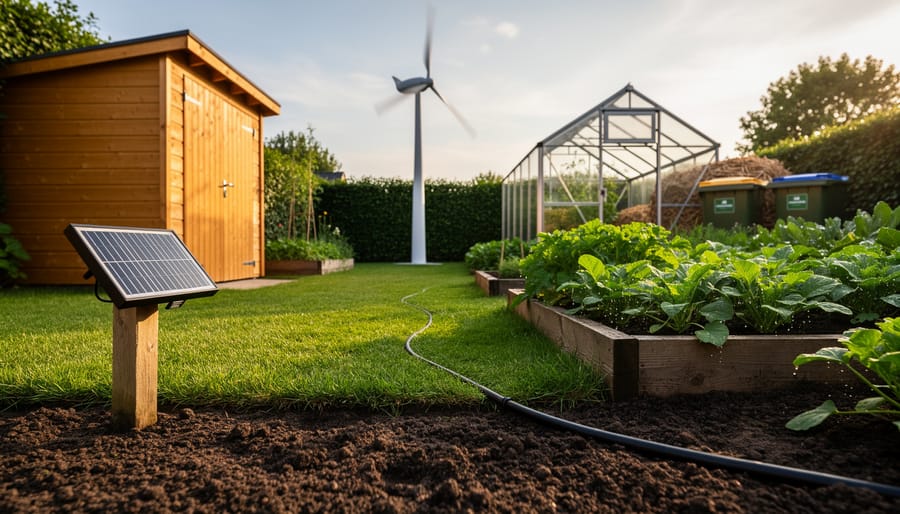
Here’s what makes this shift achievable in 2026: the technology has matured beyond early adoption hurdles. Solar panels designed specifically for garden sheds now come with weather-resistant housings and simple plug-and-play setups. Small wind turbines can supplement power in exposed garden areas. Biomass systems turn your yard waste into usable energy rather than sending it to the landfill.
The key is matching the right renewable source to your specific site conditions and maintenance needs. A shaded urban garden calls for different solutions than a sun-drenched rural property with steady breezes. You don’t need to commit to all five sources at once. Most gardeners find success starting with one renewable option, learning how it performs through the seasons, then expanding from there.
This guide walks through each renewable resource with a focus on real-world garden applications, helping you choose the options that make sense for your space, budget, and the tools you already use.
How We Chose These Renewable Energy Resources
We didn’t just pick the five most popular renewable energy options and call it a day. Each resource in this guide earned its spot by meeting specific standards that matter to gardeners and homeowners who want practical, achievable solutions for their outdoor spaces.
Our selection criteria focused on what actually works in real-world garden and home maintenance scenarios:
- Practical application for common tasks like powering tools, irrigation systems, lighting, and climate control
- Accessibility for average homeowners without requiring specialized technical knowledge or connections
- Cost-effectiveness with reasonable upfront investment and clear long-term savings potential
- Measurable environmental impact that genuinely reduces your carbon footprint
- Proven reliability in outdoor settings where weather and seasonal changes test durability
We consulted with experienced gardeners who’ve integrated renewable energy into their maintenance routines, reviewed feedback from landscape professionals, and prioritized options with established track records rather than experimental technologies. The result is a list of resources that beginners can start using within a season while offering enough depth to satisfy serious sustainability enthusiasts. If a renewable energy option couldn’t handle the daily demands of an active garden or required too much compromise, it didn’t make the cut.
1. Solar Power: The Gardener’s Best Friend
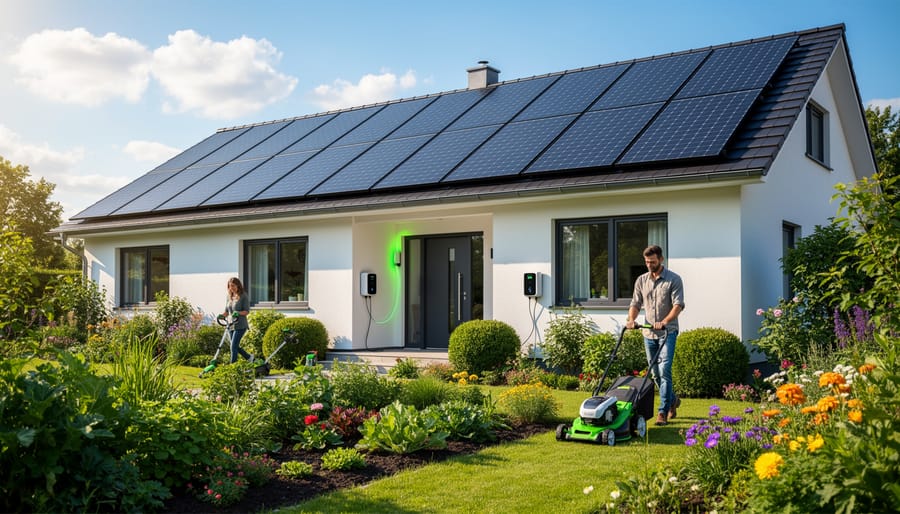
Solar panels have become the go-to renewable energy source for gardeners who want to maintain their outdoor spaces while cutting their carbon footprint. Unlike other renewable options that require specific property features, solar works almost anywhere you have a patch of sunlight, making it ideal for everything from powering your electric hedge trimmer to keeping your irrigation system running through dry spells.
Most gardeners start with portable solar panels rated between 100 and 300 watts. These small units charge battery stations that can run cordless tools like string trimmers, leaf blowers, and small electric tillers for several hours on a single charge. A 200-watt panel typically costs between $150 and $300 and can fully charge a tool battery in four to six hours of direct sunlight. If you’re using electric tools regularly, you’ll recover that investment within two years compared to buying replacement batteries or running extension cords from your house.
Solar-powered irrigation represents where this technology really shines for garden maintenance. A solar water pump connected to your rain barrel can move 200 to 400 gallons per hour, enough to water a 500-square-foot garden bed through a drip line system. These pumps run $80 to $200 and eliminate the need to manually water or rely on municipal water during peak summer rates. The pump draws power directly from its attached panel during the day and many models include battery backup for early morning or evening watering schedules.
Garden lighting is the easiest solar application to implement. Today’s solar path lights and accent lighting are light years beyond the dim options from a decade ago. Quality LED solar stakes now provide genuine illumination for walkways and garden features, with better models offering 8-12 hours of light after a full day of charging. Expect to spend $15 to $40 per light, with zero installation difficulty beyond pushing them into the ground where you want them.
The real advantage of solar for garden maintenance is scalability. Start with a few path lights this season, add a rain barrel pump next year, and expand to a proper battery charging station when your budget allows. Each addition pays for itself through eliminated electric costs while giving you more freedom to maintain your garden without worrying about outlet locations or extension cord tangles.
2. Wind Energy: Harnessing Breezes for Small-Scale Power
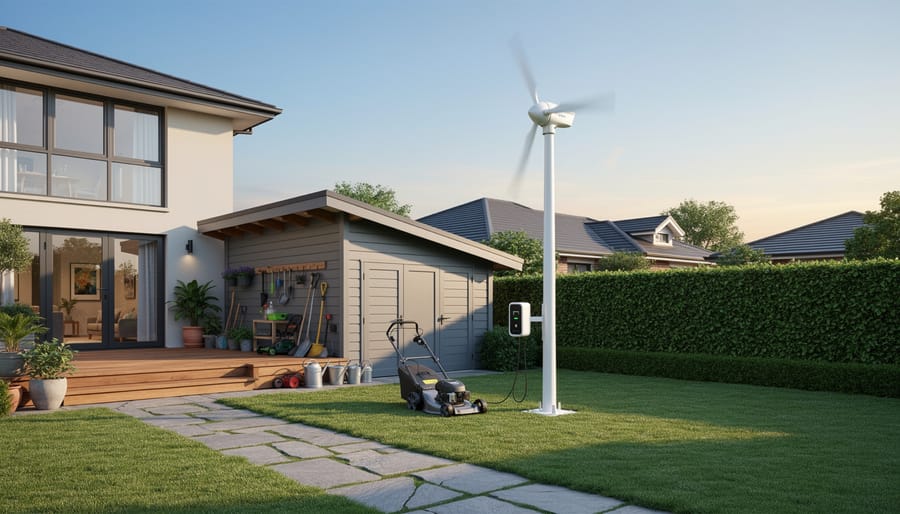
Wind energy offers an intriguing supplement to solar power for gardeners with the right conditions. Small wind turbines, typically ranging from 400 watts to 1.5 kilowatts for residential use, can generate electricity for garden sheds, greenhouse fans, automated watering systems, and battery banks that power your maintenance tools. Unlike solar panels that need direct sunlight, wind turbines work day or night, making them valuable during cloudy weeks or winter months when your garden still needs care.
The catch is location. Your property needs consistent winds of at least 10-12 mph to make a small turbine worthwhile. Coastal areas, hilltops, and open plains are ideal, while suburban lots surrounded by trees and buildings rarely generate enough wind. Most residential turbines need mounting 30 feet above nearby obstructions, which means a tower or tall pole. Local zoning often restricts heights, and some homeowners associations prohibit wind turbines entirely, so check regulations before investing.
For most gardeners, wind makes sense as a complement to solar rather than a replacement. A hybrid system lets you capture energy when it’s sunny and when it’s breezy, smoothing out the gaps. A 400-watt turbine paired with two 200-watt solar panels creates a more reliable year-round power source for a greenhouse or workshop than either resource alone.
The investment runs higher than solar. Expect to spend $1,500 to $4,000 for a quality small turbine plus installation, compared to $600 to $1,200 for comparable solar capacity. Wind turbines also need maintenance every few years to check bearings and blades. If your property sits in a wind corridor and you’ve confirmed consistent speeds with a simple anemometer test over several weeks, wind can offset 30-50% of your outdoor maintenance energy needs. For sheltered gardens, stick with solar and skip the frustration of an underperforming turbine.
3. Biomass Energy: Turning Garden Waste into Power
Your garden waste isn’t just compost material, it’s a renewable energy source waiting to be tapped. Every time you rake leaves, prune branches, or mow the lawn, you’re creating fuel that can power heating systems, generate electricity, or produce cooking gas. Unlike solar or wind power that depend on weather conditions, biomass energy uses the organic material you’re already producing through regular garden maintenance.
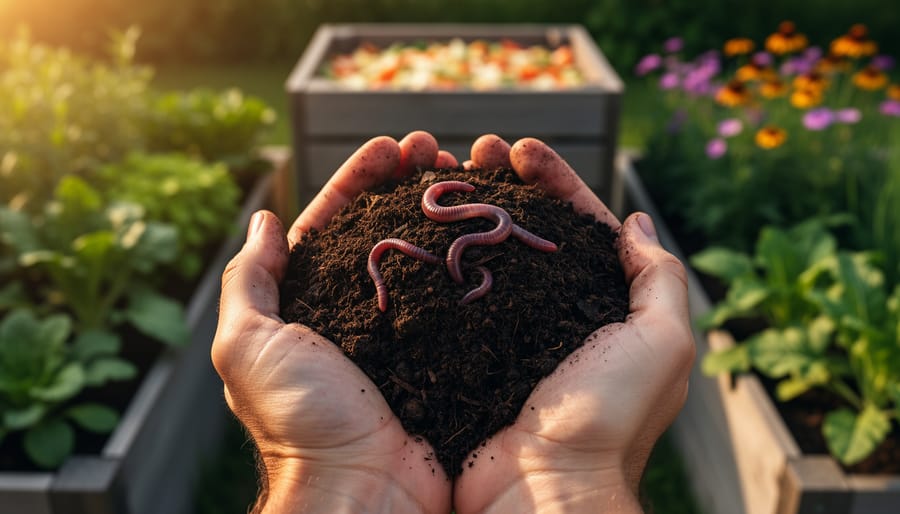
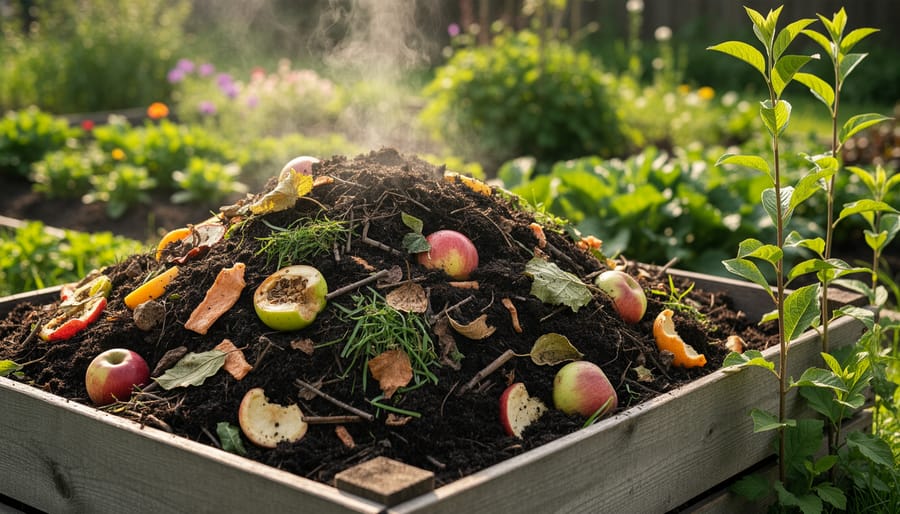
The most accessible biomass application for home gardeners is compost heat recovery. When organic materials decompose, they generate significant heat through microbial activity. A properly built hot compost pile can reach 140-160°F at its core. Smart gardeners are capturing this heat to warm greenhouses, root cellars, or even domestic hot water. A simple system involves running coiled tubing through the center of a large compost bin (at least 4x4x4 feet), circulating water through the coils, and directing that heated water where you need it. One gardener in Vermont keeps his 10×12 greenhouse above freezing all winter using nothing but heat from decomposing leaves and kitchen scraps.
Biogas digesters take the concept further by converting organic waste into methane gas you can burn for cooking or heating. These systems work best in warmer climates where anaerobic bacteria stay active. A basic backyard digester processes kitchen waste, grass clippings, and animal manure in a sealed container, producing enough gas to power a small burner or camp stove. While the initial setup requires some DIY skills, the fuel source costs nothing, you’re literally cooking dinner with yesterday’s carrot peelings.
For those with abundant woody waste, biomass briquettes offer another option. You can compress dry leaves, sawdust, and shredded paper into dense blocks that burn longer and hotter than loose materials. These work wonderfully in outdoor fire pits, chimineas, or wood stoves. The beauty of this closed-loop system is that your maintenance activities feed your energy needs. The more you garden, the more fuel you produce.
4. Hydropower: Small-Scale Water Solutions
If you’re fortunate enough to have a stream, creek, or consistent water flow on your property, hydropower offers a surprisingly practical renewable option for garden maintenance. While large-scale hydroelectric dams grab headlines, small-scale and micro-hydro systems can generate meaningful power for outdoor spaces, and they operate continuously, unlike solar panels that rely on sunshine.
Micro-hydro systems capture energy from flowing water using small turbines or water wheels. Even modest flow rates can produce enough electricity to run LED lighting in garden sheds, charge tool batteries, or power monitoring equipment for greenhouses. The beauty of these setups is their reliability: water keeps flowing day and night, providing steady energy output. For properties with natural water features, a properly installed micro-hydro generator can become a workhorse that supports year-round garden operations.
If you don’t have stream access, gravity-fed water systems offer another angle. These clever designs use elevation differences to move water without electricity, perfect for irrigation on sloped properties. Water stored uphill flows downward naturally, creating pressure that can power simple pumps or drip irrigation networks. Some gardeners combine this concept with rain barrel systems enhanced by small hydroelectric generators. As collected rainwater flows from barrel to garden, it passes through a miniature turbine that charges batteries for tools or lights.
The applications are admittedly limited compared to solar, but for gardeners with the right terrain, hydropower complements organic gardening practices beautifully. It taps into natural cycles already at work on your property, turning water movement into a quiet, continuous energy source that supports your maintenance routines without fossil fuels.
5. Geothermal Energy: Underground Climate Control for Greenhouses
Geothermal energy taps into the earth’s constant underground temperature to create surprisingly effective climate control for serious gardeners. Just a few feet below the surface, soil maintains a steady 50-55°F year-round, regardless of what’s happening above ground. This natural temperature buffer becomes your secret weapon for maintaining optimal growing conditions without the energy bills that typically come with heated greenhouses or climate-controlled spaces.
The most practical application for home gardeners is a ground-coupled system for greenhouses. By burying pipes three to six feet underground and circulating air or water through them, you can pre-heat cold winter air before it enters your growing space or cool hot summer air before it reaches your plants. One gardener I spoke with in Wisconsin cut his greenhouse heating costs by 60% using a simple DIY system with PVC pipes buried beneath his greenhouse floor. The upfront work involved digging trenches and laying pipe, but the system has run maintenance-free for seven years.
Earth-sheltered growing structures take this concept further by partially burying greenhouses, root cellars, or potting sheds into hillsides or berms. The surrounding earth acts as natural insulation, keeping spaces warmer in winter and cooler in summer. These structures blend beautifully into an eco-friendly home garden while delivering year-round temperature stability.
Here are practical ways geothermal energy can enhance your garden maintenance spaces:
- Ground-source heat exchangers for greenhouse climate control using buried pipe loops
- Earth-sheltered root cellars that maintain perfect storage temperatures for harvested produce
- Geothermal heating for propagation benches and seedling areas
- Underground air circulation systems for potting sheds and tool storage
- Passive cooling for compost tea brewing stations and work areas
- Temperature-regulated cold frames using shallow ground coupling
The initial investment ranges from $500 for a basic DIY ground-coupled system to $3,000-$5,000 for a professionally installed greenhouse setup. That sounds steep, but serious gardeners with year-round growing ambitions typically see payback within five to seven years through reduced heating and cooling costs. For those building a self-sustaining garden geothermal systems align perfectly with long-term sustainability goals, essentially paying for themselves while extending your growing season by months.
Getting Started: A Simple Step-by-Step Approach
Ready to bring renewable energy into your garden? Here’s how to start without getting overwhelmed.
Step 1: List what you actually power outdoors. Walk through your property and note everything that uses electricity, hedge trimmers, lawn mowers, irrigation timers, pathway lights, greenhouse heaters. Check their wattage (usually listed on a label or in the manual). This gives you a real number to work with instead of guessing.
Step 2: Study your property’s natural assets. Spend a week observing where sunlight hits longest, whether you get consistent breezes, if water flows anywhere naturally, and what garden waste you generate weekly. Take photos at different times of day. Your property will show you which renewable resource makes the most sense.
Step 3: Pick one system and start small. Don’t try to power everything at once. Choose solar path lights or a single solar panel for your potting shed. The point is to learn how renewable systems work in your specific conditions. Success with a small project builds confidence for bigger ones.
Step 4: Track what you’re spending and saving. Note your initial investment, then monitor energy costs over the next few months. Most gardeners see payback within 2-5 years for solar installations, faster for simple applications like lighting. Knowing your numbers keeps you motivated.
Step 5: Expand gradually as you learn. Once your first system runs smoothly, add another. Maybe solar lights lead to solar-powered irrigation, then a small wind turbine for your tool shed. Layering these earth-friendly practices over time makes the transition manageable and lets you spread costs across seasons.
You’re not rebuilding your entire garden overnight. You’re making one smart choice, learning from it, and building on that foundation.
What Gardeners Are Asking About Renewable Energy
What should I expect to spend on a basic solar setup for my garden?
A starter solar system for garden lighting and small tool charging typically runs $300-800, while a more comprehensive setup with panels for pumps and irrigation might cost $1,500-3,000. Most gardeners see a return on investment within 3-5 years through reduced electricity bills.
Can I use renewable energy if I’m renting my home?
Absolutely. Portable solar panels, battery systems, and small wind turbines that don’t require permanent installation work perfectly for renters. Focus on moveable solutions like solar-powered garden lights, portable charging stations, and freestanding equipment you can take with you.
Is it worth combining different renewable energy sources?
Combining sources makes excellent sense for gardens with varying conditions. Solar works during sunny days while wind turbines generate power at night or during cloudy weather, creating a more reliable energy supply. Start with your strongest resource, then add complementary systems as your needs grow.
How much maintenance do these systems need?
Most renewable energy systems require minimal upkeep. Solar panels need occasional cleaning (a quick rinse every few months), wind turbines benefit from annual inspections, and biomass systems need regular feeding with garden waste. Plan for about 1-2 hours of maintenance per season for basic setups.
Can I install these systems myself or do I need a professional?
Simple projects like solar garden lights, small battery charging stations, and compost heat systems are perfect DIY projects with basic tools. However, grid-tied solar installations, permanent wind turbines, and any electrical work beyond low-voltage systems should involve licensed professionals for safety and local code compliance.
These questions reflect what I hear most often from gardeners taking their first steps toward renewable energy. The beauty of starting small is that you can learn as you go, building confidence with straightforward projects before tackling more complex installations. Your garden becomes a hands-on classroom for sustainable living.
Choosing renewable energy for your garden doesn’t mean overhauling everything at once. Start with one resource that matches your space and needs, maybe solar lights along your pathways or a simple rain barrel system. As you see the benefits, you’ll naturally want to expand.
These five renewable options aren’t just good for the planet; they actually make garden maintenance easier and more affordable over time. Solar-powered irrigation runs without electricity bills. Biomass turns your yard waste into useful heat. Even small wind turbines can keep your shed powered year-round.
What’s exciting is that every gardener can contribute to cleaner energy use, whether you’re tending a balcony herb garden or managing several acres. Your choices ripple outward, inspiring neighbors and demonstrating that sustainable living fits into everyday routines.
The garden has always been a place where we nurture growth and witness natural cycles. By powering your maintenance tasks with renewable energy, you’re simply extending that philosophy. You’re creating a space that gives back to the environment while it flourishes, and that’s something worth cultivating.