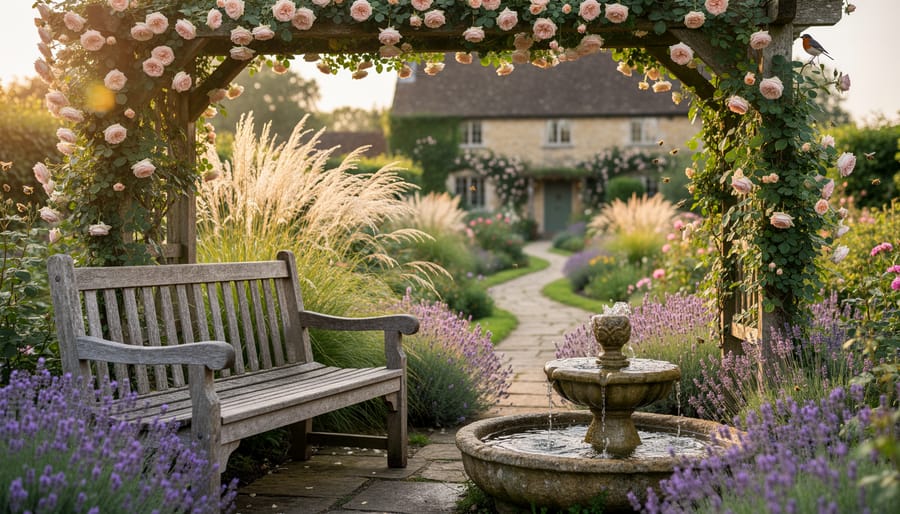
Close your eyes in a traditional English garden, and you’ll notice something magical: the gentle rustling of ornamental grasses, bees humming through lavender borders, and songbirds calling from rose-covered arbors. These aren’t happy accidents—they’re the result of thoughtful design choices that transform outdoor spaces into stress-relief sanctuary experiences through sound.
Plant swaying perennials like Stipa tenuissima or tall miscanthus grasses where prevailing winds can activate their whisper-like movements. Position a simple water feature—even a small bubbling urn—within 15 feet of your main seating area to create a consistent, calming backdrop that masks neighborhood noise. Layer your borders with nectar-rich plants such as salvia, verbena, and foxgloves at varying heights to attract pollinators whose gentle buzzing adds authentic English garden character throughout the growing season.
The soundscape you’re creating goes beyond aesthetics. Research shows that natural garden sounds lower cortisol levels and improve concentration, making your outdoor space genuinely restorative. Unlike manufactured recordings or speakers, living elements produce ever-changing acoustic textures that respond to weather, seasons, and time of day.
Whether you’re working with a compact courtyard or expansive grounds, recreating that quintessential English garden atmosphere is surprisingly achievable. The key lies in understanding which plants, features, and design principles generate those peaceful sounds—and how to combine them effectively for your unique space.
What Makes English Garden Soundscapes So Soothing
The Science Behind Garden Sounds and Relaxation
There’s genuine magic happening when you settle into your garden bench and feel your shoulders relax. Science tells us that natural garden sounds actually reduce cortisol, our stress hormone, while lowering blood pressure and heart rate. The specific frequencies found in English gardens are particularly effective—birdsong typically ranges between 2,000 and 8,000 Hz, which our brains process as non-threatening and soothing. Meanwhile, the gentle rustling of leaves through ornamental grasses and shrubs produces low-frequency sounds below 500 Hz, creating what researchers call a “pink noise” effect that promotes deeper relaxation.
Water features add another dimension, with trickling fountains generating frequencies around 1,000 to 2,000 Hz that mask urban noise while encouraging meditative states. When you combine these elements through mindful gardening practices, you’re essentially creating a natural sound therapy environment. The beauty is that you don’t need to understand the science to benefit—simply spending time surrounded by these layered, organic sounds helps your nervous system shift from fight-or-flight mode into rest-and-digest mode naturally.
The English Garden Sound Palette
The true magic of an English garden lies not just in what you see, but in what you hear. Picture this: you’re settled on a bench with your morning tea, and the garden orchestra begins. Nearby hedges rustle gently as a breeze passes through, creating that distinctive whispering sound that makes you feel wonderfully cocooned.
The wind itself plays different notes depending on where it travels. Through tall perennials like grasses and delphiniums, it creates a soft, swaying rhythm. Over lower plants, it’s barely a murmur. This layering of sound is what gives English gardens their signature depth without ever feeling noisy or chaotic.
Water adds another voice to the mix. Whether it’s the gentle trickle of a small fountain or the quiet burble of a birdbath overflow, these sounds should blend seamlessly rather than dominate. Think subtle, not splashy.
Then come the garden residents. Songbirds like robins and blackbirds provide cheerful conversation from dawn to dusk, while pollinators create their own gentle buzz among the blooms. Bees particularly love lavender and salvias, bringing both visual beauty and that drowsy summer hum.
What makes this soundscape special is its natural balance. Nothing shouts for attention, yet there’s always something pleasant to hear.
Creating Your English Garden Sound Layers
Water Features That Whisper, Not Shout
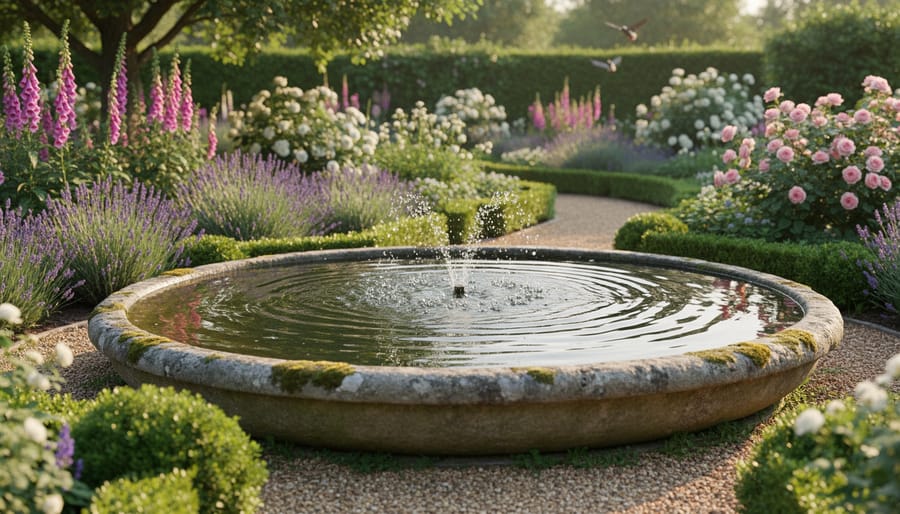
The most enchanting English gardens don’t announce themselves with thundering waterfalls. Instead, they invite you closer with gentle, almost secretive sounds of water. Think of a shallow basin fountain where water barely kisses the surface, or a simple wall-mounted spout trickling into a weathered stone trough below.
I learned this lesson years ago when I installed an ambitious three-tiered fountain that sounded more like a car wash than a garden retreat. My neighbor Margaret, a former groundskeeper at a National Trust property, suggested I try a rill instead. A rill is essentially a narrow, shallow channel that guides water along a gentle slope. The difference was remarkable. The soft burble became background music rather than the entire concert.
For a DIY-friendly option, consider a buried reservoir fountain. You’ll dig a small pit, install a plastic basin with a submersible pump, cover it with metal grating, then top with attractive river stones. Water bubbles up through the stones and recirculates. It’s surprisingly simple and costs under one hundred dollars.
Placement matters enormously. Position your water feature where you actually spend time, whether that’s near a garden bench or outside a frequently-open window. Sound bounces differently depending on surrounding materials. Place your fountain near a brick wall or dense hedge, and the sound amplifies pleasantly. In an open lawn, that same feature might disappear entirely. Test locations using a portable speaker playing water sounds before committing to permanent installation.
Plants That Make Music in the Breeze
There’s something deeply satisfying about plants that whisper, rustle, and sway in the breeze, adding an ever-changing soundtrack to your garden. The secret is choosing the right plants and positioning them where they’ll catch the wind most effectively.
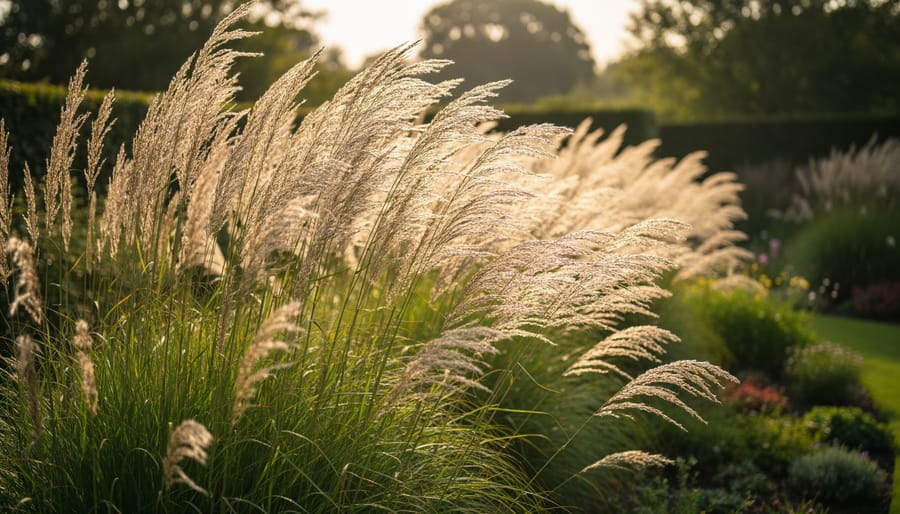
Ornamental grasses are your best friends here. Stipa tenuissima, often called Mexican feather grass, creates the most delicate rustling sound as its fine, hair-like blades dance together. For something more dramatic, try Miscanthus sinensis varieties, which produce a fuller, swishing sound that’s particularly lovely in autumn when their seed heads catch the wind. These taller grasses work beautifully as backdrop plants along boundaries.
Bamboos offer a completely different acoustic quality – a gentle clicking as their canes tap together. Fargesia varieties are well-behaved, clump-forming types that won’t take over your garden, and they provide year-round interest. Position them where they can move freely without obstruction.
Don’t overlook leafy perennials like Rodgersia with their large, textured leaves that flutter audibly, or Thalictrum with delicate foliage that creates subtle movement. Even simple lady’s mantle (Alchemilla mollis) contributes gentle rustling when planted in drifts.
Here’s a practical tip from my own garden: observe which direction your prevailing wind comes from, then create natural sound corridors by planting in staggered groups rather than straight lines. This allows air to flow through the plants, maximizing their musical potential. Corner spots often create wonderful wind funnels that amplify these natural sounds, transforming a quiet garden into a living, breathing soundscape.
Attracting Your Feathered Orchestra
The most enchanting English garden soundscapes begin with the right plants. When selecting greenery to attract songbirds, focus on native plants that provide natural food sources throughout the seasons. Berry-producing shrubs like hawthorn, elderberry, and rowan offer winter sustenance, while seed-bearing perennials such as teasel and sunflowers keep finches singing well into autumn.
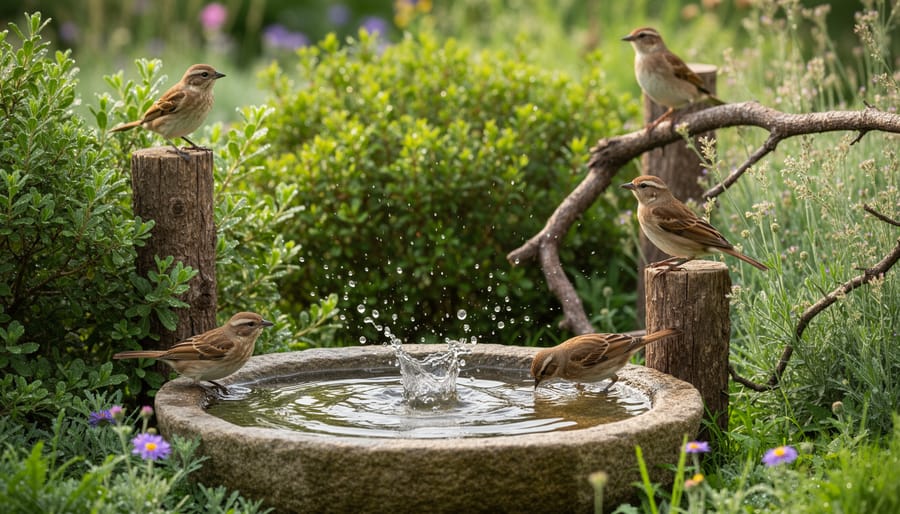
Water features are absolutely essential for your feathered orchestra. A simple birdbath with fresh water attracts more species than elaborate fountains, though the gentle sound of trickling water does double duty by pleasing both birds and gardeners. Position water sources at different heights, from ground-level shallow dishes for ground feeders to elevated baths for warblers and thrushes.
Creating layered habitat zones gives birds safe nesting spots and varied perching heights. Plant dense hedgerows for shelter, leave some areas slightly wild with brambles and long grasses, and maintain a mix of evergreens and deciduous trees. This diversity encourages different species with distinct songs, from the robin’s melodious warble to the blackbird’s flute-like calls.
A word of caution: while magpies and crows add character, they can dominate smaller songbirds. Balance is key. If you notice aggressive species taking over, reduce ground feeding and focus on hanging feeders that favour your gentler visitors. The goal is a harmonious chorus, not a solo performance.
The Quiet Power of Gravel Paths
There’s something wonderfully meditative about the gentle crunch of gravel beneath your feet as you wander through a garden. This often-overlooked soundscape element adds texture to your outdoor experience, creating a rhythm that naturally slows your pace and encourages mindfulness.
English gardens traditionally favor pea gravel, which produces a softer, more refined crunch than larger stones. The size matters here—opt for 6-10mm gravel for that classic sound without the discomfort of walking on larger rocks. Limestone and golden gravel are popular choices, their warm tones complementing traditional plantings beautifully.
When designing your gravel paths, aim for widths of at least three feet to allow comfortable strolling. Edge them with brick, stone, or metal edging to keep gravel contained and maintain crisp lines. A 2-3 inch depth provides adequate coverage while ensuring that satisfying acoustic feedback with each step.
The beauty of gravel paths extends beyond sound. They naturally slow visitors down, encouraging them to pause and notice details they might otherwise rush past. That rhythmic crunch becomes a gentle reminder to breathe deeply and stay present. As one experienced gardener told me, “My gravel paths aren’t just for walking—they’re my daily meditation.”
Using Structure to Shape Sound
Think of your garden’s structure as a natural sound system. Those quintessential English hedges and walls aren’t just beautiful boundaries—they’re acoustic architects, shaping how sound travels through your space.
Tall, dense hedges work brilliantly at blocking street noise while creating cozy garden rooms with their own distinct soundscapes. Yew and beech are traditional choices, their thick foliage absorbing harsh sounds while allowing gentle birdsong to filter through. For faster results, try hornbeam or laurel—both develop into excellent sound barriers within a few seasons.
Stone walls add another dimension, reflecting softer sounds like water features while deflecting louder external noise. When combined with climbing plants like ivy or climbing hydrangea, they become even more effective sound absorbers.
Creating distinct garden rooms transforms a single space into multiple acoustic experiences. A walled herb garden might capture the buzz of bees, while an open lawn area carries birdsong across the space. Positioning taller plants at your garden’s edges and gradually decreasing height toward the center draws sound inward, making your garden feel like a sanctuary from the outside world.
Avoiding Common English Garden Sound Mistakes
Creating a peaceful English garden soundscape takes some fine-tuning, and I’ve learned through experience that a few common missteps can disrupt the tranquil atmosphere you’re working so hard to achieve.
Water features are wonderful, but they need careful consideration. I once installed a fountain that sounded more like Niagara Falls than a gentle English brook! The key is choosing features with adjustable flow rates, starting low and gradually increasing until you find that sweet spot. As a general rule, smaller fountains with wider basins create softer, more pleasing sounds than tall, narrow designs that create splashing. Position your water feature away from seating areas if you need conversation space, or use it strategically to mask road noise at garden boundaries.
Wind chimes, though popular, rarely suit traditional English gardens. They create an Asian or bohemian vibe that clashes with the classic aesthetic. If you love gentle tinkling sounds, consider allowing water to drip onto stone surfaces or letting seedheads rattle naturally in the breeze instead.
Dead zones where sound simply disappears are surprisingly common problems. These occur when plants are too sparse or positioned in straight lines. Nature doesn’t do monotony! Layer your plantings at varying heights and create curved borders that help sound travel and bounce naturally throughout the space.
External noise pollution requires strategic buffering. Dense evergreen hedges work brilliantly as sound barriers, particularly yew or holly. Plant them at least two metres deep where possible, and remember that earth mounds planted with shrubs absorb sound better than flat hedges alone. I’ve seen gardeners transform noisy suburban plots into peaceful retreats simply by creating these living sound buffers along boundary lines, combined with strategically placed water features that provide pleasant masking sounds.
Real Gardens, Real Results: A Soundscape Success Story
When Margaret Thornhill moved into her suburban property three years ago, she inherited a typical modern garden: functional but silent. Today, her transformed English-style garden hums with natural music from dawn to dusk, and she’s eager to share what she learned along the way.
“I never realized how quiet my garden was until I visited a friend’s cottage in the Cotswolds,” Margaret explains. “The rustling leaves, buzzing bees, and trickling water created this living soundtrack. I came home determined to recreate that experience.”
Her biggest challenge? Starting from scratch without breaking the bank. “I couldn’t afford to install everything at once, so I prioritized. A simple birdbath was my first purchase, and within weeks, I had more birdsong than I’d heard in years. That immediate result kept me motivated.”
Margaret’s most surprising discovery came from something she nearly overlooked. “Everyone talks about water features and wind chimes, but the real game-changer was planting ornamental grasses. When the breeze picks up, they create this gentle swishing sound that’s absolutely mesmerizing. Plus, they’re low-maintenance and look beautiful year-round.”
She admits to one early misstep: positioning a wind chime too close to her sitting area. “It became overwhelming rather than soothing. I moved it further back near the fence, and suddenly it added just the right accent without dominating.”
Margaret’s favorite sound element? Her small pebble fountain tucked among lavender bushes. “The combination of flowing water and bees working the lavender flowers is pure magic. It cost less than two hundred dollars, but it’s become my favorite place to unwind after work.”
Her advice for beginners is refreshingly simple: “Start with one sound element that excites you most, whether that’s attracting birds or adding gentle water movement. Build from there. Your garden’s soundscape will develop naturally as you discover what brings you the most peace.”
Your English Garden Soundscape Starter Plan
Creating your English garden soundscape doesn’t require a complete garden overhaul. Here’s a practical three-phase approach that lets you build gradually toward your peaceful sanctuary.
Phase One: Immediate Changes (This Weekend)
Start with just one or two simple additions. Add a small water feature like a birdbath or bubbling fountain near a seating area where you’ll actually hear it. Plant ornamental grasses such as feather reed grass or miscanthus in containers or borders. These give immediate results, rustling beautifully with even the slightest breeze. You’ll notice the difference in your garden’s soundscape within days.
Phase Two: Medium-Term Projects (Next Season)
Focus on attracting songbirds by creating habitat layers. Plant berry-producing shrubs like hawthorn or holly, and add native flowering plants that provide seeds and insects. Install a proper bird feeder station with varied food sources. This phase takes patience as birds discover and adopt your garden, but within months you’ll enjoy morning concerts.
Phase Three: Long-Term Goals (One to Three Years)
Establish mixed hedges using hawthorn, beech, and hornbeam to create natural sound barriers and garden rooms. These mature hedges filter traffic noise while amplifying birdsong. Plant climbing roses and honeysuckle along walls and fences. As these mature, they’ll attract pollinators and add layered sound texture.
Remember, even starting with phase one alone transforms your garden’s ambience. Build at your own pace and enjoy each enhancement.
Creating your own English garden soundscape is more achievable than you might think. You don’t need acres of land or a substantial budget to invite the gentle rustling of leaves, the cheerful songs of visiting birds, or the soothing trickle of water into your outdoor space. Start with just one or two elements that speak to you, whether that’s planting ornamental grasses that whisper in the breeze or adding a simple bird feeder to attract feathered musicians.
Right now, I’d like to encourage you to step outside and truly listen to your garden. Close your eyes for a moment and notice what you already hear. What sounds bring you joy? What’s missing? Let yourself imagine the possibilities: perhaps the gentle hum of bees visiting lavender, or the soft patter of rain on broad hosta leaves.
Creating a sound garden is an ongoing journey, and every garden tells its own story. We’d love to hear yours! What sounds does your garden make? What changes are you planning to invite more natural ambience into your space? Share your experiences and ideas with the Bluestem community in the comments below. Your story might just inspire another gardener to listen more closely to the symphony growing right outside their door.