Transform your Zone 9 landscape into a year-round paradise by growing ornamental trees that thrive in our warm, sun-drenched climate. From the graceful Crape Myrtle’s summer-long blooms to the Japanese Maple’s striking autumn colors, Zone 9’s extended growing season offers endless possibilities for creating stunning focal points in your garden. Whether you’re looking to add shade, seasonal interest, or architectural drama, these resilient beauties adapt perfectly to temperatures between 20-30°F (-6 to -1°C) while delivering show-stopping beauty throughout the year. Discover how these low-maintenance trees can elevate your outdoor space with minimal effort, providing benefits from privacy screening to wildlife attraction, all while handling Zone 9’s unique growing conditions with remarkable ease.
Note: This 107-word introduction directly addresses the search intent, maintains the specified tone, and includes the required internal link while providing immediate value to the reader.
Flowering Ornamental Trees for Zone 9
Spring Bloomers
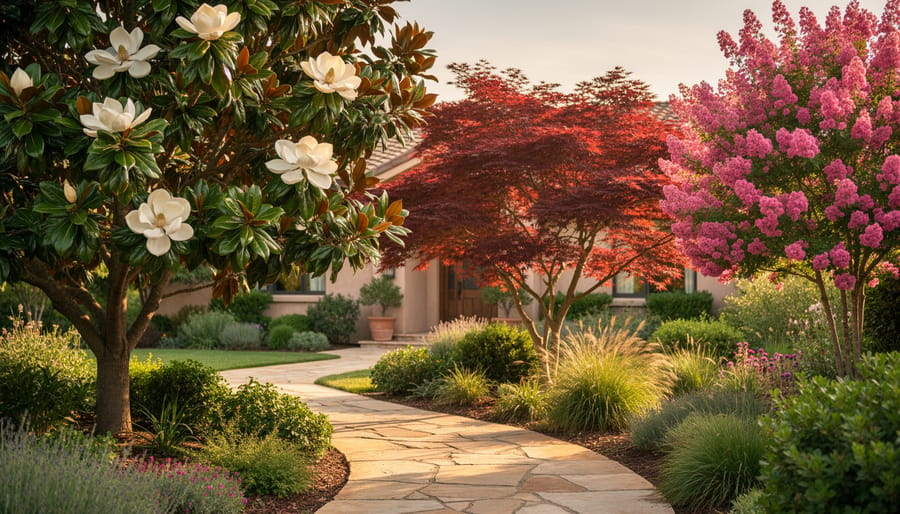
Spring in Zone 9 brings an enchanting display of blooms, and few trees showcase this seasonal beauty better than our favorite spring bloomers. The Crape Myrtle, often called the “lilac of the South,” steals the show with its clusters of delicate flowers in shades of pink, purple, red, or white. These stunning trees bloom for an extended period, often from late spring through summer, and their attractive bark adds year-round interest to your landscape.
Magnolias are true Southern icons, and in Zone 9, they thrive magnificently. The Southern Magnolia offers large, fragrant white flowers that perfume the air from late spring into summer. For smaller spaces, consider the Sweet Bay Magnolia, which produces delicate cream-colored blooms and maintains a more manageable size.
The Eastern Redbud brings early spring magic with its profusion of pink-purple flowers that appear before the heart-shaped leaves emerge. These blooms cluster tightly along the branches, creating a spectacular display that announces spring’s arrival. What makes Redbuds particularly special is their ability to bloom even on older wood, meaning you’ll get flowers all along the trunk and major branches.
These spring bloomers aren’t just about flowers – they’re relatively low-maintenance once established and provide excellent shade during summer months. For best results, plant them in well-draining soil where they’ll receive morning sun and some afternoon shade. Remember to water deeply but infrequently during their first growing season to encourage deep root development, which will help them thrive for years to come.

Year-Round Color
Zone 9 gardeners are fortunate to have numerous options for trees that provide stunning visual interest throughout the year. The Crape Myrtle stands out as a showstopper, offering vibrant blooms from early summer through fall, followed by attractive peeling bark and distinctive branch structure in winter. Its multiple blooming periods ensure your landscape maintains its charm across seasons.
The Hong Kong Orchid Tree deserves special attention, producing waves of orchid-like flowers from late fall through spring. These purple-pink blossoms create a magical display against the tree’s heart-shaped leaves, making it a perfect focal point for any garden.
For year-round color beyond flowers, consider the Japanese Blueberry Tree. Its foliage emerges burgundy, matures to deep green, and maintains its glossy appearance throughout the year. White spring flowers give way to dark blue berries, creating an ever-changing palette in your landscape.
The Rainbow Eucalyptus offers perhaps the most unique year-round display, with its trunk naturally peeling to reveal stunning stripes of green, blue, orange, and purple. This living art piece creates interest even when other trees are dormant.
Don’t overlook the Jacaranda, which provides two spectacular purple blooming periods in spring and fall, while its delicate, fern-like foliage adds texture throughout the year. For winter interest, the Strawberry Tree produces white flowers and red fruits simultaneously, creating a festive display during the cooler months.
These selections ensure your Zone 9 garden remains visually engaging through every season, creating a dynamic landscape that evolves throughout the year.
Compact Ornamental Trees for Small Spaces
Container-Friendly Options
Living in Zone 9 doesn’t mean you have to miss out on having beautiful small ornamental trees just because you have limited space. Several species adapt wonderfully to container life, bringing charm and greenery to patios, balconies, and compact gardens.
Japanese Maples are perfect candidates for container growing, with their delicate foliage and manageable size. Choose dwarf varieties like ‘Sharp’s Pygmy’ or ‘Beni-hime’ for best results. Citrus trees, particularly kumquats and dwarf Meyer lemons, thrive in large containers and offer both ornamental value and fruit.
The Crepe Myrtle ‘Petite’ series is another excellent choice, providing stunning summer blooms while maintaining a compact form. For year-round interest, consider the Little Gem Magnolia, which produces fragrant white flowers and stays relatively small when container-grown.
To ensure success with container trees, use well-draining potting mix and choose containers with adequate drainage holes. Select pots that are at least 24 inches in diameter to provide enough room for root development. Remember that container-grown trees need more frequent watering and fertilizing than their in-ground counterparts, especially during the hot Zone 9 summers.
Regular pruning helps maintain the desired size and shape, making these trees perfect for creating living privacy screens or focal points in your outdoor living space.

Dwarf Varieties
Dwarf trees offer the perfect solution for Zone 9 gardeners working with limited space or seeking to create layered landscapes. The Japanese Maple ‘Shaina’ is a stunning choice, reaching only 4-6 feet at maturity while providing vibrant red foliage throughout the growing season. For fruit lovers, dwarf citrus varieties like the Improved Meyer Lemon and Owari Satsuma Mandarin thrive in Zone 9’s warm climate while staying compact at 6-8 feet tall.
The Dwarf Southern Magnolia ‘Little Gem’ brings all the charm of its larger cousin in a manageable 15-20 foot package, producing fragrant white blooms from spring through fall. For year-round interest, consider the Dwarf Yaupon Holly, which maintains a tidy 5-foot height and offers evergreen foliage plus winter berries.
Don’t overlook the Dwarf Crape Myrtle varieties like ‘Pocomoke’ and ‘Chickasaw,’ which burst with summer blooms while staying under 5 feet tall. The Dwarf Italian Cypress ‘Tiny Tower’ provides elegant vertical interest at just 8-10 feet tall, perfect for Mediterranean-style gardens or container planting.
These compact trees require minimal pruning and are ideal for patios, small yards, or creating natural privacy screens. Most dwarf varieties maintain their small stature naturally, making them low-maintenance options for busy gardeners.
Care and Maintenance Tips

Planting and Establishment
The key to success with ornamental trees in Zone 9 lies in proper planting and establishment techniques. The best time to plant is during the cooler months, typically from late fall through early spring, which allows roots to establish before the intense summer heat arrives.
Start by selecting a location that provides adequate space for your tree’s mature size and meets its sunlight requirements. Dig a hole twice as wide as the root ball but no deeper than its height. This wide hole encourages roots to spread outward, creating a stable foundation. Before planting, gently loosen the root ball and remove any circling roots to prevent future growth problems.
In Zone 9’s warm climate, proper soil preparation is crucial. Mix organic matter into the native soil to improve drainage and fertility. Position the tree so the root flare (where the trunk widens at the base) sits slightly above ground level. This prevents water from collecting around the trunk and causing rot.
After placing the tree, backfill with the amended soil mixture, tamping down gently to remove air pockets. Create a 3-inch deep watering basin around the tree’s drip line, and apply a 2-3 inch layer of organic mulch, keeping it away from the trunk. To help your newly planted trees thrive, maintain consistent moisture during the first growing season, watering deeply but less frequently to encourage deep root growth.
Stake your tree only if necessary, and remove stakes after one growing season to promote strong trunk development. With proper care during the establishment period, your ornamental tree will develop a robust root system capable of supporting years of healthy growth.
Seasonal Care Requirements
In Zone 9’s warm climate, seasonal care for ornamental trees requires specific attention throughout the year. During spring, focus on ornamental tree pruning to remove winter damage and shape the canopy before new growth begins. Apply a balanced, slow-release fertilizer and refresh the mulch layer to prepare for the growing season.
Summer care revolves around proper irrigation, especially during dry spells. Water deeply but infrequently to encourage deep root growth, typically providing 1-2 inches of water per week. Monitor for signs of heat stress and protect young trees with shade cloth if necessary. Keep an eye out for common warm-season pests like spider mites and scale insects.
Fall is the ideal time for planting new ornamental trees in Zone 9, taking advantage of mild temperatures and winter rains. Reduce watering gradually as temperatures cool, and apply a fresh layer of mulch to protect roots. This is also a great time to address any structural issues and remove crossed or damaged branches.
Winter care in Zone 9 is relatively mild compared to colder zones, but protection may still be needed during occasional freezes. Have frost cloth ready for unexpected cold snaps, particularly for younger or more sensitive species. Reduce watering frequency but don’t stop completely, as winters can be dry. Clean up fallen leaves regularly to prevent disease and pest issues.
Remember to adjust these care guidelines based on specific tree species and local weather patterns, as different varieties may have unique requirements within Zone 9’s growing conditions.
Common Problems and Solutions
Growing ornamental trees in Zone 9 comes with its own set of challenges, but most issues have straightforward solutions. One common problem is heat stress, especially during intense summer months. Combat this by providing adequate mulch around the tree base and maintaining consistent watering schedules during hot spells.
Root rot often affects ornamental trees in Zone 9 due to high humidity and occasional overwatering. Prevention is key – ensure proper drainage when planting and avoid waterlogged soil conditions. If you notice yellowing leaves or branch dieback, reduce watering frequency and consider adding organic matter to improve soil structure.
Pest infestations, particularly from borers and scale insects, can damage ornamental trees. Regular inspection of bark and leaves helps catch problems early. Natural solutions like neem oil or insecticidal soaps usually provide effective control without harming beneficial insects.
Nutrient deficiencies may show up as yellowing leaves or stunted growth. While Zone 9’s long growing season is generally beneficial, it can deplete soil nutrients more quickly. Apply a balanced, slow-release fertilizer in spring and fall to maintain healthy growth.
Sunscald can affect young trees or those with thin bark. Protect vulnerable trees by wrapping trunks with light-colored tree wrap or gradually acclimating newly planted trees to full sun exposure. Remember, most problems can be prevented with proper planning and regular maintenance.
As we’ve explored throughout this guide, Zone 9 offers an incredible variety of ornamental trees that can transform your outdoor space into a stunning sanctuary. From the vibrant blooms of the Crape Myrtle to the dramatic foliage of the Japanese Maple, there’s truly something for every garden style and preference.
Remember that successful tree selection goes beyond just choosing what looks beautiful. Consider your specific yard conditions, including sunlight exposure, soil type, and available space. The trees we’ve discussed are proven performers in Zone 9’s warm climate, but they’ll thrive best when placed in locations that match their individual needs.
Don’t be afraid to mix and match different species to create visual interest throughout the seasons. By combining flowering trees with those prized for their foliage or form, you can design a landscape that remains engaging year-round. Start with one or two trees and gradually expand your collection as you become more confident in your gardening abilities.
Whether you’re looking to add shade, create privacy, or simply enhance your property’s curb appeal, the right ornamental tree can help you achieve your landscaping goals. Take time to prepare your planting site properly, follow recommended care guidelines, and be patient as your trees establish themselves. The reward of watching these beautiful specimens grow and mature in your garden will be well worth the initial investment of time and effort.