
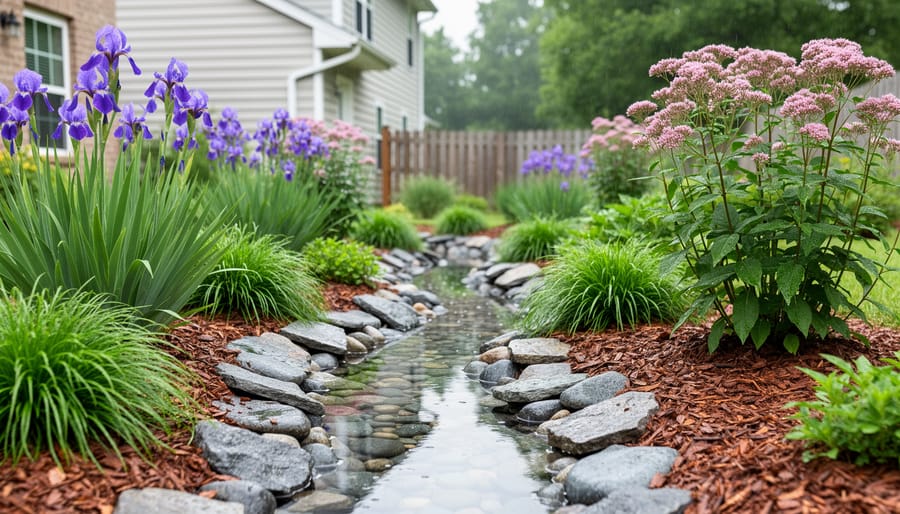
Look outside after a rainstorm and spot a lake where your lawn used to be? That standing water isn’t just unsightly—it’s drowning your plants, creating mosquito breeding grounds, and turning your yard into a muddy mess. But before you resign yourself to living with a swamp, understand this: most yard flooding stems from identifiable, fixable problems.
The good news? You don’t need to be a drainage engineer or spend thousands on professional help to reclaim your outdoor space. Whether you’re dealing with a low spot that puddles for days or an entire yard that resembles a wetland, practical solutions exist that match your budget and skill level.
I’ve talked with dozens of homeowners who’ve transformed waterlogged disasters into thriving gardens, and their stories share common threads. Some discovered simple grading adjustments solved everything. Others learned to work with the water rather than fight it, creating beautiful rain gardens that actually benefit from excess moisture. A few even turned their challenging garden spaces into unique water features that became neighborhood talking points.
This guide walks you through diagnosing why your yard floods, implementing immediate fixes to redirect water, and exploring long-term strategies that range from traditional drainage systems to innovative approaches using water-loving plants. You’ll discover that flooding doesn’t mean giving up on your dream garden—sometimes it just means reimagining what that garden could become.
Understanding Why Your Yard Floods
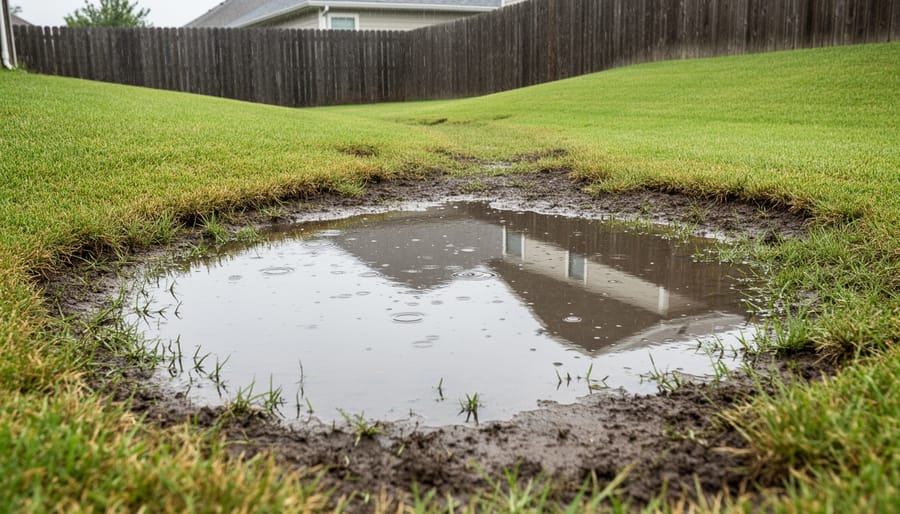
Quick Signs Your Yard Has Drainage Problems
Let me walk you through the telltale signs that your yard is crying out for better drainage. First, check for standing water that lingers more than 24 hours after rainfall. If puddles are still hanging around a day or two later, you’ve got a problem worth addressing.
Take a stroll across your lawn, especially after a rain shower. Does the ground feel spongy or mushy underfoot, even in areas without visible water? This soggy sensation indicates soil that’s completely saturated and struggling to drain properly.
Your plants are wonderful messengers too. Watch for yellowing leaves, wilting despite wet soil, or stunted growth. These stress symptoms often signal waterlogged roots that can’t breathe. You might also notice moss creeping across your lawn or algae forming in low spots, both lovers of persistently damp conditions.
Look around your foundation and walkways. Water stains, erosion channels, or soil washing away from these areas point to drainage issues that could worsen over time. These are among the common garden mistakes that are easier to fix when caught early.
Finally, trust your nose. A persistent musty or swampy smell suggests anaerobic conditions where beneficial soil organisms can’t thrive.
Immediate Solutions to Reduce Standing Water
Creating Simple Drainage Pathways
Creating simple drainage pathways is one of the most effective water management solutions you can implement in your yard. Think of it as giving water a gentle roadmap to follow, rather than letting it pool where you don’t want it.
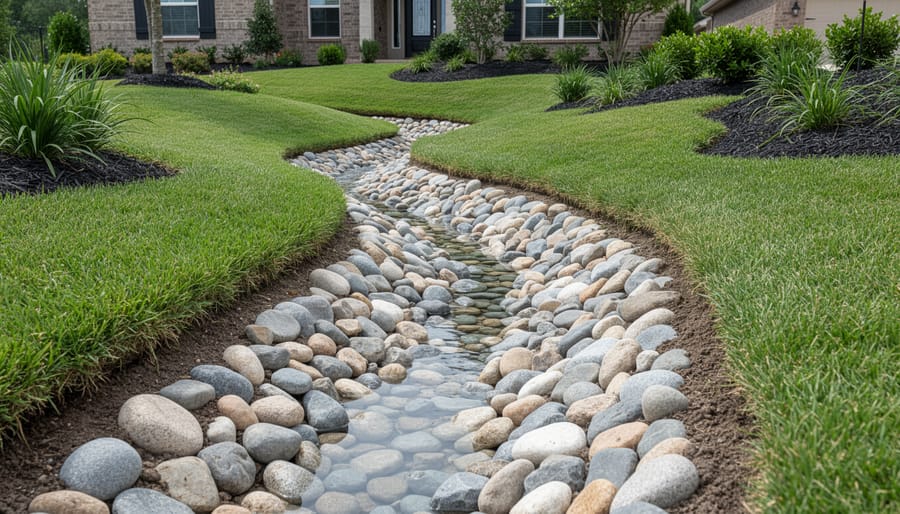
Start by observing your yard during a rainstorm to identify exactly where water accumulates and where it naturally wants to flow. You’ll be working with gravity here, so note the natural slope of your property. Your goal is to create shallow channels, called swales, that guide water away from problem areas toward a better destination like a rain garden or municipal drainage.
For a basic swale, begin by marking out a gentle, curving pathway using a garden hose or stakes and string. Dig a shallow trench about 6 to 12 inches deep and 12 to 18 inches wide, sloping it slightly downward in the direction you want water to travel. The sides should be gradual, not steep.
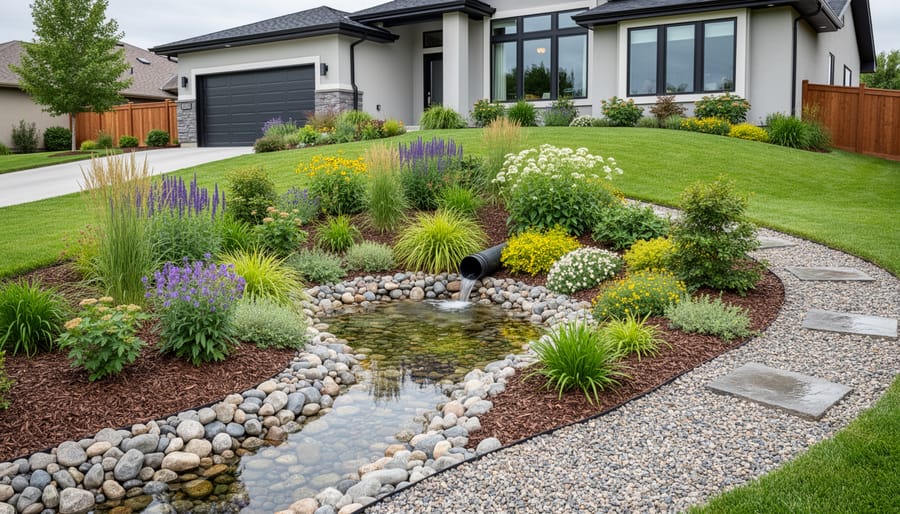
Line the channel with landscape fabric if you’re working with sandy or loose soil, then fill it with river rock or pea gravel. This creates an attractive pathway while allowing water to flow freely. For a more natural look, plant the edges with moisture-loving perennials that will help stabilize the soil and absorb excess water.
Remember, the key is gentle slopes and gradual direction changes. Water should move steadily but not rush, preventing erosion while solving your flooding problem.
When to Call in Professional Help
Let’s be honest—sometimes a flooding problem is beyond our weekend warrior skills, and that’s perfectly okay! While many drainage issues respond beautifully to DIY solutions, certain situations call for professional expertise.
Consider calling in the experts if you’re dealing with flooding that affects your home’s foundation or basement. This isn’t just about your garden anymore—it’s about protecting your most valuable investment. Similarly, if water pools near your septic system or you suspect broken underground pipes, a professional assessment is essential for safety and proper diagnosis.
Large-scale grading projects that require moving significant amounts of soil or installing complex drainage systems like French drains spanning your entire property often need professional equipment and know-how. I learned this the hard way after spending three weekends trying to level a severely sloped area—a pro finished it in two days with proper machinery!
If you’ve tried multiple DIY solutions without success, or if your neighbors are experiencing similar flooding (suggesting a broader drainage issue), it’s time to bring in a drainage specialist. They can identify problems that aren’t obvious to untrained eyes, like compacted subsoil layers or inadequate municipal drainage connections.
Remember, asking for help isn’t admitting defeat—it’s smart gardening that saves you time, money, and frustration in the long run.
Plants That Actually Love Wet Feet
Stunning Perennials for Soggy Soil
If your yard tends to flood, why not embrace the moisture and create a gorgeous water garden? Some of the most spectacular perennials actually thrive in soggy conditions that would drown typical garden favorites.
The cardinal flower is a showstopper that will transform your wet spots into hummingbird magnets. With brilliant red spikes reaching up to four feet tall, this native beauty blooms from mid-summer through fall. Plant it in consistently moist soil where it receives partial shade to full sun. I’ve seen cardinal flowers flourish in areas that stay damp year-round, and they reseed themselves readily once established.
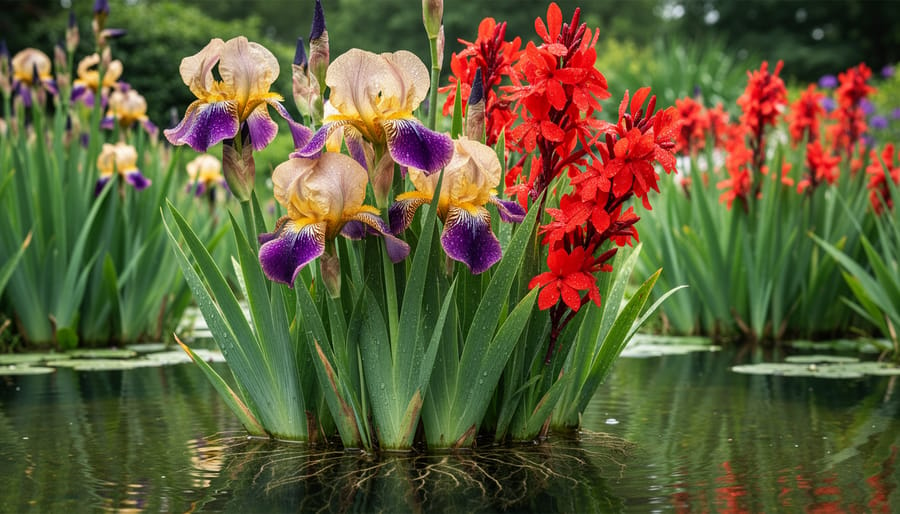
Japanese iris offers another stunning option, with dramatic blooms in shades of purple, blue, and white. Unlike their bearded cousins that need well-drained soil, Japanese iris practically demand wet feet during the growing season. Position them where standing water collects in spring, and watch them produce those magnificent flat-faced flowers in early summer.
For shady wet areas, astilbe is your best friend. These feathery plumes in pink, red, white, or lavender add softness and texture from early to mid-summer. They’re incredibly forgiving and will spread gradually to fill those troublesome boggy patches under trees.
When planting any of these water-lovers, work in compost to give them a strong start, but don’t worry about improving drainage. These plants genuinely prefer their roots in moisture-rich soil, turning your flooding problem into a gardening advantage.
Edibles That Tolerate Waterlogged Conditions
If you’ve been struggling with waterlogged areas in your yard, here’s some encouraging news: you can turn that soggy spot into a productive edible garden! Several delicious vegetables and herbs actually thrive in consistently moist or even saturated soil.
Watercress is the star of wet conditions, naturally growing in streams and wetlands. Plant it along the edges of your boggy areas, and you’ll have fresh, peppery greens for salads in no time. I’ve found it’s one of the easiest edibles to establish in problem wet spots.
Taro, a staple in many Asian cuisines, loves wet feet and can tolerate standing water for extended periods. The large, dramatic leaves add visual interest while the starchy roots become a tasty harvest. In my conversations with gardeners who’ve tried taro in their wet zones, they’re always surprised by how forgiving and productive it is.
Certain berry varieties also handle waterlogged soil remarkably well. Elderberries are particularly tolerant of wet conditions and produce abundant fruit for jams and syrups. Cranberries are another excellent choice, naturally growing in bogs and requiring acidic, consistently moist soil.
Don’t overlook rice, which thrives in flooded conditions if you’re feeling adventurous. Celery and Vietnamese coriander also appreciate moisture-rich environments.
The key is matching plants to your specific conditions. Start with one or two varieties to test your soil’s drainage patterns, and gradually expand your edible wetland garden. What once seemed like a frustrating problem can become your most productive growing area!
Building Raised Beds and Berms for Problem Areas
Materials That Work Best in Wet Conditions
When dealing with waterlogged areas, choosing the right materials can make all the difference between constant replacement and long-lasting beauty. Let me share what I’ve learned works best in persistently wet conditions.
For hardscaping, natural stone is your champion. Flagstone, slate, and bluestone are naturally porous and handle freeze-thaw cycles beautifully without cracking. I’ve seen flagstone pathways remain gorgeous even after years of seasonal flooding. River rock and pea gravel also excel in wet areas, providing excellent drainage while creating attractive borders or walkways.
If you’re considering wood, cedar and redwood contain natural oils that resist rot far better than pressure-treated pine. However, I’d recommend saving wood for raised areas when possible. For truly wet zones, consider recycled plastic lumber, which looks like wood but won’t rot or splinter regardless of moisture exposure.
Concrete pavers designed with drainage channels work wonderfully too, though standard solid concrete can trap water underneath and eventually crack. During a recent interview with master gardener Patricia Chen, she emphasized choosing permeable pavers that allow water to flow through rather than around them.
The key is embracing materials that work with water rather than fighting against it, creating functional spaces that actually improve over time.
Soil Amendments That Improve Drainage
If your yard tends to flood because of heavy, compacted clay soil, incorporating the right amendments can make a real difference over time. Think of this as a gradual investment in your garden’s health rather than an overnight fix, but the results are absolutely worth the patience.
Organic compost is your best friend when it comes to improving drainage. It works like magic by creating air pockets in dense soil, allowing water to move through more freely. I love mixing in a 2-3 inch layer of well-aged compost each spring and fall, working it into the top 6-8 inches of soil. Within one to two growing seasons, you’ll notice water pooling less frequently.
Coarse sand can also help, but here’s an important tip: you need to use builder’s sand or horticultural sand, not the fine stuff from the beach or sandbox. Mix it with compost at a ratio of about one part sand to two parts compost. Using sand alone in clay soil can actually create something resembling concrete, so always combine it with organic matter.
Perlite, those lightweight white volcanic rocks you see in potting mixes, works wonderfully for smaller garden beds. It’s more expensive for large areas, but it permanently improves soil structure without breaking down like organic materials do.
For gardeners tackling particularly stubborn clay, aged pine bark fines deserve mention. They break down slowly while creating lasting drainage channels.
Be realistic about your timeline. Most soil amendments need at least one full growing season to show noticeable improvement, with optimal results appearing after two to three years of consistent application. The good news? Once your soil structure improves, it becomes easier to maintain and continues benefiting your garden for years to come.
Turning Problems Into Features: Rain Gardens and Water Features
What if that persistent flooding wasn’t a problem at all, but an invitation to create something beautiful? I know it sounds counterintuitive when you’re staring at a waterlogged mess, but hear me out. Some of the most stunning gardens I’ve visited actually celebrate water rather than fighting it.
Rain gardens are the perfect example of turning lemons into lemonade. These shallow depressions are strategically placed to capture runoff, allowing water to slowly filter into the ground while supporting moisture-loving plants. Think of it as creating your own mini ecosystem. I spoke with landscape designer Maria Chen, who’s transformed hundreds of soggy yards, and she shared this gem: “Once homeowners see their rain garden bursting with purple iris, cheerful marsh marigolds, and visiting butterflies, they forget they ever had a flooding problem.”
The beauty of rain gardens is their flexibility. Even a small 6-foot depression can handle significant water flow while looking gorgeous year-round. Edge it with river rocks, add native sedges and cardinal flowers, and suddenly that low spot becomes a destination rather than an eyesore.
For those with more ambitious visions, consider incorporating a small pond or water feature that works with your yard’s natural flow. A simple recirculating fountain placed in a perpetually damp area can mask the sound of traffic while attracting birds and beneficial insects. Container water gardens offer another creative solution, perfect for collecting excess water in decorative vessels planted with dwarf papyrus or water lettuce.
The key is observation. Spend time watching where water naturally wants to go during heavy rains, then design with those patterns instead of against them. You might discover that your flooding issue is actually the foundation for your yard’s most captivating feature. Sometimes the best gardens aren’t about control but about creative collaboration with nature.
Seasonal Strategies for Flood-Prone Gardens
Working with a flood-prone garden means timing is everything, and I’ve learned that embracing the seasonal rhythm can turn waterlogged challenges into opportunities.
Spring arrives with unpredictable weather, so I always wait until the soil is workable before planting. In flood-prone areas, this might mean delaying planting two to three weeks longer than your neighbors. Trust me, those extra weeks of patience pay off. Focus on raised beds during March and April, and choose water-tolerant seedlings like Joe Pye weed or cardinal flower that can handle extreme weather conditions.
Summer is your maintenance window. June through August, monitor drainage patterns during storms and note where water pools longest. This detective work guides your fall improvements. Mulch generously around established plants to retain moisture during dry spells, because flood-prone soils often drain poorly but also dry out in patches.
Fall becomes preparation season. September is ideal for planting native grasses and perennials that establish strong root systems before winter. Their roots help absorb spring floods. October and November are perfect for digging rain gardens or installing French drains, as you can clearly see problem areas from summer observation.
Winter offers planning time. Review your notes from the year, sketch improvements, and order plants early. January through March, avoid walking on frozen, waterlogged soil to prevent compaction.
Remember, renowned gardener Piet Oudolf once told me that working with water, not against it, creates the most resilient gardens. Each season teaches you something new about your landscape’s unique patterns, so keep notes and stay curious about what works in your particular yard.
Here’s the truth I’ve learned after years of working with waterlogged gardens: that soggy spot you’re staring at right now isn’t a lost cause. It’s actually an invitation to create something most gardeners never get the chance to build.
I know it doesn’t feel that way when you’re watching puddles form after every rain. But I’ve seen countless frustrated homeowners transform their problem areas into thriving rain gardens, productive bog gardens, and wildlife havens that neighbors stop to admire. The secret isn’t fighting against the water—it’s learning to work with it.
You don’t need to tackle everything at once. Start with one small solution that feels manageable. Maybe that’s planting a single clump of Joe Pye weed in the wettest corner, or digging a simple drainage channel this weekend. Each small step builds momentum and teaches you something about your unique landscape.
What makes your wet yard special is that it can support plants and ecosystems that thrive nowhere else. Those moisture-loving perennials create lush, dense growth that dry gardens can’t match. The birds and butterflies that visit water-rich gardens bring constant movement and life.
Your flooded yard isn’t broken. It’s just asking you to garden a little differently. And once you discover how beautiful wet gardens can be, you might find yourself grateful for every rain-soaked inch.


