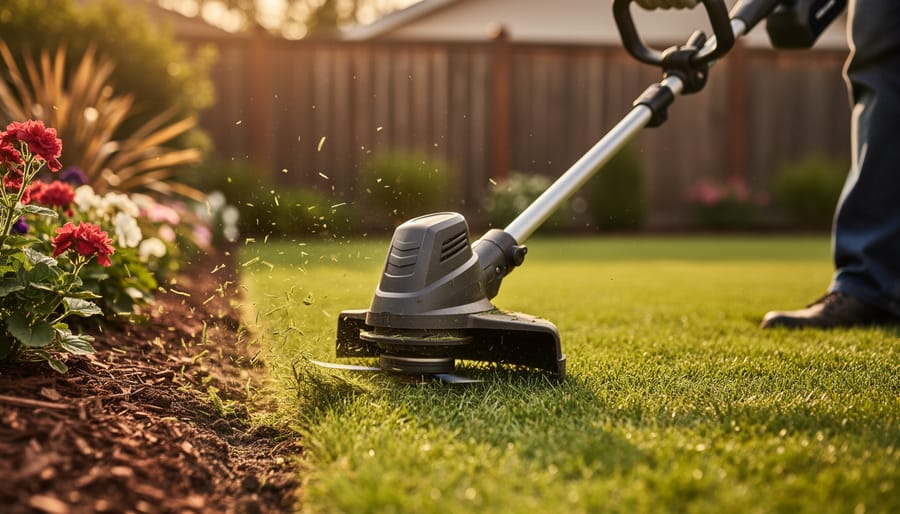
A garden strimmer transforms those awkward corners where your mower can’t reach into neatly finished edges that make your entire lawn look professionally maintained. If you’ve ever struggled with overgrown grass along fence lines or around tree bases, you already know the frustration of bent-over manual trimming with shears. A strimmer eliminates that backache while cutting your edging time by more than half.
Beyond basic lawn care, these versatile tools tackle dense weeds on slopes where pushing a mower becomes dangerous, clear pathways through wilder garden areas, and maintain those challenging spots around garden furniture and ornamental features. The rotating cutting line reaches underneath obstacles and adapts to uneven terrain that would damage traditional mower blades.
Whether you’re managing a compact urban garden or maintaining larger grounds, strimmers deliver precision without the physical strain of manual tools. You’ll finish weekend garden maintenance with energy left to actually enjoy your outdoor space, rather than collapsing exhausted after hours of hunching over hand tools. This guide explores how the right strimmer becomes your secret weapon for achieving that crisp, well-tended garden appearance that makes neighbors wonder about your gardening secrets.
Time-Saving Magic for Busy Gardeners
Let’s talk about something we all wish we had more of: time. If you’ve ever spent a Sunday afternoon hunched over with manual edging shears, carefully snipping along pathways and flowerbeds, you know exactly how precious those hours are. This is where a garden strimmer becomes your secret weapon for reclaiming your weekends.
I recently spoke with Sarah Chen, a landscape designer from Vancouver, who shared a compelling comparison. “Before I invested in a strimmer, edging my average suburban client’s property took roughly 90 minutes with manual tools. Now? I complete the same job in about 15 minutes.” That’s an hour saved on a single task, which makes a massive difference when you’re juggling lawn maintenance timing with everything else life throws at you.
The real magic happens in those tricky spots where traditional mowers simply give up. Think about the areas around fence posts, garden ornaments, tree trunks, and uneven terrain. With manual tools, you’re looking at bending, repositioning, and carefully working around each obstacle. A strimmer glides through these challenges in seconds, adjusting to different angles effortlessly.
Consider a typical quarter-acre property with established landscaping. Manually trimming around 20 trees, multiple garden beds, and a fence line could consume two to three hours of your weekend. With a strimmer, you’re looking at 30 to 45 minutes for the same area. That’s not just efficiency; it’s transformative for busy gardeners who want beautiful outdoor spaces without sacrificing their entire Saturday.
The time you save isn’t just about speed. It’s about having energy left to enjoy the garden you’ve worked so hard to create.
Reaching the Impossible Spots
You know those frustrating patches of grass that lurk around fence posts, tree trunks, and garden bed edges? The ones your mower just can’t reach, no matter how many times you circle back? That’s where a garden strimmer truly shines.
I’ve found that strimmers are absolute game-changers for tackling awkward spaces. That narrow strip between your fence and flower bed, the tight area around your bird bath, or those tricky slopes where pushing a mower feels like an extreme sport – a strimmer handles them all with ease. The rotating cutting head reaches into spots that would otherwise require you to get down on your knees with hand shears.
Master gardener Patricia Chen, whom I interviewed last spring, shared a great insight: “The biggest mistake homeowners make is ignoring those hard-to-reach corners. Within a few weeks, they become overgrown havens for weeds, and suddenly you’ve got a much bigger problem than just untidy grass.”
She’s absolutely right. Those neglected patches don’t just look messy – they become breeding grounds for persistent weeds that eventually spread throughout your garden. A quick pass with your strimmer every week or two prevents this completely.
The versatility really becomes apparent on uneven terrain too. Whether you’re working around raised roots, rocky areas, or gentle slopes, a strimmer adjusts to the contours naturally. You maintain control and precision without wrestling heavy equipment over challenging ground.
This accessibility means every corner of your garden receives the attention it deserves, creating that cohesive, well-maintained look we all aspire to achieve.

Your Back Will Thank You
Let me tell you about one of my favorite unexpected benefits of investing in a strimmer—your spine will genuinely appreciate it! After spending years hunched over with manual shears, trimming lawn edges and tackling overgrown patches, I can personally vouch for the difference a strimmer makes to your body.
Traditional edge trimming often means kneeling on hard ground or bending at awkward angles for extended periods. This puts tremendous strain on your lower back, knees, and shoulders. A strimmer keeps you upright and moving naturally, which is especially important if you’re managing a larger garden or have any existing joint concerns. Many models are designed as ergonomic gardening tools, featuring adjustable handles and balanced weight distribution that work with your body rather than against it.
To maximize comfort while using your strimmer, keep these practical tips in mind. First, adjust the handle height so you can work with slightly bent elbows and a straight back—no hunching necessary. Second, use a comfortable shoulder strap if your model includes one, distributing the weight evenly across your body. Third, take regular breaks and switch sides occasionally to avoid overusing one arm.
Renowned gardener Sarah Thompson once shared with me that switching to a strimmer added years to her gardening career by eliminating the chronic back pain she’d accepted as inevitable. Your body works hard for your garden—give it the ergonomic support it deserves!
Creating Professional-Looking Edges Without Professional Help
You know that crisp, defined line you see between a manicured lawn and a flower bed in professional landscape designs? That’s not reserved for hired gardeners with years of experience. With a strimmer, you can achieve those same sharp, clean edges that make your entire garden look intentional and well-maintained.
The beauty of using a strimmer for edging is how it transforms overlooked areas into polished features. Those spots where your lawn meets the driveway, borders pathways, or wraps around trees can go from ragged and overgrown to perfectly trimmed in minutes. I remember chatting with landscape designer Marcus Henley, who told me that clean edges are the number one detail that separates amateur gardens from professional ones. The good news? It’s also one of the easiest improvements to make.
Modern strimmers give you excellent control, allowing you to create consistent lines even if you’ve never done it before. Start by holding the strimmer at a slight angle and work slowly along your desired edge. The immediate visual impact is incredibly satisfying, and you’ll likely find yourself looking for more areas to define.
The psychological boost shouldn’t be underestimated either. There’s genuine pride in stepping back and seeing those crisp borders you’ve created yourself. It’s that landscaper-quality finish without the landscaper-level price tag. Your neighbors might even start asking for recommendations, and you can confidently share that achieving professional-looking results is absolutely within reach for any gardener willing to spend a little time with their strimmer.

Tackling Different Vegetation Types
One of the most impressive benefits of a garden strimmer is its remarkable versatility when dealing with different types of vegetation. Whether you’re tidying up delicate lawn edges or battling through stubborn brambles at the back of the garden, the right strimmer setup can handle it all.
For everyday lawn maintenance and light grass trimming, a standard nylon line does a brilliant job. These flexible lines whip through grass quickly without damaging nearby plants or garden features. I’ve found them particularly useful around flower beds where precision matters. The nylon line simply bounces off harder surfaces like tree bark or stone edging, making it wonderfully forgiving for beginners who are still getting their confidence.
When you’re tackling tougher challenges like thick weeds, nettles, or overgrown areas that haven’t seen attention in a while, switching to a heavier-gauge line makes all the difference. These thicker lines cut through dense vegetation with less effort and last considerably longer before needing replacement. Some gardeners I’ve spoken with swear by square or serrated lines for particularly stubborn growth, as the edges provide extra cutting power.
For really demanding jobs involving woody stems, brambles, or even light brush clearance, metal blades or plastic cutting heads transform your strimmer into a serious vegetation management tool. These attachments are game-changers for reclaiming neglected corners or maintaining wild areas of larger gardens.
The beauty of this adaptability is that one machine can genuinely replace several tools in your shed. Simply changing the cutting head or line type allows you to move seamlessly from delicate trimming to heavy-duty clearance work, making strimmers an incredibly practical investment for gardeners managing diverse landscapes.

Budget-Friendly Garden Maintenance
Let’s talk about something we all appreciate: saving money while maintaining a beautiful garden! When I first considered buying a strimmer, I wondered if it was worth the investment. After speaking with experienced gardener Margaret Chen during one of our interviews, I learned that the numbers actually work strongly in your favour.
Think about it this way: hiring a professional gardening service typically costs between $50-$100 per visit, depending on your location and garden size. If you need trimming every two weeks during growing season, that’s roughly $600-$1,200 annually. Meanwhile, a quality electric strimmer starts around $80-$150, while petrol models range from $200-$400. You’re essentially breaking even after just a few uses.
But the savings go beyond just the initial comparison. Manual trimming tools like shears and edgers wear out quickly and need regular replacement. A well-maintained strimmer, when counted among your essential garden tools, can last 5-10 years with basic care.
For budget-conscious gardeners, electric models offer excellent value with minimal running costs—just pennies per session in electricity. If you’re working with larger spaces, the upfront investment in a petrol strimmer pays off through versatility and power.
The real bonus? You’re not just saving money; you’re gaining flexibility. No more scheduling around professionals or spending entire weekends on manual trimming. That’s priceless when you’d rather enjoy your garden than just maintain it.
What to Look for When Choosing Your Strimmer
Finding the perfect strimmer doesn’t have to be complicated when you know what matters most for your garden. Let me walk you through the key considerations that will help you make a confident choice.
Start by thinking about your garden’s size. For smaller gardens under 500 square metres, a corded electric strimmer typically provides plenty of power and keeps things simple. Mid-sized gardens benefit from battery-powered models, which offer excellent freedom of movement without the weight and maintenance of petrol engines. For larger properties or professional use, petrol strimmers deliver the stamina you need for extended sessions.
Power source really comes down to your personal preferences and practical needs. Electric models are wonderfully quiet and eco-friendly, perfect for suburban gardens where noise might concern neighbours. Battery strimmers have come such a long way in recent years, with modern lithium-ion technology providing impressive runtime. I’ve spoken with gardeners who’ve completely switched to battery power and haven’t looked back. Petrol strimmers remain unbeatable for tackling thick undergrowth and working away from power sources.
Weight is more important than many people realize. If you have a larger area to maintain or any mobility concerns, a lighter model will make your gardening experience far more enjoyable. Many strimmers weigh between 3 to 7 kilograms, and that difference becomes quite noticeable after twenty minutes of use.
Consider special features that match your specific needs too. Adjustable handles and shafts accommodate different heights, while models with pivoting heads excel at edging work. Some strimmers convert into hedge trimmers or pole pruners, which can be brilliant for maximizing your investment.
For comprehensive information on choosing the right strimmer for your unique situation, including detailed comparisons and expert recommendations, explore our dedicated buying guide.
A garden strimmer truly offers impressive benefits that can transform how you care for your outdoor space. From tackling hard-to-reach edges with ease to reducing physical strain and creating those crisp, professional-looking borders we all admire, the right strimmer addresses multiple garden challenges in one versatile tool. Whether you’re managing a compact courtyard or maintaining larger grounds, the time-saving efficiency alone makes it worth considering.
Take a moment to think about your own garden’s unique needs. Are you spending precious weekend hours bent over with hand shears? Do overgrown edges frustrate you despite your best efforts? If you’re nodding along, a strimmer might be exactly what you need.
Remember, gardening should bring you joy, not just endless chores. By investing in tools that work smarter alongside you, you’re not simply maintaining your garden more efficiently—you’re reclaiming valuable time to actually enjoy it. Time to sip your morning coffee surrounded by birdsong, to experiment with new plantings, or simply to pause and appreciate the beautiful space you’ve created.