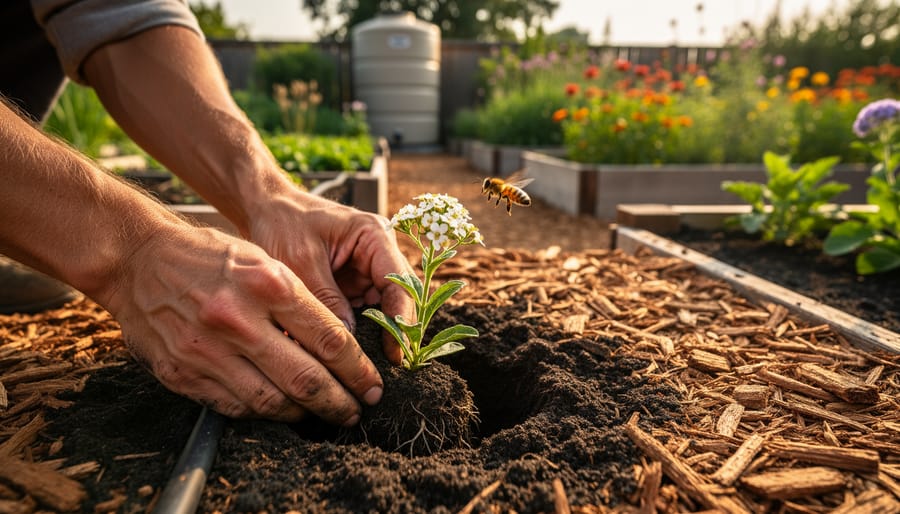
Transform your backyard into a thriving, eco-friendly oasis by starting with three fundamental sustainable gardening practices. Create rich, living soil by composting kitchen scraps, fallen leaves, and yard waste – this natural fertilizer eliminates the need for chemical alternatives while reducing household waste. Conserve water through smart irrigation techniques like mulching, installing rain barrels, and choosing drought-resistant native plants that naturally thrive in your climate. Design your garden to support local biodiversity by planting diverse species that attract beneficial insects, birds, and pollinators, creating a balanced ecosystem that naturally manages pests without harmful pesticides.
Sustainable gardening isn’t just about growing plants – it’s about cultivating a healthier environment right in your own backyard. Whether you’re working with a small balcony or a sprawling yard, these earth-friendly techniques help beginners create beautiful, productive gardens while minimizing their environmental impact. Best of all, these methods often require less maintenance and cost less than conventional gardening approaches, making it easier to grow a garden that thrives season after season.
Start With Smart Planning
Choose Your Space Wisely
The foundation of a successful sustainable garden starts with choosing the right location. Take time to observe your outdoor space throughout the day – this simple step can make a world of difference in your gardening success. Most vegetables and flowering plants need at least 6 hours of direct sunlight daily, so note how sunlight moves across your yard and identify areas that receive adequate exposure.
Consider proximity to water sources – the closer your garden is to a water supply, the less energy you’ll use transporting water. If possible, position your garden where you can easily collect rainwater or install a rain barrel system.
Before breaking ground, analyze your soil. Grab a handful and squeeze it – if it holds shape but crumbles easily when poked, you’ve got good soil texture. Too sandy or clay-heavy? Don’t worry! You can improve soil quality naturally by adding compost and organic matter over time.
Pay attention to natural drainage patterns during rainfall. Avoid areas where water pools, as this can lead to root rot. Instead, look for slightly elevated spots or consider raised beds if drainage is a concern.
Also, think about accessibility. Place your garden where you’ll see it daily – this encourages regular maintenance and helps you spot potential issues early. Remember, a sustainable garden works with nature, not against it, so choose a location that aligns with your local climate and natural conditions.

Pick Plants That Thrive Naturally
One of the most effective ways to create a sustainable garden is to work with nature rather than against it. Choosing native plants and those well-suited to your local climate is like giving your garden a head start – these plants have already adapted to your area’s rainfall patterns, soil conditions, and temperatures.
Native plants typically require less water, fertilizer, and maintenance because they’ve evolved to thrive in your local environment. They’re also more resistant to local pests and diseases, which means you won’t need to rely on chemical pesticides to keep them healthy. Plus, they provide essential food and habitat for local wildlife, including pollinators like bees and butterflies.
To select the right plants, start by observing what grows naturally in your neighborhood or local parks. Visit local nurseries and ask about native species that match your garden’s conditions – whether you have full sun, partial shade, or specific soil types. Consider plants that serve multiple purposes, such as herbs that can be used in cooking while also attracting beneficial insects.
Remember to group plants with similar water needs together. This practice, known as hydrozoning, helps conserve water and ensures each plant gets exactly what it needs to thrive. When you choose plants that naturally belong together, you create a harmonious ecosystem that largely takes care of itself.
Build Healthy Soil Without Chemicals
Composting Made Simple
Starting your journey in composting for beginners doesn’t have to be complicated. Think of composting as nature’s recycling system – it’s how we turn kitchen scraps and garden waste into black gold for your plants!
The key to successful composting lies in balancing your “greens” and “browns.” Greens include kitchen scraps like fruit and vegetable peelings, coffee grounds, and fresh grass clippings. These materials are rich in nitrogen and help speed up the composting process. Browns, on the other hand, are carbon-rich materials like dry leaves, straw, paper, and cardboard. Aim for roughly three parts browns to one part greens.
Start with a simple bin in a shady spot in your garden. Layer your materials, beginning with browns at the bottom for good drainage. Add your kitchen scraps regularly, always covering them with a layer of browns to prevent odors and discourage pests. Keep your pile as moist as a wrung-out sponge and turn it every few weeks with a garden fork to add oxygen.
Avoid adding meat, dairy, oils, or diseased plants to your pile. Within a few months, you’ll notice your waste transforming into rich, dark compost that smells like fresh earth – perfect for feeding your garden naturally!
Natural Mulching Methods
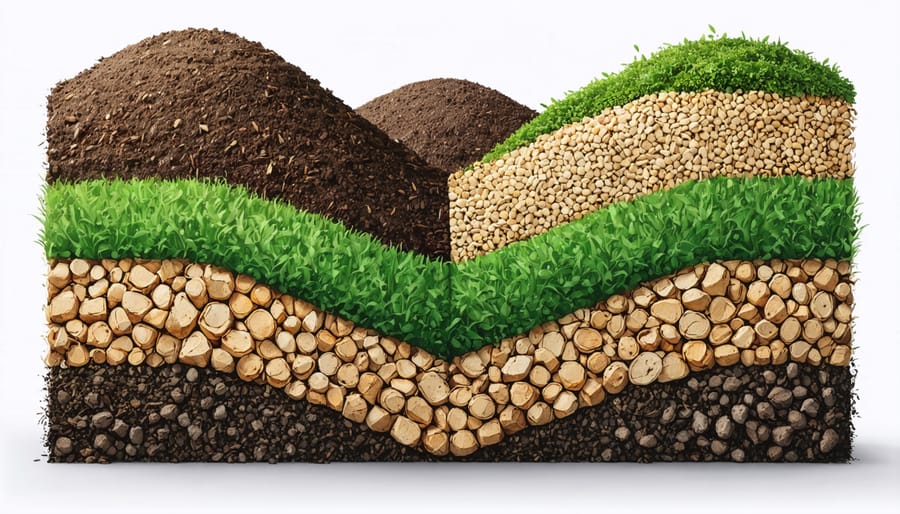
Natural mulching is one of the easiest and most effective ways to create a thriving, sustainable garden. Think of mulch as a protective blanket for your soil – it helps retain moisture, suppress weeds, and gradually enriches the earth as it breaks down.
Start by collecting materials from your own backyard. Fallen leaves, grass clippings, and small twigs make excellent mulch. Simply spread these materials around your plants in a layer about 2-3 inches thick, making sure not to pile it directly against plant stems or tree trunks.
Straw is another fantastic mulching option, especially for vegetable gardens. It’s lightweight, allows water to penetrate easily, and gradually decomposes to add nutrients to your soil. Just be sure to use clean, seed-free straw to avoid introducing unwanted plants to your garden.
For ornamental beds, wood chips or bark mulch work beautifully. These materials break down more slowly, providing long-lasting benefits while adding a polished look to your garden. Many local tree services offer free wood chips – a perfect example of turning “waste” into garden gold!
Coffee grounds and shredded paper can also serve as mulch, though they work best when mixed with other materials. Layer these with leaves or straw to create a balanced mulch that won’t compact too heavily.
Remember to refresh your mulch layer once or twice a year, adding new material as the old layer breaks down. This continuous cycle mimics nature’s own processes, creating a healthier garden while reducing water use and weeding time.
Water-Smart Gardening
Set Up Simple Water Collection
Setting up a simple water collection system is one of the easiest ways to make your garden more sustainable, and it’s surprisingly straightforward! Start by placing a rain barrel under your home’s downspout – this alone can help you harvest hundreds of gallons of free water throughout the growing season.
For a basic setup, all you need is a large food-grade barrel with a lid, a spigot for easy access, and some basic plumbing parts from your local hardware store. Make sure to elevate your barrel on concrete blocks or a sturdy platform, which will create better water pressure when you’re using it to water your plants.
Don’t have room for a rain barrel? Try placing containers with wide openings in strategic spots around your garden during rainfall. Even small-scale collection adds up over time! You can also use mulch around your plants to retain moisture and reduce water evaporation – a 2-3 inch layer works wonders.
Consider installing a drip irrigation system for efficient watering. These systems deliver water directly to plant roots, minimizing waste through evaporation. For container gardens, try using self-watering planters or adding water-retaining crystals to your soil mix.
Remember to water your garden early in the morning or late in the evening when temperatures are cooler. This simple timing adjustment helps ensure more water reaches your plants’ roots instead of evaporating in the midday sun.
Smart Watering Techniques
Water is the lifeblood of your garden, but using it wisely is key to sustainable gardening. The best time to water your plants is early morning or late evening when evaporation rates are lowest. This simple timing adjustment helps ensure your plants get the most from every drop.
Consider installing a rain barrel to collect and store rainwater – it’s free, environmentally friendly, and plants love it! When watering, focus on the root zone rather than spraying leaves. A good rule of thumb is to water deeply but less frequently, encouraging roots to grow deeper and making plants more resilient to dry spells.
Mulching is your secret weapon for water conservation. A 2-3 inch layer of organic mulch around your plants helps retain moisture, reduce evaporation, and suppress thirsty weeds. Natural materials like straw, wood chips, or fallen leaves work perfectly.
For automated watering, drip irrigation systems or soaker hoses are excellent choices. They deliver water directly to plant roots with minimal waste. If you’re using traditional sprinklers, attach a timer to prevent overwatering and water waste.
Monitor your soil’s moisture level by sticking your finger about an inch into the soil – if it feels dry at that depth, it’s time to water. Remember, different plants have different water needs, so group those with similar requirements together for more efficient watering.
Natural Pest Management
Companion Planting Basics
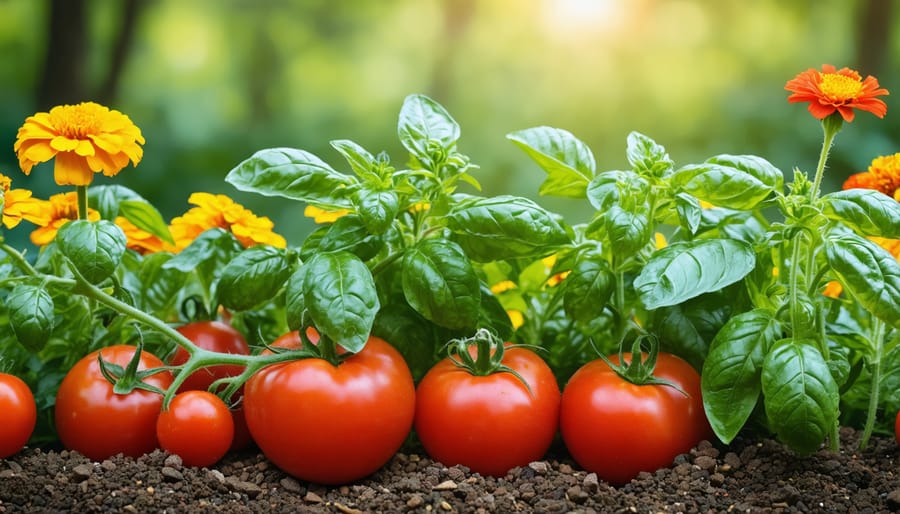
Companion planting is like creating a community of plants that help each other thrive naturally. By strategically placing certain plants together, you can reduce pest problems without using harmful chemicals. One classic combination is planting marigolds alongside your vegetables – these cheerful flowers naturally repel many garden pests while adding a splash of color to your beds.
Tomatoes and basil are another perfect pair. Not only do they taste great together in the kitchen, but basil helps improve tomatoes’ flavor and growth while deterring unwanted insects. Plant some carrots with onions, and you’ll notice fewer carrot flies – the strong scent of onions masks the smell that attracts these pests.
The “Three Sisters” method, developed by Native Americans, is a time-tested combination of corn, beans, and squash. The corn provides support for the climbing beans, which fix nitrogen in the soil, while squash spreads along the ground, suppressing weeds and retaining moisture.
For your herb garden, try growing rosemary near sage and cabbage. This aromatic duo helps protect cabbage from moths and other leaf-eating insects. Similarly, nasturtiums act as a natural pest deterrent when planted around the edges of your vegetable beds, and they’re edible too!
Remember, successful companion planting isn’t just about pest control – it’s about creating a balanced, healthy garden ecosystem where plants support each other’s growth.
Welcome Helpful Insects
Creating a garden that welcomes beneficial insects is like recruiting a tiny army of natural pest controllers. These helpful creatures, including ladybugs, praying mantises, and parasitic wasps, can keep troublesome pests in check without the need for harmful chemicals.
To attract these garden allies, start by planting flowers with small, clustered blooms like yarrow, dill, and marigolds. These plants provide nectar and pollen that beneficial insects love. Herbs such as mint, oregano, and thyme not only enhance your cooking but also create an inviting habitat for these helpful visitors.
Leave some areas of your garden slightly wild by incorporating native plants and creating small brush piles. These natural spaces serve as shelter for beneficial insects and give them places to overwinter. Consider adding a shallow water source, like a dish with pebbles and water, to keep your insect friends hydrated.
Remember that a few pest insects in your garden are actually good news – they provide food for beneficial insects! Avoid using chemical pesticides, as these can harm both harmful and helpful insects alike. Instead, focus on creating a balanced ecosystem where beneficial insects can thrive and naturally manage pest populations.
By welcoming these helpful insects, you’ll create a more resilient garden that manages itself while supporting local biodiversity. It’s amazing to watch your garden come alive with these tiny helpers doing their important work.
Embarking on your sustainable gardening journey is an exciting step toward creating a more environmentally friendly lifestyle while enjoying the rewards of growing your own plants. As we’ve explored throughout this guide, sustainable gardening isn’t just about what you grow – it’s about how you grow it and the positive impact you can make on our planet.
Remember, you don’t need to implement everything at once. Start small by choosing one or two sustainable practices that resonate with you, whether it’s composting kitchen scraps, collecting rainwater, or planting native species. As your confidence grows, you can gradually incorporate more eco-friendly techniques into your garden.
The key principles we’ve covered – soil health, water conservation, natural pest control, and biodiversity – form the foundation of a thriving sustainable garden. By working with nature rather than against it, you’ll create a resilient garden that requires less maintenance and provides better yields.
Don’t be afraid to make mistakes – they’re valuable learning opportunities. Connect with other gardeners in your community, share experiences, and celebrate your successes, no matter how small. Every sustainable choice you make in your garden contributes to a healthier environment and a more sustainable future.
Now it’s time to put your knowledge into practice. Your sustainable garden awaits – get out there and start growing!