Tree removal usually comes up when something starts to feel off, like a branch scraping the roof during windy nights or a tree that suddenly seems closer to the house than before. Often, it begins with a quick call or form submission more out of curiosity than urgency. People want to see what it takes, what it might cost, or just to check if the tree really is as risky as it feels.
From the outside, professional tree removal can look loud and chaotic. You might hear chainsaws roaring and heavy machinery moving and see ropes swinging in the air, making it look dramatic. In reality, the process is controlled, deliberate, and carefully planned. It’s not about rushing; it’s about assessing the space, considering the surroundings, and working through the job with steady precision.
Site inspection and assessment
Before any equipment is unloaded or ropes go up, the crew walks the property and studies the surroundings. They check how the tree leans, its height, what sits underneath, and how close it is to fences, homes, power lines, or neighboring yards. They notice small details like low-hanging branches, uneven ground, or tight corners that could affect the work. Access points, the firmness of the soil, and nearby landscaping all play a role in how the tree will come down safely. In tight residential areas, there’s little room for error, so planning each step carefully is essential.
Work area preparation
Once the crew understands the tree and the space around it, they begin preparing the work area. Ropes are secured, equipment is staged, and certain sections of the yard are marked off. Lawns, gardens, and other fragile areas are protected wherever possible. The goal is to create a safe and organized environment that allows the tree to come down efficiently while minimizing disruption to the property.
Branch removal
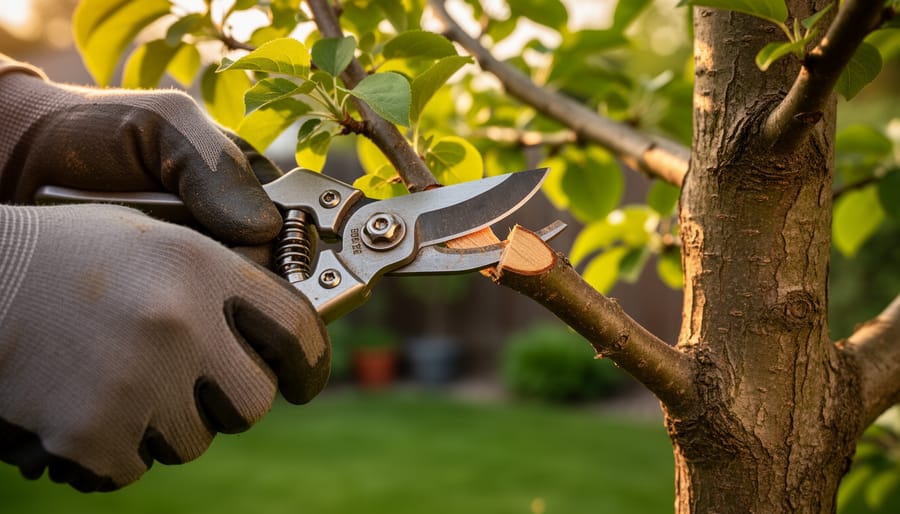
The tree is dismantled in sections, starting with the branches. Branches are cut, guided, and lowered slowly, especially when the tree sits near a house, fence, or driveway. Watching from a distance, it may seem dramatic, but every movement is precise. Even with loud equipment and falling limbs, the process feels methodical because the crew follows a plan developed during the initial inspection.
Trunk sectioning
After the canopy is removed, the trunk is taken down piece by piece. Each cut shortens what once felt permanent, and the tree gradually disappears from view. There are no sudden drops or chaotic crashes. Instead, the work continues steadily, reducing the tree to manageable logs that can be removed or repurposed. The pace is consistent, balancing safety with efficiency at every step.
Debris handling and cleanup
As the tree is dismantled, debris is cleared continuously. Logs are stacked neatly, branches are removed, and the yard never looks buried under a pile of cuttings. By the end, the area looks organized and functional. You can almost imagine using the space for outdoor gatherings, a garden expansion, or simply enjoying the newfound sunlight where the tree once stood.
Taking the First Step Toward Tree Removal
If a tree on your property lingers in the back of your mind more than it should, the first step often involves simply understanding what’s ahead. Requesting a professional tree removal estimate brings clarity on the process, timeline, and scope without any obligation. That knowledge alone makes the situation feel more manageable, easing the stress of uncertainty and letting you decide confidently for your property.