
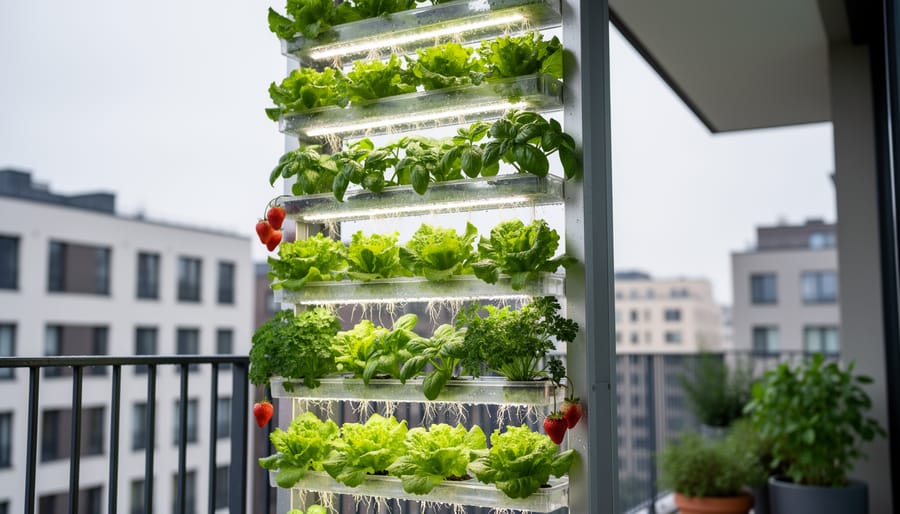
Transform a blank wall into a thriving food garden by stacking hydroponic growing containers vertically. This method lets you grow lettuce, herbs, strawberries, and even tomatoes in a fraction of the space traditional gardens require, perfect if you’re working with a small patio, balcony, or even an indoor corner.
Vertical hydroponic systems work by circulating nutrient-rich water through multiple levels of plants, eliminating soil entirely. The water flows from top to bottom through a network of towers or wall-mounted channels, delivering exactly what your plants need while gravity does most of the work. You’ll harvest faster than soil gardening because roots access nutrients directly, and you’ll never deal with weeding, tilling, or soil-borne diseases again.
The learning curve isn’t as steep as you might think. Most beginners succeed with simple tower systems that require nothing more than adding water, measuring nutrients weekly, and monitoring pH levels. You don’t need a green thumb or years of experience.
Over the next sections, we’ll walk through choosing your first system based on your space and budget, setting it up step by step without confusion, and maintaining it with a simple weekly routine that takes less than 30 minutes. You’ll also hear from Maria Chen, an urban gardener who transformed her apartment balcony into a year-round salad bar using a basic vertical setup she assembled herself.
Whether you’re hoping to grow fresh produce in a cramped city apartment or maximize your greenhouse output, vertical hydroponics offers a practical solution worth exploring.
What Makes Vertical Hydroponics Different from Traditional Gardening
Vertical hydroponics strips away soil and flips the growing space on its side, letting you stack plants upward instead of spreading them across ground level. Instead of roots digging into dirt, they hang in air, tuck into grow media, or dangle in channels where nutrient-rich water flows past them on a schedule. The plants get exactly what they need, water, oxygen, and dissolved nutrients, without competing for resources or battling compacted soil.
This approach differs from soil-based vertical gardens in a fundamental way: no soil means no guessing about whether your plants are getting enough food. You control the nutrient mix directly, adjusting it as your crops grow. Traditional hydroponics typically spreads plants horizontally across tables or in long troughs, which still eats up floor space. Vertical systems take that same efficient water delivery and flip it ninety degrees, letting you grow ten or twenty plants in the footprint where you’d normally fit two or three.
Understanding why vertical hydroponics works so well comes down to a few core concepts that become second nature once you’ve seen them in action:
- Growing medium
- Inert material like clay pebbles, coconut coir, or rockwool that anchors plant roots while letting water and air flow freely. It replaces soil but doesn’t provide nutrients on its own.
- Nutrient solution
- Water mixed with dissolved minerals that feed your plants directly. You adjust the recipe based on what you’re growing and how mature the plants are.
- Vertical stack
- The arrangement of planting sites one above another, maximizing the number of crops in minimal floor space. Water typically flows from top to bottom through gravity or pump systems.
- Growing tower
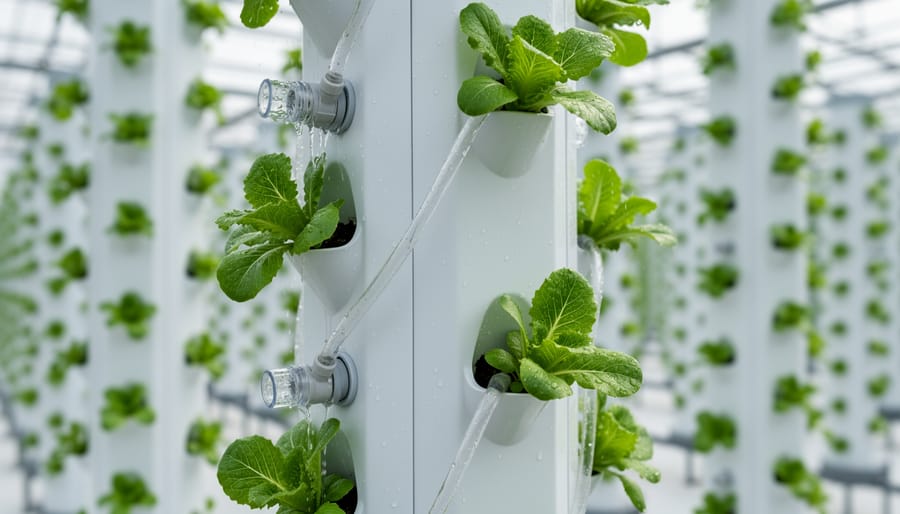
- A freestanding column with pockets or holes where plants sit at multiple levels. The tower circulates nutrients from a reservoir at the base up through the plants and back down.
The water delivery happens through pumps and timers, cycling nutrient solution to the roots several times daily. Between cycles, the roots get oxygen, which accelerates growth compared to soil where roots can get waterlogged. You’re essentially giving plants room service, everything delivered on demand, nothing wasted, and all of it happening in a compact vertical footprint.
The Real Benefits You’ll Experience
When you switch to vertical hydroponics, the changes show up fast. A typical 4-foot tower can produce what would normally require 40 square feet of garden bed. That means you could grow 30 lettuce plants in the same floor space currently occupied by a single potted plant. If you’re working with a small balcony or patio, this multiplication effect opens up possibilities that seemed impossible before.
Water usage drops dramatically because these systems recirculate the nutrient solution instead of letting it drain away. You’ll use roughly 90% less water compared to soil gardening. For context, a traditional garden bed might need 10 gallons weekly during summer, while a vertical hydroponic system producing the same yield uses about one gallon. Your water bill reflects this, and so does your conscience if you live in a drought-prone area.
Growth rates surprise most newcomers. Lettuce that takes 60 days in soil often matures in 35 to 40 days hydroponically. Basil grows bushier and faster, ready for your first harvest in three weeks rather than five. This acceleration happens because roots access nutrients directly without searching through soil, and you control the growing conditions precisely. Questions about hydroponic nutrition come up often, but these plants develop just as robustly as their soil-grown counterparts when you maintain proper nutrient levels.
Pest problems diminish significantly. Without soil, you eliminate the habitat for many common insects and soil-borne diseases. Slugs, cutworms, and root rot become non-issues. You’ll still need to watch for aphids and whiteflies, but the clean environment and easier monitoring make spotting problems simple before they spread.
Harvesting becomes genuinely pleasant instead of a back-straining chore. Everything sits at comfortable heights, no kneeling required. You can snip herbs while standing, check plant health without bending over, and spot ripe produce easily because it’s right at eye level. For anyone with mobility concerns or just a tired back after a long day, this ergonomic advantage matters more than you might initially think. Your morning routine of gathering fresh greens shifts from a workout to a two-minute task.
Popular Vertical Hydroponic Systems Explained
Tower Systems
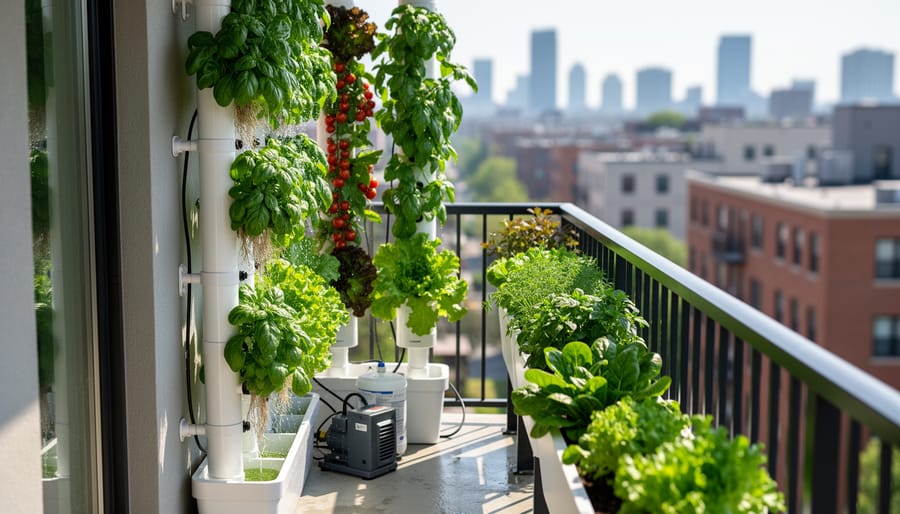
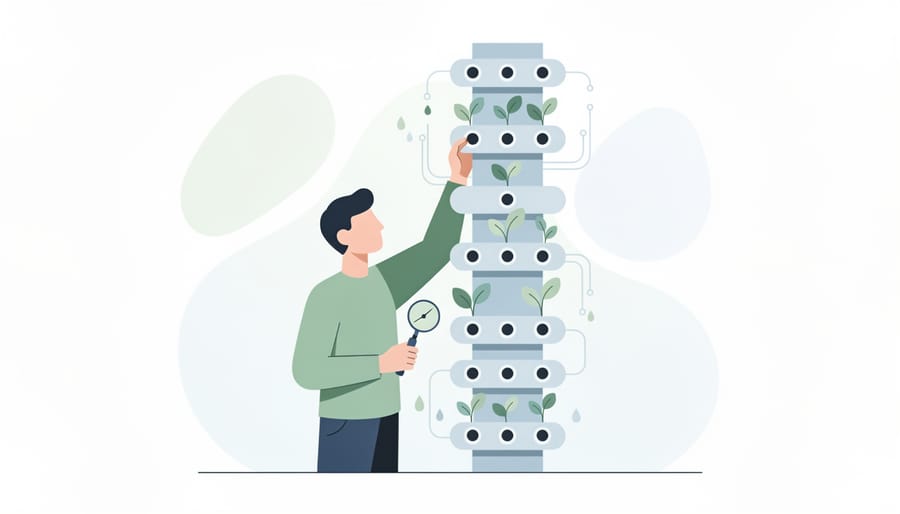
Tower systems are the most recognizable vertical hydroponic setups, featuring a central column with planting pockets spiraling up the sides. Water pumps from a reservoir at the base to the top, then trickles down through the tower, bathing each plant’s roots before recycling back to the reservoir. Most towers stand four to six feet tall and hold 20 to 40 plants in roughly four square feet of floor space.
Beginners gravitate toward towers because they’re genuinely straightforward. You plug in one pump, fill one reservoir, and every plant gets fed automatically. There’s no complex plumbing to troubleshoot. Pre-made towers like the Tower Garden or Lettuce Grow range from $300 to $600, while DIY versions using PVC pipe cost under $100. They work beautifully for lettuce, spinach, herbs, and strawberries, crops that don’t mind a bit of crowding and stay compact.
Wall-Mounted and Living Wall Systems
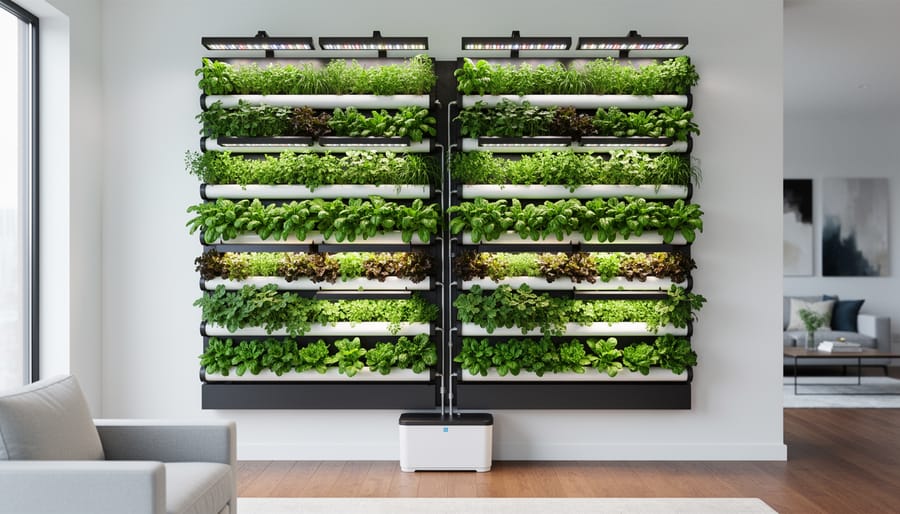
Wall-mounted systems attach directly to vertical surfaces, creating living walls that maximize unused space. These units typically feature pockets or channels where you plant herbs, lettuce, and other compact greens. They’re ideal for patios, balconies, or even kitchen walls where you want fresh herbs within arm’s reach.
Indoor living walls usually incorporate grow lights and recirculating pumps hidden behind the façade, while outdoor versions rely on natural sunlight. The flat design makes them perfect for renters since most mount without permanent modifications. Basil, mint, arugula, and spinach thrive in these setups. Expect to pay between $150 for basic pocket systems and $500 for sophisticated automated units with built-in lighting and timers.
A-Frame and Ladder Systems
A-frame and ladder systems appeal to gardeners who enjoy building their own setups or want something customizable without a hefty price tag. These structures resemble their namesakes, with angled supports holding multiple growing channels or gutters in a tiered arrangement. You can construct them from PVC pipe, wood, or metal frames, making them perfect weekend projects that cost a fraction of commercial systems.
What makes these designs particularly practical is their accessibility. Unlike tall towers where you’re stretching to reach upper plants, A-frames keep everything at a comfortable working height. The angled design also ensures excellent light distribution, as upper levels don’t completely shade lower ones. Most DIY plans accommodate 20 to 40 plants depending on size, striking a nice balance between capacity and manageability for home gardeners.
Stacked NFT (Nutrient Film Technique) Systems
NFT systems run a thin film of nutrient solution through gently sloped channels, and stacking these channels vertically creates serious production capacity. You’ll typically see three to five tiers of horizontal channels mounted on a frame, with plants positioned in holes along the top of each channel. This setup works brilliantly for lettuces, herbs, and other lightweight crops that don’t need deep root space.
The catch? These systems demand closer attention than towers or wall units. If your pump fails or the flow rate drops, plants can suffer quickly since roots aren’t sitting in a reservoir. You’ll also need to monitor the slope angle, too steep and nutrients rush past the roots, too shallow and water pools instead of flowing. For growers comfortable with basic maintenance and ready to check their system daily, NFT delivers impressive yields per square foot.
Best Plants for Vertical Hydroponic Gardens
Choosing the right plants makes all the difference when you start your hydroponic garden. Fortunately, vertical systems accommodate a surprising variety of crops, though some are definitely easier than others.
Leafy greens are your best starting point. Lettuce, spinach, kale, and Swiss chard practically thrive on neglect in vertical hydroponic setups. They grow quickly (often harvest-ready in 30 days), stay compact, and tolerate minor pH fluctuations. Arugula and bok choy work equally well, giving you a steady supply of salad ingredients without the space that soil beds demand.
Herbs are nearly foolproof. Basil, cilantro, parsley, and mint flourish in vertical arrangements, and their shallow root systems make them ideal for tower gardens or wall-mounted units. You’ll harvest multiple times from a single planting. Oregano, thyme, and sage grow a bit slower but reward you with intense flavors that surpass anything from the grocery store.
Strawberries surprise many beginners with how well they adapt to vertical growing. The hanging growth habit looks beautiful, and you’ll avoid the slug problems that plague ground-level strawberry patches. Everbearing varieties produce fruit continuously throughout the season, making them worth the slightly higher nutrient demands compared to leafy greens.
Tomatoes and peppers require more experience but deliver impressive yields. Cherry and grape tomato varieties work best since they’re lighter and more manageable than beefsteak types. You’ll need sturdy structures to support the weight, and these fruiting plants demand consistent nutrient levels and stronger lighting. Bell peppers and hot peppers like jalapeños adapt well once you understand Hydroponics 101 principles, though they take longer to mature.
Start with three or four lettuce plants and a couple of herb varieties. Once you’ve mastered the basics with those forgiving crops, add strawberries or peppers to expand your vertical harvest.
Setting Up Your First Vertical Hydroponic System
Choosing the Right Location
Location determines whether your vertical hydroponic system thrives or frustrates. Indoor setups give you complete control over temperature and light, but you’ll need strong grow lights, LEDs work best, positioned 6-12 inches from plants. Outdoor systems harness free sunlight (aim for 6+ hours daily) but face weather swings and temperature extremes.
Position your system near a water source and electrical outlet. Hauling water gets old fast, and pumps run constantly. For indoor gardens, check that floors can handle weight when water reservoirs are full. South-facing windows offer maximum natural light indoors. Outdoors, morning sun with afternoon shade prevents overheating in summer. Test your chosen spot for a week before committing.
Understanding Your Nutrient Solution
Your plants need food, and in hydroponics, that comes entirely from the nutrient solution you mix into the water. Don’t let this intimidate you, start with a pre-mixed hydroponic fertilizer designed for leafy greens or vegetables. These come with clear instructions, usually something like “add 2 teaspoons per gallon of water.”
The pH level determines whether your plants can actually absorb those nutrients. Test your water weekly with inexpensive pH test strips or a digital meter, aiming for 5.5 to 6.5. If it drifts too high, add a few drops of pH down solution. Too low? Use pH up. Make small adjustments, a little goes a long way.
Change your nutrient solution completely every two weeks to prevent buildup of unused minerals and maintain freshness. Top off with plain water between changes as your plants drink. The water should look clean, not cloudy or smelly. If it develops an odor or turns murky, drain it immediately and start fresh.
That’s genuinely all most beginners need to know to succeed.
Planting and Early Care
Starting your vertical hydroponic garden is simpler than you might think. If you’re working with seeds, consider germinating them in rockwool cubes or rapid rooter plugs first. These small growing media cubes make transplanting into your vertical system incredibly easy once roots appear, usually within five to seven days for most herbs and greens.
For transplanting seedlings, gently rinse away any soil from the roots under lukewarm water. Soil particles can clog your system and harbor bacteria, so take your time with this step. Once clean, tuck the roots into your net pots with some expanded clay pebbles or whatever growing medium your system uses.
Spacing matters more in vertical systems than you might expect. While it’s tempting to pack plants tightly, leave at least four to six inches between leafy greens and eight to ten inches for larger plants like tomatoes. Remember that plants in the upper tiers will cast shadows on those below, so position shade-tolerant varieties like lettuce toward the bottom.
During the first two weeks, check your water level daily. New plants drink enthusiastically as they adapt. Watch for any wilting, which usually signals pH issues rather than underwatering in hydroponics. Leaves should look perky and vibrant. If you notice yellowing, your nutrient concentration might need adjusting. Don’t panic if growth seems slow initially. Plants need time to transition from soil to water-based roots.
Common Challenges and How to Solve Them
Every new vertical hydroponic gardener hits the same snags, and the good news is that they’re all fixable once you know what to look for. The most common issue you’ll face is pump failure or clogging, which stops water circulation and can stress plants quickly. Check your pump weekly by listening for unusual sounds or reduced flow, and keep a spare on hand if possible. Clean the intake filter every two weeks to prevent debris buildup, and if you notice water isn’t reaching the top tiers, disconnect the pump and rinse it thoroughly under running water.
pH imbalances trip up more beginners than anything else because plants in hydroponic systems are sensitive to even small shifts. Your target range is 5.5 to 6.5 for most vegetables and herbs. Test your water every few days with a simple pH kit (they cost about ten dollars), and when levels drift too high, add pH down solution a few drops at a time. If pH drops too low, pH up does the reverse. The key is making small adjustments rather than overcorrecting, which creates a frustrating seesaw effect.
Algae growth shows up as green slime on surfaces exposed to light, especially around the base of plants and on reservoir walls. While it looks alarming, algae mainly competes for nutrients rather than harming plants directly. Prevent it by covering any openings where light reaches the water, using opaque tubing instead of clear, and wrapping exposed growing cups with aluminum foil. If algae appears, wipe surfaces clean during your weekly maintenance and consider adding a small amount of hydrogen peroxide (one tablespoon per gallon) to the reservoir.
Nutrient deficiencies appear as yellowing leaves, stunted growth, or purple-tinged stems, and they usually mean your nutrient concentration is too weak or you’ve gone too long without changing the solution. Replace your entire nutrient solution every two weeks, and between changes, top off with a diluted mixture rather than plain water. Keep a photo journal of your plants so you can spot gradual changes that signal a problem before it becomes serious.
Interview: How Sarah Transformed Her Balcony with Vertical Hydroponics
I met Sarah Chen on her eighth-floor balcony in downtown Portland, where lettuce, basil, and cherry tomatoes now grow in neat vertical towers where potted plants once struggled. A year ago, she’d never heard of hydroponics.
“I was skeptical,” Sarah admits, pouring us coffee while her pump quietly circulates nutrient solution. “I thought hydroponics was only for tech-savvy people with greenhouses. My balcony gets maybe five hours of direct sun, and I’d killed more herbs than I care to admit.”
After watching her neighbor’s setup produce bushels of greens, Sarah invested in a basic five-tier tower system. She chose towers specifically because they fit her narrow balcony footprint and didn’t require drilling into her rental’s walls.
The first month humbled her.
“I mixed the nutrients wrong and burned my seedlings. Then I forgot to check the reservoir during a heat wave, and everything wilted.” She laughs now, but at the time, she nearly gave up. “What saved me was joining an online hydroponics group. Real people posted their disasters alongside their harvests. I realized everyone struggles at first.”
Sarah’s breakthrough came when she stopped overthinking. She set phone reminders to check pH weekly, kept a simple log of what she added to the reservoir, and started with bulletproof crops like lettuce and mint rather than jumping straight to tomatoes.
The results surprised even her. “By month three, I was harvesting enough lettuce for salads three times a week. My basil grew so fast I started making pesto for friends.” She points to her largest tower, where Sungold cherry tomatoes cascade down. “Those produced for seven months straight. In my old soil pots, I’d get maybe six weeks of fruit.”
Her advice for hesitant beginners? Start smaller than you think you need.
“I wanted three towers right away. Good thing I started with one, because that first month I would’ve tripled my failures.” She also recommends choosing a system with a visible reservoir. “Being able to see the water level without disassembling anything makes daily checks actually happen.”
Would she go back to traditional container gardening? Sarah gestures at her thriving balcony garden, where she now harvests year-round. “Not a chance. I’ve got more food growing in fifteen square feet than I ever imagined possible.”
Starting your vertical hydroponic journey might feel overwhelming right now, but remember that every expert gardener was once a complete beginner staring at their first system wondering if they’d made a terrible mistake. The truth is, you probably will encounter some hiccups along the way. Your pH might drift off target, a pump might stop working at the worst possible moment, or your first batch of lettuce might look sadder than you hoped.
But here’s what matters more: each of those challenges teaches you something valuable. You’ll learn to troubleshoot, adjust, and refine your approach. Within a few growing cycles, what once seemed complicated becomes second nature.
The gardening community is remarkably generous with advice and support. Online forums, local gardening groups, and social media communities are filled with people eager to share what worked for them and help you solve problems. You’re never truly alone in this.
If your growing space has always felt too small, too shaded, or just plain inadequate, vertical hydroponics offers you a genuine chance to reimagine what’s possible. That awkward corner of your balcony, the blank wall in your kitchen, or the cramped patio you thought could never produce much food, all of these spaces hold untapped potential.
Start with one small system. Grow a few heads of lettuce or a handful of herb plants. Watch them thrive in ways that surprise you. Then decide where to go next.
