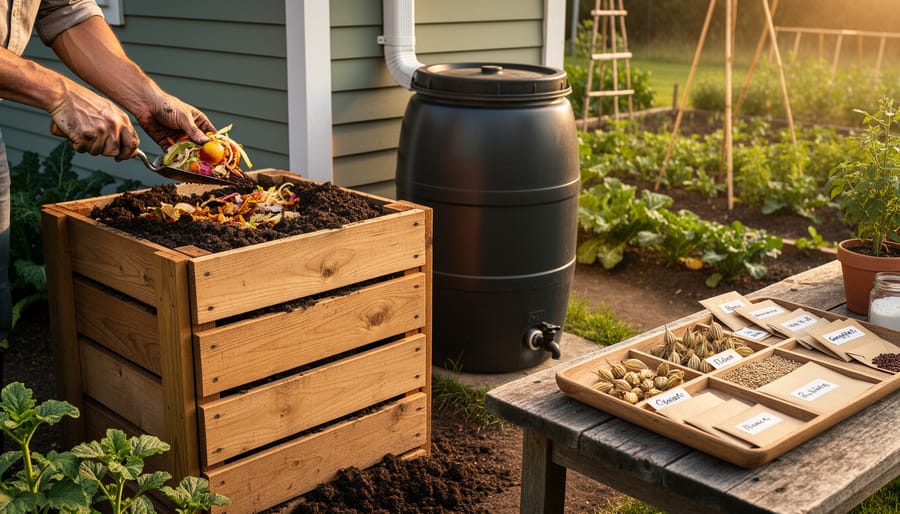
Transform yesterday’s kitchen scraps into tomorrow’s compost by creating a simple three-bin system that turns waste into black gold for your garden beds. Capture rainwater in barrels positioned beneath downspouts, then use this free resource to irrigate during dry spells rather than relying on municipal water supplies. Save seeds from your healthiest plants each season, air-dry them in paper envelopes, and replant them the following year to create a self-sustaining garden cycle that eliminates the need for annual seed purchases.
The circular economy isn’t a business buzzword reserved for corporations and manufacturers. It’s a practical philosophy that mirrors what happens naturally in forests, meadows, and ecosystems worldwide. Every fallen leaf becomes nutrients for new growth. Every decomposing plant feeds the soil that will nurture the next generation. Nothing goes to waste because waste doesn’t exist in nature’s vocabulary.
Your garden offers the perfect testing ground for circular thinking. Instead of viewing grass clippings, pruned branches, and spent plants as trash to haul away, you can recognize them as valuable resources waiting for their next purpose. Rather than buying new materials season after season, you can design systems where outputs become inputs, where endings transform into beginnings.
This approach doesn’t require advanced degrees or expensive equipment. It starts with observation, a shift in perspective, and small practical changes that add up to significant environmental impact. Your garden becomes more resilient, your grocery budget stretches further, and you develop a deeper connection to the natural cycles that sustain all life.
What Circular Economy Actually Means for Your Backyard
Think about what happens in most gardens. We buy plants from the nursery, use fresh soil and fertilizer, pull weeds, and toss everything we don’t want into the trash or yard waste bin. This is the traditional ‘take-make-dispose’ model playing out right in our backyards. We’re constantly bringing in new resources and sending waste away.
But what if your garden could work more like nature does? That’s where circular economy principles come in, and they’re simpler than they sound.
In nature, there’s no such thing as waste. When a leaf falls, it becomes food for soil organisms. When a plant dies back, its nutrients return to the earth. Everything cycles back around to support new growth. A circular economy garden mimics this beautiful, efficient system.
Instead of ‘take-make-dispose,’ we shift to ‘reduce-reuse-regenerate.’ Here’s what that looks like in practical terms:
Reduce means starting with less. Choose perennials over annuals to avoid replanting yearly. Collect rainwater instead of running the hose. Select native plants that naturally thrive without constant inputs.
Reuse means finding new purposes for materials. Those fallen leaves become mulch. Vegetable scraps turn into compost. Last year’s tomato cages support this year’s beans. Broken pots become drainage layers.
Regenerate means actively improving your garden’s health over time. As you compost and mulch, your soil gets richer each season. You’re not just maintaining your garden; you’re making it more vibrant and self-sufficient.
This approach aligns beautifully with permaculture principles, creating gardens that give back more than they take. The best part? Your garden becomes easier to maintain while supporting local wildlife and reducing your environmental impact.
The Three Core Principles That Transform Any Garden
Design Out Waste From the Start
The best time to eliminate waste is before it happens. When you’re sketching out your garden beds this winter, think beyond just aesthetics. Consider how your design choices today will affect maintenance, resource use, and waste tomorrow.
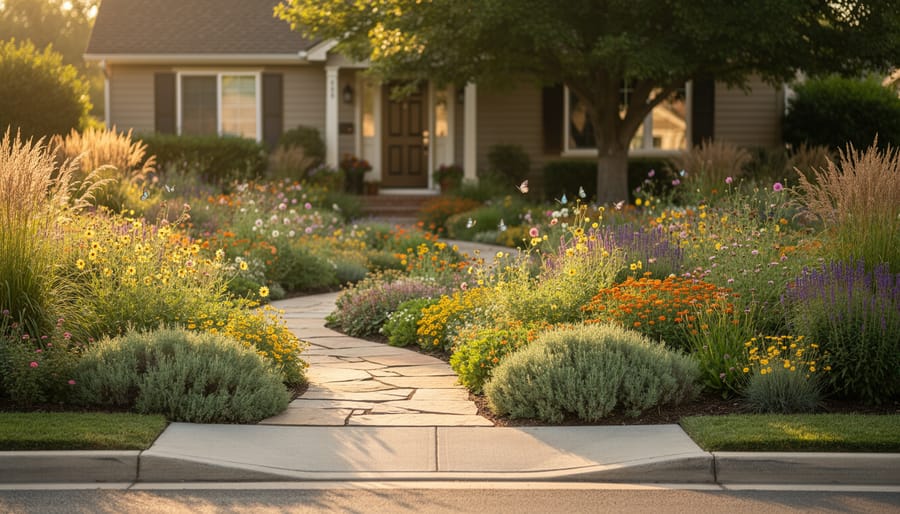
Start by favoring perennials over annuals wherever possible. While that flat of petunias might tempt you at the garden center, perennials like coneflowers, daylilies, and sedums return year after year without needing replacement. This simple shift dramatically reduces packaging waste, transportation emissions, and the disposal of spent plants each fall. I learned this lesson after three seasons of hauling bags of wilted annuals to the compost pile.
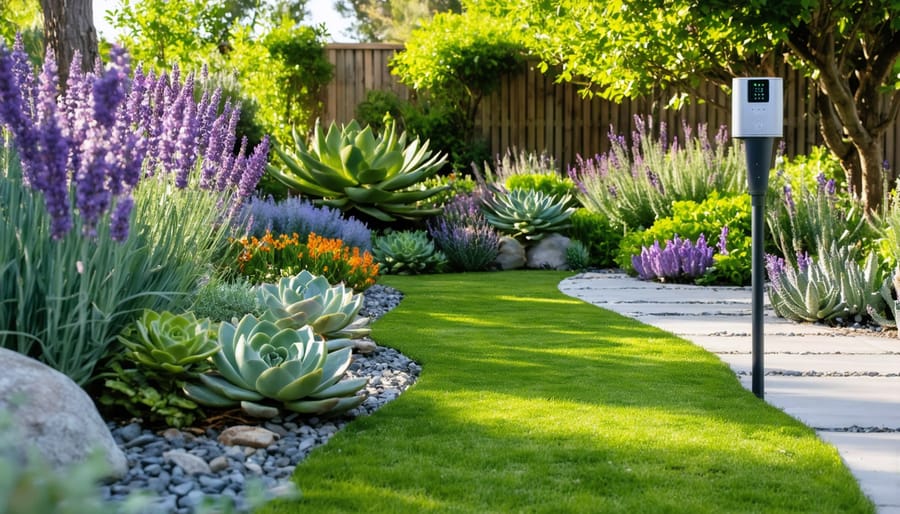
Choose plants that multitask. Herbs like rosemary and lavender offer culinary and ornamental value. Berry bushes feed both you and local birds. Native flowering plants support pollinators while requiring less water and fertilizer than exotic varieties. When each plant serves multiple purposes, you naturally need fewer plants overall.
Plan ahead for season’s end. Before planting, ask yourself: where will this material go when it’s done? Can it be composted? Will it provide winter interest for wildlife? Could it be cut back and left as mulch? This forward-thinking approach is fundamental to circular garden design.
Also consider succession planting in the same space. After early lettuce finishes, that spot can host tomatoes, then fall greens. You’re maximizing productivity without expanding your footprint or creating gaps that invite weeds and wasted space.
Keep Everything Cycling Through Your Garden
The beauty of circular gardening lies in its simplicity: what comes from your garden stays in your garden. Think of it as creating your own little ecosystem where nothing goes to waste.
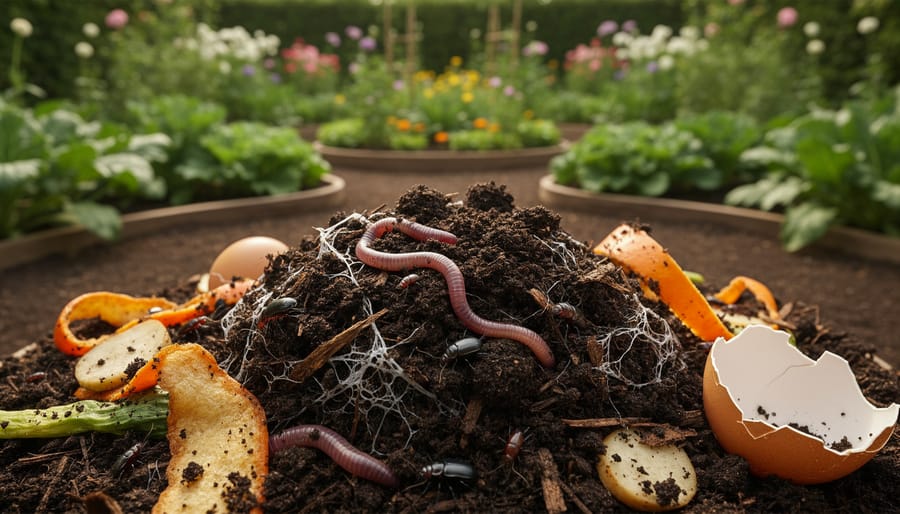
Start with composting systems as your foundation. Kitchen scraps, plant trimmings, and fallen leaves become black gold that feeds your soil. I’ve learned that even a basic three-bin system works wonders, turning yesterday’s dinner prep into next season’s tomatoes.
Mulching is another game-changer. Rather than bagging grass clippings or buying wood chips, let your garden’s own materials do the work. Spread leaves around perennials, use spent plant stalks as pathways between beds, or chop and drop weeds before they seed. This protective layer holds moisture, suppresses new weeds, and gradually enriches your soil as it breaks down.
Seed saving connects you to your garden’s future. Start with easy plants like beans, tomatoes, or lettuce. Collect seeds from your healthiest plants, store them properly, and you’ll never need to buy those varieties again. Plus, they’ll gradually adapt to your specific growing conditions.
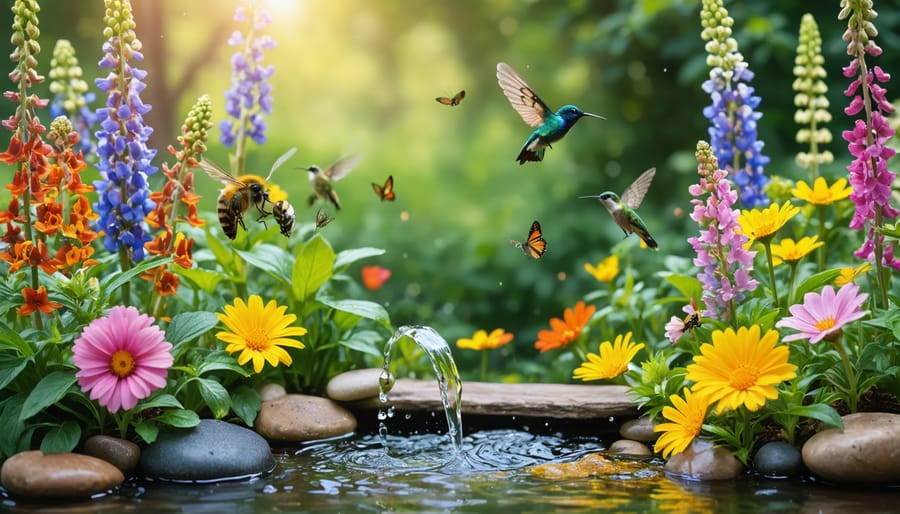
Water can cycle through too. Rain barrels capture runoff from your roof, while greywater from sinks can nourish ornamental plants. Some gardeners even create simple filtration ponds where water circulates through plants before returning to irrigation systems.
These practices transform your garden from a consumer into a self-sustaining producer.
Regenerate Your Soil, Not Just Maintain It
The real magic of circular gardening isn’t just about keeping your soil ticking along—it’s about genuinely improving it year after year. Think of your soil as a living bank account where you’re making deposits that compound over time.
Start by embracing cover cropping between your main growing seasons. These hardworking plants add nitrogen, prevent erosion, and create organic matter when you cut them down and let them decompose right where they grew. Crimson clover, winter rye, and field peas are fantastic choices that actually build soil health while protecting your garden beds during dormant periods.
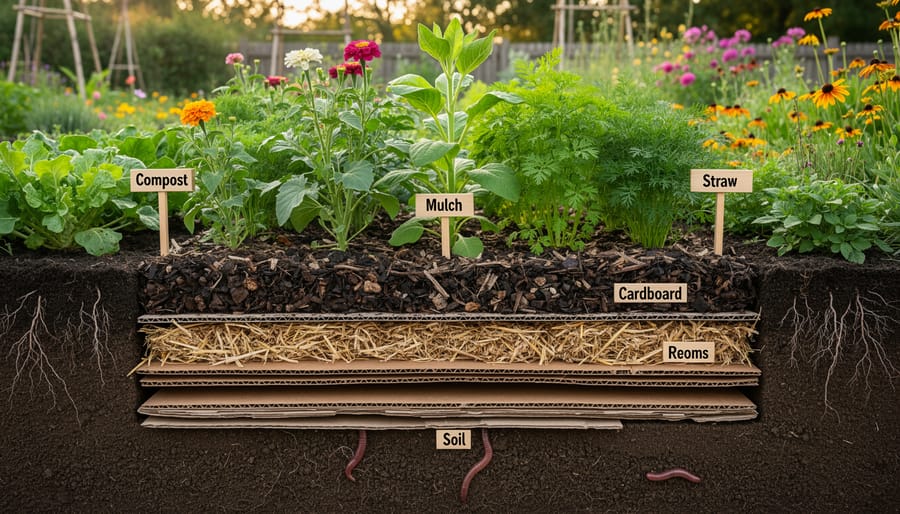
No-dig gardening is another game-changer. By layering compost and organic materials on top of your soil rather than turning it over, you preserve the intricate web of fungi, bacteria, and beneficial organisms that do the heavy lifting for you. This underground community breaks down nutrients, improves soil structure, and helps plants resist diseases naturally.
Speaking of beneficial organisms, invite them in deliberately. Add worm castings, brew compost tea, or simply create habitats for soil-dwelling helpers. These microscopic workers and their larger friends transform your amendments into plant-available nutrition far more effectively than any quick-fix fertilizer.
The beauty of this approach is watching your soil transform from dry and compacted to rich, crumbly, and alive—proof that regeneration beats maintenance every time.
Simple Swaps That Make Your Garden More Circular
Rethink Your Garden Inputs
Before you reach for that credit card at the garden center, let’s explore what you already have at home. Embracing circular economy principles starts with recognizing the wealth of gardening resources hiding in plain sight around your house.
Your kitchen produces gold—or at least, the organic material that becomes gold for your soil. Those vegetable peelings, coffee grounds, and eggshells aren’t waste; they’re your future compost. I’ve been composting for years, and watching food scraps transform into rich, dark soil never gets old. Even if you have limited space, a small countertop compost bin can work wonders.
Rainwater collection offers another brilliant opportunity to close the loop. A simple barrel connected to your downspout captures hundreds of gallons of free, chemical-free water throughout the growing season. Your plants will thank you, and your water bill will shrink.
Making your own fertilizers is easier than you might think. Banana peels soaked in water create potassium-rich plant food, while crushed eggshells provide calcium. I spoke with master gardener Ellen Rodriguez, who swears by her DIY compost tea: “It costs nothing and outperforms anything I’ve bought.”
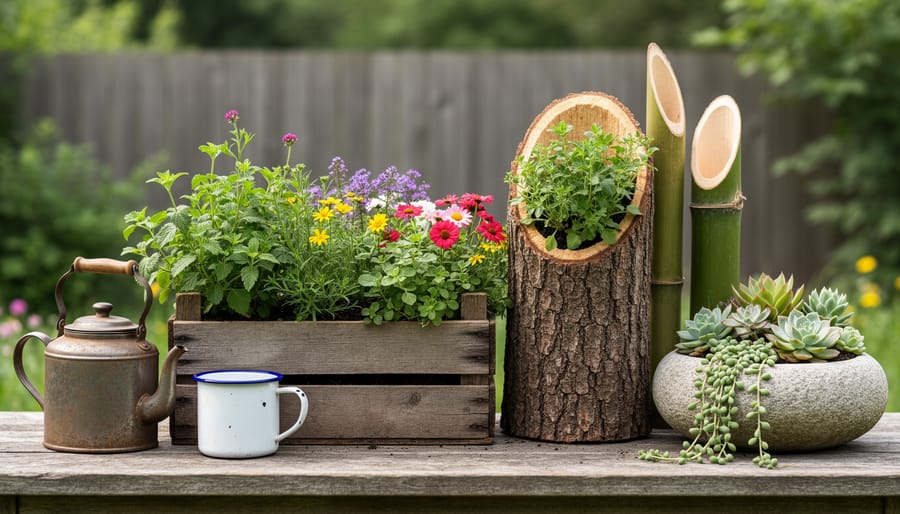
Look around your home for creative planters and supports. Yogurt containers become seedling pots, old ladders transform into vertical gardens, and wine bottles work beautifully as garden edging. Those worn-out clothes? Cut them into strips for plant ties.
The best garden inputs often cost nothing at all—they just require reimagining what you already own.
Choose Materials That Give Back
One of my favorite aspects of circular garden design is choosing materials that eventually give back to the earth rather than sitting in a landfill for centuries. It’s like investing in your garden’s future while honoring nature’s rhythms.
Start with biodegradable pots for your seedlings and transplants. Paper pots, coconut coir containers, and compressed peat pots can go directly into the ground, where they’ll decompose and nourish the soil. I recently spoke with master gardener Sarah Chen, who shared that she’s completely switched to biodegradable options in her demonstration garden. “The difference is remarkable,” she told me. “No plastic waste, and my transplants experience less shock since I’m not disturbing their roots.”
Natural mulches are another circular champion. Wood chips, shredded leaves, straw, and grass clippings break down over time, improving soil structure and feeding beneficial microorganisms. You’re essentially feeding your garden while protecting it.
When building garden structures, choose untreated wood that can eventually decompose without leaching chemicals. Cedar and black locust are naturally rot-resistant options that last for years before gracefully returning to the earth.
For pathways and borders, consider stone, brick, or gravel. These materials can be endlessly reused, rearranged as your garden evolves, or passed along to fellow gardeners. I’ve redesigned my garden paths three times using the same river stones, and they look better each time.
The beauty of these choices is their dual purpose: they serve your garden beautifully while their useful life, then transition seamlessly back into nature’s cycle. That’s circular thinking at its finest.
Building a Garden That Feeds Itself
Let me walk you through creating a simple closed-loop system that beautifully demonstrates how your garden can sustain itself. I’ve seen countless gardeners transform their spaces using this approach, and the best part? You can start small and expand as you gain confidence.
Your first circular garden project centers around what I call the “Three Sisters Plus Compost” system. This builds on traditional companion planting while incorporating regenerative practices that close the loop.
Here’s your step-by-step guide:
Start by designating a 10×10 foot garden bed. In early spring, establish your compost collection point at one corner. This becomes your system’s heart where all garden waste returns to create new life.
Plant your corn first, spacing seeds 12 inches apart in rows. Once corn reaches 6 inches tall, plant pole beans around each stalk. These beans capture nitrogen from the air and deposit it into the soil, feeding your corn naturally. No synthetic fertilizers needed.
Two weeks later, plant squash between the rows. The large leaves shade the soil, reducing water needs and suppressing weeds. See how each element supports another?
Now the circular magic happens. As you harvest, collect all plant material. Corn stalks, bean vines, squash leaves, even the roots all go into your compost corner. Mix in kitchen scraps like vegetable peelings and coffee grounds. Keep this pile moist and turn it monthly.
While your compost develops, the bean roots continue enriching your soil even after harvest. The decomposing squash leaves feed soil organisms. You’re already generating next year’s fertility.
Before winter, spread half-finished compost over your bed. Come spring, what was last season’s waste becomes this season’s planting medium. You’ve completed the circle.
Take this further by adding a rain barrel to capture water runoff from nearby surfaces. Use this stored water during dry spells. The overflow can water a pollinator strip you’ve planted along the bed’s edge, using seeds saved from last year’s flowers.
Each component serves multiple purposes and feeds into the next. Your corn stalks become compost that feeds squash that shades soil that grows beans that enrich earth that supports corn. Nothing leaves the system. Nothing needs to enter from outside.
Start with this single bed. Once you see how beautifully it functions, you’ll naturally find ways to connect other garden areas into your circular system. Trust the process and watch your garden begin feeding itself.
Common Mistakes (And How I Learned From Them)
I’ll be honest—my first attempt at circular gardening was a disaster. I got so excited about closing every loop that I built an elaborate rainwater collection system in autumn, only to realize I’d miscalculated my winter storage needs. Come January, my barrels were overflowing, and I had no use for all that water since nothing was actively growing. I learned the hard way that circular systems need to match seasonal rhythms, not just good intentions.
My composting journey had its share of mishaps too. Early on, I thought more was better and threw everything into my bin without considering balance. The result? A slimy, smelly mess that attracted every fly in the neighborhood. I’d forgotten the basic rule: green and brown materials need each other. Now I keep a simple ratio in mind and layer thoughtfully. It’s not about perfection—it’s about paying attention.
Another mistake I see beginners make, because I made it myself, is creating systems that are too ambitious for the time available. I once designed this beautiful closed-loop system involving chickens, compost, and a vegetable bed rotation that looked fantastic on paper. In reality? I spent more time managing the system than actually enjoying my garden. Sometimes the most circular solution is also the simplest one.
Here’s what I wish someone had told me earlier: start small and expand gradually. Pick one principle—maybe just composting your kitchen scraps—and get comfortable with it before adding complexity. Pay attention to your garden’s seasonal patterns before investing in big infrastructure. And remember, even experienced gardeners make mistakes. The difference is we’ve learned to adjust our expectations and troubleshoot as we go.
The beauty of circular gardening is that missteps become learning opportunities. That failed rainwater system? I repositioned it near my greenhouse where I actually need water year-round. Those composting disasters taught me patience and observation. Each mistake brought me closer to a system that truly works for my space and lifestyle.
Here’s the truth about circular gardening: it’s not about achieving perfection overnight. Think of it as a journey, one where each thoughtful choice brings you closer to a garden that gives back as much as it takes. Perhaps you’re already composting your kitchen scraps, or maybe you’ve been saving seeds from your favorite tomatoes without realizing you were practicing circular principles. That’s wonderful! You’re already on your way.
The beauty of these principles is that they’re incredibly forgiving. You don’t need to overhaul your entire garden this weekend or invest in expensive systems. Start small. Choose one principle that speaks to where you are right now. If you’re drowning in autumn leaves, begin with composting. If water bills concern you, explore rainwater collection. Have a pile of broken pots? Get creative with repurposing.
Every gardener I’ve spoken with started somewhere simple, and each small change created momentum for the next. Your garden is already a living ecosystem, constantly cycling nutrients, supporting life, and adapting to seasons. By embracing circular economy principles, you’re simply working alongside these natural rhythms rather than against them. What matters most isn’t how quickly you transform your space, but that you begin. Your garden, your community, and our planet will thank you for it.