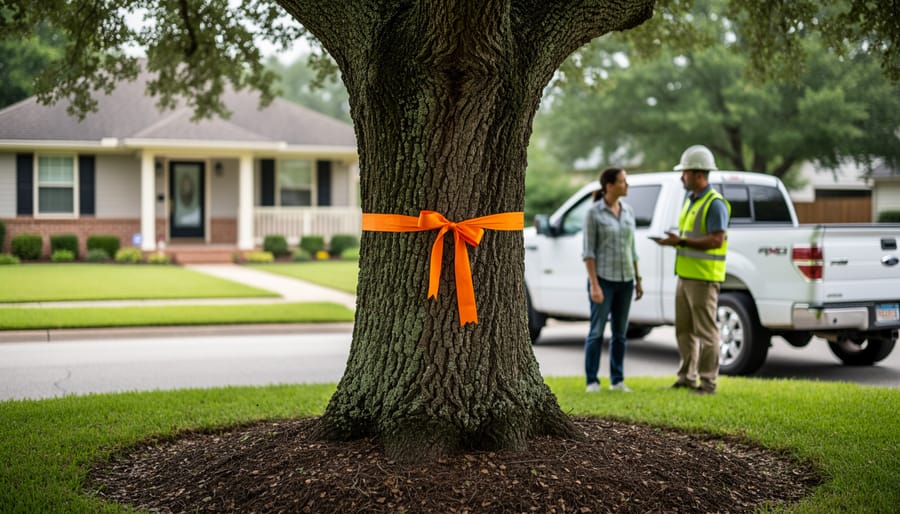
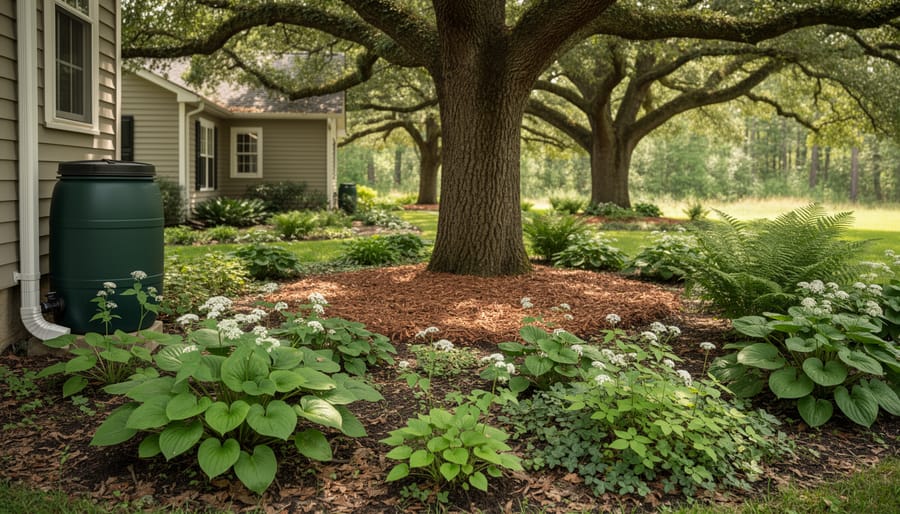
Push your finger two inches into the soil beneath that struggling hosta. If it feels bone-dry while the surface looks damp, you’ve just discovered why shade gardening keeps so many of us guessing. Tree roots steal moisture before our plants can reach it, dense canopies block rain, and that deceiving layer of wet leaves masks parched soil underneath.
A soil moisture meter eliminates this guesswork by reading moisture levels at root depth, where it actually matters. Think of it as having x-ray vision for your garden beds. Instead of following a watering schedule that worked for your neighbor or relying on that finger test that only checks the top inch, you’ll know exactly when your shade plants need water and when they don’t.
Here’s what makes this simple tool transformative for shade gardens: it prevents both overwatering (the leading killer of hostas, ferns, and astilbes) and underwatering (why your hydrangeas wilt despite yesterday’s rain). You’ll stop drowning shallow-rooted plants while deeper-rooted perennials stay thirsty. You’ll catch dry pockets under evergreen trees before your plants show stress. Most importantly, you’ll learn how your specific shade garden behaves, because every yard has its own moisture personality shaped by soil type, tree density, and microclimates.
Whether you’re a beginner trying to keep impatiens alive or an experienced gardener managing a diverse shade border, understanding soil moisture changes everything. Let’s find the right meter for your garden and put it to work.
The Hidden Challenge of Shade Garden Watering
Why Tree Canopies Make Everything Complicated
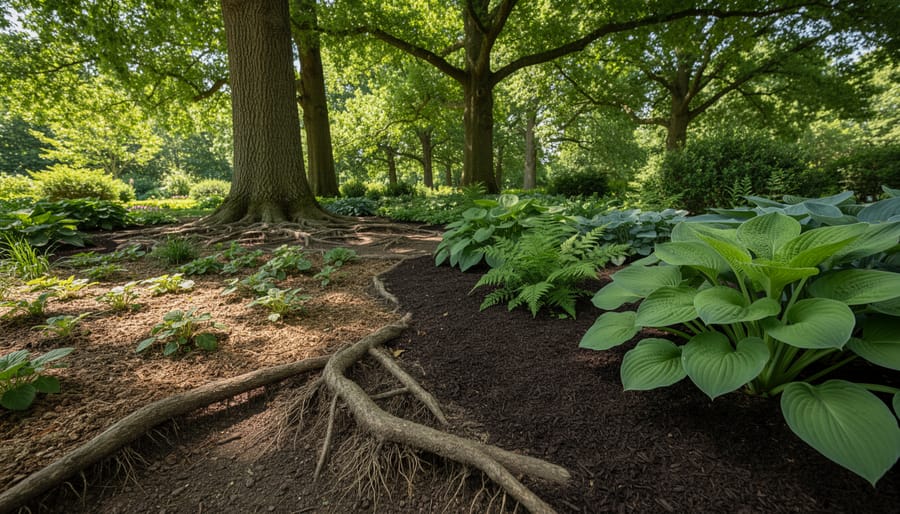
If you’ve ever gardened beneath trees, you know the puzzle well. You water diligently, yet your plants look thirsty. Here’s what’s happening: tree canopies act like umbrellas, intercepting rainfall before it reaches the ground below. I’ve measured spots under mature maples that received less than half the rainfall of nearby open areas during the same storm.
But that’s just the beginning of the challenge. Tree roots are incredibly efficient competitors, drawing moisture from a surprisingly wide area. A single oak can pull up 50 gallons of water daily during peak growing season. This creates unpredictable dry zones that shift with the seasons and weather patterns. What stays moist in spring might become parched by July.
This is where a moisture meter becomes invaluable. Rather than guessing what’s happening beneath the surface, you can check moisture levels at different depths and distances from the trunk. You’ll quickly discover that effective soil management under trees requires testing multiple spots, since conditions vary dramatically within just a few feet. It’s eye-opening information that transforms how you approach watering.
The Danger Zone: When Soil Looks Fine But Isn’t
Here’s the tricky part about shade garden soil—it’s a master of disguise. You might spot dry, crusty soil on the surface and assume your plants that thrive in shade need a good drink. But dig down a few inches, and you could discover a soggy mess that’s drowning your roots. This happens because limited sunlight means slower evaporation, and tree canopies can actually block rainfall from reaching the ground evenly.
The opposite scenario is equally deceiving. Sometimes the top layer appears moist from morning dew or light rain, but just below the surface, the soil is bone-dry. Tree roots are notorious water hogs, creating parched pockets that your garden plants struggle to compete with.
Both extremes spell trouble. Overwatering leads to root rot, fungal diseases, and stunted growth. Underwatering causes wilting, stress, and eventual plant death. Without checking what’s happening beneath the surface, you’re essentially gardening blindfolded. This is exactly where a moisture meter becomes your best friend, giving you the underground intel you need to water with confidence.
What a Soil Moisture Meter Actually Tells You
Reading the Numbers Without Getting Overwhelmed
Most moisture meters use a simple three-zone scale that takes the guesswork out of watering. The dry zone typically registers 1-3, moist reads 4-7, and wet falls between 8-10. Think of it like a traffic light for your plants: red means water soon, green means you’re good, and if you’re consistently in the wet zone, it’s time to ease up.
Here’s where it gets interesting for shade gardeners. Your ferns, hostas, and astilbes generally thrive when readings stay in that 5-7 range, comfortably moist but never soggy. I learned this the hard way when my newly planted coral bells kept wilting despite regular watering. Turns out, I was reading a 2 on the meter but watering like they needed a 6. Once I adjusted my schedule to maintain readings around 5, they bounced back beautifully.
Dry-shade lovers like epimedium and Solomon’s seal can handle readings dropping to 3-4 before needing water. Meanwhile, moisture-loving plants such as ligularia prefer staying closer to 6-7. The key is checking at root depth, usually 2-4 inches down, not just surface soil.
I chatted with master gardener Ellen Rodriguez about this, and she shared a great tip: check your plants at the same time each day for a week to understand their water consumption patterns. You’ll quickly learn whether that reading of 4 means water today or wait until tomorrow. It’s like getting to know a new friend, their quirks become predictable and manageable.
Choosing the Right Moisture Meter for Your Shade Garden
Features Worth Paying For (And Ones That Aren’t)
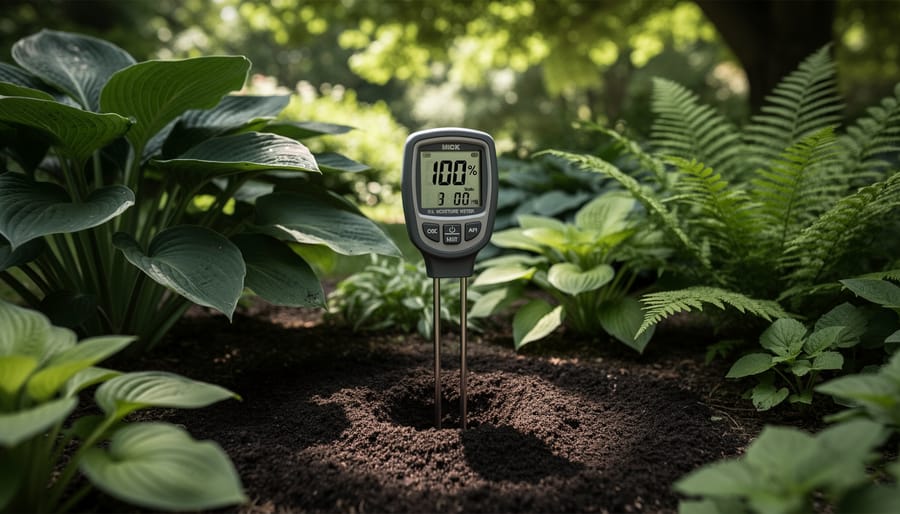
When investing in a soil moisture meter, probe length truly matters for shade gardeners working around established trees. I learned this the hard way when my 6-inch probe kept hitting surface roots instead of reaching the critical zone where feeder roots actually drink. For areas beneath trees, look for probes between 8 to 12 inches. This length allows you to test soil at varying depths, which is essential since moisture levels can differ dramatically just a few inches down. If you’re primarily working with container plants or shallow-rooted perennials, a shorter 6-inch probe works just fine and costs less.
Durability is where you shouldn’t compromise. Master gardener Susan Chen shared with me that she’s replaced three cheap meters in two years, spending more in the long run than if she’d invested in a quality stainless steel probe initially. Metal probes resist bending and corrosion far better than aluminum alternatives, especially important if you’re checking moisture multiple times weekly.
As for multi-function meters that measure pH and light levels, here’s my honest take: skip them unless you have a specific need. The pH readings are often unreliable, and you likely already know which areas are shady. A dedicated moisture meter does one job exceptionally well, and that’s what matters most. Save your money for quality soil amendments instead. The simpler analog meters with just moisture readings are remarkably accurate and require no batteries.
How to Use Your Moisture Meter Like a Pro
Mapping Your Garden’s Moisture Personality
Think of your garden as a living map with its own moisture personality! Start by testing various spots throughout your yard, especially those tricky areas under trees where roots compete for water. Your moisture meter becomes your detective tool here.
Begin by checking multiple depths in each location. Surface readings can be deceiving – the top inch might feel dry while six inches down remains soggy. Test around tree drip lines, in dense shade, and in partial sun spots. You’ll quickly discover patterns: maybe that corner under the maple stays perpetually damp while the area near the fence dries out fast.
I recommend sketching a simple garden map and noting moisture readings for each zone. Label them as “thirsty,” “moderate,” or “stays moist.” This visual reference becomes invaluable when choosing plants or adjusting watering schedules. Professional gardener Maria Chen suggests testing the same spots monthly to understand seasonal shifts. “Spring might show different patterns than late summer,” she notes.
These shade garden techniques combined with regular moisture mapping help you work with your garden’s natural rhythms rather than against them. You’ll save water, reduce plant stress, and finally understand why some areas thrive while others struggle.
Avoiding Common Mistakes That Give False Readings
Even the best moisture meter won’t help if you’re accidentally sabotaging your readings! I learned this the hard way when I kept getting wildly different results in the same garden bed. Turns out, I was hitting rocks and roots that threw everything off.
Here’s what I’ve discovered: Always insert your probe gently into the soil. If you hit resistance, pull back and try a different spot. Rocks, dense clay clumps, or buried debris create air pockets that register as dry soil, even when moisture is present nearby. In shade gardens especially, avoid testing directly next to tree trunks where massive roots dominate. Instead, measure midway between the trunk and your plants’ root zones for accurate readings.
Keep those probes clean too! Soil buildup creates a barrier that affects conductivity. After each use, wipe the metal probes with a damp cloth. If you notice crusty mineral deposits, a gentle scrub with fine steel wool works wonders.
Finally, never leave your meter in the ground. Constant soil contact corrodes the probes and drains batteries surprisingly fast. Think of it as a tool you use and put away, not a permanent installation. Taking these simple precautions means reliable readings season after season.
Adjusting Your Watering Based on What You Learn
When Your Meter Says ‘Stop Watering’ (But You’re Tempted Anyway)
I’ll admit it—I used to be the person who’d see that meter reading say “moist” and think, “but just a little more water couldn’t hurt, right?” Wrong. That instinct to water when your plants don’t need it is one of the hardest habits to break, especially with shade plants where the consequences of overwatering show up slowly.
Here’s the truth: your moisture meter is giving you permission to step back. When it reads in the adequate moisture zone, your plants are happy. They’re not silently suffering while you walk away with an empty watering can. In fact, watering trees properly means understanding that roots need oxygen as much as water.
Master gardener Janet told me she keeps a journal noting her meter readings alongside plant health observations. Within weeks, she saw the pattern: her hostas and ferns thrived when she trusted the data, not her anxiety. “The meter became my permission slip to do nothing,” she laughed, “which turns out to be exactly what my shade garden needed.”
Start trusting those numbers. Your restraint is actually expert-level care.
Real Results: What Changes When You Start Using a Moisture Meter
I’ll never forget the summer I finally bought my first moisture meter. I’d been battling what I thought was a mysterious wilt affecting my shade-loving hostas under the old maple tree. I was watering faithfully every other day, convinced I was being a diligent gardener. Turns out, I was drowning them.
The moment I pushed that meter into the soil, the reading told me everything. My “dry” shade garden was actually soggy six inches down. The dense tree canopy kept surface soil looking parched while water pooled below. Within two weeks of adjusting my watering schedule based on actual readings rather than guesswork, those hostas perked up remarkably. Their leaves regained that healthy, robust appearance I’d been missing all season.
The changes went beyond saving struggling plants. I noticed fewer fungal issues throughout my garden beds because I wasn’t creating those constantly damp conditions that invite disease. My water bill dropped noticeably too, probably by about 30 percent that summer, since I stopped overwatering areas that didn’t need it.
Perhaps most satisfying was the confidence it gave me. Instead of anxiously wondering whether to water or not, I simply checked the meter. No more plant losses from my well-intentioned but misguided care. My neighbor borrowed it once to check her containers and immediately ordered her own.
The investment paid for itself within weeks, both in water savings and in healthy, thriving plants. Sometimes the simplest tools make the biggest difference in how we garden.
Think of a soil moisture meter not as just another gadget cluttering your potting bench, but as a genuine investment in your garden’s long-term health and your own peace of mind. When you remove the uncertainty from watering decisions, especially in those tricky shade garden spots under trees or along north-facing beds, you’re setting yourself up for consistent success rather than seasons of trial and error.
I’ve watched countless gardeners transform their most challenging areas simply by understanding what’s really happening below the surface. Those mystery plant deaths? Often prevented. That constant worry about whether to water or not? Gone. The frustration of watching neighbors’ gardens thrive while yours struggles? Replaced with confidence in your decisions.
Your shade garden has unique needs that your sunny beds simply don’t face, from competing tree roots to uneven moisture distribution. A moisture meter gives you the clarity to work with these conditions rather than against them. You’ll start noticing patterns you never saw before, learning which spots dry out faster and which hold water longer than expected.
Ready to take control of your watering routine? Start with just one or two problem areas in your shade garden. Take daily readings for a week, observe how your plants respond, and watch how quickly you develop an intuition for what your garden truly needs. You might be surprised at how much more enjoyable gardening becomes when you’re working with knowledge instead of guesswork.