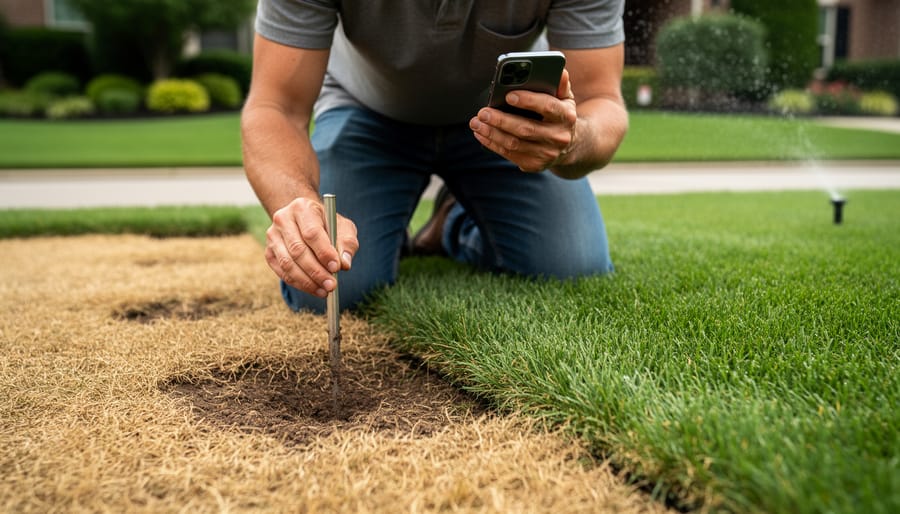
Your traditional lawn is costing you weekends, water, and peace of mind. That emerald carpet demands constant mowing, gulps thousands of gallons yearly, and requires chemical treatments that seep into groundwater. Meanwhile, alternatives exist that slash maintenance time by half, support declining pollinator populations, and actually improve your soil health over time.
The shift away from grass isn’t about sacrificing curb appeal. Clover lawns stay green through droughts while fixing nitrogen naturally into soil. Native groundcovers like creeping thyme release fragrance underfoot and never need mowing. Ornamental grasses create movement and texture that standard turf never could. Even combining multiple approaches, like edible landscaping with walking paths through herb gardens, gives you beauty and function together.
Making the transition feels overwhelming until you break it down. Start small with high-traffic problem areas where grass struggles anyway. Test one alternative in a manageable section before committing your entire yard. Most importantly, match your choice to your specific conditions: shade tolerance, foot traffic patterns, and climate zone matter more than trends.
The environmental benefits extend beyond your property line. Reduced mowing means fewer carbon emissions. Eliminating fertilizers protects local waterways. Native plantings provide crucial habitat for butterflies, bees, and birds that have lost 70% of their population in recent decades. Your yard becomes part of the solution rather than the problem, and you reclaim your Saturdays in the process.
Why Traditional Lawns Are Falling Out of Favor
The Real Cost of That Perfect Green Carpet
Let’s talk numbers, because that pristine lawn comes with a hefty price tag – both for your wallet and the planet. The average American lawn gulps down about 30,000 gallons of water annually, with water consumption spiking dramatically during summer months. That’s equivalent to taking 480 showers!
Then there’s the maintenance treadmill. Most homeowners spend 70 hours per year mowing, which adds up to nearly two full work weeks. Factor in gas or electricity for that mower, and you’re looking at another expense line item. Traditional turf also demands regular feeding, with fertilizer needs typically requiring applications four times yearly.
The financial reality? Maintaining a quarter-acre lawn costs between 700 and 1,500 dollars annually when you account for water bills, fertilizer, pest control, equipment maintenance, and your valuable time. And here’s the kicker: all those inputs often run off into storm drains, carrying chemicals into local waterways. It’s a system that keeps demanding more while giving relatively little back to local ecosystems.
What Your Lawn Means for Local Wildlife
Let’s talk about what’s really happening in your yard. Traditional grass lawns might look tidy, but they’re essentially “green deserts” for wildlife. That perfectly manicured turf? It offers almost no food or shelter for the creatures that keep our gardens thriving.
Think about it this way: a monoculture lawn is like serving the same plain dish at every meal. Pollinators like bees and butterflies can’t survive on grass alone. They need diverse flowering plants to provide nectar and pollen throughout the growing season. Beneficial insects, which help control garden pests naturally, also need variety to establish homes and hunting grounds.
Here’s the encouraging news: when you switch to eco-friendly alternatives, your yard becomes a mini ecosystem. Native wildflower meadows attract dozens of pollinator species. Ground covers like clover not only fix nitrogen in your soil but also provide early-season nectar when pollinators are hungriest. Even a simple moss lawn creates habitat for tiny invertebrates that birds depend on for food.
I’ve watched friends transform their yards from silent, sterile spaces into buzzing, active gardens. The difference is remarkable. You’re not just reducing maintenance time when you choose alternatives; you’re actively supporting the web of life that makes healthy gardens possible.
Ground Covers That Beat Grass Every Time
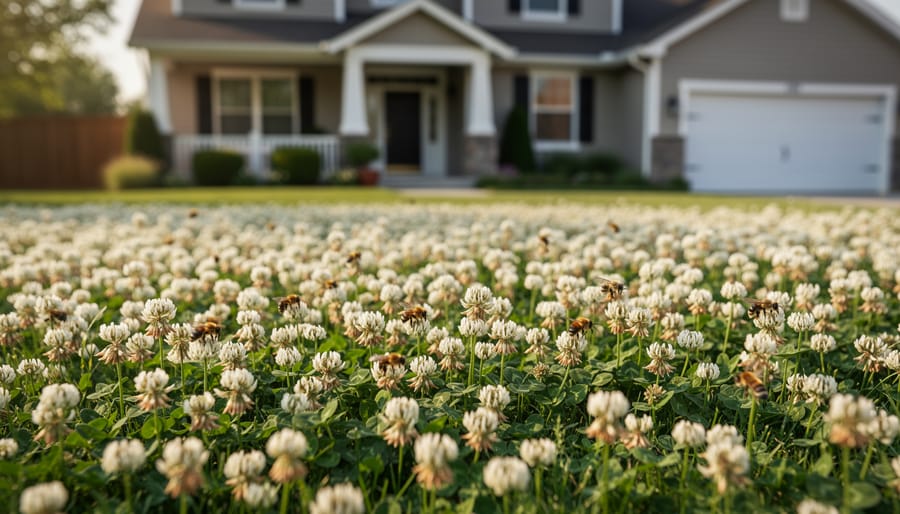
Clover: The Comeback Kid of Lawn Alternatives
Remember when clover was actually considered a lawn weed? Well, times have changed, and this humble plant is experiencing a well-deserved renaissance. I’ve watched my neighbor’s clover lawn thrive through hot summers while traditional grass lawns turned brown, and I’m convinced this is one of the smartest switches you can make.
The secret to clover’s success lies in its remarkable ability to fix nitrogen from the air, essentially fertilizing itself. This means you can say goodbye to those costly fertilizer applications. Plus, its impressive drought tolerance means less time wrestling with hoses and sprinklers. Your water bill will thank you.
For the best results, I recommend white Dutch clover for most situations. It stays relatively low, creates a lush carpet that feels wonderful underfoot, and those tiny white flowers attract beneficial pollinators like bees and butterflies. If you’re after something even lower-growing, try microclover, which blends beautifully with existing grass.
Getting started is straightforward. Prepare your soil by removing weeds and loosening the top layer. Broadcast clover seed in early spring or fall at about 2 ounces per 1,000 square feet. Keep the area moist until germination, which typically takes 7-10 days. Within a few weeks, you’ll see a green carpet emerging that requires minimal mowing and practically no maintenance.
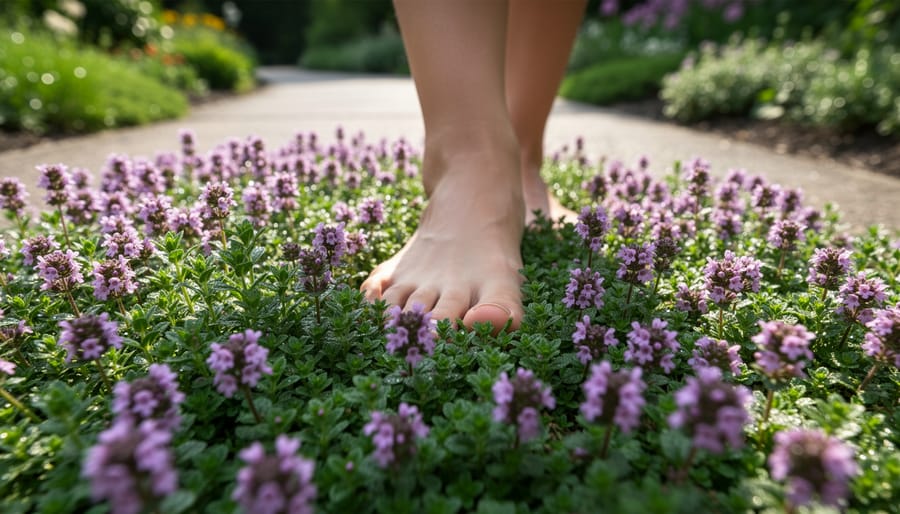
Creeping Thyme and Other Aromatic Options
If you’re dreaming of a lawn that releases delightful fragrance with every footstep, creeping thyme might be your perfect match. I’ve seen countless gardeners fall in love with this charming ground cover, especially varieties like Elfin thyme and Red Creeping thyme, which form dense mats just 2-4 inches high.
What makes thyme truly special is that sweet, herbal scent released when you brush against it or walk across it. Imagine the aroma of your favorite Italian dish wafting up from your yard! Plus, those tiny purple, pink, or white flowers attract beneficial pollinators throughout the growing season.
Thyme thrives in full sun and well-drained soil, making it ideal for areas with Mediterranean-like conditions. It’s remarkably drought-tolerant once established, though it appreciates occasional watering during extreme heat. The catch? Thyme performs best in zones 4-9 and struggles in heavy shade or constantly wet conditions.
For cooler climates, plant in spring to give roots time to establish before winter. In warmer regions, fall planting works beautifully. Space plants 6-12 inches apart, and be patient—full coverage typically takes one to two growing seasons. While thyme tolerates light foot traffic better than grass, it’s not suitable for high-traffic play areas. Consider it for pathways, between stepping stones, or those tricky spots where grass refuses to grow.
Moss Gardens for Shady Spots
If you’ve got a shady corner where grass just won’t cooperate, it’s time to stop fighting nature and embrace moss instead. These ancient plants are perfectly suited for those dim, damp areas that make traditional lawns throw in the towel. Plus, they create a lush, velvety carpet that’s absolutely magical to look at.
Getting started with moss is surprisingly simple. First, assess your site—moss loves acidic soil with a pH between 5.0 and 6.0, so if needed, amend with sulfur to lower the pH. Remove any struggling grass and rake the area smooth. The key is creating direct contact between moss and soil, so compact the ground slightly by walking over it or using a roller.
You have two options for establishing moss: transplanting patches from other areas of your property (with permission, of course) or making a moss slurry. For the slurry method, blend a handful of moss with two cups of buttermilk and two cups of water, then paint this mixture onto rocks or soil where you want growth.
Keep your moss installation moist for the first few weeks by misting daily. Once established, moss requires virtually no maintenance—no mowing, fertilizing, or regular watering. Just remove fallen leaves occasionally, and enjoy your emerald-green, eco-friendly ground cover that stays beautiful year-round.
Native Wildflower Meadows That Practically Maintain Themselves
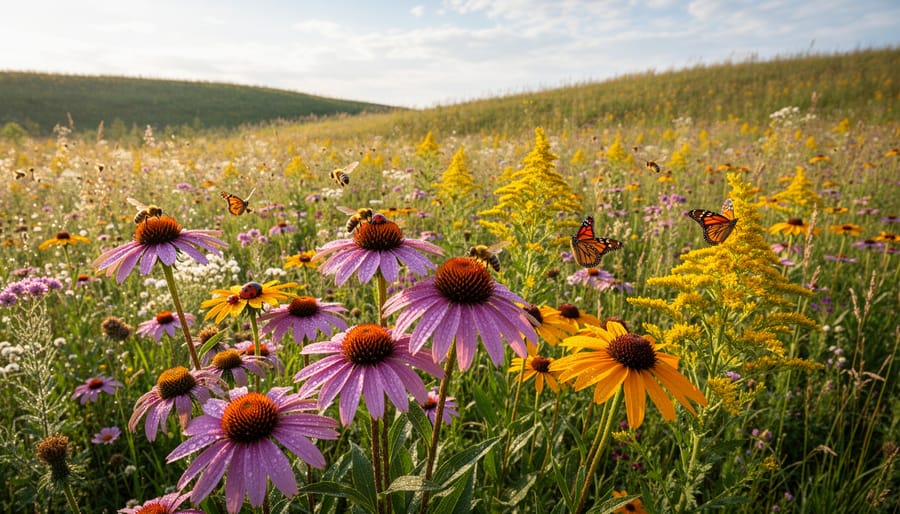
Choosing the Right Native Mix for Your Region
Selecting the perfect native plant mix for your region is like finding the right ingredients for your favorite recipe—it makes all the difference! The key is working with nature rather than against it, choosing plants that already thrive in your local climate without coddling.
Start by identifying your USDA hardiness zone and rainfall patterns. For the Pacific Northwest, consider mixes featuring Oregon sunshine, wild strawberry, and blue grama grass. These beauties handle mild, wet winters and dry summers like champions. If you’re gardening in the hot, humid Southeast, look for native options like wiregrass, muhly grass, and purple coneflower that embrace the heat.
Midwest gardeners have wonderful options in little bluestem, black-eyed Susans, and prairie dropseed—plants that survived the original tallgrass prairies and can certainly handle your yard. Southwest residents should embrace drought-tolerant heroes like buffalo grass, desert marigold, and blue grama, which laugh in the face of scorching summers.
I always recommend visiting your local native plant nursery or contacting your county extension office. These folks are treasure troves of regional knowledge and can point you toward pre-mixed seed blends specifically designed for your area. Many offer “ecoregion” mixes that match your exact locale, taking the guesswork out entirely.
Remember, choosing locally-adapted plants means they’ll require less water, fertilizer, and fussing once established. You’re essentially letting your landscape run on autopilot while supporting local wildlife. Now that’s smart gardening!
From Lawn to Meadow: The First-Year Journey
Transforming your traditional lawn into a wildflower meadow is honestly one of the most rewarding garden projects you can tackle, though I’ll be straight with you—it requires patience that first year. The good news? The process itself is pretty straightforward.
Start by timing your conversion for either early spring or fall, when seeds have the best chance to establish. You’ll need to eliminate existing grass first, and there are a few approaches here. The most eco-friendly method is smothering: cover your lawn with cardboard or thick layers of newspaper, top with 4-6 inches of compost, and let it sit for several months. If you’re eager to start faster, you can remove sod manually (great workout!) or use a sod cutter.
Once your site is prepped, resist the urge to till deeply—this brings up dormant weed seeds that’ll compete with your meadow plants. Instead, just rough up the top inch or two to create good seed contact with soil.
For seeding, choose a native wildflower mix suited to your region and sun exposure. Mix your tiny seeds with sand for easier, more even spreading—I learned this trick from a meadow restoration expert who said it prevents clumping and overseeding. Broadcast seeds in two passes at right angles to each other, then gently rake them in. A light rolling helps press seeds into soil.
Here’s the hardest part: that first year, your meadow will look underwhelming. You’ll see mostly grasses and maybe some weeds. This is completely normal. Wildflowers are busy establishing deep roots underground. Mow to 6 inches if weeds get aggressive, but otherwise, let it be.
By year two, the magic truly begins.
Hardscaping Solutions That Add Function and Beauty
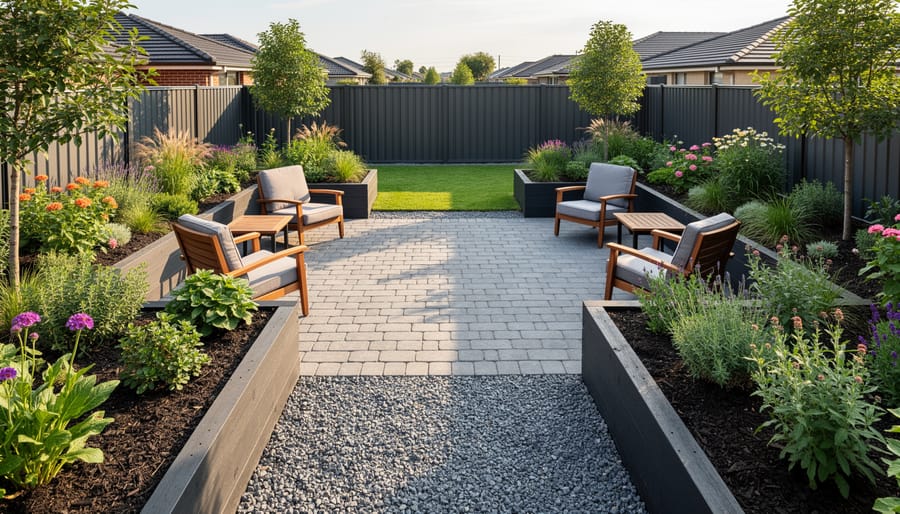
Permeable Pavers and Eco-Friendly Patios
If you’re looking to reduce lawn space while adding functional outdoor living areas, permeable pavers and eco-friendly patios offer an excellent solution. Unlike traditional concrete or asphalt surfaces that send rainwater rushing into storm drains, permeable hardscaping allows water to filter naturally back into the ground, reducing runoff and helping replenish groundwater supplies.
Permeable pavers come in various styles, from interlocking concrete units with gaps that fill with gravel or soil to porous materials that let water pass directly through. I’ve seen beautiful patios where low-growing groundcovers like creeping thyme fill the spaces between pavers, creating a living, breathing surface that’s both practical and lovely to look at.
For those concerned about installation, many permeable paver systems are surprisingly DIY-friendly. You’ll need a proper base of graded gravel, but the installation process is manageable for weekend warriors. Start with a small project like a garden pathway to build your confidence before tackling larger patio spaces.
The environmental benefits extend beyond water management. By replacing grass with hardscaping, you eliminate the need for mowing, fertilizing, and watering in those areas. Plus, these surfaces stay functional year-round without becoming muddy messes during rainy seasons. Just remember to occasionally sweep sand into the joints and remove any debris that might clog the permeable surfaces.
Strategic Mulched Areas and Garden Beds
Here’s a simple truth I’ve learned from years of gardening: the less lawn you have, the more room you have for plants you’ll actually enjoy. Expanding your garden beds and mulched areas is one of the easiest ways to transition away from traditional turf while creating space for both beauty and bounty.
Start by identifying underused lawn areas, especially those tricky spots where grass struggles anyway. That shady corner? Perfect for a woodland garden. The strip along your fence? Ideal for a berry hedge. These naturally become your first mulched zones.
I love using the “lasagna method” to convert lawn to garden beds. Simply lay down cardboard over the grass, pile on compost and mulch, and let it break down. Within a few months, you’ll have rich planting beds without the backbreaking work of removing sod.
Consider creating island beds throughout your yard, connecting them with mulched pathways. This gives you flexibility to grow vegetables, herbs, native perennials, or ornamental shrubs based on your interests. One neighbor I interviewed grows enough tomatoes and peppers in her expanded beds to preserve for winter.
Wood chip mulch is fantastic for pathways and around trees, while shredded bark works beautifully in ornamental beds. Both suppress weeds, retain moisture, and eliminate mowing in those areas permanently.
Making the Transition Without Overwhelming Yourself
The Start-Small Strategy
You don’t need to transform your entire lawn overnight. In fact, starting small is the smartest approach for most homeowners. Choose a manageable test area, perhaps 50 to 100 square feet, where you can experiment without feeling overwhelmed.
Consider starting with a trouble spot where grass already struggles. That shady corner under your oak tree or the dry patch near your driveway makes an ideal testing ground. You’ll solve an existing problem while gaining valuable experience.
Try different alternatives in separate sections if you have the space. Plant clover in one area, creeping thyme in another, and native sedges in a third. Over a growing season, you’ll discover which options thrive in your specific conditions and which ones you genuinely enjoy maintaining.
This approach builds your confidence gradually. You’ll learn how each alternative establishes itself, how much water it truly needs, and how it looks through different seasons. When you’re ready to expand, you’ll know exactly what works for your yard and your lifestyle. Plus, there’s something deeply satisfying about watching your small experiment succeed before committing to a larger transformation.
Working with HOA Rules and Neighbor Concerns
Before transforming your lawn, it’s smart to check your HOA guidelines and have a friendly chat with your neighbors. I learned this the hard way when I enthusiastically planted clover without mentioning it to anyone first!
Start by reviewing your community’s landscaping rules. Many HOAs have updated their policies to allow eco-friendly alternatives, especially in drought-prone areas. If your desired plants aren’t explicitly mentioned, request a meeting with the board. Come prepared with photos of well-maintained examples, research on water savings, and perhaps a phased implementation plan. Showing you’ve thought it through demonstrates respect for community standards.
For neighbors, communication is key. Stop by or send a note explaining your plans before you start. Emphasize benefits they’ll appreciate: reduced mower noise, fewer chemicals near shared spaces, and pollinator-friendly flowers. Offering to keep edges neat and maintaining a tidy appearance during the transition helps tremendously.
Consider starting with your backyard or a small front section to demonstrate how attractive these alternatives can be. Once neighbors see healthy, beautiful results, concerns often melt away. Some may even ask for your advice on making their own eco-friendly switch!
Maintenance Reality Check: What to Actually Expect
Let me share something that might surprise you: most lawn alternatives aren’t maintenance-free, but they do require different care than what you’re used to. I’ve learned this through conversations with gardeners who made the switch, and the reality check is important before you dive in.
Traditional lawns demand weekly mowing, regular watering, and frequent fertilizing during the growing season. If you’re following typical maintenance schedules, that’s roughly 30 hours of work each season, plus water and chemical costs.
Now, here’s the good news: clover lawns need mowing only once a month or not at all if you prefer a meadow look. They self-fertilize through nitrogen fixation, so you can skip that chore entirely. Native groundcovers like creeping thyme or wild strawberry need minimal watering once established, maybe occasional weeding the first year, and a simple spring cleanup.
Wildflower meadows have a different rhythm. You’ll mow them just once or twice annually, usually in late fall or early spring. The first year requires some vigilance with weeding, but after that, nature mostly handles things. One experienced gardener I spoke with said her meadow takes about 5 hours of care yearly compared to the 30-plus her old lawn demanded.
The biggest misconception? That these alternatives grow themselves. During establishment, which typically takes one growing season, you’ll need to water regularly and watch for invasive weeds. After that first year though, most alternatives truly become lower maintenance than traditional grass.
The key is matching the alternative to your actual lifestyle. Be honest about the time you want to spend outside and choose accordingly.
Here’s the wonderful news: you don’t have to transform your entire yard overnight. The beauty of shifting toward eco-friendly lawn alternatives is that you can start exactly where you are, with whatever space feels manageable. Maybe it’s replacing that troublesome shady patch under your oak tree with native ferns, or converting a strip along your fence into a wildflower meadow. Every square foot you transition means less mowing, fewer chemicals seeping into the watershed, more habitat for pollinators, and honestly, more time for you to actually enjoy your outdoor space instead of maintaining it.
I’ve talked with so many gardeners who wished they’d started this journey sooner. The consistent message? Begin small, learn as you go, and celebrate each success. That struggling lawn area you’ve been nursing along for years might actually thrive as a clover lawn or a moss garden, working with your conditions rather than against them.
The environmental impact of your choice ripples outward in ways you might not immediately see. Native plants support local ecosystems, groundcovers reduce water runoff, and diverse plantings create corridors for wildlife moving through urban spaces. But the personal benefits matter too—lower water bills, quieter weekends, and a landscape that genuinely reflects your values.
So pick one area. Research what grows naturally in your region. Talk to neighbors who’ve made the switch. Your lawn alternative journey starts with a single decision to try something different, and I promise, your future self will thank you.