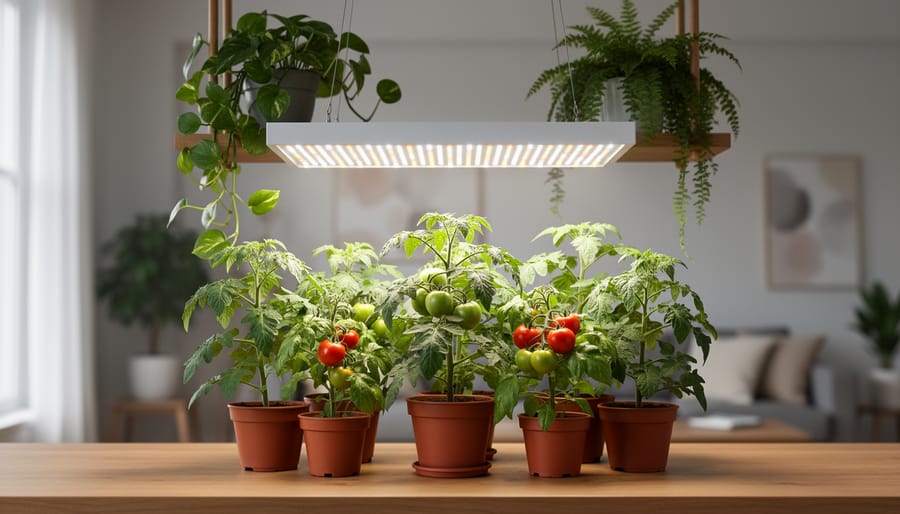
Transform your indoor space into a thriving garden without relying on natural sunlight. Modern LED grow lights now match the sun’s spectrum perfectly, enabling plants to photosynthesize 24/7 in any corner of your home. From leafy greens to flowering orchids, countless species flourish under artificial lighting when given the right conditions.
The science behind growing plants without sunlight has revolutionized indoor gardening, making it possible to cultivate everything from fresh herbs to exotic tropicals in basements, windowless rooms, and urban environments. Using hydroponics or soil-based systems combined with proper lighting, temperature control, and nutrients, plants can actually grow faster and produce higher yields than their outdoor counterparts.
This guide explores proven techniques for creating your own sunless garden, whether you’re dealing with limited window space, northern exposure, or simply want to extend your growing season year-round. We’ll cover everything from selecting the right artificial lighting to choosing plants that thrive in these conditions, helping you create a productive indoor garden regardless of natural light availability.
Let’s explore how you can harness modern technology and time-tested methods to grow beautiful, healthy plants without depending on the sun’s rays.
Understanding Plant Light Requirements
Natural vs. Artificial Light
While natural sunlight provides the perfect spectrum for plant growth, modern artificial lighting has come a long way in replicating these benefits. Natural sunlight offers a full spectrum of light wavelengths that plants need for photosynthesis, along with the added advantages of being free and environmentally friendly. However, it can be inconsistent due to weather conditions, seasonal changes, and geographical limitations.
Artificial grow lights, on the other hand, offer reliable and controllable light exposure. LED grow lights are particularly effective, providing specific light wavelengths that plants need most – primarily red and blue light. They’re energy-efficient and produce minimal heat, making them ideal for indoor growing. Fluorescent lights work well for seedlings and low-light plants, while HID (High-Intensity Discharge) lights are powerful options for larger growing operations.
The key difference lies in light intensity and duration control. While natural light follows the sun’s daily cycle, artificial lights can be programmed to provide consistent exposure throughout the year. This means you can maintain optimal growing conditions regardless of external factors, though it does require more energy and initial setup costs.
Measuring Light Levels
Before setting up your growing space, it’s essential to understand how much light you’re working with. Start by observing your space throughout the day using the hand shadow test: hold your hand about 12 inches above the spot where you plan to grow plants. If you see a sharp, dark shadow, you have bright light; a fuzzy shadow indicates medium light; and barely visible or no shadow means low light.
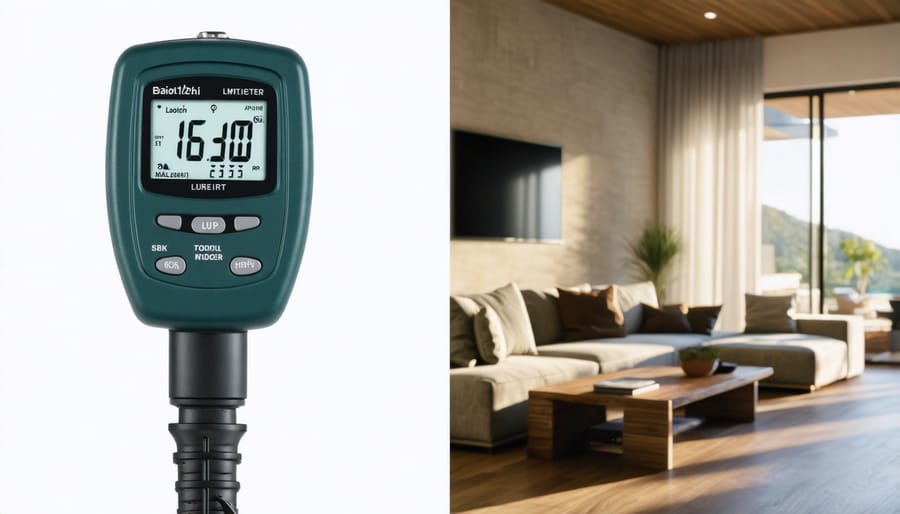
For more accurate measurements, consider investing in a light meter or downloading a light meter app on your smartphone. These tools measure light intensity in foot-candles (fc) or lux, helping you make informed decisions about supplemental lighting needs. Most indoor plants need between 100-500 fc for healthy growth.
Another helpful approach is the paper test: place a white piece of paper in your growing area and observe its appearance. If it appears bright white, you have good light; if it looks grayish, you’ll likely need additional lighting. Remember to check light levels at different times of day and in different seasons, as natural light conditions can vary significantly throughout the year.
Best Plants for Low-Light Environments
Indoor Foliage Plants
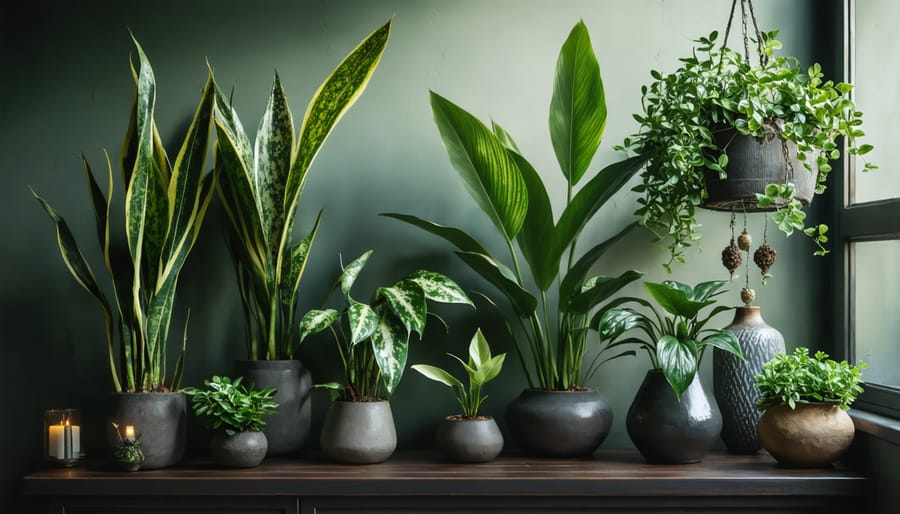
When it comes to growing plants without sunlight, several shade-loving plants have adapted beautifully to indoor environments. The Snake Plant (Sansevieria) is a top choice, known for its striking upright leaves and remarkable ability to thrive in low-light conditions. It’s practically indestructible and perfect for beginners.
Another fantastic option is the ZZ Plant (Zamioculcas zamiifolia), which seems to flourish even in the darkest corners. Its glossy, dark green leaves add a touch of sophistication to any room, and it’s incredibly forgiving if you occasionally forget to water it.
Peace Lilies are equally accommodating, producing lovely white blooms even in minimal light. These air-purifying champions are perfect for bathrooms or offices with fluorescent lighting. The Chinese Evergreen (Aglaonema) is another excellent choice, offering variegated leaves in various patterns and colors that brighten up dim spaces.
Don’t overlook the classic Pothos, with its trailing vines that can transform any indoor space. Available in several varieties, from golden to marble queen, it’s one of the most adaptable plants you’ll find. For those seeking something unique, the Cast Iron Plant (Aspidistra elatior) lives up to its name with unmatched durability in low-light conditions.
These plants not only survive but can truly thrive in your home’s shadier spots, proving that limited natural light doesn’t mean limiting your indoor garden dreams.
Edible Plants for Low Light
While growing food plants typically requires plenty of sunlight, several vegetables that grow in low light can thrive with minimal natural light exposure. These plants are perfect for indoor spaces or shaded gardens where direct sunlight is limited.
Leafy greens are your best bet for low-light food production. Microgreens, particularly arugula and watercress, can flourish under artificial lighting or in partially shaded areas. Lettuce varieties like butter lettuce and romaine are also excellent choices, requiring only 4-6 hours of indirect light daily.
Asian greens such as bok choy and tatsoi are remarkably adaptable to lower light conditions. These nutritious vegetables can produce healthy yields even when grown under fluorescent lights or in areas that receive minimal natural light.
Herbs are another fantastic option for low-light environments. Mint, parsley, and chives are particularly forgiving and can thrive in spaces that receive as little as 3-4 hours of indirect light. These herbs not only add fresh flavors to your cooking but also bring a touch of green to dimly lit spaces.
While these plants can grow in low light, they may develop more slowly than their full-sun counterparts. Supplementing with LED grow lights can help optimize growth and ensure healthier, more productive plants.
Artificial Lighting Solutions
Types of Grow Lights
When it comes to growing plants without sunlight, choosing the right grow light is crucial for success. There are several excellent options available, each with its own advantages for indoor gardening.
LED grow lights are currently the most popular choice, and for good reason. They’re energy-efficient, produce minimal heat, and last for many years. These lights can be customized to provide specific light spectrums that plants need for different growth stages, from seedling to flowering.
Fluorescent lights, particularly T5 models, are another fantastic option, especially for beginners. They’re affordable, easy to set up, and work well for leafy greens and herbs. These lights produce less heat than traditional options and are perfect for small spaces or growing areas with limited height.
High-Intensity Discharge (HID) lights, including Metal Halide (MH) and High-Pressure Sodium (HPS) lights, are powerful options that commercial growers often use. While they require more setup and generate more heat, they provide intense light that flowering and fruiting plants love.
For those just starting out, consider beginning with LED or fluorescent lights. They’re more forgiving on your electricity bill and easier to manage. As you gain experience, you can experiment with different types or combinations of grow lights to create the perfect environment for your indoor garden.
Remember that regardless of which type you choose, positioning your lights at the correct height and providing the right duration of light exposure are key factors in successful indoor growing.
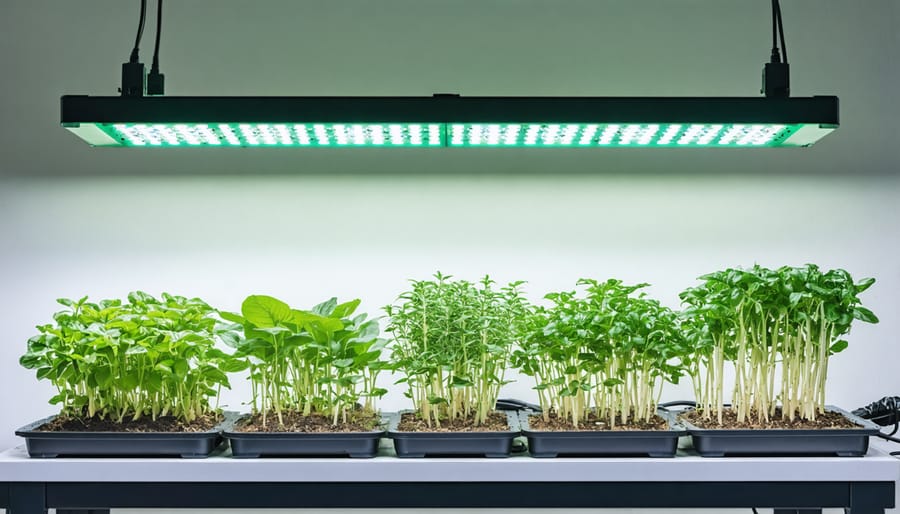
Setting Up Your Lighting System
Creating an effective lighting system for your indoor garden doesn’t have to be complicated. Start by choosing the right location – a clean, dry space with access to electrical outlets and good air circulation. While some gardeners focus solely on artificial lighting, combining natural and artificial light can often yield the best results.
Install your grow lights using sturdy chains or adjustable stands that allow you to modify the height as your plants grow. As a general rule, position LED grow lights 12-24 inches above your plants, while fluorescent lights can be placed closer, around 6-12 inches away. Remember to adjust these distances based on your specific plants’ needs and the intensity of your lights.
Set up a timer to ensure your plants receive consistent light exposure – most indoor plants thrive with 14-16 hours of light daily. Consider using a reflective material like white plastic or aluminum foil on nearby walls to maximize light distribution and efficiency.
Don’t forget about heat management! Install a small fan to maintain good air circulation and prevent heat buildup around your plants. Monitor the temperature regularly and adjust the light height if needed. With proper setup and maintenance, your artificial lighting system will provide your plants with the energy they need to flourish indoors.
Growing plants without natural sunlight is not just possible – it’s an exciting opportunity to expand your gardening horizons and bring life to any space, regardless of lighting conditions. As we’ve explored throughout this article, advances in artificial lighting technology, combined with a better understanding of plant biology, have opened up countless possibilities for indoor gardening enthusiasts.
Remember that success in low-light gardening comes down to choosing the right plants, providing appropriate artificial lighting, and maintaining consistent care routines. Whether you’re working with LED grow lights, fluorescent systems, or making the most of indirect natural light, there’s a solution for every space and budget.
Don’t let limited natural light discourage you from pursuing your gardening dreams. Start small with a few hardy, low-light tolerant plants, and gradually expand your indoor garden as you gain confidence and experience. Experiment with different lighting setups and plant combinations to find what works best in your unique environment.
The joy of watching plants thrive under your care remains the same, whether they’re basking in natural sunlight or flourishing under artificial lights. Take the knowledge you’ve gained here and put it into practice. Your indoor jungle awaits, and with patience, dedication, and the right approach, you’ll soon be enjoying the rewards of your low-light gardening adventure.