Check your water meter before and after a two-hour period when no water is being used in your home or garden. If the meter reading changes, you have a leak somewhere in your system, and that’s non-revenue water in action.
Non-revenue water might sound like corporate jargon, but for gardeners and homeowners, it translates to something simple and frustrating: water you’re paying for but never actually use. It’s the slow drip from a sprinkler connection, the underground leak you can’t see, or the faulty valve that wastes gallons while you sleep. Water utilities lose billions of gallons annually to non-revenue water, but the same problem happens right in your backyard, quietly inflating your bills and undermining your water conservation efforts.
Every garden has potential leak points. Your irrigation system connects dozens of components, from hose bibs to drip lines, and each joint represents a place where water can escape unnoticed. That damp spot near your vegetable bed might not be overwatering but a pinhole leak. The section of lawn that’s always greener could sit above a cracked pipe. These losses add up quickly, with a leak the width of a pencil tip wasting over 900 gallons monthly.
Understanding non-revenue water empowers you to become a water detective in your own garden. You’ll save money, conserve a precious resource, and ensure every drop reaches your plants where it belongs.
What Non-Revenue Water Really Means for Your Garden
You’ve probably heard about cities tracking “non-revenue water” in their systems, but what does this have to do with your backyard garden? Think of it this way: it’s essentially water you’re paying for that never actually reaches your plants.
When water utilities talk about non-revenue water, they mean all the water that flows through their pipes but doesn’t generate income because it’s lost to leaks, theft, or meter errors. In your garden, the concept is remarkably similar. It’s the water flowing from your outdoor spigot or irrigation system that disappears before it can nourish your tomatoes, roses, or lawn.
Let me give you a real-world example. Last summer, I chatted with veteran gardener Maria Chen, who discovered she was losing nearly 30 gallons daily from a hairline crack in her garden hose. That’s water she paid for, but her plants never saw a drop. This is non-revenue water at the home level.
Your garden’s non-revenue water includes obvious culprits like dripping outdoor faucets and broken sprinkler heads spraying water onto your driveway instead of your flower beds. But it also encompasses less visible losses: underground irrigation leaks, excessive evaporation from poorly timed watering sessions during midday heat, and runoff from overwatering that flows straight into storm drains.
The good news? Unlike municipal water systems that manage miles of infrastructure, your garden watering system is manageable. Most homeowners can identify and fix these losses with basic tools and a bit of detective work. Understanding where your water actually goes is the first step toward becoming both a better steward of this precious resource and saving money on your water bills.

The Real Cost of Water Loss in Your Yard
Money Down the Drain
Let’s talk about what water loss really means for your wallet, because the numbers might surprise you. That tiny drip from your garden hose connection? It’s probably not as harmless as it looks.
Here’s some friendly math to put things in perspective. A small leak in a drip irrigation line, barely noticeable at just one drip per second, wastes about 5 gallons of water per day. That adds up to 150 gallons monthly, or 1,825 gallons annually. Depending on where you live, that’s roughly $15 to $30 per year from just one tiny leak.
Now, let’s consider a more common scenario. Maybe your sprinkler head has a crack, or your garden hose connection isn’t quite tight. These moderate leaks can lose about a gallon per hour, which equals 720 gallons monthly. Over a year, that single problem spot drains 8,640 gallons and costs you anywhere from $70 to $150, depending on your local water rates.
I spoke with veteran gardener Maria Chen, who discovered three small leaks in her vegetable garden’s irrigation system last spring. “I couldn’t believe it when I did the calculation,” she told me. “Those three leaks were costing me nearly $200 a year, and I had no idea. That’s money I could have spent on new plants or better soil.”
The good news? Once you know where to look, most garden water leaks are surprisingly easy to fix yourself.
What It Means for Your Plants and Soil
When water leaks from your irrigation system or outdoor faucets, it doesn’t just disappear into thin air. That lost water, what municipalities call non-revenue water when it happens on a larger scale, creates some real headaches for your garden.
First, let’s talk about your plants. Inconsistent watering from leaks means some areas get drenched while others stay parched. Your tomatoes might be drowning while your peppers twenty feet away are wilting. Plants need steady, predictable moisture to develop strong root systems and produce abundant flowers or fruit. When leaks create unpredictable wet and dry zones, your plants become stressed, making them more vulnerable to pests and disease.
Those persistent wet spots are particularly troublesome. I learned this the hard way when a hidden leak near my rose bed created a constantly soggy area. Within weeks, fungal diseases took hold, and I lost three beautiful plants. Excess moisture encourages root rot, powdery mildew, and other moisture-loving problems that spread quickly through your garden.
Beyond plant health, there’s the water waste itself. In an era when water conservation matters more than ever, losing gallons daily through leaks contradicts everything we’re trying to achieve with drought-tolerant plants and a rainwater harvesting system. Your water bill climbs while your garden struggles, creating a frustrating situation that’s entirely preventable with some detective work and basic repairs.
Where Water Disappears in Home Irrigation Systems
Underground Leaks You Can’t See
The trickiest leaks are the ones you never see—those hiding beneath your garden beds and lawn. I learned this the hard way when my tomatoes on one side of the garden were absolutely thriving while everything else struggled, only to discover a slow pipe leak was creating an accidental irrigation system!
Here’s what to watch for: unexplained soggy patches that never quite dry out, even days after rain. You might notice unusually lush, green grass in random spots, or even hear a faint hissing sound when you put your ear close to the ground near water lines. One gardener I spoke with discovered her leak by noticing mushrooms sprouting in a line across her yard—they were following the moisture from a cracked pipe.
Your water meter is your best detective tool. Turn off all taps and irrigation systems, then check if the meter dial is still moving. If it is, water’s going somewhere it shouldn’t.
For a quick listening test, use a screwdriver as a makeshift stethoscope. Place the metal tip against an outdoor spigot and press your ear to the handle—you’ll be amazed how well sound travels through pipes. A continuous rushing or hissing indicates a leak somewhere in your system.
Drip Line and Emitter Problems
Drip irrigation systems are wonderfully efficient, but they’re not immune to problems that can waste water. One of the most common culprits? Clogged emitters. When mineral deposits or tiny debris block an emitter, water pressure builds up elsewhere in the line, sometimes causing ruptures at weak points. I learned this the hard way when a burst line flooded my tomato bed overnight!
Garden tools pose another real threat to drip lines. One careless thrust with a spade or aggressive pass with a hoe can slice right through tubing. These punctures might seem small, but they can leak gallons over time. I now make it a habit to mark my drip lines with small flags during planting season.
Don’t overlook connection points either. Those plastic fittings where tubes join together deteriorate from sun exposure and temperature fluctuations. After a year or two, they can crack or loosen, creating sneaky leaks that pool beneath mulch where you won’t notice them. Walking your irrigation lines monthly helps catch these issues early, saving both water and money while keeping your plants properly hydrated.

Sprinkler Head Waste
Picture this: you’ve set up your irrigation system with the best intentions, but a sprinkler head gets knocked askew by a curious dog or a wayward soccer ball. Suddenly, instead of nourishing your roses, that water’s creating rivers down your driveway. I’ve seen this countless times in gardens I visit, and it’s one of the sneakiest sources of wasted water.
Broken or misaligned sprinkler heads are surprisingly common culprits of non-revenue water in home gardens. A cracked nozzle might create a geyser effect, sending water skyward instead of creating that gentle spray pattern. Heads tilted at the wrong angle water concrete instead of soil. Even a buildup of mineral deposits can distort spray patterns, sending precious water where you don’t need it.
The good news? This is usually an easy fix. Walk your irrigation zones while they’re running and watch where the water actually lands. If you spot a misdirected stream, adjust the head’s position or replace damaged components. Most sprinkler parts cost just a few dollars and require no special tools.
The Hose Connection Problem
I’ve spent countless hours tracking down mysterious water bills, and I can tell you that hose connections are sneaky culprits. Those convenient spots where hoses attach to outdoor faucets, automatic timers, and quick-connect fittings might seem fine at first glance, but they’re often dripping away gallons while you’re not looking.
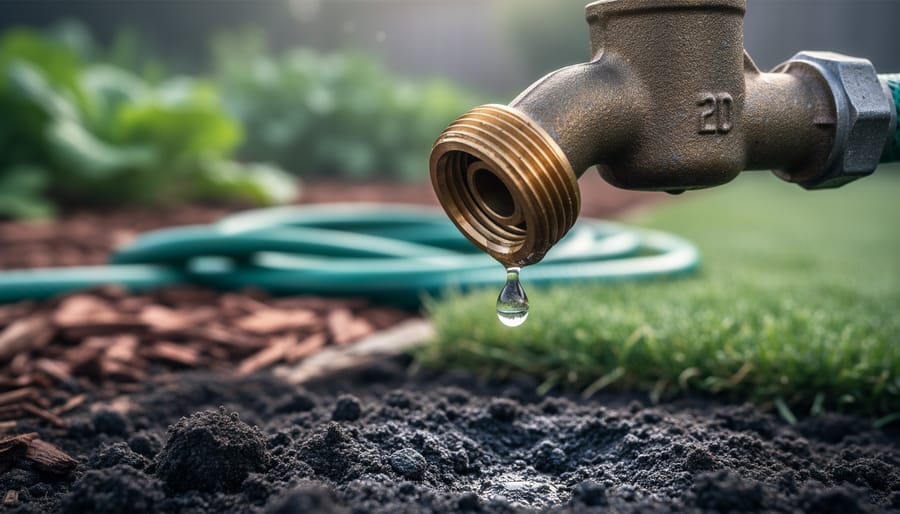
Here’s the thing: these connections loosen over time from temperature changes, vibrations, and regular use. A drip that seems insignificant—just one drop every few seconds—can waste 15 gallons per day. Multiply that by several connection points around your garden, and you’re looking at hundreds of gallons monthly.
Check each connection point by running your finger around the joint while water flows. Even if it feels dry, wrap a paper towel around it for a minute to catch slow seeps. Tighten loose connections with an adjustable wrench, replace worn rubber washers (they cost pennies), and consider upgrading to brass quick-connects, which seal more reliably than plastic versions. Your water bill will thank you.
Your Step-by-Step Water Audit
The Meter Test
Here’s a simple test I learned from a plumber friend that’ll help you spot leaks before they spiral out of control. All you need is five minutes and your water meter.
First, make sure no water is running anywhere in your home or garden. Turn off all faucets, shut down your irrigation system, and ask everyone in the household not to use water for just a few minutes. Even check that your ice maker isn’t cycling.
Now, head to your water meter and take a close look. Most meters have a small triangle, star, or dial that moves when water flows through. Watch it carefully for about two minutes. If it’s moving even slightly, you’ve got a leak somewhere.
Want to know how much water you’re losing? Write down the meter reading, wait exactly one hour without using any water, then check again. The difference tells you your leak rate. Even a small movement can add up to hundreds of gallons monthly, especially frustrating when you’ve been carefully conserving water for your garden beds. This quick test has saved many gardeners from surprisingly high bills and helped protect our precious water resources.
The Visual Walk-Through
Grab a cup of tea and let’s take a walk through your irrigation system together. Think of this as a treasure hunt, except we’re looking for water that’s escaping when it shouldn’t be.
Start your inspection while the system is running. Turn on each zone and watch carefully. Look for obvious geysers or streams shooting up where they shouldn’t be, but also pay attention to the subtler signs. Do you see wet spots appearing on walkways or driveways? Are there mini puddles forming around sprinkler heads? Watch for that telltale fog or mist that indicates a cracked line under pressure. I like to walk slowly, pausing every few feet, because sometimes you’ll only catch that suspicious spray from certain angles.
Check each sprinkler head closely. Are they spraying in the right direction, or are you watering the sidewalk more than your flower beds? Broken or tilted heads often create beautiful rainbow arcs that are lovely to look at but terrible for your water bill.
Now turn the system off and continue your investigation. Run your hands along visible pipes, feeling for dampness. Look for areas where the grass is unusually lush and green compared to surrounding patches. That spot might be getting secret watering sessions from an underground leak. Check valve boxes for standing water, and examine hose connections for drips or corrosion. These quiet leaks add up surprisingly fast, sometimes wasting hundreds of gallons before you notice them.

Fixing the Leaks: Simple Repairs Any Gardener Can Do
Quick Fixes for Drip Systems
The good news is that most drip system repairs are surprisingly simple and require just a few basic tools. Keep a small repair kit handy with scissors, a punch tool, and spare parts, and you’ll be ready to tackle the most common issues.
For punctured tubing, the easiest fix is using a connector or coupling. Simply cut out the damaged section with sharp scissors, then insert a barbed connector into both ends of the tubing. Push firmly until secure. If the hole is tiny, you can also use goof plugs, which are small barbed stoppers that seal punctures instantly.
Clogged or broken emitters happen to everyone. Twist the faulty emitter counterclockwise to remove it, then insert a new one by pushing it firmly into the hole and twisting clockwise. If you’ve removed an emitter you no longer need, plug the hole with a goof plug to prevent water loss.
Loose connections at fittings are often the sneakiest culprits. Walk your system while it’s running and watch for spray or dripping at connection points. Simply push the tubing deeper onto the barbed fitting, ensuring it passes all the ridges. Sometimes tubing becomes brittle with age, so don’t hesitate to trim off the end and reconnect for a tighter seal.
Sprinkler Head Maintenance
Maintaining your sprinkler heads is one of the easiest ways to prevent wasted water in your garden. Let’s walk through three essential tasks that’ll keep your system running efficiently.
Start by cleaning clogged heads. Turn off your system and unscrew each head carefully. You’ll often find dirt, grass clippings, or mineral deposits blocking the nozzles. Rinse them under running water and use an old toothbrush to gently scrub away stubborn buildup. For mineral deposits, a quick soak in white vinegar works wonders. Rinse thoroughly before reattaching.
Next, check your spray patterns. Turn the system on and observe each head. Are they spraying where they should, or are you watering the sidewalk? Most heads have adjustment screws on top that let you change the spray arc. Use a flathead screwdriver to rotate these screws clockwise to reduce coverage or counterclockwise to expand it. Small adjustments make a big difference.
Finally, inspect for damaged heads. Cracked bodies, broken nozzles, or heads that won’t pop up properly need replacing. This is surprisingly simple: turn off the water, unscrew the old head, wrap plumber’s tape around the threads of the new one, and screw it in snugly. Match the spray pattern to your needs, whether that’s a fixed spray for flower beds or rotating pattern for lawns.
Preventing Future Water Loss
Seasonal Maintenance Checklist
Think of seasonal maintenance as your garden’s preventive health check—a little attention each season can save you from bigger headaches and water waste down the road.
When spring arrives and you’re firing up your irrigation system after winter, take fifteen minutes to walk your entire setup. Turn on each zone and watch for geysers, soggy spots, or sprinkler heads doing a wild spray dance. Check hose connections that may have worked loose during winter’s freeze-thaw cycles. I learned this the hard way when a forgotten hose connection flooded my entire strawberry bed!
Summer demands a monthly once-over. With your system running regularly, you’re more likely to notice subtle changes—maybe that one sprinkler isn’t rotating properly anymore, or there’s a damp patch that wasn’t there last week. Hot weather can actually stress pipes and connections, making small leaks worse. Consider upgrading to smart irrigation timers that can alert you to unusual water usage patterns.
Before fall’s first freeze, drain outdoor faucets, disconnect hoses, and if you have an irrigation system, schedule a professional blowout or learn to winterize it yourself. Trust me, preventing frozen pipe damage beats discovering burst lines come spring!
Smart Watering Habits That Save Water
Once you’ve tackled leaks and system inefficiencies, the next step is making every drop count through smart watering habits. These simple changes can dramatically reduce water waste while keeping your garden thriving.
Start by watering in the early morning, ideally between 5 and 9 AM. At this time, temperatures are cooler and winds are calmer, so less water evaporates before reaching plant roots. Evening watering might seem equally logical, but it can leave foliage damp overnight, inviting fungal diseases.
Add a 2-3 inch layer of organic mulch around your plants to act like a protective blanket, reducing soil evaporation by up to 70 percent. Wood chips, shredded bark, or compost work beautifully and improve your soil as they break down.
Consider grouping plants with similar water needs together in your garden design. This practice, called hydrozoning, prevents overwatering drought-tolerant plants while underwatering thirsty ones. Place your vegetables and annuals together in one area, while keeping succulents and native plants in another zone.
These adjustments require minimal effort but deliver maximum water savings, ensuring your conservation efforts extend beyond just fixing leaks.
Here’s the exciting part: you now have the power to take control of water loss in your own garden, and the impact goes far beyond just saving a few dollars. By understanding and addressing non-revenue water in your outdoor spaces, you’re joining a community of gardeners who are making a real difference through smarter water use.
Think about what you’ve learned today. Those hidden leaks, poorly timed sprinklers, and inefficient watering habits aren’t just costing you money; they’re preventing your plants from getting the consistent care they deserve. But the good news is that fixing these issues is entirely within your reach, starting with that simple meter test we talked about earlier.
Why not make this weekend your starting point? Grab a notebook, do the meter test, and walk your garden with fresh eyes. You might be surprised at what you discover. One reader recently shared that they found a slow leak that had been wasting 50 gallons a day, which they’d simply assumed was normal water usage. Fixing it took 20 minutes and saved them over $30 a month.
As you implement these water-wise gardening strategies, remember that every drop you save matters. Your plants will thank you with healthier growth, your wallet will thank you with lower bills, and our shared water resources benefit from your thoughtful stewardship. We’d love to hear about your water-saving discoveries, so don’t hesitate to share your successes with our gardening community. Happy detecting, and here’s to a more efficient, thriving garden ahead!