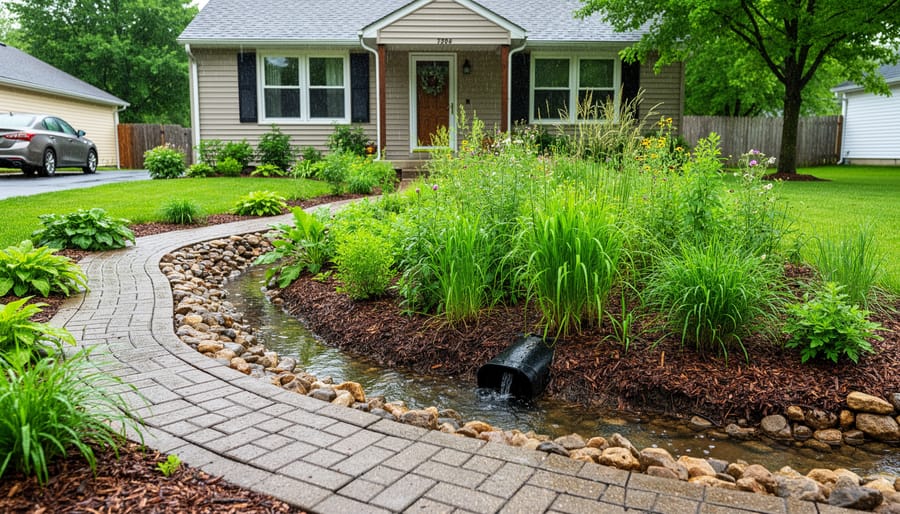
Every time rain pools in your yard, runs off your driveway, or erodes your garden beds, you’re watching money and topsoil disappear down the drain. Green infrastructure transforms these stormwater headaches into opportunities for creating beautiful, functional landscapes that actually work with nature instead of against it.
Think of green infrastructure as your garden’s built-in sponge system. Rain gardens capture runoff in shallow depressions filled with native plants that thrive in wet conditions. Permeable pathways let water soak through instead of sheeting across your property. Bioswales channel water through planted trenches that filter pollutants while adding visual interest. Even something as simple as directing your downspouts into planted areas rather than onto pavement makes a real difference.
The beauty of these solutions is that they solve practical problems while enhancing your landscape. That chronically soggy spot near your foundation becomes a lush rain garden. The eroding slope transforms into a terraced bioswale bursting with flowers. Your plain concrete walkway gets replaced with attractive permeable pavers surrounded by groundcovers.
You don’t need an engineering degree or a massive budget to implement these techniques. Most green infrastructure projects work perfectly as weekend DIY endeavors, using plants you can find at any garden center and materials from your local landscape supply. The key is understanding which solution fits your specific drainage challenge, then choosing the right plants to make it both functional and beautiful.
What Green Infrastructure Really Means for Your Property
Think of green infrastructure as giving your property its own natural sponge system. Instead of forcing rainwater to rush across hard surfaces and into storm drains, green infrastructure works with nature to slow down, soak up, and filter water right where it falls. It’s essentially recreating what forests and meadows have been doing for millions of years.
Traditional stormwater management relies heavily on concrete and pipes. When rain hits your roof, it flows into gutters, dumps onto your driveway, rushes down to the street, and disappears into storm drains. This approach treats water like a problem to be pushed elsewhere as quickly as possible. The trouble is, this creates flooding downstream, erodes soil, and misses opportunities to nourish your landscape.
Green infrastructure takes a completely different approach. Instead of fighting water, you’re putting it to work. Picture this: rather than watching your downspout pour water onto concrete where it races away, imagine redirecting it into a beautiful rain garden filled with native plants. Those plants and their root systems create spaces in the soil, allowing water to gradually soak in. The result? Less runoff, healthier plants that thrive on natural irrigation, and a more resilient landscape during dry spells.
The beauty of this approach is that it’s not all-or-nothing. You might start by swapping a section of your driveway for permeable pavers that let water seep through. Or perhaps you’ll create a shallow basin planted with water-loving perennials where your gutter currently creates an erosion channel. Even replacing a patch of lawn with a rain garden counts.
I’ve seen homeowners transform their biggest drainage headaches into their favorite garden features. That soggy area where nothing grew? Perfect spot for a bioswale filled with colorful iris and cardinal flowers. The concrete wasteland? Now a permeable patio surrounded by lush plantings that drink up every drop.

Why Your Yard Needs Help Managing Stormwater
Have you noticed water pooling in your yard after a heavy rain? Or perhaps you’ve dealt with the sinking feeling of discovering water seeping into your basement? You’re certainly not alone. These frustrating scenarios happen when our yards can’t handle the water nature sends our way.
The truth is, most residential landscapes were never designed to manage stormwater effectively. Over time, foot traffic, lawn equipment, and settling have compacted our soil, making it nearly impossible for water to soak in naturally. Think of compacted soil like a hard-packed clay pot – water just runs right off instead of penetrating down to the roots where it’s needed.
Add to this all the impervious surfaces we’ve created around our homes. Driveways, patios, walkways, and roofs create vast expanses where rainwater has nowhere to go except sideways. A typical suburban property might have 40% or more of its surface covered by these water-blocking materials. When a storm hits, all that water rushes off your property at once.
Traditional lawns don’t help much either. While grass looks nice, closely-mowed turf with shallow roots does surprisingly little to absorb heavy rainfall. During intense storms, even well-maintained lawns can shed water like a roof.
The consequences ripple outward beyond your property line. When thousands of homes in a neighborhood simultaneously send their stormwater rushing into streets and storm drains, municipal systems become overwhelmed. This contributes to downstream flooding and water quality issues in local streams and rivers.
The encouraging news? Your yard has enormous potential to become part of the solution rather than part of the problem. By working with nature instead of against it, you can transform problematic areas into beautiful, functional landscapes that actually welcome the rain.
Green Infrastructure Solutions You Can Actually Install
Rain Gardens That Actually Work
Rain gardens are shallow depressions designed to temporarily hold and naturally filter stormwater runoff from roofs, driveways, and other hard surfaces. Think of them as nature’s water purification system right in your yard. When rain falls, the garden captures the runoff, allowing it to slowly soak into the ground rather than rushing into storm drains. As water percolates through the soil and plant roots, pollutants get filtered out, and you’re recharging groundwater supplies instead of overwhelming municipal systems.
The key to success is choosing plants that tolerate both wet and dry conditions. Native perennials like black-eyed Susans, coneflowers, and switchgrass are excellent choices because they develop deep root systems that help water infiltrate. Blue flag iris and cardinal flower thrive in the wetter center, while Joe-Pye weed and little bluestem work well on the edges where it’s drier.
Sizing matters more than you might think. A good rule of thumb is making your rain garden about 20 percent the size of the area draining into it. So if you’re capturing runoff from a 200-square-foot patio, aim for a 40-square-foot garden. Place it at least 10 feet from your foundation and locate it where water naturally flows.
Common mistakes include making the depression too deep (6 inches is plenty), using plants that can’t handle flooding, and adding mulch that floats away. Here’s a simple starter project: Create a 4-foot by 6-foot rain garden at the end of your downspout. Dig down 6 inches, mix in compost, plant nine native perennials in groups of three, and watch your garden transform problematic runoff into a thriving landscape feature.
Bioswales for Sloped Properties
If you have a sloped property where rainwater rushes downhill, carving channels and carrying away your precious topsoil, bioswales might be your new best friend. Think of these as nature’s own drainage ditches—shallow, gently curving channels designed to slow water down, give it time to soak into the ground, and filter out pollutants before they reach storm drains or natural waterways.
The beauty of bioswales is that they work with gravity rather than against it. They’re perfect for those challenging slopes where water gains momentum, especially along driveways, at the base of hills, or between garden beds at different elevations. The key is placing them perpendicular to water flow, creating a speed bump that gives runoff time to infiltrate.
Construction is surprisingly straightforward. Dig a shallow channel about 4-6 inches deep with gently sloping sides—nothing dramatic. Line the bottom with a few inches of gravel or small river stones to improve drainage, then add amended soil on top. The channel should follow the natural contour of your land, meandering slightly rather than running perfectly straight.
Now for the fun part: planting! Choose deep-rooted native plants that can handle both wet and dry conditions. Ornamental grasses like switchgrass and little bluestem anchor soil beautifully while adding movement and texture. Mix in flowering perennials such as black-eyed Susans, asters, and bee balm for year-round interest. Shrubs like red twig dogwood provide structure and brilliant winter color. These plants don’t just hold soil in place—they create a living filter that looks absolutely stunning while doing important environmental work.
Permeable Pathways and Patios
Transforming traditional hardscapes into permeable surfaces is one of the most effective ways to manage stormwater right where you walk and gather. I’ve watched neighbors completely eliminate puddles on their patios simply by choosing the right permeable materials, and the results are truly satisfying.
Permeable pavers are my top recommendation for high-traffic areas like driveways and entertaining spaces. These interlocking units create small gaps that allow water to filter through while providing a stable, attractive surface. They’re surprisingly DIY-friendly—you’ll install them over a gravel base that acts as a reservoir for stormwater. Maintenance is straightforward: vacuum or sweep the joints annually to prevent sediment from clogging the gaps. Choose permeable pavers when you want a polished look that rivals traditional hardscaping.
Gravel pathways offer the most budget-friendly option and work beautifully in casual garden settings. I particularly love decomposed granite or pea gravel for their natural appearance. These surfaces drain instantly but require edging to keep stones in place. They’re perfect for meandering garden paths where you want a softer, cottage-garden aesthetic.
Porous concrete provides a solid surface that filters water through its specially formulated mix. It’s ideal for modern landscapes and areas needing wheelchair accessibility. However, it requires professional installation and careful maintenance—sealing it every few years prevents surface clogging.
Consider your traffic patterns when choosing: pavers for heavy use, gravel for light foot traffic, and porous concrete when accessibility matters most.

Rain Barrels and Cisterns Made Simple
Rain barrels offer one of the easiest entry points into stormwater management, and you’ll love how quickly they make a difference. Start by positioning a barrel beneath your downspout to capture roof runoff. For sizing, a simple rule helps: a 1,000-square-foot roof generates about 600 gallons from one inch of rain, so consider your roof area and typical rainfall patterns.
Want to expand your capacity? Connecting multiple barrels is straightforward using linking kits available at most hardware stores. Position them on level ground and connect them near the top so water flows naturally between containers. This creates a simple rainwater harvesting system that grows with your needs.
Overflow management is crucial. Install an overflow hose that directs excess water away from your foundation, ideally toward a rain garden or other planted area. Never let overflow pool near your home.
Using your collected water is the rewarding part. Attach a standard garden hose to the spigot for easy watering, or use a watering can for container plants. Remember, this untreated water is perfect for ornamental gardens but should be used within a few days to keep it fresh.

Native Planting Beds for Better Absorption
Transforming your lawn into native planting beds creates a powerful stormwater solution while building beautiful, resilient landscapes. Deep-rooted native plants penetrate compacted soil far better than shallow grass roots, creating channels that absorb rainfall like natural sponges. I’ve seen properties reduce puddling dramatically simply by converting problem areas to native beds.
Start with species adapted to your region’s moisture levels. Purple coneflower, black-eyed Susan, and wild bergamot thrive in moderate conditions, while joe-pye weed and cardinal flower excel in damper spots. These natives develop root systems reaching three to six feet deep, compared to grass roots that barely scratch the surface at four inches.
Soil preparation makes all the difference. Loosen compacted areas to at least twelve inches deep, mixing in compost to improve structure without creating drainage barriers. For existing lawns, try the gradual approach: expand garden beds incrementally each season, allowing you to observe water flow patterns and adjust accordingly.
Renowned landscape designer Janet Morrison shared this tip with me: “Create swales or slight depressions within your native beds to temporarily hold water during storms, giving it time to infiltrate rather than rushing away.” This simple technique transforms plantings into functioning water-wise gardens that actively manage runoff while providing year-round beauty and habitat.

Choosing the Right Solution for Your Space
Finding the perfect green infrastructure solution for your property doesn’t have to feel overwhelming. Think of it as matching the right plant to the right place, but on a larger scale. Let me walk you through a simple way to assess your space and choose solutions that will thrive.
Start by observing your property during a heavy rain. Where does water pool? Where does it flow fastest? These trouble spots are your starting points. For small urban lots under 5,000 square feet, rain gardens and container gardens work beautifully without consuming much space. I’ve seen neighbors transform problematic corner puddles into gorgeous rain gardens that bloom from spring through fall.
If you’re working with a larger suburban yard, you have more flexibility to combine solutions. A permeable patio near the house can channel water into a rain garden, which then overflows into a bioswale leading to the street. It’s like creating a water highway through your landscape.
Slope matters tremendously in your decision. Flat yards are perfect for rain gardens and infiltration planters, as water naturally settles. Properties with moderate slopes benefit from terraced rain gardens or bioswales that follow the contour lines, slowing water as it travels downhill. Steep slopes require extra attention, and you might need to install small check dams within bioswales to prevent erosion.
Your soil type tells you whether water will soak in quickly or needs help. Dig a hole about 12 inches deep, fill it with water, and see how fast it drains. Sandy soils drain quickly and work with most solutions. Clay soils need amended planting areas with compost and sand mixed in, or you might direct water into a dry creek bed instead.
The best approach often combines multiple techniques, creating a cascading system where one solution feeds into another, handling water at every step of its journey through your property.
What to Expect: Costs, Time, and Maintenance
Let’s talk numbers and reality checks, because I want you to go into your green infrastructure project with eyes wide open and confidence high.
For DIY enthusiasts, a simple rain garden typically costs between $300-$1,500, depending on size and plant selection. You can complete the digging and planting in a weekend, though I’d recommend spreading it across two weekends to avoid turning it into a marathon. Bioswales run slightly higher at $500-$2,000 for materials, with installation taking about three to four days of solid work. If you’re tackling a permeable patio, budget $8-$15 per square foot for materials, compared to $6-$10 for traditional pavers.
Professional installation naturally costs more upfront—expect $3,000-$7,000 for a professionally designed rain garden or $15-$25 per square foot for permeable paving. However, these investments often include proper grading, drainage calculations, and warranties that protect your investment.
Here’s where it gets exciting: the long-term savings are substantial. Most homeowners see a 20-30 percent reduction in water runoff issues, fewer foundation problems, and lower water bills if you’re capturing rainwater for irrigation. One gardener I spoke with eliminated her $800 annual French drain maintenance after installing two rain gardens.
Maintenance is refreshingly minimal. Plan for seasonal weeding (about an hour monthly during growing season), annual mulch refreshment, and occasional sediment removal from collection areas. Native plants do most of the heavy lifting once established, typically by year two.
The time investment shrinks dramatically after that first year. Most systems become self-sustaining, requiring only the attention you’d give any garden bed. You’re not just managing stormwater—you’re creating a living, working landscape that pays dividends for decades.
Real Results: What Green Infrastructure Delivers
When you implement green infrastructure for stormwater management, you’re not just solving drainage problems—you’re creating a cascade of benefits that touch every corner of your property.
The most immediate reward? Say goodbye to those frustrating puddles and soggy patches. Rain gardens and bioswales redirect water away from foundations and patios, eliminating flooding headaches. Your plants will thank you too. Instead of drowning in downpours or wilting during dry spells, they’ll enjoy consistent moisture levels as the soil slowly releases stored rainwater.
Your wallet will notice the difference. Many homeowners see their water bills drop by 30-40% once they’ve established systems that capture and use rainwater instead of relying on municipal supplies. Combine this with water recycling techniques, and the savings add up quickly.
Below ground, your soil transforms. The constant cycle of water infiltration improves structure, increases organic matter, and supports beneficial microorganisms. Above ground, you’ll notice butterflies, birds, and beneficial insects discovering your new native plantings—suddenly your yard becomes a haven for wildlife.
Take Sarah from Wisconsin, who installed a simple rain garden three years ago. Not only did her basement flooding stop completely, but when she sold her home last spring, the real estate agent specifically highlighted the sustainable landscape features. The property sold for 6% above asking price, with multiple buyers citing the established green infrastructure as a major selling point.
You don’t need to transform your entire yard overnight to make a meaningful difference. Start with just one project that feels manageable for your time, budget, and skill level. Maybe it’s a small rain garden near your downspout, or replacing a section of concrete with permeable pavers. Perhaps you’ll begin by simply redirecting your gutter into a garden bed instead of onto the driveway.
The beauty of green infrastructure is that every single improvement counts. Your rain garden doesn’t just help your property by reducing flooding and erosion—it filters pollutants, recharges groundwater, and creates habitat for beneficial insects and birds. When your neighbors see your success, they might be inspired to try their own projects. Collectively, these individual efforts create healthier watersheds and more resilient communities.
Think of green infrastructure as another opportunity to practice the water-saving solutions you already value as a gardener. You’re working with nature rather than against it, creating spaces that are both functional and beautiful.
So take that first step today. Sketch out a plan, choose your native plants, or simply observe where water flows on your property after the next rain. Your yard—and your community—will thank you.