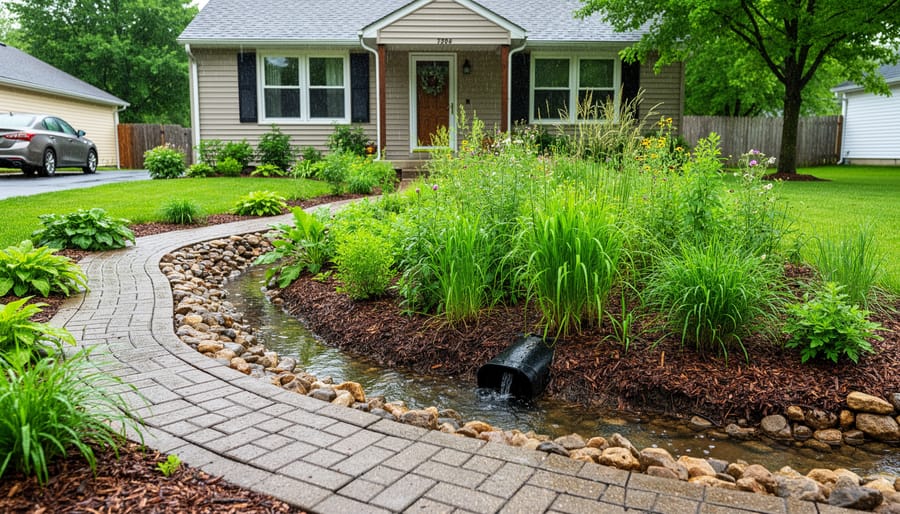
Every time it rains, water rushes off your roof, driveway, and lawn, picking up pollutants and overwhelming storm drains before flooding basements and eroding gardens. This runoff carries fertilizers, pesticides, and sediment directly into local streams and rivers, degrading water quality and harming aquatic life. But your yard can become part of the solution.
Green infrastructure mimics nature’s water cycle by capturing, filtering, and slowly releasing stormwater right where it falls. Instead of rushing away, rain soaks into the ground through specially designed gardens, permeable surfaces, and strategic landscaping. These systems reduce flooding, recharge groundwater, filter out pollutants, and create beautiful, wildlife-friendly spaces in your yard.
You don’t need a civil engineering degree or a massive budget to make a difference. Simple projects like installing a rain garden in that soggy spot near your downspout, replacing a concrete patio with permeable pavers, or directing roof runoff into planted areas can dramatically reduce the stormwater leaving your property. These solutions work with your existing landscape, turning problem areas into attractive features that actually improve your home’s value.
Whether you’re battling a persistently wet lawn, looking to reduce your environmental footprint, or simply want a more resilient landscape that thrives through both downpours and dry spells, green infrastructure offers practical answers. Let’s explore how you can transform your yard into a stormwater management powerhouse, one achievable project at a time.
What Is Green Infrastructure for Stormwater (And Why Should Gardeners Care)?
Think about what happens when rain falls in a forest. The water soaks into layers of leaves, filters through rich soil, and slowly makes its way to streams and groundwater. Nothing floods, nothing erodes, and plants get the moisture they need. That’s nature’s stormwater management system, refined over millions of years.
Now picture a typical suburban street. Rain hits rooftops, driveways, and lawns, then rushes into storm drains that pipe it away as fast as possible. This traditional “gray infrastructure” approach treats rainwater like a problem to be eliminated rather than a resource to be managed.
Green infrastructure takes a completely different approach by working with nature instead of against it. It’s a collection of landscape features designed to capture, slow down, and filter rainwater right where it falls. Instead of rushing water into pipes, green infrastructure lets it soak into the ground naturally through specially designed gardens, planted areas, and permeable surfaces.
Here’s where it gets exciting for gardeners: green infrastructure doesn’t just solve drainage problems. It creates opportunities for beautiful, functional landscape features that enhance your property. That soggy spot in your yard where grass won’t grow? It could become a stunning rain garden filled with native wildflowers and butterflies. The barren strip alongside your driveway? Perfect for a bioswale planted with ornamental grasses that manage runoff while adding curb appeal.
These aren’t utilitarian concrete solutions hidden from view. They’re gardens with a purpose, combining beauty with function. You get to grow plants, create habitat for pollinators and birds, and solve real drainage issues all at once.
The best part? You don’t need special training or expensive contractors. Many green infrastructure projects are perfect weekend DIY endeavors that start small and grow as you gain confidence. You’re already halfway there if you know how to dig a hole and plant something in it.
The Problem With How We Usually Handle Rain
Think about what happens during a typical rainstorm in your yard. Instead of soaking into the ground like it would in a forest or meadow, rain hits your roof and rushes down the gutters. It splashes onto your driveway and sidewalk, then races toward the street, picking up speed as it goes. If you’ve ever watched your downspouts during a heavy rain, you’ve probably noticed how they can blast out water with surprising force, often creating those frustrating eroded channels in your garden beds.
This isn’t how nature intended rain to behave. In natural settings, soil acts like a sponge, absorbing rainfall and slowly releasing it. But our yards tell a different story. Compacted soil from foot traffic and construction equipment can’t absorb water effectively. Those persistent puddles that linger for days after a storm? That’s a telltale sign your soil has lost its natural absorption capacity.
Here’s where things get problematic on a larger scale. All that rushing water carries more than just H2O. As it flows across surfaces, it picks up oil residue from driveways, fertilizers from lawns, pet waste, and sediment from exposed soil. This cocktail of pollutants flows directly into storm drains, which in most neighborhoods lead straight to local streams, rivers, and lakes without any treatment.
During heavy storms, the sheer volume of runoff can overwhelm municipal stormwater systems, leading to street flooding and even basement backups. Meanwhile, local waterways experience sudden surges that erode stream banks and harm aquatic life. It’s a cascade of consequences that starts right in our own backyards, but the good news is that solutions can start there too.
Green Infrastructure Solutions You Can Actually Use at Home
Rain Gardens: Beauty That Works
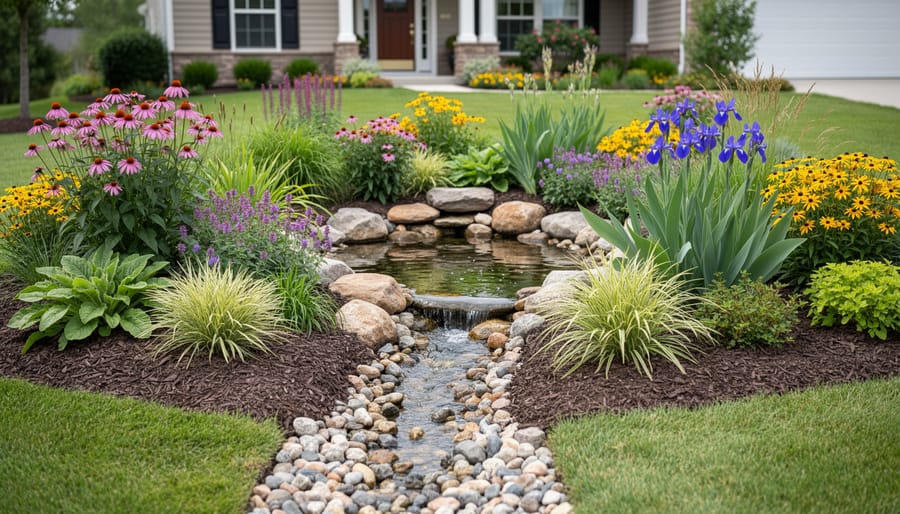
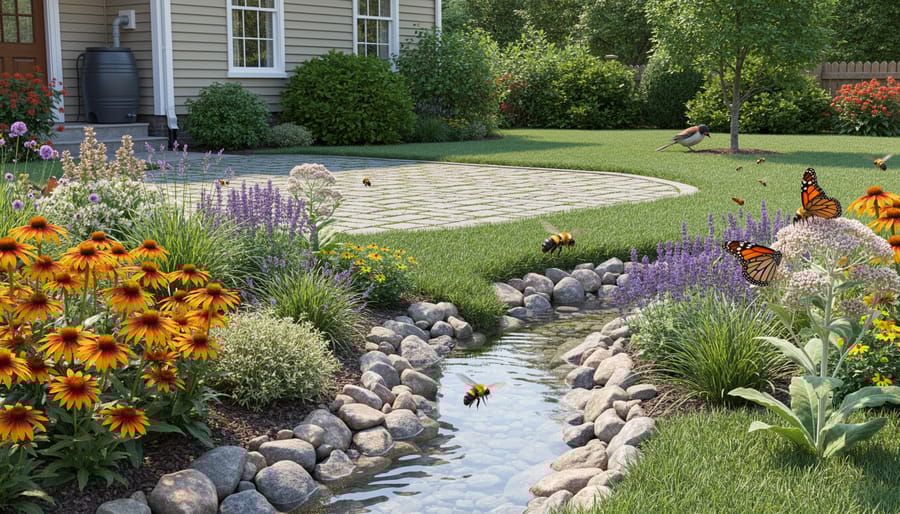
If you’ve ever noticed a soggy spot in your yard after a downpour or watched water rush off your driveway toward the street, you’ve witnessed the perfect opportunity for a rain garden. These beautiful landscape features are essentially shallow depressions planted with native perennials and grasses that capture and filter stormwater runoff. Unlike traditional gardens, rain gardens are specifically designed to handle temporary flooding, transforming a drainage problem into an environmental asset.
Here’s how they work their magic: when rain falls, water flows from hard surfaces like roofs, driveways, and patios into your rain garden. The plants and soil act as a natural filter, removing pollutants before the water slowly soaks into the ground. This process recharges groundwater supplies while preventing contaminated runoff from reaching storm drains and local waterways.
The ideal placement is at least ten feet from your home’s foundation, positioned to catch runoff from downspouts or sloped areas. Most rain gardens are about six inches deep and sized to handle the water flowing into them. A good rule of thumb is making your rain garden about 20% the size of the surface area draining into it.
Plant selection is key to success. Choose native species with deep root systems that can tolerate both wet and dry conditions. Purple coneflower, black-eyed Susan, switchgrass, and cardinal flower are excellent choices that provide year-round interest while attracting pollinators.
Here’s the best part: once established, rain gardens typically require less maintenance than traditional flower beds. Native plants are naturally adapted to local conditions, needing minimal watering, fertilizing, or pest control. You’ll mainly just remove weeds and cut back dead growth in spring.
Bioswales: The Natural Drainage Ditch
Think of bioswales as the hardworking cousins of rain gardens. While rain gardens sit in low spots like little ponds, bioswales are gently sloped, planted channels that guide water on a journey across your property. As stormwater flows through these vegetated pathways, it slows down dramatically, giving the ground time to soak it up while plants and soil naturally filter out pollutants.
Bioswales really shine along slopes, driveways, and property edges where water naturally wants to run. Instead of letting it rush straight into storm drains carrying fertilizers and debris, you’re giving it a scenic route through native grasses, sedges, and moisture-loving perennials. The magic happens in that slow meandering—water has time to infiltrate rather than erode.
Here’s the beautiful part: bioswales can transform those unsightly concrete drainage ditches or muddy erosion channels into attractive landscape features. I’ve seen homeowners replace boring side-yard problem areas with lush bioswales that look intentional and inviting.
The key difference from rain gardens? Bioswales keep water moving along a gentle grade, while rain gardens hold and absorb it in place. Both are wonderful tools, just designed for different situations in your yard.
Permeable Surfaces: Let the Water Through
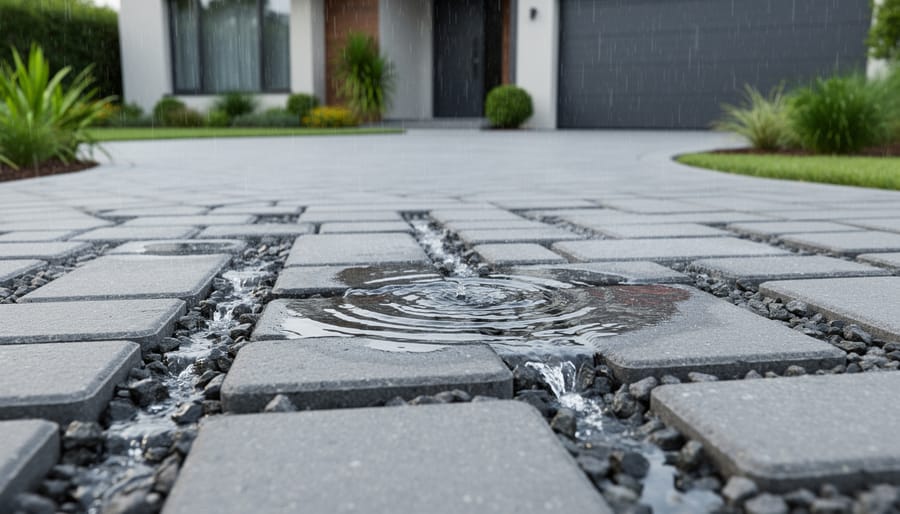
Think of permeable surfaces as giving water a VIP pass straight into the ground rather than forcing it to run off into storm drains. Unlike traditional concrete or asphalt that creates an impenetrable barrier, permeable pavers, gravel pathways, and porous materials welcome water to filter through naturally.
These surfaces work beautifully for patios, driveways, and walkways where you need durability but don’t want to contribute to runoff problems. Permeable pavers look just like regular pavers but feature wider joints filled with gravel or small stones that let water seep between them. Porous concrete and asphalt contain small voids throughout the material itself, allowing water to pass directly through. For a more casual look, consider crushed gravel or decomposed granite pathways that naturally allow infiltration.
The bonus? These surfaces help recharge groundwater, reduce puddles, and keep pollutants from washing into waterways. I’ve replaced my old concrete walkway with permeable pavers, and watching the water disappear instantly during rainstorms instead of pooling gives me such satisfaction. Installation is similar to traditional hardscaping but requires a deeper gravel base for proper drainage. Start with a small project like a garden path to get comfortable with the technique.
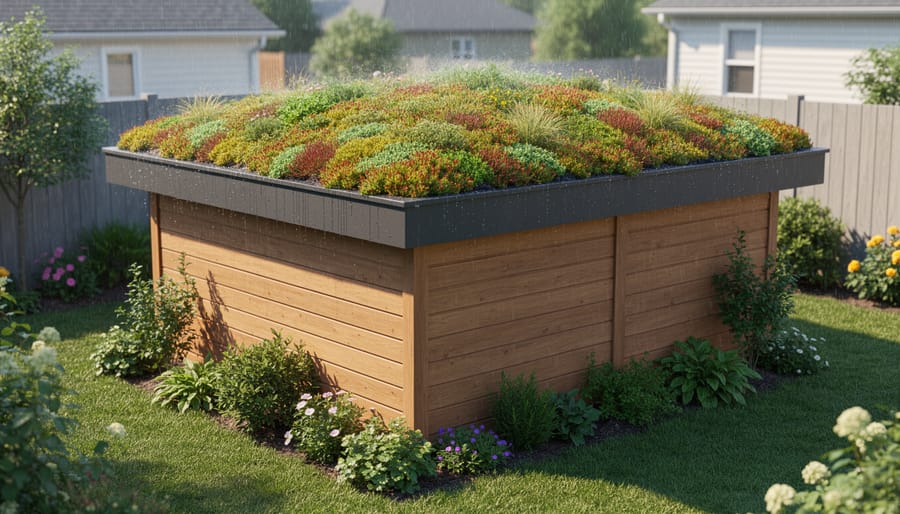
Green Roofs and Container Gardens
You don’t need a sprawling rooftop to make a difference with green roofs! Even small structures like garden sheds, garages, or bike shelters can support lightweight green roof systems that capture and absorb rainwater before it ever reaches the ground. These miniature green roofs work surprisingly well, with their growing medium and plants acting like a sponge during rain events.
Container gardens and rooftop planters offer another accessible entry point for urban gardeners working with limited space. A collection of large containers on a flat roof, balcony, or patio creates a mini water-retention system. During storms, the soil in your containers absorbs water that would otherwise run off immediately. Plus, you’re growing flowers, herbs, or vegetables at the same time.
I’ve seen apartment dwellers transform their balconies into productive stormwater managers with just a dozen well-placed containers. The key is using quality potting mix that holds moisture well and choosing plants suited to your local climate. This approach proves that green infrastructure isn’t just for homeowners with yards – anyone with a few square feet of outdoor space can participate in smarter water management.
Rain Barrels and Cisterns: Capture and Reuse
Collecting rainwater is one of the smartest moves you can make for both your garden and the environment. Rain barrels and cisterns capture water that would otherwise rush off your roof and into storm drains, giving you a free supply for watering plants during dry spells.
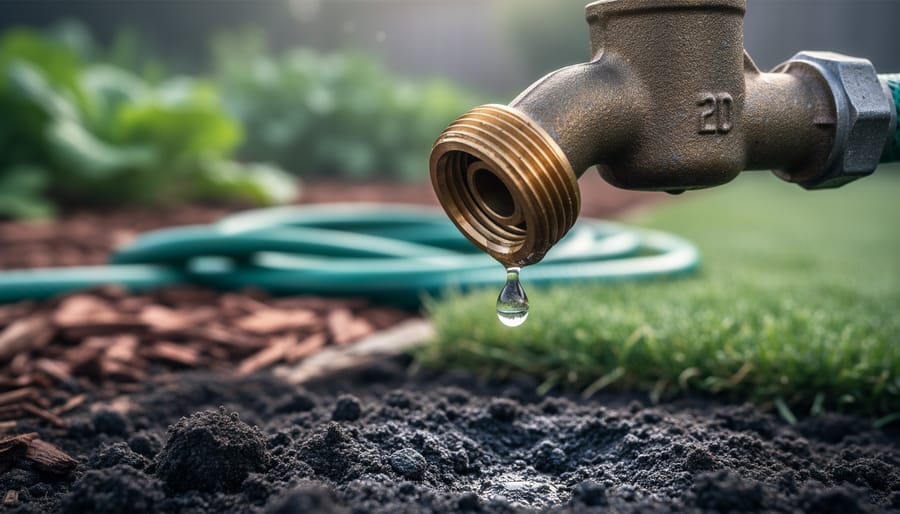
Setting up a basic rainwater harvesting system starts with placing a barrel beneath your downspout. Modern rain barrels come with screens to keep debris and mosquitoes out, plus spigots for easy watering access. For larger storage capacity, cisterns can hold hundreds of gallons underground or alongside your home.
The benefits multiply quickly. You’ll reduce stormwater runoff from your property, lowering the burden on municipal systems and preventing erosion in your yard. Meanwhile, your water bills drop since you’re using free rainwater instead of tap water. Plants actually prefer rainwater because it’s naturally soft and free of chlorine and other chemicals.
This simple addition ties perfectly into your broader green infrastructure efforts, working hand-in-hand with rain gardens and permeable surfaces to manage water naturally right where it falls.
Native Plants: Your Secret Weapon
Here’s something most gardeners don’t realize: your typical lawn grass has shallow roots that barely reach six inches deep, while native plants can send roots down three feet or more. When it comes to managing stormwater, that difference is absolutely game-changing.
Those deep root systems create natural channels in the soil, allowing rainwater to infiltrate quickly rather than running off into streets and storm drains. Native plants also absorb significantly more water than turf grass and hold soil in place with their extensive root networks, preventing erosion even during heavy downpours.
The best part? Once established, native plants thrive without the constant watering and maintenance that lawns demand, making them perfect for water-wise gardening.
Let me share some regional favorites. In the Northeast, try New England aster and switchgrass. Midwest gardeners have excellent results with purple coneflower, black-eyed Susan, and little bluestem grass. For Southern gardens, consider muhly grass and goldenrod. Pacific Northwest residents should look into sword fern and Oregon grape.
I spoke with landscape designer Maria Chen, who’s transformed dozens of soggy yards using natives. “People are amazed at the difference,” she told me. “A client had standing water for days after every rain. We replaced half their lawn with native plants, and now the water disappears within hours.”
Start by replacing even a small lawn section with native plants suited to your area, and you’ll notice the improvement immediately.
Real Benefits You’ll See in Your Yard
Once you’ve installed green infrastructure in your yard, you’ll start noticing positive changes surprisingly quickly. Let me share what you can actually expect to see and experience.
First, those frustrating puddles that used to linger for days after heavy rain? They’ll disappear much faster, or vanish entirely. Your rain garden or bioswale absorbs water where it falls, meaning less standing water near your home’s foundation and fewer muddy patches on your lawn. One homeowner I spoke with mentioned she could finally use her backyard the day after a storm, something that was impossible before adding a rain garden.
Erosion becomes a thing of the past. If you’ve been watching precious topsoil wash away down your driveway or seeing gullies form in your flower beds, green infrastructure holds that soil in place. The deep-rooted native plants act like anchors, keeping everything stable even during downpours.
Your plants will thrive like never before. The improved soil structure and better moisture retention from bioswales and rain gardens create ideal growing conditions. You’ll notice lusher foliage, more abundant blooms, and stronger, healthier plants overall. These systems also complement other water recycling strategies you might already be using.
The wildlife visitors are genuinely delightful. Within weeks, you’ll spot more butterflies, bees, and hummingbirds. Native plants in rain gardens provide essential habitat and food sources. Birds will follow, attracted by insects and seeds. It transforms your yard into a mini ecosystem.
Your water bills may drop too, especially if you incorporate rain barrels alongside your green infrastructure. Less reliance on irrigation means real savings.
Finally, there’s the curb appeal boost and comfort factor. These landscapes look intentional and beautiful, plus the vegetation creates cooler microclimates on hot summer days. You’ll actually want to spend more time outside enjoying your transformed space.
Getting Started: A Simple Step-by-Step Approach
Ready to transform your yard into a water-wise wonderland? Let’s break this down into manageable steps that won’t overwhelm your weekend plans.
Start by playing detective with your property’s drainage patterns. After a good rain, grab an umbrella and take a walk around your yard. Where does water pool? Which areas stay soggy longest? Notice where water rushes off driveways or roofs. Take photos and make simple sketches—this isn’t art class, just quick notes about problem spots and opportunities. You might discover that the perpetually muddy patch by your fence is actually the perfect location for a rain garden.
Here’s my best advice: resist the urge to tackle everything at once. Choose one project that addresses your biggest concern or fits your current skill level. Installing a rain barrel takes an afternoon and gives you immediate results. Feeling more ambitious? A small rain garden might be your next adventure. Starting small builds your confidence and lets you learn what works for your specific conditions before investing significant time or money.
Match your solution to your space and budget realistically. A compact urban lot might be perfect for container rain gardens or permeable pavers in a small patio area, while larger properties can accommodate bioswales or extensive native plantings. Rain barrels cost as little as fifty dollars, while professional rain garden installation might run several thousand. Don’t let budget constraints discourage you—even simple upgrades like adding mulch to bare soil or redirecting a downspout makes a difference.
Know when to call in reinforcements. Complicated drainage issues near foundations, large-scale grading projects, or properties with significant slope often need professional assessment. Local landscape designers experienced with green infrastructure can evaluate your situation and create solutions that work with your property’s unique characteristics. There’s wisdom in recognizing when expert help will save you time, money, and frustration down the road.
Common Questions and Concerns Answered
I completely understand if you’re hesitating—these are smart questions to ask before diving in! Let’s tackle the most common concerns I hear from gardeners considering green infrastructure projects.
“Will this turn my yard into a mosquito breeding ground?” This worry tops the list, but here’s the good news: properly designed rain gardens and bioswales drain within 24-48 hours, which isn’t enough time for mosquito larvae to develop. These areas aren’t ponds—they’re gardens that temporarily hold water. If you notice standing water lingering beyond two days, you simply need to improve your soil drainage by adding more compost or sand.
“Isn’t this expensive?” Actually, many green infrastructure projects cost less than traditional solutions. A rain barrel runs $50-150, while a basic rain garden might cost $300-500 if you do it yourself—far less than installing underground drainage systems. Plus, you’ll save money on water bills through efficient watering practices and reduced landscape maintenance.
“What about upkeep?” These features actually require less maintenance than traditional lawns once established. You’ll weed occasionally during the first year, remove debris from rain barrels seasonally, and maybe refresh mulch annually. That’s typically it!
“Will my HOA or municipality allow this?” Most communities increasingly welcome green infrastructure, but it’s wise to check first. Many HOAs approve projects that look like attractive garden beds. Some municipalities even offer rebates or fast-tracked permits for stormwater management features.
“Do I need permits?” For small residential projects like rain gardens or rain barrels, permits usually aren’t required. Larger installations involving grading or structures might need approval. A quick call to your local planning department provides clarity and often reveals helpful resources you didn’t know existed.
The beauty of green infrastructure is that you don’t need to transform your entire yard overnight to make a meaningful difference. Starting small is perfectly fine—and often the smartest approach. A single rain garden nestled beside your downspout, a couple of rain barrels collecting water for your vegetables, or even replacing a patch of lawn with native groundcovers all contribute to managing stormwater more sustainably.
What makes green infrastructure so rewarding is how it transforms a problem into an opportunity. Instead of watching water pool in your driveway or rush down the street carrying pollutants, you’re creating beautiful, functional spaces that support pollinators, reduce your water bills, and add genuine character to your landscape. That troublesome low spot in your yard? It could become your favorite rain garden, bursting with colorful native flowers.
Remember, every garden that manages stormwater naturally is part of a larger movement toward more resilient, sustainable neighborhoods. When you install that first rain barrel or plant those native shrubs, you’re joining countless other gardeners who understand that our individual choices ripple outward. Together, we’re creating communities that work with nature rather than against it—one garden at a time.