
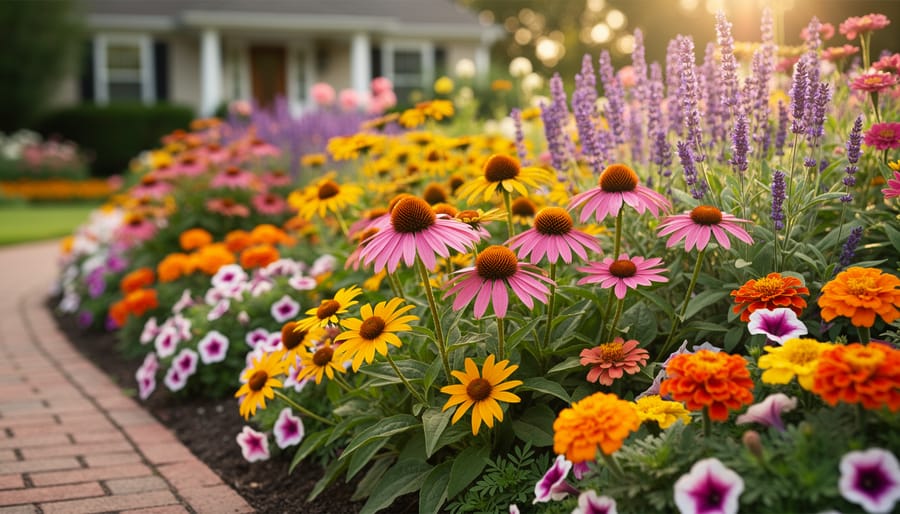
Plant continuous bloomers like coneflowers, black-eyed Susans, and salvia that naturally flower from June through September without deadheading. Combine early, mid, and late-season summer flowers in the same bed so new blooms emerge as others fade. Deadhead spent flowers weekly on zinnias, marigolds, and petunias to trigger new bud production throughout the season. Choose proven performers like lantana, cosmos, and geraniums that thrive in summer heat and actually bloom more vigorously during the hottest months.
The secret to nonstop color isn’t finding magical plants that bloom for four straight months. Instead, you’ll create a succession of overlapping blooms by selecting the right mix of reliable performers and giving them simple maintenance. Whether you’re starting your first garden or redesigning established beds, understanding which flowers genuinely deliver extended blooms versus those that peak and fade will save you from disappointing gaps in color. I’ve spent fifteen seasons testing varieties in my own garden, and I’m excited to share the specific plants that have never let me down, plus the straightforward care techniques that keep them flowering from Memorial Day straight through to the first frost.
What ‘Blooming All Summer’ Really Means
Before we dive into specific plants, let’s clarify what we really mean by “blooming all summer.” You might be imagining a garden where every single flower stays in constant bloom from June through September without pause. While that sounds dreamy, the reality is slightly different, but no less beautiful!
True continuous bloomers produce fresh flowers steadily throughout the season. Think of these as your garden’s marathon runners. They keep pushing out new blooms while older ones fade, creating an ongoing display. Zinnias and marigolds are perfect examples. You’ll always see flowers on these plants, though individual blooms come and go.
Repeat bloomers, on the other hand, work in waves. They bloom abundantly, take a brief rest, then return for another show. Many roses fall into this category. With proper deadheading (snipping off spent flowers), you can encourage these plants to rebloom faster and more frequently.
Some gardeners also use “all summer” to describe combinations of plants with staggered bloom times. For instance, planting early, mid, and late-summer bloomers together creates the illusion of constant color, even though individual plants aren’t flowering the entire time.
The good news? With smart plant selection and a bit of maintenance, you can absolutely achieve a garden bursting with color from early summer until frost. It’s not about finding one magical plant, but rather understanding how different bloomers work and choosing the right mix for your space.
The Best Flowers That Bloom From June Through September
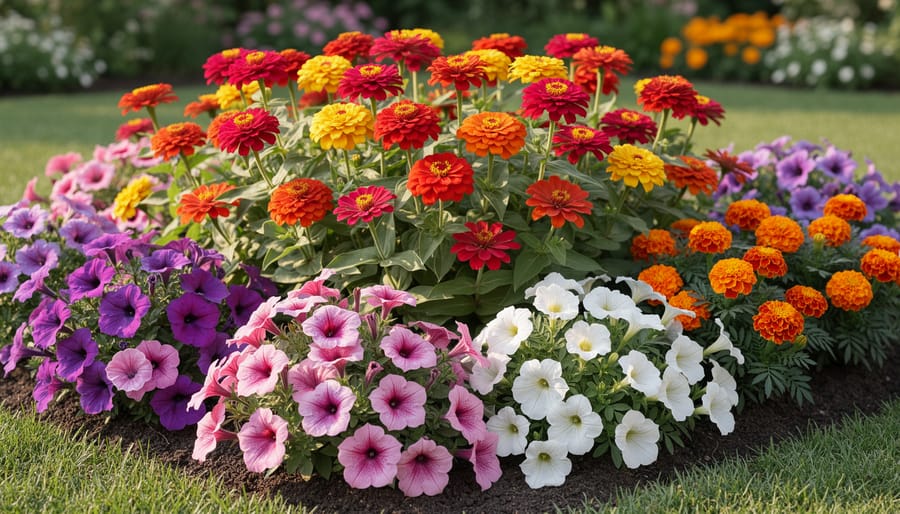
Can’t-Kill Annuals for Nonstop Color
If you’re looking for flowers that practically take care of themselves while delivering color from late spring straight through the first frost, these tried-and-true annuals are your best friends. I always tell new gardeners that these five plants are nearly impossible to mess up, and experienced gardeners love them because they free up time to experiment with fussier specimens.
Petunias have come a long way from your grandmother’s garden. The newer spreading varieties like Wave and Supertunia series create cascading mounds of color that literally smother themselves in blooms. They thrive in full sun and actually prefer somewhat dry conditions once established. Here’s the secret most gardeners miss: give them a light trim in mid-July if they start looking leggy. Just grab your scissors and cut them back by about a third. Within two weeks, you’ll have fresh, compact growth covered in new flower buds. The classic grandiflora types work beautifully in containers, while multiflora varieties handle rain better and are perfect for garden beds.
Zinnias are the workhorses of the cutting garden, and they’re one of the few flowers that actually bloom more when you cut them. Plant seeds directly in the garden after your last frost date, and you’ll have flowers in about 60 days. They love heat and laugh at drought conditions. For continuous blooms, I recommend the Profusion series for disease resistance, or try the tall Benary’s Giant varieties if you want armloads of cut flowers. Deadheading isn’t strictly necessary, but it does keep them looking tidy and encourages even more blooms.
Marigolds get unfairly labeled as old-fashioned, but these cheerful plants are summer workhorses that ask for almost nothing. French marigolds stay compact at 6-12 inches and create neat edges, while African marigolds tower up to three feet with softball-sized blooms. They’re incredibly heat tolerant and actually prefer lean soil, which means you can skip the fertilizer. The only thing they truly dislike is wet feet, so make sure they’re not sitting in soggy soil.
Cosmos might be the most carefree annual you’ll ever grow. Scatter seeds in spring, and these airy beauties will self-sow for years to come. They bloom nonstop without deadheading, though removing spent flowers does keep them looking neater. The Sensation series offers classic daisy-like flowers on tall stems, while the newer compact Sonata series stays under two feet for smaller spaces. They actually bloom better in poor soil, so resist the urge to pamper them.
Impatiens are your answer for those shady spots where nothing seems to bloom. New Guinea impatiens handle more sun than traditional types and come in stunning color combinations. They do appreciate consistent moisture, so mulch around them to retain water during hot spells. While they won’t tolerate drought like the others on this list, they’re incredibly forgiving of neglect and bloom continuously without any deadheading.
The beauty of these five annuals is their flexibility. Plant them together or separately, in beds or containers, sun or shade. They’ll reward even the busiest gardener with months of reliable color.
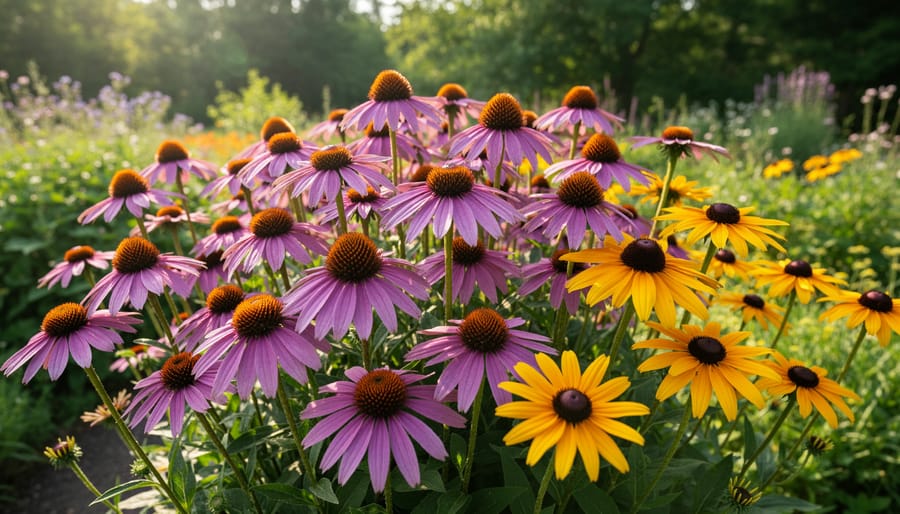
Perennials That Earn Their Keep
If you’re looking to get the most bang for your buck in your summer garden, perennials are where it’s at. Unlike annuals that need replanting every year, these hardy performers come back season after season, getting stronger and more generous with their blooms. Let me introduce you to five champions that truly earn their keep.
Coneflowers, or echinacea, are absolute workhorses in the summer garden. These sturdy plants produce those distinctive daisy-like flowers with prominent cone centers from early summer right through fall. They shrug off heat, tolerate drought once established, and butterflies adore them. The original purple varieties are stunning, but you’ll also find them in white, orange, yellow, and even coral shades now.
Black-eyed Susans are equally reliable companions, sporting cheerful golden-yellow petals with dark centers. They’re practically indestructible and will brighten even the neglected corners of your garden. I’ve seen them thrive in conditions that would make other plants sulk.
Daylilies might seem like an obvious choice, but they deserve every bit of their popularity. Each flower lasts just one day, but a single plant produces so many buds that you’ll have continuous color for weeks. They’re available in nearly every color except true blue, and modern varieties are absolute showstoppers.
Coreopsis, often called tickseed, produces masses of bright yellow, pink, or bicolored flowers on airy stems. They’re part of that wonderful group of drought-tolerant perennials that keep performing even when summer gets tough.
Salvia rounds out this lineup with elegant spikes of purple, blue, red, or white flowers. Hummingbirds can’t resist them, and they bloom continuously when treated right.
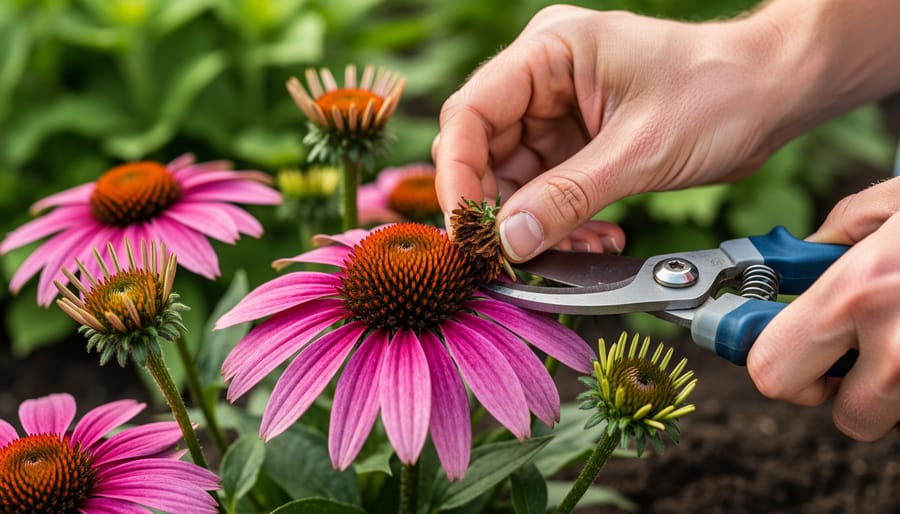
Here’s the secret to keeping these perennials blooming all summer: deadheading. This simply means removing spent flowers before they set seed. When you do this, the plant redirects its energy into producing more blooms instead of making seeds. For coneflowers and black-eyed Susans, snip the stem just above the next set of leaves. With daylilies, snap off individual spent blooms and cut the entire stalk once all buds have finished. Coreopsis and salvia benefit from cutting back by about a third when flowering slows.
The beauty of investing in these perennials is that they multiply over time. In a few years, you can divide them to create more plants for free, expanding your garden or sharing with friends. That initial investment keeps paying dividends summer after summer.
The Secret to Keeping Flowers Blooming Longer
Here’s the wonderful news: keeping your summer bloomers going strong isn’t complicated, and you don’t need a degree in horticulture to make it happen. A few simple practices, done consistently, will reward you with months of gorgeous color.
Let’s start with deadheading, which is simply removing spent flowers before they set seed. When you snip off faded blooms, you’re telling the plant “keep producing flowers instead of making seeds.” For most summer bloomers like zinnias, petunias, and marigolds, pinch or cut just below the flower head every few days. I know it seems time-consuming at first, but you’ll get into a rhythm. Think of it as meditation time with your plants. Some gardeners I’ve spoken with actually find it relaxing to deadhead while enjoying their morning coffee.
Watering makes or breaks summer blooms. Most flowering plants need about an inch of water weekly, but during heat waves, they’ll need more. The golden rule? Water deeply but less frequently rather than shallow sprinkles every day. This encourages roots to grow down where soil stays moist longer. Early morning watering is ideal because it reduces disease risk and gives plants moisture before the day’s heat arrives.
Fertilizing keeps the bloom factory running. Container plants especially need regular feeding since nutrients wash out with watering. A balanced, water-soluble fertilizer every two weeks works beautifully for most summer flowers. I prefer liquid fertilizers diluted to half-strength and applied weekly instead. It’s gentler and keeps plants consistently fed without overwhelming them.
Finally, don’t be afraid to cut back leggy growth mid-summer. Many annuals and perennials benefit from a trim when they start looking tired, usually around July. Cut them back by one-third, give them a good drink and some fertilizer, and watch them bounce back with fresh growth and renewed blooming energy. You’ve got this!
Creating a Garden That Never Stops Blooming
The secret to a garden that never stops blooming isn’t just choosing the right flowers—it’s about smart planning and strategic timing. Think of your summer garden as a relay race, where each plant passes the baton of color to the next.
Start by dividing your summer into three phases: early (May-June), mid (July), and late (August-September). For each phase, select at least three different flowers that peak during that time. This simple approach ensures you’ll always have something spectacular happening in your beds.
Here’s your step-by-step planning process. First, map out your garden space on paper, noting which areas get full sun versus partial shade. Next, choose your workhorses—those reliable all-summer bloomers like zinnias and marigolds—as your foundation. Then layer in early bloomers such as calibrachoa and sweet alyssum. For your mid-summer stars, add salvias and globe amaranth. Finally, select late-season champions like dahlias and flowers that bloom into fall such as celosia.
Don’t forget the power of succession planting. Instead of planting all your annuals at once, stagger your plantings every two to three weeks through early summer. I learned this trick from a master gardener who swore by it—she’d plant new zinnias in June, then again in early July, ensuring fresh blooms right through September.
Mix heights and textures throughout your beds. Place tall plants like cleome at the back, medium growers like geraniums in the middle, and cascading petunias at the front. This creates depth while maximizing your viewing pleasure from every angle. Remember, a continuously blooming garden is simply the result of thoughtful planning meeting consistent care.
Common Mistakes That Stop Summer Blooms
Even the most dedicated gardeners sometimes wonder why their summer blooms fizzle out by mid-July. Let’s troubleshoot together!
Overcrowding is one of the sneakiest bloom-stoppers. When plants compete for resources, they focus on survival rather than flowering. I learned this the hard way when my zinnias barely bloomed despite looking lush and green. Give your plants room to breathe—check spacing recommendations on plant tags and thin seedlings accordingly.
Watering woes come in two flavors: too much or too little. Most summer bloomers prefer deep, infrequent watering rather than daily sprinkling. Stick your finger two inches into the soil—if it’s dry, it’s time to water. Inconsistent watering stresses plants and reduces flower production.
Skipping deadheading is like leaving a “mission accomplished” sign up for your plants. Once flowers go to seed, many plants think their job is done and stop blooming. Spend a few minutes every few days snipping off spent blooms, and you’ll be amazed at the difference.
Poor soil nutrition often flies under the radar. Continuous blooming requires serious energy, and depleted soil simply can’t support it. Starting with healthy garden soil is essential, but don’t forget to feed your bloomers throughout summer. A balanced, water-soluble fertilizer applied every two to three weeks keeps those flowers coming strong until frost.
Creating a garden that blooms continuously through summer is absolutely within your reach, no matter where you’re starting from. The key is remembering that you don’t need to transform your entire yard overnight. Pick just three or four varieties from this list that speak to you and suit your growing conditions. Maybe start with reliable favorites like zinnias and marigolds, then add a perennial like coneflowers for future summers. As you gain confidence watching these beauties thrive, you’ll naturally want to expand your palette.
The secret truly lies in those simple practices we’ve covered: deadheading spent blooms, providing consistent moisture, and feeding your plants regularly. These small acts of care make all the difference between a garden that fizzles by July and one that dazzles right through September.
So grab your gardening gloves and head to your local nursery this weekend. Your summer-long display of color awaits, and trust me, there’s nothing quite like stepping outside each morning to see your garden in full, glorious bloom.


