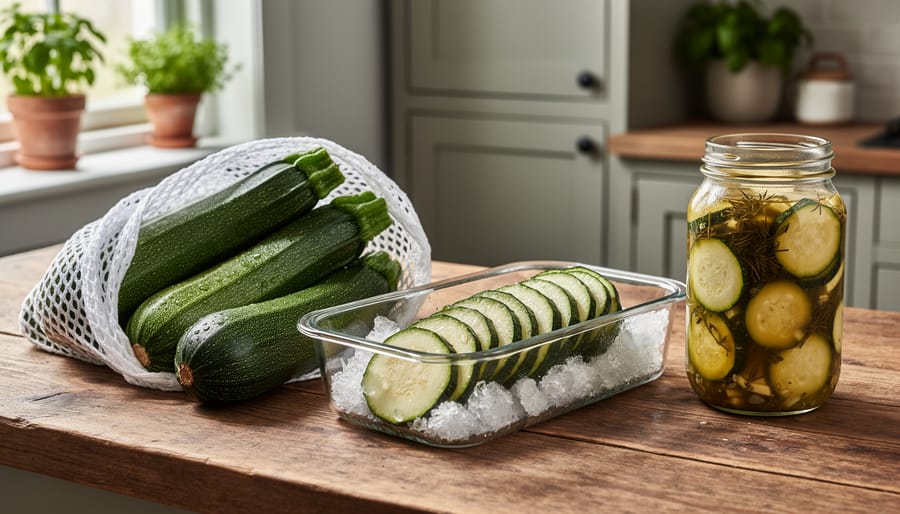
Harvest your zucchini when they’re 6-8 inches long for optimal storage potential—smaller fruits keep longer and taste better than oversized ones that have developed tough skins and seeds. Refrigerate unwashed zucchini in a perforated plastic bag in your crisper drawer for up to two weeks, checking every few days to remove any that show soft spots before they spoil the batch. Blanch and freeze sliced or shredded zucchini in airtight containers for 8-12 months of storage, perfect for adding to winter soups, breads, and casseroles without sacrificing flavor or texture. Preserve your abundance through pickling, dehydrating into crispy chips, or spiralizing and freezing in portion-sized bundles for quick weeknight meals.
When planning your garden harvest, timing makes all the difference between zucchini that stores beautifully and squash that turns mushy within days. This guide walks you through proven storage methods that home gardeners have used successfully for generations, from simple countertop strategies for daily use to long-term preservation techniques that let you enjoy your summer harvest well into spring. You’ll discover which methods work best for different quantities, how to troubleshoot common storage problems, and creative ways to use every single zucchini you’ve grown.
Knowing When Your Zucchini Is Ready to Harvest
The secret to successful zucchini storage starts right in your garden, with knowing exactly when to harvest. Trust me, this timing makes all the difference between zucchini that stays fresh for weeks and ones that turn mushy in days.
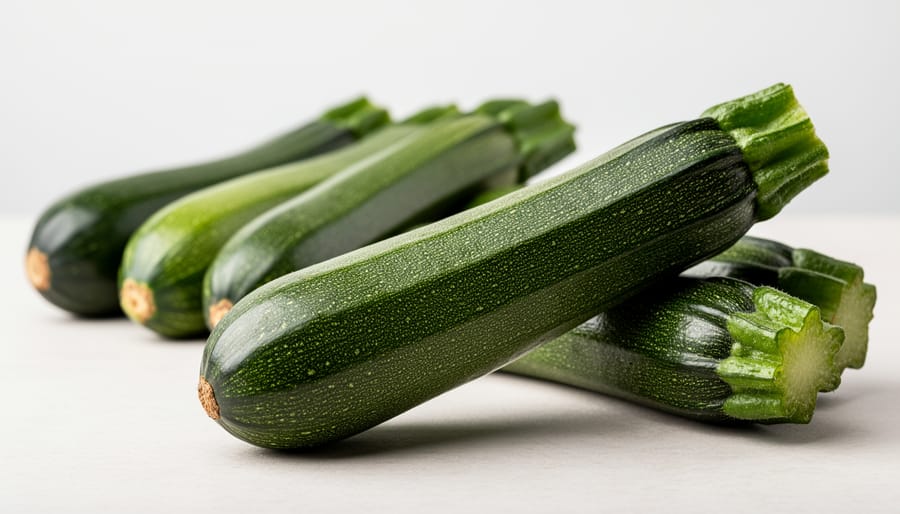
For the best storage results, harvest your zucchini when they’re between 6 to 8 inches long. At this size, they’re wonderfully tender with firm flesh and thin, edible skin. I’ve learned through experience that smaller zucchini not only taste better but also store significantly longer than their oversized cousins. Those giant baseball-bat-sized specimens might look impressive, but they contain more water, have developed tough seeds, and will deteriorate quickly even under ideal storage conditions.
Give your zucchini a gentle squeeze test before harvesting. You’re looking for firm, glossy skin with no soft spots or blemishes. The skin should resist light pressure but not feel rock-hard. Check the stem end too; it should be green and fresh-looking, not dried out or yellowing.
Here’s an important tip for maximizing your harvest while maintaining quality: check your plants daily during peak season. Zucchini can grow surprisingly fast, sometimes doubling in size within 24 hours. Missing even a couple of days means you’ll end up with oversized fruits that won’t store well.
Always use clean, sharp pruning shears or a knife to cut the stem about an inch above the fruit, rather than twisting or pulling, which can damage both the zucchini and the plant.
Preparing Your Zucchini for Storage
The Gentle Cleaning Method
The key to proper storage starts with how you handle your zucchini right after harvest. Resist the urge to rinse them under running water, as excess moisture is the enemy of longevity. Instead, use a soft, dry cloth or a gentle brush to wipe away any dirt or garden debris from the skin. If you encounter stubborn soil, slightly dampen your cloth with water, wipe quickly, and immediately dry the zucchini thoroughly with a separate dry towel. This minimal-moisture approach protects the natural protective coating on the skin while keeping the surface clean. I learned this the hard way one summer when my well-intentioned washing routine led to soft spots appearing within days. Now, I keep a dedicated basket of soft cloths near my garden specifically for this gentle cleaning process, and my zucchini stays fresh significantly longer in storage.
Sorting and Selecting for Storage
Not all zucchini are created equal when it comes to storage! The best candidates for long-term keeping are firm, unblemished fruits harvested at their prime. Look for zucchini with smooth, glossy skin free from soft spots, cuts, or bruises. The stem should be intact and dry, acting as a natural seal against decay. Medium-sized zucchini, around 6-8 inches, store better than oversized ones, which tend to have more water content and seeds.
Now, those zucchini with minor scratches, slight bruising, or cut stems? They’re perfectly fine for immediate cooking but won’t last in storage. Same goes for any that feel even slightly soft when gently squeezed. Here’s my approach: I sort my harvest into two piles right in the garden. The “keepers” go straight into proper storage, while the “use now” batch inspires delicious meals for the week ahead. This simple sorting step saves disappointment later and ensures you’re not wasting energy storing produce that won’t make it.
Short-Term Storage: Keeping Zucchini Fresh for Weeks
Refrigerator Storage Done Right
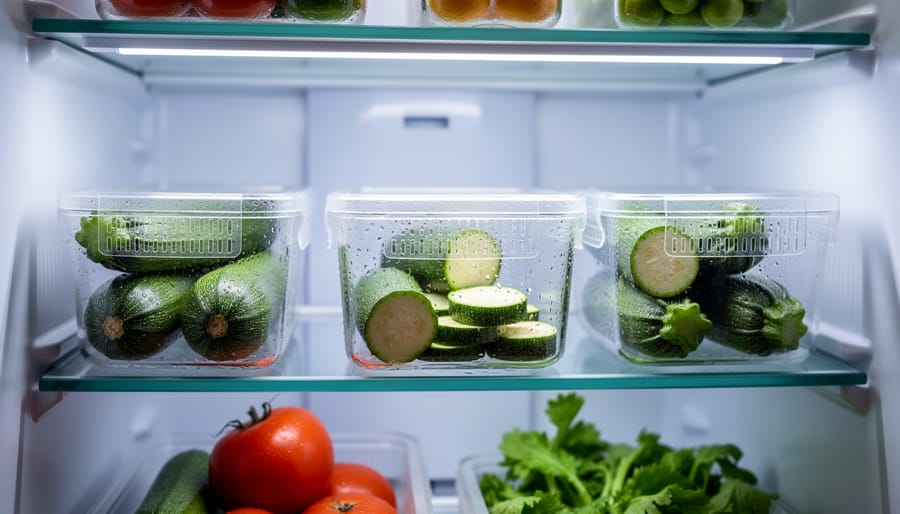
Your refrigerator is your best friend for keeping whole zucchini fresh for up to two weeks. The key is creating the right environment that balances moisture and airflow.
Store your unwashed zucchini in the crisper drawer, where humidity levels naturally stay higher. The ideal temperature range is between 50-55°F, though standard refrigerator temperatures (around 40°F) work fine for shorter storage periods. Here’s a little secret from my gardening mentor, Maria: she wraps each zucchini loosely in a dry paper towel, then places them in a perforated plastic bag. This method absorbs excess moisture while allowing just enough air circulation to prevent that dreaded sliminess.
Never wash your zucchini before refrigerating—moisture is the enemy of long-term freshness. If your zucchini came from the garden with dirt, simply brush it off gently with a dry cloth. Keep them away from ethylene-producing fruits like apples and bananas, which can speed up spoilage.
Check your stored zucchini every few days, replacing damp paper towels as needed. If you notice soft spots developing, use those zucchini first or trim away the affected areas. With proper refrigerator storage, you’ll have plenty of time to enjoy your harvest in various meals throughout the week.
Counter Storage for Immediate Use
If you’ve just harvested fresh zucchini and plan to use them within a few days, your kitchen counter is perfectly fine for storage. I like to think of zucchini as houseguests—they’re comfortable at room temperature for a short visit but need cooler accommodations for extended stays.
Place your unwashed zucchini in a basket or on a countertop away from direct sunlight and heat sources like your stove or windowsill. The ideal room temperature is between 60-70°F. Small to medium zucchini stay firm and delicious for about 2-3 days this way, while larger ones might start showing signs of aging sooner.
Keep an eye out for telltale signs it’s time to refrigerate. If the skin starts looking dull or feels slightly soft when you gently squeeze it, move it to the fridge right away. You’ll also want to refrigerate immediately if you notice any condensation forming or if your kitchen is particularly warm. Never store zucchini near ethylene-producing fruits like bananas or tomatoes on your counter—they’ll speed up ripening and lead to faster spoilage.
Here’s a tip from my own kitchen: if you’re storing multiple zucchini, give them a little breathing room. Crowding can trap moisture and create soft spots.
Long-Term Storage: Freezing Your Zucchini Harvest
Blanching for Better Quality
Blanching might seem like an extra step, but trust me—it makes all the difference when freezing zucchini! This simple process deactivates enzymes that cause vegetables to lose color, flavor, and nutrients over time. Without blanching, your frozen zucchini can turn mushy and develop off-flavors within just a few months.
Here’s how to do it: Start by bringing a large pot of water to a rolling boil. While it heats, prepare a big bowl of ice water. Slice your zucchini into rounds, cubes, or whatever shape you prefer—keeping pieces uniform ensures even cooking. When the water boils, add the zucchini and let it cook for just one minute (yes, only one!). Immediately transfer the pieces to the ice bath using a slotted spoon. This stops the cooking process instantly. Let them chill for about two minutes, then drain thoroughly.
Pat the zucchini dry with clean kitchen towels—removing excess moisture prevents ice crystals from forming. Now they’re ready for the freezer! Many gardeners skip blanching to save time, but I’ve found those few extra minutes really pay off when you’re enjoying garden-fresh flavor months later.
Freezing Methods for Different Uses
The beauty of freezing zucchini is that you can prepare it specifically for how you’ll use it later. Let me share the methods that work best for different cooking needs.
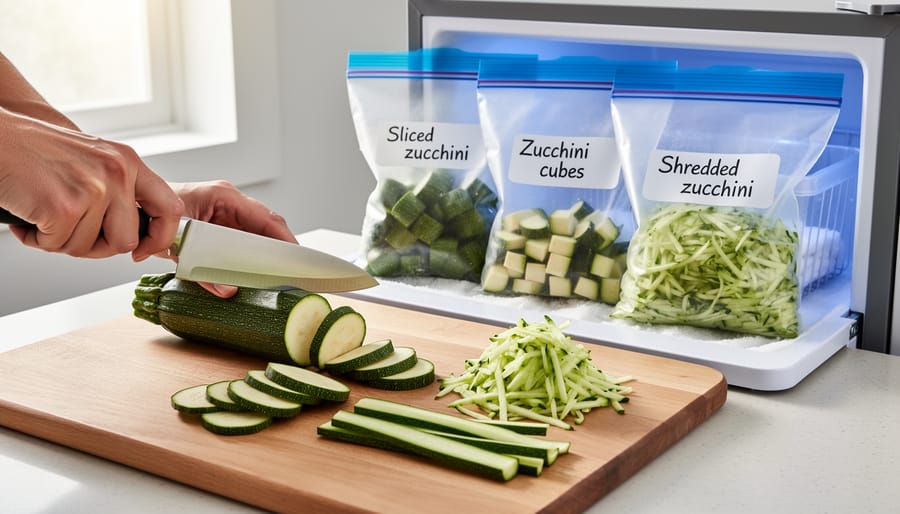
For sautés and stir-fries, slice your zucchini into rounds about half an inch thick. Blanch them in boiling water for just one minute, then plunge into ice water. Pat completely dry before spreading on a parchment-lined baking sheet. Freeze until solid, then transfer to freezer bags—this prevents the slices from clumping together.
Planning to make zucchini bread or muffins? Shred your zucchini using a box grater, then squeeze out excess moisture with a clean kitchen towel. Measure it into one or two-cup portions and pack into freezer bags, pressing out all air. I like to flatten the bags for easier stacking and quicker thawing.
Spiralized zucchini noodles need special care since they’re delicate. Skip blanching here—just pat the spirals dry and freeze them in single-serving portions. They’ll release water when thawed, so plan to sauté them quickly without defrosting first.
Whatever method you choose, label everything with the date and preparation method. Remove as much air as possible from bags, and use a double-wrapping technique for anything stored longer than three months. This simple step prevents those dreaded ice crystals and preserves that fresh garden flavor you worked so hard to grow.
Thawing and Using Frozen Zucchini
No need to thaw frozen zucchini for most uses—simply add it directly to soups, stews, casseroles, or stir-fries during cooking. The frozen pieces will release moisture as they cook, so reduce added liquids slightly in your recipes. If you must thaw it first, place frozen zucchini in a colander and gently press out excess water with paper towels or a clean kitchen cloth. This prevents sogginess in dishes like frittatas or baked goods. Frozen zucchini works beautifully in breads, muffins, and smoothies where texture matters less. Experiment with creative cooking methods to make the most of your preserved harvest throughout winter months.
Creative Preservation Methods Beyond Freezing
Dehydrating for Compact Storage
Dehydrating transforms your zucchini bounty into lightweight chips that last for months! I love this method because it frees up freezer space and creates a healthy snack you can enjoy year-round.
Start by washing and slicing your zucchini into uniform rounds, about one-quarter inch thick. Thinner slices dry faster and create crispier chips. You can use a dehydrator set to 125-135°F for 8-12 hours, or your oven on its lowest setting (around 170°F) with the door slightly ajar. Arrange slices in a single layer without overlapping.
The zucchini is ready when it feels leathery or crisp with no moisture when you squeeze it. Once completely cooled, store your dehydrated slices in airtight containers or vacuum-sealed bags in a cool, dark pantry. They’ll keep beautifully for 6-12 months.
To rehydrate, simply soak the pieces in warm water for 15-20 minutes before adding to soups, stews, or casseroles. Some gardeners I’ve talked with actually prefer munching on the chips as-is, seasoned with a sprinkle of salt and herbs before dehydrating!
Pickling and Canning Options
If you’re swimming in zucchini and want something truly different, pickling is a delightful way to transform your harvest into tangy, crispy treats. Pickled zucchini makes fantastic relish, bread-and-butter style chips, or spicy pickles that’ll jazz up sandwiches and cheese boards all year long. The best part? You can experiment with flavors like dill, garlic, curry spices, or even sweet cinnamon blends.
For those interested in canning, it’s important to know that zucchini is a low-acid vegetable, which means you’ll need to follow tested recipes carefully and use proper canning techniques. The USDA recommends pressure canning for plain zucchini, though pickling recipes with vinegar are safe for water bath canning. Don’t let this discourage you though! With the right resources and a bit of practice, you’ll be proudly stocking your pantry with beautiful jars of preserved zucchini. Consider connecting with your local extension office for tested recipes and canning workshops—many experienced gardeners find these classes both educational and fun.
Making Zucchini Bread and Freezing Baked Goods
Turning your abundant zucchini into bread, muffins, or cake is one of my favorite ways to preserve the harvest. These baked goods freeze exceptionally well for up to three months, giving you garden-fresh treats whenever a craving strikes. Simply grate your zucchini, squeeze out excess moisture, and bake according to your favorite recipe. Once completely cooled, wrap individual loaves or muffins tightly in plastic wrap, then add a layer of aluminum foil or place in freezer-safe bags. Label with the date and contents. When you’re ready to enjoy, thaw at room temperature or warm in the oven for that fresh-baked experience.
Common Storage Mistakes That Lead to Spoilage
Even experienced gardeners can fall into storage traps that shorten zucchini’s shelf life. Let’s address the most common mistakes so you can avoid them!
The biggest culprit? Washing before storage. While it seems counterintuitive, moisture is zucchini’s enemy. Water on the skin creates the perfect environment for mold and bacteria. Instead, wait to wash your zucchini until you’re ready to use it. Simply brush off any dirt with a dry cloth after harvest.
Another frequent mistake is storing damaged or bruised zucchini alongside healthy ones. Those soft spots spread decay quickly, affecting your entire harvest. Always inspect each zucchini carefully and use any with blemishes first.
Temperature matters more than you might think. Keeping zucchini in the warmest part of your refrigerator or in direct sunlight accelerates spoilage. The crisper drawer maintains the ideal cool, slightly humid environment they need.
Plastic bags without ventilation are problematic too. Trapped moisture leads to rapid deterioration. If you must use plastic, poke holes for airflow or switch to perforated produce bags.
Finally, remember that storage success starts in the garden. Following healthy garden practices produces more robust zucchini that naturally stores longer. Healthy plants yield stronger fruits with better keeping quality, giving you a head start on preservation success.
Your zucchini harvest doesn’t have to feel overwhelming when you have the right storage strategies at your fingertips. Whether you’re dealing with a few extra squash or experiencing that legendary zucchini explosion mid-summer, there’s a preservation method perfectly suited to your needs. Don’t hesitate to experiment with different approaches—try freezing some for winter soups, pickling a batch for tangy summer snacks, and keeping a few fresh in the crisper for immediate meals.
The beauty of proper storage is that it transforms potential waste into culinary opportunity. You’ll discover which methods work best for your kitchen habits and favorite recipes. Maybe you’ll become known among friends for your zucchini bread stockpile, or perhaps you’ll develop a signature pickle recipe that everyone requests.
We’d love to hear about your storage successes and creative solutions. What methods have saved your harvest? Share your experiences with fellow gardeners who are navigating their own abundant crops. After all, the gardening community thrives when we learn from each other’s adventures in the kitchen and garden alike.