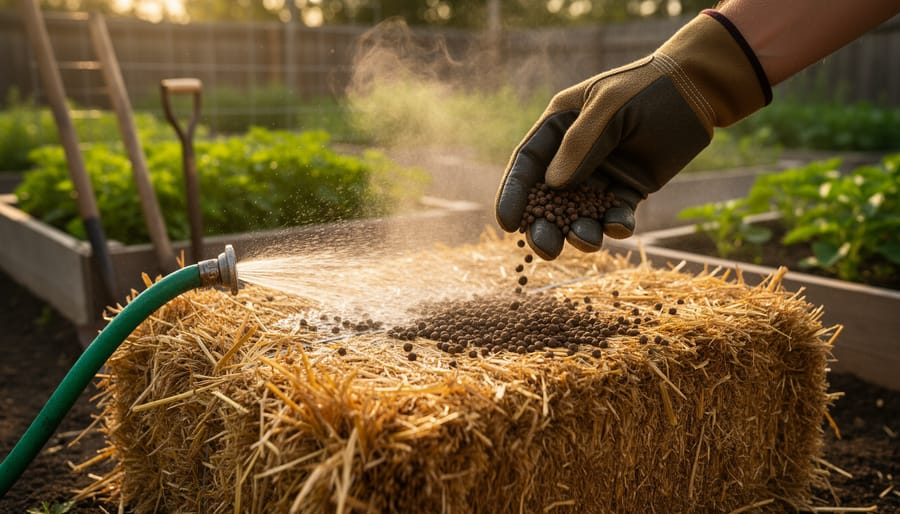
Transform your backyard into a self-sustaining ecosystem with a keyhole garden – nature’s most efficient raised bed design that embodies core permaculture principles. This innovative African-inspired design stands as one of the most effective small space gardening solutions, combining composting and growing in a single, circular structure. By positioning a central compost basket within arm’s reach of all planting areas, keyhole gardens maximize growing space while minimizing water usage and maintenance needs. Whether you’re working with limited space in an urban setting or seeking to create a drought-resistant food production system, this ingenious design offers a practical approach to sustainable gardening that yields abundant harvests while nurturing soil health naturally. In the following guide, we’ll walk through everything you need to know to build, plant, and maintain your own keyhole garden, from initial layout to seasonal care strategies.
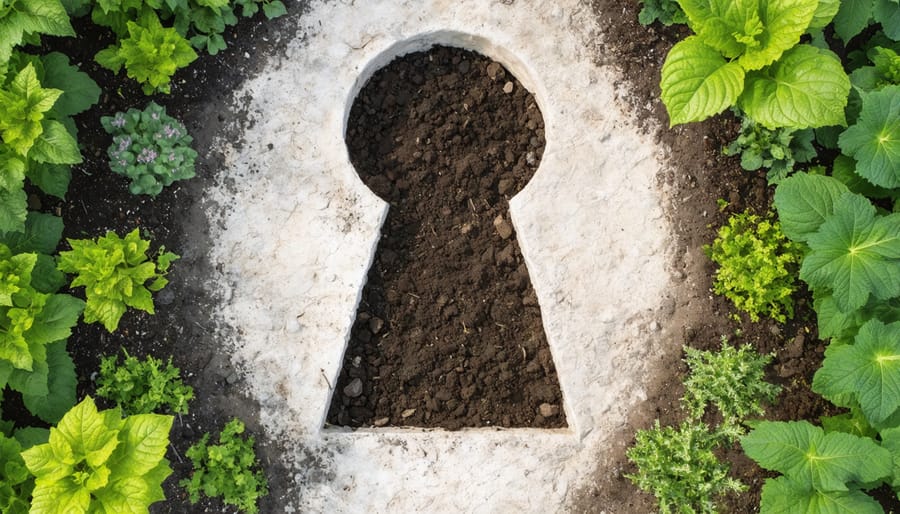
Why Keyhole Gardens Are Perfect for Sustainable Growing
The Magic of the Center Compost Basket
At the heart of every keyhole garden stands its most innovative feature: the center compost basket. This circular wire mesh structure acts like a natural feeding system, continuously nourishing your plants while reducing waste. As you add kitchen scraps, yard waste, and water into the basket, beneficial nutrients slowly seep into the surrounding soil.
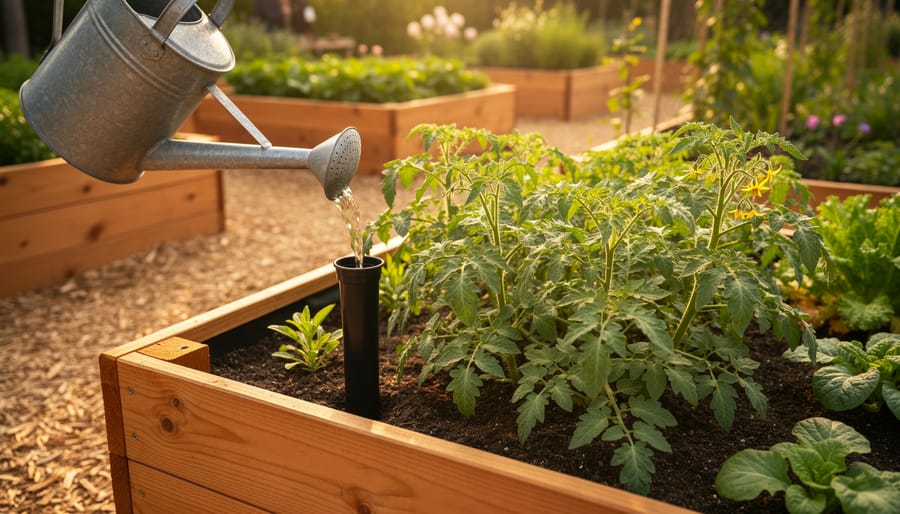
Think of the compost basket as your garden’s digestive system. When you water the compost, it creates a nutrient-rich tea that flows outward through the soil, feeding plants from their roots. The basket’s design is brilliantly simple: layers of biodegradable materials break down over time, providing a steady supply of nutrients rather than one big dose.
What makes this system truly magical is its self-sustaining nature. You can add fresh kitchen scraps daily – vegetable peelings, coffee grounds, eggshells, and even cardboard – knowing they’ll gradually transform into garden gold. The closer plants are to the basket, the more nutrients they receive, which is why many gardeners plant their heavy feeders, like tomatoes and leafy greens, nearest to the center.
Water-Wise Design Features
The keyhole garden’s unique design maximizes water efficiency through several clever features. At its heart, the central composting basket serves as a natural irrigation system, slowly releasing moisture and nutrients to surrounding plants. This design incorporates natural water conservation techniques that make it perfect for areas with limited water resources.
The garden’s raised circular shape and slight inward slope direct water naturally toward the center, preventing runoff and ensuring every drop counts. When you water the compost basket, the moisture gradually seeps outward, reaching plant roots at different levels. This creates a self-sustaining moisture gradient that keeps plants hydrated longer than traditional garden beds.
Adding mulch around your plants further enhances water retention by reducing evaporation and maintaining consistent soil moisture. Many gardeners find they can reduce watering frequency by up to 30% compared to conventional gardens. The combination of composting, strategic design, and mulching creates a water-wise system that’s both efficient and environmentally friendly.
Building Your Own Keyhole Garden
Materials and Tools You’ll Need
To build your keyhole garden, you’ll need several readily available materials. For the outer wall, gather stones, bricks, or concrete blocks – whichever is most accessible in your area. You’ll also need wooden posts or stakes for marking the garden’s circular shape and creating the central composting basket.
For the composting basket, you can use chicken wire, hardware cloth, or recycled fencing material. You’ll need enough to create a cylinder approximately 3-4 feet tall and 1-2 feet in diameter. Consider collecting cardboard, newspaper, and untreated wood chips for the base layers.
Essential materials include:
– Topsoil and compost for filling
– Organic matter (leaves, grass clippings, straw)
– Garden tools (shovel, rake, wheelbarrow)
– Level and measuring tape
– Wire cutters
– Work gloves
Optional materials that can enhance your garden:
– Landscape fabric for weed control
– PVC pipes for irrigation
– Decorative stones for pathways
– Metal stakes for added structure support
– Mulch for top dressing
Remember, many of these materials can be sourced for free or substituted with recycled alternatives, making this project both eco-friendly and budget-conscious.
Layout and Construction Steps
Building a keyhole garden is surprisingly straightforward. Start by marking a circle approximately 6 feet in diameter on your chosen spot, leaving a notch (about 2 feet wide) that creates the keyhole shape. This notch should extend about halfway into the circle.
In the center, create a circular composting basket about 1 foot in diameter using chicken wire or similar material. This basket should stand about 4 feet tall and will be your garden’s heart.
For the outer wall, use locally available materials like stones, bricks, or wooden boards to build up to a height of 3-4 feet. Layer your materials carefully, ensuring the wall is sturdy and slightly tapers inward as it rises. If using stones, stagger them for stability.
Once the walls are up, create layers inside the garden bed. Start with thick cardboard or newspaper at the bottom for weed suppression. Add a 4-inch layer of twigs and branches for drainage, followed by a layer of straw or dried leaves. Continue layering with:
– 6 inches of brown materials (dried leaves, straw)
– 4 inches of green materials (grass clippings, food scraps)
– 4 inches of good garden soil
– 2 inches of compost
Slope all layers gently from the center basket toward the outer edges at about a 30-degree angle. This design helps water flow from the central basket throughout the garden bed. Top the final layer with mulch to retain moisture.
Remember to leave the notch pathway clear for easy access to both the planting area and the central composting basket. Your garden is now ready for planting!
Soil Layering Technique
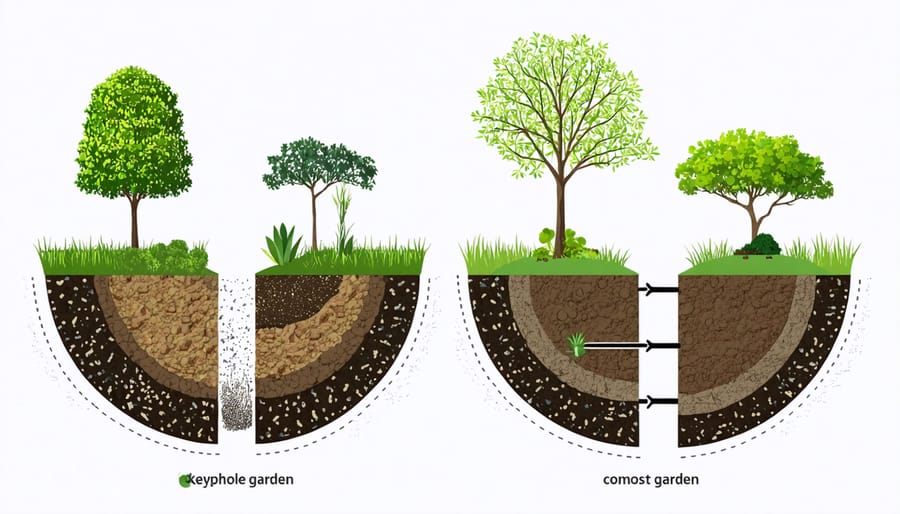
The secret to a thriving keyhole garden lies in optimal soil layering, which creates a rich, self-sustaining growing environment. Start at the bottom with thick branches and twigs, creating a 6-inch foundation layer that ensures proper drainage and adds long-term nutrients as it decomposes.
Next, add a 4-inch layer of dry brown materials like straw, fallen leaves, or cardboard. This layer helps retain moisture and slowly breaks down to feed your plants. Follow this with a generous 6-inch layer of green materials such as grass clippings, kitchen scraps, and fresh plant matter, which provide immediate nutrients and encourage beneficial microorganisms.
Add a 4-inch layer of partially decomposed compost, followed by a layer of aged manure if available. Top it all off with 6-8 inches of good-quality garden soil mixed with finished compost. This final layer is where you’ll do your planting.
Remember to slope all layers slightly toward the central basket, allowing nutrients from your kitchen scraps to flow through the soil layers and nourish your plants. As materials break down over time, add fresh organic matter to the top and central basket to maintain soil health and structure. This layering technique mimics natural soil building processes, creating a self-feeding system that becomes more fertile over time.
Planting and Maintaining Your Keyhole Garden
Best Plants for Keyhole Gardens
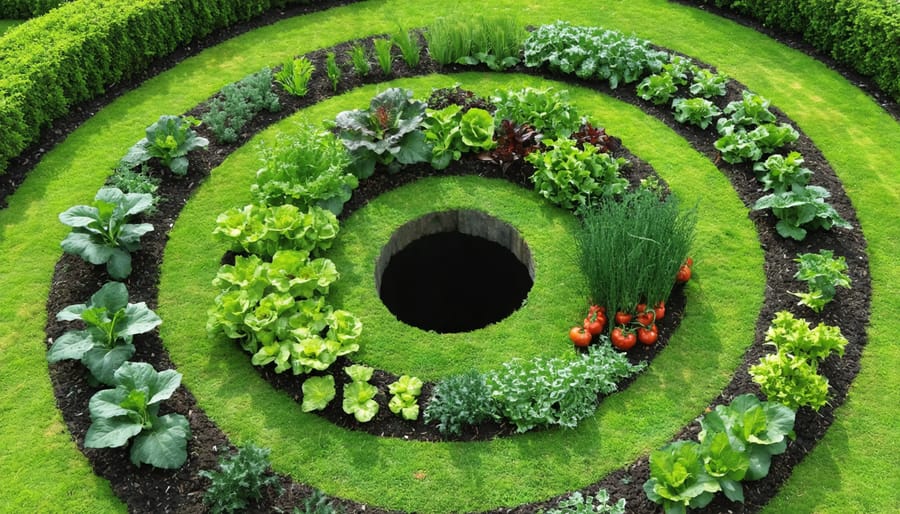
A keyhole garden thrives with a diverse mix of plants that work together harmoniously. At the center, where compost materials are added, plant heavy feeders like tomatoes, squash, and leafy greens that benefit from constant nutrient replenishment. These plants will flourish with the steady supply of nutrients from the composting basket.
Around the middle section, consider planting companion crops like bush beans, which fix nitrogen in the soil, alongside herbs such as basil and oregano that help deter pests. Marigolds make excellent additions not only for their bright flowers but also for their ability to repel unwanted insects.
Along the outer edges, plant trailing crops like cucumbers or pole beans that can cascade down the sides, maximizing your growing space. Root vegetables such as carrots and radishes work well in the lower tiers, while shallow-rooted herbs like thyme and sage can thrive in the upper levels.
For year-round productivity, incorporate perennial vegetables like artichokes or asparagus in strategic locations. Remember to include pollinator-friendly flowers like lavender or borage throughout your garden to attract beneficial insects.
When planning your plantings, consider the natural height of each plant to prevent taller varieties from shading shorter ones. Group plants with similar water needs together, and always leave enough space between plants for proper growth and air circulation.
Seasonal Maintenance Tips
Maintaining your keyhole garden throughout the seasons ensures a thriving, productive space year-round. In spring, refresh your compost basket with new organic matter and add a layer of mulch to prepare for the growing season. Check the garden’s borders for any winter damage and repair as needed.
Summer maintenance focuses on regular watering and monitoring moisture levels, especially around the central basket. The compost basket should be kept consistently moist but not waterlogged. Add fresh kitchen scraps and garden waste regularly, and trim any plants that might overshadow others.
As autumn approaches, harvest the last of your summer crops and plant cold-hardy vegetables. Add fallen leaves to your compost basket and consider installing a cover over part of the garden to extend the growing season. This is also the perfect time to assess soil health and add amendments if needed.
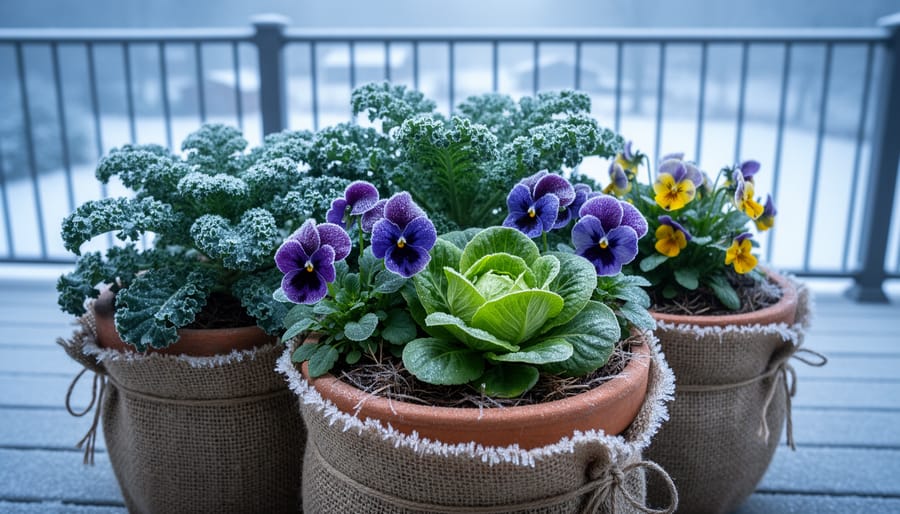
Winter care involves protecting your garden from harsh elements. In colder regions, add extra mulch around perennial plants and consider using row covers. Continue adding kitchen scraps to the compost basket, though decomposition will slow during cold months.
Watch for signs of potential issues throughout the year: uneven plant growth might indicate drainage problems, while yellowing leaves could suggest nutrient deficiencies. Regular observation and prompt attention to these signs will help maintain your garden’s productivity and health across all seasons.
Remember to document what works best in your climate and adjust your maintenance routine accordingly. Every keyhole garden develops its own unique patterns and needs over time.
A permaculture keyhole garden represents more than just an innovative gardening method – it’s a testament to sustainable living and efficient food production. By combining composting, water conservation, and space-efficient design, these gardens offer a remarkable solution for both urban and rural gardeners alike.
The benefits of keyhole gardening are truly compelling. From reducing water usage by up to 80% compared to traditional gardens to providing a continuous supply of nutrients through the central composting basket, these gardens exemplify permaculture principles in action. The raised bed design makes gardening accessible to those with limited mobility, while the circular layout maximizes growing space in even the smallest yards.
Perhaps most importantly, keyhole gardens create a self-sustaining ecosystem that requires minimal maintenance once established. The design naturally promotes soil health, reduces weeding needs, and provides year-round growing opportunities in many climates. Gardeners report higher yields from their keyhole gardens compared to traditional beds of similar size, making them an excellent choice for food security and self-sufficiency.
Getting started with your own keyhole garden doesn’t require extensive gardening experience or expensive materials. Many successful gardens have been built using locally sourced materials and basic tools. The initial investment of time and resources pays dividends through years of productive growing seasons.
As climate change continues to affect growing conditions worldwide, adopting sustainable gardening practices becomes increasingly important. Keyhole gardens offer a practical solution that anyone can implement, whether you have a sprawling backyard or a modest urban plot.
Why not take the first step toward creating your own keyhole garden? Start small, learn from the process, and watch as your garden develops into a thriving ecosystem. Remember, every sustainable garden contributes to a healthier planet, and keyhole gardens offer one of the most efficient ways to grow food while honoring permaculture principles. Your journey toward sustainable gardening starts here – and the rewards will last a lifetime.