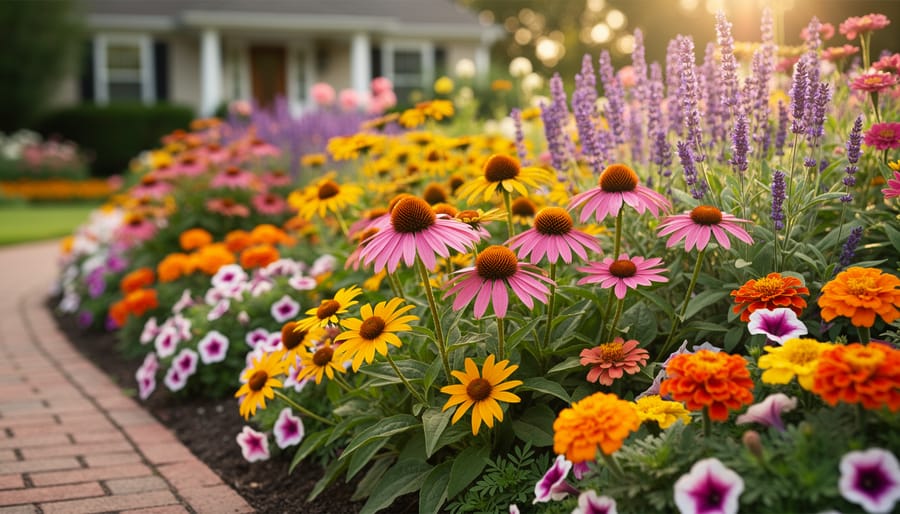
Transform coffee grounds into a powerful slug deterrent by creating a protective barrier around vulnerable plants – the caffeine and rough texture naturally repel garden pests while enriching your soil with nitrogen. Plant marigolds between tomato rows to naturally fight nematodes and attract beneficial pollinators, creating a vibrant defensive shield that doubles as an aesthetic companion planting strategy. Bury wine corks halfway into the soil around your garden beds to establish permanent plant markers that won’t fade or wash away, while gradually releasing beneficial tannins as they decompose. Place banana peels just beneath the soil surface around rose bushes to deliver a slow-release potassium boost that promotes stellar blooms without the need for commercial fertilizers.
These unconventional yet scientifically-sound techniques harness everyday items to solve common garden challenges while building a more sustainable growing environment. Each method works with nature’s own processes, turning ordinary household waste into garden gold through simple, practical applications that any gardener can implement today.
Coffee Grounds Beyond Your Morning Brew
The Caffeine Connection
Did you know those used coffee grounds from your morning brew can work wonders in your garden? Far from being waste, coffee grounds are packed with nitrogen, phosphorus, and potassium – essential nutrients that plants crave. When mixed into your compost or soil, they gradually release these nutrients while improving soil structure.
Coffee grounds are particularly beneficial for acid-loving plants like azaleas, blueberries, and roses. They also help attract earthworms, nature’s perfect soil aerators, while deterring common garden pests like slugs and snails. The grounds’ slightly abrasive texture creates a barrier these soft-bodied creatures prefer to avoid.
However, moderation is key. Too many coffee grounds can make soil too acidic and may inhibit seed germination. Mix them with other compost materials or sprinkle a thin layer around established plants. Fresh grounds work best for compost, while dried grounds make an excellent mulch when combined with other organic materials.

Unexpected Coffee Ground Applications
While many gardeners know about composting coffee grounds, these versatile leftovers have some surprising applications in your garden. Sprinkle them around the base of acid-loving plants like azaleas and blueberries for a natural pH adjustment. Coffee grounds also excel as one of the most effective natural pest control methods, creating a barrier that slugs and snails won’t cross.
Try mixing spent grounds with orange peels to create a cat deterrent that keeps curious felines from treating your garden beds as their personal bathroom. For container gardens, blend coffee grounds with your potting soil to improve drainage and add slow-release nutrients. My favorite trick is using them to create natural dye for garden markers – just mix with water for a lovely earth-toned stain that’s perfect for wooden stakes.
Remember to let your grounds dry completely before using them in these applications, as wet grounds can clump together and become moldy.

Kitchen Scraps That Work Magic
Eggshell Secrets
Those crushed eggshells aren’t just for adding calcium to your healthy garden soil! Here’s a delightful secret: they make excellent mini seed-starting pots. Simply clean halved eggshells, poke a small drainage hole, and fill them with potting mix. When your seedlings are ready for transplanting, crush the bottom slightly and plant the whole thing – shell and all!
Want to keep slugs and snails at bay? Create a protective barrier around vulnerable plants by crushing eggshells into sharp pieces. These garden pests avoid crawling over the jagged edges, keeping your tender plants safe naturally.
Here’s another clever use: add a few crushed eggshells to your coffee grounds when brewing, then use the enriched coffee water for acid-loving plants like tomatoes and roses. The shells neutralize some of the coffee’s acidity while adding minerals.
For container gardens, place several uncrushed half shells in the bottom of pots before adding soil. They improve drainage and slowly release nutrients as they decompose.
Banana Peel Power
Don’t toss those banana peels into the compost bin just yet! These nutrient-rich fruit wraps are gardening gold, packed with potassium, phosphorus, and calcium that your plants crave. Here’s a garden secret: simply bury chopped banana peels 2-3 inches deep around your roses and flowering plants to give them an amazing boost.
For an instant nutrient boost, soak banana peels in water for 48 hours to create a rich fertilizer tea. Your plants will love this natural drink, especially during their growing season. Tomatoes and peppers particularly benefit from this potassium-rich solution – just dilute it with equal parts water before applying.
Got aphids? Place banana peel strips around the base of affected plants. The peels naturally repel these persistent pests while slowly releasing nutrients into the soil. You can also dry and grind banana peels into a powder to sprinkle around plants as a slow-release fertilizer.
Remember to cut the peels into smaller pieces to speed up decomposition. Your garden will thank you with vibrant blooms and healthy growth, all from something you might have thrown away!
Household Items Turn Garden Heroes
Vinegar Victories
Vinegar isn’t just for salad dressing – it’s a versatile gardening ally that can help you tackle numerous challenges naturally. This pantry staple, particularly white vinegar and apple cider vinegar, works wonders in ways you might not expect.
For weed control, mix equal parts vinegar and water in a spray bottle, adding a tablespoon of salt for stubborn weeds. Apply this solution on a sunny day for best results, but be careful to avoid your precious plants as vinegar doesn’t discriminate between wanted and unwanted growth.
Here’s a gardener’s secret: vinegar makes an excellent cleaning solution for garden tools. Soak rusty tools in undiluted vinegar overnight, and watch years of rust dissolve away. A quick scrub the next morning will leave them looking almost new.
Got ants in your garden? Create a natural deterrent by spraying vinegar around garden borders. The strong scent disrupts their trail and keeps them at bay without harmful chemicals. For slug control, place shallow dishes of apple cider vinegar near vulnerable plants – slugs are attracted to the sweet smell but can’t handle the acidity.
My favorite vinegar trick? Use it to adjust soil pH for acid-loving plants like blueberries and azaleas. Mix one cup of vinegar with a gallon of water for regular soil treatments, but always test your soil first to avoid over-acidifying.
Remember to dilute vinegar appropriately – while it’s natural, it’s still potent enough to affect plant growth when used at full strength.
Surprising Uses for Old Shoes
Before tossing those worn-out sneakers or boots in the trash, consider giving them a second life in your garden! Old shoes can become charming and functional garden containers with just a few simple modifications. Start by thoroughly cleaning your old footwear and drilling drainage holes in the soles. Work boots and rain boots make particularly excellent planters for shallow-rooted plants like succulents, herbs, and annual flowers.
For hanging gardens, running shoes and sneakers are perfect candidates. Their existing laces can be used to suspend them from fences or pergolas, creating unique vertical garden elements. Fill them with trailing plants like ivy, petunias, or cascading herbs for an eye-catching display.
Children’s outgrown shoes make adorable mini planters for windowsills or small spaces. They’re ideal for starting seedlings or growing compact plants like miniature cacti or small herbs. Plus, it’s a wonderful way to preserve memories while teaching kids about sustainability and gardening.
Don’t limit yourself to just planters – sturdy boots can serve as creative garden edging when partially buried along pathway borders. You can also repurpose water-resistant boots as temporary plant covers during frost, protecting sensitive seedlings from unexpected cold snaps.
Remember to position your shoe planters where they can drain properly, and consider adding a layer of gravel at the bottom for improved drainage. With proper preparation, these unique containers can last several seasons while adding whimsical charm to your garden space.
Strange But Effective Companion Planting
While traditional companion planting strategies often pair familiar friends like tomatoes and basil, some unlikely plant partnerships can yield remarkable results in your garden. Here are some surprising combinations that might raise eyebrows but actually work wonders together.
Consider planting strawberries with garlic – an odd couple that brings out the best in each other. The strong scent of garlic naturally repels strawberry-loving pests, while the ground cover provided by strawberry plants helps maintain soil moisture for the garlic.
One of my favorite unexpected duos is corn and pole beans grown alongside watermelon. The corn provides natural stakes for the beans, while the watermelon spreads along the ground, acting as living mulch that keeps the soil cool and moist. The beans, being nitrogen-fixers, help feed both their companions.
Roses and chives make another surprising match. Chives help prevent black spot on roses and actually enhance their fragrance. Plus, the purple chive flowers create a lovely contrast against the rose blooms.
Here’s an unusual trio that works magic: plant carrots, radishes, and coffee grounds together. The coffee grounds improve soil structure, while radishes break up the soil as they grow and mature quickly, making way for the slower-growing carrots.
Remember that successful unusual pairings often work because they either share compatible growing needs or provide mutual benefits through pest control, nutrient sharing, or physical support. Don’t be afraid to experiment with unexpected combinations in small patches – you might discover your own winning partnership!

As we’ve explored throughout this article, unconventional gardening methods can transform your garden while saving time, money, and resources. These unusual techniques might raise eyebrows at first, but they often prove to be remarkably effective solutions to common gardening challenges. By thinking outside the box and daring to try new approaches, you’ll not only develop a more sustainable garden but also discover the joy of creative problem-solving.
Remember, some of the most successful gardening innovations came from experimenters who weren’t afraid to challenge traditional methods. Whether it’s using coffee grounds to boost soil fertility, employing eggshells for pest control, or growing plants in unexpected containers, each unusual technique adds another tool to your gardening arsenal.
Don’t be afraid to adapt these tips to suit your specific needs or even create your own unique solutions. Gardening is as much about the journey of discovery as it is about the harvest. Start small, document your results, and share your experiences with fellow gardeners. After all, today’s unusual tip might become tomorrow’s gardening wisdom. Happy experimenting in your garden!