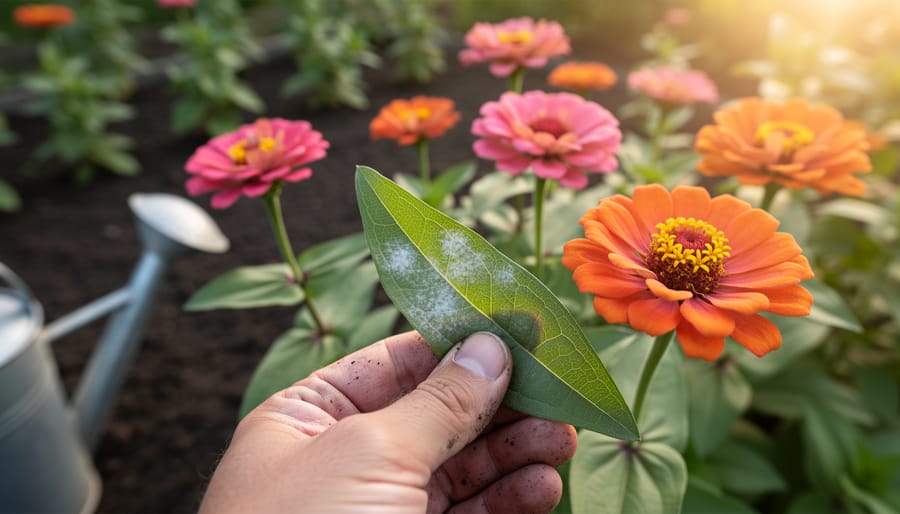
Inspect the undersides of zinnia leaves weekly for the telltale white spots of powdery mildew, which thrives in crowded plantings with poor air circulation. Space new plants 12-18 inches apart and water at soil level in early morning to keep foliage dry throughout the day. Remove infected leaves immediately and dispose of them in the trash, never your compost pile, to prevent spores from spreading to healthy plants.
Watch for tiny aphid clusters on new growth and spray them off with a strong stream of water, or apply insecticidal soap directly to affected areas every 5-7 days until populations disappear. Japanese beetles often target zinnia blooms in midsummer, so handpick them into soapy water during early morning hours when they’re sluggish, or use row covers on young plants until they’re established enough to withstand some damage.
Spider mites appear as fine webbing and yellow stippling on leaves during hot, dry weather, particularly on stressed plants. Increase humidity around your zinnias by watering consistently and spray foliage with water every few days to discourage these pests naturally.
The good news? Most zinnia problems stem from preventable environmental conditions rather than serious disease. Choose disease-resistant varieties like the Profusion and Zahara series, which show remarkable tolerance to powdery mildew even in humid climates. Provide full sun exposure for at least 6-8 hours daily, as zinnias growing in shade become weak and susceptible to every problem imaginable. With proper spacing, smart watering habits, and vigilant monitoring, you’ll enjoy these cheerful blooms all season long without constantly battling pests and diseases.
Understanding Why Zinnias Attract Trouble
If you’ve grown zinnias, you’ve probably noticed they seem to attract every pest and problem in the garden! Before you blame yourself, let me share why these cheerful bloomers are naturally prone to trouble—and how understanding this helps you protect them better.
Zinnias grow incredibly fast, which is wonderful for impatient gardeners like me who want blooms quickly. However, this rapid growth creates soft, succulent foliage that pests find absolutely irresistible. Think of it as the gardening equivalent of a buffet sign lighting up! Aphids, spider mites, and Japanese beetles all view those tender new leaves as premium dining.
Their dense, bushy growth habit creates another challenge: poor air circulation. When leaves grow close together, they trap moisture, creating the perfect environment for fungal diseases like powdery mildew to thrive. It’s similar to how a damp basement encourages mold—zinnias create their own humid microclimate within their foliage.
Garden placement plays a surprisingly important role too. Many gardeners tuck zinnias into established perennial beds, where they’re exposed to common perennial garden pests already living nearby. These pests simply migrate over to sample the new zinnia offerings.
The good news? You can outsmart these problems with smart planning. Start by choosing your planting location carefully. Select spots with excellent air circulation—avoid cramped corners or areas surrounded by walls. Space plants according to their mature size, even if they look lonely at first. I learned this lesson after watching my crowded zinnia patch succumb to mildew!
Consider companion planting with herbs like basil or marigolds, which naturally deter many pests. When placing zinnias in perennial beds, position them where air flows freely and morning sun can quickly dry any overnight dew. This simple step dramatically reduces disease pressure.
Remember, understanding your zinnias’ vulnerabilities isn’t discouraging—it’s empowering! With proper site selection and thoughtful garden design, you can enjoy those gorgeous blooms with far fewer headaches.
The Powdery Mildew Problem Every Zinnia Gardener Faces

Spotting the Early Warning Signs
The good news is that powdery mildew doesn’t appear overnight, and catching it early makes treatment much easier. I’ve learned to scout my zinnias weekly, especially once we hit mid-summer when humidity levels rise.
Look for small white spots on lower leaves first. They’ll appear as tiny patches that look like someone dusted flour across the foliage. At this stage, you might mistake it for dust or pollen, so run your finger across the leaf. Unlike dirt, powdery mildew won’t wipe away cleanly. The spots will have a slightly fuzzy texture, almost velvety to the touch.
As the infection progresses, these spots expand into larger white patches that can cover entire leaves. The foliage may start to look distorted or curled, and affected leaves often turn yellow before dropping off completely.
Timing matters too. Powdery mildew typically strikes during warm days and cool nights, usually in late July through September in most regions. After rainfall or overhead watering, check your plants within 48 hours since the fungus thrives in that post-moisture period when humidity is high but leaves have dried. Morning inspections work best since the telltale white coating appears more prominent before the day’s heat sets in.
Treatments That Actually Work
Let’s talk about solutions that genuinely work. I won’t promise overnight miracles, but these treatments can turn things around with consistent application.
For powdery mildew, milk spray is surprisingly effective. Mix one part whole milk with nine parts water and spray weekly. It sounds too simple, but the proteins in milk create an antiseptic effect when exposed to sunlight. You’ll notice improvement within two to three weeks. I’ve seen gardeners rescue entire beds with this approach.
Neem oil tackles both fungal issues and pests like aphids and spider mites. Apply it in the early morning or evening to avoid leaf burn, coating both sides of leaves thoroughly. It works by disrupting insect life cycles and preventing fungal spores from taking hold. Expect to see results within a week for pests, though fungal problems need two to three applications spaced five to seven days apart.
For bacterial leaf spot, unfortunately, there’s no cure. Remove affected plants immediately to prevent spread. Focus on zinnia disease prevention through proper spacing and watering techniques.
Insecticidal soap works wonders on soft-bodied pests. Spray directly on insects, since it must make contact to be effective. Reapply after rain.
Remember, organic treatments require patience and consistency. Mark your calendar for regular applications rather than waiting until problems worsen. Most gardeners see significant improvement within two to three weeks of starting a treatment routine.
The Pest Lineup: Who’s Eating Your Zinnias

Japanese Beetles: The Summer Zinnia Destroyer
If you’ve ever stepped into your garden on a sunny July morning to find your gorgeous zinnias covered with shimmering, metallic green beetles, you’ve met one of summer’s most voracious visitors. Japanese beetles are remarkably beautiful insects that unfortunately treat your zinnias like an all-you-can-eat buffet, skeletonizing leaves and decimating blooms in shockingly short order.
These beetles are easy to identify with their distinctive copper-colored wings and metallic green head and body. They measure about half an inch long and often cluster together on flowers, which makes them easier to spot but also more damaging. Their life cycle begins as white grubs in your lawn, where they feed on grass roots before emerging as adults in early summer.
The most effective management strategy combines several approaches. Hand-picking is surprisingly satisfying and works best in early morning when beetles are sluggish from cooler temperatures. Simply knock them into a bucket of soapy water. I’ve found this method particularly rewarding when I catch them before they can signal to their friends that my garden is open for business.
Japanese beetle traps are controversial, and here’s why placement matters tremendously. Place traps at least 30 feet away from your zinnias, ideally at your property’s edge. Traps attract beetles from wide areas, so positioning them near your garden actually invites more trouble.
Companion planting offers a clever long-term solution. Perennials like chives, catnip, and tansy naturally repel Japanese beetles. Interplanting these with your zinnias creates a protective barrier while adding visual interest and supporting beneficial insects that help keep beetle populations in check.

Aphids and Their Sneaky Damage
Aphids are masters of disguise, often going unnoticed until their population explodes. These tiny, soft-bodied insects cluster on new growth, buds, and the undersides of zinnia leaves. Check your plants regularly, especially during morning inspections when aphids are most visible. Look for curled or yellowing leaves, which signal an infestation is underway.
The real trouble with aphids isn’t just their feeding habits. They excrete a sticky substance called honeydew that coats leaves and attracts ants, creating a messy situation. Worse yet, this honeydew encourages sooty mold growth, which blocks sunlight and weakens your zinnias. I’ve learned that catching aphids early makes all the difference.
Your best defense? Invite beneficial insects like ladybugs and lacewings into your garden. Plant dill, fennel, or yarrow nearby to attract these natural predators. They’ll happily feast on aphids for you. For mild infestations, a strong spray from your garden hose often dislodges the pests.
When populations get out of hand, insecticidal soap provides effective relief. Apply it in the early morning or evening, coating both leaf surfaces thoroughly. Repeat every few days as needed. For those interested in broader strategies, exploring organic pest control methods can help you maintain a balanced garden ecosystem year-round.
Spider Mites in Hot, Dry Weather
When temperatures soar and humidity drops, spider mites seem to appear out of nowhere on zinnias. These tiny pests, barely visible to the naked eye, thrive in hot, dry conditions that stress your plants.
The first signs of spider mites are easy to miss. Look for fine stippling or tiny yellow or white dots on leaves, especially on the undersides. As the infestation progresses, you might notice delicate webbing between stems and leaves. Severely affected leaves turn bronze or grayish and eventually drop off, leaving your once-vibrant zinnias looking ragged.
Here’s something I’ve learned over the years: drought-stressed zinnias are like an open invitation to spider mites. When plants lack water, they become weaker and less able to defend themselves. The good news? Prevention is straightforward. Consistent watering during dry spells keeps plants healthy and less attractive to these pests.
If you spot spider mites early, a strong blast from your garden hose often does the trick. Spray the undersides of leaves every few days to knock off the mites and disrupt their lifecycle. For serious infestations, insecticidal soap or horticultural oil works well. Some gardeners have success with miticides specifically formulated for spider mites, though I always recommend starting with the gentlest approach first. Remember, healthy, well-watered zinnias are your best defense.
Caterpillars and Other Occasional Visitors
While zinnias don’t attract many unusual pests, you might occasionally spot some unexpected visitors munching on your blooms.
Cabbage loopers, those light green caterpillars that inch along like they’re measuring your plants, sometimes find their way to zinnias from nearby vegetable gardens. They’re easy to recognize by their distinctive looping movement. If you only see a few, simply handpick them in the morning and drop them into soapy water. For larger infestations, Bacillus thuringiensis (Bt) is a wonderfully effective organic spray that specifically targets caterpillars without harming beneficial insects.
Earwigs are another occasional visitor, though they’re often more nuisance than serious threat. These reddish-brown insects with pincer-like tails hide in flowers during the day and feed at night. A simple trap works wonders: roll up damp newspaper, place it near affected plants at dusk, and dispose of the trapped earwigs each morning.
I’ve learned that healthy, vigorous zinnias naturally resist these occasional pests better than stressed plants. Keep your plants well-watered and properly spaced, and you’ll rarely need intervention. Remember, seeing a few insects doesn’t mean disaster—it’s just part of creating a thriving garden ecosystem where zinnias flourish alongside nature’s other inhabitants.
Beyond Powdery Mildew: Other Zinnia Diseases to Watch For
Leaf Spots and Blights
Leaf spots on zinnias can be concerning when you first notice them, but the good news is they’re usually manageable with simple interventions. Let me walk you through the three most common culprits and help you decide when to take action.
Alternaria leaf spot shows up as brown or reddish-brown spots with distinctive concentric rings—think of a target pattern. These spots typically start on lower, older leaves and work their way up. Cercospora leaf spot appears as small, dark brown to purple spots that may have a grayish center. Both are fungal diseases that thrive in humid conditions and spread through water splash.
Bacterial leaf spot looks different—you’ll see angular, dark brown or black spots that often appear water-soaked, especially in the morning. This one spreads quickly in warm, wet weather and can make leaves look quite ragged.
Here’s my practical approach: If you’re only seeing a few spotted leaves on the lower part of your plants, don’t panic. Simply remove those affected leaves, dispose of them in the trash (not your compost pile), and keep an eye on the rest of the plant. Make sure you’re watering at the base rather than overhead to prevent splash.
However, if spots are rapidly spreading up the plant or covering more than a third of the foliage, it’s time for more decisive action. Remove heavily affected plants entirely to protect their neighbors. The key is catching these issues early during your regular garden strolls—another good reason to spend time admiring your zinnias each day!
When the Whole Plant Collapses: Wilt and Rot
When your zinnia suddenly collapses despite looking healthy just days before, you’re likely dealing with bacterial wilt or crown and root rot. These frustrating problems can feel heartbreaking, but understanding what’s happening helps you protect the rest of your garden.
Bacterial wilt strikes fast. One day your plant looks fine, the next it’s completely drooped over. Unlike underwatering (which perks up after a good drink), wilted plants with bacterial infection stay collapsed. The bacteria clogs the plant’s vascular system, preventing water movement. Unfortunately, there’s no cure once infection occurs, so remove affected plants immediately to prevent spread.
Crown and root rot develop more gradually. You’ll notice yellowing lower leaves, stunted growth, and eventually the whole plant topples over. When you check the base, the stem looks dark and mushy. These fungal diseases thrive in soggy soil and attack stressed plants.
The good news? Both problems are largely preventable. Think of it as setting your zinnias up for success from day one. Space plants properly so air circulates freely around stems. This single step makes an enormous difference. Choose well-draining soil and avoid overwatering. Water at soil level in the morning rather than overhead evening watering, which keeps foliage wet overnight.
If you’ve battled these issues before, don’t plant zinnias in the same spot next year. Rotate to a fresh bed where disease organisms haven’t established themselves. With proper spacing and drainage, your zinnias should stand tall all season long.
Building a Prevention-First Strategy for Perennial Gardens
The best defense against zinnia troubles is a solid prevention strategy woven right into your regular garden routine. Think of it as building healthy habits for your plants—much easier than dealing with problems later!
Start with variety selection, which truly makes a difference. When shopping for seeds or transplants, look beyond pretty colors. Check those seed packets or plant tags for disease resistance, particularly to powdery mildew. Newer cultivars like ‘Profusion’ series and ‘Zahara’ series have been bred specifically to resist common zinnia ailments. It’s worth noting that these aren’t just marketing claims—I’ve watched these varieties sail through humid summers while older varieties struggled nearby.
Spacing matters more than you might think. I know it’s tempting to squeeze plants together for that lush, full look right away, but resist the urge! Proper air circulation is your secret weapon against fungal diseases. Follow the spacing recommendations on plant labels, typically 8-12 inches apart depending on the variety. Yes, your garden might look a bit sparse initially, but those plants will fill in beautifully while staying healthier.
Your watering technique plays a starring role in prevention. Water at the soil level using drip irrigation, soaker hoses, or simply aim your watering can toward the base of plants. Overhead watering creates the perfect environment for fungal spores to spread and germinate on wet foliage. Water in the morning so any moisture that does splash on leaves has time to dry before evening. Consider incorporating these practices into your season-long garden maintenance routine.
Make weekly garden walks part of your schedule. Grab your coffee and stroll through your beds, really looking at your zinnias. Check leaf undersides, inspect new growth, and catch problems when they’re manageable. Early detection means simple solutions—removing a few affected leaves beats battling full-blown infestations.
Finally, think about your garden’s overall ecosystem. Companion planting strategies that attract beneficial insects create natural pest control. Plants like alyssum, yarrow, and dill bring in predatory insects that feast on common zinnia pests.
Prevention isn’t about perfection—it’s about creating conditions where your zinnias can thrive naturally with minimal intervention.

My Favorite Disease-Resistant Zinnia Varieties
After years of battling powdery mildew on my zinnias, I’ve learned that choosing the right varieties makes all the difference. Let me share the varieties that have truly impressed me with their resilience.
For tall varieties, Benary’s Giant series consistently tops my list. These beauties grow 3-4 feet tall with gorgeous blooms perfect for cutting, and they’ve shown remarkable resistance to powdery mildew in my garden. I particularly love the coral and wine shades. Another winner is the Zinderella series, which produces dahlia-like flowers on sturdy stems that rarely show disease issues, even during humid summers.
If you’re looking for mid-height options, the Profusion series is practically bulletproof. Bred specifically for disease resistance, these 12-18 inch plants earned an All-America Selections award for good reason. I’ve grown them in both full sun and partial shade, and they’ve never let me down. The coral and cherry varieties are especially vibrant.
For edging and containers, Zahara zinnias have been game-changers in my garden. These compact plants stay healthy all season without the constant powdery mildew battle I experienced with older dwarf varieties. They’re self-cleaning too, which means less deadheading for you.
I’ll be honest though – no zinnia is completely immune to problems if conditions are terrible. Even these resistant varieties need good air circulation and proper watering practices. But compared to older heirloom types, these modern selections give you such a better starting point. They let you enjoy the beauty of zinnias without feeling like you’re constantly fighting an uphill battle against disease.
If you’re feeling discouraged after reading about all these potential zinnia challenges, take a deep breath. I promise you, these flowers are absolutely worth growing! Yes, powdery mildew can be annoying, and yes, you might lose a few plants to pests along the way. But here’s what I’ve learned through years of growing zinnias: every problem teaches you something valuable.
The beauty of zinnias is that they’re incredibly forgiving plants. Choose disease-resistant varieties like Profusion or Zahara series, give them proper spacing and airflow, and you’ll sidestep most issues before they start. Water at the base in the morning, deadhead regularly, and keep an eye out for early warning signs. These simple habits make a world of difference.
Remember, even experienced gardeners deal with pests and diseases. The difference is they’ve built up knowledge over seasons, learning what works in their specific garden conditions. You’re building that same expertise right now. Each season, you’ll get better at spotting problems early and knowing exactly how to respond. Don’t let a few setbacks rob you of those incredible blooms that butterflies adore and that keep your vases full all summer long. Your zinnia journey is just beginning, and it’s going to be beautiful.