Divide your perennial bed into four seasonal zones in your mind, each requiring distinct attention at specific times of year. Mark your calendar now with four key maintenance windows: early spring cleanup before new growth emerges, late spring deadheading and staking, midsummer divisions of overgrown clumps, and fall cutting back after the first hard frost. This rhythm mirrors how perennials naturally grow, rest, and regenerate.
Check soil moisture weekly by inserting your finger two inches deep rather than following a rigid watering schedule. Perennials need consistent moisture during their active growth phases in spring and early summer, but many prefer drier conditions as they enter dormancy in fall. Adjust your approach based on what you feel in the soil, not what the calendar says.
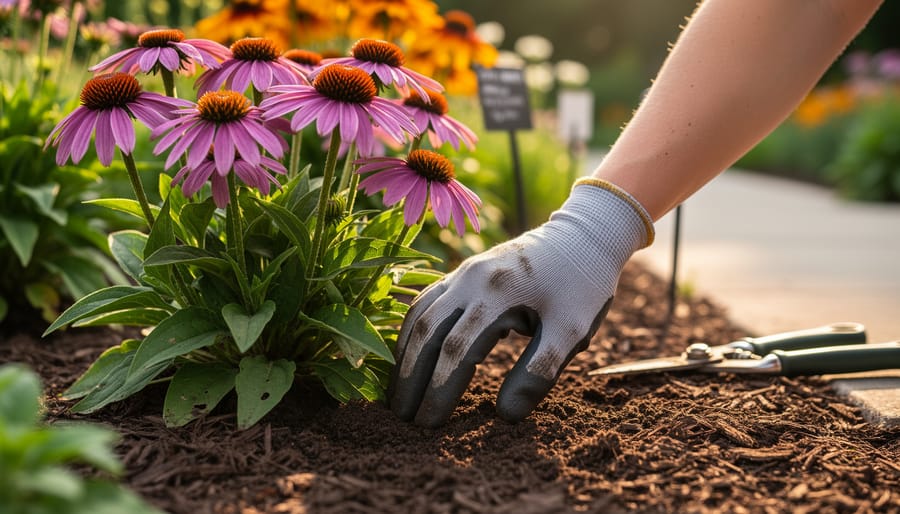
Apply a two-to-three-inch layer of organic mulch around plants each spring, keeping it pulled back from stems to prevent rot. This single action suppresses weeds, retains moisture during summer heat, moderates soil temperature, and breaks down to feed your plants over time. Refresh thin spots in midsummer if needed.
Deadhead spent blooms throughout the growing season by snipping just below the flower head, redirecting energy into root development rather than seed production. Some perennials like coneflowers and black-eyed Susans can be left standing in fall to feed birds and provide winter interest, proving that a successful perennial garden balances human intervention with natural processes.
Understanding these seasonal patterns transforms perennial care from guesswork into a rewarding, predictable routine that ensures your plants return stronger each year.
Understanding Your Perennials’ Annual Cycle
Think of your perennials as plants with an internal calendar, one that’s beautifully synchronized with the changing seasons. Understanding this natural rhythm is like having a secret key to successful gardening – it tells you exactly when your plants need attention and when they’re better left alone.
During spring and early summer, perennials enter their active growth phase. This is when they’re hungriest for nutrients, eagerly pushing out new leaves, stems, and eventually those gorgeous blooms we all love. Their root systems are actively expanding, and they’re drinking up water like there’s no tomorrow. This is your window for feeding, dividing, and giving them the support they need to thrive.
As autumn approaches, something fascinating happens. Your perennials begin preparing for their winter rest, gradually slowing their growth and directing energy back into their roots. They’re essentially stocking their underground pantry for the cold months ahead. This transition period is crucial for tasks like cutting back spent foliage and applying protective mulch.
Winter brings dormancy, a state that might look like death to beginners but is actually a vital rest period. Think of it as your plants taking a long, restorative nap. Those roots are very much alive beneath the soil, just conserving energy until spring’s warmth triggers their awakening.
Here’s why this seasonal awareness matters so much: timing your care activities wrong can stress your plants or even reduce blooming. Feed too late in fall, and you might encourage tender new growth that winter will damage. Divide during summer heat, and you risk shocking plants when they’re already working hard. When you work with nature’s schedule rather than against it, your perennials reward you with stronger growth and more abundant flowers year after year.
Spring: Waking Up Your Garden
Early Spring Cleanup and Assessment
As the snow melts and temperatures start rising, it’s time to venture into your garden and see how your perennials weathered the winter. This early spring assessment is like giving your garden a wellness check, and trust me, a little attention now prevents big problems later.
Start by gently removing any winter mulch, leaves, or debris that accumulated around your plants. Work carefully though, as new growth might already be poking through the soil. I learned this lesson the hard way when I accidentally snapped off emerging peony shoots in my eagerness to tidy up! Pull back the debris gradually, checking for those delicate green tips.
Next, tackle the dead foliage from last season. Cut back dried stems and leaves to about 3-4 inches from the ground, making clean cuts with sharp pruners. However, resist the urge to cut back everything immediately. Some plants, like ornamental grasses and sedums, might still have their attractive seed heads, and early pollinators appreciate the habitat.
While you’re working, inspect each plant for winter damage. Look for heaving, where freeze-thaw cycles have pushed plants out of the soil, exposing roots. Gently press these plants back into place and add a light layer of soil if needed. Check for broken stems, crown rot, or suspicious soft spots that might indicate disease.
Make notes about which plants look robust and which seem struggling. This information helps you plan divisions, replacements, or extra care as the season progresses.
Dividing and Transplanting
Your perennials will tell you when they need dividing if you know what to look for. Watch for these telltale signs: the center of the plant dying out while the edges thrive, fewer blooms than previous years, or the clump becoming so crowded it starts flopping over. Generally, perennials benefit from division every three to five years, though fast growers like bee balm and shasta daisies may need attention more frequently.
Timing makes all the difference. Spring bloomers like irises and daylilies divide best in late summer or early fall, giving them time to establish before winter. Summer and fall bloomers, such as asters and sedums, prefer spring division just as new growth emerges. I always aim to divide at least four to six weeks before your area’s first expected frost.
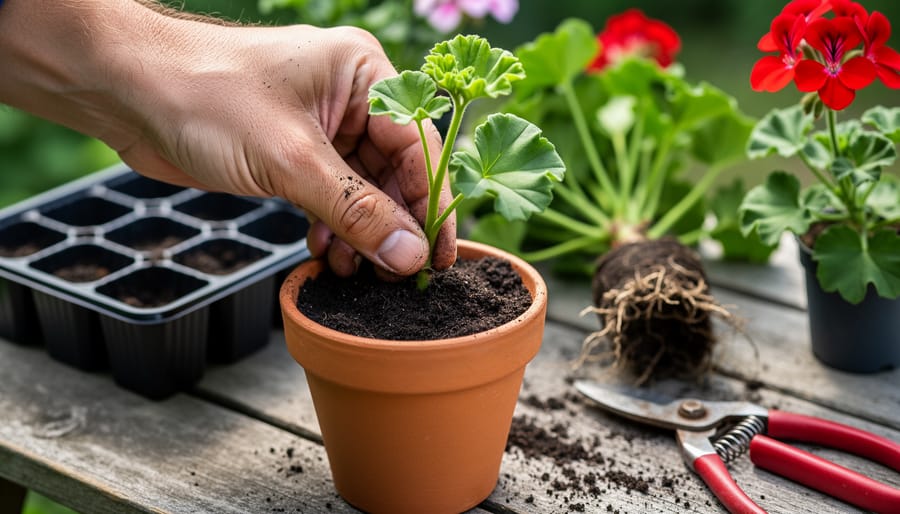
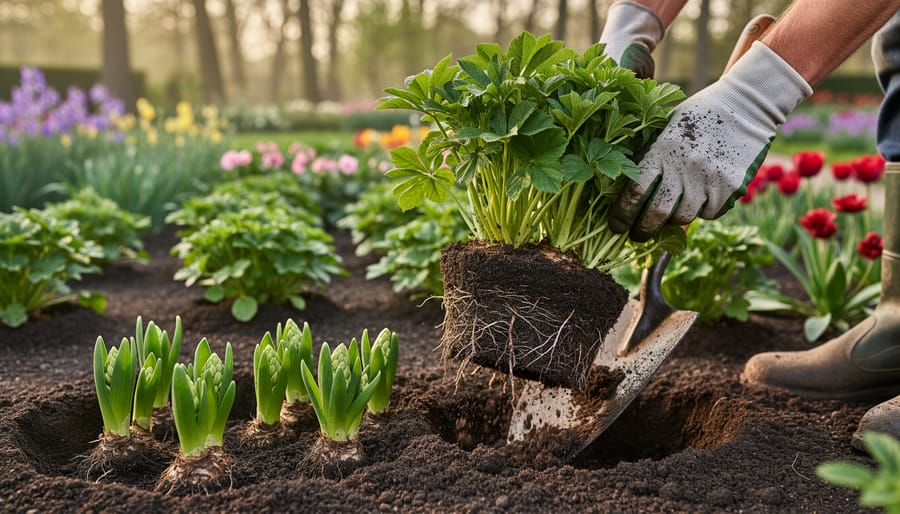
Here’s my tried-and-true process: Start by watering your plant thoroughly the day before. Dig around the entire root ball, staying several inches from the stems. Lift the whole clump and gently shake off excess soil so you can see the natural divisions. For plants with distinct crowns, simply pull or cut them apart. Tougher clumps might need two garden forks inserted back-to-back to pry them open.
Each division should have at least three to five healthy shoots and a good root system. Replant immediately at the same depth they were growing before, water deeply, and add a layer of mulch. Don’t worry if they look a bit sad initially. Within a few weeks, you’ll see fresh growth rewarding your efforts.
Feeding and Mulching for Growth
Spring is the perfect time to give your perennials a nutritional boost as they emerge from dormancy. Once you see new growth appearing, apply a balanced, slow-release fertilizer around the base of each plant, keeping it a few inches away from stems to prevent burning. I like to think of it as breakfast for my garden—it sets them up for success! The timing and type of nutrients matter more than you might think, which is why understanding feeding perennials properly makes such a difference in their performance.
After fertilizing, apply a 2-3 inch layer of organic mulch like shredded bark or compost around your plants. This works wonders by retaining moisture during dry spells, suppressing weeds that compete for nutrients, and gradually enriching the soil as it breaks down. Pull mulch back slightly from plant crowns to allow air circulation and prevent rot.
For an extra boost, work compost into the soil surface each spring. This improves soil structure, encourages beneficial microbes, and provides gentle, ongoing nutrition. Your perennials will reward you with stronger growth and more abundant blooms throughout the season.
Summer: Keeping the Momentum Going
Deadheading and Pruning Strategies
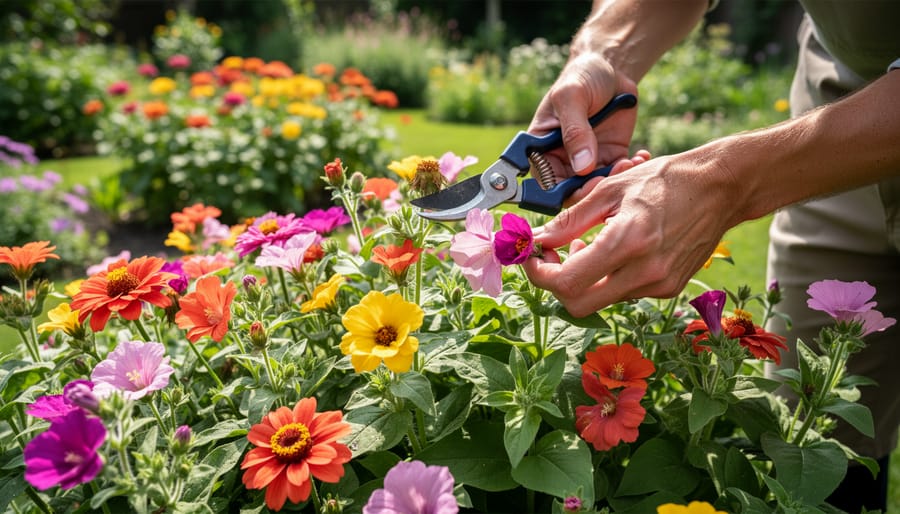
Deadheading might sound intimidating, but it’s simply the practice of removing spent flowers—and trust me, your perennials will thank you for it! Many popular perennials like coneflowers, salvia, and coreopsis respond beautifully to regular deadheading by producing fresh waves of blooms throughout the season. I’ve seen my own blanket flowers double their flowering period just by snipping off faded blooms every week or so.
The technique is straightforward: use clean pruners or even just your fingers to remove the flower head just above the next set of leaves or buds. For plants like daylilies, simply snap off individual spent blooms, while the rest of the stalk continues flowering. Deadheading not only encourages repeat blooms but also prevents plants from putting energy into seed production, redirecting that vigor into more flowers instead.
Some perennials benefit from a mid-season “Chelsea chop”—a technique named after the timing of the famous Chelsea Flower Show in late May. Plants like sedums, asters, and phlox can be cut back by about one-third in early summer to promote bushier growth and prevent flopping later in the season. This creates sturdier plants with more compact blooms.
Not every perennial needs deadheading, though. Ornamental grasses and coneflowers left standing provide winter interest and food for birds. Consider your garden’s purpose—more blooms or wildlife support—and adjust your strategy accordingly. The beauty of perennial care is that you get to decide!
Watering Wisdom
The secret to thriving perennials lies in watering deeply but infrequently. Think of it as teaching your plants to fish rather than feeding them daily! When you water, aim for 6-8 inches of soil penetration, which encourages roots to grow deep and strong. I typically water established perennials once weekly during dry spells, delivering about an inch of water per session. A simple trick? Place an empty tuna can near your plants while watering to measure exactly one inch.
Watch for telltale signs of water stress before things get critical. Wilting leaves in early morning, grayish or dull foliage, and slower growth all signal thirsty plants. During drought periods, prioritize newly planted perennials and those in containers, as they’re most vulnerable. For established beds, apply a 2-3 inch layer of organic mulch to retain moisture and regulate soil temperature.
Here’s something I learned from an experienced gardener: water in the morning to minimize fungal issues and reduce evaporation. Your perennials will reward you with deeper root systems that naturally withstand dry periods, making your garden increasingly resilient year after year.
Pest and Disease Patrol
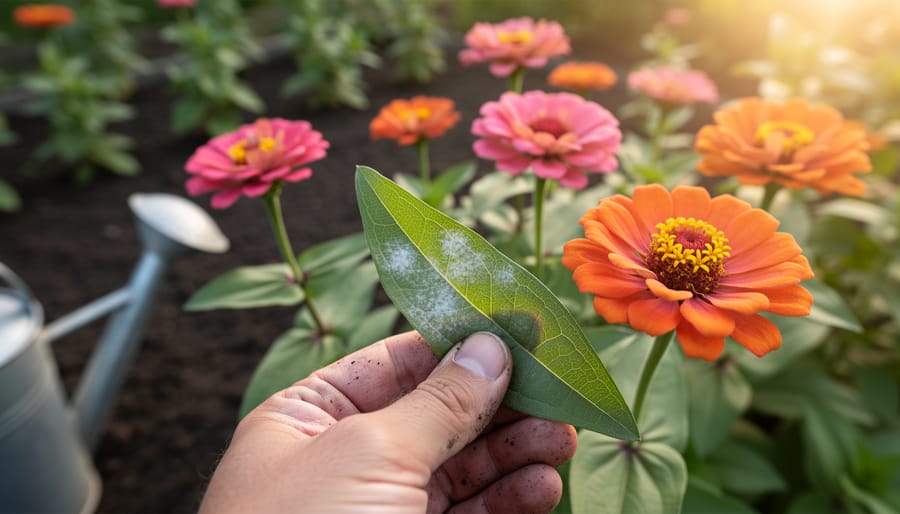
Summer brings vigorous growth, but it also invites unwanted guests to the garden party. Keep a watchful eye for aphids clustering on tender new shoots, powdery mildew coating leaves in white patches, and Japanese beetles munching through foliage.
Prevention is your best defense. Strong, healthy plants resist pests and diseases better, so maintain consistent watering and avoid overhead irrigation that encourages fungal problems. I’ve learned that good air circulation works wonders—don’t be afraid to thin crowded plantings.
When problems arise, start with the gentlest approach. A strong spray from the hose dislodges aphids, while handpicking works surprisingly well for larger beetles (drop them in soapy water). Neem oil serves as my go-to organic solution for both fungal issues and persistent pests. Apply early morning or evening to prevent leaf burn.
Remember, a few nibbled leaves rarely harm established perennials. Focus your energy on severe infestations, and you’ll maintain balance without harsh chemicals.
Fall: Preparing for the Long Sleep
The Great Debate: To Cut or Not to Cut
Here’s the truth: there’s no one-size-fits-all answer to whether you should cut back your perennials in fall. I’ve learned this through years of trial and error in my own garden, and it’s actually liberating once you understand the factors at play.
Some perennials benefit from fall pruning. Peonies, bearded iris, and hostas are prone to diseases that overwinter in foliage, so cutting them back makes sense. Anything that turned to mush after the first frost should definitely go into the compost pile.
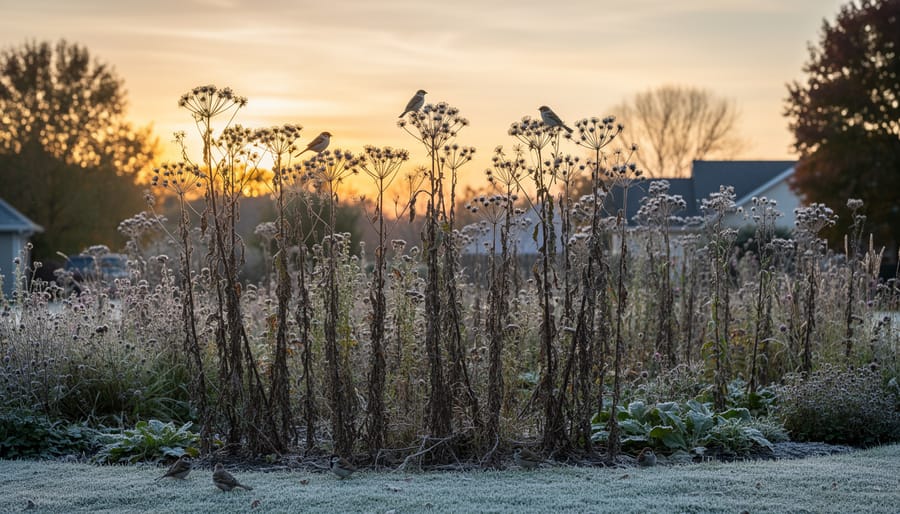
But here’s where it gets interesting: leaving many perennials standing through winter offers real benefits. Those sturdy seed heads on coneflowers, black-eyed Susans, and sedums provide critical food for birds during lean months. I can’t tell you how delightful it is to watch goldfinches clinging to swaying seedheads on a January morning. Ornamental grasses add winter structure and beauty, catching snow and creating magical garden scenes.
The hollow stems of many perennials also shelter beneficial insects that will help your garden thrive come spring. Native bees, in particular, use these stems as overwintering sites.
My advice? Make decisions plant by plant. Cut back anything diseased or mushy. Leave sturdy, attractive seed heads and grasses for wildlife and winter interest. You can always tidy up in early spring before new growth emerges. Your garden doesn’t need to look pristine in November—it needs to support the ecosystem that supports it.
Planting and Transplanting Windows
Fall is hands-down my favorite time to introduce new perennials to the garden, and there’s solid science behind this timing. While spring gets all the glory at garden centers, autumn planting gives your perennials a secret advantage: cool, moist soil that encourages root development without the stress of supporting top growth.
Think of it this way: when you plant in fall, your perennials can focus all their energy underground. The soil stays warm well into November in most regions, allowing roots to spread and establish before winter dormancy sets in. Come spring, these well-rooted plants wake up ready to thrive, often blooming their first year while spring-planted neighbors are still getting settled.
For best results, aim to plant at least six weeks before your first hard freeze. This gives roots enough time to take hold. Water new additions thoroughly and apply a light layer of mulch after the ground freezes to prevent frost heaving. During a recent conversation with master gardener Ellen Morris, she shared that fall-planted perennials typically need 50 percent less watering their first summer compared to spring plantings. That alone makes autumn planting worth considering, especially in areas facing water restrictions.
Final Feeding and Winter Protection
Here’s something I learned the hard way: feeding your perennials a big meal in late fall is like giving them an espresso before bedtime. You want your plants to slow down and prepare for dormancy, not push out tender new growth that’ll get zapped by frost. Understanding proper late-season fertilization timing means stopping fertilizer applications by mid-summer in most regions, giving plants time to naturally harden off.
Once the ground starts to freeze, it’s mulch time. Apply a 2-3 inch layer of shredded leaves, straw, or wood chips around your perennials after the first hard frost. This insulates the soil, preventing the damaging freeze-thaw cycles that can heave plants right out of the ground. Think of it as tucking your garden in for a long winter’s nap.
For tender perennials that are borderline hardy in your zone, give them extra protection with evergreen boughs or create windbreaks using burlap screens. Container-grown perennials should be moved to sheltered locations or buried, pot and all, in a protected garden bed. These small efforts now ensure a vibrant garden come spring.
Winter: The Quiet Season (But Not Idle)
Monitoring and Adjusting Winter Protection
Winter isn’t a “set it and forget it” season for your perennials. I’ve learned this the hard way after losing a prized hosta to a particularly wild winter! Regular check-ins are essential, especially after heavy snow, ice storms, or prolonged cold snaps.
Start by inspecting your mulch after severe weather. Wind can scatter it, and heavy snow can compact or displace it entirely. Gently replenish any thin spots to maintain that protective 2-3 inch layer, but avoid piling mulch directly against plant crowns, which invites rot.
The real troublemaker in winter? Freeze-thaw cycles. These temperature swings cause soil to heave, literally pushing plants out of the ground and exposing their roots. If you spot any heaving, resist the urge to immediately push plants back down. Instead, gently tuck mulch around the exposed roots and wait until spring when the soil thaws completely to replant properly.
Watch for snow and ice buildup on evergreen perennials too. Heavy accumulation can break stems or damage foliage. A gentle brush with a broom works wonders, but only when temperatures are above freezing to avoid snapping brittle, frozen stems. Think of these winter patrols as friendly check-ins with your garden, ensuring everyone makes it safely to spring.
Planning Next Year’s Garden
Winter’s quiet months are perfect for reflecting on your garden’s performance and dreaming up improvements for next year. Grab a cup of tea, settle in with your garden journal, and jot down what thrived and what struggled this past season. Did those sun-loving delphiniums actually get enough light? Were the hostas cramped? Honest assessments now save you from repeating mistakes.
This is also the ideal time to browse plant catalogs and online nurseries. I find winter catalogs arrive just when I need a gardening fix! Mark your wishlist items, paying attention to bloom times to ensure continuous color throughout the growing season. Consider adding native perennials that support local pollinators, or experiment with varieties that performed well in neighboring gardens.
Order bare-root perennials early for the best selection and spring planting. Many experienced gardeners I’ve spoken with swear by placing orders in January or February, well before the spring rush. Sketch out where new additions will go, ensuring proper spacing and companion plantings that complement each other’s needs.
Common Seasonal Care Mistakes (And How to Avoid Them)
Even the most devoted gardeners can fall into seasonal timing traps that leave their perennials struggling. I’ve watched my neighbor religiously cut back her garden each fall, only to wonder why her plants looked stressed come spring. The truth is, timing mistakes are incredibly common, but they’re also easily fixable once you know what to watch for.
One of the biggest missteps happens in late fall when eager gardeners cut everything back to the ground. While it feels satisfying to tidy up, many perennials actually benefit from keeping their foliage through winter. Those dried stems provide insulation for crowns and offer shelter for beneficial insects. Plants like coneflowers, black-eyed Susans, and ornamental grasses should stay standing until early spring. I learned this lesson after cutting back my sedum too early and losing several plants to frost damage.
Over-fertilizing in fall is another common pitfall. When gardeners see their perennials winding down, they sometimes think a boost of fertilizer will help them prepare for winter. However, fertilizing encourages new growth at precisely the wrong time. That tender new growth won’t have time to harden off before freezing temperatures arrive, leaving plants vulnerable. Save your fertilizing energy for spring when plants actually need that growth encouragement.
On the flip side, skipping spring cleanup altogether creates problems too. While waiting until temperatures consistently warm up is wise, neglecting to remove winter-damaged foliage and debris eventually invites disease and pest problems. Dead material harbors fungal spores and provides hiding spots for slugs and other pests.
The sweet spot lies in observing your plants rather than following arbitrary calendar dates. Wait until you see new growth emerging at the base before cutting back old foliage. This natural signal tells you the plant is ready for its spring haircut, and you’ll avoid damaging emerging shoots hidden beneath last year’s growth.
Here’s the truth about perennial care: you don’t need to be perfect. What transforms a struggling garden into a thriving perennial paradise isn’t flawless execution, but consistent, thoughtful attention through the seasons.
As you work through your first full year of seasonal maintenance, you’ll notice something wonderful happening. Those tasks that once felt unfamiliar become automatic. You’ll find yourself checking for new growth in early spring without thinking about it, and your hands will reach for deadheading shears naturally as you walk past spent blooms. This rhythm becomes part of your gardening life, not a chore to remember.
The best part? Your perennials will reward your efforts generously. Each year, they’ll return stronger, fuller, and more spectacular. You’ll watch them spread and fill in bare spots, creating that lush, established look that makes gardens feel like home. Remember, every experienced gardener started exactly where you are now. Be patient with yourself, stay curious, and enjoy watching your garden flourish season after season.